
Cellular Respiration Respiration Overview Aerobic Respiration Eukaryotic cells
Cellular Respiration
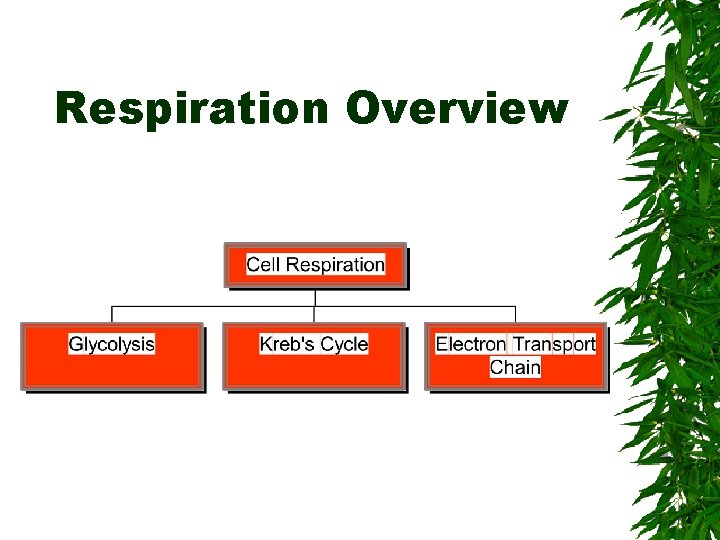
Respiration Overview
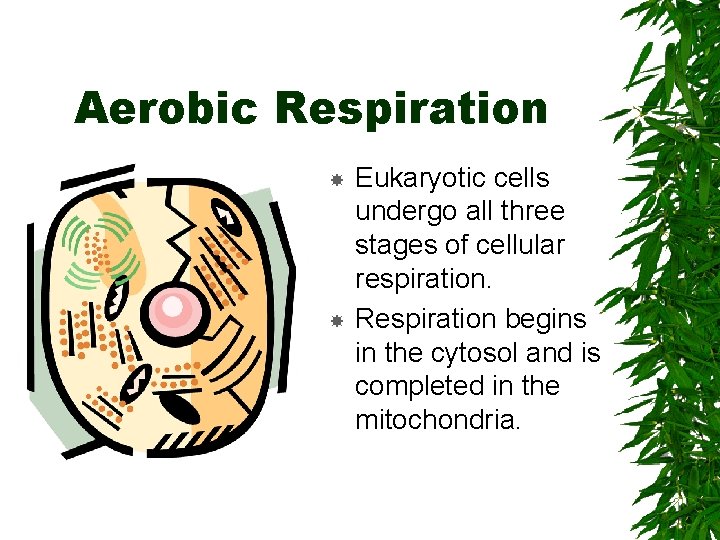
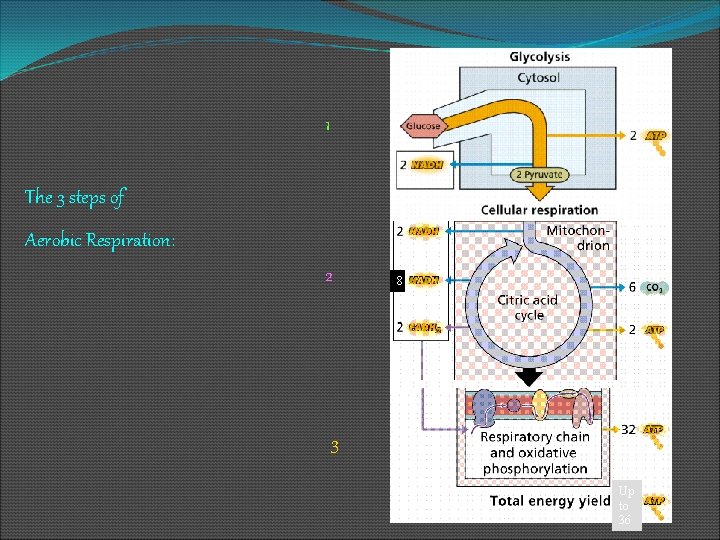
Aerobic Respiration Eukaryotic cells undergo all three stages of cellular respiration. Respiration begins in the cytosol and is completed in the mitochondria.
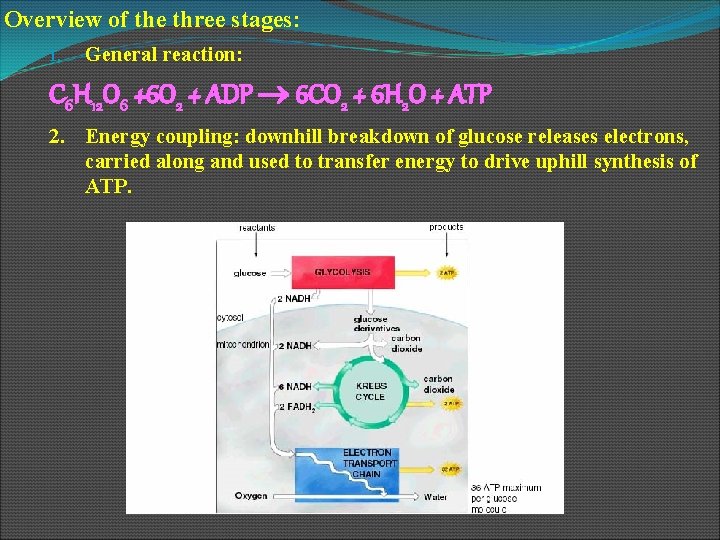
Overview of the three stages: 1. General reaction: C 6 H 12 O 6 +6 O 2 + ADP 6 CO 2 + 6 H 2 O + ATP 2. Energy coupling: downhill breakdown of glucose releases electrons, carried along and used to transfer energy to drive uphill synthesis of ATP.
First Stage of Respiration: Glycolysis—For eukaryotes this is the first stage. It begins breakdown of glucose, yielding little energy, but it does transfer electrons to NAD+. On the plus side, it doesn’t require oxygen and occurs in the cytoplasm, and some prokaryotes and single-celled eukaryotes have long used it as the sole source of energy.
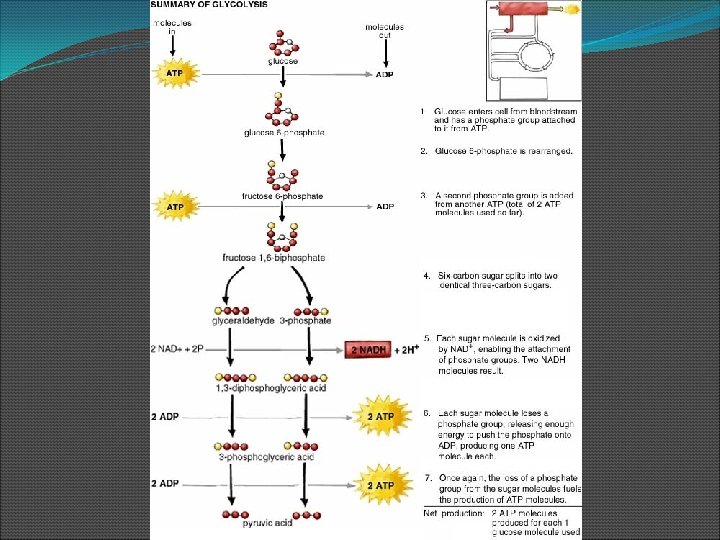
Glycolysis: Steps in the process: 1. Sugar in bloodstream enters cytoplasm, where this breakdown begins. Enzymes catalyze each reaction in metabolic pathway (first is hexokinase, which adds a phosphate from ATP called phosphorylation). 2. Although breaking sugar apart generates energy, it requires some activation energy (another ATP is used to attach another phosphate: -2 ATP total).
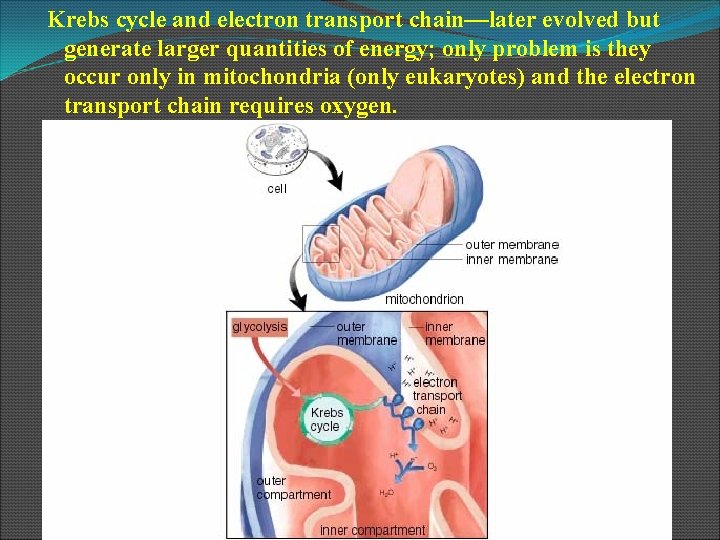
Krebs cycle and electron transport chain—later evolved but generate larger quantities of energy; only problem is they occur only in mitochondria (only eukaryotes) and the electron transport chain requires oxygen.
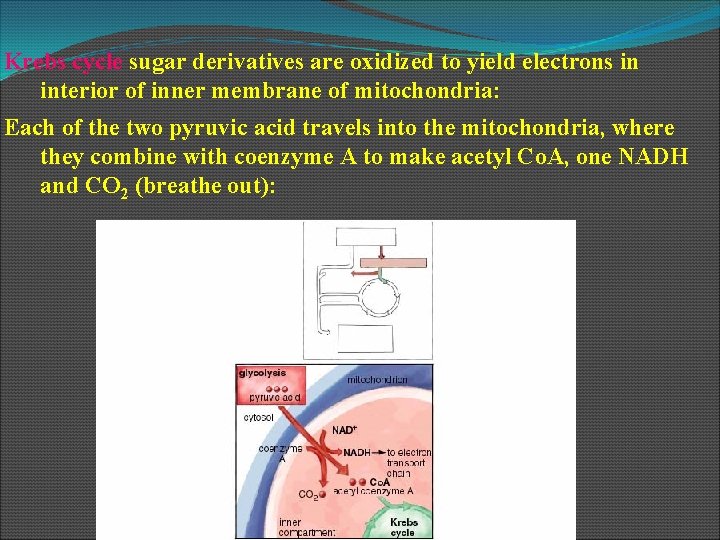
Krebs cycle sugar derivatives are oxidized to yield electrons in interior of inner membrane of mitochondria: Each of the two pyruvic acid travels into the mitochondria, where they combine with coenzyme A to make acetyl Co. A, one NADH and CO 2 (breathe out):
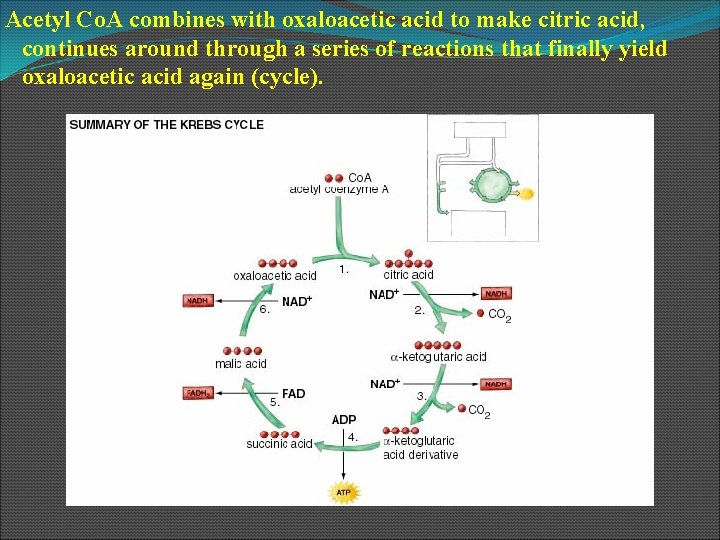
Acetyl Co. A combines with oxaloacetic acid to make citric acid, continues around through a series of reactions that finally yield oxaloacetic acid again (cycle).
Steps in the process: Figure 7. 8 b) During the cycle of reactions, as the acetyl Co. A is transformed, it is being oxidized by electron carrier molecules NAD+ and FAD. c) Also, ATP and CO 2 are produced. Majority of electrons for next stage (electron transport chain)
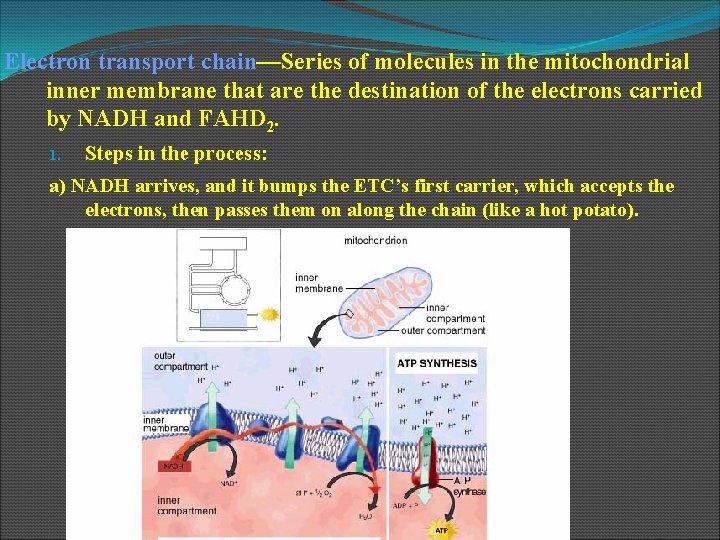
Electron transport chain—Series of molecules in the mitochondrial inner membrane that are the destination of the electrons carried by NADH and FAHD 2. 1. Steps in the process: a) NADH arrives, and it bumps the ETC’s first carrier, which accepts the electrons, then passes them on along the chain (like a hot potato).
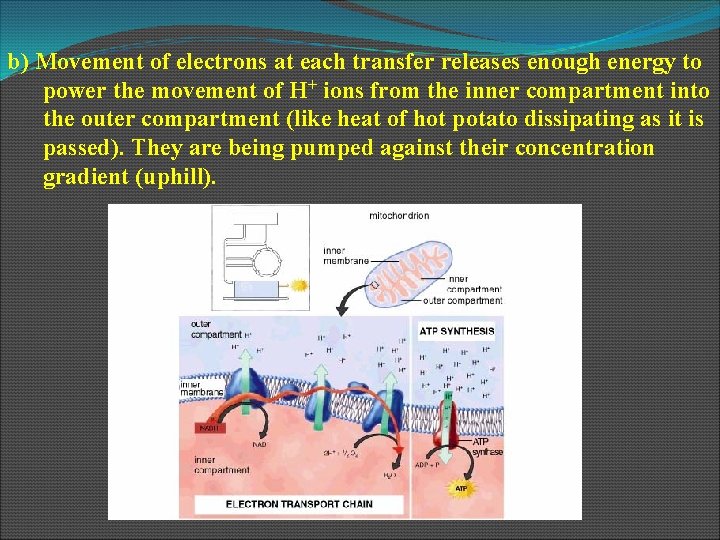
b) Movement of electrons at each transfer releases enough energy to power the movement of H+ ions from the inner compartment into the outer compartment (like heat of hot potato dissipating as it is passed). They are being pumped against their concentration gradient (uphill).
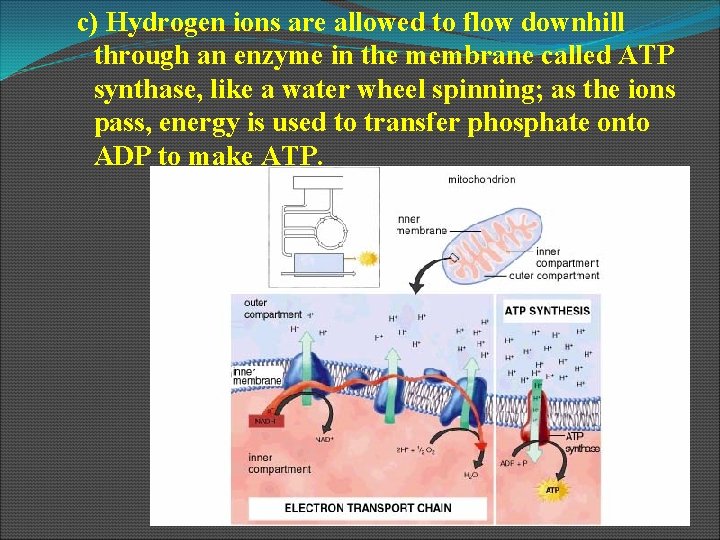
c) Hydrogen ions are allowed to flow downhill through an enzyme in the membrane called ATP synthase, like a water wheel spinning; as the ions pass, energy is used to transfer phosphate onto ADP to make ATP.
Greatest amount of ATP is made in this stage (up to 32 ATP per glucose). At the end of the ETC , who accepts the electron? ½ O 2 + 2 electrons + 2 H+ = H 2 O

Greatest amount of ATP is made in this stage (up to 32 ATP per glucose). At the end of the ETC , who accepts the electron? ½ O 2 + 2 electrons + 2 H+ = H 2 O
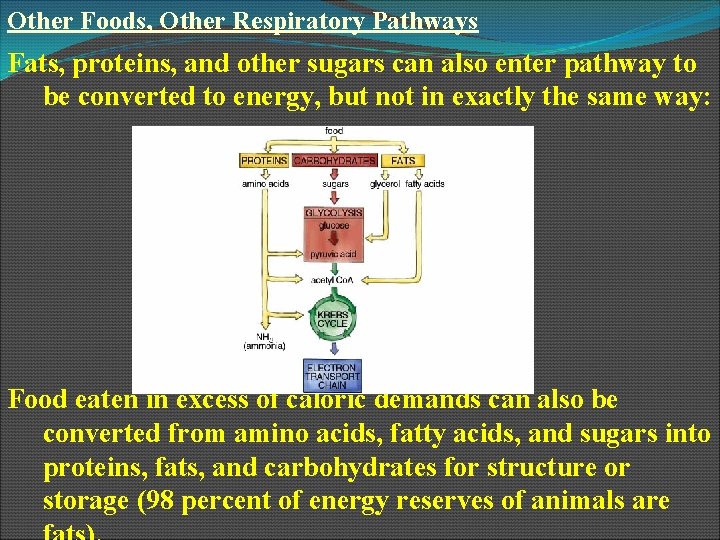
Other Foods, Other Respiratory Pathways Fats, proteins, and other sugars can also enter pathway to be converted to energy, but not in exactly the same way: Food eaten in excess of caloric demands can also be converted from amino acids, fatty acids, and sugars into proteins, fats, and carbohydrates for structure or storage (98 percent of energy reserves of animals are
1 The 3 steps of Aerobic Respiration: 2 8 3 Up to 36
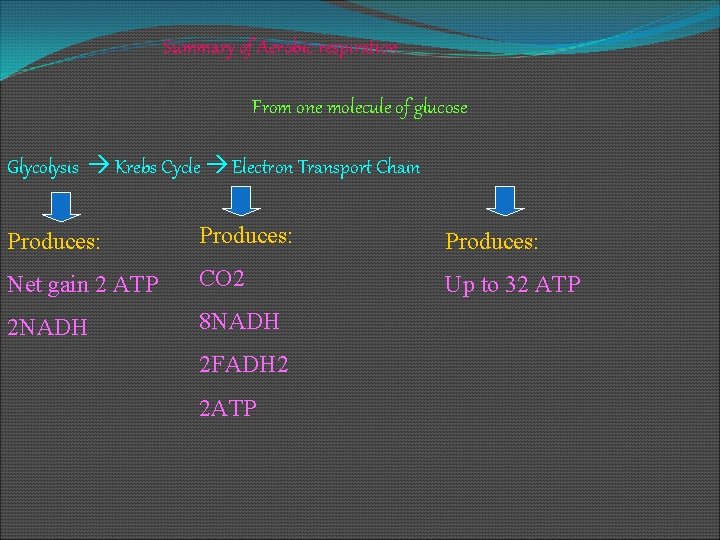
Summary of Aerobic respiration From one molecule of glucose Glycolysis Krebs Cycle Electron Transport Chain Produces: Net gain 2 ATP CO 2 Up to 32 ATP 2 NADH 8 NADH 2 FADH 2 2 ATP

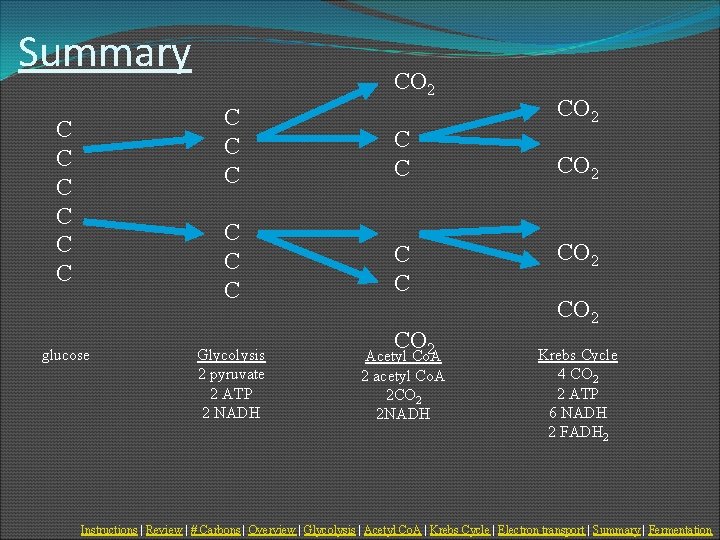
Summary C C C glucose CO 2 C C C C C Glycolysis 2 pyruvate 2 ATP 2 NADH CO 2 Acetyl Co. A 2 acetyl Co. A 2 CO 2 2 NADH CO 2 Krebs Cycle 4 CO 2 2 ATP 6 NADH 2 FADH 2 Instructions | Review | # Carbons | Overview | Glycolysis | Acetyl Co. A | Krebs Cycle | Electron transport | Summary | Fermentation

What if there is NO Oxygen? ? ? Some organisms can live without oxygen – Can they respire? ? ?
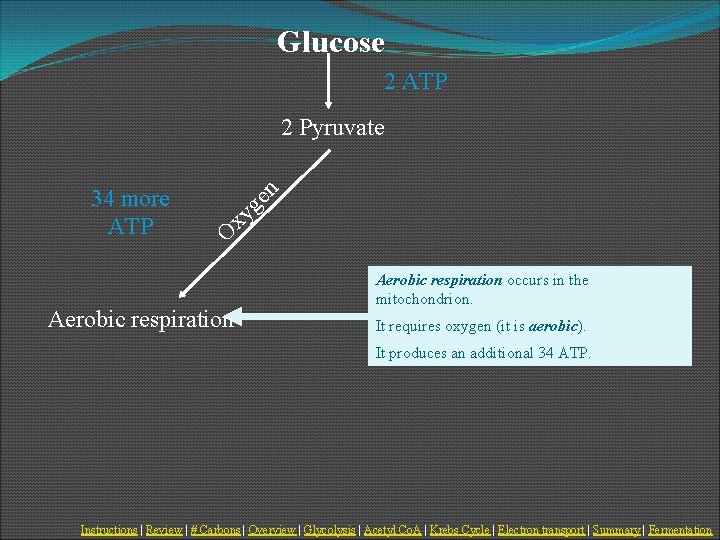
Glucose 2 ATP xy O 34 more ATP ge n 2 Pyruvate Aerobic respiration occurs in the mitochondrion. It requires oxygen (it is aerobic). It produces an additional 34 ATP. Instructions | Review | # Carbons | Overview | Glycolysis | Acetyl Co. A | Krebs Cycle | Electron transport | Summary | Fermentation
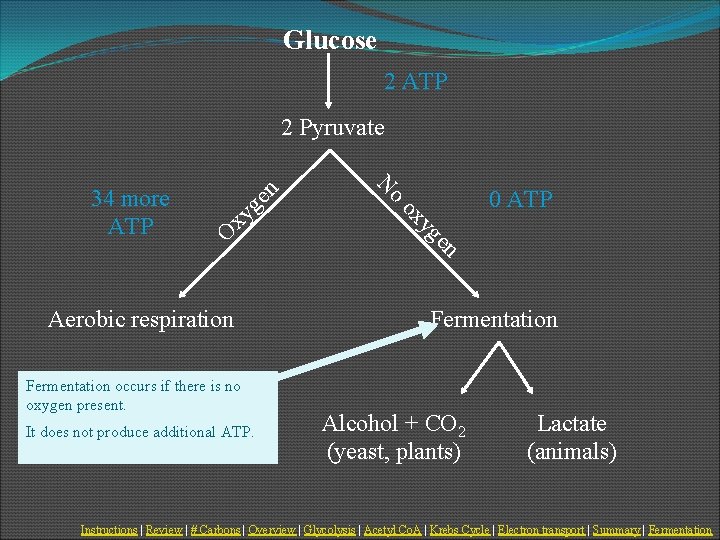
Glucose 2 ATP xy 0 ATP n ge y ox O o N 34 more ATP ge n 2 Pyruvate Aerobic respiration Fermentation occurs if there is no oxygen present. It does not produce additional ATP. Fermentation Alcohol + CO 2 (yeast, plants) Lactate (animals) Instructions | Review | # Carbons | Overview | Glycolysis | Acetyl Co. A | Krebs Cycle | Electron transport | Summary | Fermentation
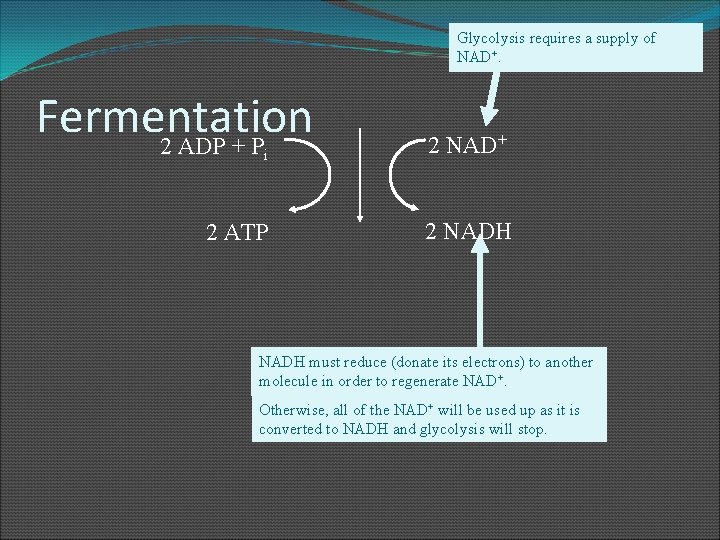
Glycolysis requires a supply of NAD+. Fermentation 2 ADP + P i 2 ATP 2 NAD+ 2 NADH must reduce (donate its electrons) to another molecule in order to regenerate NAD+. Otherwise, all of the NAD+ will be used up as it is converted to NADH and glycolysis will stop.
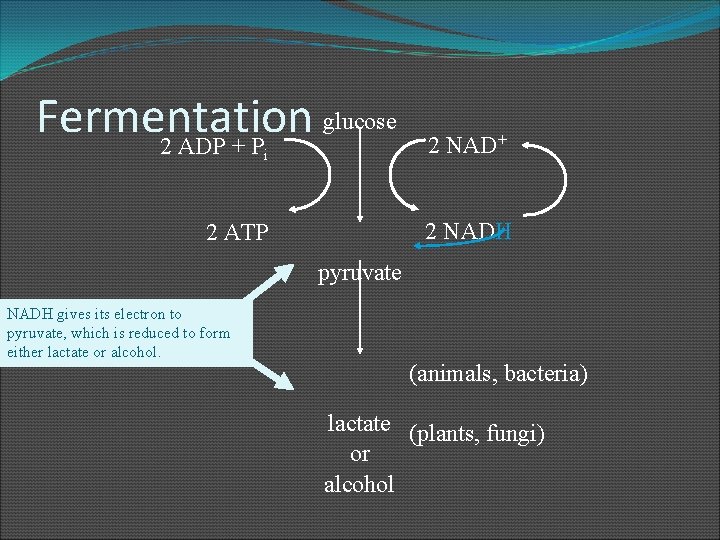
glucose Fermentation 2 ADP + P i 2 NAD+ 2 NADH 2 ATP pyruvate NADH gives its electron to pyruvate, which is reduced to form either lactate or alcohol. (animals, bacteria) lactate (plants, fungi) or alcohol
- Slides: 26