
Cellular Respiration oxygen glucose carbon dioxide water energy
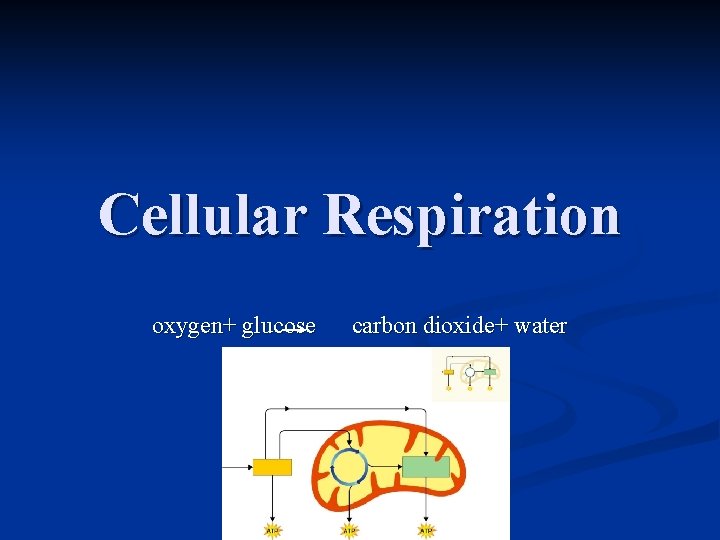
Cellular Respiration oxygen+ glucose carbon dioxide+ water +energy
Cellular Respiration n Since animals cannot create food they eat plants, or they eat plant-eating animals. n Plants and animals get energy from food by cellular respiration. n Occurs in the mitochondria, of the cell. n Oxygen is used to get the energy out of sugar.
Cellular Respiration n How much energy is actually in food? n 1 gram of the sugar glucose, when burned in the presence of oxygen, releases 3811 calories of heat energy!!!! What is a calorie? The amount of energy needed to raise the temp of one gram of water 1 degree Celcius. n
Cellular Respiration Cells, of course don’t burn glucose, instead they gradually release energy from glucose and other food compounds. Release of energy from glucose occurs in 3 steps n The pathway begins with Glycolysis n The Krebs Cycle n And the Electron Transport Chain n
Glycolysis Occurs in the cytoplasm of the cell. n Glycolysis is the process in which one molecule of glucose(6 C) is broken in half, producing two molecules of pyruvic acid(3 C) n Requires 2 ATP molecules to get it started but produces 4 ATP molecules and 2 NADH molecules in return n
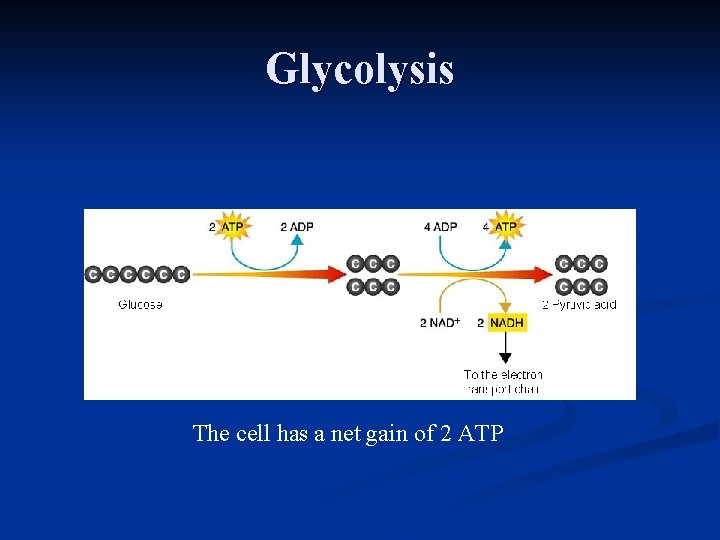
Glycolysis The cell has a net gain of 2 ATP
Fermentation When Oxygen is not present, glycolysis is followed by a different pathway. n Fermentation. n Alcoholic Fermentation n Bread, beer, and wine are produced n Lactic Acid Fermentation n n Produced in your muscles during rapid exercise when the body cannot supply enough oxygen to the tissues. This is why muscles feel sore after intense activity
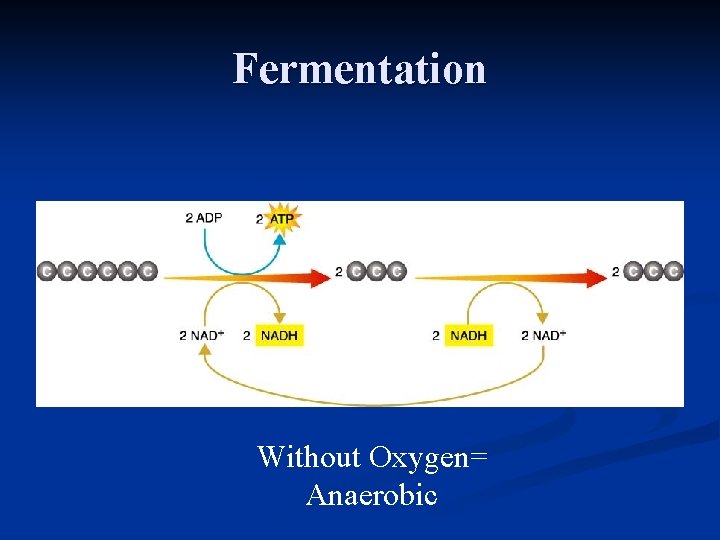
Fermentation Without Oxygen= Anaerobic
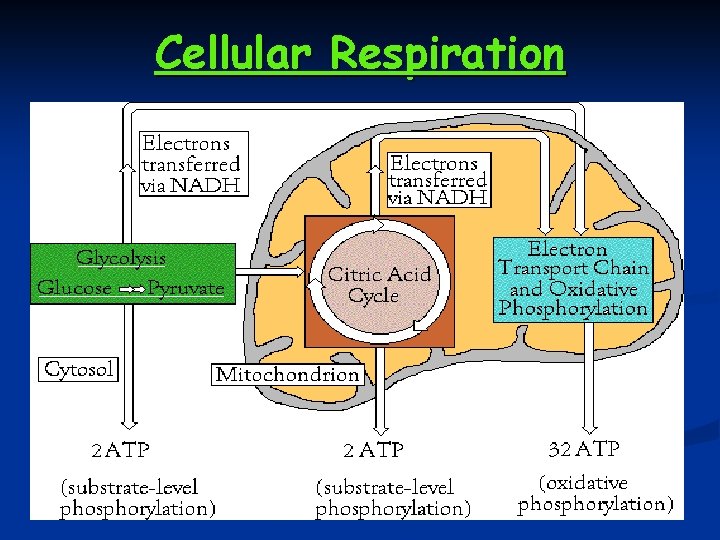
Cellular Respiration
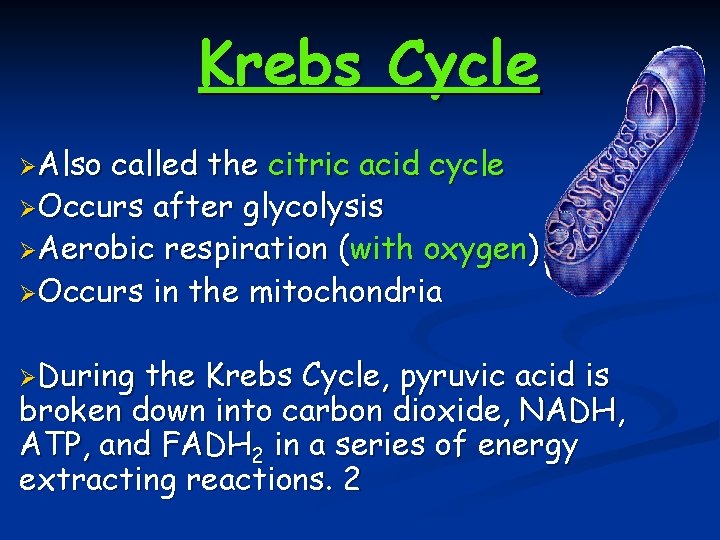
Krebs Cycle ØAlso called the citric acid cycle ØOccurs after glycolysis ØAerobic respiration (with oxygen) ØOccurs in the mitochondria ØDuring the Krebs Cycle, pyruvic acid is broken down into carbon dioxide, NADH, ATP, and FADH 2 in a series of energy extracting reactions. 2
Krebs Cycle Steps: n n In the presence of oxygen, pyruvic acid produced in glycolysis passes to the 2 nd stage of cellular respiration. During the Krebs cycle, pyruvic acid is broken down into carbon dioxide in a series of energyextracting reactions. Pyruvic Acid enters the mitochondrion, eventually forming citric acid. Citric acid is broken down to form a 4 -carbon molecule and carbon dioxide. FADH 2 and NADH are formed.
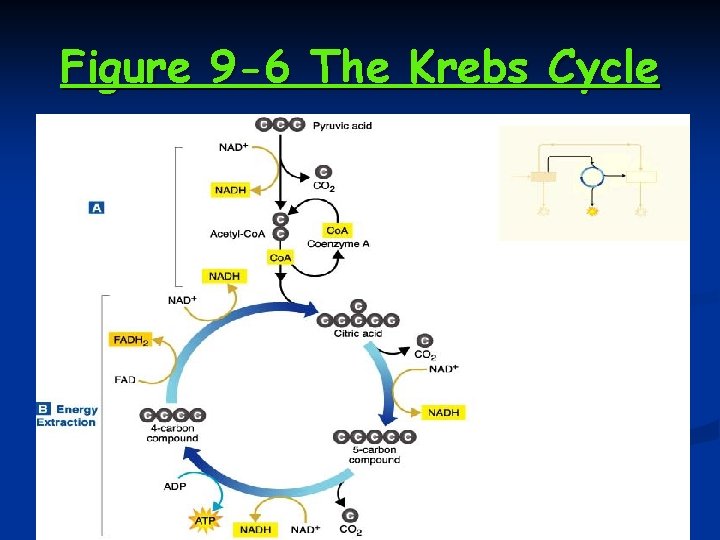
Figure 9 -6 The Krebs Cycle
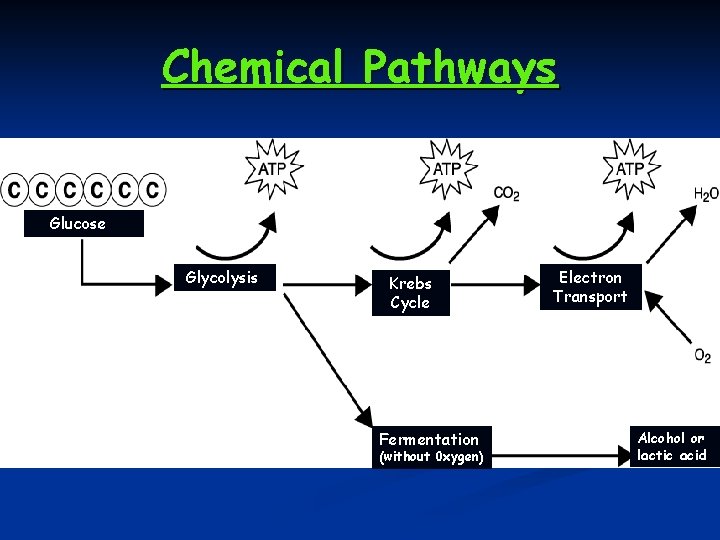
Chemical Pathways Glucose Glycolysis Krebs Cycle Fermentation (without 0 xygen) Electron Transport Alcohol or lactic acid
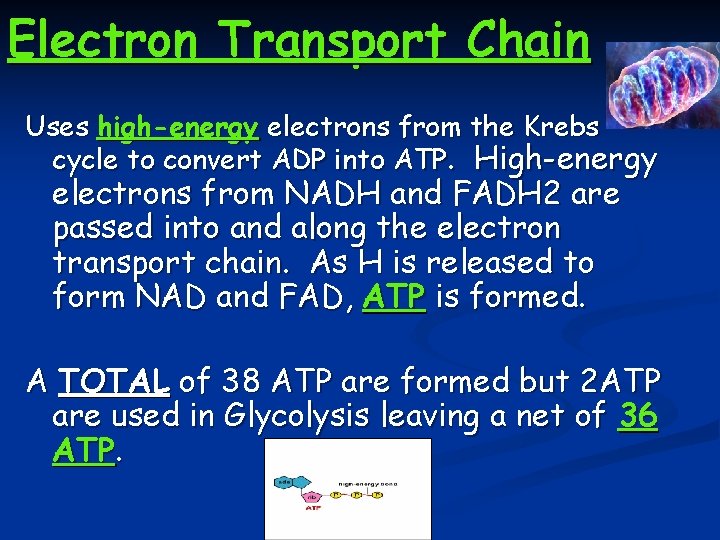
Electron Transport Chain Uses high-energy electrons from the Krebs cycle to convert ADP into ATP. High-energy electrons from NADH and FADH 2 are passed into and along the electron transport chain. As H is released to form NAD and FAD, ATP is formed. A TOTAL of 38 ATP are formed but 2 ATP are used in Glycolysis leaving a net of 36 ATP.
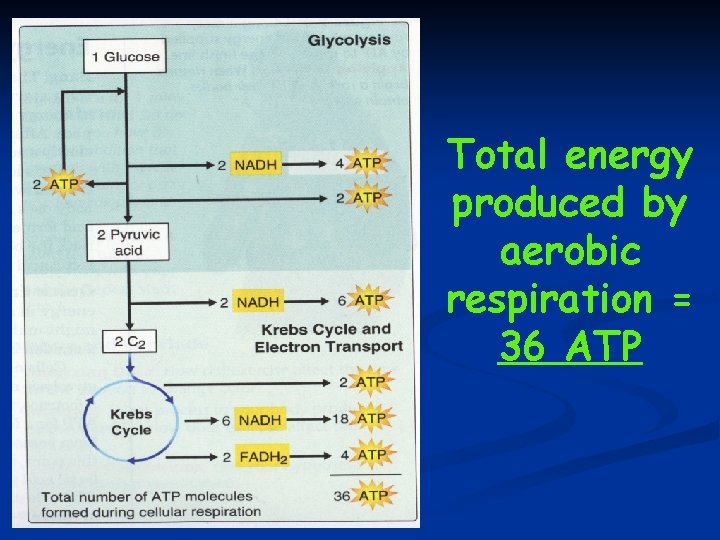
Total energy produced by aerobic respiration = 36 ATP
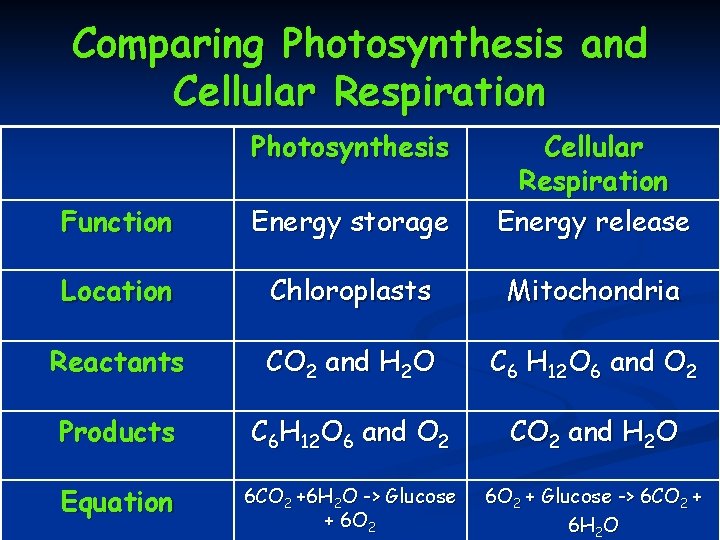
Comparing Photosynthesis and Cellular Respiration Photosynthesis Function Energy storage Cellular Respiration Energy release Location Chloroplasts Mitochondria Reactants CO 2 and H 2 O C 6 H 12 O 6 and O 2 Products C 6 H 12 O 6 and O 2 CO 2 and H 2 O Equation 6 CO 2 +6 H 2 O -> Glucose + 6 O 2 + Glucose -> 6 CO 2 + 6 H 2 O
- Slides: 16