
Cellular Respiration Overview Cellular Respiration song to the
- Slides: 42
Cellular Respiration Overview Cellular Respiration song to the tune of Californication =). . Biology 11 -12Bio videosCellular Respiration. mp 4
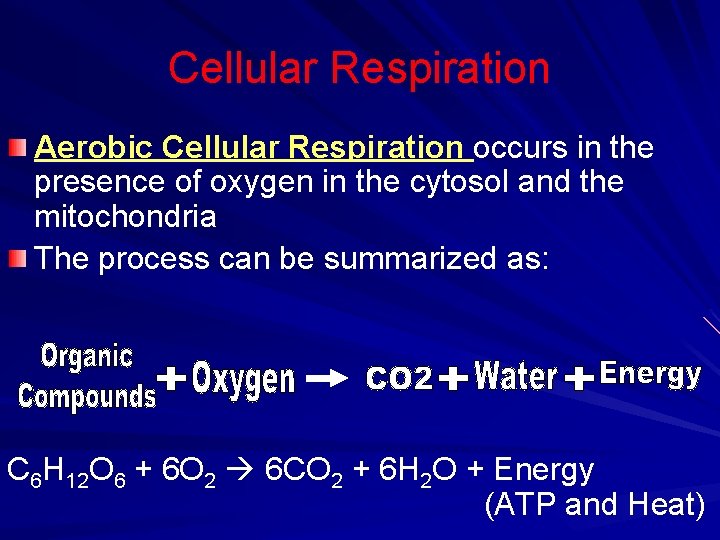
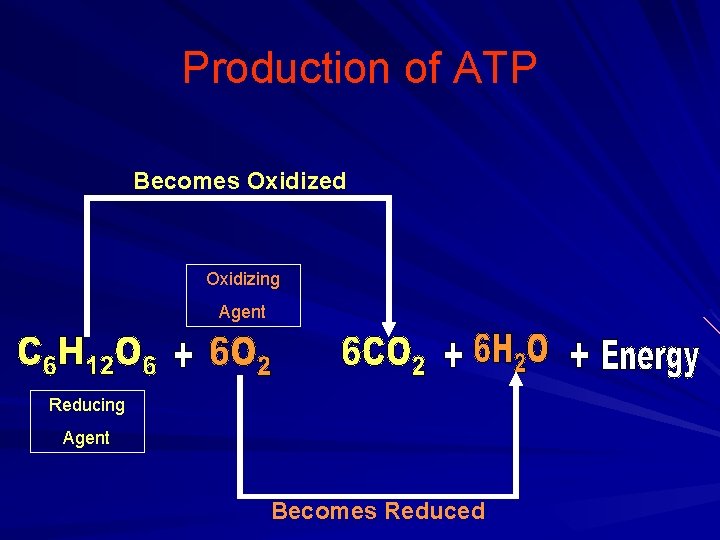
Cellular Respiration Aerobic Cellular Respiration occurs in the presence of oxygen in the cytosol and the mitochondria The process can be summarized as: C 6 H 12 O 6 + 6 O 2 6 CO 2 + 6 H 2 O + Energy (ATP and Heat)
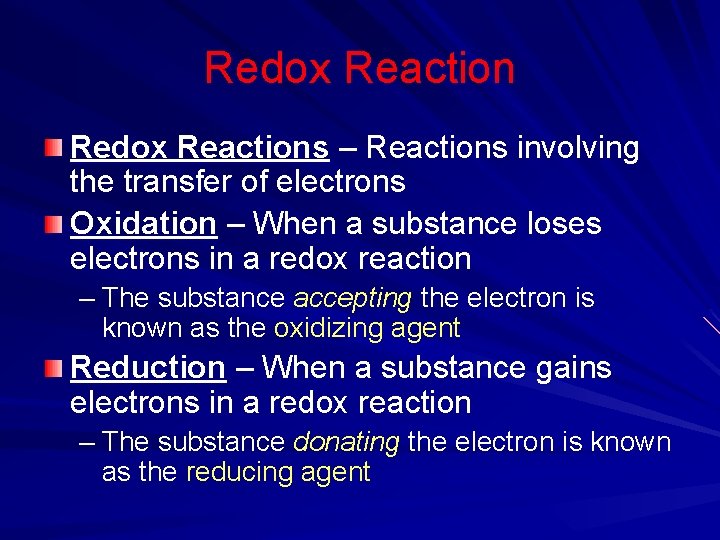
Redox Reactions – Reactions involving the transfer of electrons Oxidation – When a substance loses electrons in a redox reaction – The substance accepting the electron is known as the oxidizing agent Reduction – When a substance gains electrons in a redox reaction – The substance donating the electron is known as the reducing agent
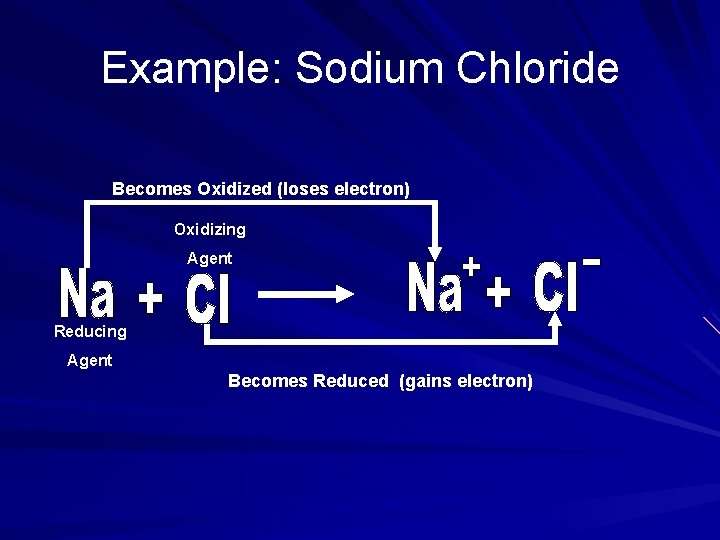
Example: Sodium Chloride Becomes Oxidized (loses electron) Oxidizing Agent Reducing Agent Becomes Reduced (gains electron)
Production of ATP Becomes Oxidized Oxidizing Agent Reducing Agent Becomes Reduced
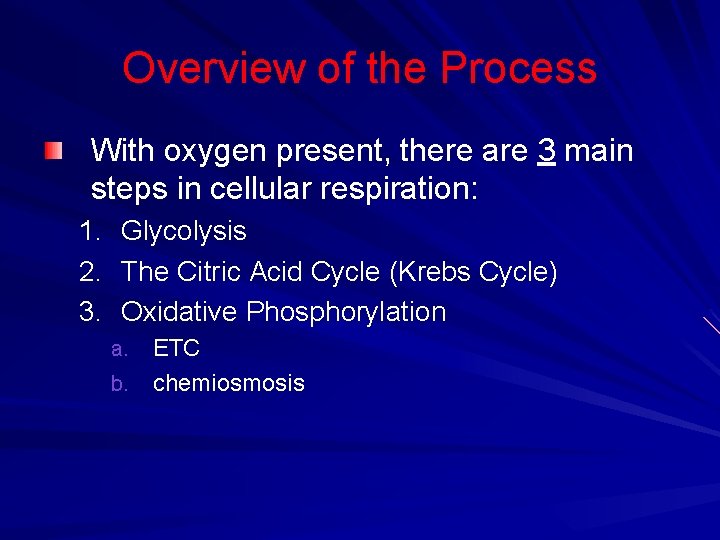
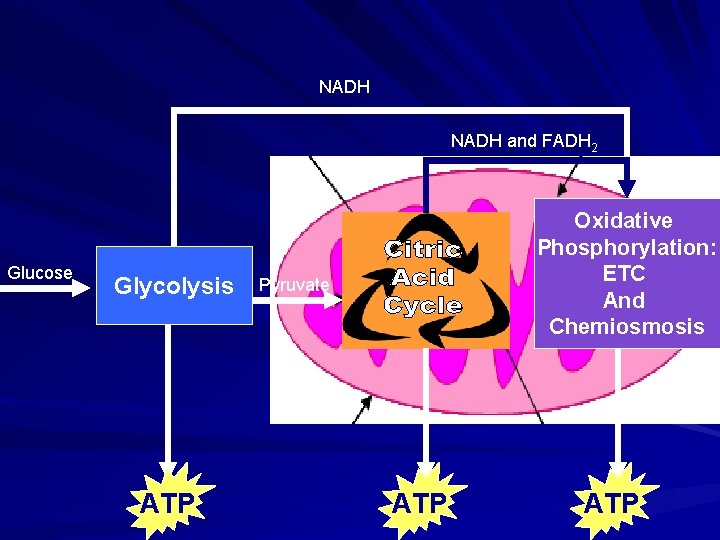
Overview of the Process With oxygen present, there are 3 main steps in cellular respiration: 1. Glycolysis 2. The Citric Acid Cycle (Krebs Cycle) 3. Oxidative Phosphorylation ETC b. chemiosmosis a.
NADH and FADH 2 Glucose Glycolysis ATP Oxidative Phosphorylation: ETC And Chemiosmosis Pyruvate ATP
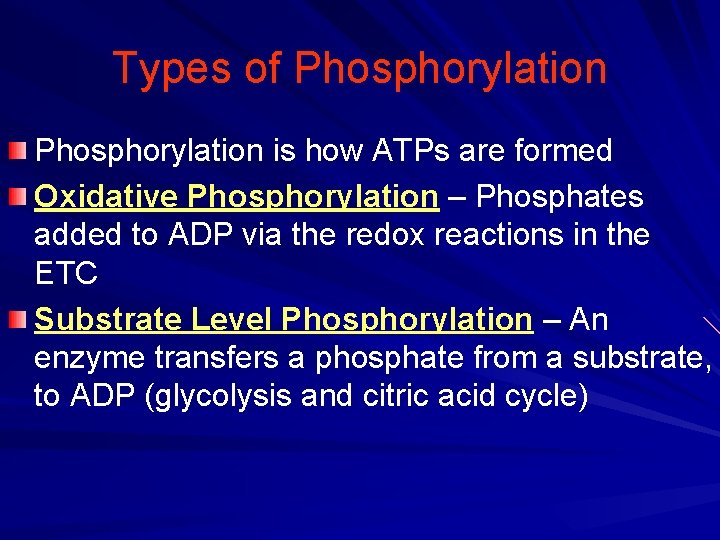
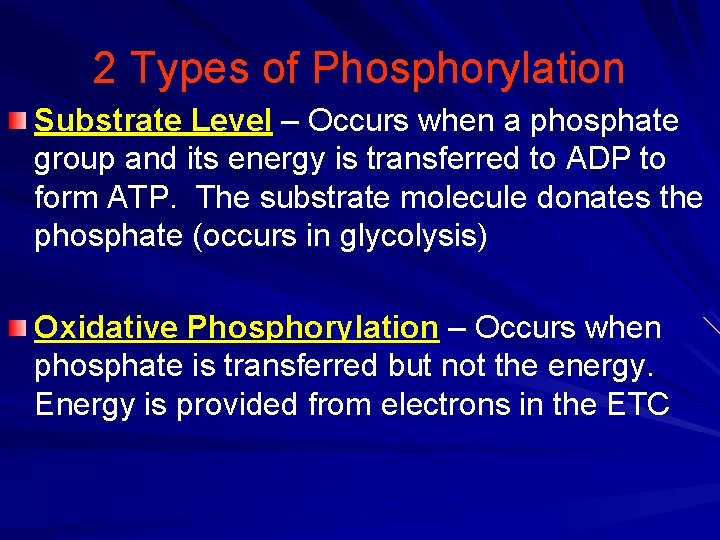
Types of Phosphorylation is how ATPs are formed Oxidative Phosphorylation – Phosphates added to ADP via the redox reactions in the ETC Substrate Level Phosphorylation – An enzyme transfers a phosphate from a substrate, to ADP (glycolysis and citric acid cycle)
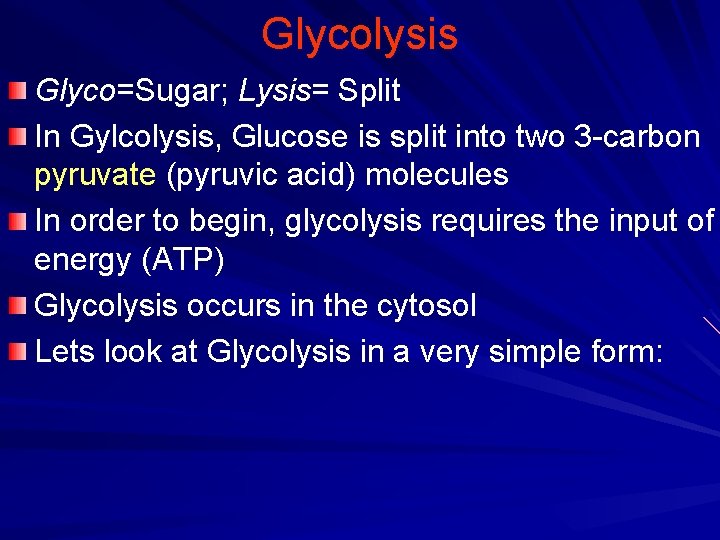
Glycolysis Glyco=Sugar; Lysis= Split In Gylcolysis, Glucose is split into two 3 -carbon pyruvate (pyruvic acid) molecules In order to begin, glycolysis requires the input of energy (ATP) Glycolysis occurs in the cytosol Lets look at Glycolysis in a very simple form:
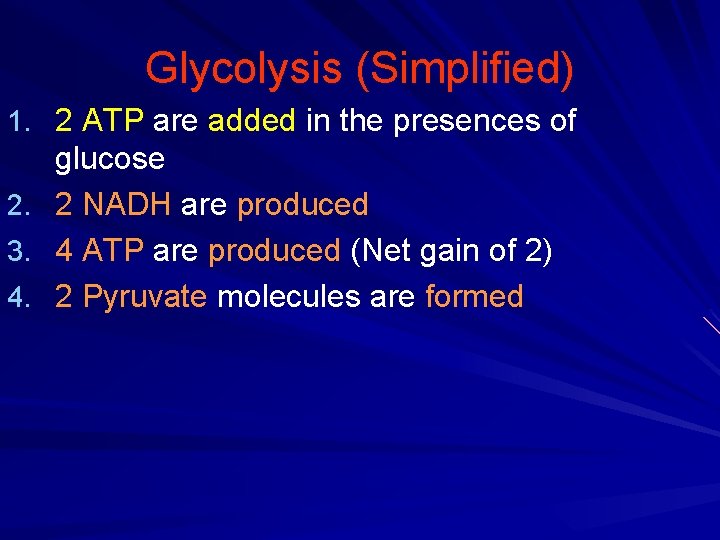
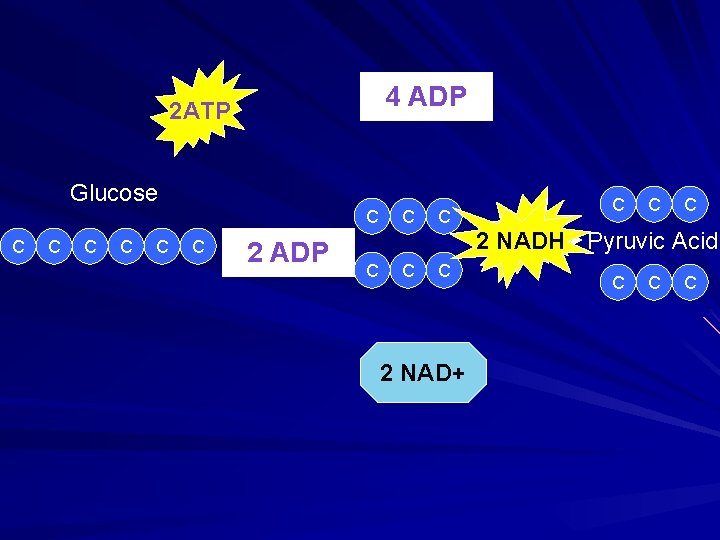
Glycolysis (Simplified) 1. 2 ATP are added in the presences of 2. 3. 4. glucose 2 NADH are produced 4 ATP are produced (Net gain of 2) 2 Pyruvate molecules are formed
4 ADP 2 ATP Glucose C C C 2 ADP C C C 2 NAD+ C C C 2 4 ATP NADH Pyruvic Acid C C C
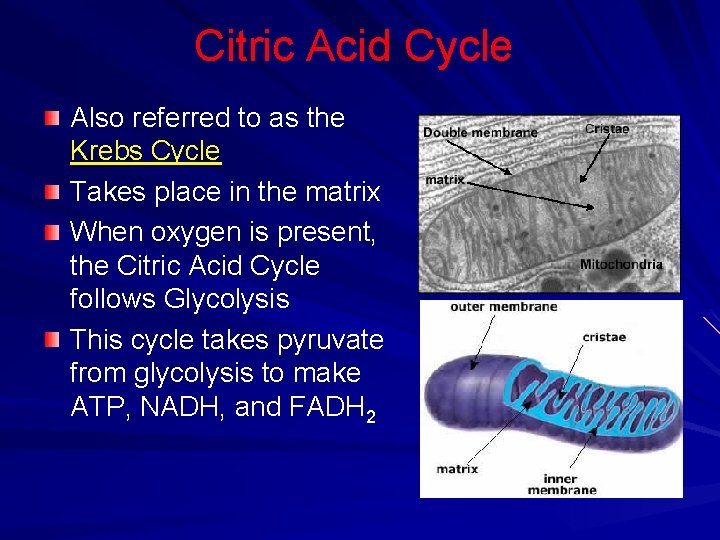
Citric Acid Cycle Also referred to as the Krebs Cycle Takes place in the matrix When oxygen is present, the Citric Acid Cycle follows Glycolysis This cycle takes pyruvate from glycolysis to make ATP, NADH, and FADH 2
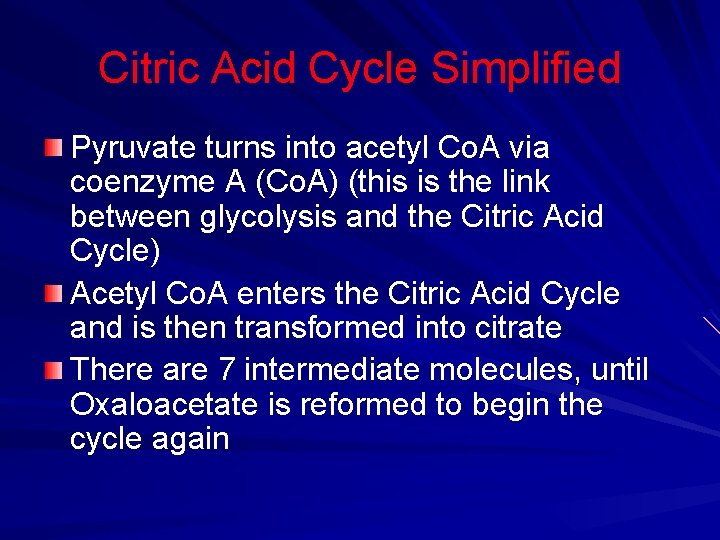
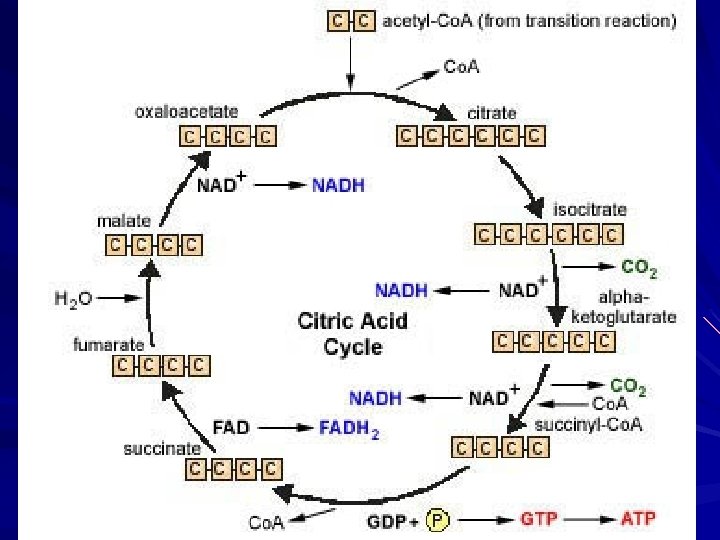
Citric Acid Cycle Simplified Pyruvate turns into acetyl Co. A via coenzyme A (Co. A) (this is the link between glycolysis and the Citric Acid Cycle) Acetyl Co. A enters the Citric Acid Cycle and is then transformed into citrate There are 7 intermediate molecules, until Oxaloacetate is reformed to begin the cycle again
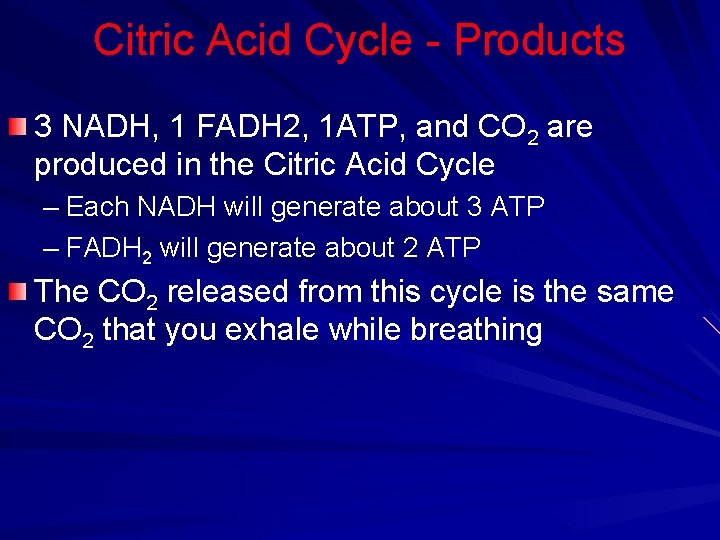
Citric Acid Cycle - Products 3 NADH, 1 FADH 2, 1 ATP, and CO 2 are produced in the Citric Acid Cycle – Each NADH will generate about 3 ATP – FADH 2 will generate about 2 ATP The CO 2 released from this cycle is the same CO 2 that you exhale while breathing
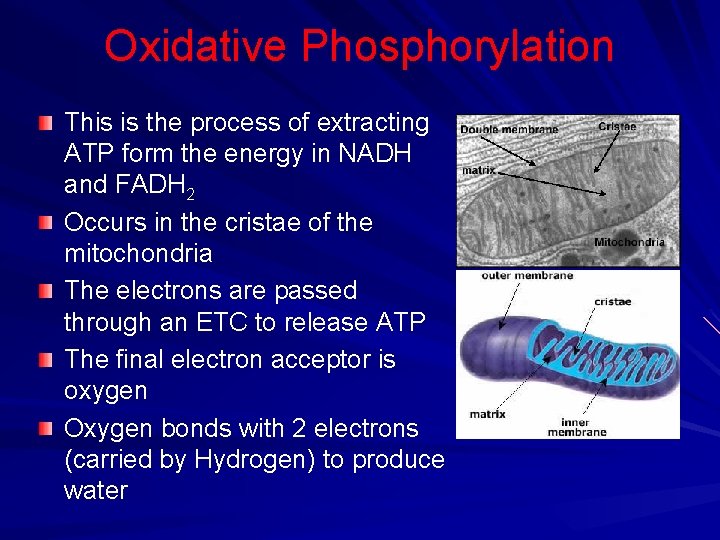
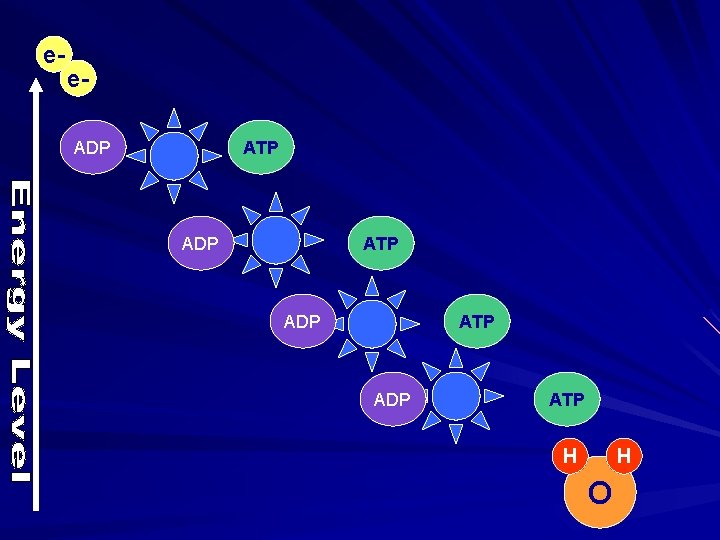
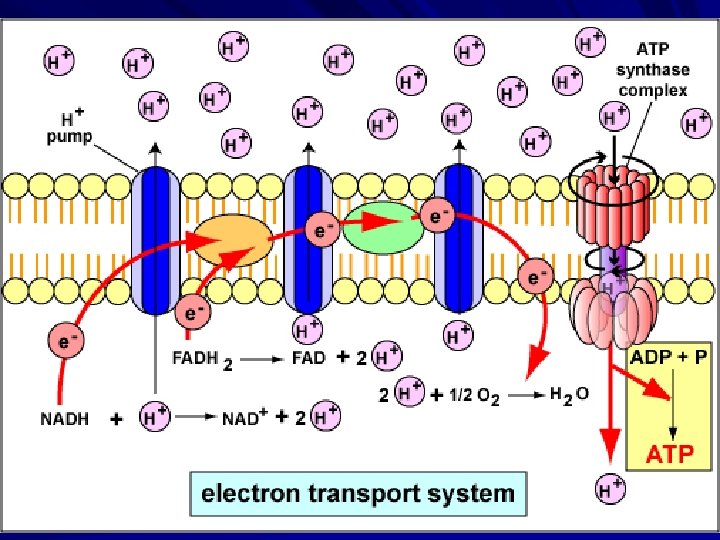
Oxidative Phosphorylation This is the process of extracting ATP form the energy in NADH and FADH 2 Occurs in the cristae of the mitochondria The electrons are passed through an ETC to release ATP The final electron acceptor is oxygen Oxygen bonds with 2 electrons (carried by Hydrogen) to produce water
e- e. ADP ATP H H O
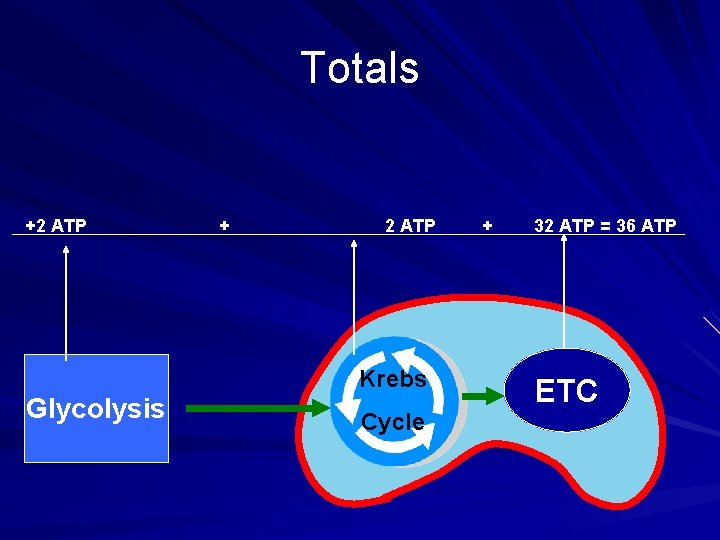
Totals +2 ATP + 2 ATP Krebs Glycolysis Cycle + 32 ATP = 36 ATP ETC
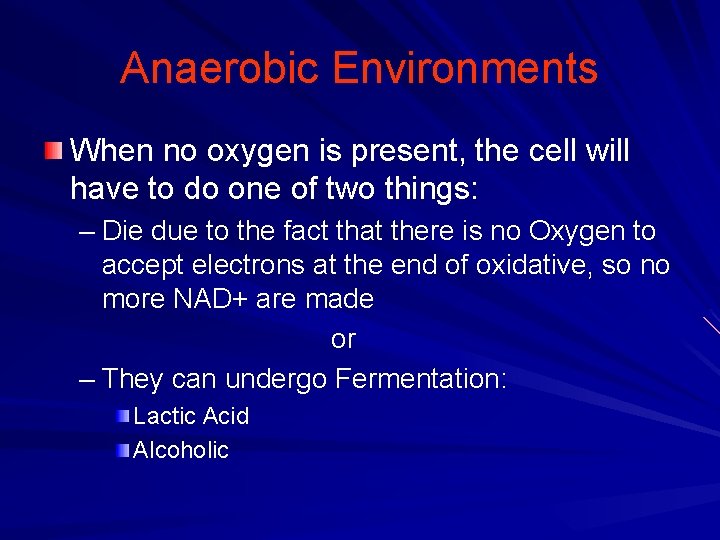
Anaerobic Environments When no oxygen is present, the cell will have to do one of two things: – Die due to the fact that there is no Oxygen to accept electrons at the end of oxidative, so no more NAD+ are made or – They can undergo Fermentation: Lactic Acid Alcoholic
Fermentation Takes place in the mitochondrial inner membrane Does not require oxygen to occur Does not directly produce ATP
Lactic Acid Fermentation Pyruvate comes from glycolysis and is turned into lactate (lactic acid) NADH gives an electron to become NAD+
Alcoholic Fermentation Pyruvate comes from glycolysis, and is changed into acetaldehyde, and a CO 2 is given off in the process Acetaldehyde is turned into ethanol with the help of an electron from NADH The products are CO 2, Ethanol, and NAD+
Why fermentation? Why do cells switch to fermentation? Why can’t cells use glycolysis and the Krebs cycle in an anaerobic environment? Right now with your table compare and contrast aerobic and anaerobic respiration
Begin work on dynamic models Work with the group you are assigned Read through the assignment Design your model Divide up the work And begin! Oh, and be ready for a short quiz tomorrow on the overview of cellular respiration.
Cellular Respiration – A Review of the Process Test your knowledge and complete the graphic organizer without looking at your notes/book/etc. ! Work independently =) You have 10 minutes, turn in to the HW folder when done. We will correct in class.
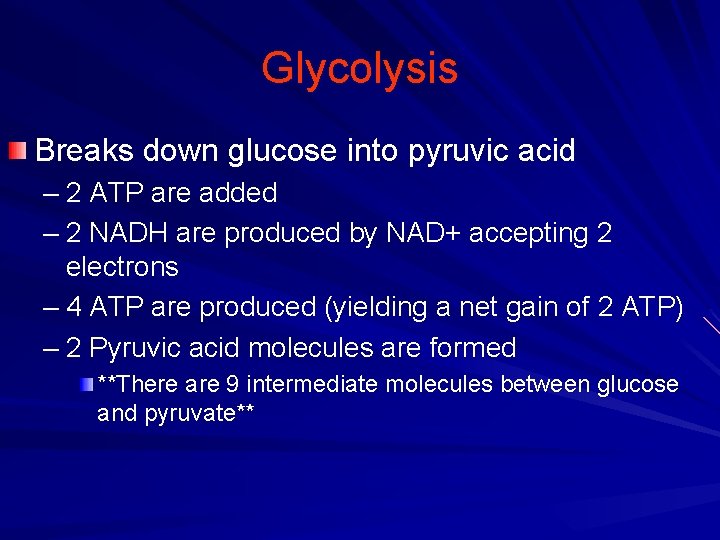
Glycolysis Breaks down glucose into pyruvic acid – 2 ATP are added – 2 NADH are produced by NAD+ accepting 2 electrons – 4 ATP are produced (yielding a net gain of 2 ATP) – 2 Pyruvic acid molecules are formed **There are 9 intermediate molecules between glucose and pyruvate**
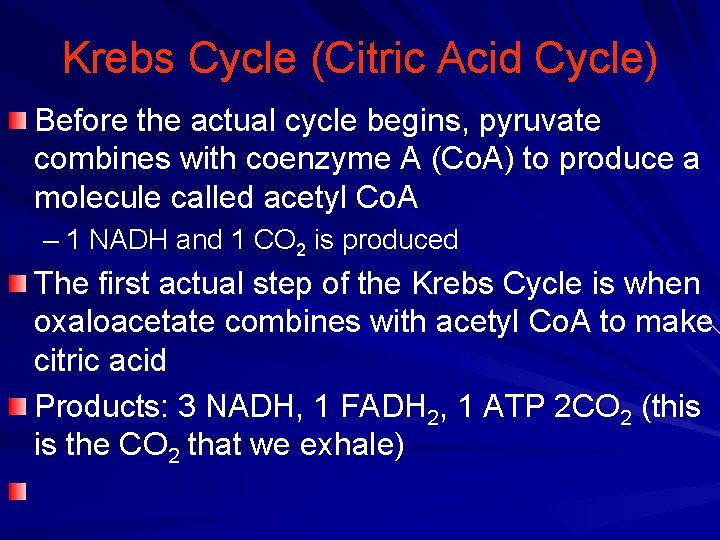
Krebs Cycle (Citric Acid Cycle) Before the actual cycle begins, pyruvate combines with coenzyme A (Co. A) to produce a molecule called acetyl Co. A – 1 NADH and 1 CO 2 is produced The first actual step of the Krebs Cycle is when oxaloacetate combines with acetyl Co. A to make citric acid Products: 3 NADH, 1 FADH 2, 1 ATP 2 CO 2 (this is the CO 2 that we exhale)
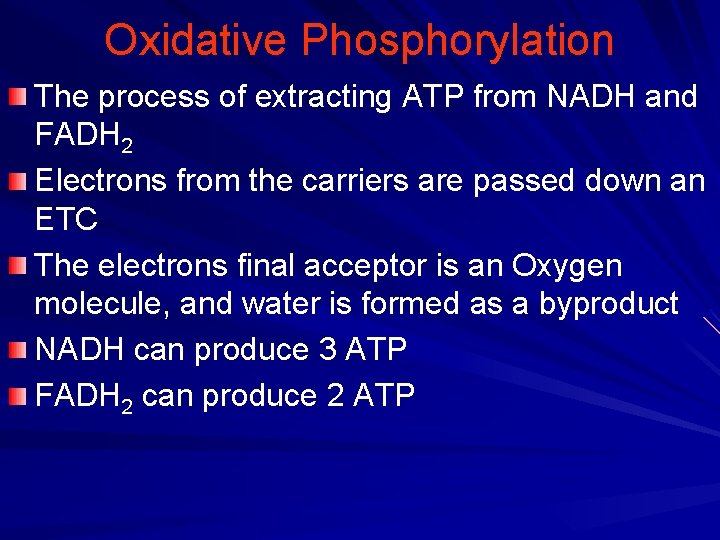
Oxidative Phosphorylation The process of extracting ATP from NADH and FADH 2 Electrons from the carriers are passed down an ETC The electrons final acceptor is an Oxygen molecule, and water is formed as a byproduct NADH can produce 3 ATP FADH 2 can produce 2 ATP
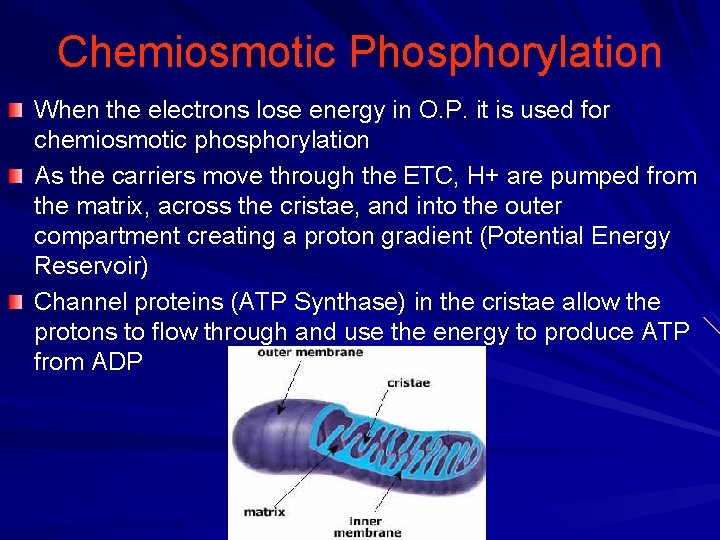
Chemiosmotic Phosphorylation When the electrons lose energy in O. P. it is used for chemiosmotic phosphorylation As the carriers move through the ETC, H+ are pumped from the matrix, across the cristae, and into the outer compartment creating a proton gradient (Potential Energy Reservoir) Channel proteins (ATP Synthase) in the cristae allow the protons to flow through and use the energy to produce ATP from ADP
2 Types of Phosphorylation Substrate Level – Occurs when a phosphate group and its energy is transferred to ADP to form ATP. The substrate molecule donates the phosphate (occurs in glycolysis) Oxidative Phosphorylation – Occurs when phosphate is transferred but not the energy. Energy is provided from electrons in the ETC
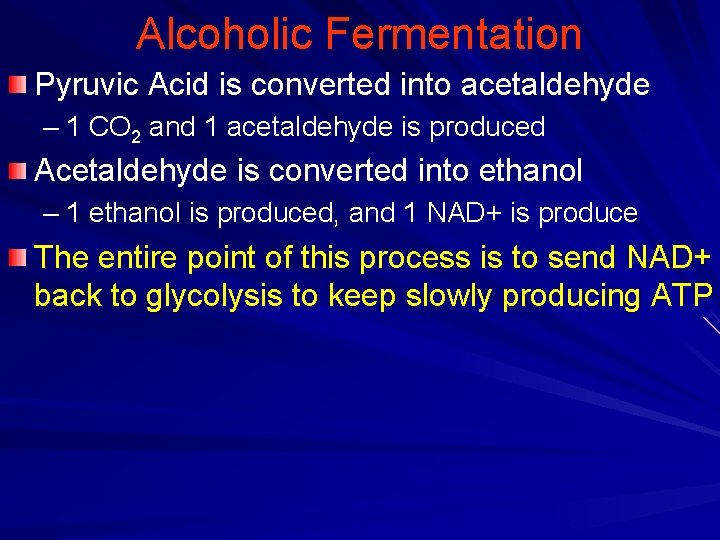
Alcoholic Fermentation Pyruvic Acid is converted into acetaldehyde – 1 CO 2 and 1 acetaldehyde is produced Acetaldehyde is converted into ethanol – 1 ethanol is produced, and 1 NAD+ is produce The entire point of this process is to send NAD+ back to glycolysis to keep slowly producing ATP
Lactic Acid Fermentation Pyruvic Acid is converted to lactic acid – NAD+ is given off and sent back to glycolysis
Energy and Exercise
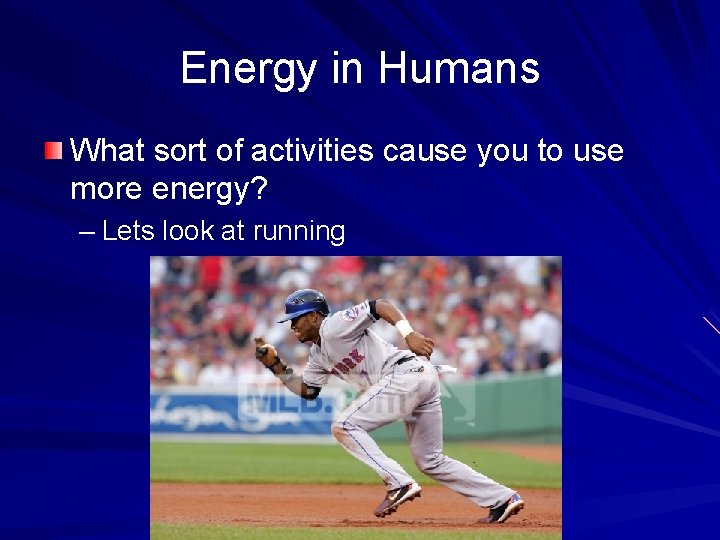
Energy in Humans What sort of activities cause you to use more energy? – Lets look at running
Human Body The human body has a limited amount of ATP stored in it The reserve can last about 90 seconds of intense exercise (like sprinting) What does this mean?
Intense Exercise Your body has 3 sources of ATP – Stored ATP – ATP’s from fermentation – ATP’s from cellular respiration The stored ATP will only last about 30 -40 seconds After that we begin to undergo lactic acid fermentation
Lactic Acid Fermentation We can use the ATP’s in lactic acid fermentation for about 90 seconds – What builds up in our muscles when this happens? – Lactic Acid The only way to break down and get rid of lactic acid is by using oxygen
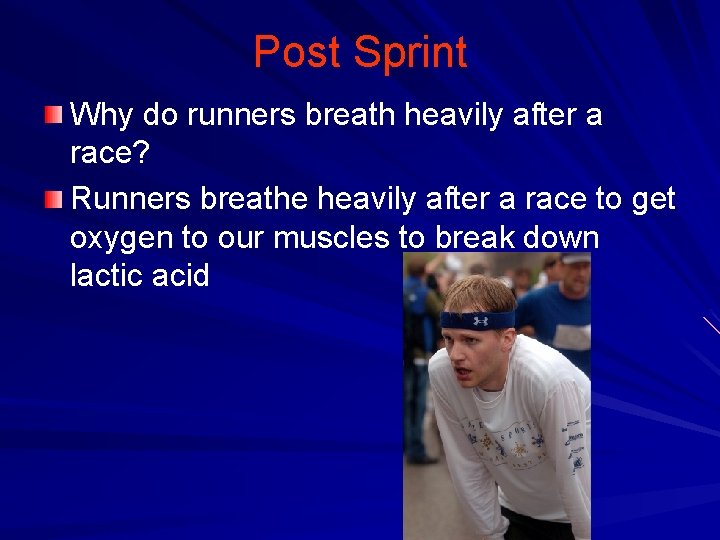
Post Sprint Why do runners breath heavily after a race? Runners breathe heavily after a race to get oxygen to our muscles to break down lactic acid
Running a Mile We have just said that we can only generate ATP with lactic acid fermentation for about 90 seconds. What if you were running a mile?
Long Term Energy Lactic Acid releases energy very quickly (but can only last a short time) When running a mile or more, your body will switch over to cellular respiration (instead of fermentation) Cellular respiration releases energy much more slowly This is why athletes must pace themselves during a race
Energy Sources The body stores energy in a carbohydrate known as glycogen After 15 -20 minutes of physical activity, the body will use other sources for energy – Fats – Proteins