
CELLULAR RESPIRATION OVERVIEW C 6 H 12 O
- Slides: 22
CELLULAR RESPIRATION
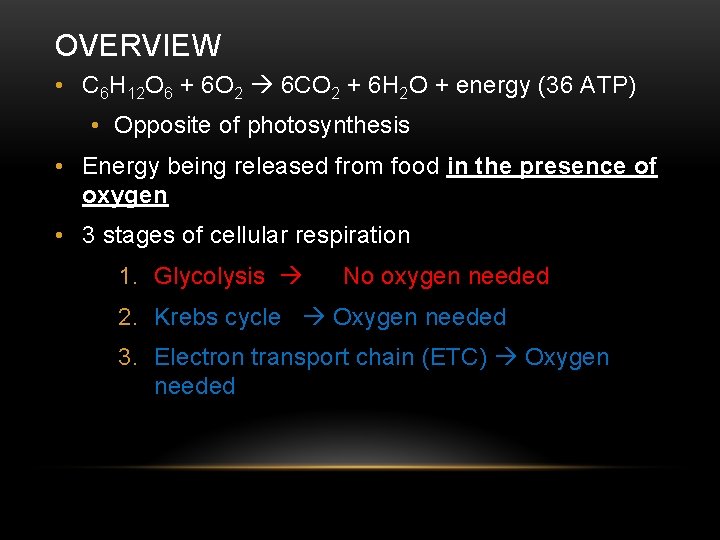
OVERVIEW • C 6 H 12 O 6 + 6 O 2 6 CO 2 + 6 H 2 O + energy (36 ATP) • Opposite of photosynthesis • Energy being released from food in the presence of oxygen • 3 stages of cellular respiration 1. Glycolysis No oxygen needed 2. Krebs cycle Oxygen needed 3. Electron transport chain (ETC) Oxygen needed
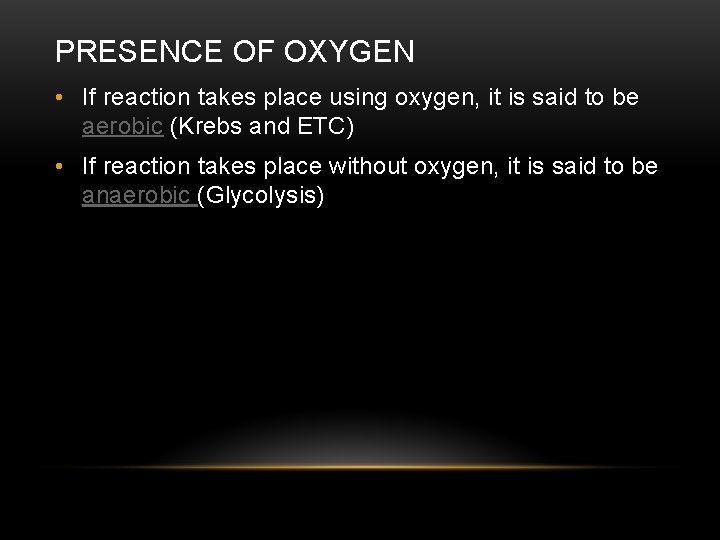
PRESENCE OF OXYGEN • If reaction takes place using oxygen, it is said to be aerobic (Krebs and ETC) • If reaction takes place without oxygen, it is said to be anaerobic (Glycolysis)
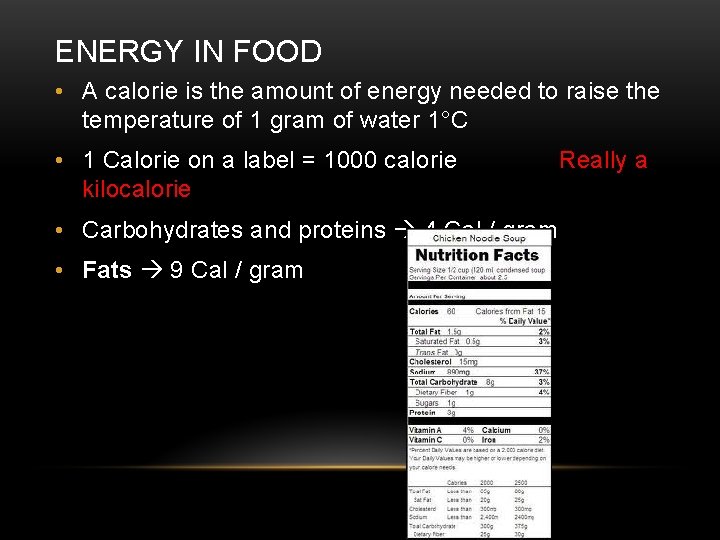
ENERGY IN FOOD • A calorie is the amount of energy needed to raise the temperature of 1 gram of water 1°C • 1 Calorie on a label = 1000 calorie kilocalorie • Carbohydrates and proteins 4 Cal / gram • Fats 9 Cal / gram Really a
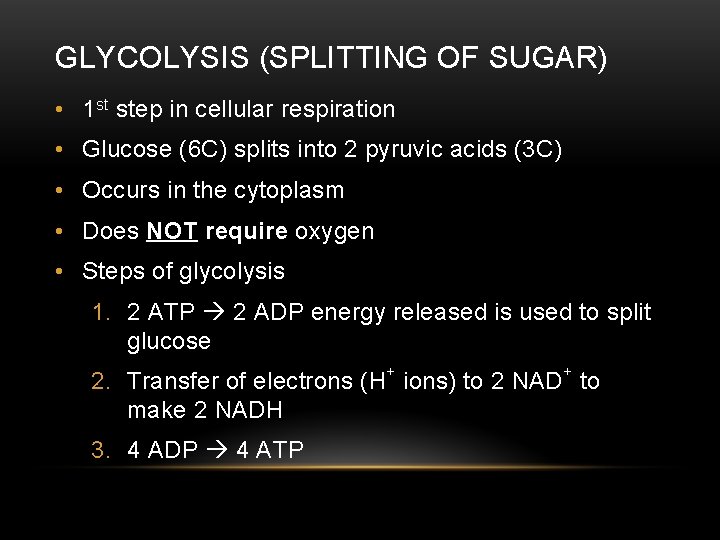
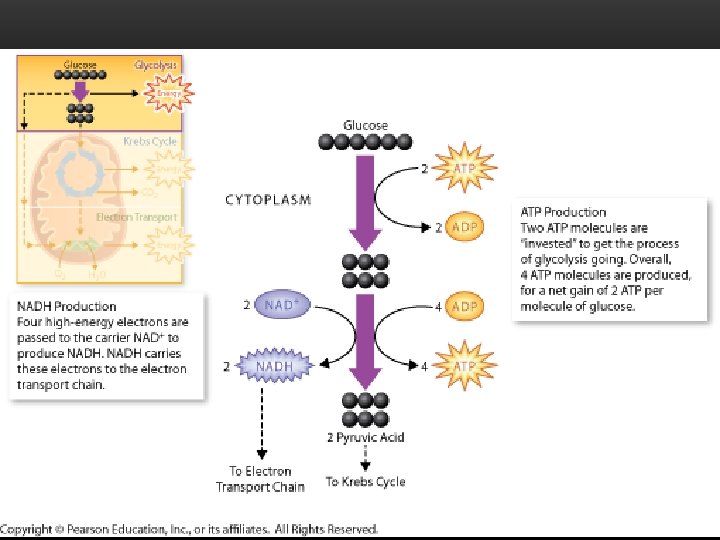
GLYCOLYSIS (SPLITTING OF SUGAR) • 1 st step in cellular respiration • Glucose (6 C) splits into 2 pyruvic acids (3 C) • Occurs in the cytoplasm • Does NOT require oxygen • Steps of glycolysis 1. 2 ATP 2 ADP energy released is used to split glucose 2. Transfer of electrons (H+ ions) to 2 NAD+ to make 2 NADH 3. 4 ADP 4 ATP
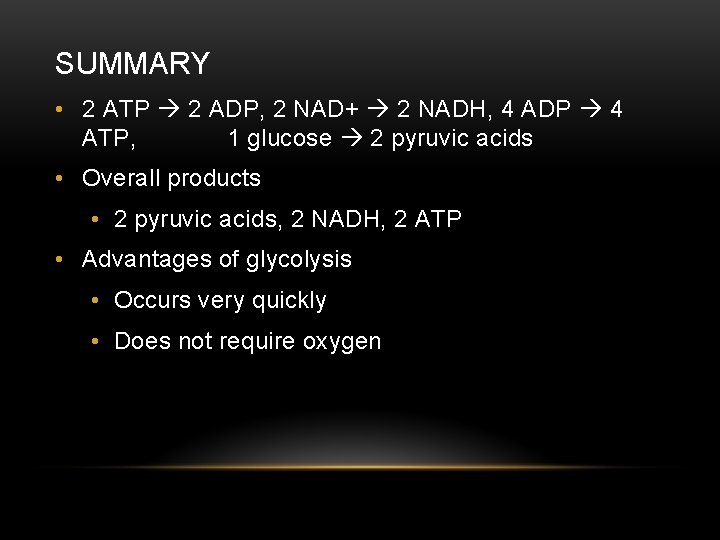
SUMMARY • 2 ATP 2 ADP, 2 NAD+ 2 NADH, 4 ADP 4 ATP, 1 glucose 2 pyruvic acids • Overall products • 2 pyruvic acids, 2 NADH, 2 ATP • Advantages of glycolysis • Occurs very quickly • Does not require oxygen
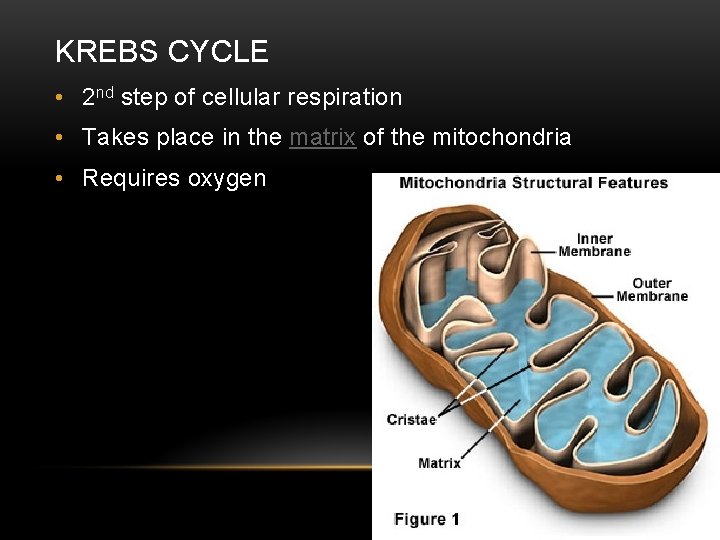
KREBS CYCLE • 2 nd step of cellular respiration • Takes place in the matrix of the mitochondria • Requires oxygen
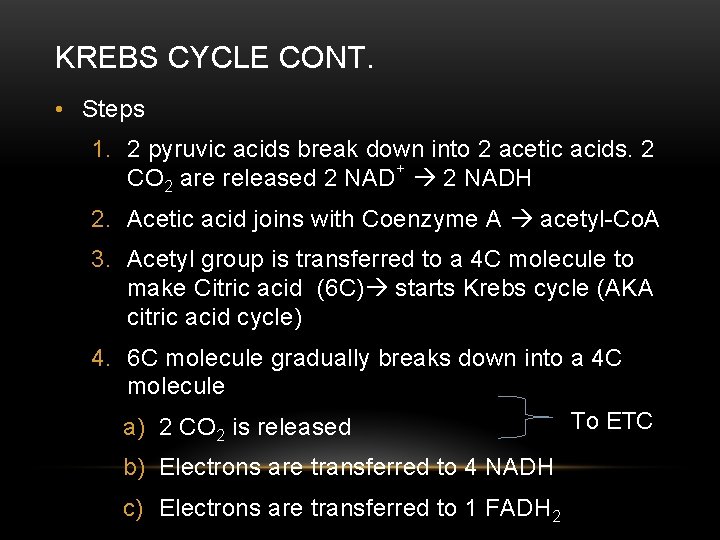
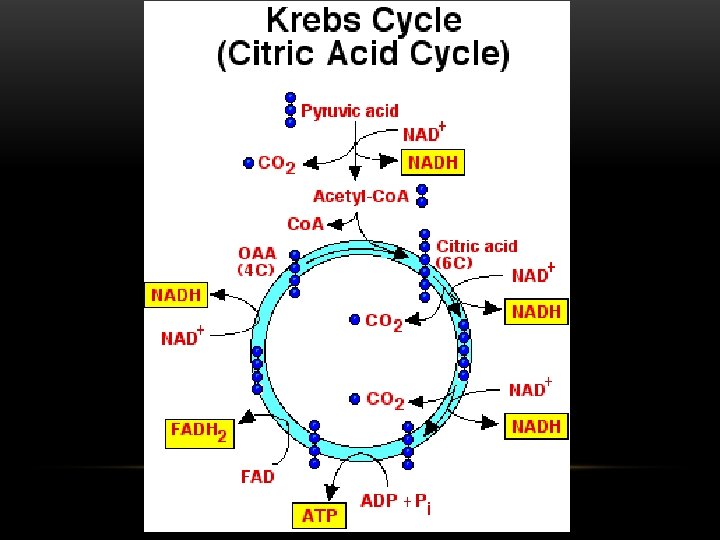
KREBS CYCLE CONT. • Steps 1. 2 pyruvic acids break down into 2 acetic acids. 2 CO 2 are released 2 NAD+ 2 NADH 2. Acetic acid joins with Coenzyme A acetyl-Co. A 3. Acetyl group is transferred to a 4 C molecule to make Citric acid (6 C) starts Krebs cycle (AKA citric acid cycle) 4. 6 C molecule gradually breaks down into a 4 C molecule To ETC a) 2 CO is released 2 b) Electrons are transferred to 4 NADH c) Electrons are transferred to 1 FADH 2
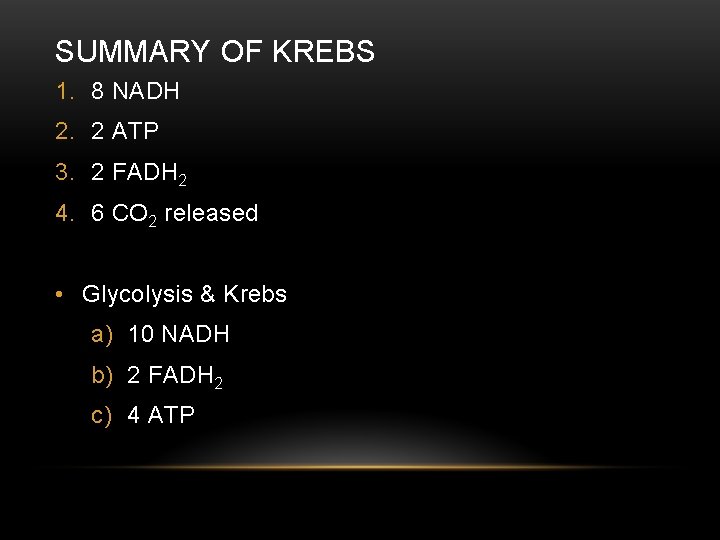
SUMMARY OF KREBS 1. 8 NADH 2. 2 ATP 3. 2 FADH 2 4. 6 CO 2 released • Glycolysis & Krebs a) 10 NADH b) 2 FADH 2 c) 4 ATP
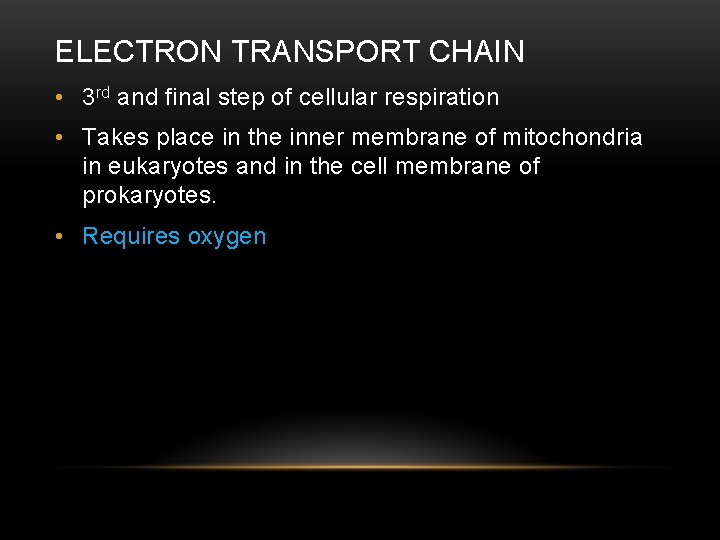
ELECTRON TRANSPORT CHAIN • 3 rd and final step of cellular respiration • Takes place in the inner membrane of mitochondria in eukaryotes and in the cell membrane of prokaryotes. • Requires oxygen
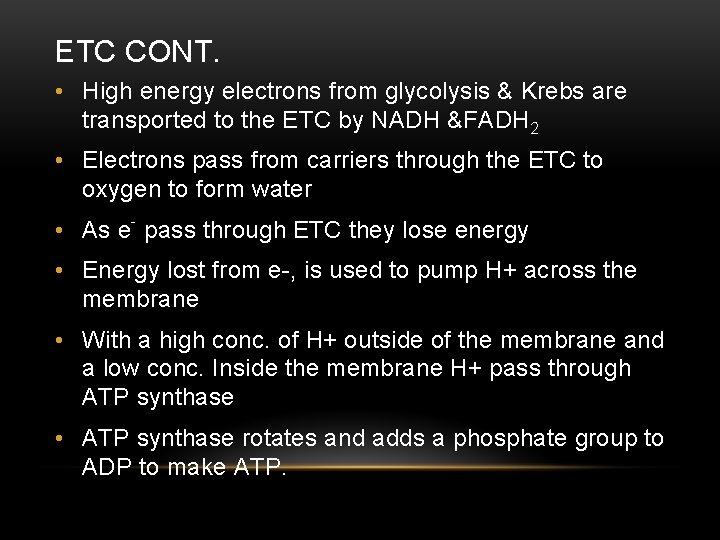
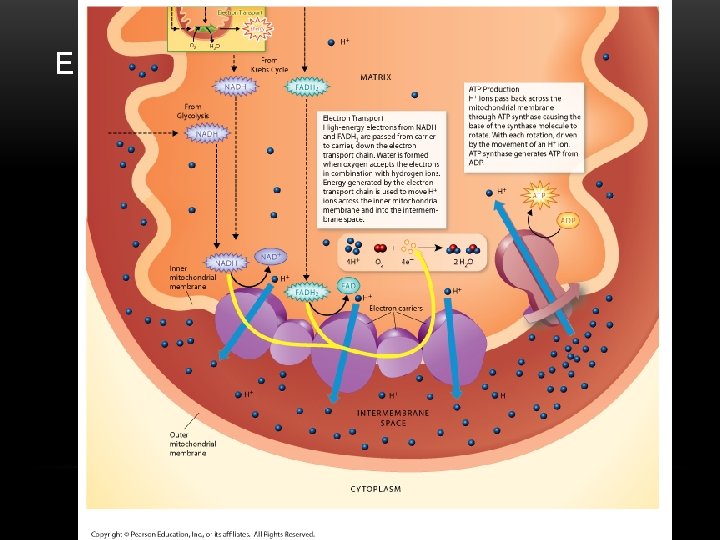
ETC CONT. • High energy electrons from glycolysis & Krebs are transported to the ETC by NADH &FADH 2 • Electrons pass from carriers through the ETC to oxygen to form water • As e- pass through ETC they lose energy • Energy lost from e-, is used to pump H+ across the membrane • With a high conc. of H+ outside of the membrane and a low conc. Inside the membrane H+ pass through ATP synthase • ATP synthase rotates and adds a phosphate group to ADP to make ATP.
ELECTRON TRANSPORT CHAIN
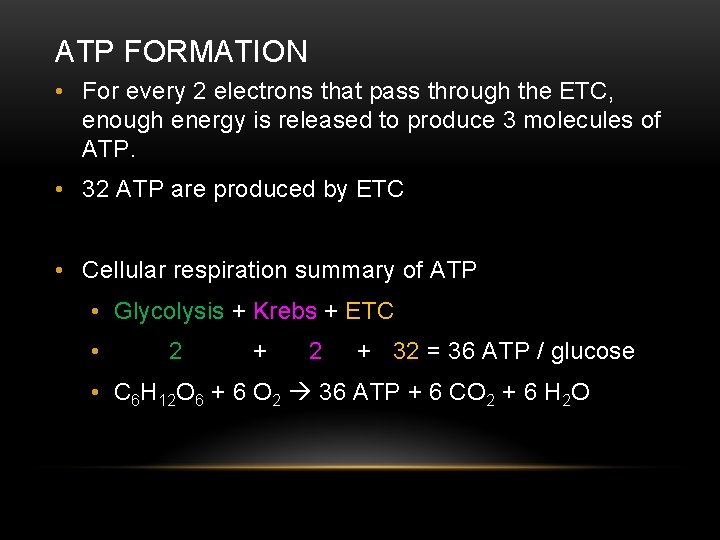
ATP FORMATION • For every 2 electrons that pass through the ETC, enough energy is released to produce 3 molecules of ATP. • 32 ATP are produced by ETC • Cellular respiration summary of ATP • Glycolysis + Krebs + ETC • 2 + 32 = 36 ATP / glucose • C 6 H 12 O 6 + 6 O 2 36 ATP + 6 CO 2 + 6 H 2 O
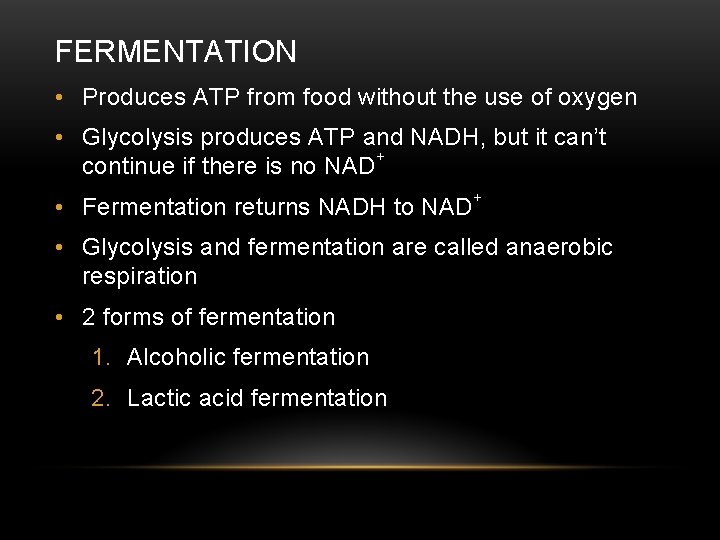
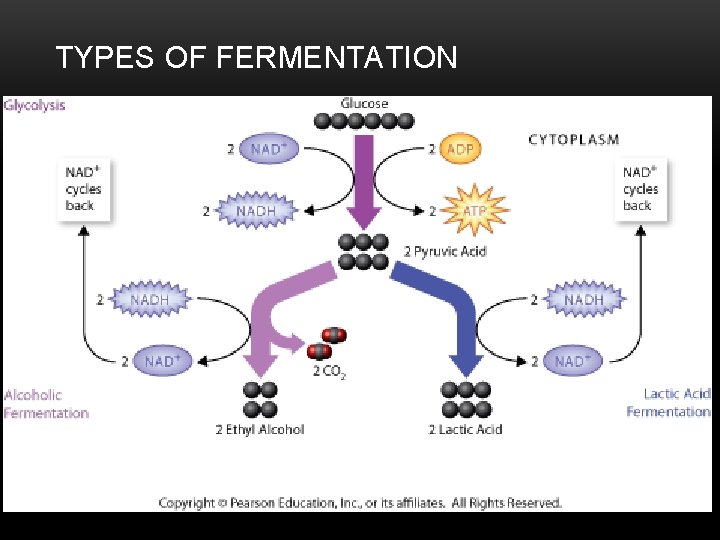
FERMENTATION • Produces ATP from food without the use of oxygen • Glycolysis produces ATP and NADH, but it can’t continue if there is no NAD+ • Fermentation returns NADH to NAD+ • Glycolysis and fermentation are called anaerobic respiration • 2 forms of fermentation 1. Alcoholic fermentation 2. Lactic acid fermentation
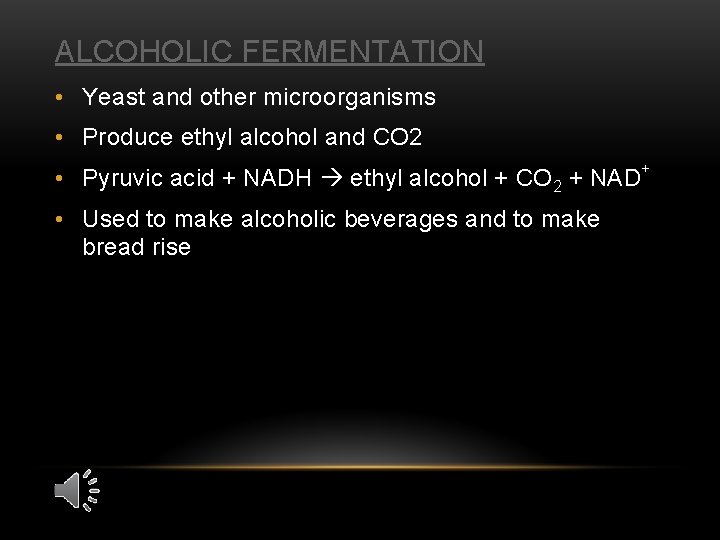
ALCOHOLIC FERMENTATION • Yeast and other microorganisms • Produce ethyl alcohol and CO 2 • Pyruvic acid + NADH ethyl alcohol + CO 2 + NAD+ • Used to make alcoholic beverages and to make bread rise
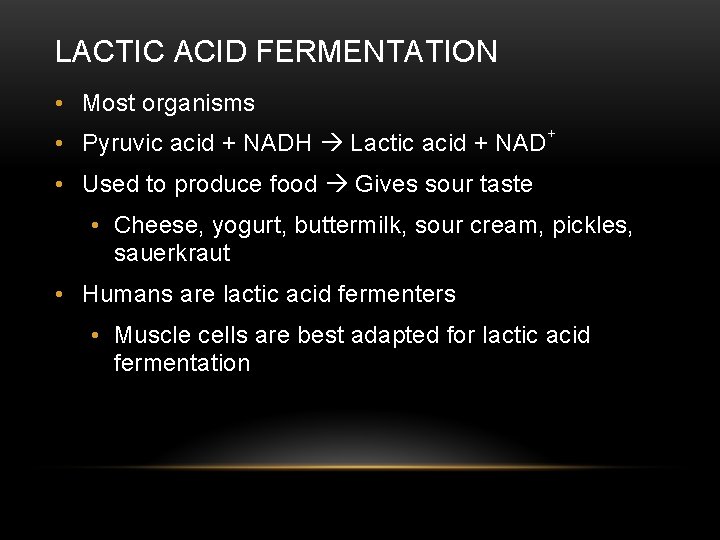
LACTIC ACID FERMENTATION • Most organisms • Pyruvic acid + NADH Lactic acid + NAD+ • Used to produce food Gives sour taste • Cheese, yogurt, buttermilk, sour cream, pickles, sauerkraut • Humans are lactic acid fermenters • Muscle cells are best adapted for lactic acid fermentation
TYPES OF FERMENTATION
ENERGY SUPPLY • Three sources of ATP 1. ATP already in the muscles 2. ATP make through lactic acid fermentation 3. ATP made from cellular respiration
SHORT TERM ENERGY • Muscles only contain enough ATP for a few seconds of intense activity • After that ATP is produced by lactic acid fermentation • Makes enough ATP for about 90 seconds of activity • Lactic acid builds up in muscles and takes excess oxygen to get rid of acid • In quick bursts of energy, the body uses ATP already in the body along with ATP made through lactic acid fermentation.
LONG TERM ENERGY • For activity lasting longer than 90 seconds, cellular respiration is the only way to continue producing ATP • Glycogen in the muscles supplies energy for 15 – 20 minutes. • After that other stored molecules (such as fats) are broken down.