
Cellular Respiration Overview 1 SUN 2 LIGHT ENERGY

- Slides: 41
Cellular Respiration
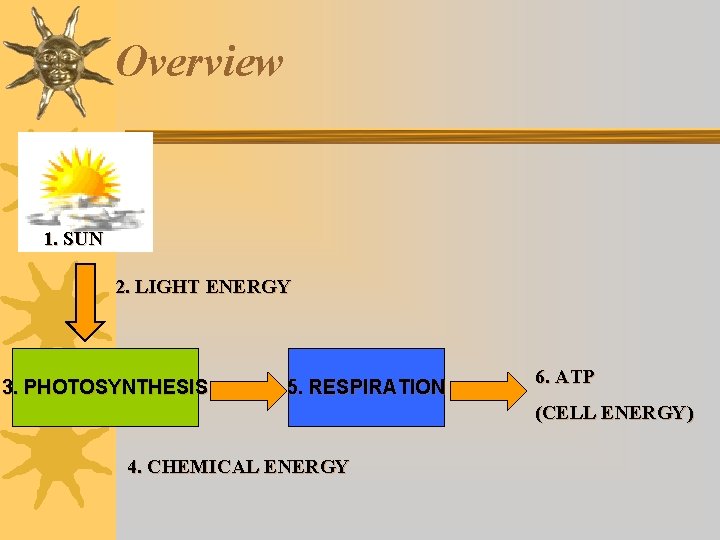
Overview 1. SUN 2. LIGHT ENERGY 3. PHOTOSYNTHESIS 5. RESPIRATION 6. ATP (CELL ENERGY) 4. CHEMICAL ENERGY
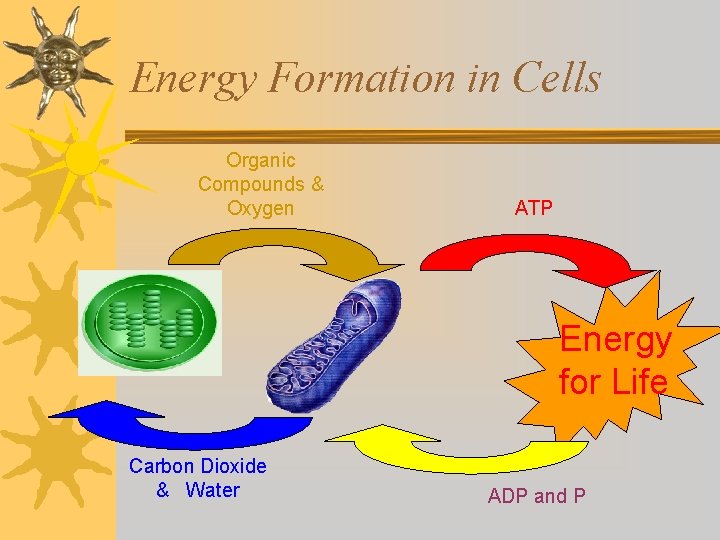
Energy Formation in Cells Organic Compounds & Oxygen ATP Energy for Life Carbon Dioxide & Water ADP and P
What is Respiration? ¬The process of respiration is where organisms convert chemical energy into cellular energy, which is known as ATP.
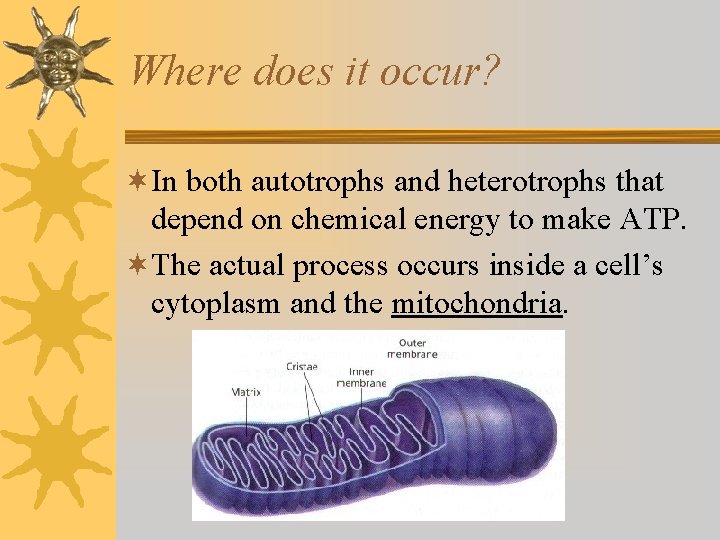
Where does it occur? ¬In both autotrophs and heterotrophs that depend on chemical energy to make ATP. ¬The actual process occurs inside a cell’s cytoplasm and the mitochondria.
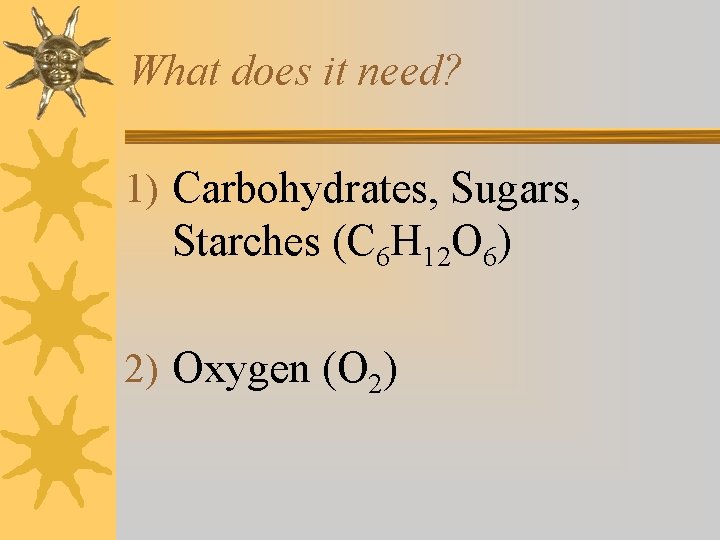
What does it need? 1) Carbohydrates, Sugars, Starches (C 6 H 12 O 6) 2) Oxygen (O 2)
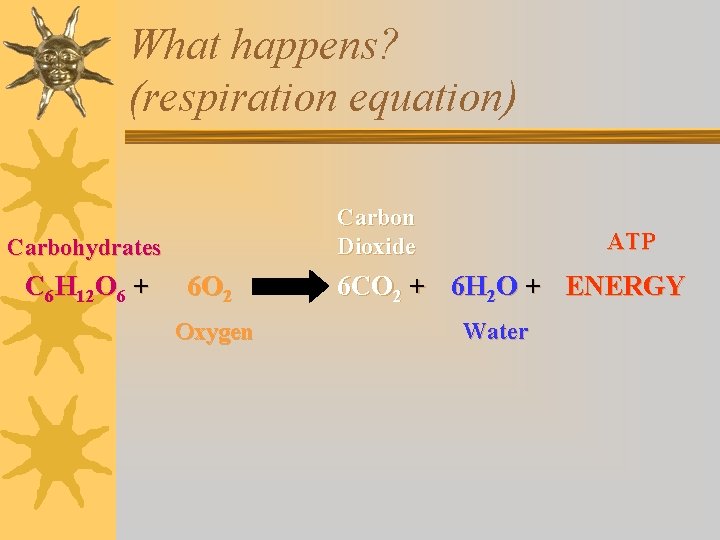
What happens? (respiration equation) Carbon Dioxide Carbohydrates C 6 H 12 O 6 + 6 O 2 Oxygen ATP 6 CO 2 + 6 H 2 O + ENERGY Water
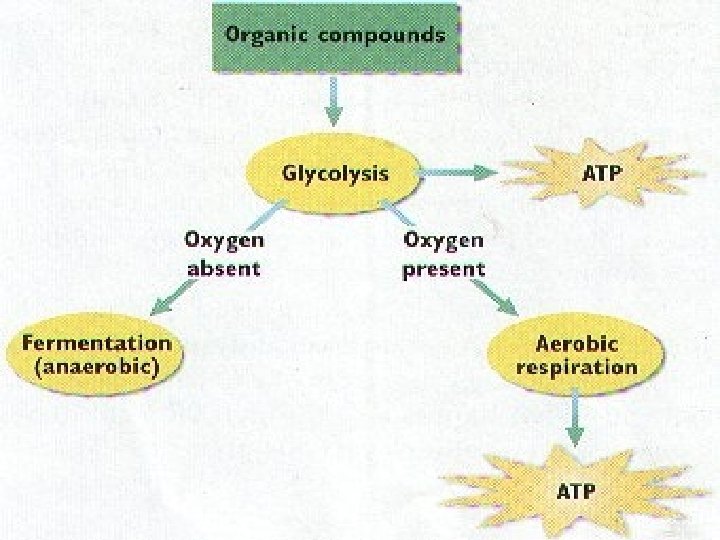
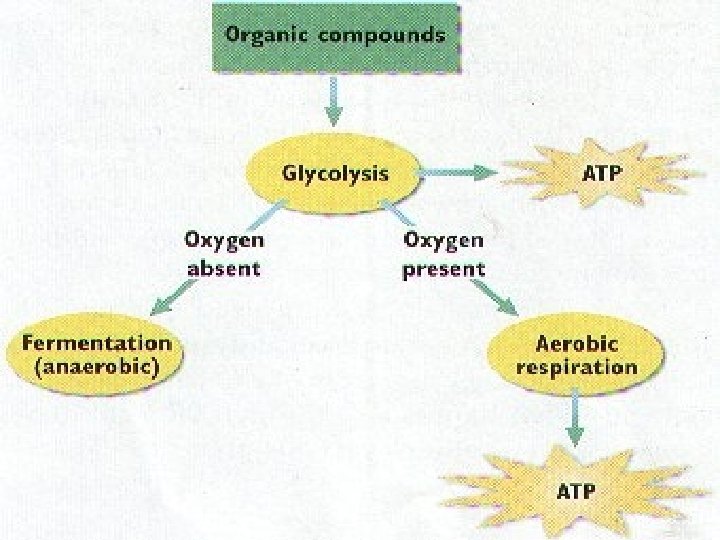
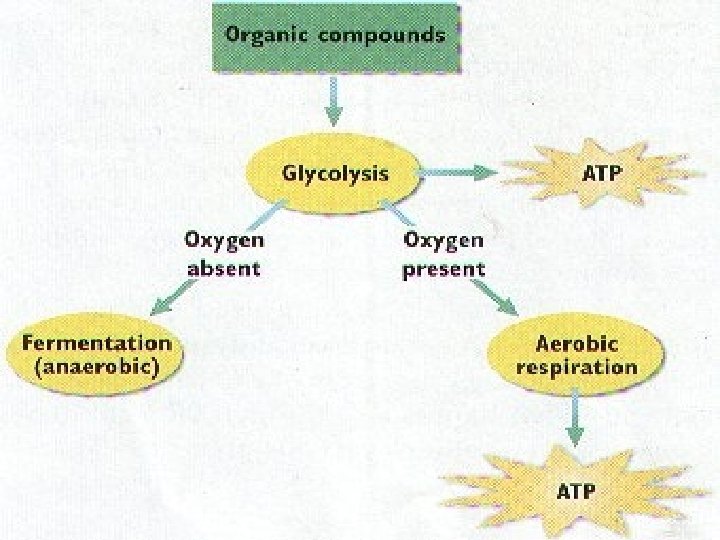
How does this happen? ¬The process of respiration is divided into different stages depending on whether or not oxygen is present. ¬When oxygen is present more ATP can be made (up to 20 times more).
How does this happen? ¬Respiration that uses oxygen is called aerobic. ¬Respiration that does not use oxygen is called anaerobic or fermentation.
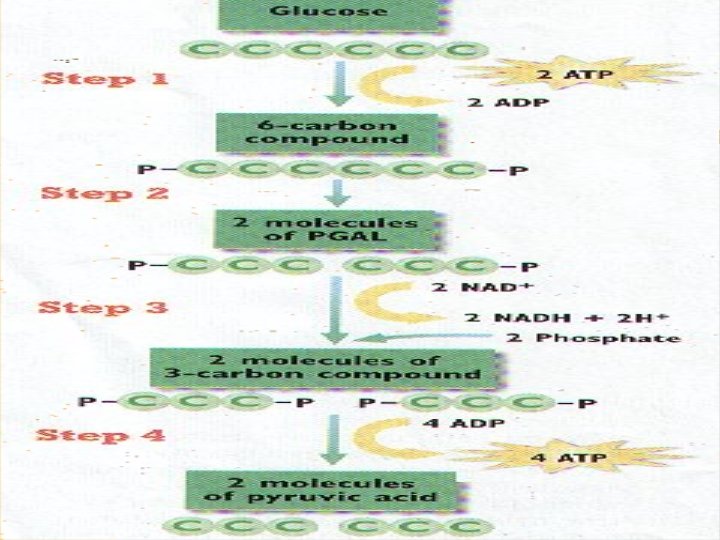
Stage 1 - Glycolysis ¬A 6 -carbon molecule of glucose is separated into two 3 -carbon pyruvate molecules and makes some ATP and NADH. ¬This process occurs in 4 steps that take place in the cytoplasm and does not require oxygen to be present.
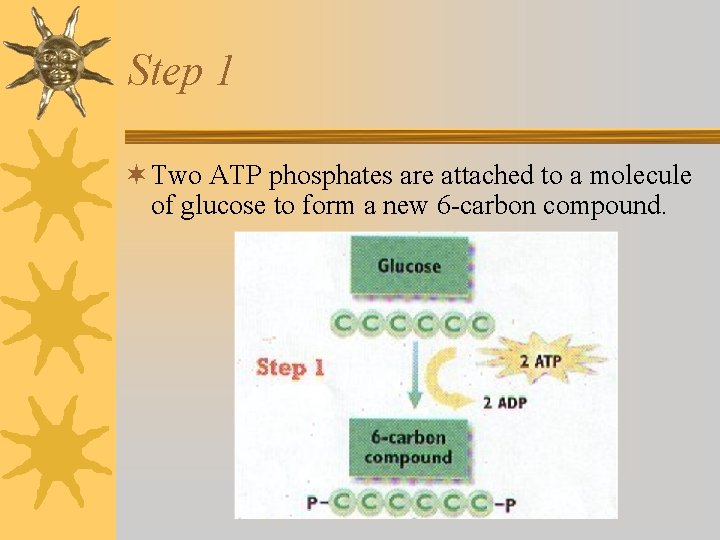
Step 1 ¬ Two ATP phosphates are attached to a molecule of glucose to form a new 6 -carbon compound.
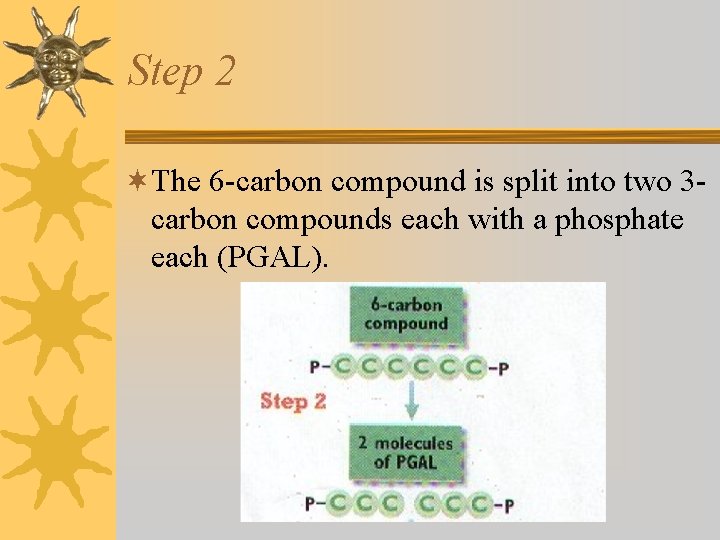
Step 2 ¬The 6 -carbon compound is split into two 3 carbon compounds each with a phosphate each (PGAL).
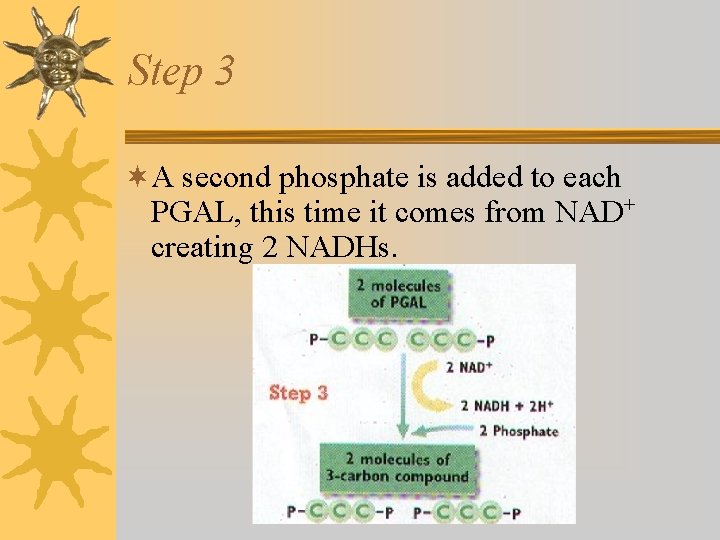
Step 3 ¬A second phosphate is added to each PGAL, this time it comes from NAD+ creating 2 NADHs.
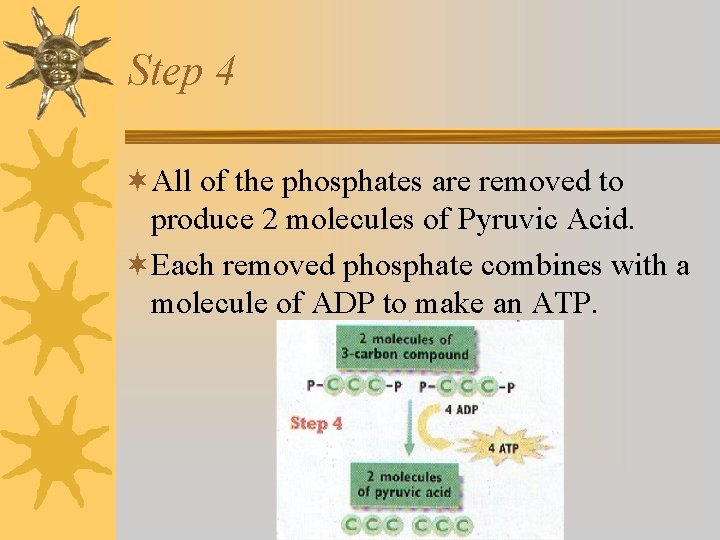
Step 4 ¬All of the phosphates are removed to produce 2 molecules of Pyruvic Acid. ¬Each removed phosphate combines with a molecule of ADP to make an ATP.
Glycolysis Summary ¬ 2 ATP were used to start the process. ¬ 4 ATP were produced from this process. ¬This gives a total net yield of 2 ATP.
A. Aerobic Respiration ¬If oxygen is present the pyruvic acid produced during glycolysis continues on to aerobic respiration. ¬Aerobic respiration takes place within the mitochondria.
How does it work? ¬ Aerobic Respiration has 2 stages: i) Krebs Cycle ii) Electron Transport Chain
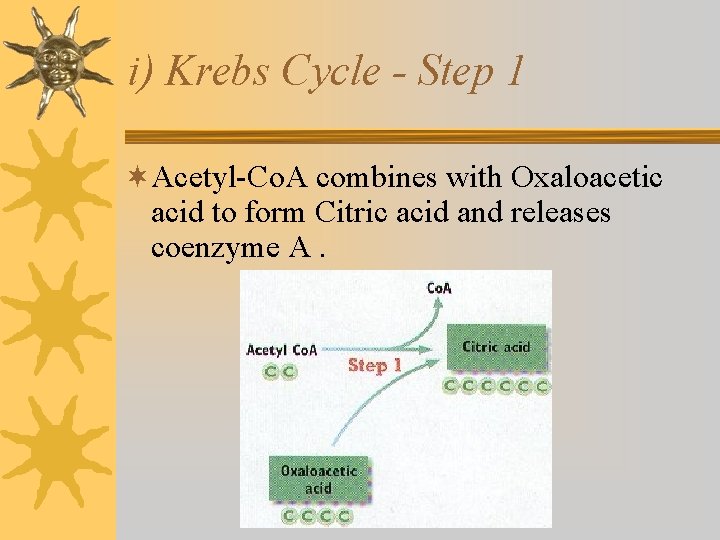
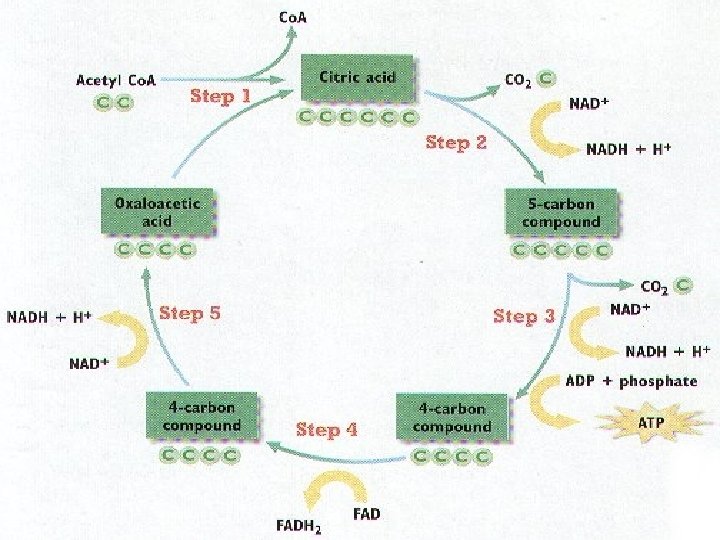
i) Krebs Cycle - Step 1 ¬Acetyl-Co. A combines with Oxaloacetic acid to form Citric acid and releases coenzyme A.
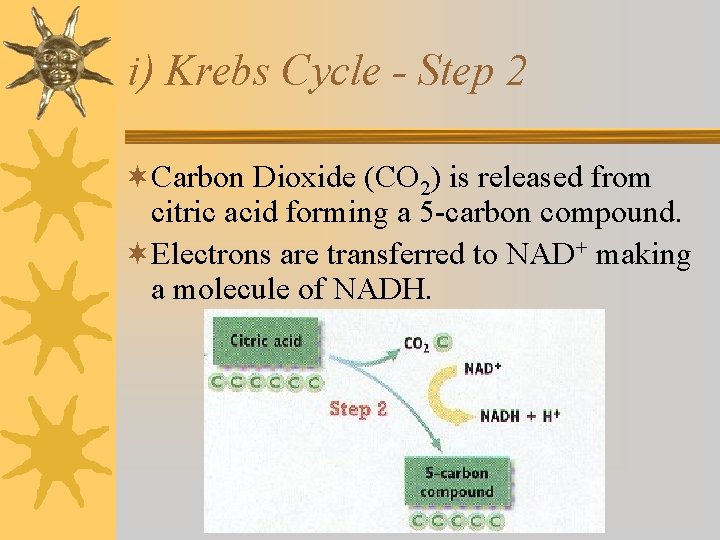
i) Krebs Cycle - Step 2 ¬Carbon Dioxide (CO 2) is released from citric acid forming a 5 -carbon compound. ¬Electrons are transferred to NAD+ making a molecule of NADH.
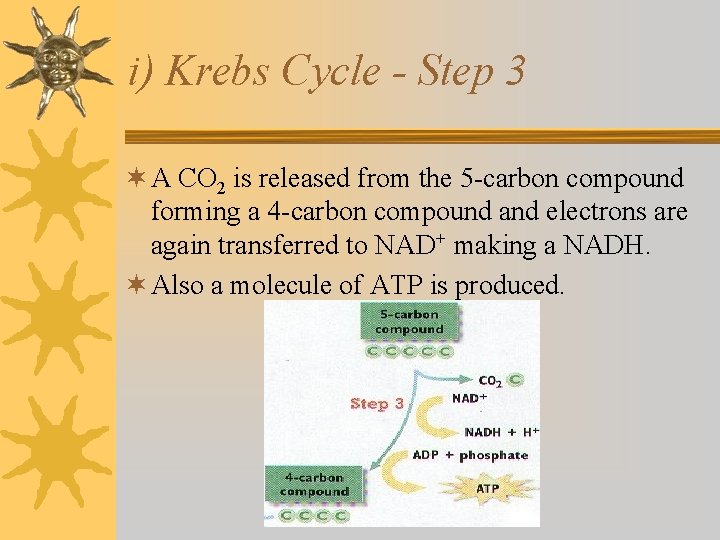
i) Krebs Cycle - Step 3 ¬ A CO 2 is released from the 5 -carbon compound forming a 4 -carbon compound and electrons are again transferred to NAD+ making a NADH. ¬ Also a molecule of ATP is produced.
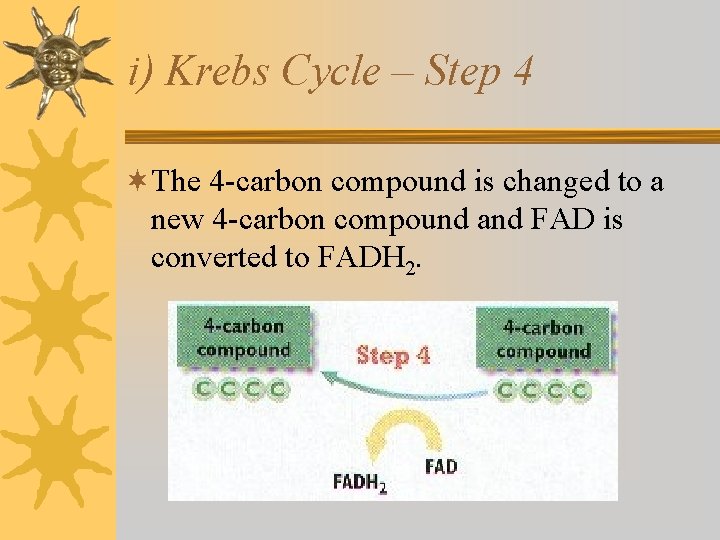
i) Krebs Cycle – Step 4 ¬The 4 -carbon compound is changed to a new 4 -carbon compound and FAD is converted to FADH 2.
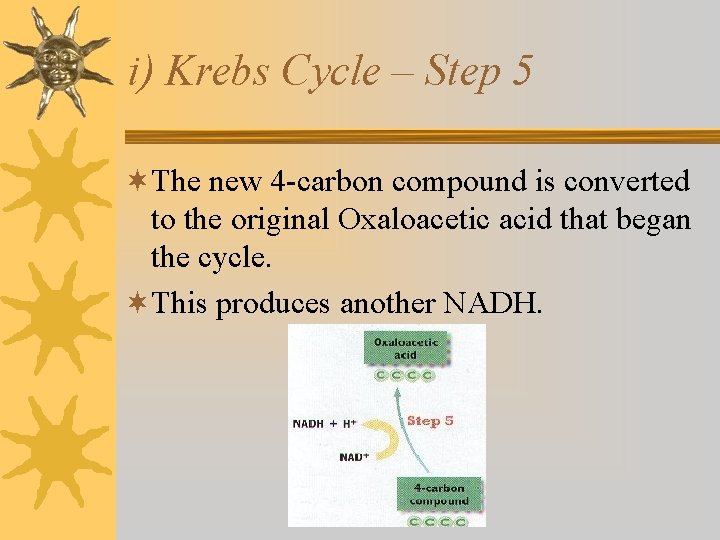
i) Krebs Cycle – Step 5 ¬The new 4 -carbon compound is converted to the original Oxaloacetic acid that began the cycle. ¬This produces another NADH.
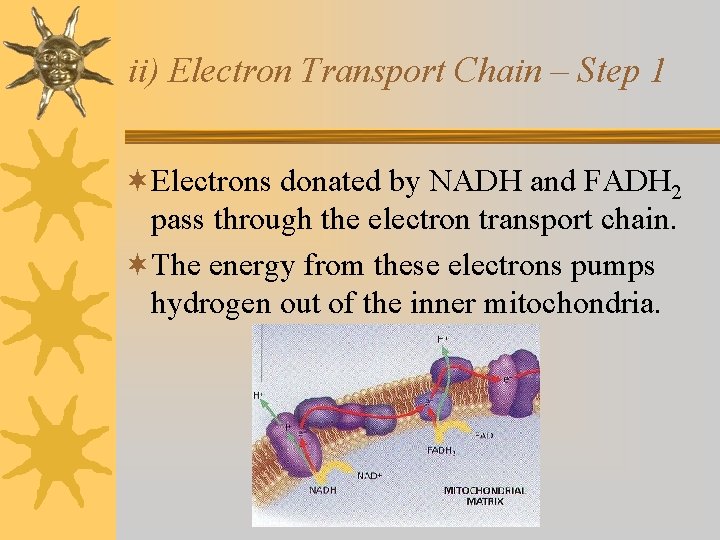
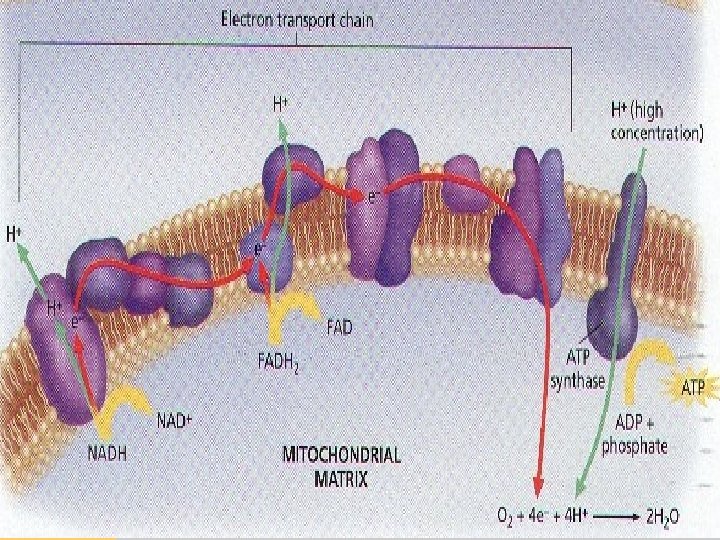
ii) Electron Transport Chain – Step 1 ¬Electrons donated by NADH and FADH 2 pass through the electron transport chain. ¬The energy from these electrons pumps hydrogen out of the inner mitochondria.
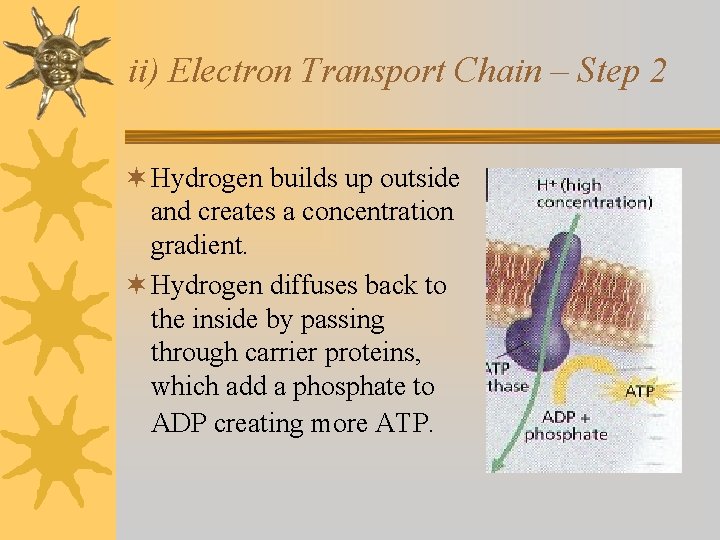
ii) Electron Transport Chain – Step 2 ¬ Hydrogen builds up outside and creates a concentration gradient. ¬ Hydrogen diffuses back to the inside by passing through carrier proteins, which add a phosphate to ADP creating more ATP.
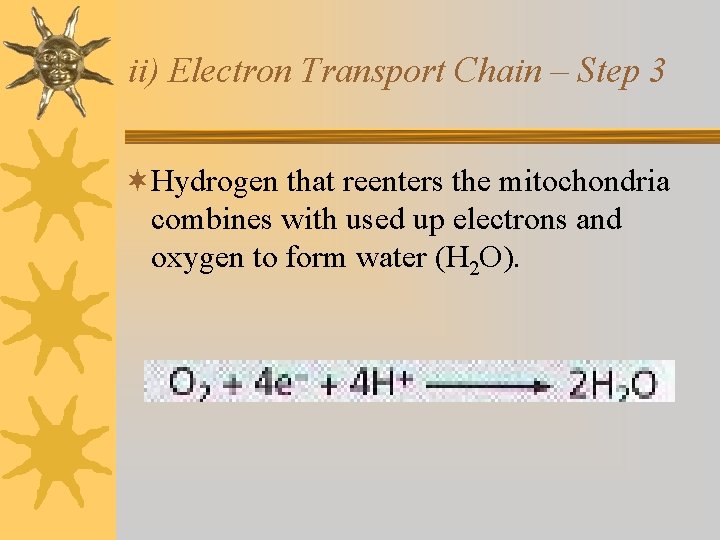
ii) Electron Transport Chain – Step 3 ¬Hydrogen that reenters the mitochondria combines with used up electrons and oxygen to form water (H 2 O).
B. Anaerobic Respiration ¬If oxygen is not present the pyruvate produced during glycolysis continues on to anaerobic respiration. ¬Anaerobic respiration takes place in the cytoplasm.
How does it work? ¬ Anaerobic Respiration has 2 types: i) Lactic Acid Fermentation ii) Alcoholic Fermentation
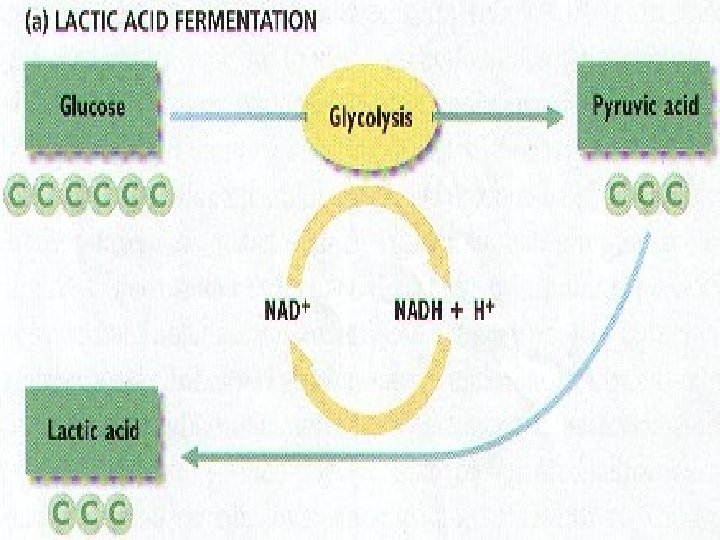
i) Lactic Acid Fermentation ¬Pyruvate is changed to lactate by removing two hydrogen. ¬This process is by bacteria and fungi to produce foods like yogurt and cheese. ¬Also used by muscle cells when oxygen is not present (called lactic acid build up. )
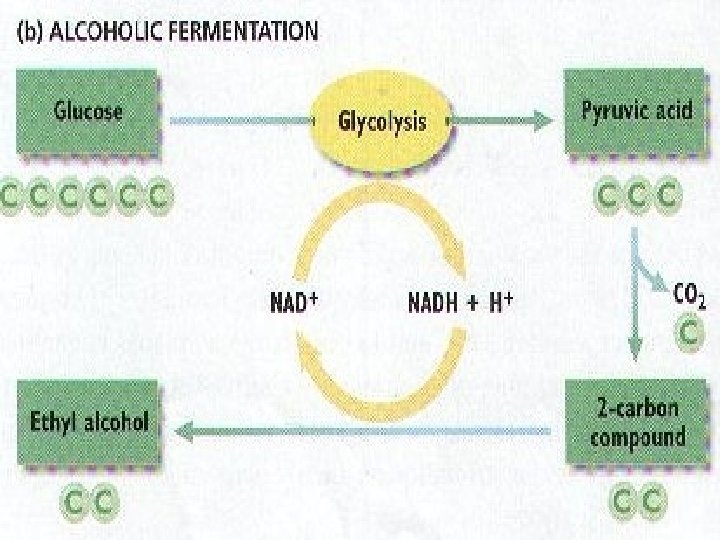
ii) Alcoholic Fermentation ¬Pyruvate is changed to Ethyl Alcohol by first removing CO 2 and then 2 hydrogen. ¬This process is used by yeast to prepare many foods and beverages. ¬The release of CO 2 causes dough to rise.
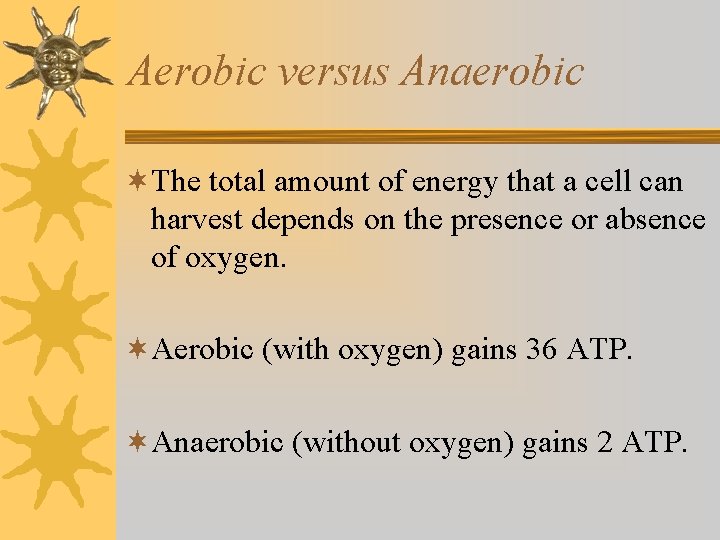
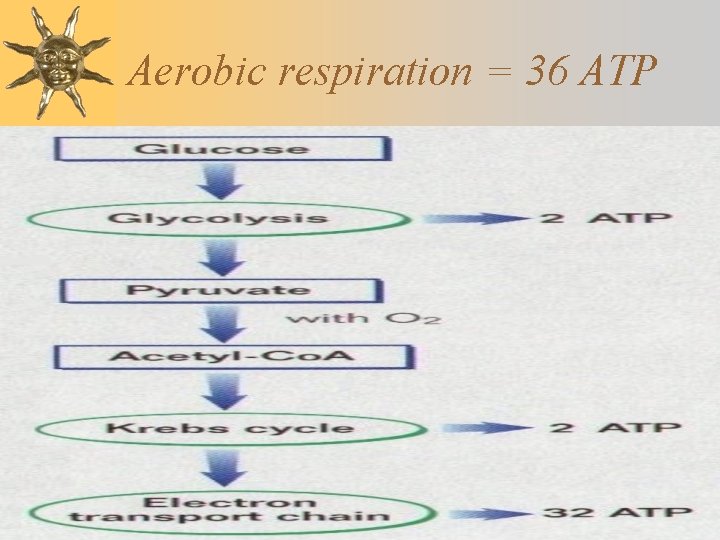
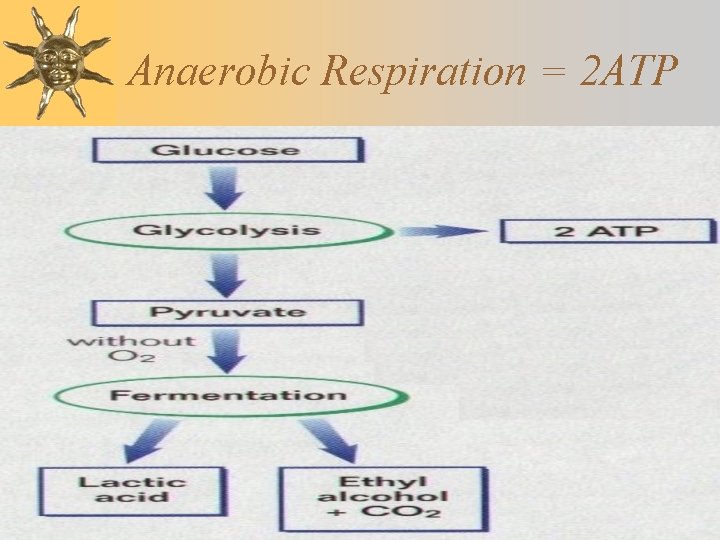
Aerobic versus Anaerobic ¬The total amount of energy that a cell can harvest depends on the presence or absence of oxygen. ¬Aerobic (with oxygen) gains 36 ATP. ¬Anaerobic (without oxygen) gains 2 ATP.
Aerobic respiration = 36 ATP
Anaerobic Respiration = 2 ATP
Any Questions? ¬“Education is our passport to the future, for tomorrow belongs to the people who prepare for it today. ” --Malcolm X ¬“Living on Earth is expensive, but it does include a free trip around the sun every year. ” --Unknown