
Cellular Respiration Mr Fletcher Why Do I Need
- Slides: 23
Cellular Respiration Mr. Fletcher
Why Do I Need To Learn About This? • Without respiration, you wouldn’t have enough energy to carry out functions necessary for survival. • By learning about cellular respiration, you may be able to find ways to make your body more efficient. • Respiration: When cells break down simple food molecules and release the energy they contain.
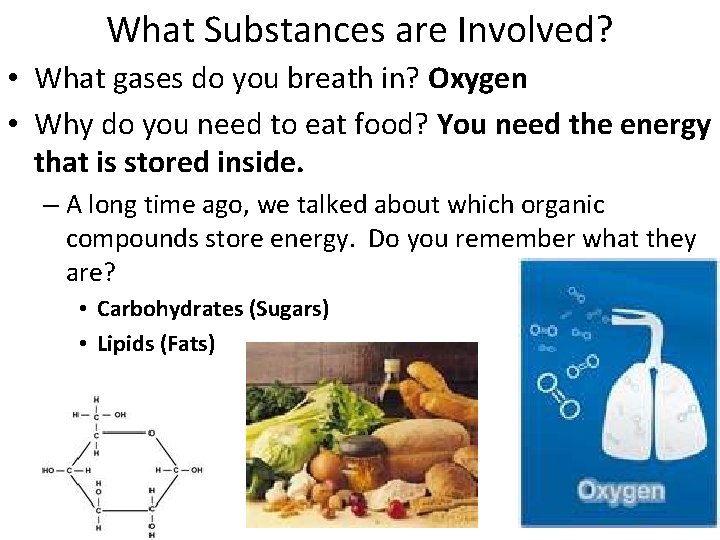
What Substances are Involved? • What gases do you breath in? Oxygen • Why do you need to eat food? You need the energy that is stored inside. – A long time ago, we talked about which organic compounds store energy. Do you remember what they are? • Carbohydrates (Sugars) • Lipids (Fats)
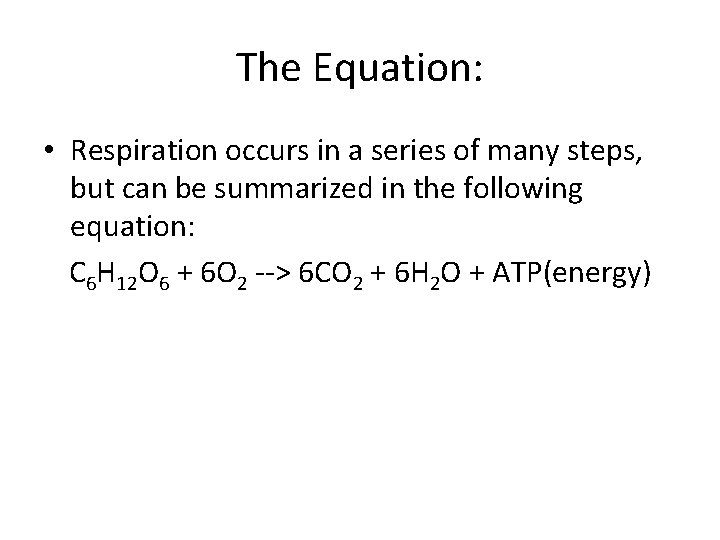
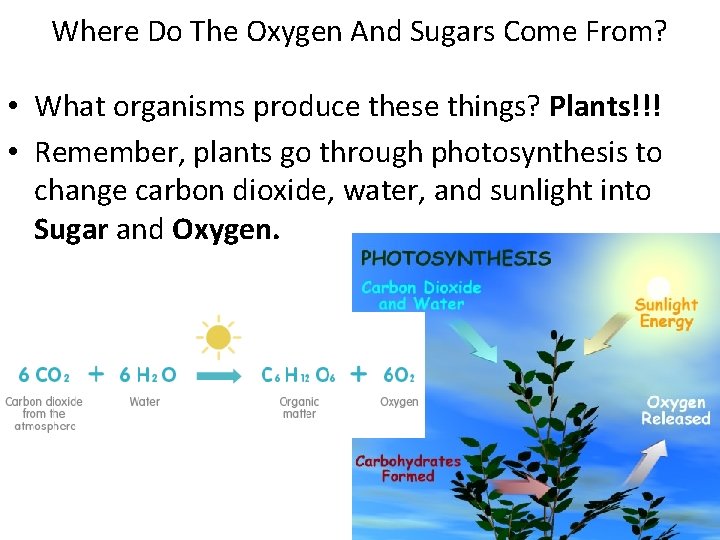
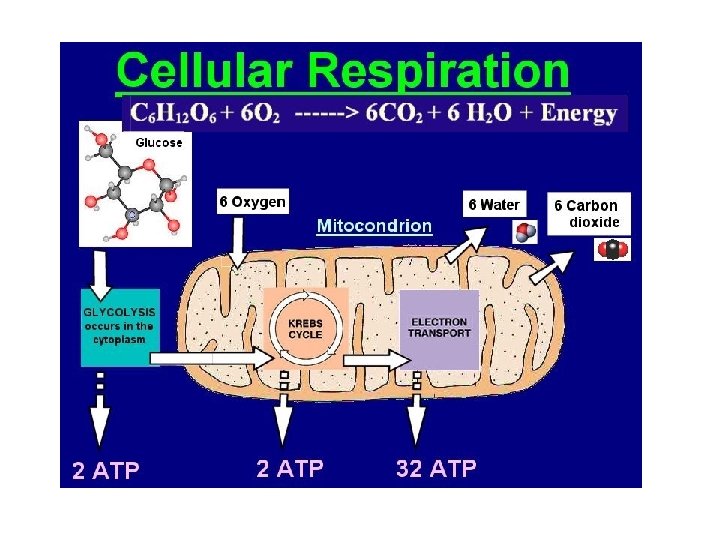
The Equation: • Respiration occurs in a series of many steps, but can be summarized in the following equation: C 6 H 12 O 6 + 6 O 2 --> 6 CO 2 + 6 H 2 O + ATP(energy)
Where Do The Oxygen And Sugars Come From? • What organisms produce these things? Plants!!! • Remember, plants go through photosynthesis to change carbon dioxide, water, and sunlight into Sugar and Oxygen.
How Do Oxygen and Sugar make Energy? • Glucose (sugar) is full of stored energy that was captured from sunlight. – 1 gram of glucose releases 3811 calories of energy • Calorie= amount of heat energy required to raise one gram of water by 1 degree Celsius. • Oxygen is needed to accept electrons during a crucial part of respiration, where a lot of energy is created.
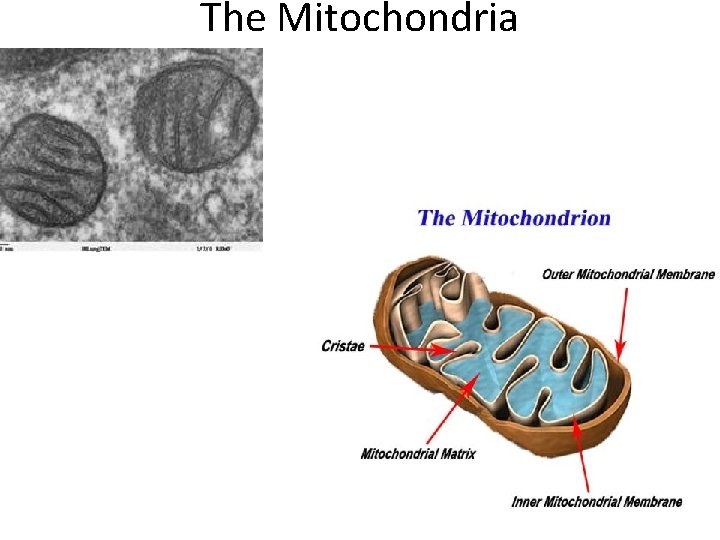
The Mitochondria
The Steps Of Respiration • Respiration begins in the cytoplasm, where glucose is broken down into smaller molecules, releasing a very small amount of energy. (Oxygen not needed here) Glycolysis • Those molecules are then transported into the mitochondria, where they are broken down further, releasing large amounts of ATP energy. (Requires Oxygen) Kreb’s Cycle (Citric Acid Cycle) and Electron Transport Chain
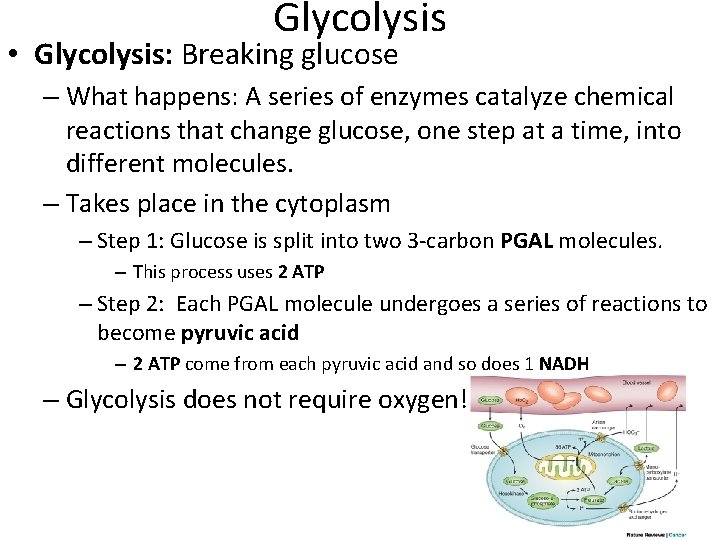
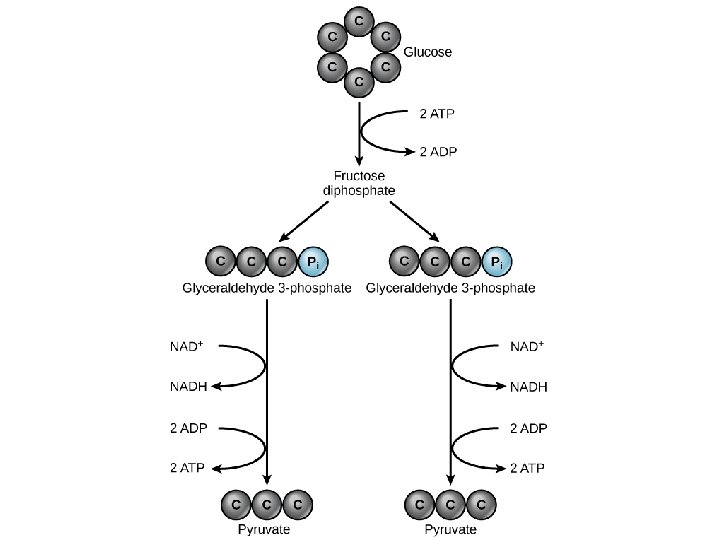
Glycolysis • Glycolysis: Breaking glucose – What happens: A series of enzymes catalyze chemical reactions that change glucose, one step at a time, into different molecules. – Takes place in the cytoplasm – Step 1: Glucose is split into two 3 -carbon PGAL molecules. – This process uses 2 ATP – Step 2: Each PGAL molecule undergoes a series of reactions to become pyruvic acid – 2 ATP come from each pyruvic acid and so does 1 NADH – Glycolysis does not require oxygen!
Respiration • If the air is aerobic, has oxygen, respiration will take place in the mitochondria. – Respiration involves the use of oxygen to break down food molecules to release energy. • In respiration, pyruvic acid is broken down to make 34 additional ATP. • Respiration occurs in both plants and animals.
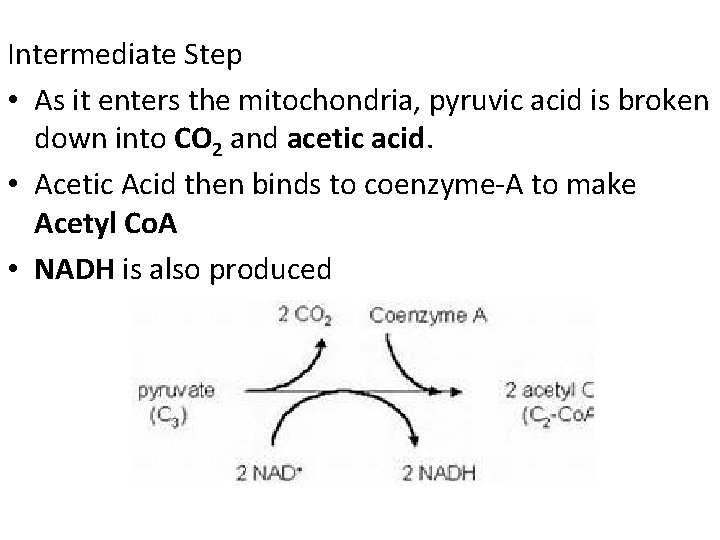
Intermediate Step • As it enters the mitochondria, pyruvic acid is broken down into CO 2 and acetic acid. • Acetic Acid then binds to coenzyme-A to make Acetyl Co. A • NADH is also produced
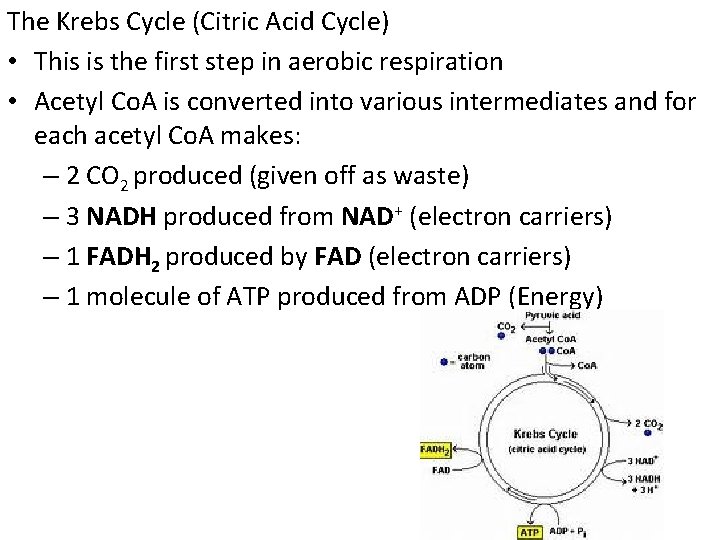
The Krebs Cycle (Citric Acid Cycle) • This is the first step in aerobic respiration • Acetyl Co. A is converted into various intermediates and for each acetyl Co. A makes: – 2 CO 2 produced (given off as waste) – 3 NADH produced from NAD+ (electron carriers) – 1 FADH 2 produced by FAD (electron carriers) – 1 molecule of ATP produced from ADP (Energy)
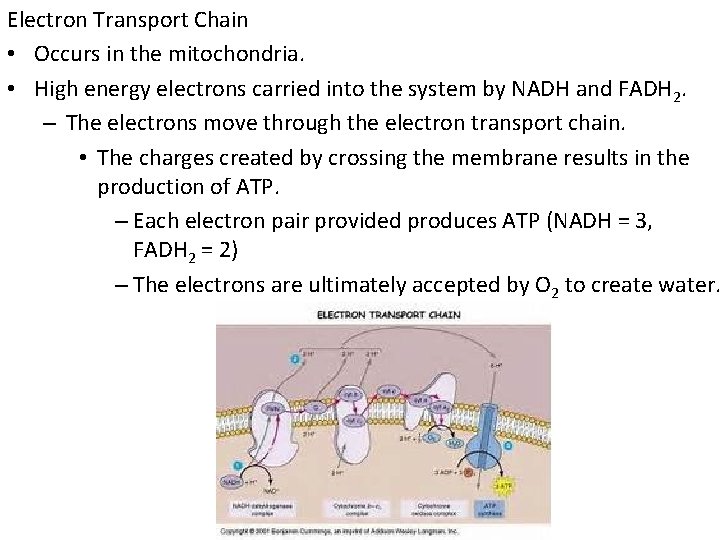
Electron Transport Chain • Occurs in the mitochondria. • High energy electrons carried into the system by NADH and FADH 2. – The electrons move through the electron transport chain. • The charges created by crossing the membrane results in the production of ATP. – Each electron pair provided produces ATP (NADH = 3, FADH 2 = 2) – The electrons are ultimately accepted by O 2 to create water.
Summarizing Respiration • The complete breakdown of glucose through cellular respiration (including glycolysis) results in the production of 36 ATP. • Glycolysis = 2 ATP – 4 made, but 2 are spent. • Krebs Cycle = 2 ATP • Electron Transport Chain = 32 ATP
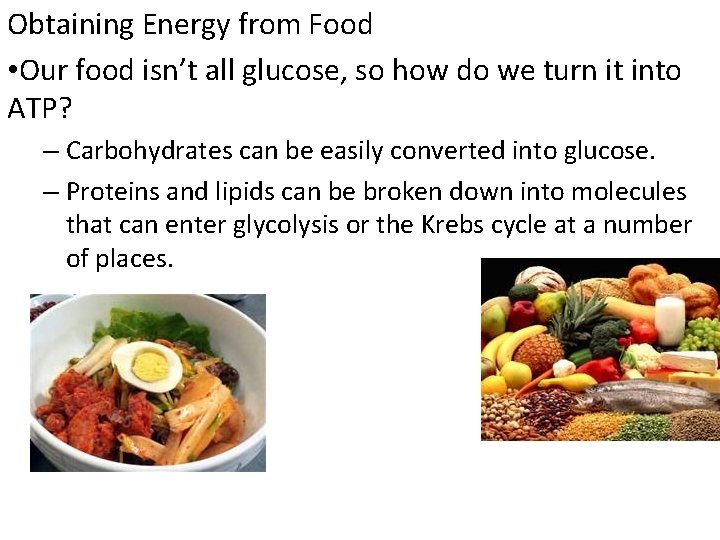
Obtaining Energy from Food • Our food isn’t all glucose, so how do we turn it into ATP? – Carbohydrates can be easily converted into glucose. – Proteins and lipids can be broken down into molecules that can enter glycolysis or the Krebs cycle at a number of places.
Fermentation 6 -4
Introduction • Sometimes, the air around organisms is anaerobic and cellular respiration cannot take place in the mitochondria. – So what happens next? • In order for glycolysis to occur and produce small amounts of ATP, NADH must be converted back to NAD+. – Fermentation allows this to occur by adding the extra electrons in NADH to an organic molecule that acts as an electron acceptor.
Types of Fermentation • Many types of fermentation exist, but most eukaryotic cells go through one of 2 fermentation pathways: – Lactic Acid Fermentation or – Alcoholic Fermentation
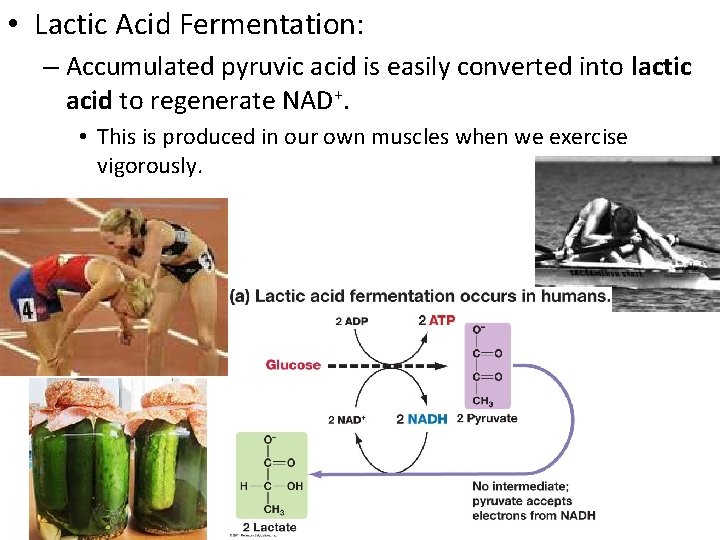
• Lactic Acid Fermentation: – Accumulated pyruvic acid is easily converted into lactic acid to regenerate NAD+. • This is produced in our own muscles when we exercise vigorously.
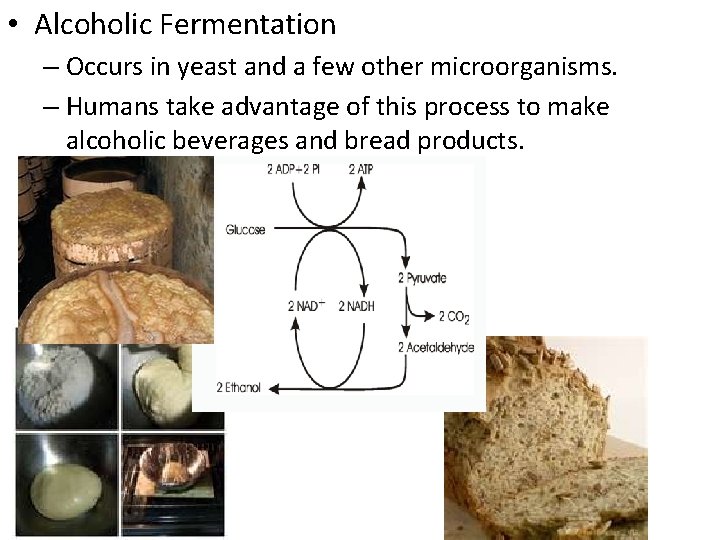
• Alcoholic Fermentation – Occurs in yeast and a few other microorganisms. – Humans take advantage of this process to make alcoholic beverages and bread products.
Let’s take 5 minutes to answer think about these questions and answer them as a class. 1. Do plant cells need to carry out respiration? -Yes, plant cells carry out respiration to produce energy for cell functions from molecules such as glucose. 2. Why is respiration important for a cell? -It supplies the energy a cell needs.