
Cellular Respiration Mitochondria The matrix where 3 carbon
Cellular Respiration


Mitochondria • The matrix where 3 carbon pieces that came from carbohydrates are broken down to (CO 2 and water) • The cristae is where ATP is made

What Is ATP? Energy used by all Cells Adenosine Triphosphate Organic molecule containing highenergy Phosphate bonds
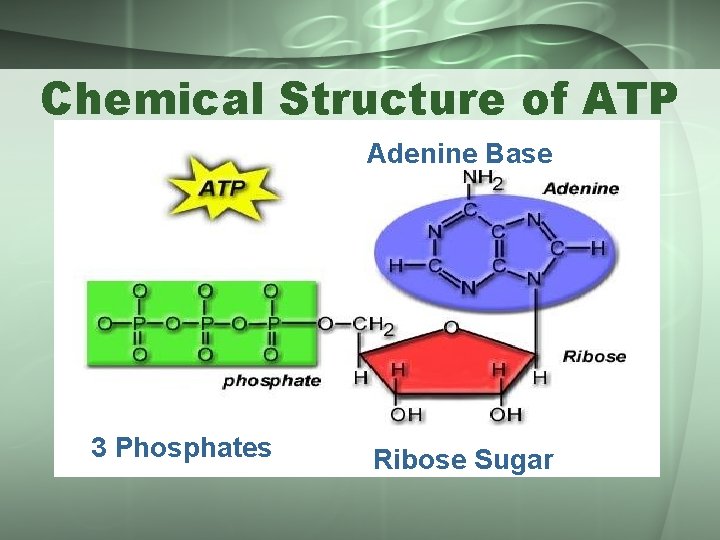
Chemical Structure of ATP Adenine Base 3 Phosphates Ribose Sugar
• What Does ATP Do for You? It supplies YOU with ENERGY!
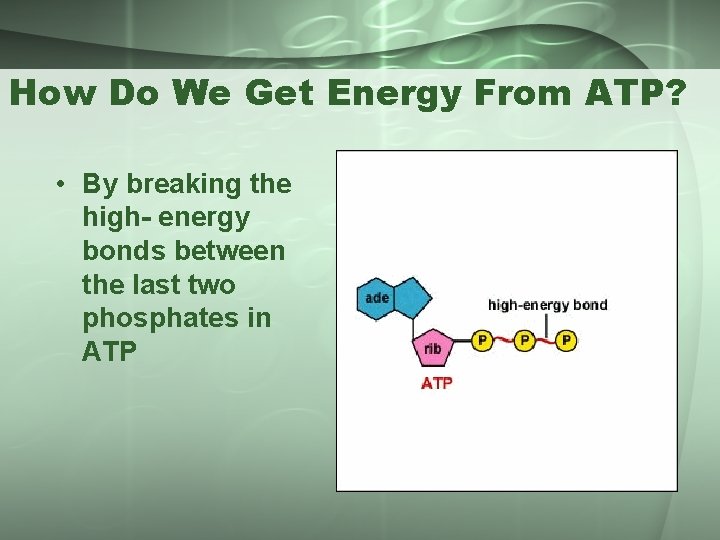
How Do We Get Energy From ATP? • By breaking the high- energy bonds between the last two phosphates in ATP
When is ATP Made in the Body? • During a Process called Cellular Respiration that takes place in both Plants & Animals
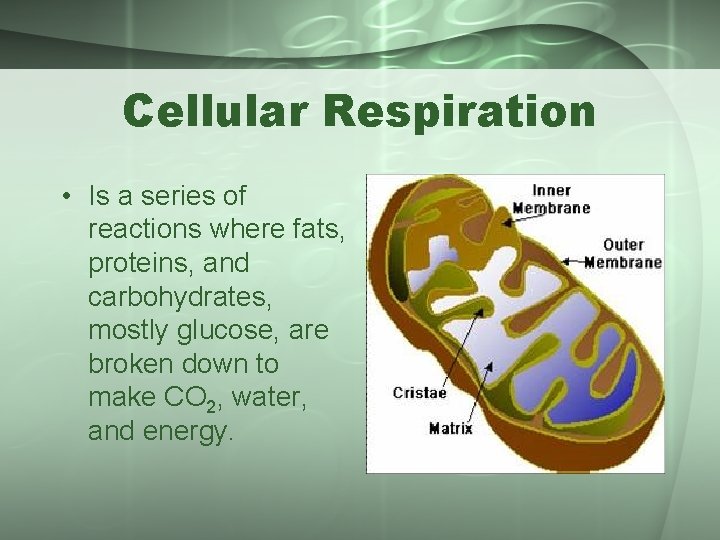
Cellular Respiration • Is a series of reactions where fats, proteins, and carbohydrates, mostly glucose, are broken down to make CO 2, water, and energy.
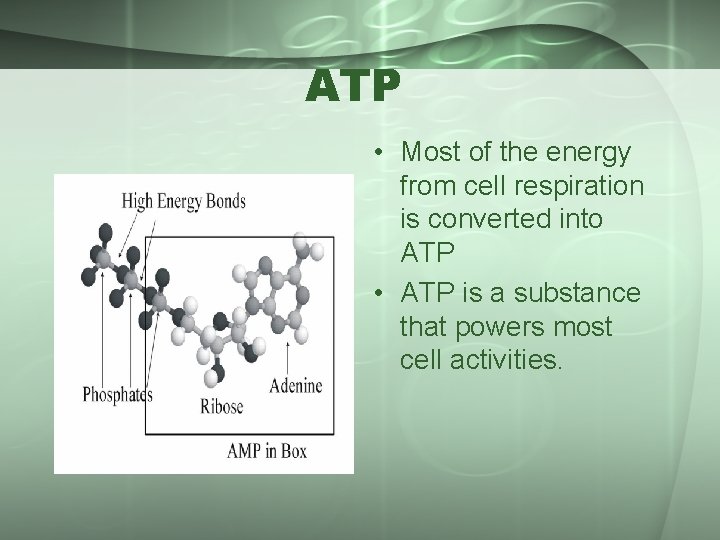
ATP • Most of the energy from cell respiration is converted into ATP • ATP is a substance that powers most cell activities.
Cellular Respiration Cellular Energy • The Stages of Cellular Respiration Cellular respiration has two stages. • Glycolysis The first stage of cellular respiration is called glycolysis. • Aerobic and Anaerobic Respiration The second stage of cellular respiration is either aerobic respiration (in the presence of oxygen) or anaerobic respiration (in the absence of oxygen). A large amount of ATP is made during aerobic respiration. NAD+ is recycled during the anaerobic process of fermentation.
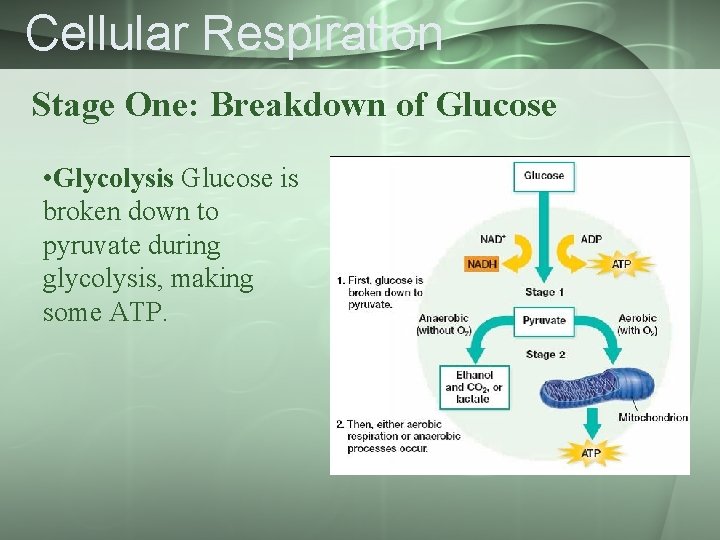
Cellular Respiration Stage One: Breakdown of Glucose • Glycolysis Glucose is broken down to pyruvate during glycolysis, making some ATP.
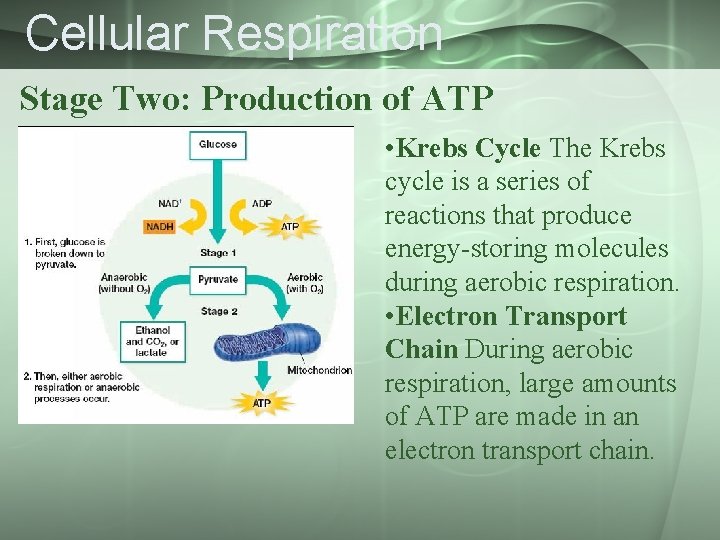
Cellular Respiration Stage Two: Production of ATP • Krebs Cycle The Krebs cycle is a series of reactions that produce energy-storing molecules during aerobic respiration. • Electron Transport Chain During aerobic respiration, large amounts of ATP are made in an electron transport chain.
Cellular Respiration Fermentation in the Absence of Oxygen • Fermentation When oxygen is not present, fermentation follows glycolysis, regenerating NAD+ needed for glycolysis to continue. • Lactic Acid Fermentation In lactic acid fermentation, pyruvate is converted to lactate.
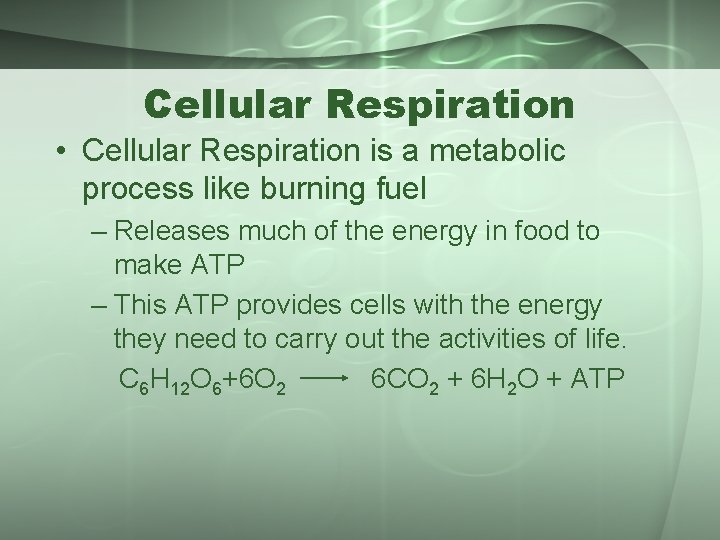
Cellular Respiration • Cellular Respiration is a metabolic process like burning fuel – Releases much of the energy in food to make ATP – This ATP provides cells with the energy they need to carry out the activities of life. C 6 H 12 O 6+6 O 2 6 CO 2 + 6 H 2 O + ATP
- Slides: 15