
Cellular Respiration Lab Warm Up 4 minutes 1
Cellular Respiration Lab
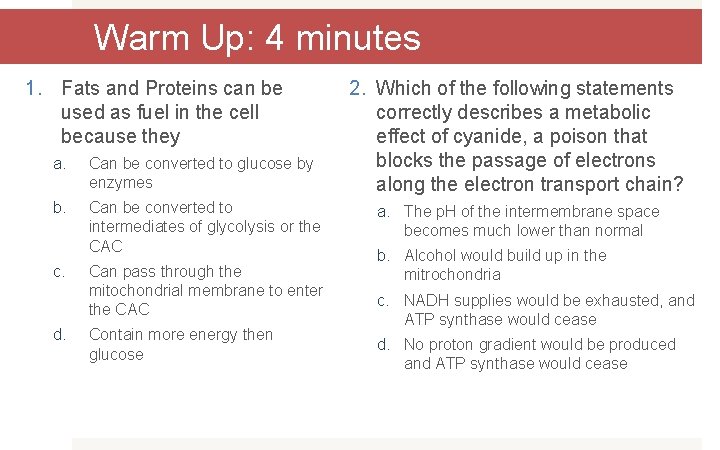
Warm Up: 4 minutes 1. Fats and Proteins can be used as fuel in the cell because they a. Can be converted to glucose by enzymes b. Can be converted to intermediates of glycolysis or the CAC c. d. Can pass through the mitochondrial membrane to enter the CAC Contain more energy then glucose 2. Which of the following statements correctly describes a metabolic effect of cyanide, a poison that blocks the passage of electrons along the electron transport chain? a. The p. H of the intermembrane space becomes much lower than normal b. Alcohol would build up in the mitrochondria c. NADH supplies would be exhausted, and ATP synthase would cease d. No proton gradient would be produced and ATP synthase would cease
Agenda Cellular Respiration Lab Get into groups of 2 or 3 Need 6 groups Front row you will be room temperature Back row you will be 10 degrees Celsius
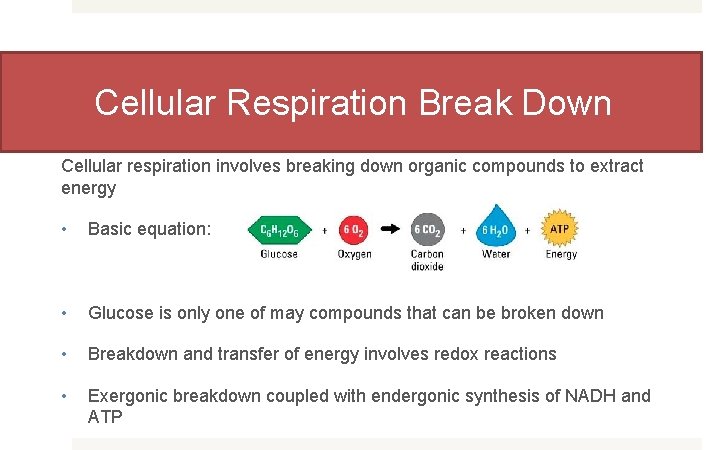
Cellular Respiration Break Down Cellular respiration involves breaking down organic compounds to extract energy • Basic equation: • Glucose is only one of may compounds that can be broken down • Breakdown and transfer of energy involves redox reactions • Exergonic breakdown coupled with endergonic synthesis of NADH and ATP
Letting the water acclimate If your bin is not filled with water already fill it ¼ full of water (room temperature) and add ice (10 degree Celsius) Use fancy thermometers for ice water and old school for room temp Let water sit while everything else gets prepared
The Experiment. .

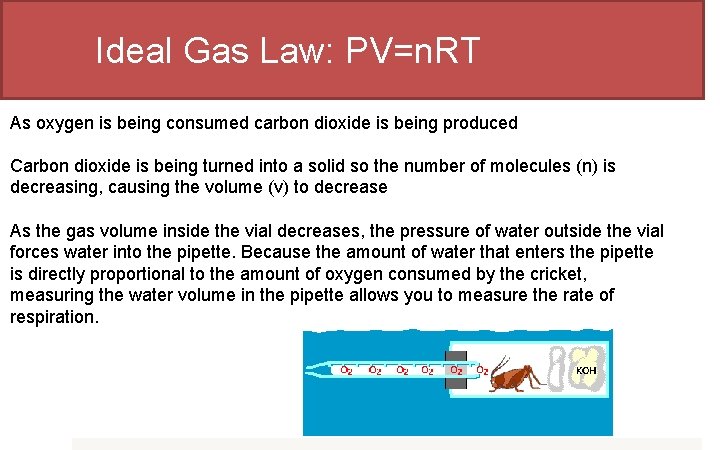
Ideal Gas Law: PV=n. RT As oxygen is being consumed carbon dioxide is being produced Carbon dioxide is being turned into a solid so the number of molecules (n) is decreasing, causing the volume (v) to decrease As the gas volume inside the vial decreases, the pressure of water outside the vial forces water into the pipette. Because the amount of water that enters the pipette is directly proportional to the amount of oxygen consumed by the cricket, measuring the water volume in the pipette allows you to measure the rate of respiration.
Cellular Respiration Lab
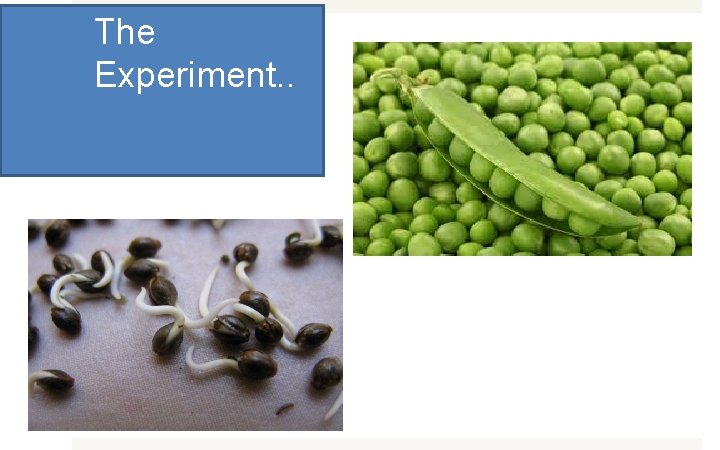
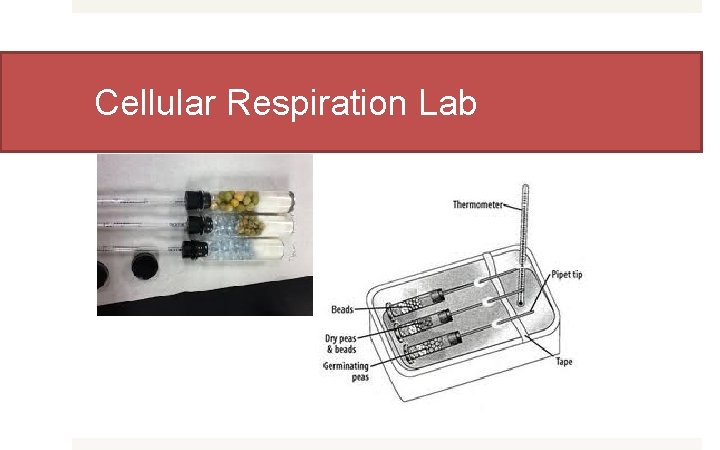
Set Up Using a 100 m. L graduated cylinder, carefully add 50 m. L of H 2 O and then drop in 25 germinating peas to measure the volume of the peas. Record the displacement volume. Remove these peas and place them on a paper towel. They will be used in respirometer #1. Using the same technique, add 25 nongerminating seeds add beads to displace the same volume as the germinating peas. Remove these beads and peas and place them on a second paper towel. These beads will be used in respirometer #2. Using the same technique, do the same with beads. They will be used in respirometer #3.
Setting Up Respirometers follow direction in packet! Place a wad of cotton in the bottom of a culture tube you will use for the respirometer. Put on goggles and gloves! Using a dropper, carefully saturate the cotton with KOH without getting the sides of the vial wet. Keep track of how many drops you used. 20 drops is usually a minimum, but do not use more than 30 drops! Place another wad of dry cotton on top of the saturated cotton to protect the seeds from the KOH. Try to have the amount of cotton and KOH be the same for each tube.
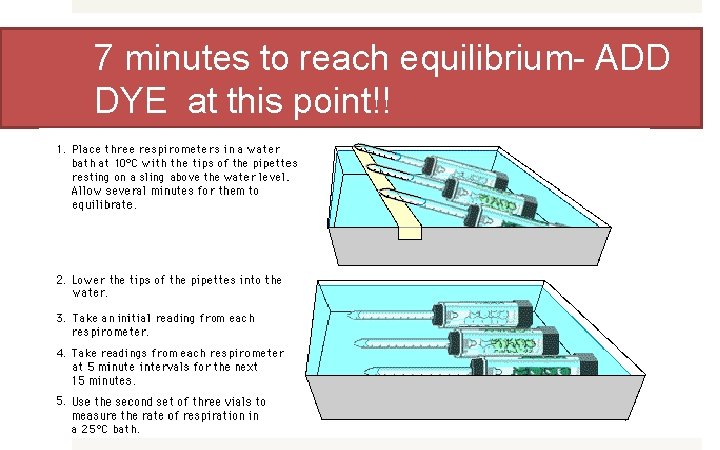
7 minutes to reach equilibrium- ADD DYE at this point!!
Data • Record on your data table every 5 minutes starting at time 0 for 20 minutes
Clean Up
Rinse off the beads and put a paper towel on the small tray in your bin and let them dry on there Throw away the germinating seeds and the cotton Put the nongerminating seeds in a beaker Rinse out respirometers and put on a paper towel in bin to dry Dump water Return bins to back room as neat as you got them! Wipe down table and wash hands!
- Slides: 15