
Cellular Respiration Lab 5 Warm Up 1 4
Cellular Respiration Lab 5
Warm Up (1 -4 -16) • Welcome back! Please get a warm-up off the front table. • Explain what you remember from the transpiration lab. What are some things you noticed about your graph and about the lab in general?

Outline • • Objectives Test Review Transpiration Lab analysis and discussion Transpiration structure investigation
Objectives • To discuss results from the transpiration lab and to determine the importance of transpiration to a plant.
Warm Up (1 -5 -16) • How can you explain transpiration in your own words? • Remember how measuring transpiration rates allows you to make conclusions about the climate of a plant? Explain what observations you could make about a plant that would help you identify the climate.
Outline • Objectives • Transpiration Lab analysis and discussion • Personal Investigation
Objectives • To discuss results from the transpiration lab and to determine the importance of transpiration to a plant.
Investigation • Open Ended… – Pick a plant from a different climate zone: • Polar, Temperate, Tropical • Use this site to help you narrow down the region where your plant is found • http: //www. csun. edu/~psk 17793/ES 9 CP/ES 9%20 climate_zones. htm – Research the structure of your plants. (Most of this we have already talked about!) Think about roots, stems, and leaves – Make a model of one portion of your plant (roots, stems, leaves) – Make a visual display describing how the structure of your plant allows for optimal function for your plant in its specific environment – Include explanations of the relationship between structure and function – Make connections between your research and the topics we have already discussed about plants this year. (photosynthesis and transpiration)
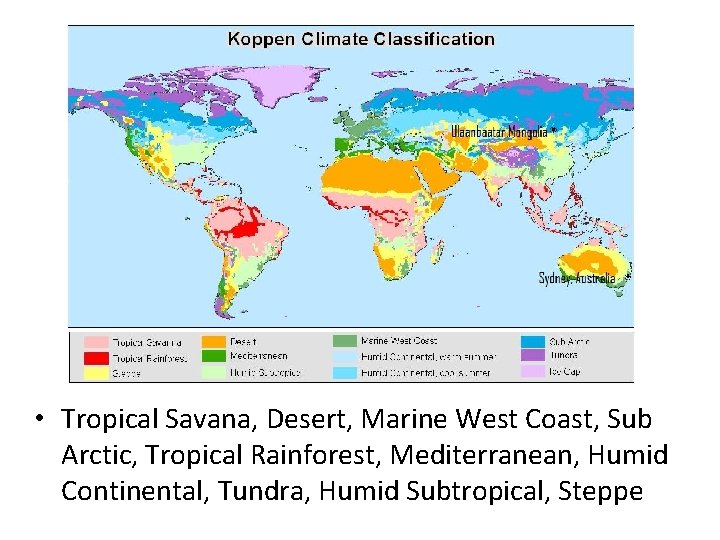
• Tropical Savana, Desert, Marine West Coast, Sub Arctic, Tropical Rainforest, Mediterranean, Humid Continental, Tundra, Humid Subtropical, Steppe
Personal Investigation Project Plan • You need to include the following in your project plan: – Name of plant (both scientific name and common name) – Rough sketch of what your 3 D model will look like – What materials you will be using for your model – Which portion of your plant you will be making a model of – The climate that your plant is located in – Region of the world where your plant is located – Common uses for your plant (timber, food, etc. )
Warm Up (1 -6 -16) • Think about all the processes that plants go through. Identify and explain those processes in humans. (yes, they will be different but see if you can identify them)
Outline • Objectives • Personal Investigation • Planning and Research Personal Investigation
Objectives • To discuss results from the transpiration lab and to determine the importance of transpiration to a plant.
Investigation • Open Ended… – Pick a plant from a different climate zone: • Polar, Temperate, Tropical • Use this site to help you narrow down the region where your plant is found • http: //www. csun. edu/~psk 17793/ES 9 CP/ES 9%20 climate_zones. htm – Research the structure of your plants. (Most of this we have already talked about!) Think about roots, stems, and leaves – Make a model of one portion of your plant (roots, stems, leaves) – Make a visual display describing how the structure of your plant allows for optimal function for your plant in its specific environment – Include explanations of the relationship between structure and function – Make connections between your research and the topics we have already discussed about plants this year. (photosynthesis and transpiration)
Warm Up (1 -7 -16) • Explain the relationship between transpiration and photosynthesis. • Explain what might happen if one of these processes was less efficient than the other in a plant. What might some of the effects be?
Outline • • • Objectives Personal Investigation Planning and Research Personal Investigation Research for personal investigation Building model
Objectives • To discuss results from the transpiration lab and to determine the importance of transpiration to a plant. • To apply the results and interpretations from the transpiration lab to real world examples and organisms in various climates.
Investigation • Open Ended… – Pick a plant from a different climate zone: • Polar, Temperate, Tropical • Use this site to help you narrow down the region where your plant is found • http: //www. csun. edu/~psk 17793/ES 9 CP/ES 9%20 climate_zones. htm – Research the structure of your plants. (Most of this we have already talked about!) Think about roots, stems, and leaves – Make a model of one portion of your plant (roots, stems, leaves) – Make a visual display describing how the structure of your plant allows for optimal function for your plant in its specific environment – Include explanations of the relationship between structure and function – Make connections between your research and the topics we have already discussed about plants this year. (photosynthesis and transpiration)
How to cite in MLA • Contributors' names. "Title of Resource. " The Purdue OWL. Purdue U Writing Lab, Last edited date. Web. Date of access. • Russell, Tony, Allen Brizee, and Elizabeth Angeli. "MLA Formatting and Style Guide. " The Purdue OWL. Purdue U Writing Lab, 4 Apr. 2010. Web. 20 July 2010.
Warm Up (1 -8 -16) • Now that you have a plan for your personal investigation, explain some of the key things that you will be searching for while conducting your research. (Describe a plan for the thought process for your research)
Outline • • Objectives Personal Investigation Research for Personal Investigation Building model
Objectives • To discuss results from the transpiration lab and to determine the importance of transpiration to a plant. • To apply the results and interpretations from the transpiration lab to real world examples and organisms in various climates.
How to cite in MLA • Contributors' names. "Title of Resource. " The Purdue OWL. Purdue U Writing Lab, Last edited date. Web. Date of access. • Russell, Tony, Allen Brizee, and Elizabeth Angeli. "MLA Formatting and Style Guide. " The Purdue OWL. Purdue U Writing Lab, 4 Apr. 2010. Web. 20 July 2010.

Warm Up (1 -11 -16) • What are some things in your research that are interesting to you? • What are some unexpected findings that you might want to research further or that you might suggest other scientists research further?
Outline • • Objectives Personal Investigation Research for Personal Investigation Building model
Objectives • To discuss results from the transpiration lab and to determine the importance of transpiration to a plant. • To apply the results and interpretations from the transpiration lab to real world examples and organisms in various climates.
Warm Up (1 -12 -16) • Explain what helped you learn through this project. – In what ways was it easy to make connections between your plant and transpiration and photosynthesis? – In what ways was it difficult to make connections between your plant and transpiration and photosynthesis?
Outline • • Objectives Personal Investigation Research for Personal Investigation Building model
Objectives • To discuss results from the transpiration lab and to determine the importance of transpiration to a plant. • To apply the results and interpretations from the transpiration lab to real world examples and organisms in various climates.
Warm Up (1 -13 -16) • Explain how the structure of your plant helps the function of your plant in its specific environment. (think about rates of transpiration and rates of photosynthesis in your answer)
Outline • • Objectives Personal Investigation Research for Personal Investigation Building model
Objectives • To discuss results from the transpiration lab and to determine the importance of transpiration to a plant. • To apply the results and interpretations from the transpiration lab to real world examples and organisms in various climates.
Warm Up (1 -14 -16) • Explain one thing about this project that you learned that helped you better understand transpiration and photosynthesis for your particular plant.
Outline • • Objectives Personal Investigation Research for Personal Investigation Building model
Objectives • To discuss results from the transpiration lab and to determine the importance of transpiration to a plant. • To apply the results and interpretations from the transpiration lab to real world examples and organisms in various climates.
Warm Up (1 -15 -16) • Briefly explain photosynthesis in terms of gas exchange. – What is taken in, and what is given off? • Now apply that to humans, and contrast the processes.
Outline • • Objectives Personal Investigation Research for Personal Investigation Building model
Objectives • To discuss results from the transpiration lab and to determine the importance of transpiration to a plant.
Warm Up (1 -19 -16) • What has to happen in order for plants to be able to use the energy (glucose) produced during photosynthesis?
Outline • • Objectives Cellular respiration reading ch. 9 Take the self quiz Virtual cellular respiration lab
Objectives • To gain background information about cellular respiration • IWBAT explain what cellular respiration is and how this process is similar/different from photosynthesis
Cellular Respiration Virtual Lab • http: //www. phschool. com/science/biology_pl ace/labbench/lab 5/intro. html
Cellular Respiration Introduction • https: //www. khanacademy. org/testprep/mcat/biomolecules/carbohydratemetabolism/v/introduction-to-cellularrespiration
Review • What is energy? • Different types? – Light, sound, kinetic, potential, chemical energy stored in bonds • Law of conservation of energy? – Energy can’t be created or destroyed – Energy can be transferred from one form to another – Energy transfer is inefficient
Review • Energy can’t be created or destroyed… why do we “run out of energy” after exercise? – Definition of energy – Our bodies need to create more chemical energy, or replace those molecules – Why we eat food. We need fuel
Warm Up (1 -20 -16) • Explain what cellular respiration is in your own words.
Outline • Objectives • Cellular respiration virtual lab • Khan Academy cellular respiration video / notes
Objectives • To gain background information about cellular respiration • IWBAT explain what cellular respiration is and how this process is similar/different from photosynthesis
Cellular Respiration Virtual Lab • http: //www. phschool. com/science/biology_pl ace/labbench/lab 5/intro. html
Cellular Respiration Introduction • https: //www. khanacademy. org/testprep/mcat/biomolecules/carbohydratemetabolism/v/introduction-to-cellularrespiration
Review • What is energy? • Different types? – Light, sound, kinetic, potential, chemical energy stored in bonds • Law of conservation of energy? – Energy can’t be created or destroyed – Energy can be transferred from one form to another – Energy transfer is inefficient
Review • Energy can’t be created or destroyed… why do we “run out of energy” after exercise? – Definition of energy – Our bodies need to create more chemical energy, or replace those molecules – Why we eat food. We need fuel
Warm Up (1 -21 -15) Explain what the two main parts of cellular respiration are and where each of these parts takes place.
Outline • Objectives • Cellular Respiration Background information • Project introduction – Cellular Respiration
Objectives • IWBAT explain what cellular respiration is and which organisms use this process • IWBAT begin thinking about the inquiry project and planning with my group the direction for this project
Cellular Respiration • http: //bxscience. enschool. org/ourpages/auto /2014/2/4/39771675/L 7%20 CH%209%20 NOT ES%20 cellular%20 respiration. pdf
Cellular Respiration Video • https: //www. youtube. com/watch? v=2 f 7 Yw. Ct Hcgk
Cellular Respiration Activity • http: //www. phschool. com/science/biology_pl ace/biocoach/cellresp/intro. html
Warm Up (1 -22 -16) • What are some of the necessary reactants in order for cellular respiration to occur?
Outline • Objectives • Virtual lab – cellular respiration • Lab. Quest Inquiry project – Cellular Respiration
Objectives • IWBAT begin thinking about the inquiry project and planning with my group the direction for this project
Warm Up (1 -25 -16) What is the equation for cellular respiration? Where does cellular respiration take place?
Outline • Objectives • Cellular respiration virtual lab
Objectives • I will be able to explain the process of cellular respiration and how it is helpful to humans. • I will be able to identify where cellular respiration takes place in a cell.
Warm Up (1 -26 -16) Explain whether cellular respiration is an anaerobic or aerobic process and what that means.
Outline • • Objectives Cellular respiration virtual lab – discussion Glycolysis video Cellular respiration notes explanations
Objectives • I will be able to explain the process of cellular respiration and how it is helpful to humans. • I will be able to identify where cellular respiration takes place in a cell.
Glycolysis video • https: //www. khanacademy. org/testprep/mcat/biomolecules/carbohydratemetabolism/v/glycolysis
Warm Up (1 -27 -16) • Explain how cellular respiration and photosynthesis are mirror images of each other.
Outline • Objectives • Cellular Respiration notes and explanations
Objectives • Explain the products necessary for cellular respiration to occur • Explain where the process of cellular respiration occurs.
Cellular respiration notes • http: //faculty. clintoncc. suny. edu/faculty/mich ael. gregory/files/bio%20101%20 le ctures/cellular%20 respiration/cellular. htm • Cellular respiration simulation • http: //www. sumanasinc. com/webcontent/ani mations/content/cellularrespiration. html
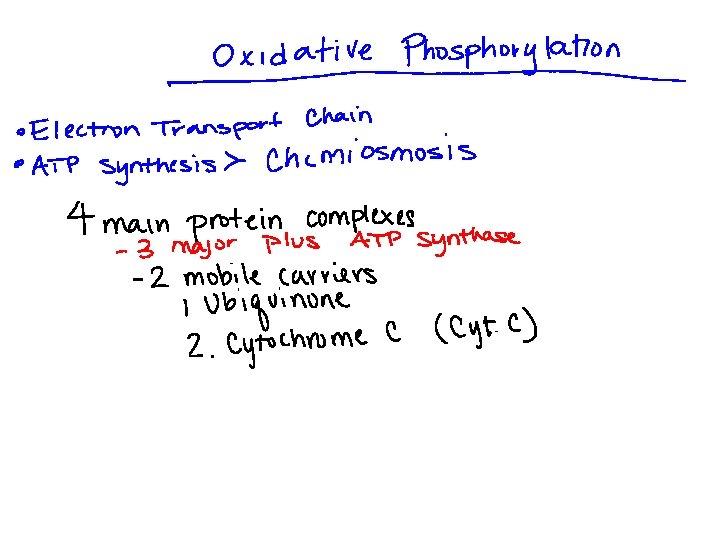
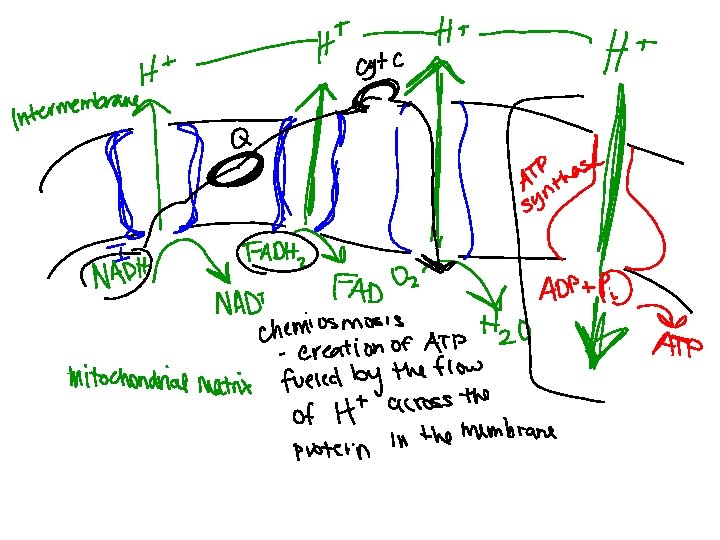
Warm Up (1 -28 -16) • Explain how glycolysis is connected to both cellular respiration and fermentation.
Outline • Objectives • Cellular Respiration review
Objectives • Explain the products necessary for cellular respiration to occur • Explain where the process of cellular respiration occurs.
Warm Up (1 -29 -16) • Write down everything you can about cellular respiration. • Think about glycolysis, fermentation, and cellular respiration in your answer.
Outline • Objectives • Cellular Respiration test
Objectives • Explain the products necessary for cellular respiration to occur • Explain where the process of cellular respiration occurs.
Warm Up (2 -1 -16) • Write down a couple of ideas for the elementary science projects. Also include the “big idea” that those experiments would address.
Outline • Objectives • Elementary labs creation

Objectives
Warm Up (2 -2 -16) • For one of your experiment ideas, identify all of the parts of experimental design for that experiment.
Outline • Objectives • Elementary labs creation
Objectives • IWBAT investigate the effects of temperature and p. H on the digestion of paramecium. • IWBAT create quantitative ways to measure data and rates of digestion.
- Slides: 86