
Cellular Respiration How our body makes ATP ENERGY
Cellular Respiration How our body makes ATP, ENERGY!!
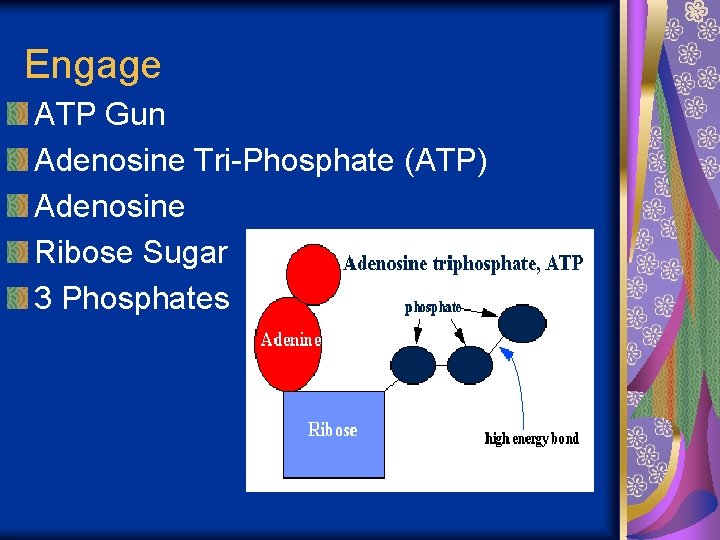
Engage ATP Gun Adenosine Tri-Phosphate (ATP) Adenosine Ribose Sugar 3 Phosphates
Explore: Cellular Respiration Simulation To review the "big picture" of metabolism, aiding students in understanding the relationship among glycolysis, the Kreb's cycle, and the ETC. See the diagram for the simulation layout.
Explore: Muscle Fatigue You will be using a procedure to experience and explore lactic acid buildup in muscles.
Explain: Where do our cells get energy? 6 -C sugars are the MAJOR source of energy for cell What type of macromolecule are 6 -C sugars? Carbohydrates Cells break down glucose a 6 -C sugar to make ATP “energy”
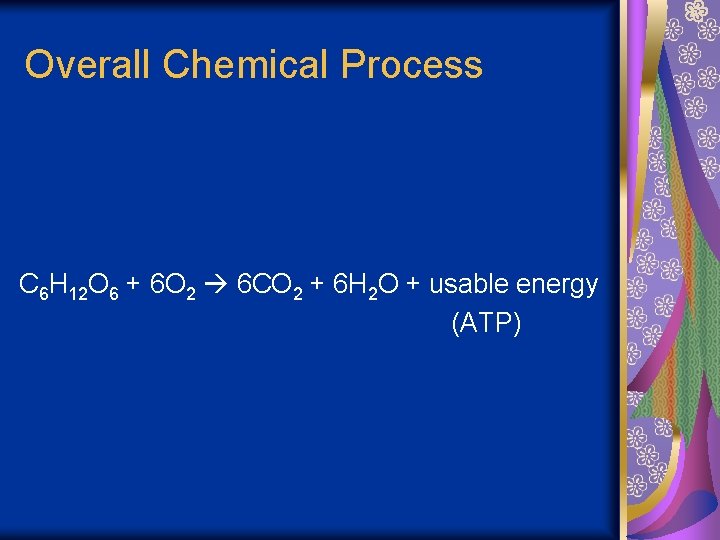
Overall Chemical Process C 6 H 12 O 6 + 6 O 2 6 CO 2 + 6 H 2 O + usable energy (ATP)
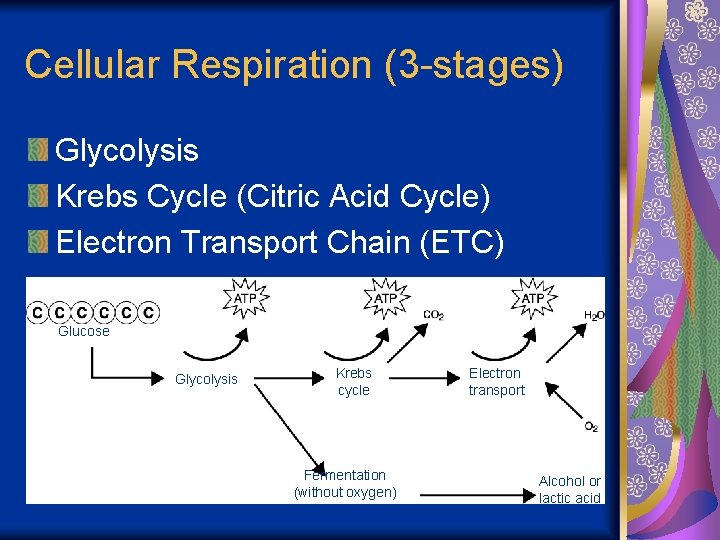
Cellular Respiration (3 -stages) Glycolysis Krebs Cycle (Citric Acid Cycle) Electron Transport Chain (ETC) Glucose Glycolysis Krebs cycle Fermentation (without oxygen) Electron transport Alcohol or lactic acid
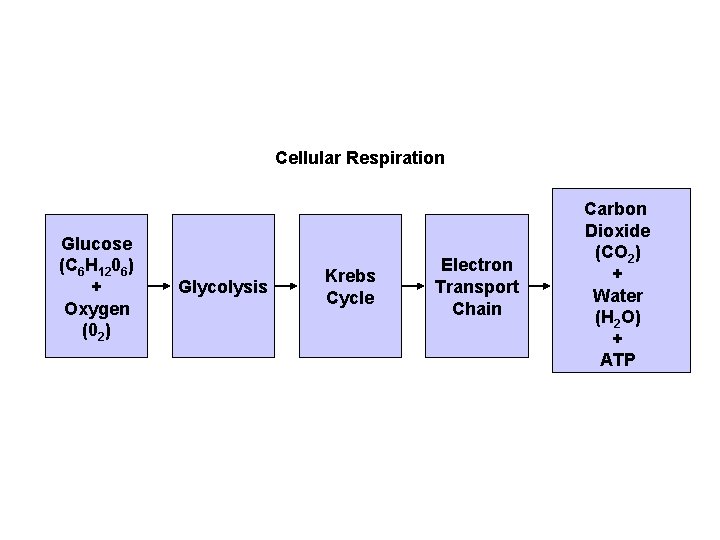
Flowchart Section 9 -2 Cellular Respiration Glucose (C 6 H 1206) + Oxygen (02) Glycolysis Krebs Cycle Electron Transport Chain Carbon Dioxide (CO 2) + Water (H 2 O) + ATP
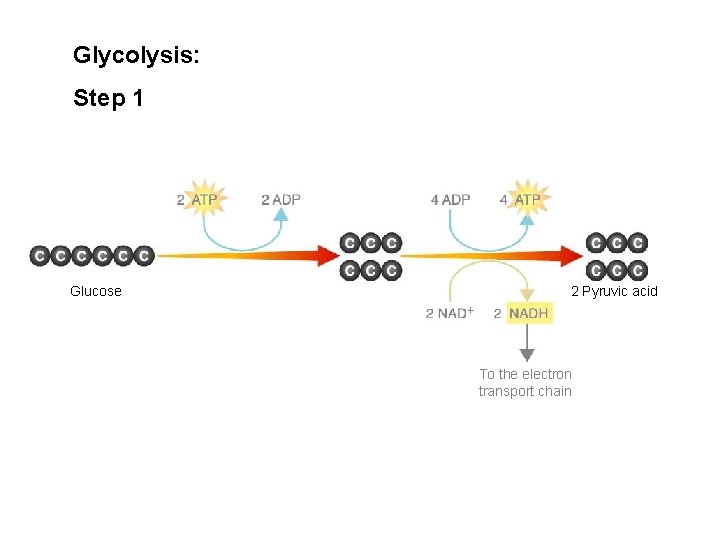
Glycolysis: Figure 9– 3 Glycolysis Step 1 Glucose 2 Pyruvic acid To the electron transport chain
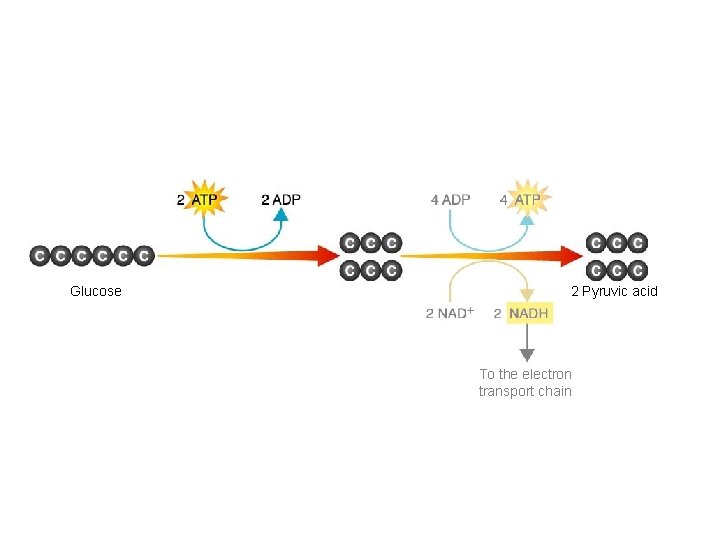
Figure 9– 3 Glycolysis Section 9 -1 Glucose 2 Pyruvic acid To the electron transport chain
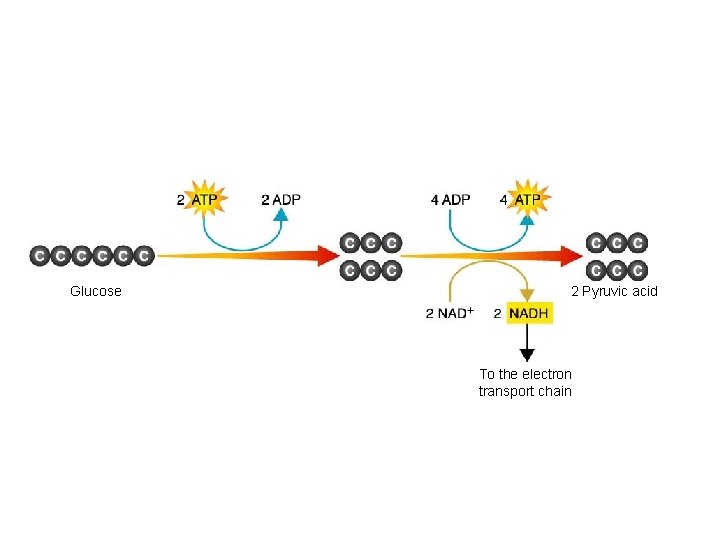
Figure 9– 3 Glycolysis Section 9 -1 Glucose 2 Pyruvic acid To the electron transport chain
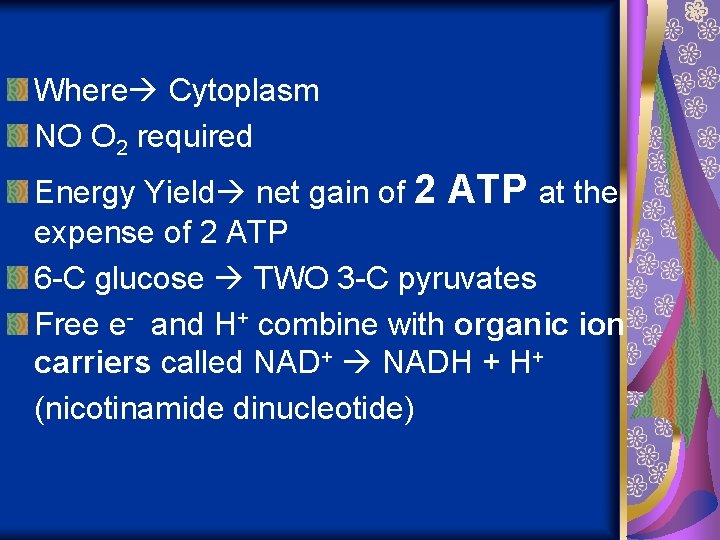
Where Cytoplasm NO O 2 required Energy Yield net gain of 2 ATP at the expense of 2 ATP 6 -C glucose TWO 3 -C pyruvates Free e- and H+ combine with organic ion carriers called NAD+ NADH + H+ (nicotinamide dinucleotide)
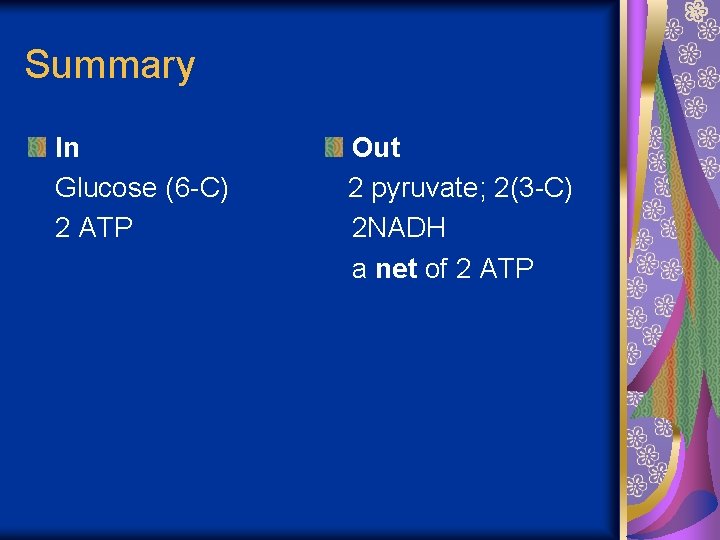
Summary In Glucose (6 -C) 2 ATP Out 2 pyruvate; 2(3 -C) 2 NADH a net of 2 ATP
Questions Where does glycolysis take place? Glycolysis energy yield? Breaks glucose into TWO ____.
The Krebs Cycle Section 9 -2 Citric Acid Production Mitochondrion
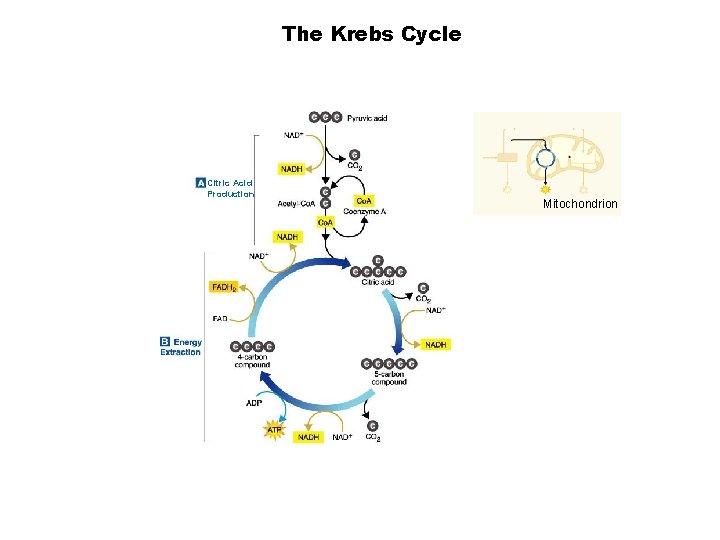
Figure 9– 6 The Krebs Cycle Section 9 -2 Citric Acid Production Mitochondrion
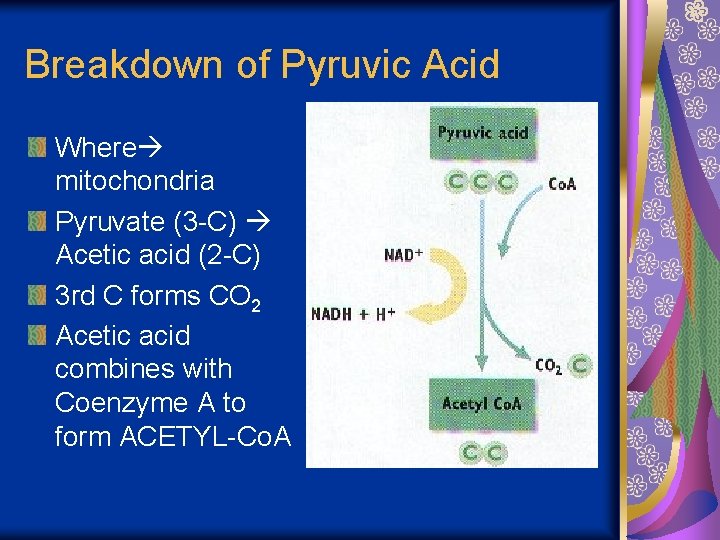
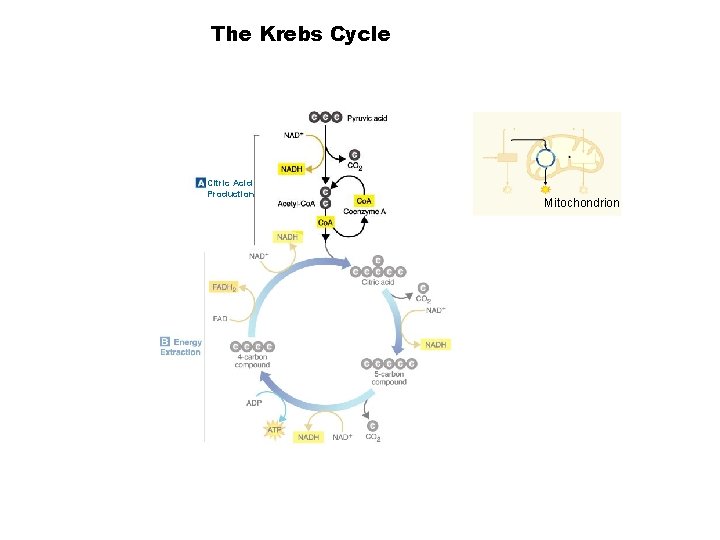
Breakdown of Pyruvic Acid Where mitochondria Pyruvate (3 -C) Acetic acid (2 -C) 3 rd C forms CO 2 Acetic acid combines with Coenzyme A to form ACETYL-Co. A
Summary In Pyruvate NAD Co. A Out CO 2 (as waste) NADH Acetyl-Co. A
What is releasing Energy with O 2? Aerobic respiration Where In mitochondria
Second Step: Citric Acid Cycle (Krebs Cycle) Where Mitochondrial matrix Energy Yield 2 ATP and more e. Acetyl-Co. A (2 -C) combines with 4 -C to form 6 -C CITRIC ACID Citric Acid (6 -C) changed to 5 -C then to a 4 -C Gives off a CO 2 molecule NAD+ and FAD pick up the released e. FAD becomes FADH 2 NAD+ becomes NADH + H+ Cycle ALWAYS reforming a 4 -C molecule
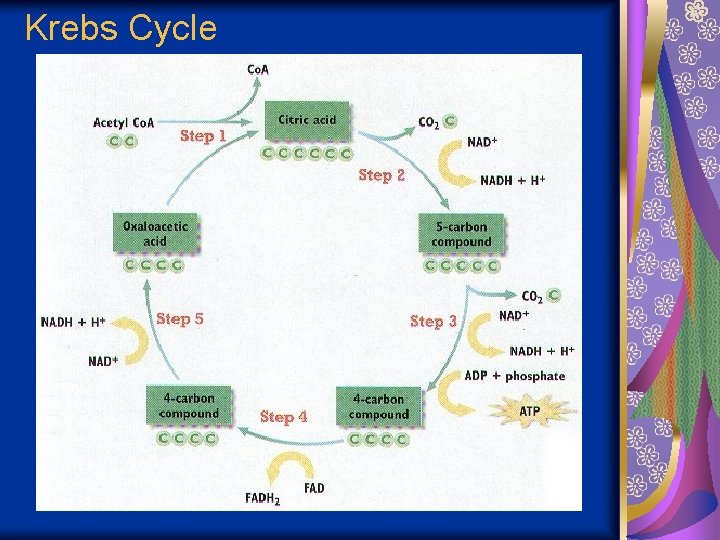
Krebs Cycle
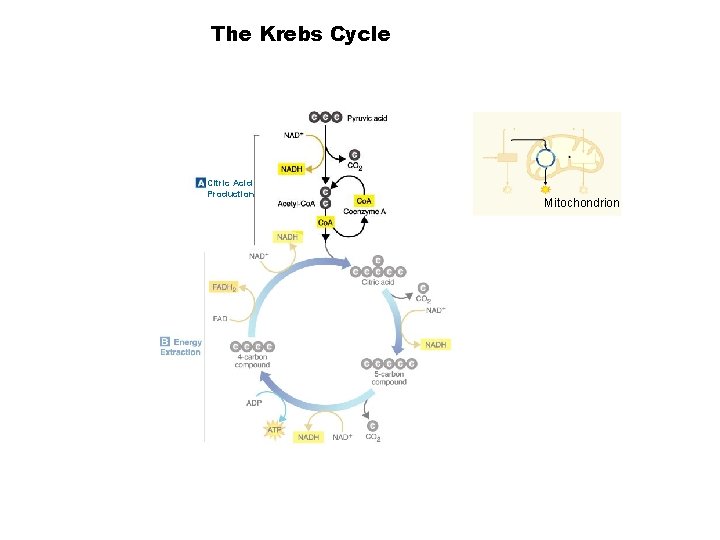
The Krebs Cycle Section 9 -2 Citric Acid Production Mitochondrion
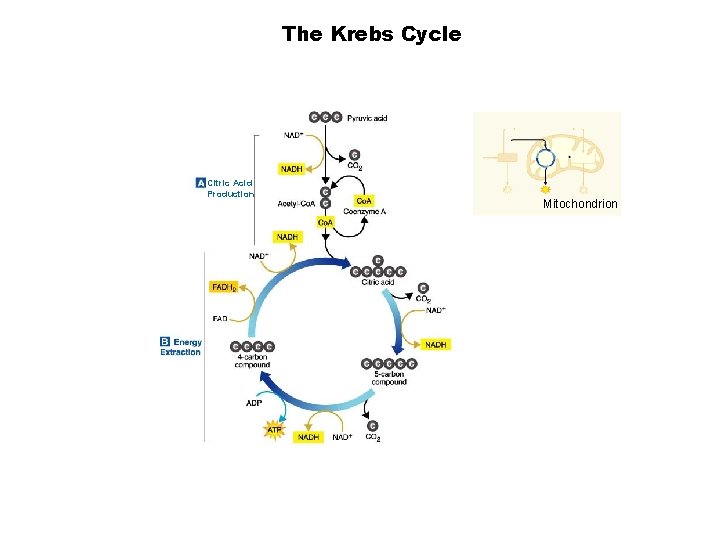
Figure 9– 6 The Krebs Cycle Section 9 -2 Citric Acid Production Mitochondrion
ETC Where inner membrane of mitochondria Energy Yield Total of 32 ATP O 2 combines with TWO H+ to form H 2 O Exhale - CO 2, H 2 O comes from cellular respiration
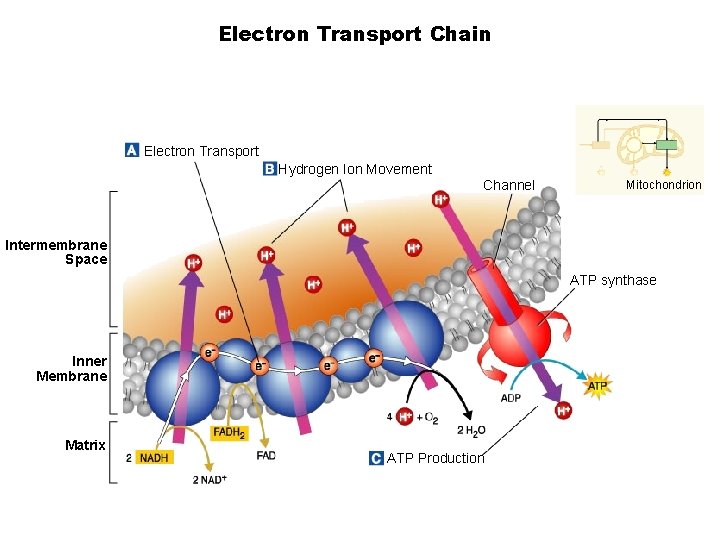
Electron Transport Chain Section 9 -2 Electron Transport Hydrogen Ion Movement Channel Mitochondrion Intermembrane Space ATP synthase Inner Membrane Matrix ATP Production
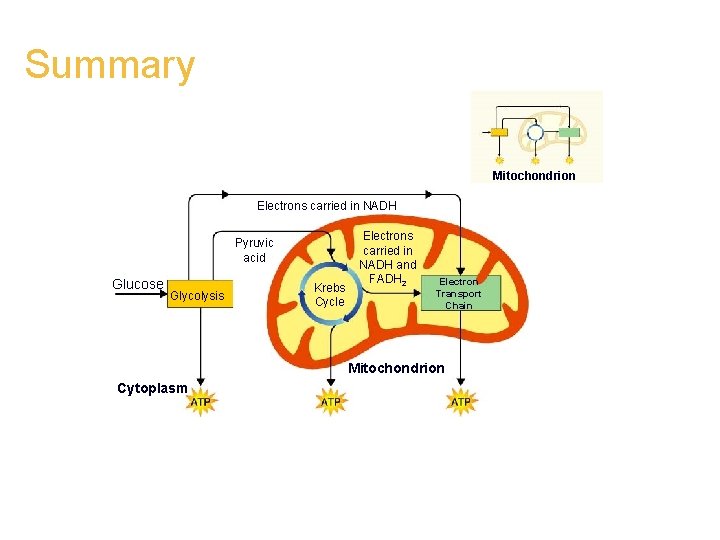
Summary Mitochondrion Electrons carried in NADH Pyruvic acid Glucose Glycolysis Krebs Cycle Electrons carried in NADH and FADH 2 Electron Transport Chain Mitochondrion Cytoplasm

Total ENERGY Yield Glycolysis 2 ATP Krebs Cycle 2 ATP ETC 32 ATP Total 36 ATP
Elaboration Respiration Lab Three experiments that review and further explain the process of cellular respiration
What happens if NO O 2? Cellular respiration process STOPS
Aerobic vs. Anaerobic DOES NOT require oxygen Simple fast produces smaller amounts of energy (ATP) Aerobic requires oxygen Yields large amounts of energy What is this energy molecule? ATP, ATP
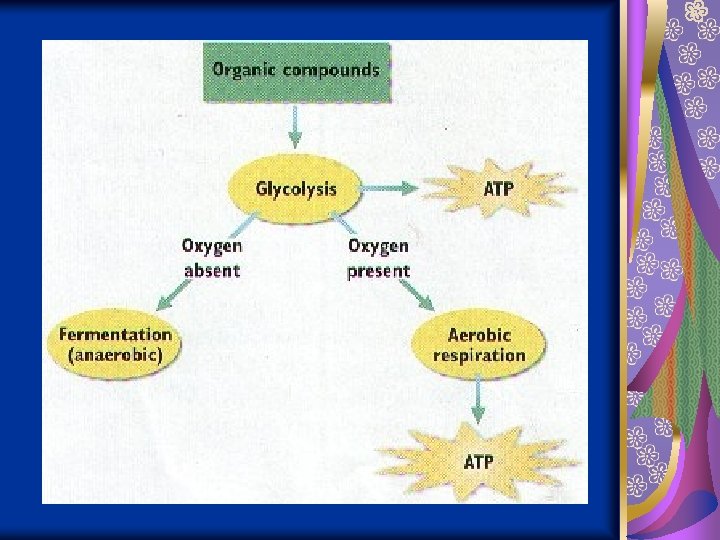
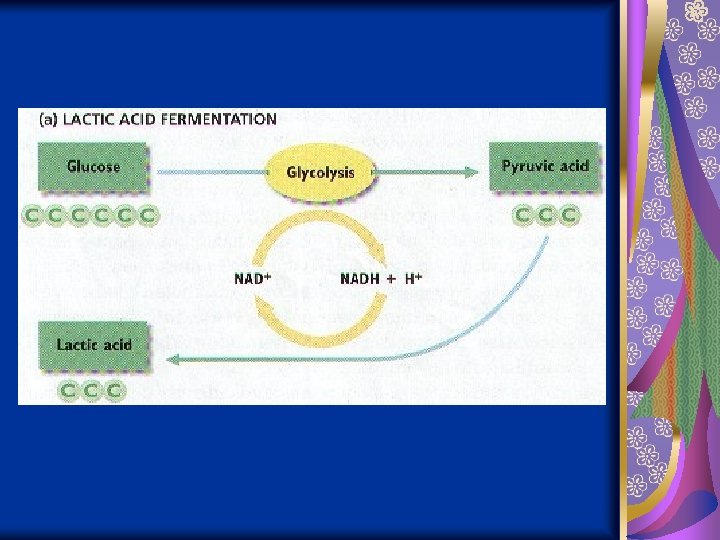
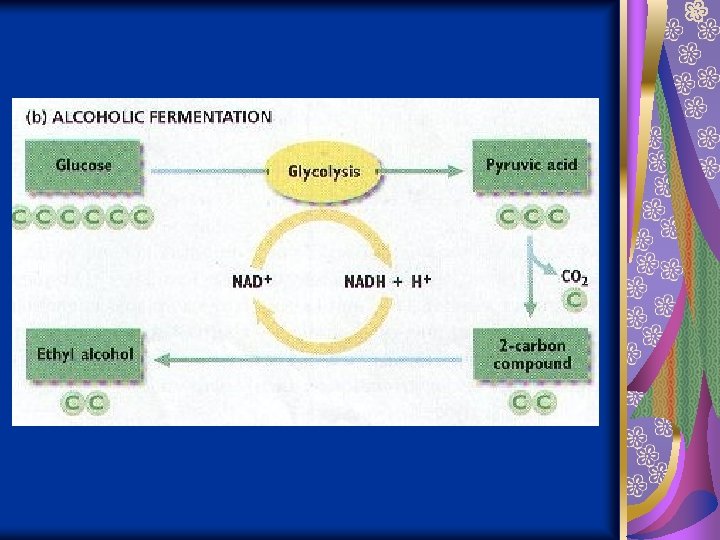
Releasing Energy w/out Oxygen Anaerobic Respiration NO Additional ATP is Formed NO O 2 leads to Fermentation Two Types Lactic Acid Fermentation Alcoholic Fermentation
Lactic Acid Fermentation bacteria, plants and most animals After glycolysis 2 pyruvic acid changed to lactic acid Sometimes happens in your muscles, cramps-----Exercise
Alcoholic Fermentation Bacteria and fungi (yeast) Ethyl alcohol and carbon dioxide are the end products Process used to form beer, wine, and other alcoholic beverages Also used to raise dough, bread
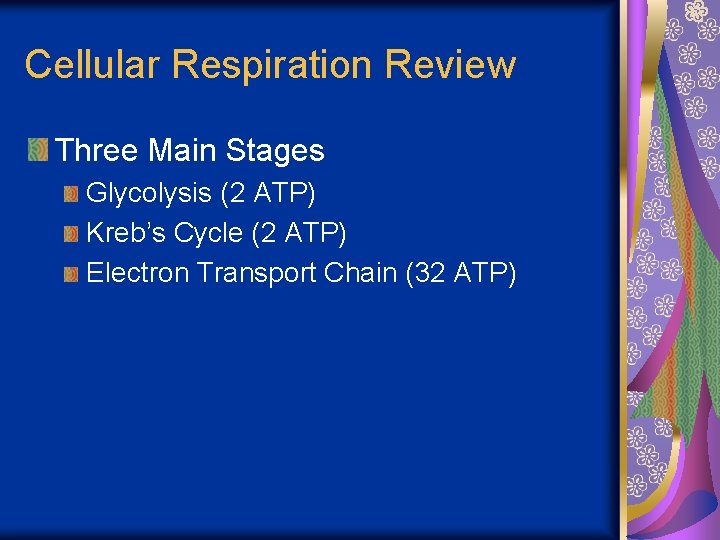
Cellular Respiration Review Three Main Stages Glycolysis (2 ATP) Kreb’s Cycle (2 ATP) Electron Transport Chain (32 ATP)
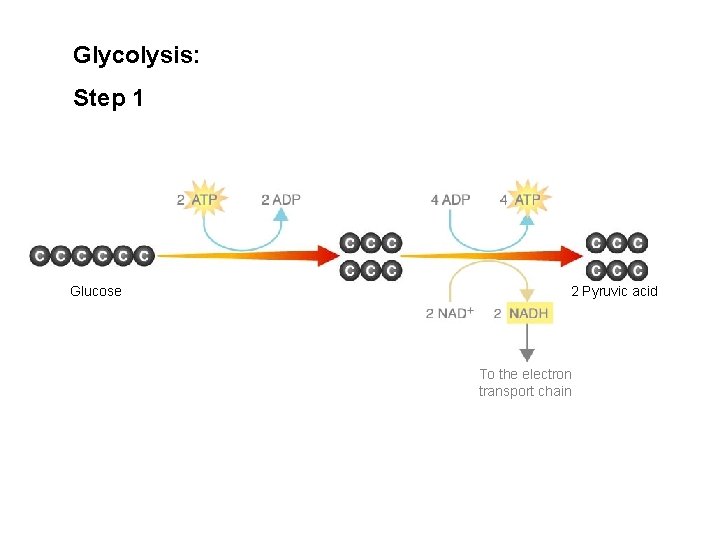
Glycolysis: Figure 9– 3 Glycolysis Step 1 Glucose 2 Pyruvic acid To the electron transport chain
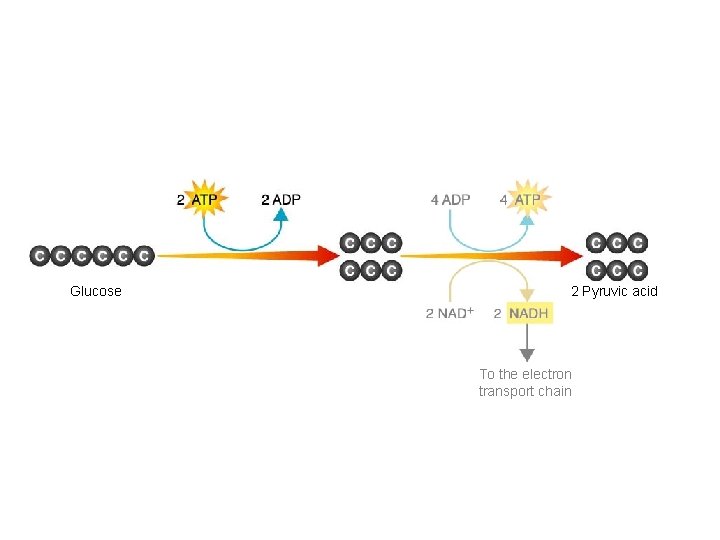
Figure 9– 3 Glycolysis Section 9 -1 Glucose 2 Pyruvic acid To the electron transport chain
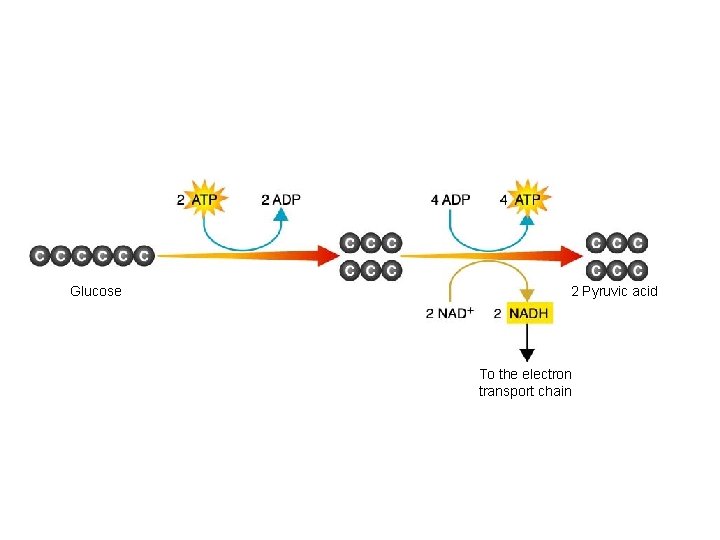
Figure 9– 3 Glycolysis Section 9 -1 Glucose 2 Pyruvic acid To the electron transport chain
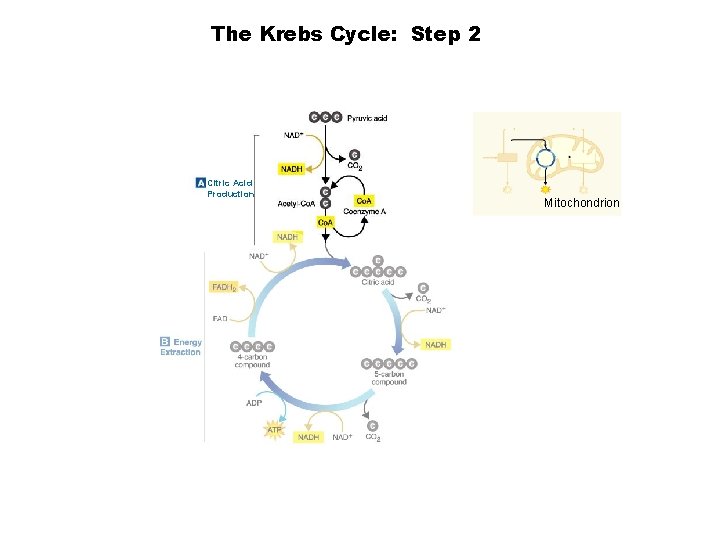
The Krebs Cycle: Step 2 Section 9 -2 Citric Acid Production Mitochondrion
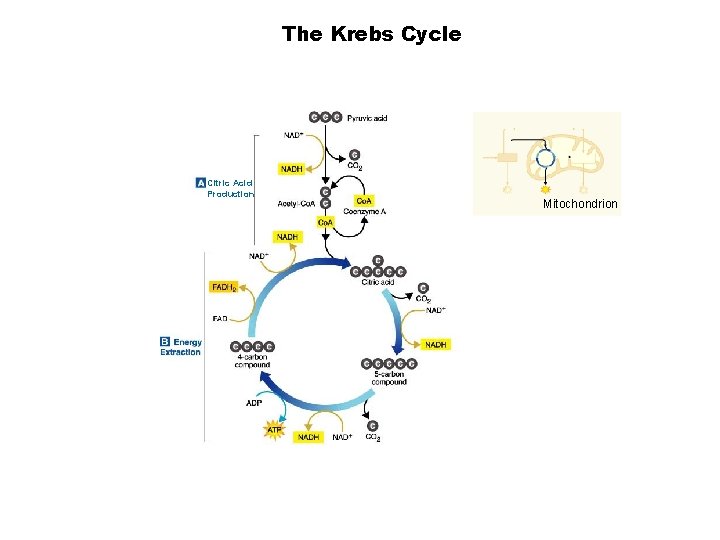
Figure 9– 6 The Krebs Cycle Section 9 -2 Citric Acid Production Mitochondrion
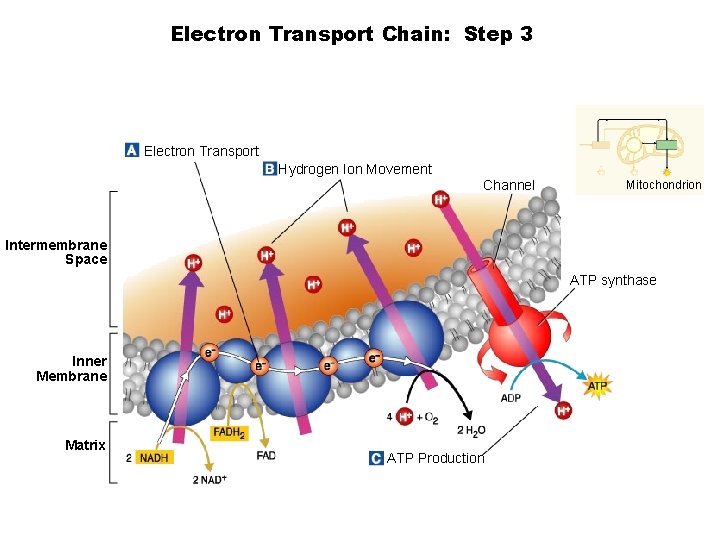
Electron Transport Chain: Step 3 Section 9 -2 Electron Transport Hydrogen Ion Movement Channel Mitochondrion Intermembrane Space ATP synthase Inner Membrane Matrix ATP Production
Evaluation Cellular Respiration Concept Map
- Slides: 48