
CELLULAR RESPIRATION HOW DOES THE MITOCHONDRIA BREAK DOWN
CELLULAR RESPIRATION HOW DOES THE MITOCHONDRIA BREAK DOWN GLUCOSE AND CONVERT IT INTO USABLE ENERGY FOR THE CELL?
RECALL: • Autotrophs use energy from sunlight or chemicals to make their own food • Photosynthesis: sunlight glucose
RECALL: • Photosynthesis: sunlight glucose • Glucose – can it be broken down and used by the cell?
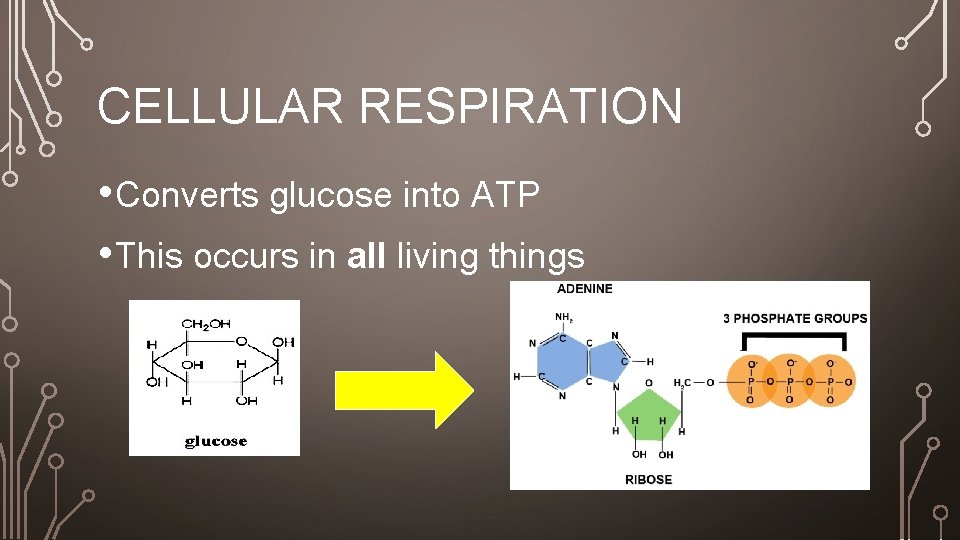
CELLULAR RESPIRATION • Converts glucose into ATP • This occurs in all living things
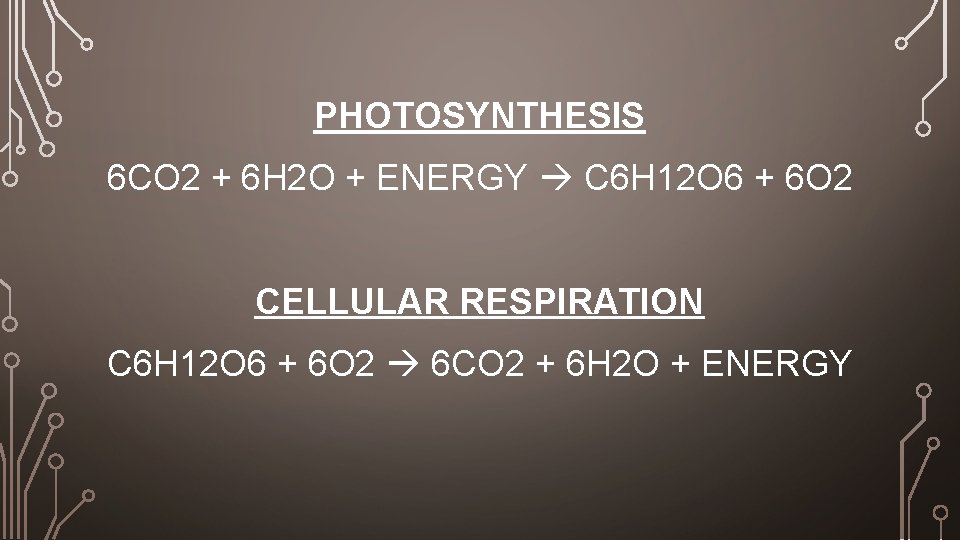
PHOTOSYNTHESIS 6 CO 2 + 6 H 2 O + ENERGY C 6 H 12 O 6 + 6 O 2 CELLULAR RESPIRATION C 6 H 12 O 6 + 6 O 2 6 CO 2 + 6 H 2 O + ENERGY
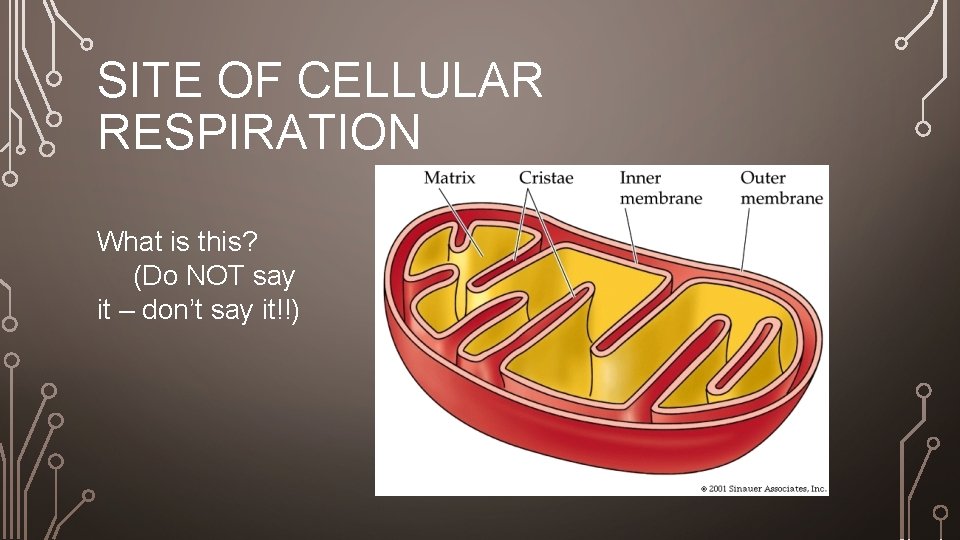
SITE OF CELLULAR RESPIRATION What is this? (Do NOT say it – don’t say it!!)
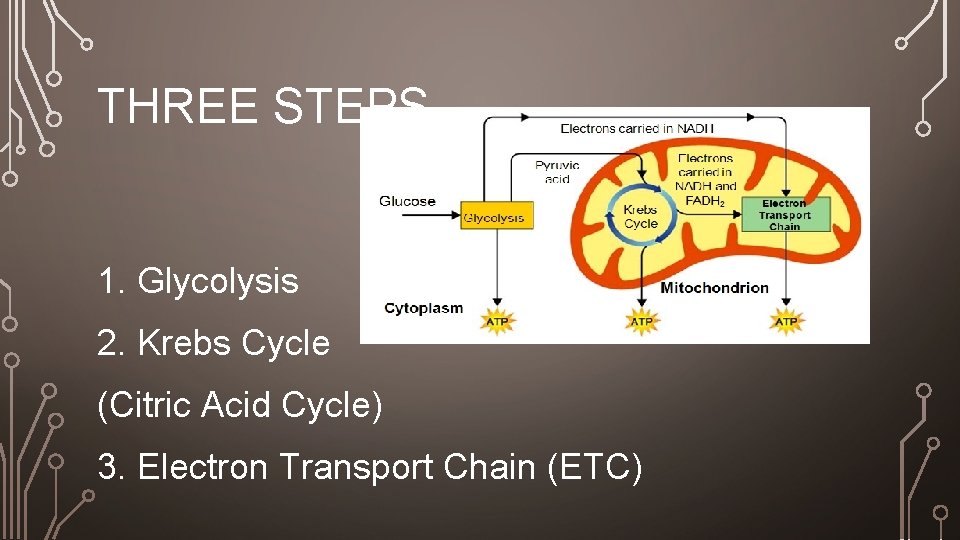
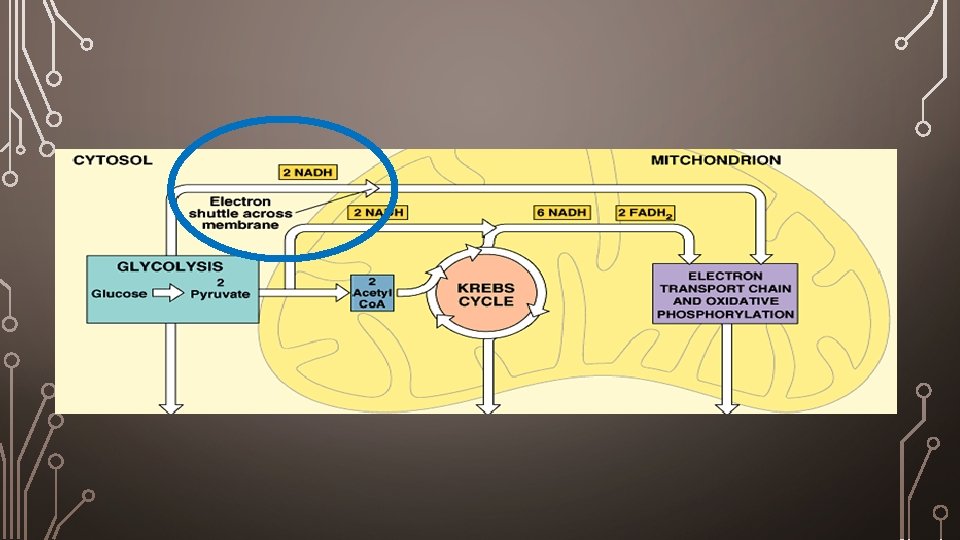
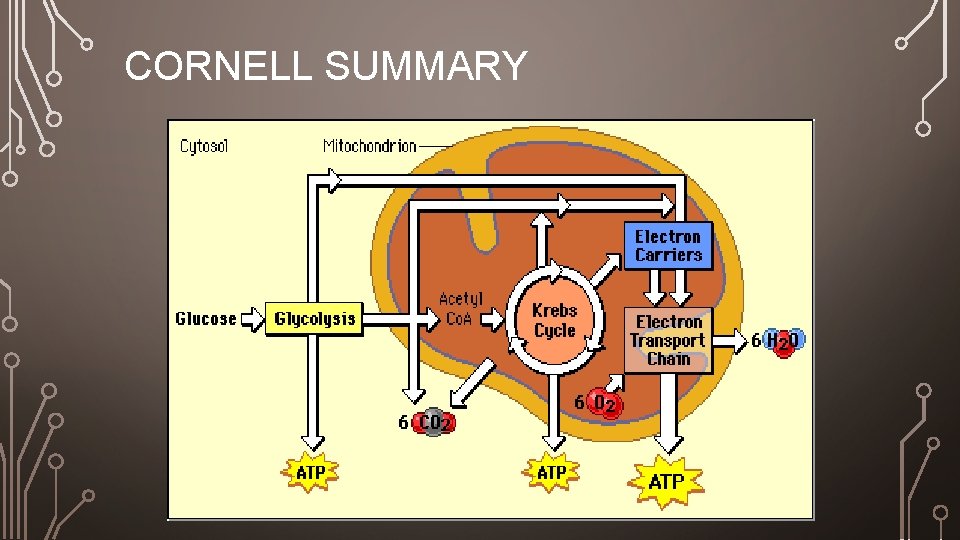
THREE STEPS 1. Glycolysis 2. Krebs Cycle (Citric Acid Cycle) 3. Electron Transport Chain (ETC)
STEP#1: GLYCOLYSIS • Occurs in cytoplasm • 2 ATPs used to split glucose in half (pyruvate) • some energy is released • NADH is produced – shuttled straight to ETC • 4 ATP produced but net gain of 2 ATP total – why?
WHAT HAPPENS TO PYRUVIC ACID NO OXYGEN PRESENT Pyruvate stays in the cytoplasm and will go through fermentation/anaerobic respiration OXYGEN PRESENT Pyruvate will travel to mitochondria and go through aerobic respiration
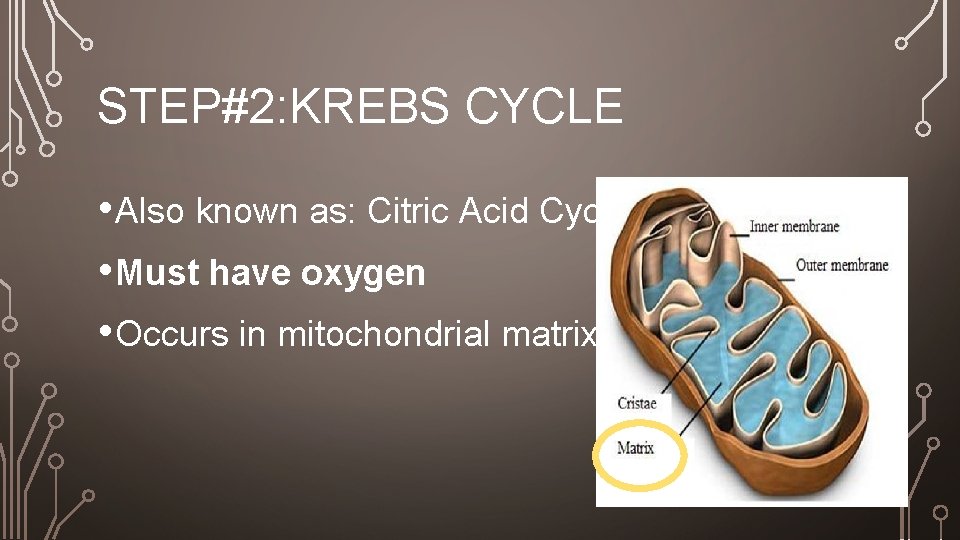
STEP#2: KREBS CYCLE • Also known as: Citric Acid Cycle • Must have oxygen • Occurs in mitochondrial matrix
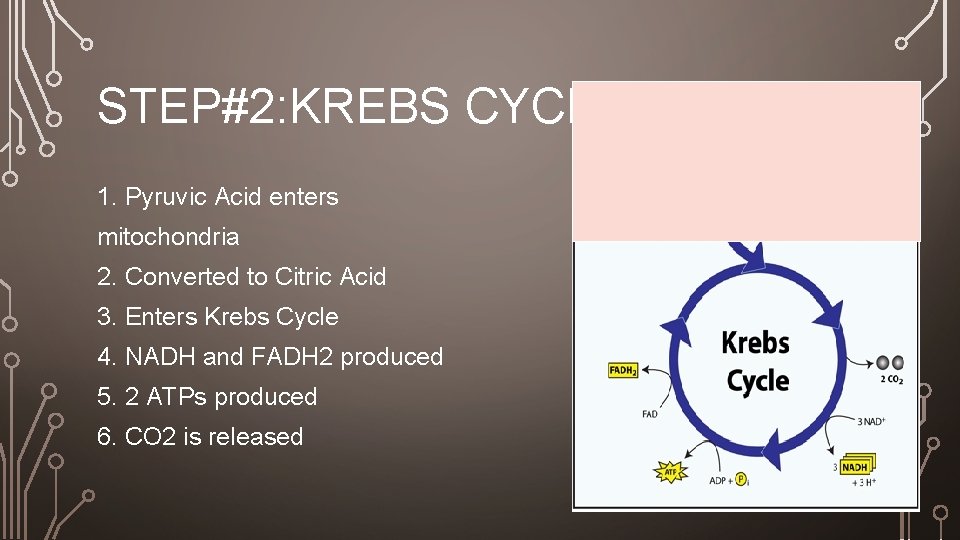
STEP#2: KREBS CYCLE 1. Pyruvic Acid enters mitochondria 2. Converted to Citric Acid 3. Enters Krebs Cycle 4. NADH and FADH 2 produced 5. 2 ATPs produced 6. CO 2 is released
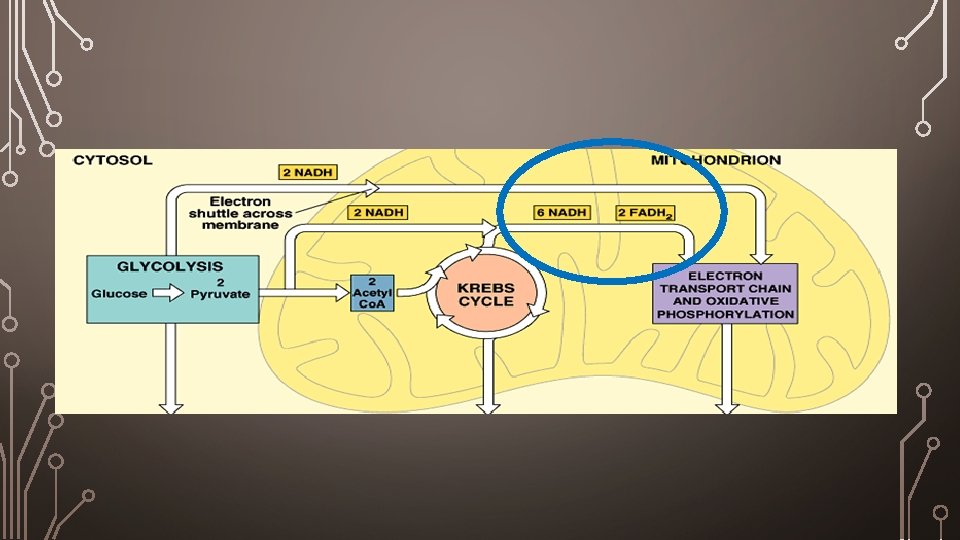
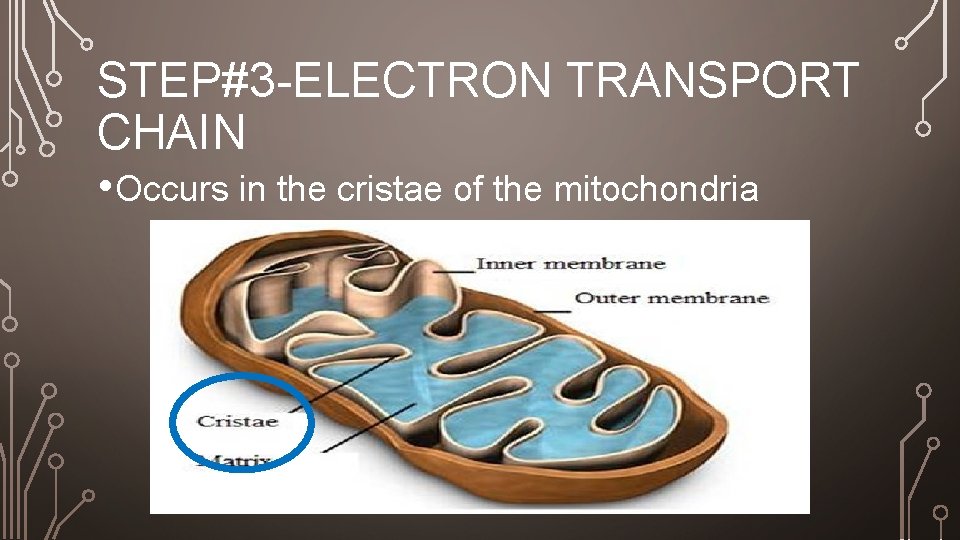
STEP#3 -ELECTRON TRANSPORT CHAIN • Occurs in the cristae of the mitochondria
STEP#3 -ELECTRON TRANSPORT CHAIN 1. 2. NADH and FADH 2 enter the cristae 3. Electrons are accepted by O 2 which combines with H+ to form H 2 O which is released into cell 4. H+ builds up inside cristae and passed through ATP synthase (ADP ATP) Their H+ are lost and electrons shuttles through the ETC
STEP#3 -ELECTRON TRANSPORT CHAIN 5. ETC produces 32 -34 ATP NOTE: 2 ATP are used by transport proteins to move NADH from glycolysis which leaves a net gain of 32 ATP from ETC
CORNELL SUMMARY
- Slides: 17