
Cellular Respiration How do all living organsims make


- Slides: 22
Cellular Respiration How do all living organsims make energy?
Cell Respiration Warm-up- Look at the cell respiration flow chart from your notes to answer the following • Name three stages of cell respiration • Where is most of the energy in cell respiration made? • What stages of cell respiration require oxygen? • What is the main molecule that is broken down in cell respiration?
Cellular Respiration Definition • Process that releases energy by breaking down food molecules in the presence of oxygen; made up of glycolysis, Kreb Cycle, and electron transport chain
Cellular Respiration • process by which glucose is broken down by cells in order to obtain cellular energy (ATP) • We get the glucose from food. Which molecule is the main source? • Two Types of Respiration When Oxygen is used= AEROBIC RESPIRATION • When Oxygen is not used= ANAEROBIC RESPIRATION
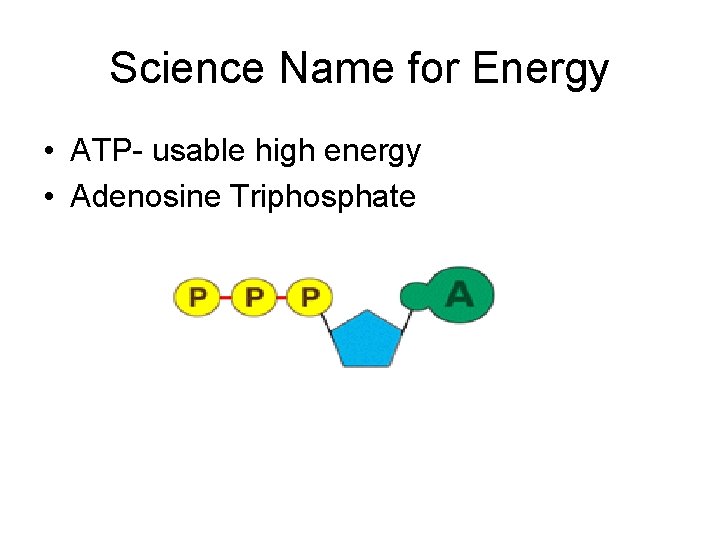
Science Name for Energy • ATP- usable high energy • Adenosine Triphosphate
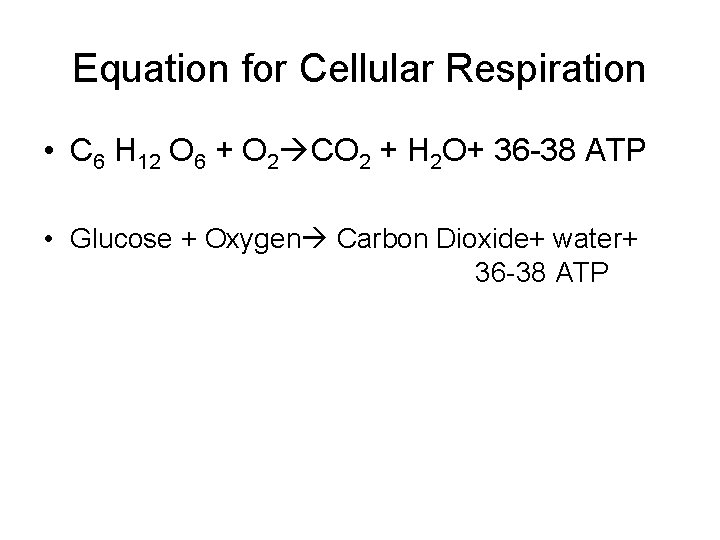
Equation for Cellular Respiration • C 6 H 12 O 6 + O 2 CO 2 + H 2 O+ 36 -38 ATP • Glucose + Oxygen Carbon Dioxide+ water+ 36 -38 ATP
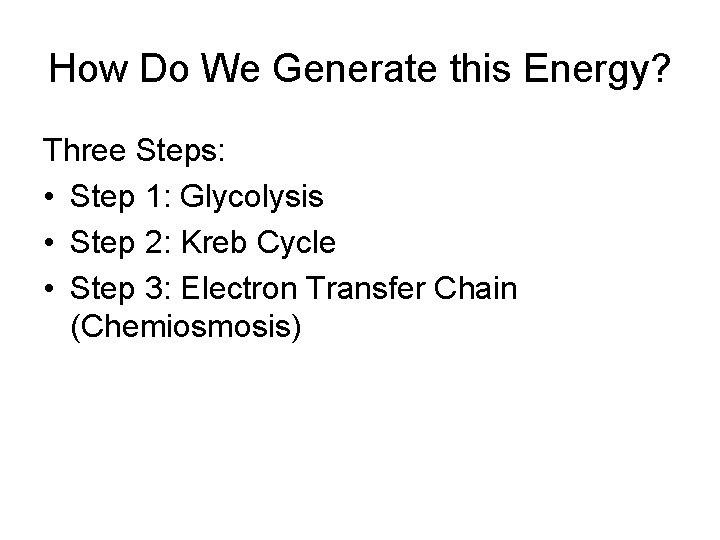
How Do We Generate this Energy? Three Steps: • Step 1: Glycolysis • Step 2: Kreb Cycle • Step 3: Electron Transfer Chain (Chemiosmosis)
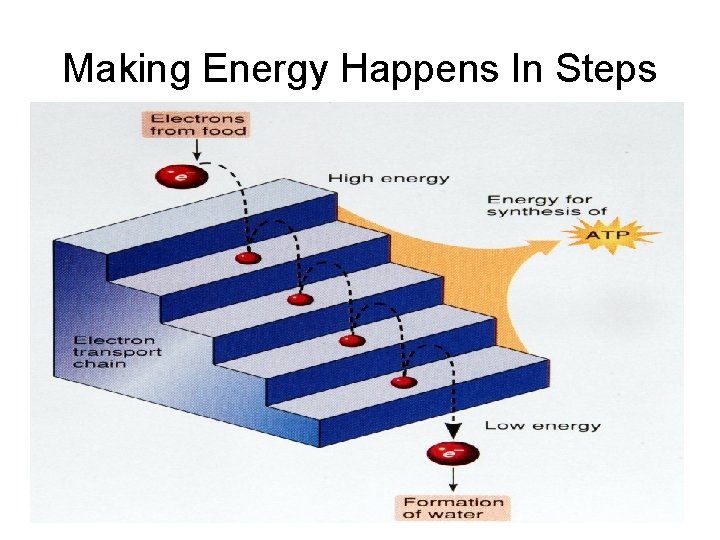
Making Energy Happens In Steps
Where Does this Process Happen? • Cytoplasm- Stage 1 • Mitochondria- Stage 2 and 3
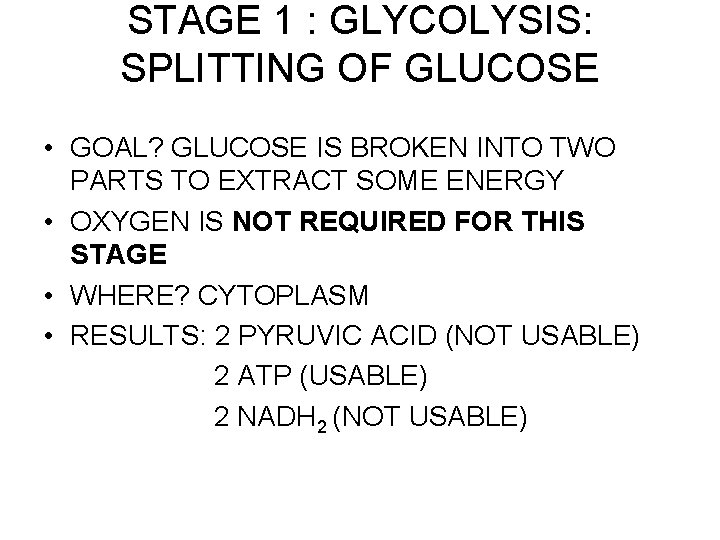
STAGE 1 : GLYCOLYSIS: SPLITTING OF GLUCOSE • GOAL? GLUCOSE IS BROKEN INTO TWO PARTS TO EXTRACT SOME ENERGY • OXYGEN IS NOT REQUIRED FOR THIS STAGE • WHERE? CYTOPLASM • RESULTS: 2 PYRUVIC ACID (NOT USABLE) 2 ATP (USABLE) 2 NADH 2 (NOT USABLE)
Glycolysis • http: //highered. mcgrawhill. com/sites/0072507470/student_view 0/ chapter 25/animation__how_glycolysis_wo rks. html • Watch the animation and discuss with your neighbor what you saw happen to glucose and how much energy was formed
Copy and paste this link to view stage one http: //www. science. smith. edu/departments/B iology/Bio 231/glycolysis. html
The Kreb Cycle • http: //highered. mcgrawhill. com/sites/0072507470/student_view 0/ chapter 25/animation__how_the_krebs_cy cle_works__quiz_1_. html • Watch the animation and discuss with your neighbor what you saw happen to pyruvic acid and how much energy was formed. • How much of the energy can directly be used by cells? Can not directly be used?
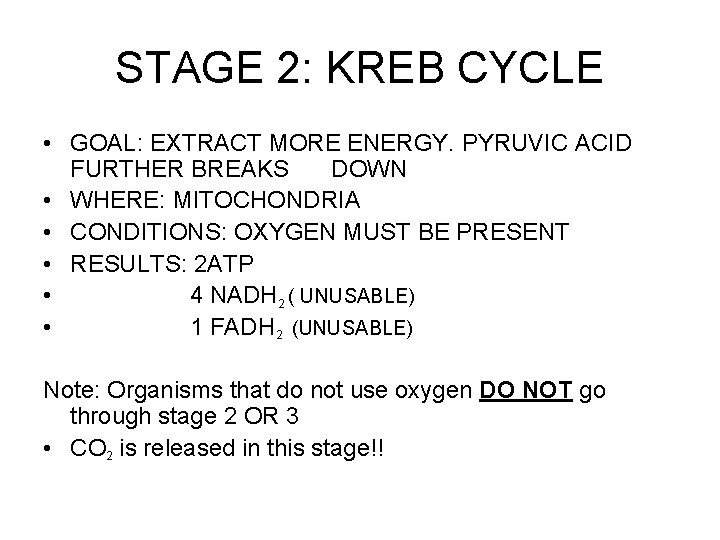
STAGE 2: KREB CYCLE • GOAL: EXTRACT MORE ENERGY. PYRUVIC ACID FURTHER BREAKS DOWN • WHERE: MITOCHONDRIA • CONDITIONS: OXYGEN MUST BE PRESENT • RESULTS: 2 ATP • 4 NADH 2 ( UNUSABLE) • 1 FADH 2 (UNUSABLE) Note: Organisms that do not use oxygen DO NOT go through stage 2 OR 3 • CO 2 is released in this stage!!
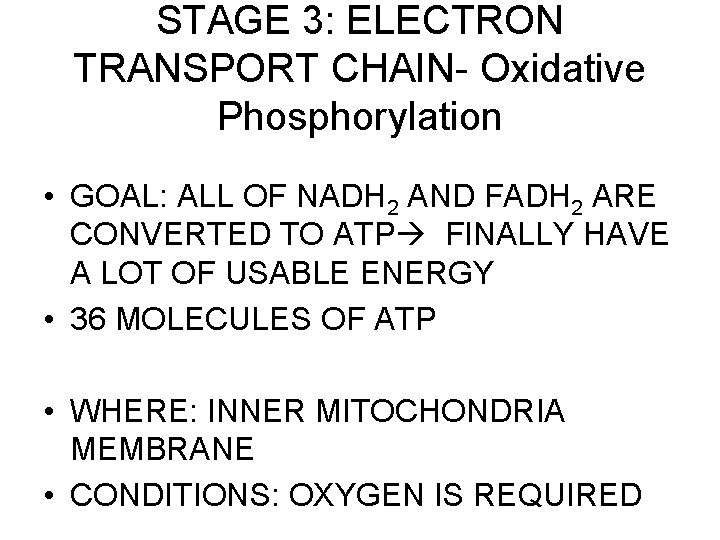
STAGE 3: ELECTRON TRANSPORT CHAIN- Oxidative Phosphorylation • GOAL: ALL OF NADH 2 AND FADH 2 ARE CONVERTED TO ATP FINALLY HAVE A LOT OF USABLE ENERGY • 36 MOLECULES OF ATP • WHERE: INNER MITOCHONDRIA MEMBRANE • CONDITIONS: OXYGEN IS REQUIRED
The Electron Transport Chain • http: //highered. mcgrawhill. com/sites/0072507470/student_view 0/ chapter 25/animation__electron_transport_ system_and_formation_of_atp__quiz_2_. h tml • Discuss with your neighbor oxygen is important in this stage of cellular respiration, and what happens to all the NADH and FADH’s
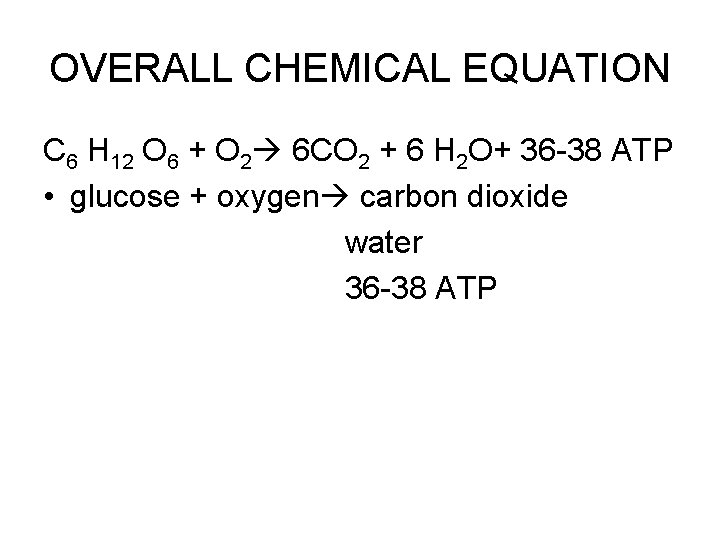
OVERALL CHEMICAL EQUATION C 6 H 12 O 6 + O 2 6 CO 2 + 6 H 2 O+ 36 -38 ATP • glucose + oxygen carbon dioxide water 36 -38 ATP
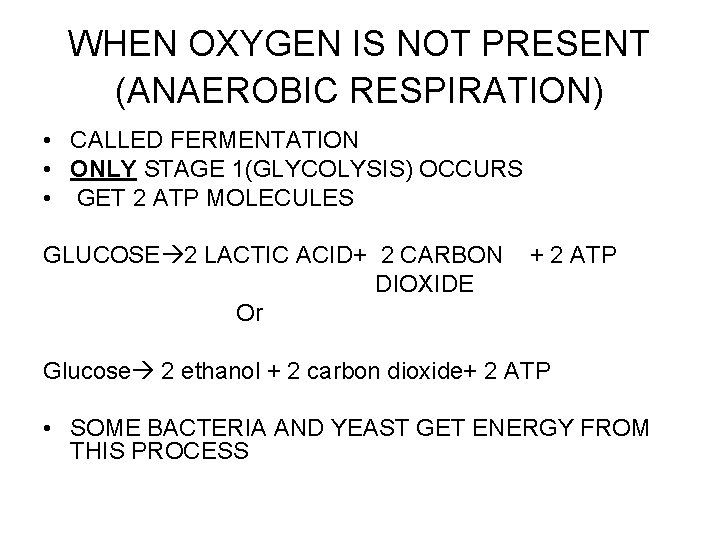
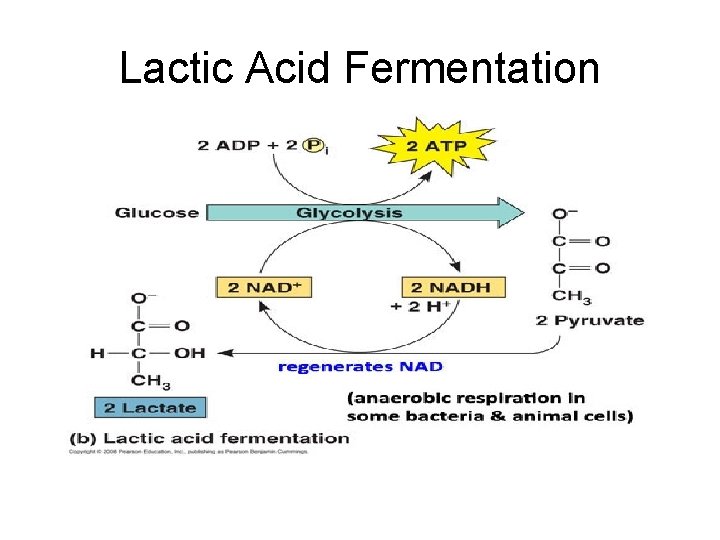
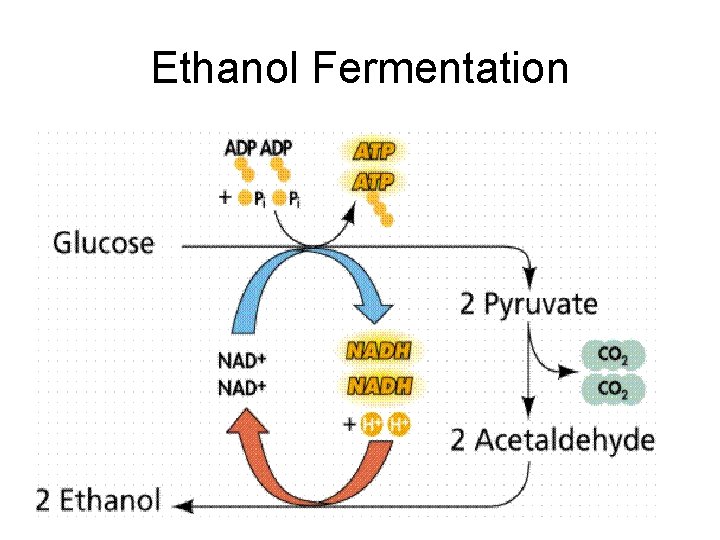
WHEN OXYGEN IS NOT PRESENT (ANAEROBIC RESPIRATION) • CALLED FERMENTATION • ONLY STAGE 1(GLYCOLYSIS) OCCURS • GET 2 ATP MOLECULES GLUCOSE 2 LACTIC ACID+ 2 CARBON DIOXIDE Or + 2 ATP Glucose 2 ethanol + 2 carbon dioxide+ 2 ATP • SOME BACTERIA AND YEAST GET ENERGY FROM THIS PROCESS
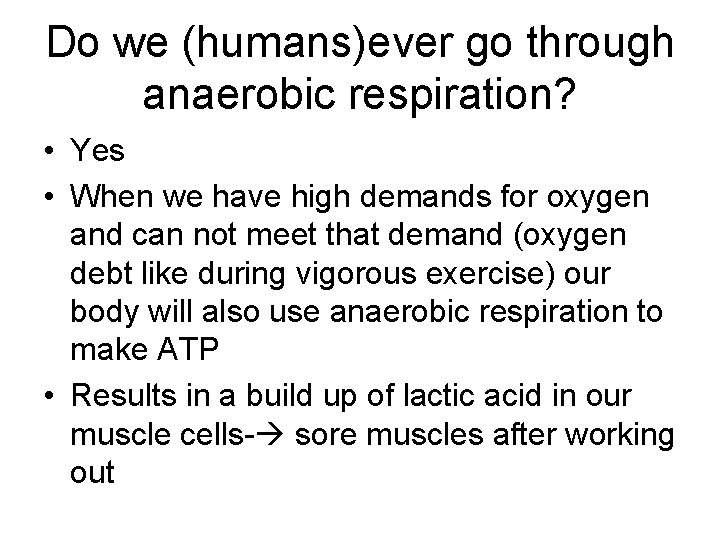
Do we (humans)ever go through anaerobic respiration? • Yes • When we have high demands for oxygen and can not meet that demand (oxygen debt like during vigorous exercise) our body will also use anaerobic respiration to make ATP • Results in a build up of lactic acid in our muscle cells- sore muscles after working out
Lactic Acid Fermentation
Ethanol Fermentation
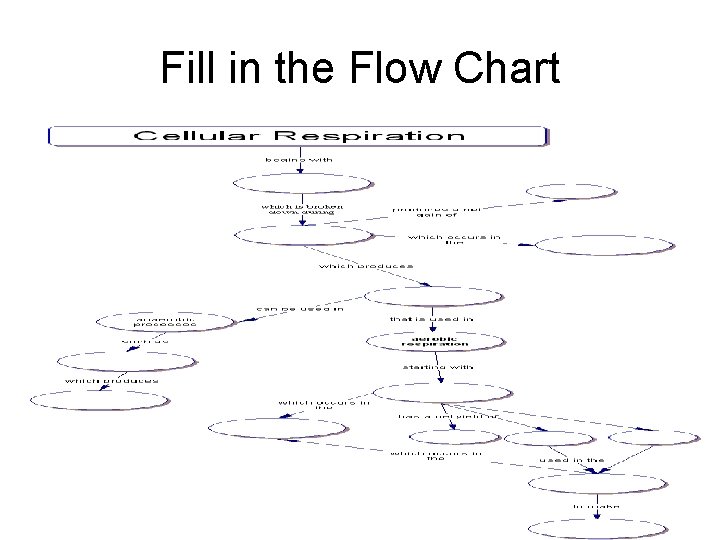
Fill in the Flow Chart