
Cellular Respiration How cells release energy from food
- Slides: 13
Cellular Respiration: How cells release energy from food 12/12/2021 Chapter 6 1
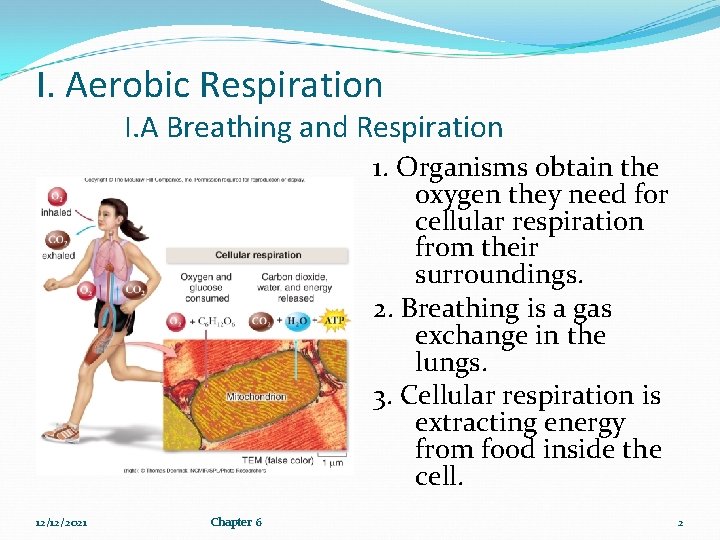
I. Aerobic Respiration I. A Breathing and Respiration 1. Organisms obtain the oxygen they need for cellular respiration from their surroundings. 2. Breathing is a gas exchange in the lungs. 3. Cellular respiration is extracting energy from food inside the cell. 12/12/2021 Chapter 6 2
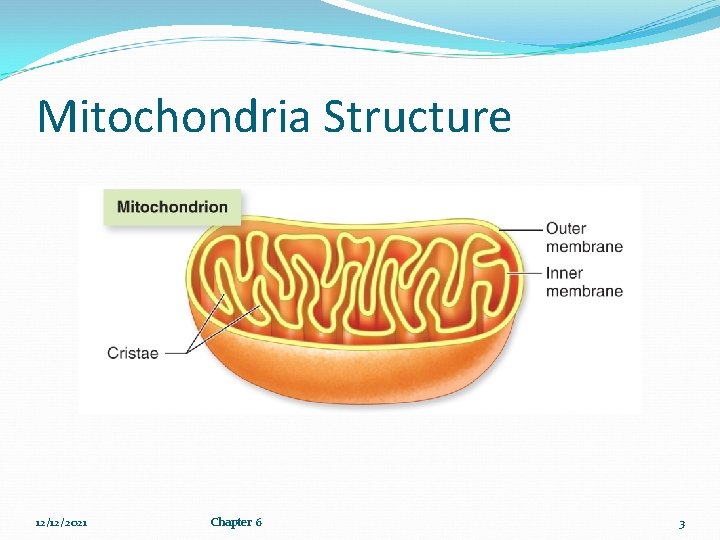
Mitochondria Structure 12/12/2021 Chapter 6 3
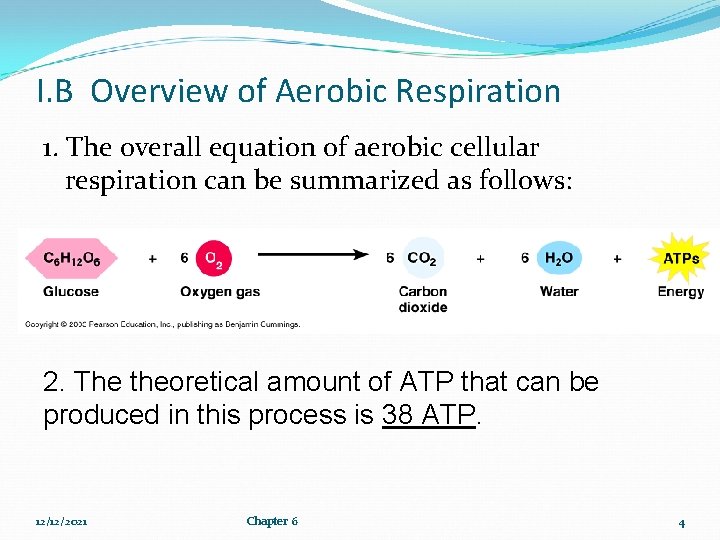
I. B Overview of Aerobic Respiration 1. The overall equation of aerobic cellular respiration can be summarized as follows: 2. The theoretical amount of ATP that can be produced in this process is 38 ATP. 12/12/2021 Chapter 6 4
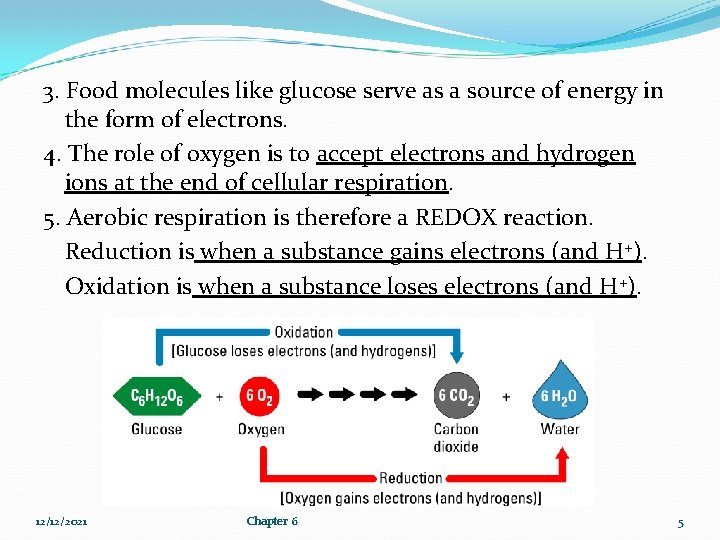
3. Food molecules like glucose serve as a source of energy in the form of electrons. 4. The role of oxygen is to accept electrons and hydrogen ions at the end of cellular respiration. 5. Aerobic respiration is therefore a REDOX reaction. Reduction is when a substance gains electrons (and H+). Oxidation is when a substance loses electrons (and H+). 12/12/2021 Chapter 6 5
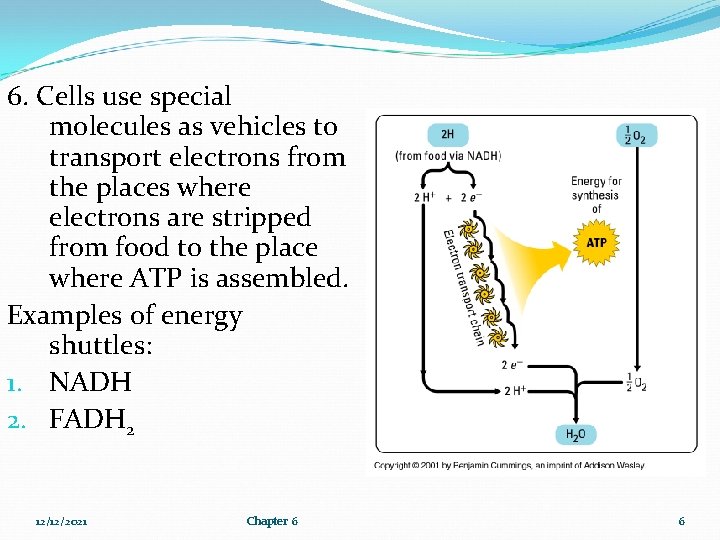
6. Cells use special molecules as vehicles to transport electrons from the places where electrons are stripped from food to the place where ATP is assembled. Examples of energy shuttles: 1. NADH 2. FADH 2 12/12/2021 Chapter 6 6
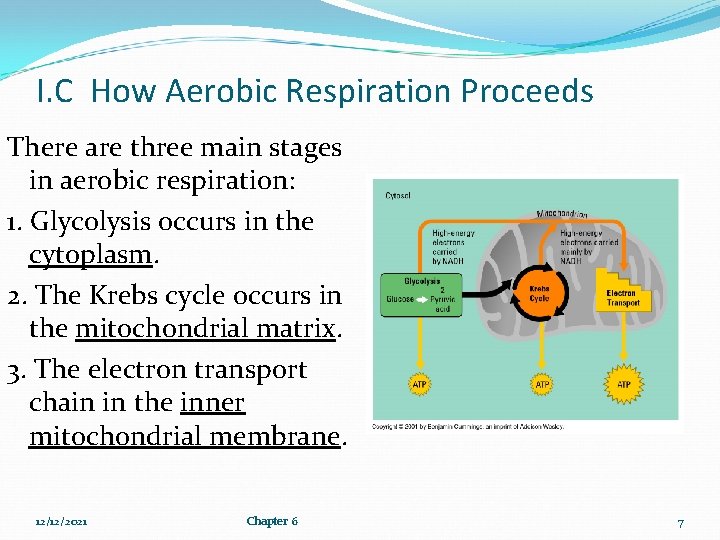
I. C How Aerobic Respiration Proceeds There are three main stages in aerobic respiration: 1. Glycolysis occurs in the cytoplasm. 2. The Krebs cycle occurs in the mitochondrial matrix. 3. The electron transport chain in the inner mitochondrial membrane. 12/12/2021 Chapter 6 7
12/12/2021 Chapter 6 8
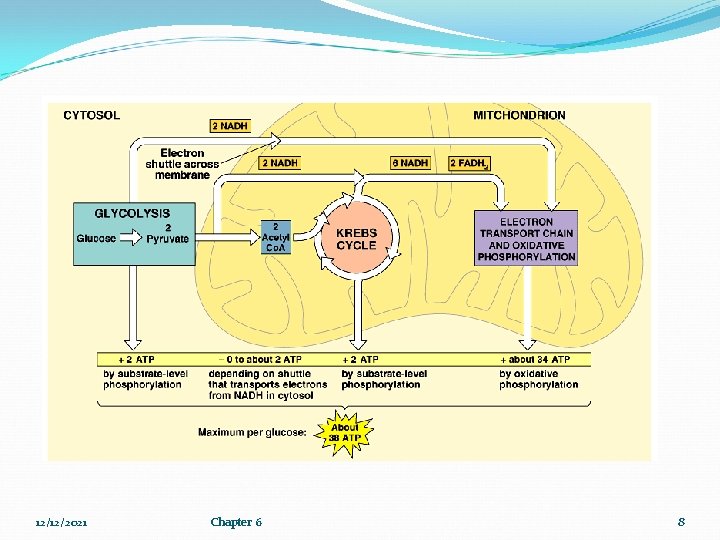
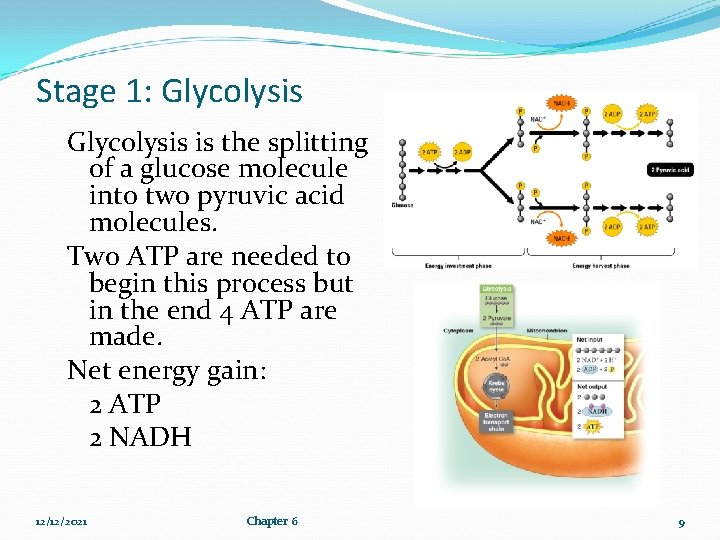
Stage 1: Glycolysis is the splitting of a glucose molecule into two pyruvic acid molecules. Two ATP are needed to begin this process but in the end 4 ATP are made. Net energy gain: 2 ATP 2 NADH 12/12/2021 Chapter 6 9
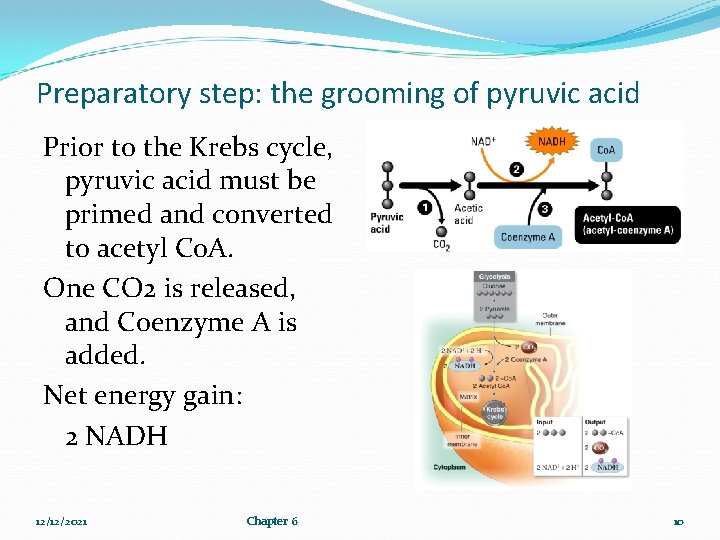
Preparatory step: the grooming of pyruvic acid Prior to the Krebs cycle, pyruvic acid must be primed and converted to acetyl Co. A. One CO 2 is released, and Coenzyme A is added. Net energy gain: 2 NADH 12/12/2021 Chapter 6 10
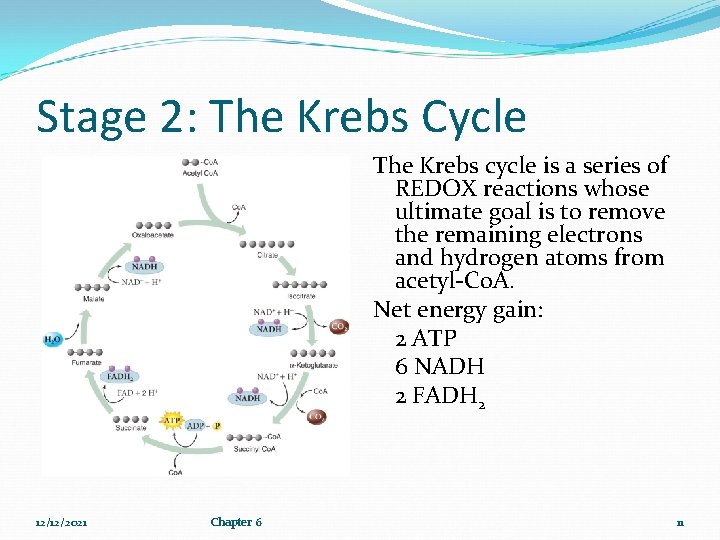
Stage 2: The Krebs Cycle The Krebs cycle is a series of REDOX reactions whose ultimate goal is to remove the remaining electrons and hydrogen atoms from acetyl-Co. A. Net energy gain: 2 ATP 6 NADH 2 FADH 2 12/12/2021 Chapter 6 11
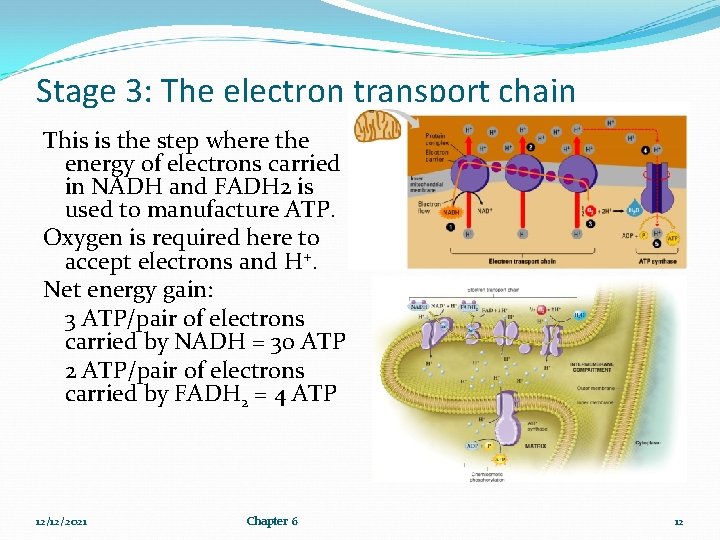
Stage 3: The electron transport chain This is the step where the energy of electrons carried in NADH and FADH 2 is used to manufacture ATP. Oxygen is required here to accept electrons and H+. Net energy gain: 3 ATP/pair of electrons carried by NADH = 30 ATP 2 ATP/pair of electrons carried by FADH 2 = 4 ATP 12/12/2021 Chapter 6 12
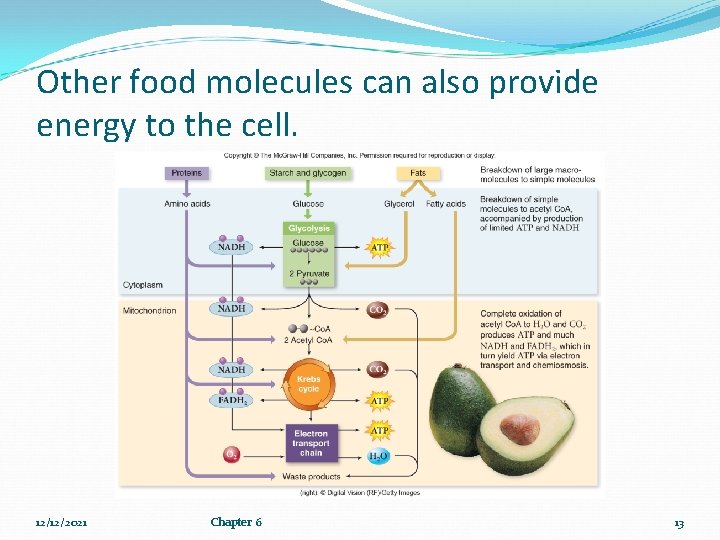
Other food molecules can also provide energy to the cell. 12/12/2021 Chapter 6 13