
Cellular Respiration How cells make ATP by breaking
Cellular Respiration How cells make ATP by breaking down organic compounds
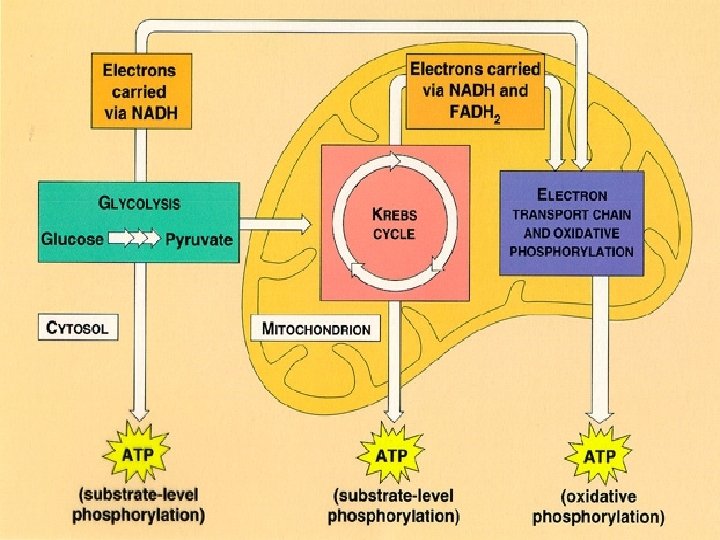
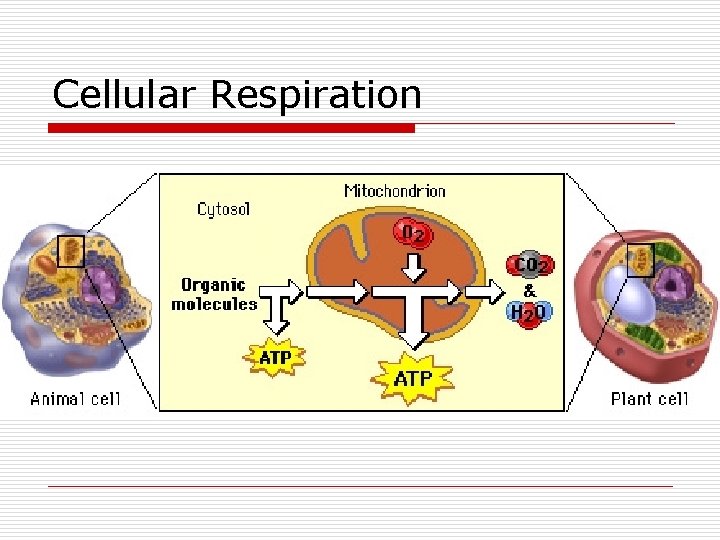
Overview o o BOTH plants and animals use cellular respiration Two stages to cellular respiration n Glycolysis o n Organic compounds converted to pyruvic acid Aerobic Respiration o Pyruvic acid used to make large number of ATP
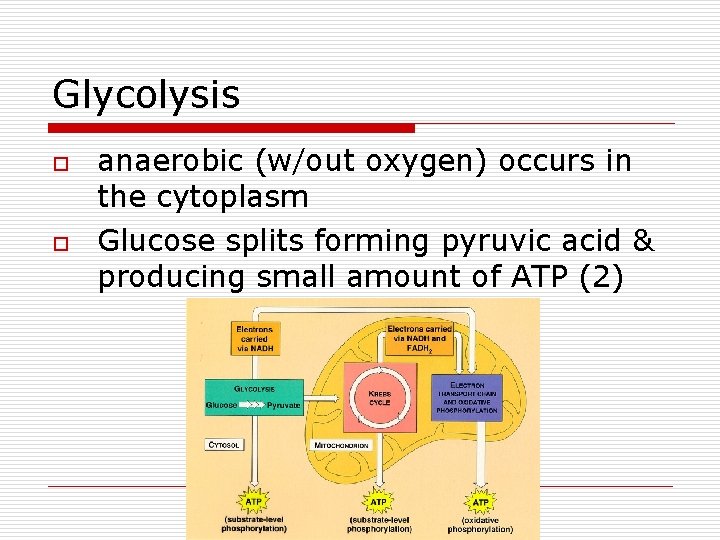
Glycolysis o o anaerobic (w/out oxygen) occurs in the cytoplasm Glucose splits forming pyruvic acid & producing small amount of ATP (2)
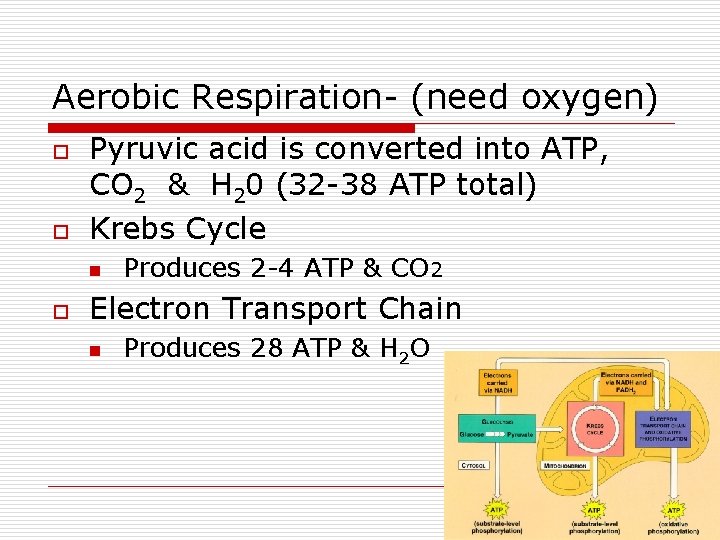
Aerobic Respiration- (need oxygen) o o Pyruvic acid is converted into ATP, CO 2 & H 20 (32 -38 ATP total) Krebs Cycle n o Produces 2 -4 ATP & CO 2 Electron Transport Chain n Produces 28 ATP & H 2 O
Fermentation (no oxygen present) Convert pyruvic acid into other compounds Two common pathways o n Lactic acid fermentation o milk ferments if not refrigerated; n o soreness in muscles n n yogurt, sour cream, cheese; muscle cells use up oxygen faster than it can be delivered to them Alcoholic fermentation o pyruvic acid to ethyl alcohol, done by yeast o yeast releases ethyl alcohol & CO 2 n o (ethyl alcohol is the “alcohol” in alcoholic beverages) bread making n CO 2 released makes the bread rise, ethyl alcohol evaporates during baking
Cellular Respiration
On the back of your paper o Draw the process of cellular respiration n n Glucose Cytoplasm Glycolysis Mitochondria Aerobic Krebs cycle Electron transport chain ATP Fermentation H 2 O CO 2
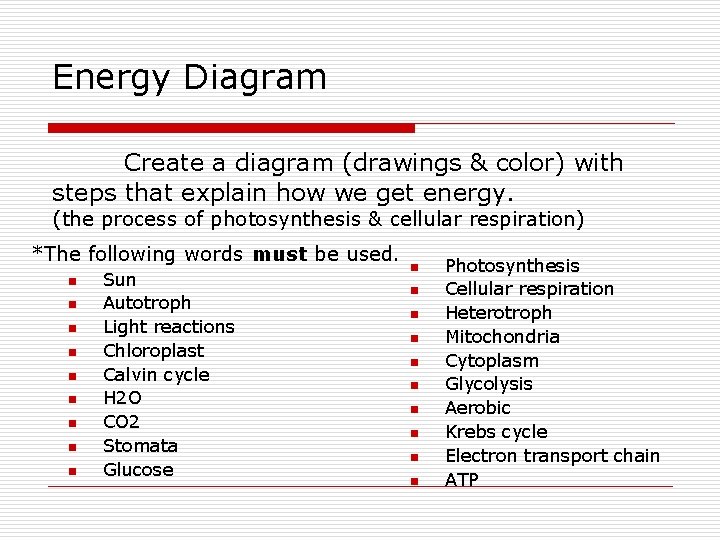
Energy Diagram Create a diagram (drawings & color) with steps that explain how we get energy. (the process of photosynthesis & cellular respiration) *The following words must be used. n n n n n Sun Autotroph Light reactions Chloroplast Calvin cycle H 2 O CO 2 Stomata Glucose n n n n n Photosynthesis Cellular respiration Heterotroph Mitochondria Cytoplasm Glycolysis Aerobic Krebs cycle Electron transport chain ATP
- Slides: 9