
Cellular Respiration Glycolysis Overview of Cellular Respiration n
- Slides: 15
Cellular Respiration & Glycolysis
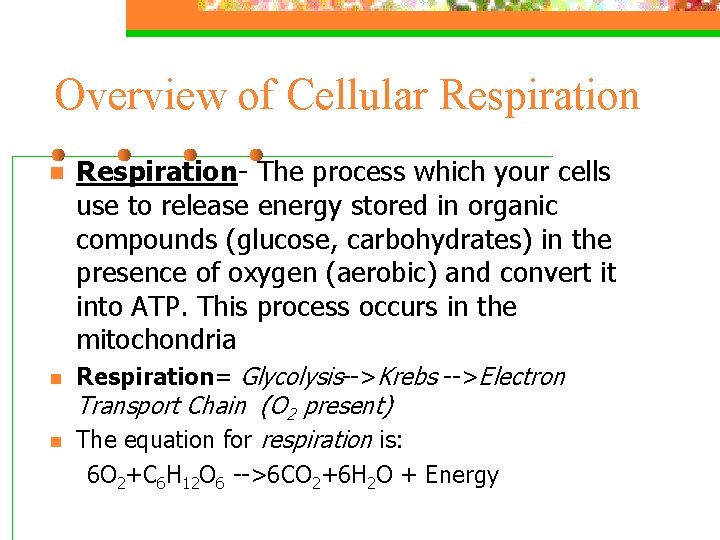
Overview of Cellular Respiration n Respiration- The process which your cells use to release energy stored in organic compounds (glucose, carbohydrates) in the presence of oxygen (aerobic) and convert it into ATP. This process occurs in the mitochondria n Respiration= Glycolysis-->Krebs -->Electron n Transport Chain (O 2 present) The equation for respiration is: 6 O 2+C 6 H 12 O 6 -->6 CO 2+6 H 2 O + Energy
Chemical Energy & Food n n We are heterotrophs and can’t produce our own food, so we must obtain it by eating food. Calorie- is the amount of heat needed to raise the temperature of 1 gram of water 1 degree Celsius. n n n We measure our food source using calories. On food labels it says how many calories are in the food. This tells us how much energy we are going to get from that food
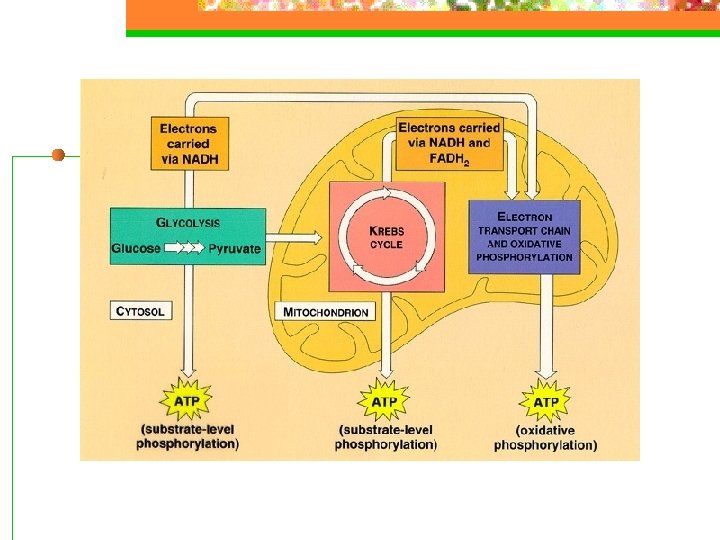
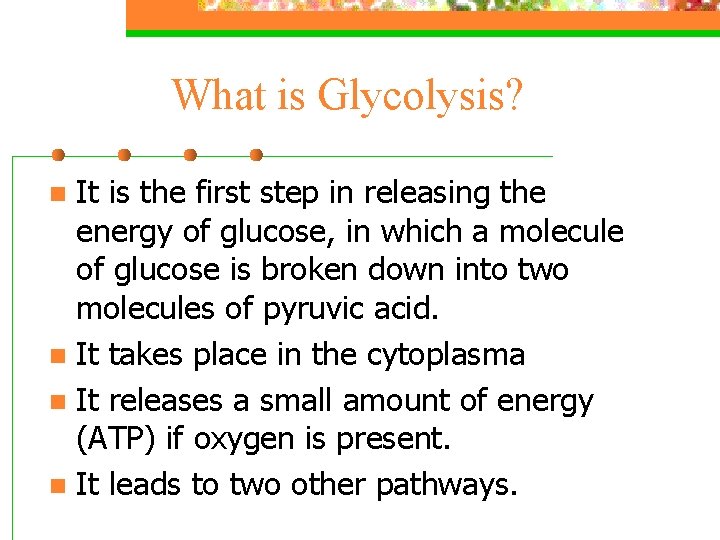
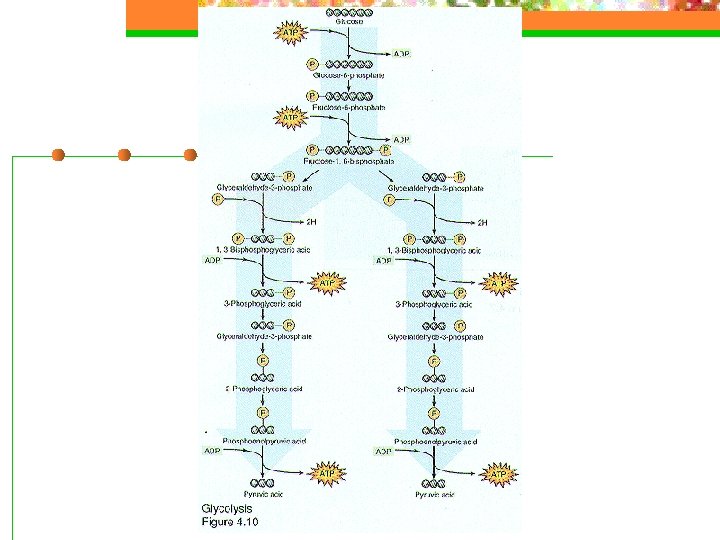
What is Glycolysis? It is the first step in releasing the energy of glucose, in which a molecule of glucose is broken down into two molecules of pyruvic acid. n It takes place in the cytoplasma n It releases a small amount of energy (ATP) if oxygen is present. n It leads to two other pathways. n
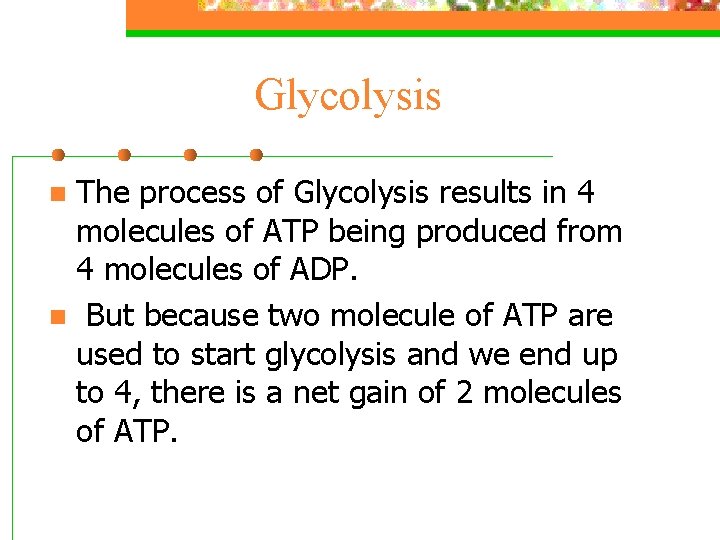
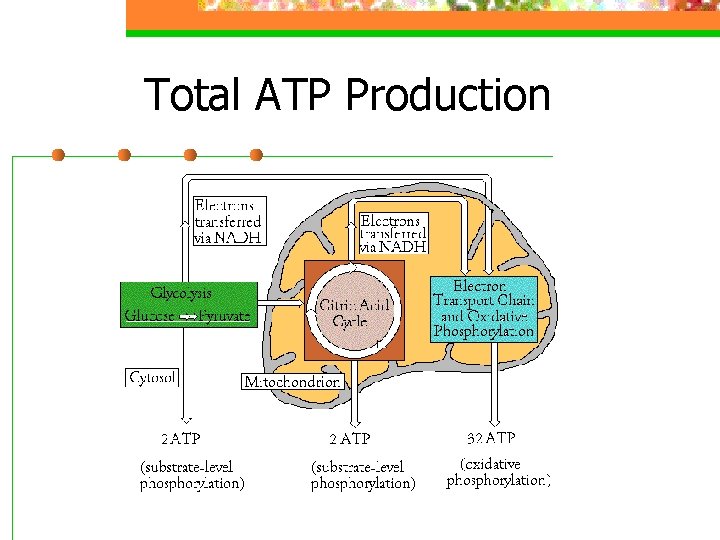
Glycolysis The process of Glycolysis results in 4 molecules of ATP being produced from 4 molecules of ADP. n But because two molecule of ATP are used to start glycolysis and we end up to 4, there is a net gain of 2 molecules of ATP. n
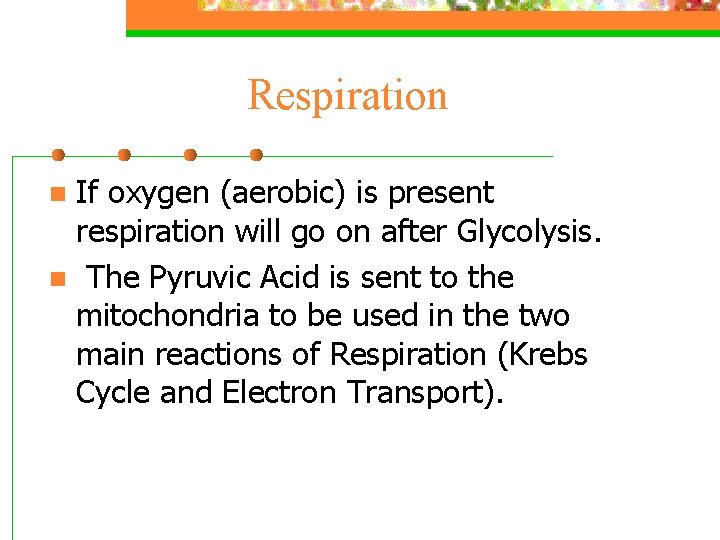
Respiration If oxygen (aerobic) is present respiration will go on after Glycolysis. n The Pyruvic Acid is sent to the mitochondria to be used in the two main reactions of Respiration (Krebs Cycle and Electron Transport). n
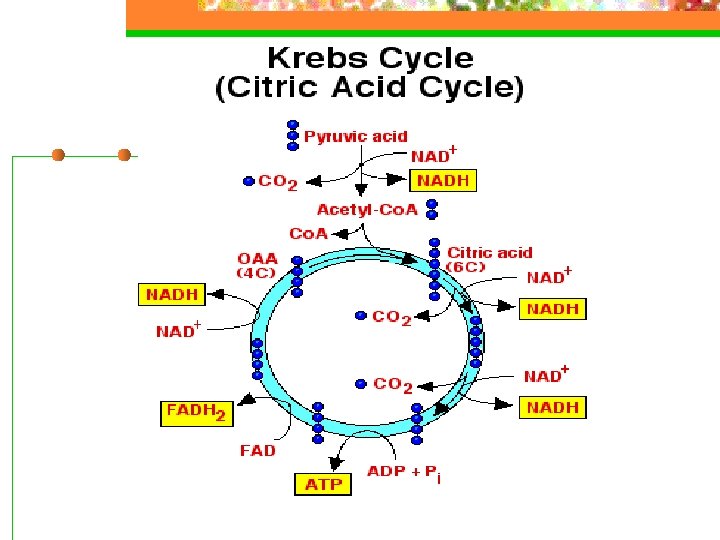
Krebs Cycle n n n The first set of reactions in respiration. Also known as the Citric Acid Cycle. Takes place in the mitochondria. During Krebs, Pyruvic Acid (from glycolysis) is broken down in to Carbon Dioxide. It is a continuing series of reactions (cycle). Its takes place twice for every one time glycolysis takes place.
Krebs n n n The cycle transfers electrons to electron carriers (FAD, NAD). There are nine reactions and nine intermediates in the Krebs Cycle, at two places it releases CO 2 and at five places a pair of high energy electrons are accepted by carriers. Products (CO 2, NADH, FADH 2)
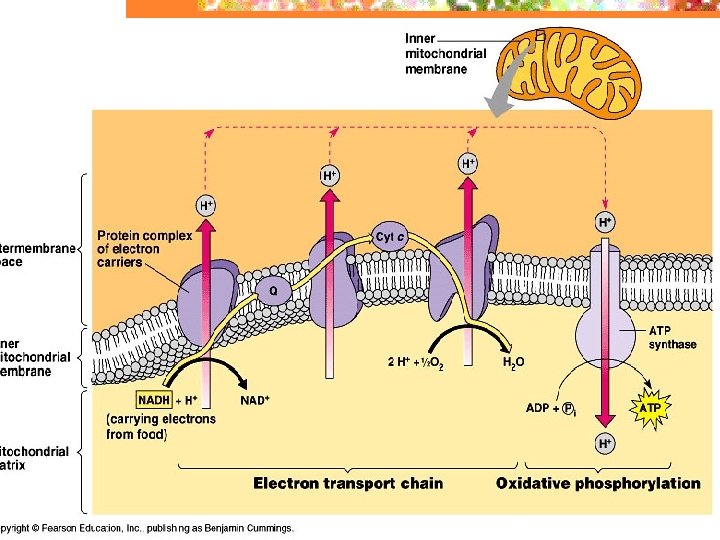
Electron Transport Chain The high energy electrons generated by the Krebs cycle are passed via (NADH and FADH 2) to the electron transport chain. n The electron transport chain uses the high-energy electrons to convert ADP to ATP, 3 molecules of ATP are produced. n
Electron Transport Chain n The electrons from the NADH and FADH 2 are passed to a series of electron transport enzymes in the mitochondrion. At the end of this chain is an enzyme that combines electrons from the chain with H+ and O 2 to form water. This is where O 2 the final electron acceptor in respiration comes from. O 2 is essential from obtaining energy from NADH and FADH 2
Total ATP Production