
CELLULAR RESPIRATION Glucose to ATP Mitochondria are important
- Slides: 42
CELLULAR RESPIRATION Glucose to ATP
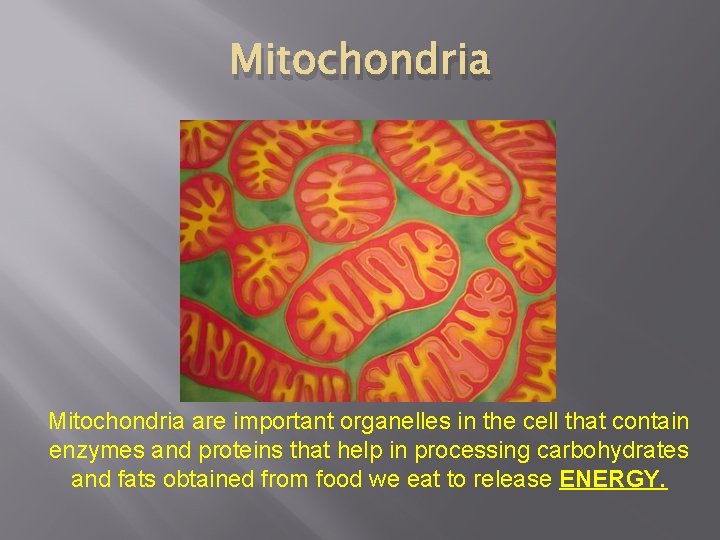
Mitochondria are important organelles in the cell that contain enzymes and proteins that help in processing carbohydrates and fats obtained from food we eat to release ENERGY.
Mitochondria � � � Everything that an organism does requires energy, from the beating of heart or the flapping of wings. This energy is stored in ATP molecules that are produced in the mitochondria by the process of oxidative phosphorylation. Mitochondria are present in every cell, they are found in high concentrations in the muscle cells that require more energy.
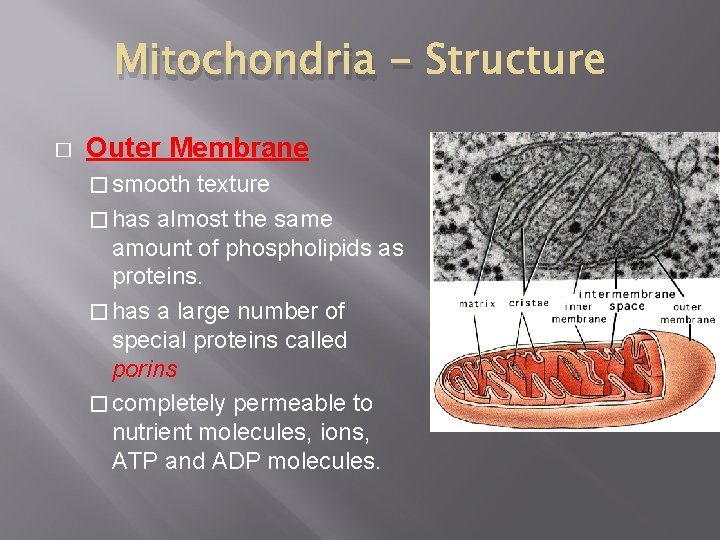
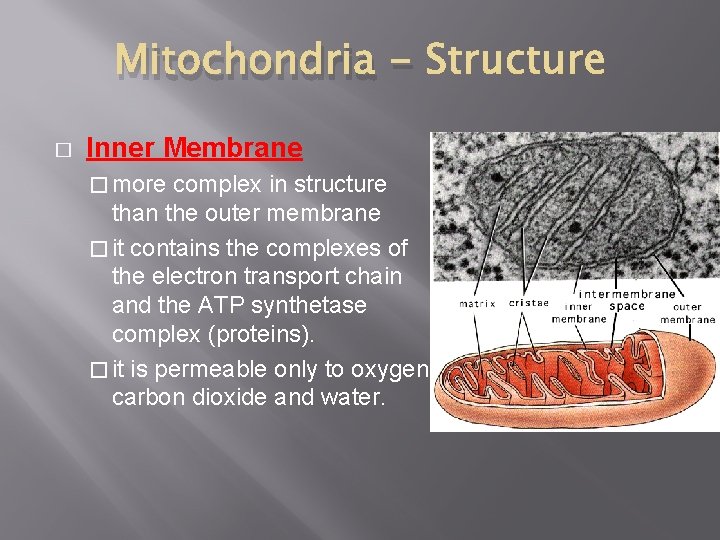
Mitochondria � � � Mitochondria are rod-shaped structures that are enclosed within two membranes. The membranes are made up of phospholipids and proteins. The space in between the two membranes is called the inter-membrane space which has the same composition as the cytoplasm of the cell.
Mitochondria � Outer Membrane � smooth texture � has almost the same amount of phospholipids as proteins. � has a large number of special proteins called porins � completely permeable to nutrient molecules, ions, ATP and ADP molecules.
Mitochondria � Inner Membrane � more complex in structure than the outer membrane � it contains the complexes of the electron transport chain and the ATP synthetase complex (proteins). � it is permeable only to oxygen, carbon dioxide and water.
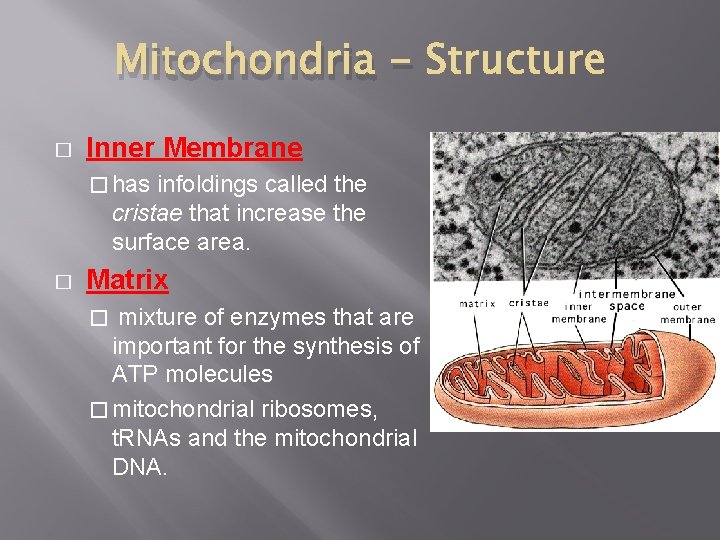
Mitochondria � Inner Membrane � has infoldings called the cristae that increase the surface area. � Matrix � mixture of enzymes that are important for the synthesis of ATP molecules � mitochondrial ribosomes, t. RNAs and the mitochondrial DNA.
Mitochondria � The most important function of the mitochondria is to produce energy. � food is broken into simpler molecules (carbohydrates, fats, etc. ) � These are sent to the mitochondrion where they are further processed to produce charged molecules that combine with oxygen and produce ATP molecules. � This entire process is known as OXIDATIVE PHOSPHORYLATION.
Mitochondria � � � Serve as storage tanks of calcium ions for the cell. Help produce hormones like testosterone and estrogen. Mitochondria in the liver cells have enzymes that detoxify ammonia( to produce Urea).
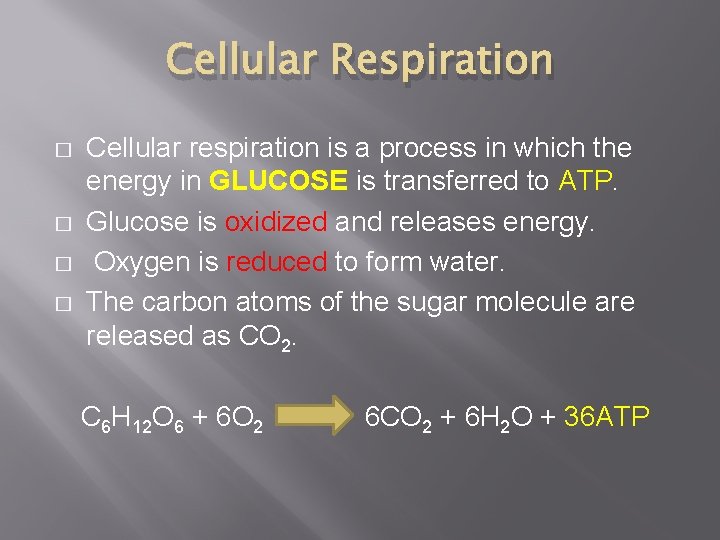
Cellular Respiration � � Cellular respiration is a process in which the energy in GLUCOSE is transferred to ATP. Glucose is oxidized and releases energy. Oxygen is reduced to form water. The carbon atoms of the sugar molecule are released as CO 2. C 6 H 12 O 6 + 6 O 2 6 CO 2 + 6 H 2 O + 36 ATP
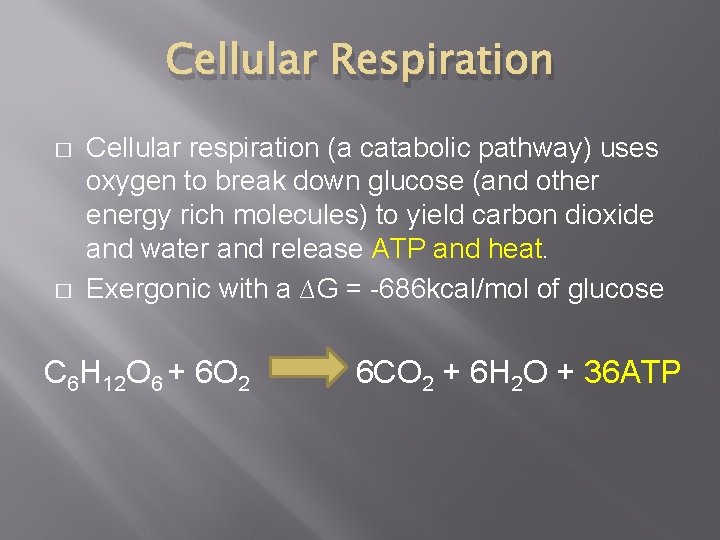
Cellular Respiration � � Cellular respiration (a catabolic pathway) uses oxygen to break down glucose (and other energy rich molecules) to yield carbon dioxide and water and release ATP and heat. Exergonic with a ∆G = -686 kcal/mol of glucose C 6 H 12 O 6 + 6 O 2 6 CO 2 + 6 H 2 O + 36 ATP
Cellular Respiration � � � Is called a Redox Reaction (Oxidation and Reduction. Oxidation – the loss of electrons from one substance Reduction is the addition of electrons to another substance. The substance that loses electrons becomes oxidized. The substance that gains electrons becomes reduced.
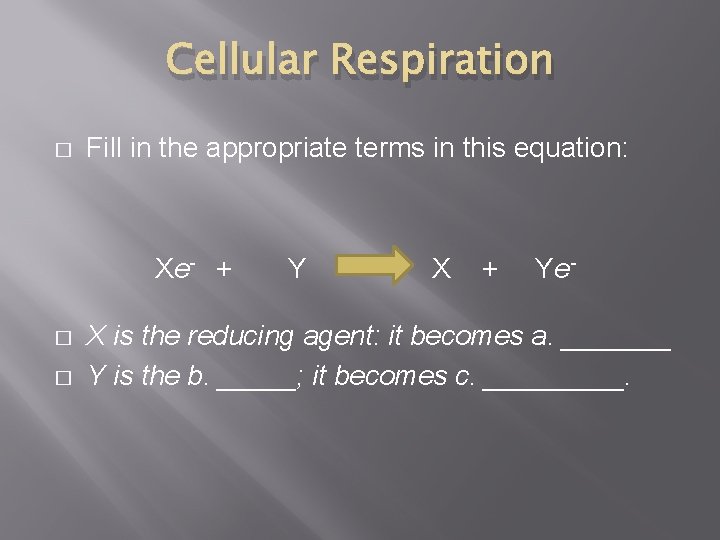
Cellular Respiration � Fill in the appropriate terms in this equation: Xe- + � � Y X + Ye- X is the reducing agent: it becomes a. _______ Y is the b. _____; it becomes c. _____.
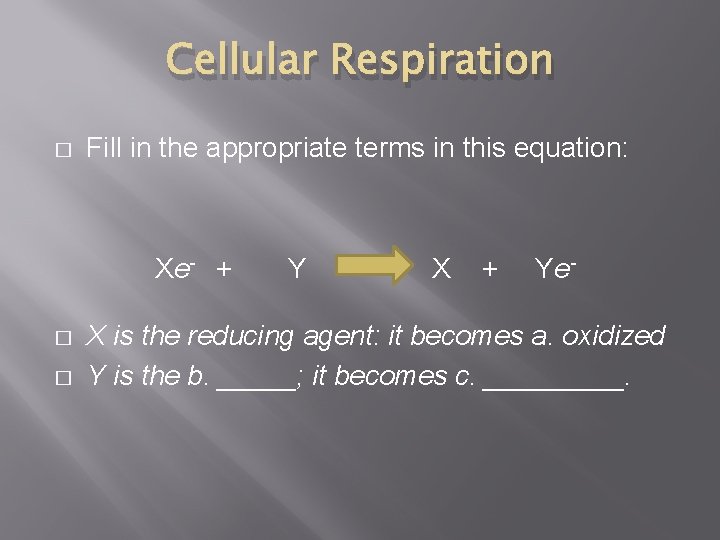
Cellular Respiration � Fill in the appropriate terms in this equation: Xe- + � � Y X + Ye- X is the reducing agent: it becomes a. oxidized Y is the b. _____; it becomes c. _____.
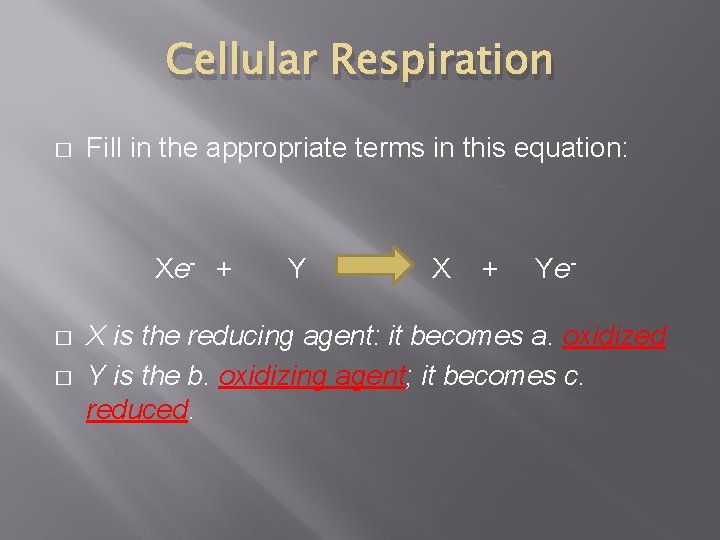
Cellular Respiration � Fill in the appropriate terms in this equation: Xe- + � � Y X + Ye- X is the reducing agent: it becomes a. oxidized Y is the b. oxidizing agent; it becomes c. reduced.
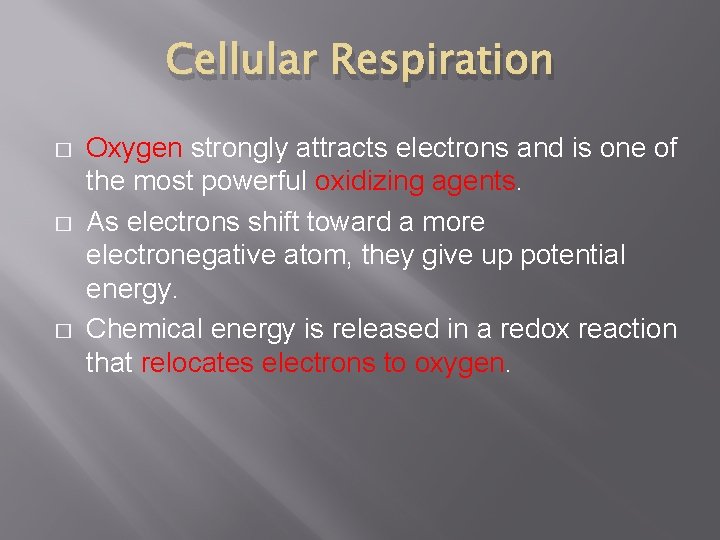
Cellular Respiration � � � Oxygen strongly attracts electrons and is one of the most powerful oxidizing agents. As electrons shift toward a more electronegative atom, they give up potential energy. Chemical energy is released in a redox reaction that relocates electrons to oxygen.
Cellular Respiration � � � In the conversion of glucose and oxygen to carbon dioxide and water, which molecule is reduced? Which molecule is oxidized? What happens to the energy that is released in this redox reaction?
Cellular Respiration � � � In the conversion of glucose and oxygen to carbon dioxide and water, which molecule is reduced? Which molecule is oxidized? glucose What happens to the energy that is released in this redox reaction?
Cellular Respiration � � � In the conversion of glucose and oxygen to carbon dioxide and water, which molecule is reduced? oxygen Which molecule is oxidized? glucose What happens to the energy that is released in this redox reaction?
Cellular Respiration � � � In the conversion of glucose and oxygen to carbon dioxide and water, which molecule is reduced? oxygen Which molecule is oxidized? glucose What happens to the energy that is released in this redox reaction? Some is stored as ATP and some is released as heat.
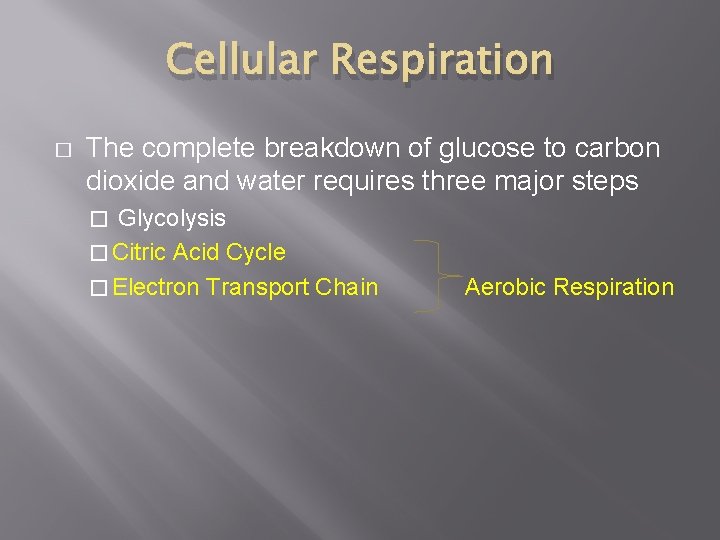
Cellular Respiration � The complete breakdown of glucose to carbon dioxide and water requires three major steps � Glycolysis � Citric Acid Cycle � Electron Transport Chain Aerobic Respiration
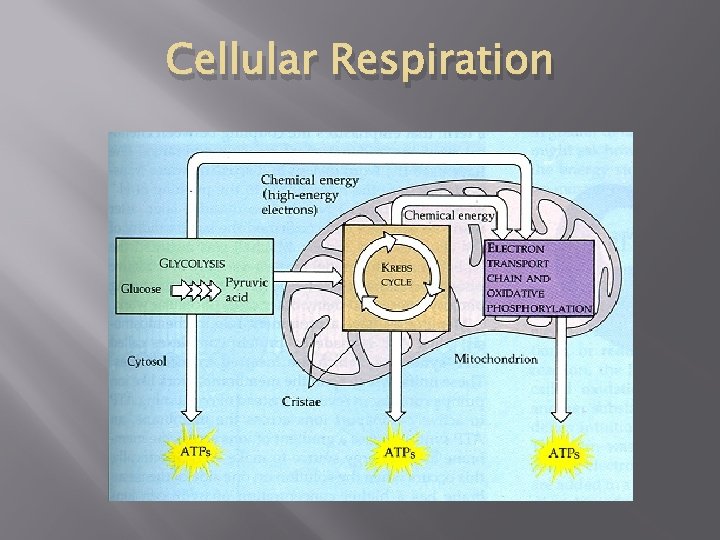
Cellular Respiration
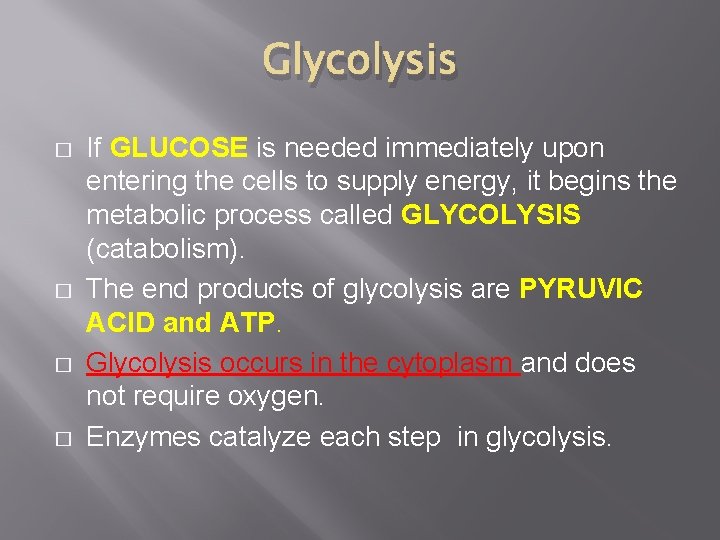
Glycolysis � � If GLUCOSE is needed immediately upon entering the cells to supply energy, it begins the metabolic process called GLYCOLYSIS (catabolism). The end products of glycolysis are PYRUVIC ACID and ATP. Glycolysis occurs in the cytoplasm and does not require oxygen. Enzymes catalyze each step in glycolysis.
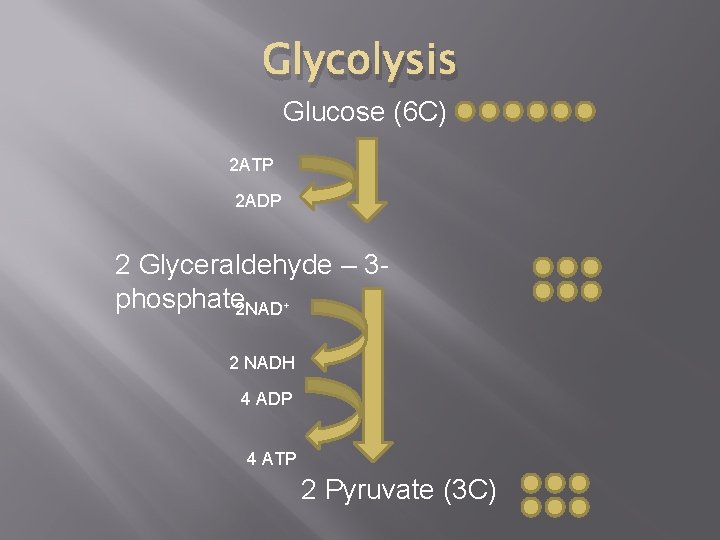
Glycolysis Glucose (6 C) 2 ATP 2 ADP 2 Glyceraldehyde – 3 - phosphate 2 NAD+ 2 NADH 4 ADP 4 ATP 2 Pyruvate (3 C)
Glycolysis � � For each molecule of glucose, glycolysis yields a net gain of 2 ATP and 2 NADH. NAD+ is a coenzyme A coenzyme is an organic molecule, such as a vitamin, that binds to an enzyme. Nicotinamide adenine dinucleotide, Oxidizing agent or electron acceptor.
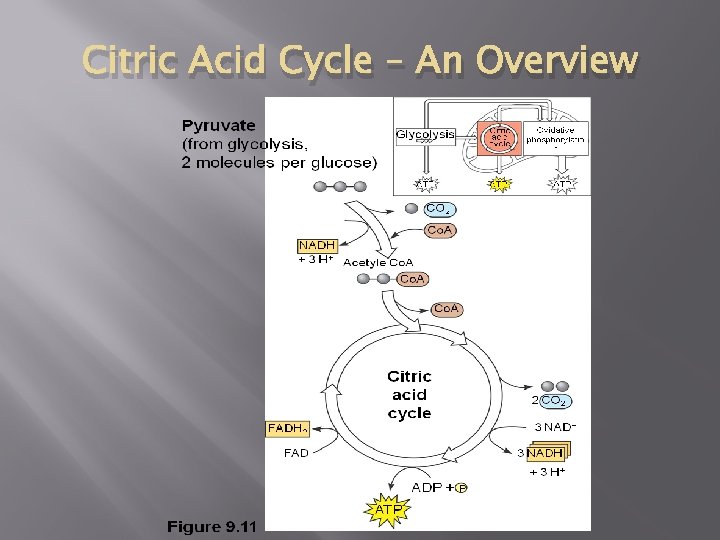
Citric Acid Cycle � � � Pyruvate is transported into the mitochondria CO 2 is released and the two - carbon molecule (acetate) is combined with coenzyme A forming acetyl Co. A. Acetyl Co. A enters the Citric Acid cycle. Also known as the Krebs Cycle Completes the energy yielding oxidation of organic molecules (glucose). Occurs in the mitochondrial matrix
Citric Acid Cycle – An Overview
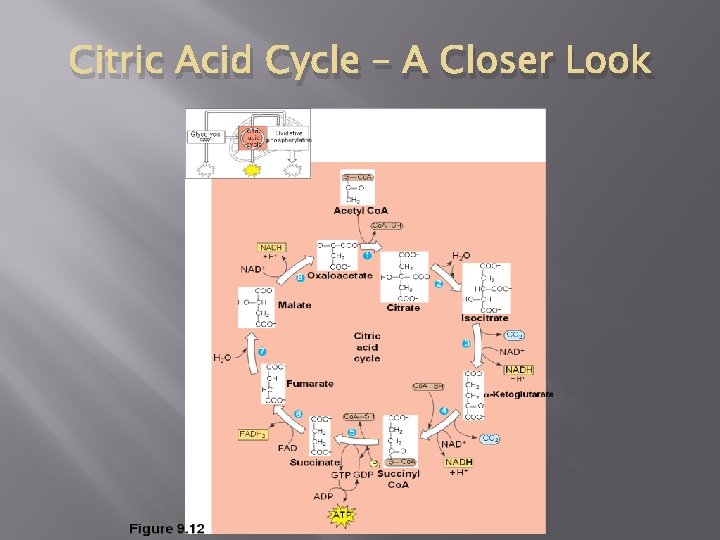
Citric Acid Cycle – A Closer Look
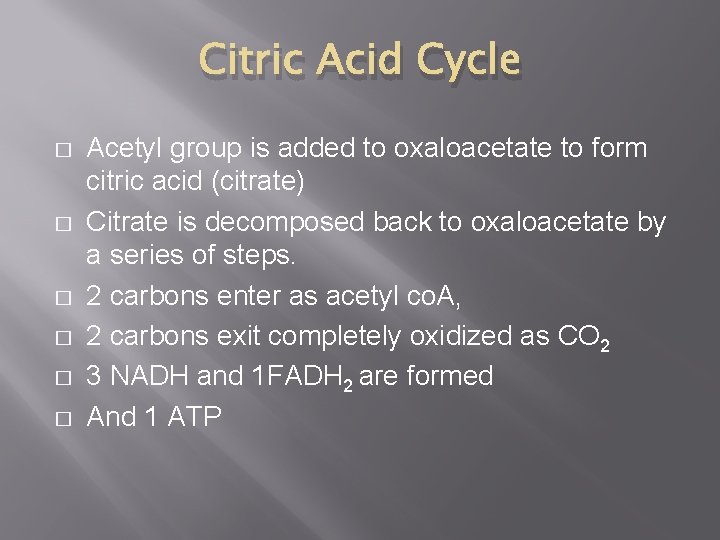
Citric Acid Cycle � � � Acetyl group is added to oxaloacetate to form citric acid (citrate) Citrate is decomposed back to oxaloacetate by a series of steps. 2 carbons enter as acetyl co. A, 2 carbons exit completely oxidized as CO 2 3 NADH and 1 FADH 2 are formed And 1 ATP
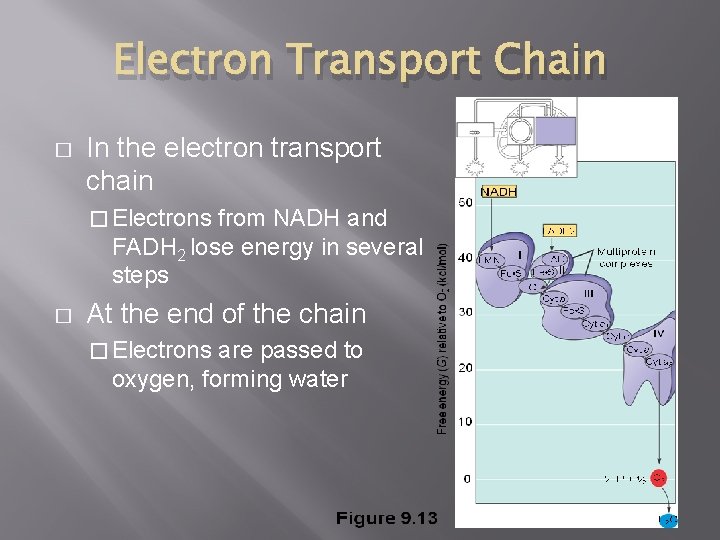
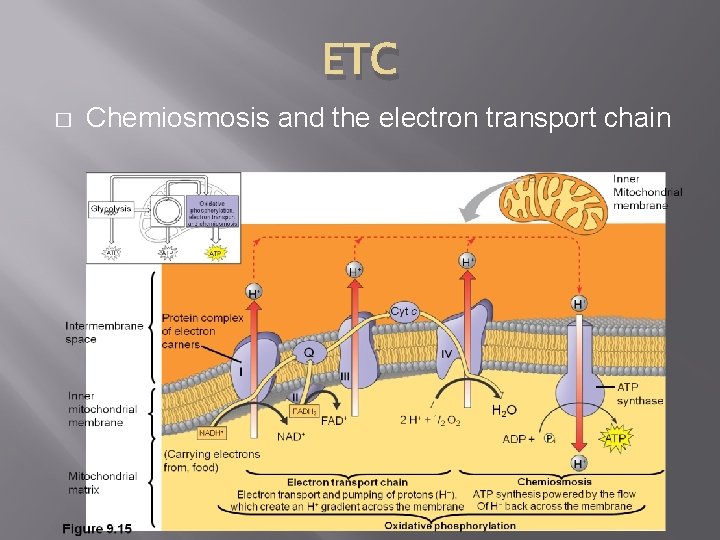
Electron Transport Chain � In the electron transport chain � Electrons from NADH and FADH 2 lose energy in several steps � At the end of the chain � Electrons are passed to oxygen, forming water
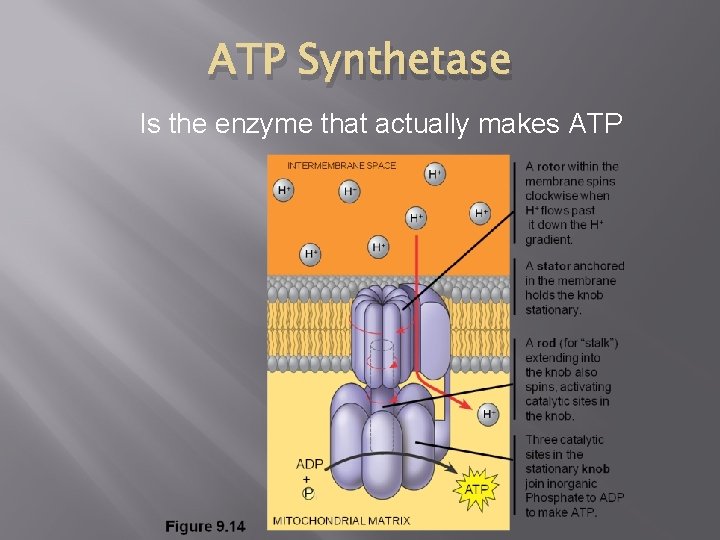
ATP Synthetase Is the enzyme that actually makes ATP
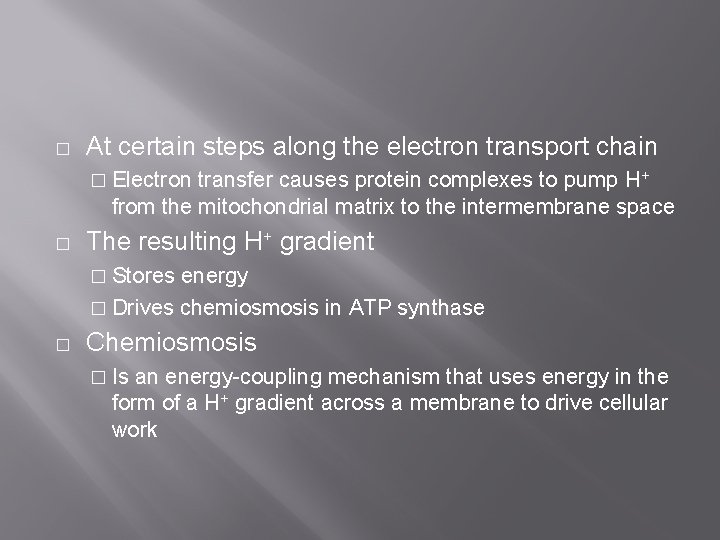
� At certain steps along the electron transport chain � Electron transfer causes protein complexes to pump H+ from the mitochondrial matrix to the intermembrane space � The resulting H+ gradient � Stores energy � Drives chemiosmosis in ATP synthase � Chemiosmosis � Is an energy-coupling mechanism that uses energy in the form of a H+ gradient across a membrane to drive cellular work
ETC � Chemiosmosis and the electron transport chain
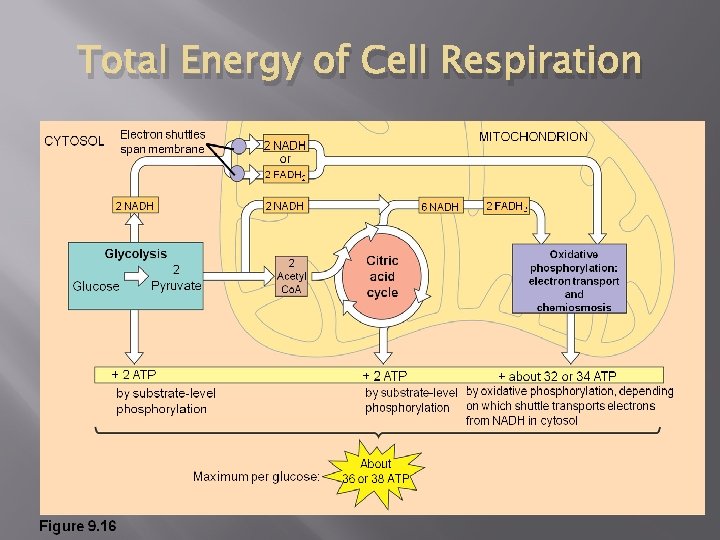
Total Energy of Cell Respiration
Cellular Respiration � About 40% of the energy in a glucose molecule � Is transferred to ATP during cellular respiration, making approximately 38 ATP
Fermentation � � Fermentation enables some cells to produce ATP without the use of oxygen Cellular respiration � Relies on oxygen to produce ATP � In the absence of oxygen � Cells can still produce ATP through fermentation
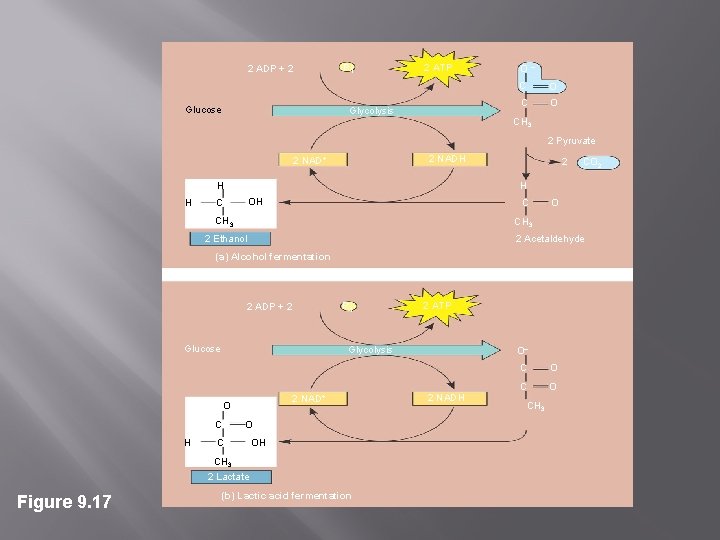
� Fermentation consists of � Glycolysis plus reactions that regenerate NAD+, which can be reused by glyocolysis � In alcohol fermentation � Pyruvate is converted to ethanol in two steps, one of which releases CO 2 � During lactic acid fermentation � Pyruvate is reduced directly to NADH to form lactate as a waste product
2 ADP + 2 Glucose P 1 2 ATP Glycolysis O – C O CH 3 2 Pyruvate 2 NADH 2 NAD+ H H 2 H OH C C CH 3 O CH 3 2 Ethanol 2 Acetaldehyde (a) Alcohol fermentation 2 ADP + 2 Glucose 2 NAD+ O H P 1 O C OH CH 3 2 Lactate Figure 9. 17 2 ATP Glycolysis C CO 2 (b) Lactic acid fermentation O– 2 NADH C O CH 3
� Both fermentation and cellular respiration � Use glycolysis to oxidize glucose and other organic fuels to pyruvate � Cellular respiration � Produces more ATP
Evolutionary Importance � Glycolysis � Occurs in nearly all organisms (prokaryotic and eukaryotic) � Probably evolved in ancient prokaryotes before oxygen was abundant in the atmosphere about 3. 5 billion years ago.
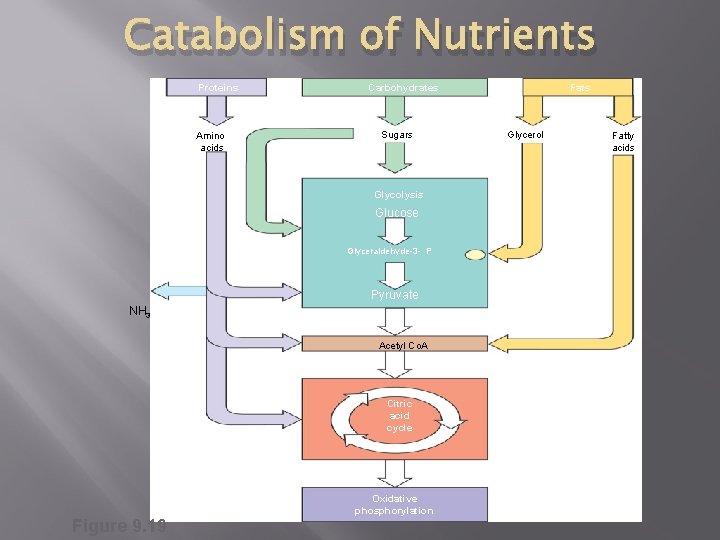
� � Glycolysis and the citric acid cycle connect to many other metabolic pathways Catabolic pathways � Funnel electrons from many kinds of organic molecules into cellular respiration
Catabolism of Nutrients Proteins Amino acids Carbohydrates Sugars Glycolysis Glucose Glyceraldehyde-3 - P Pyruvate NH 3 Acetyl Co. A Citric acid cycle Figure 9. 19 Oxidative phosphorylation Fats Glycerol Fatty acids