
Cellular Respiration Flow of Energy through the Respiration
- Slides: 34
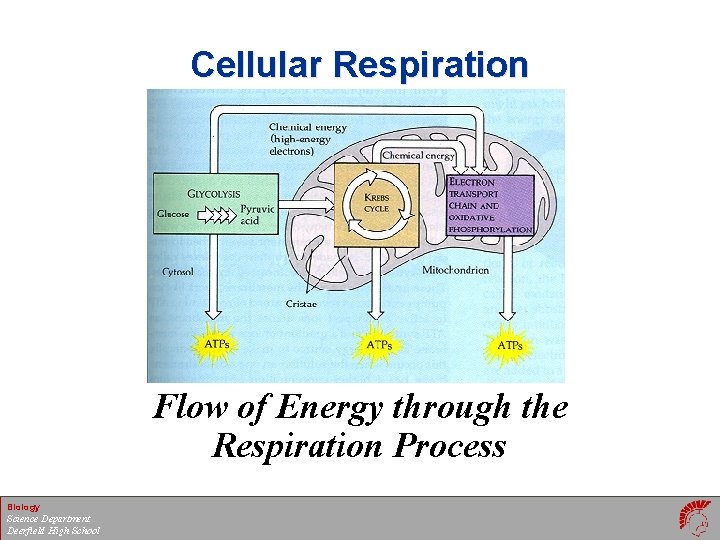
Cellular Respiration Flow of Energy through the Respiration Process Biology Science Department Deerfield High School
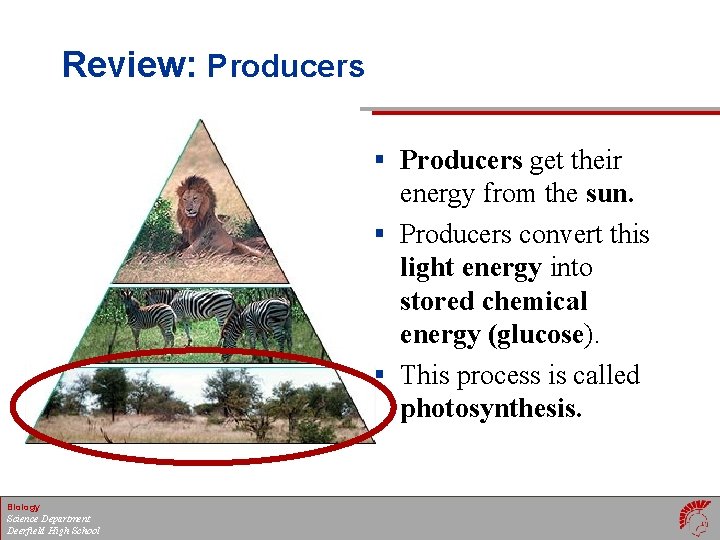
Review: Producers § Producers get their energy from the sun. § Producers convert this light energy into stored chemical energy (glucose). § This process is called photosynthesis. Biology Science Department Deerfield High School
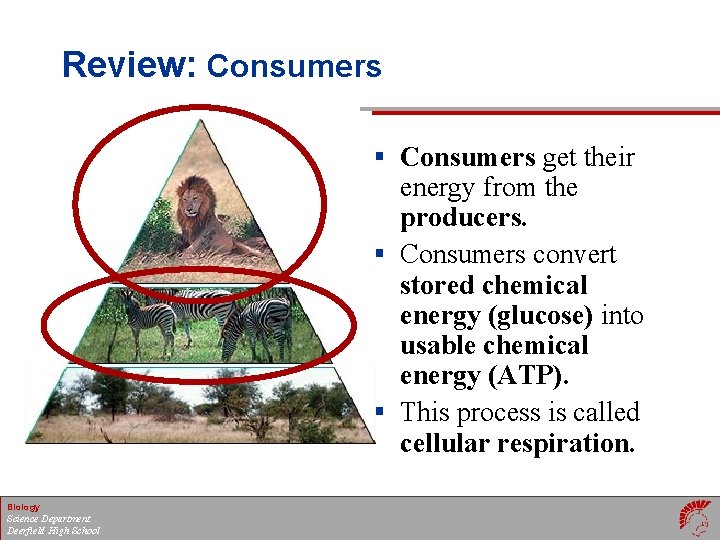
Review: Consumers § Consumers get their energy from the producers. § Consumers convert stored chemical energy (glucose) into usable chemical energy (ATP). § This process is called cellular respiration. Biology Science Department Deerfield High School
Energy Review § Energy Storing Molecules – ATP, NADPH (NAD+), FADH (FAD+), FADH 2 § ATP supplies most of the energy that drives metabolism in living things § ATP releases energy when converted into ADP Biology Science Department Deerfield High School
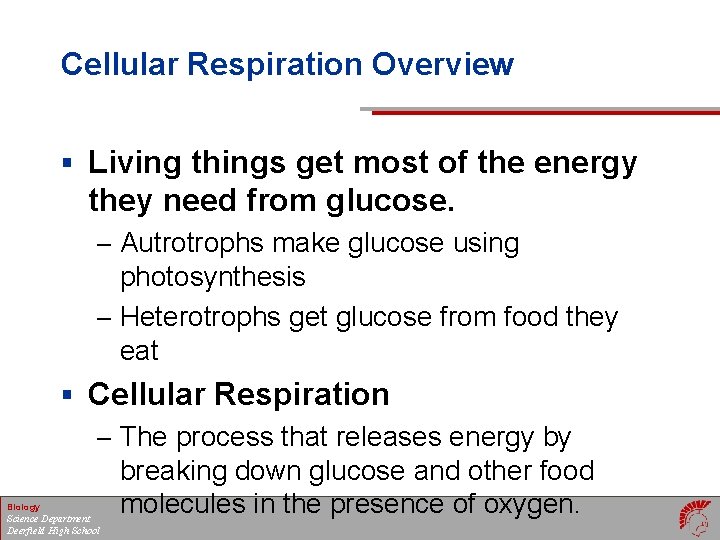
Cellular Respiration Overview § Living things get most of the energy they need from glucose. – Autrotrophs make glucose using photosynthesis – Heterotrophs get glucose from food they eat Biology § Cellular Respiration – The process that releases energy by breaking down glucose and other food molecules in the presence of oxygen. Science Department Deerfield High School
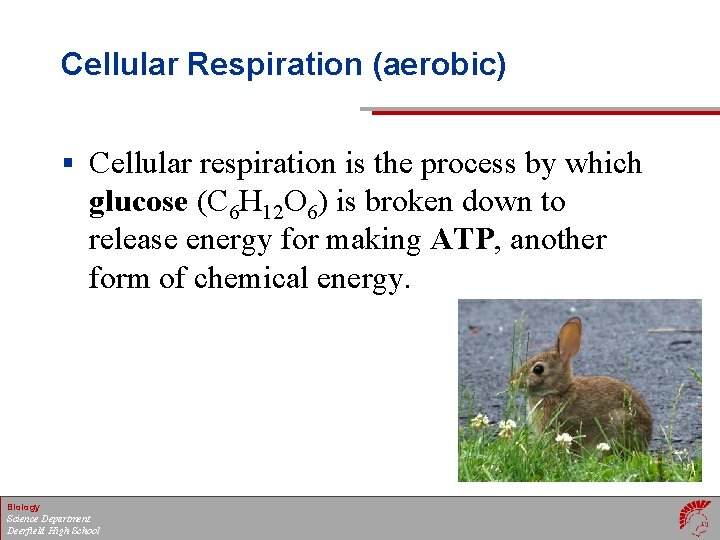
Cellular Respiration (aerobic) § Cellular respiration is the process by which glucose (C 6 H 12 O 6) is broken down to release energy for making ATP, another form of chemical energy. Biology Science Department Deerfield High School
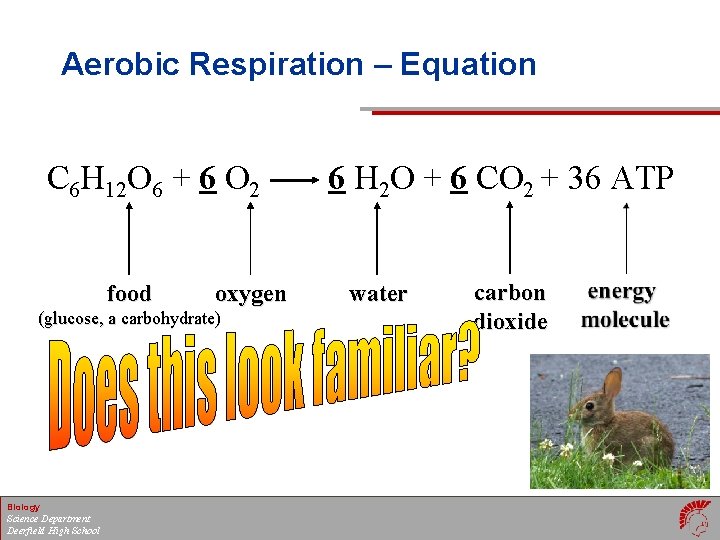
Aerobic Respiration – Equation C 6 H 12 O 6 + 6 O 2 food oxygen (glucose, a carbohydrate) Biology Science Department Deerfield High School 6 H 2 O + 6 CO 2 + 36 ATP water carbon dioxide
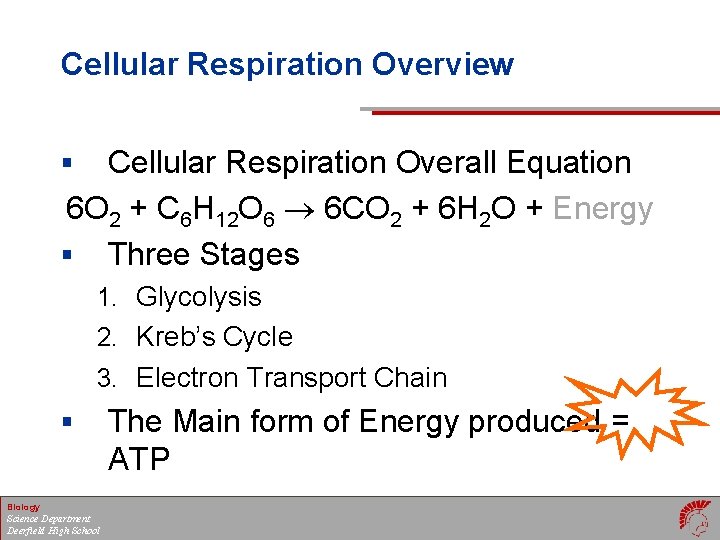
Cellular Respiration Overview Cellular Respiration Overall Equation 6 O 2 + C 6 H 12 O 6 6 CO 2 + 6 H 2 O + Energy § Three Stages § 1. Glycolysis 2. Kreb’s Cycle 3. Electron Transport Chain § Biology Science Department Deerfield High School The Main form of Energy produced = ATP
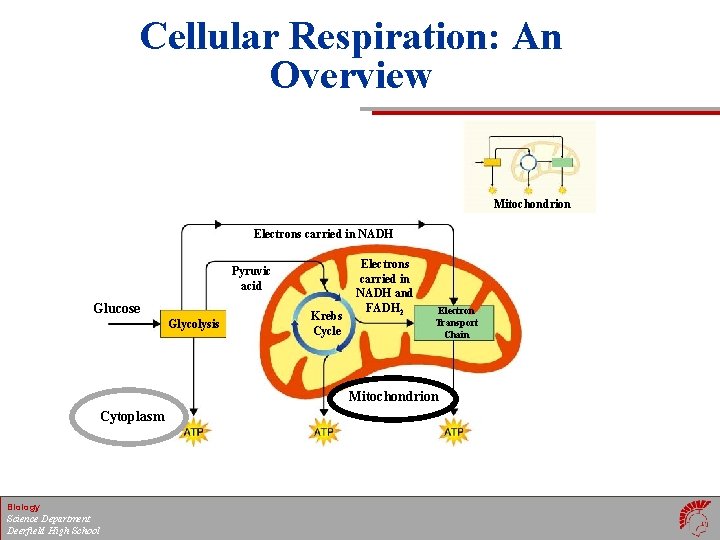
Cellular Respiration: An Overview Mitochondrion Electrons carried in NADH Pyruvic acid Glucose Glycolysis Krebs Cycle Electrons carried in NADH and FADH 2 Electron Transport Chain Mitochondrion Cytoplasm Biology Science Department Deerfield High School
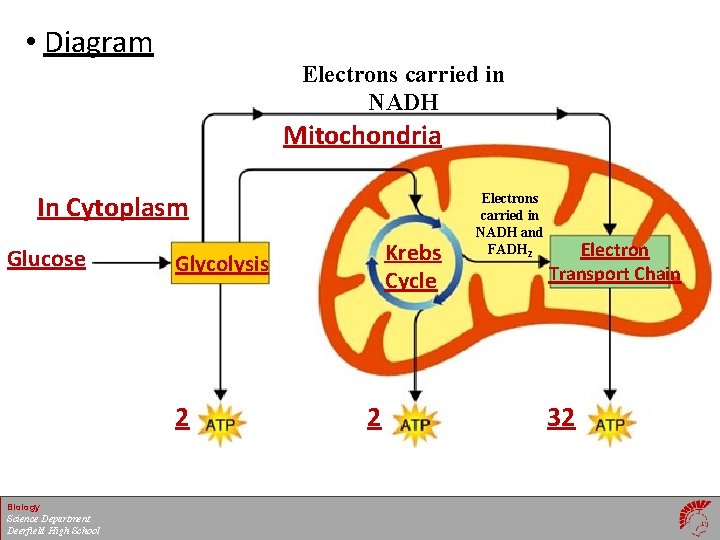
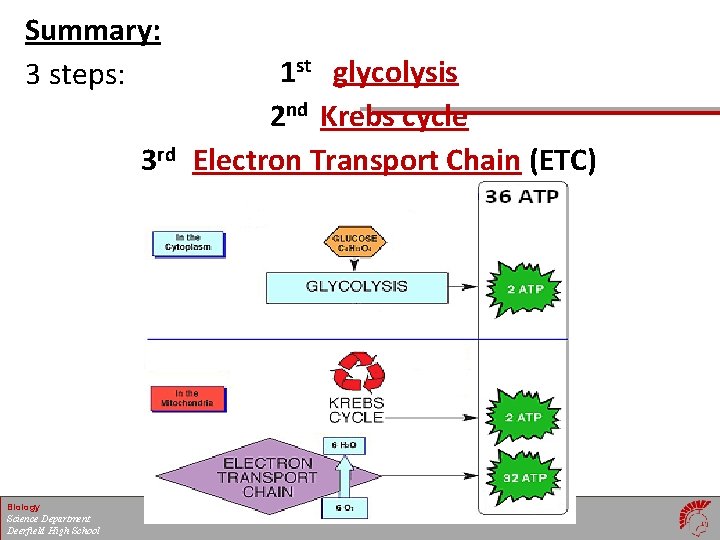
• Diagram Electrons carried in NADH Mitochondria In Cytoplasm Glucose 2 Biology Science Department Deerfield High School Krebs Cycle Glycolysis 2 Electrons carried in NADH and FADH 2 Electron Transport Chain 32
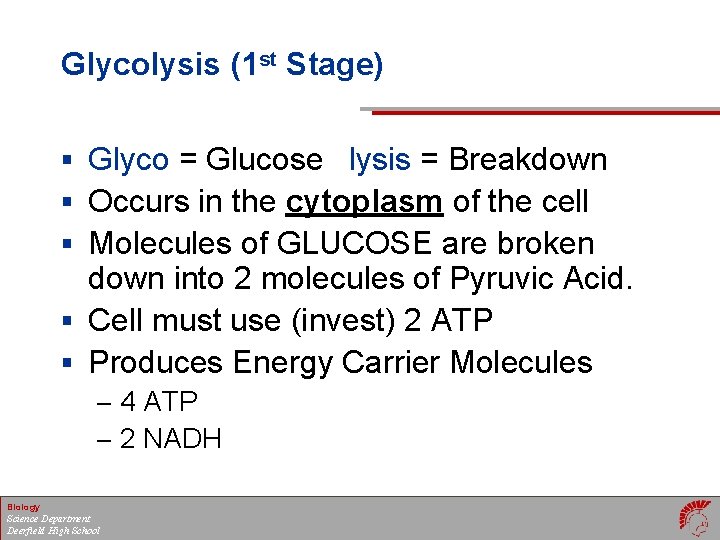
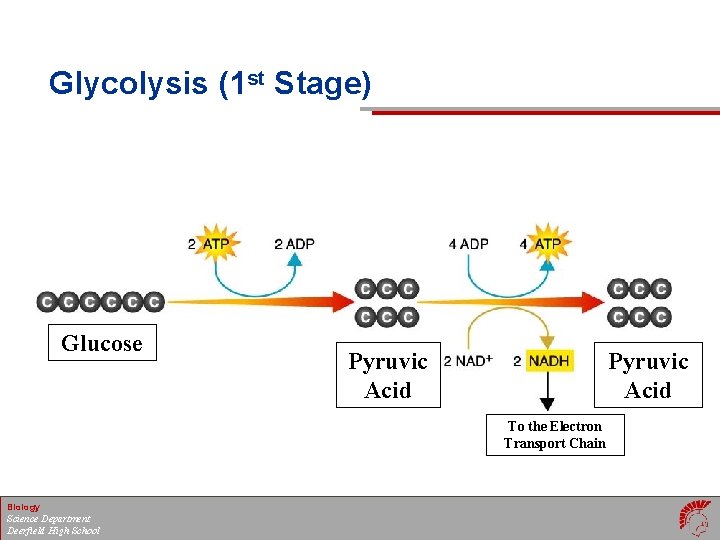
Glycolysis (1 st Stage) § Glyco = Glucose lysis = Breakdown § Occurs in the cytoplasm of the cell § Molecules of GLUCOSE are broken down into 2 molecules of Pyruvic Acid. § Cell must use (invest) 2 ATP § Produces Energy Carrier Molecules – 4 ATP – 2 NADH Biology Science Department Deerfield High School
Glycolysis (1 st Stage) Glucose Pyruvic Acid To the Electron Transport Chain Biology Science Department Deerfield High School
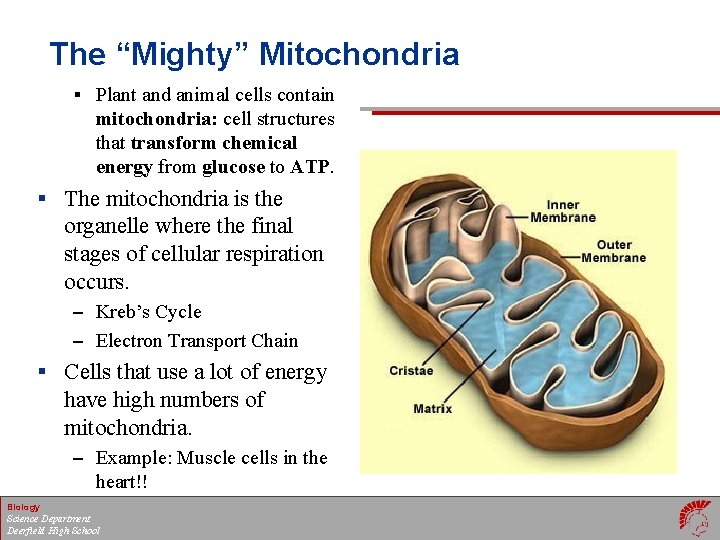
The “Mighty” Mitochondria § Plant and animal cells contain mitochondria: cell structures that transform chemical energy from glucose to ATP. § The mitochondria is the organelle where the final stages of cellular respiration occurs. – Kreb’s Cycle – Electron Transport Chain § Cells that use a lot of energy have high numbers of mitochondria. – Example: Muscle cells in the heart!! Biology Science Department Deerfield High School
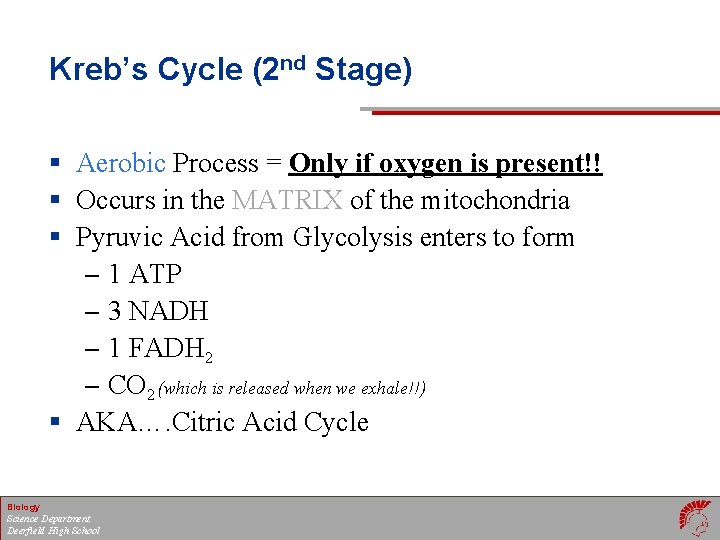
Kreb’s Cycle (2 nd Stage) § Aerobic Process = Only if oxygen is present!! § Occurs in the MATRIX of the mitochondria § Pyruvic Acid from Glycolysis enters to form – 1 ATP – 3 NADH – 1 FADH 2 – CO 2 (which is released when we exhale!!) § AKA…. Citric Acid Cycle Biology Science Department Deerfield High School
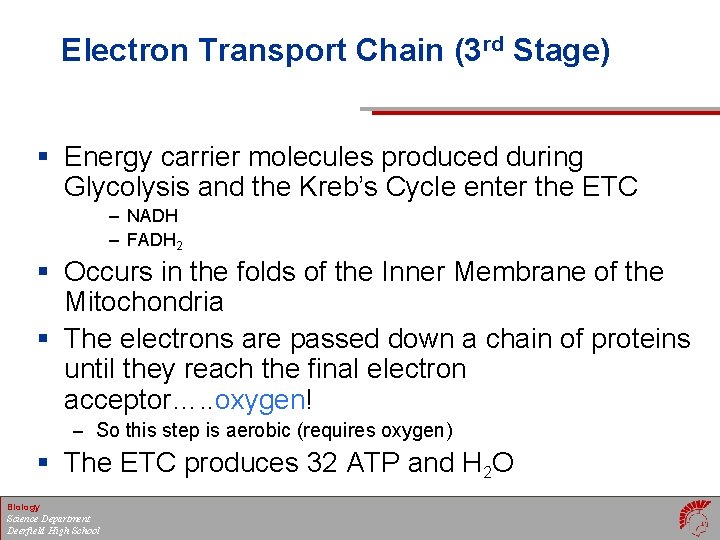
Electron Transport Chain (3 rd Stage) § Energy carrier molecules produced during Glycolysis and the Kreb’s Cycle enter the ETC – NADH – FADH 2 § Occurs in the folds of the Inner Membrane of the Mitochondria § The electrons are passed down a chain of proteins until they reach the final electron acceptor…. . oxygen! – So this step is aerobic (requires oxygen) § The ETC produces 32 ATP and H 2 O Biology Science Department Deerfield High School
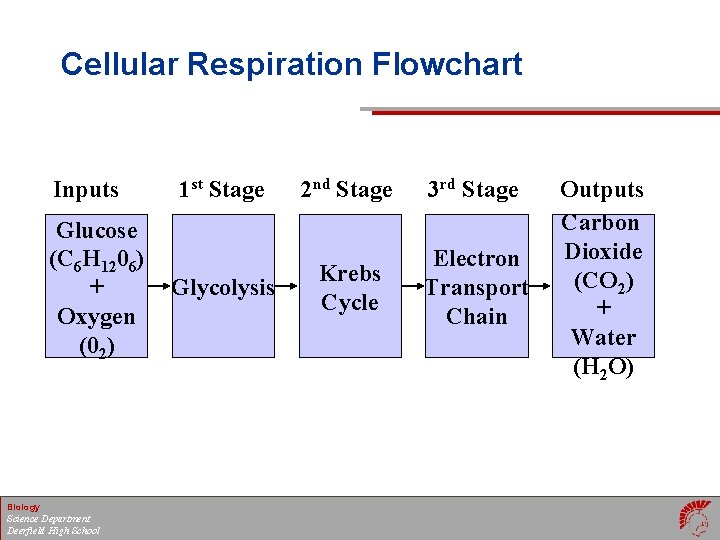
Cellular Respiration Flowchart Inputs Glucose (C 6 H 1206) + Oxygen (02) Biology Science Department Deerfield High School 1 st Stage Glycolysis 2 nd Stage 3 rd Stage Krebs Cycle Electron Transport Chain Outputs Carbon Dioxide (CO 2) + Water (H 2 O)
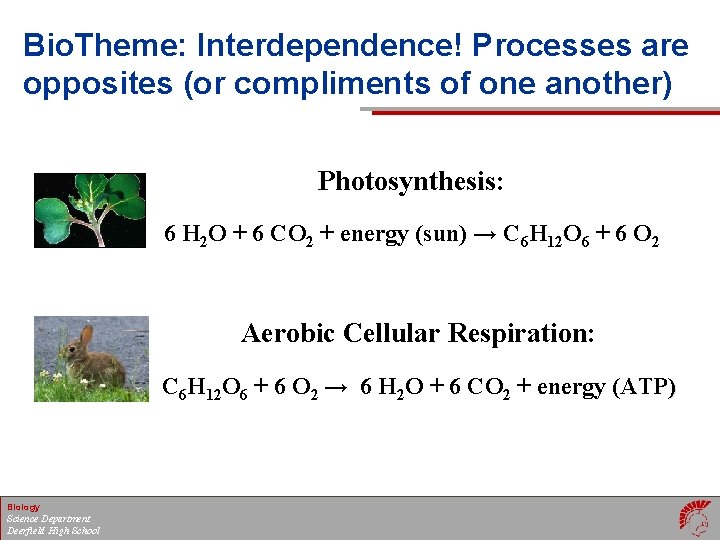
Bio. Theme: Interdependence! Processes are opposites (or compliments of one another) Photosynthesis: 6 H 2 O + 6 CO 2 + energy (sun) → C 6 H 12 O 6 + 6 O 2 Aerobic Cellular Respiration: C 6 H 12 O 6 + 6 O 2 → 6 H 2 O + 6 CO 2 + energy (ATP) Biology Science Department Deerfield High School
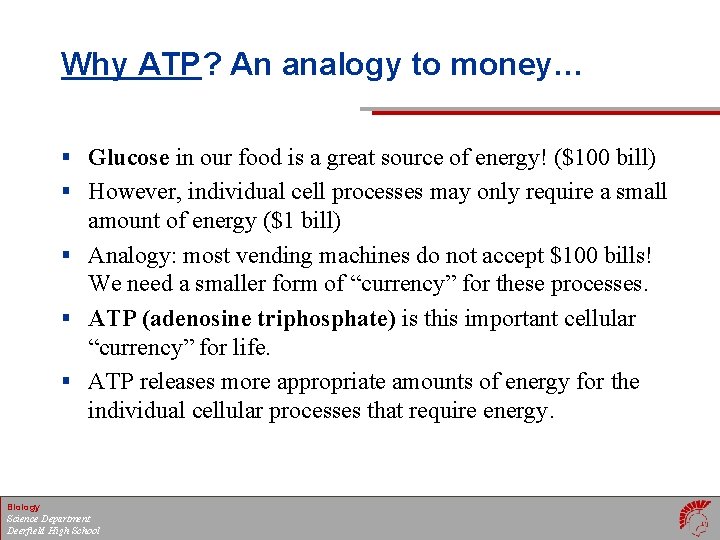
Why ATP? An analogy to money… § Glucose in our food is a great source of energy! ($100 bill) § However, individual cell processes may only require a small amount of energy ($1 bill) § Analogy: most vending machines do not accept $100 bills! We need a smaller form of “currency” for these processes. § ATP (adenosine triphosphate) is this important cellular “currency” for life. § ATP releases more appropriate amounts of energy for the individual cellular processes that require energy. Biology Science Department Deerfield High School
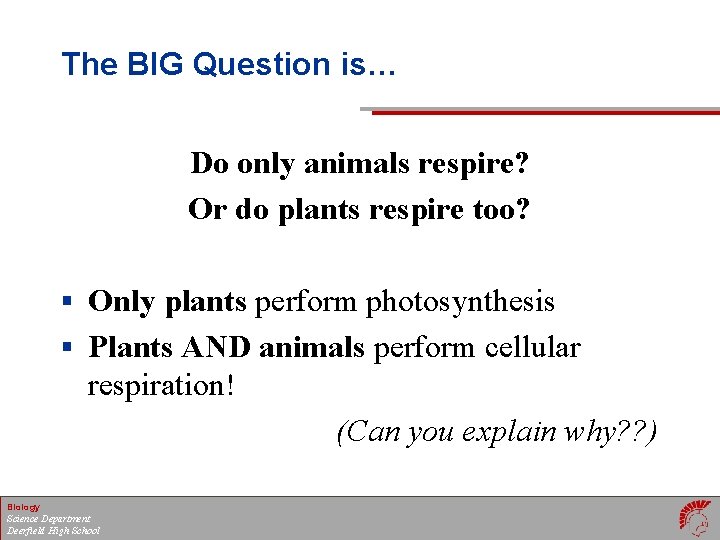
The BIG Question is… Do only animals respire? Or do plants respire too? § Only plants perform photosynthesis § Plants AND animals perform cellular respiration! (Can you explain why? ? ) Biology Science Department Deerfield High School
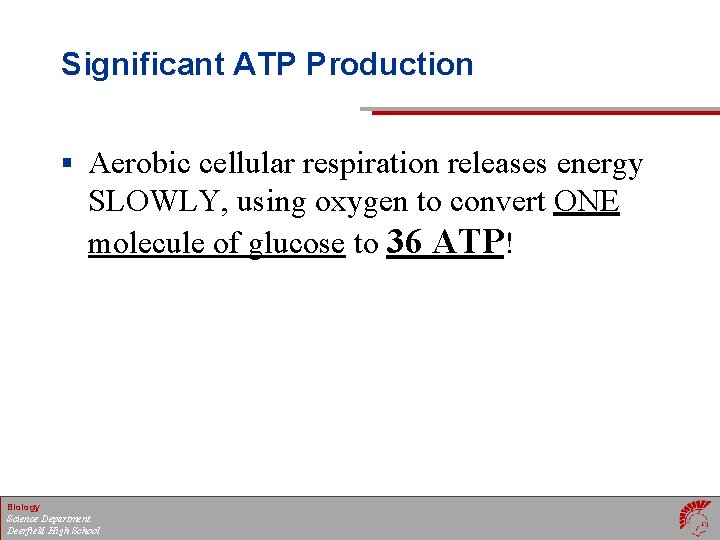
Significant ATP Production § Aerobic cellular respiration releases energy SLOWLY, using oxygen to convert ONE molecule of glucose to 36 ATP! Biology Science Department Deerfield High School
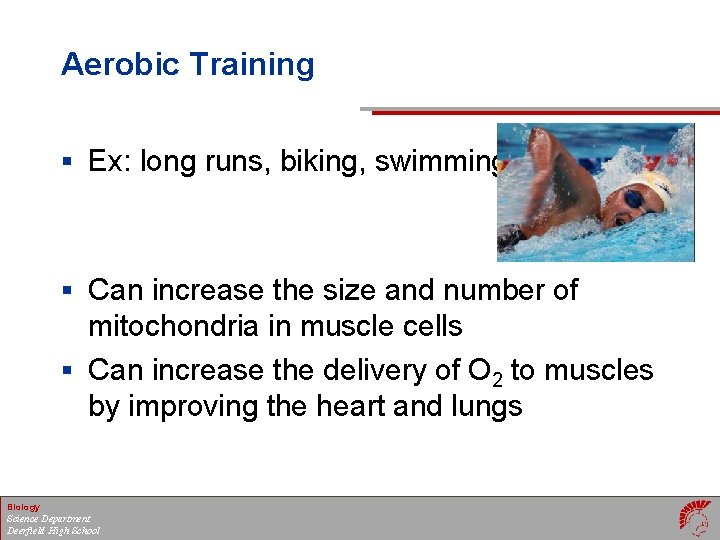
Aerobic Training § Ex: long runs, biking, swimming § Can increase the size and number of mitochondria in muscle cells § Can increase the delivery of O 2 to muscles by improving the heart and lungs Biology Science Department Deerfield High School
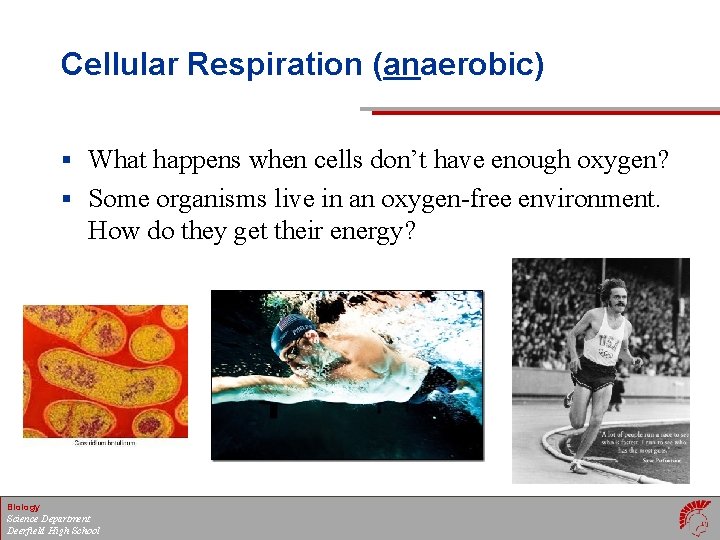
Cellular Respiration (anaerobic) § What happens when cells don’t have enough oxygen? § Some organisms live in an oxygen-free environment. How do they get their energy? Biology Science Department Deerfield High School
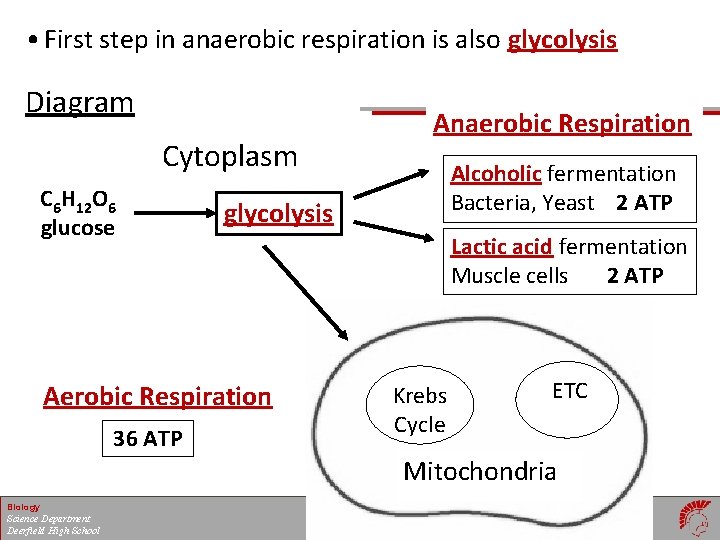
Cellular Respiration (anaerobic) § Anaerobic respiration is also called fermentation, or the process by which energy is released from glucose when oxygen is NOT available. § This process allows organisms to continue to produce energy until oxygen is available. § However, this process only releases 2 ATP per molecule of glucose. Biology Science Department Deerfield High School
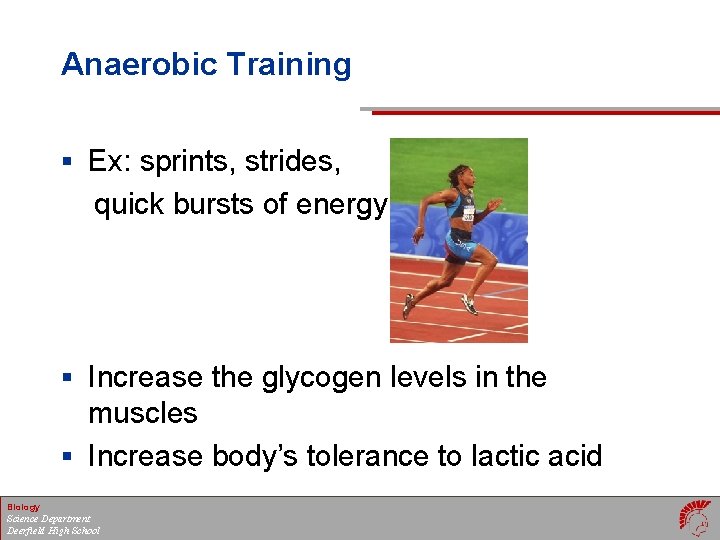
Anaerobic Training § Ex: sprints, strides, quick bursts of energy § Increase the glycogen levels in the muscles § Increase body’s tolerance to lactic acid Biology Science Department Deerfield High School
Minimal ATP Production § In the absence of oxygen, anaerobic respiration only releases 2 ATP for each molecule of glucose broken down. Biology Science Department Deerfield High School
Lactic Acid Fermentation § Anaerobic way of converting energy in animal cells and some microorganisms § Glucose broken down to produce lactic acid, CO 2 and energy (ATP) § C 6 H 12 O 6 lactic acid + CO 2 + 2 ATP § EX: muscle cells during strenuous exercise fermenting cheese, yogurt, sour cream Biology Science Department Deerfield High School
Strenuous Exercise § Lactic acid is produced by your muscle cells during rapid exercise when the body cannot supply enough O 2 to tissues. § Without enough O 2, the body is NOT able to produce all of the ATP that is required. § The buildup of lactic acid can cause painful burning in your muscles! Biology Science Department Deerfield High School
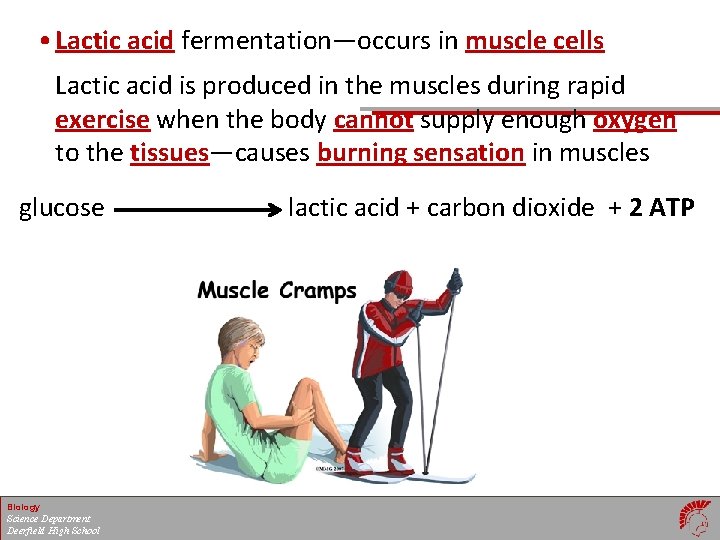
• Lactic acid fermentation—occurs in muscle cells Lactic acid is produced in the muscles during rapid exercise when the body cannot supply enough oxygen to the tissues—causes burning sensation in muscles glucose Biology Science Department Deerfield High School lactic acid + carbon dioxide + 2 ATP
Comparing ATP Production § First, your body breaks down glucose through aerobic respiration to produce 36 ATP per glucose molecule; however, this is a slow process. § When muscle cells cannot get enough O 2 they break down glucose through lactic acid fermentation to produce 2 ATP per glucose… § Therefore, AEROBIC RESPIRATION is Biology much more efficient in terms of ATP production – 36 ATP compared to 2 Science Department Deerfield High School
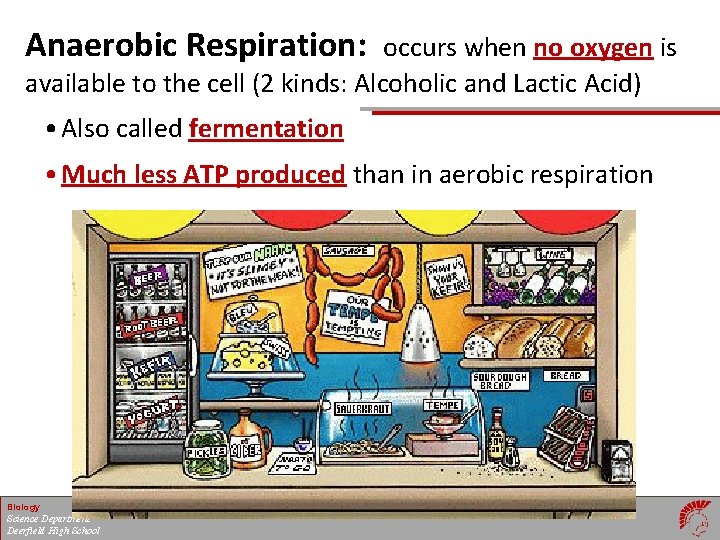
Anaerobic Respiration: occurs when no oxygen is available to the cell (2 kinds: Alcoholic and Lactic Acid) • Also called fermentation • Much less ATP produced than in aerobic respiration Biology Science Department Deerfield High School
Alcoholic Fermentation § Anaerobic way of converting energy for yeast and other microorganisms § Glucose broken down to produce alcohol, CO 2 and energy (ATP) § C 6 H 12 O 6 ethanol + CO 2 + 2 ATP § EX: baking bread with yeast fermenting wine & beer Biology Science Department Deerfield High School
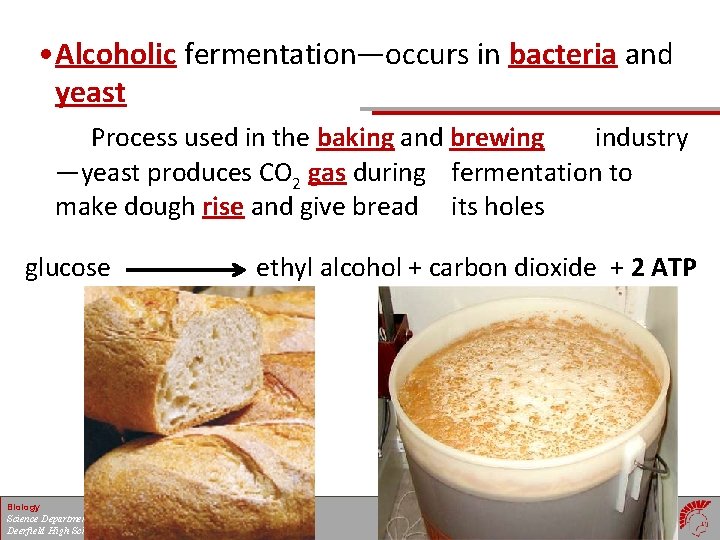
• Alcoholic fermentation—occurs in bacteria and yeast Process used in the baking and brewing industry —yeast produces CO 2 gas during fermentation to make dough rise and give bread its holes glucose Biology Science Department Deerfield High School ethyl alcohol + carbon dioxide + 2 ATP
Summary: 3 steps: 3 rd Biology Science Department Deerfield High School 1 st glycolysis 2 nd Krebs cycle Electron Transport Chain (ETC)
• First step in anaerobic respiration is also glycolysis Diagram Cytoplasm C 6 H 12 O 6 glucose Alcoholic fermentation Bacteria, Yeast 2 ATP glycolysis Aerobic Respiration 36 ATP Anaerobic Respiration Lactic acid fermentation Muscle cells 2 ATP Krebs Cycle ETC Mitochondria Biology Science Department Deerfield High School