
Cellular Respiration Essential Questions How is the energy
- Slides: 14
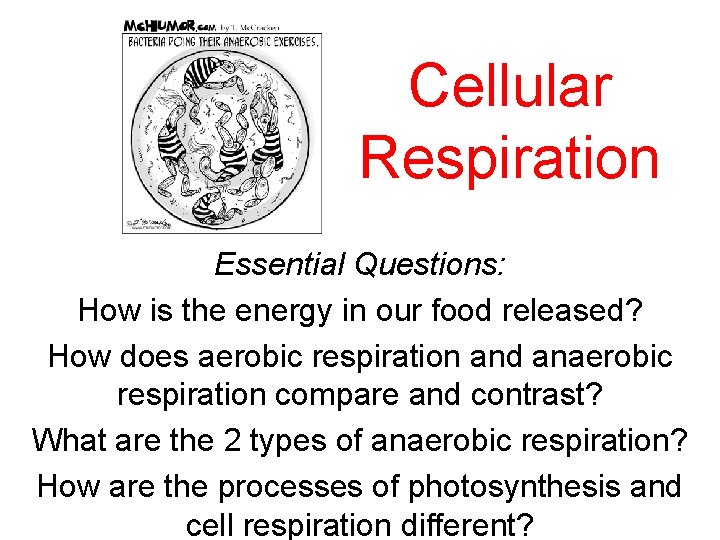
Cellular Respiration Essential Questions: How is the energy in our food released? How does aerobic respiration and anaerobic respiration compare and contrast? What are the 2 types of anaerobic respiration? How are the processes of photosynthesis and cell respiration different?
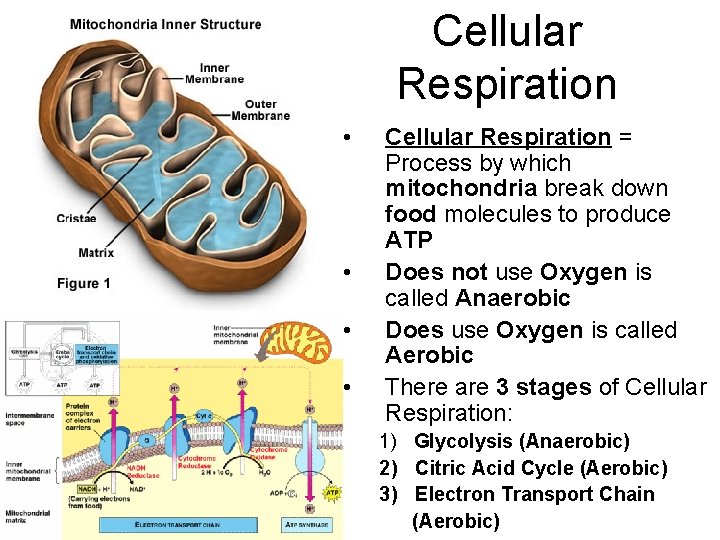
Cellular Respiration • • Cellular Respiration = Process by which mitochondria break down food molecules to produce ATP Does not use Oxygen is called Anaerobic Does use Oxygen is called Aerobic There are 3 stages of Cellular Respiration: 1) Glycolysis (Anaerobic) 2) Citric Acid Cycle (Aerobic) 3) Electron Transport Chain (Aerobic)
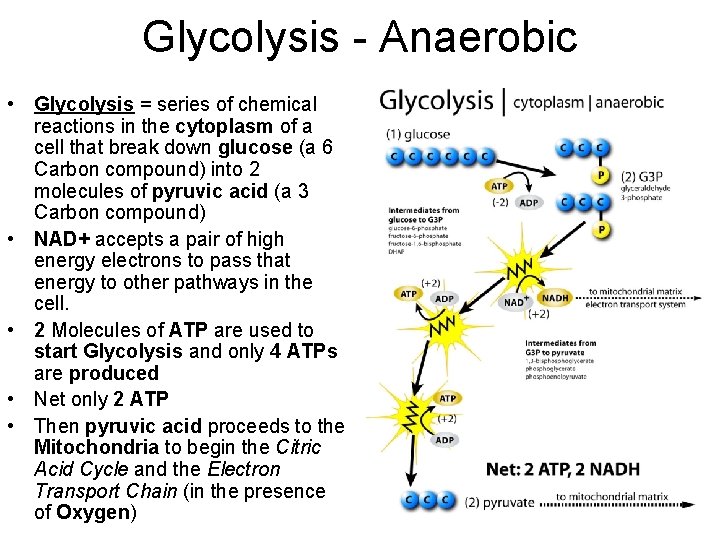
Glycolysis - Anaerobic • Glycolysis = series of chemical reactions in the cytoplasm of a cell that break down glucose (a 6 Carbon compound) into 2 molecules of pyruvic acid (a 3 Carbon compound) • NAD+ accepts a pair of high energy electrons to pass that energy to other pathways in the cell. • 2 Molecules of ATP are used to start Glycolysis and only 4 ATPs are produced • Net only 2 ATP • Then pyruvic acid proceeds to the Mitochondria to begin the Citric Acid Cycle and the Electron Transport Chain (in the presence of Oxygen)
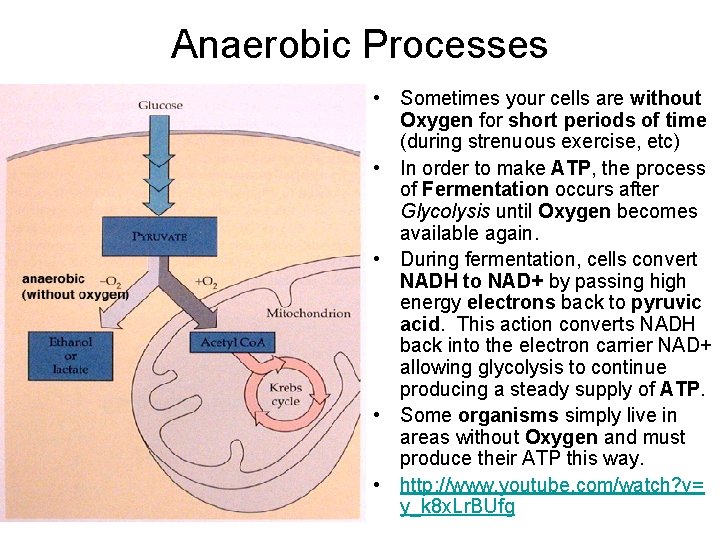
Anaerobic Processes • Sometimes your cells are without Oxygen for short periods of time (during strenuous exercise, etc) • In order to make ATP, the process of Fermentation occurs after Glycolysis until Oxygen becomes available again. • During fermentation, cells convert NADH to NAD+ by passing high energy electrons back to pyruvic acid. This action converts NADH back into the electron carrier NAD+ allowing glycolysis to continue producing a steady supply of ATP. • Some organisms simply live in areas without Oxygen and must produce their ATP this way. • http: //www. youtube. com/watch? v= y_k 8 x. Lr. BUfg
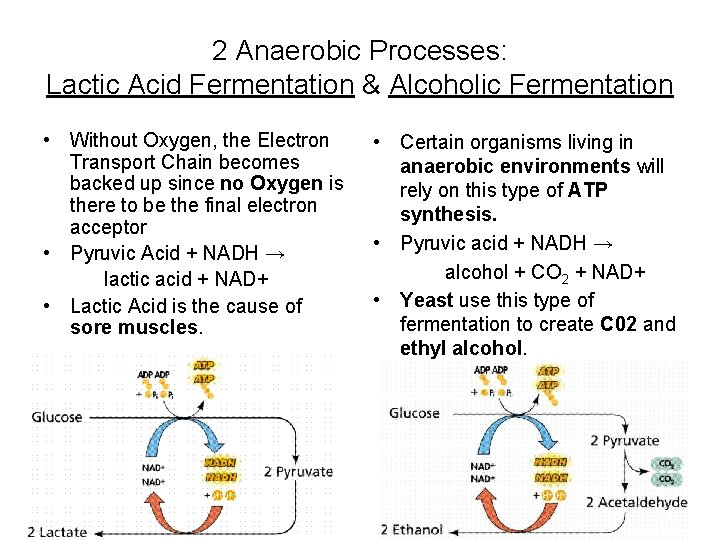
2 Anaerobic Processes: Lactic Acid Fermentation & Alcoholic Fermentation • Without Oxygen, the Electron Transport Chain becomes backed up since no Oxygen is there to be the final electron acceptor • Pyruvic Acid + NADH → lactic acid + NAD+ • Lactic Acid is the cause of sore muscles. • Certain organisms living in anaerobic environments will rely on this type of ATP synthesis. • Pyruvic acid + NADH → alcohol + CO 2 + NAD+ • Yeast use this type of fermentation to create C 02 and ethyl alcohol.
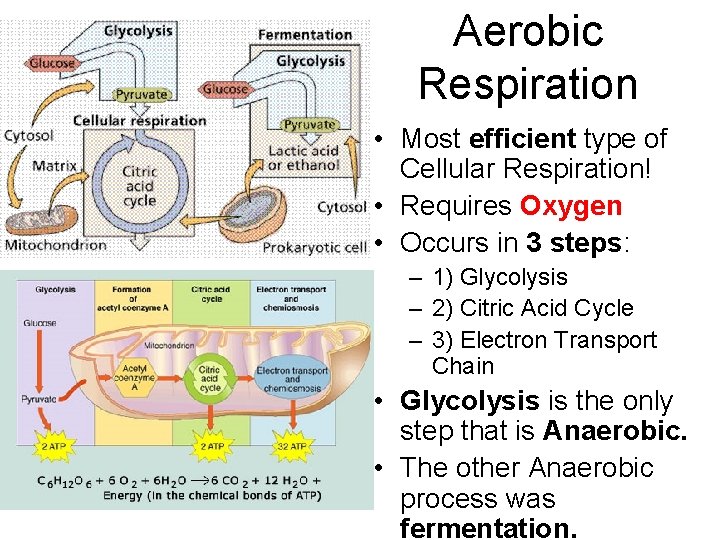
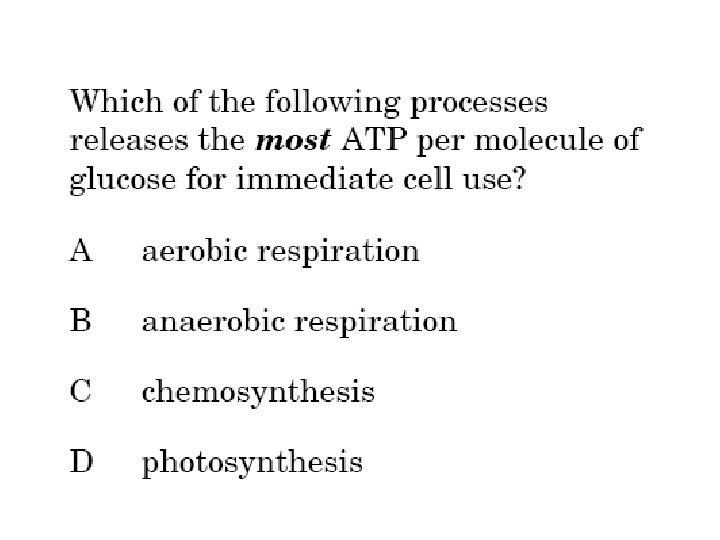
Aerobic Respiration • Most efficient type of Cellular Respiration! • Requires Oxygen • Occurs in 3 steps: – 1) Glycolysis – 2) Citric Acid Cycle – 3) Electron Transport Chain • Glycolysis is the only step that is Anaerobic. • The other Anaerobic process was fermentation.
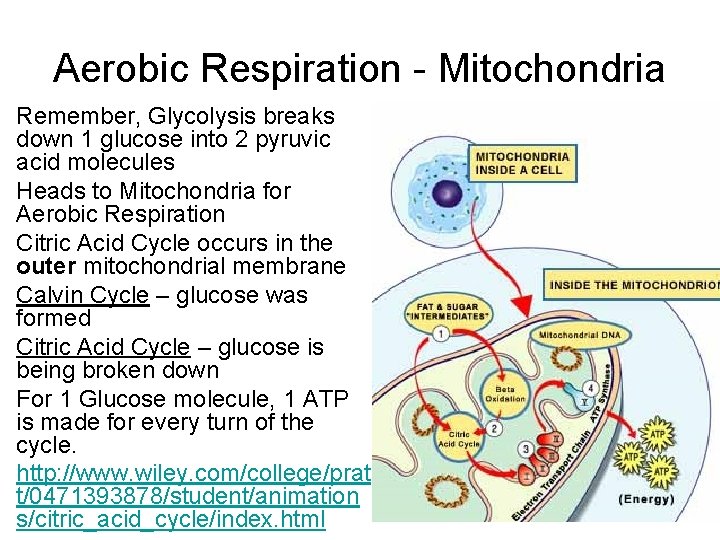
Aerobic Respiration - Mitochondria Remember, Glycolysis breaks down 1 glucose into 2 pyruvic acid molecules Heads to Mitochondria for Aerobic Respiration Citric Acid Cycle occurs in the outer mitochondrial membrane Calvin Cycle – glucose was formed Citric Acid Cycle – glucose is being broken down For 1 Glucose molecule, 1 ATP is made for every turn of the cycle. http: //www. wiley. com/college/prat t/0471393878/student/animation s/citric_acid_cycle/index. html
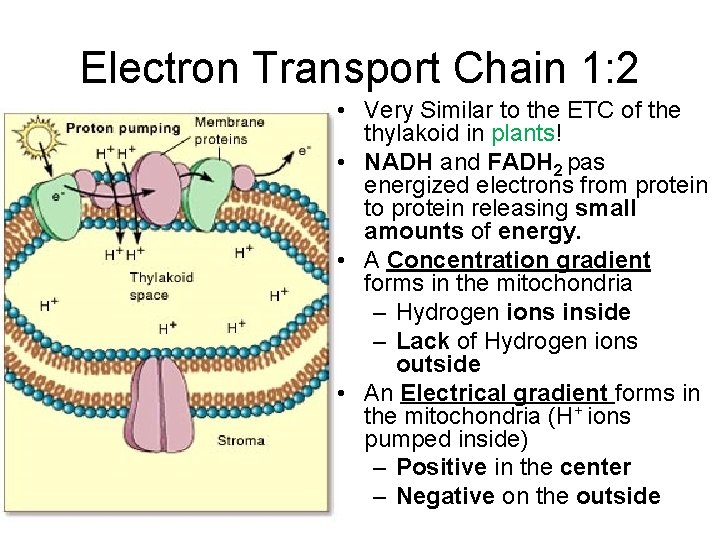
Electron Transport Chain 1: 2 • Very Similar to the ETC of the thylakoid in plants! • NADH and FADH 2 pas energized electrons from protein to protein releasing small amounts of energy. • A Concentration gradient forms in the mitochondria – Hydrogen ions inside – Lack of Hydrogen ions outside • An Electrical gradient forms in the mitochondria (H+ ions pumped inside) – Positive in the center – Negative on the outside
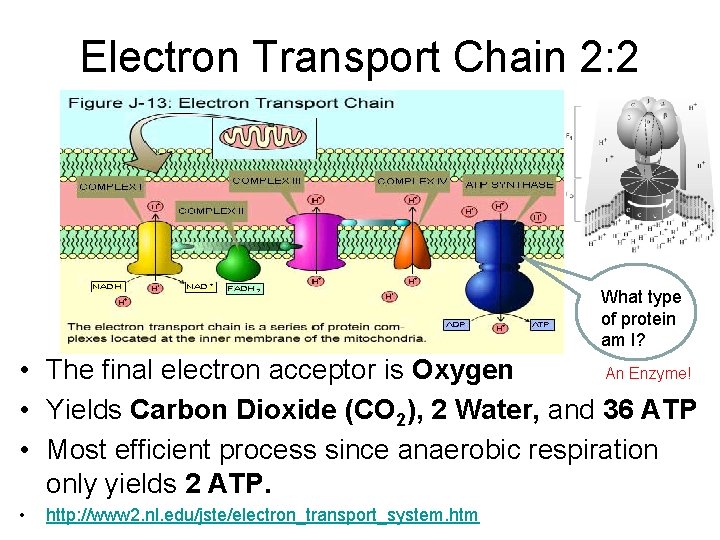
Electron Transport Chain 2: 2 What type of protein am I? • The final electron acceptor is Oxygen An Enzyme! • Yields Carbon Dioxide (CO 2), 2 Water, and 36 ATP • Most efficient process since anaerobic respiration only yields 2 ATP. • http: //www 2. nl. edu/jste/electron_transport_system. htm
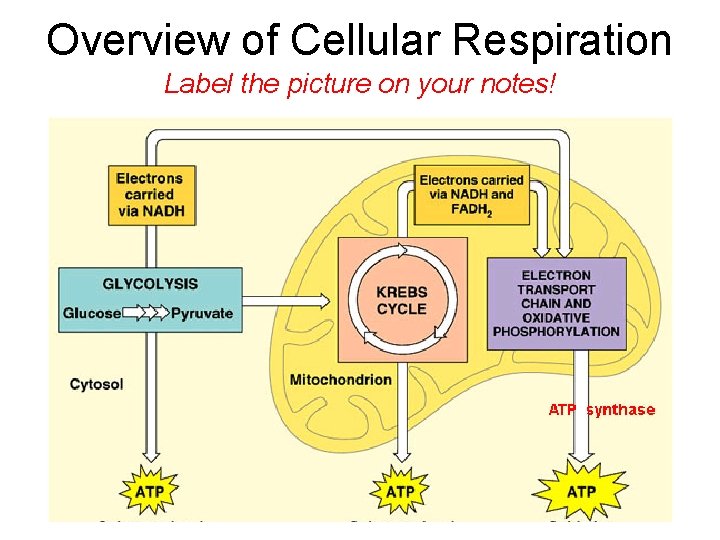
Overview of Cellular Respiration Label the picture on your notes!
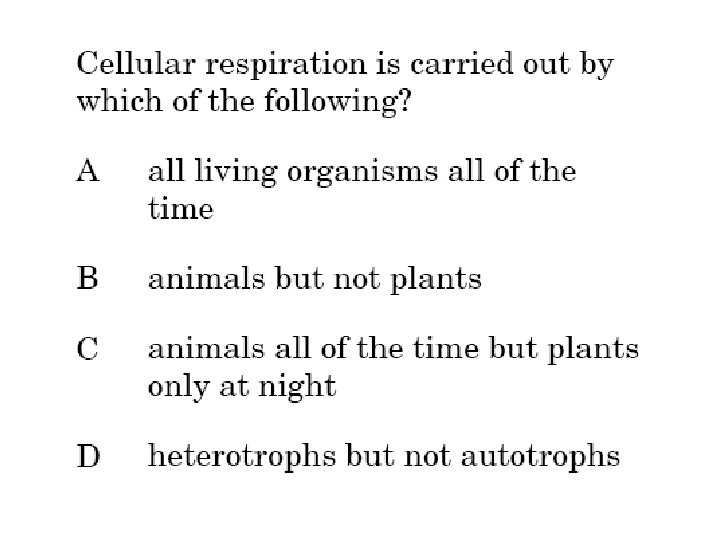
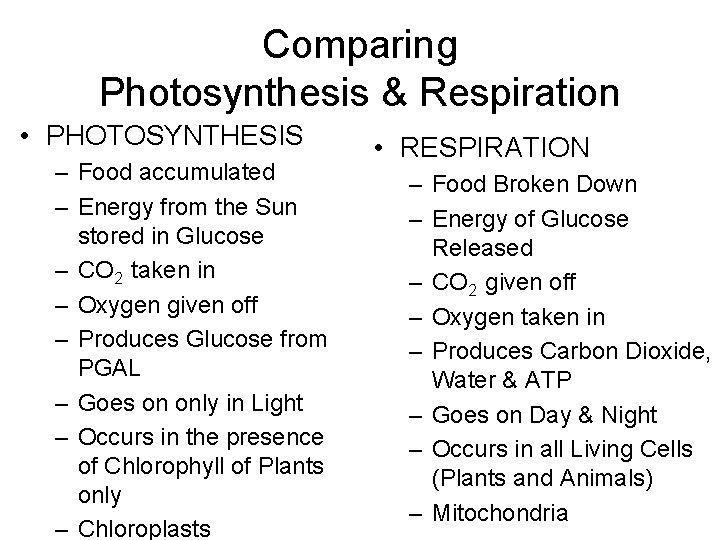
Comparing Photosynthesis & Respiration • PHOTOSYNTHESIS – Food accumulated – Energy from the Sun stored in Glucose – CO 2 taken in – Oxygen given off – Produces Glucose from PGAL – Goes on only in Light – Occurs in the presence of Chlorophyll of Plants only – Chloroplasts • RESPIRATION – Food Broken Down – Energy of Glucose Released – CO 2 given off – Oxygen taken in – Produces Carbon Dioxide, Water & ATP – Goes on Day & Night – Occurs in all Living Cells (Plants and Animals) – Mitochondria