
CELLULAR RESPIRATION Chemical Pathways Chapter 9 1 http
- Slides: 28
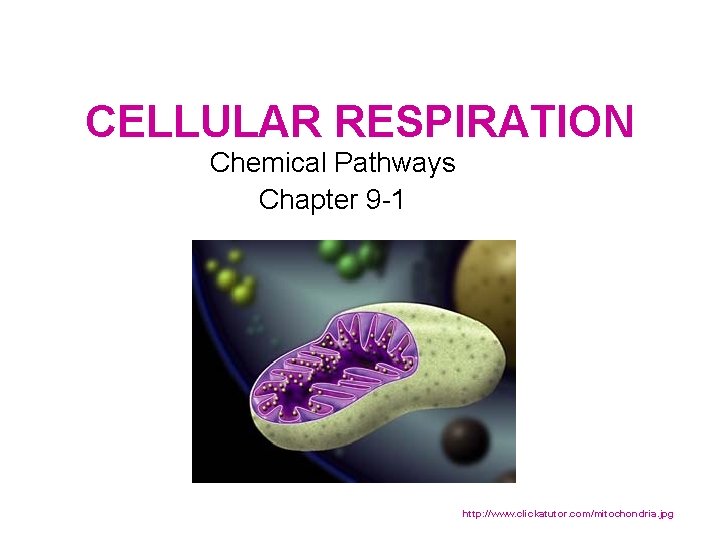
CELLULAR RESPIRATION Chemical Pathways Chapter 9 -1 http: //www. clickatutor. com/mitochondria. jpg
Objectives: • -Explain what cellular respiration is • -Describe what happens during the process of glycolysis • -Name the two main types of fermentation
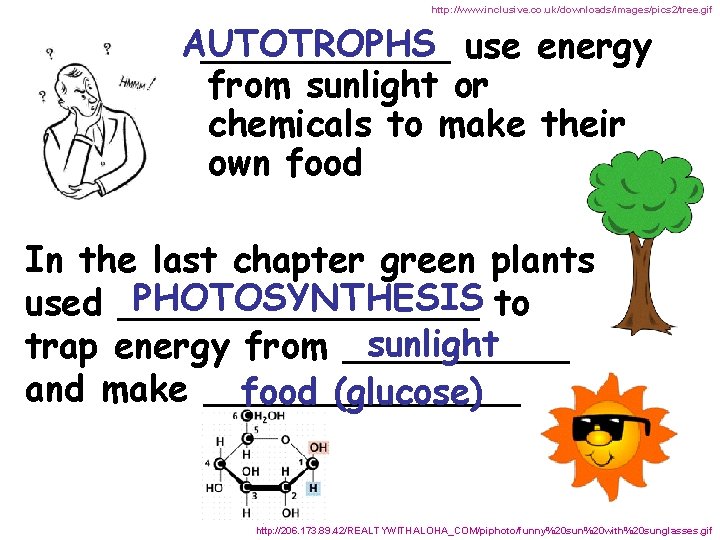
http: //www. inclusive. co. uk/downloads/images/pics 2/tree. gif AUTOTROPHS ______ use energy from sunlight or chemicals to make their own food In the last chapter green plants PHOTOSYNTHESIS to used ________ sunlight trap energy from _____ and make _______ food (glucose) http: //206. 173. 89. 42/REALTYWITHALOHA_COM/piphoto/funny%20 sun%20 with%20 sunglasses. gif
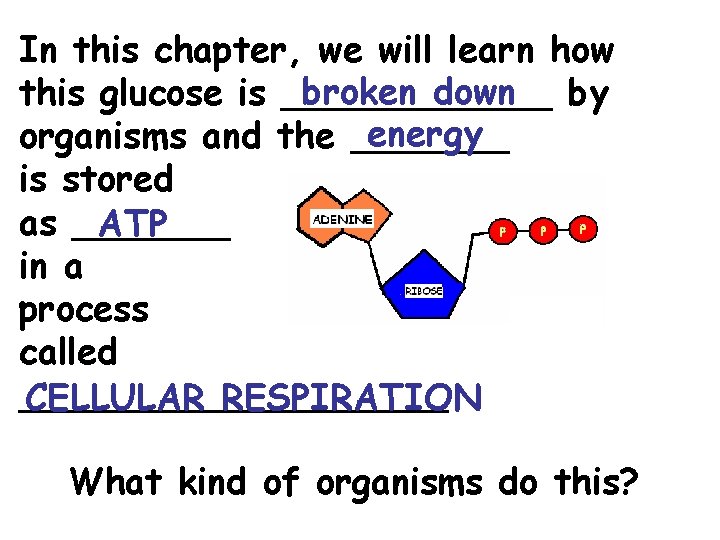
In this chapter, we will learn how broken down by this glucose is ______ energy organisms and the _______ is stored as _______ ATP in a process called __________ CELLULAR RESPIRATION What kind of organisms do this?
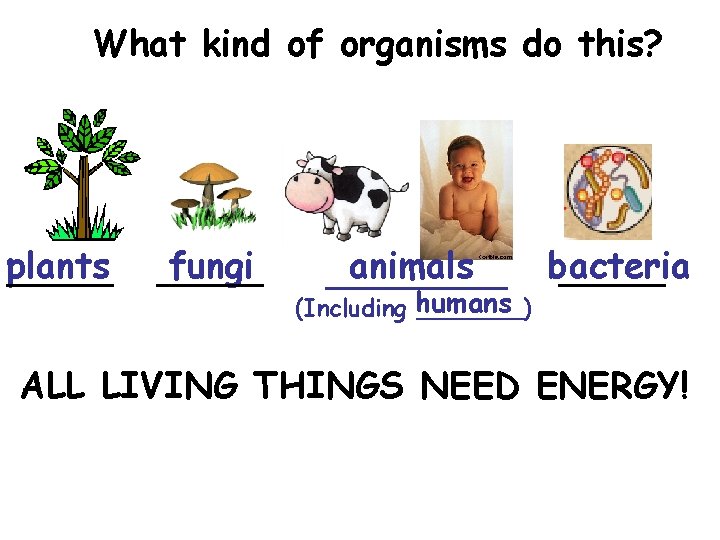
What kind of organisms do this? plants ______ fungi ______ animals ____ (Including humans _______) bacteria ______ ALL LIVING THINGS NEED ENERGY!
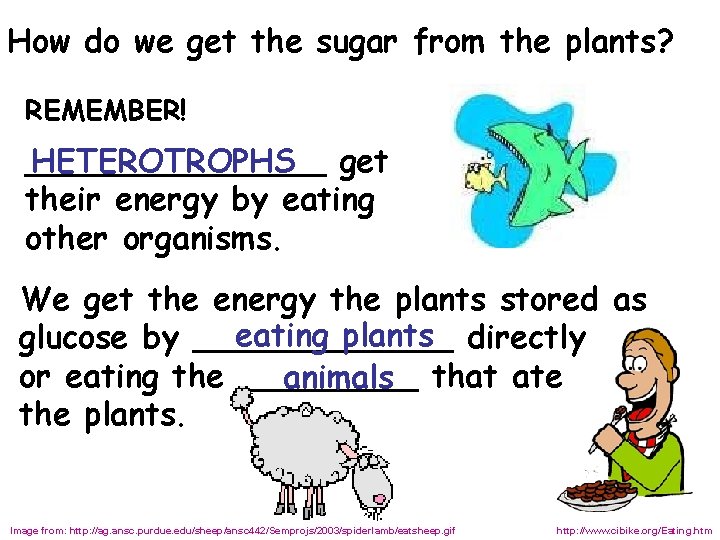
How do we get the sugar from the plants? REMEMBER! ________ HETEROTROPHS get their energy by eating other organisms. We get the energy the plants stored as eating plants directly glucose by _______ or eating the _____ animals that ate the plants. Image from: http: //ag. ansc. purdue. edu/sheep/ansc 442/Semprojs/2003/spiderlamb/eatsheep. gif http: //www. cibike. org/Eating. htm
REMEMBER CELL BIO
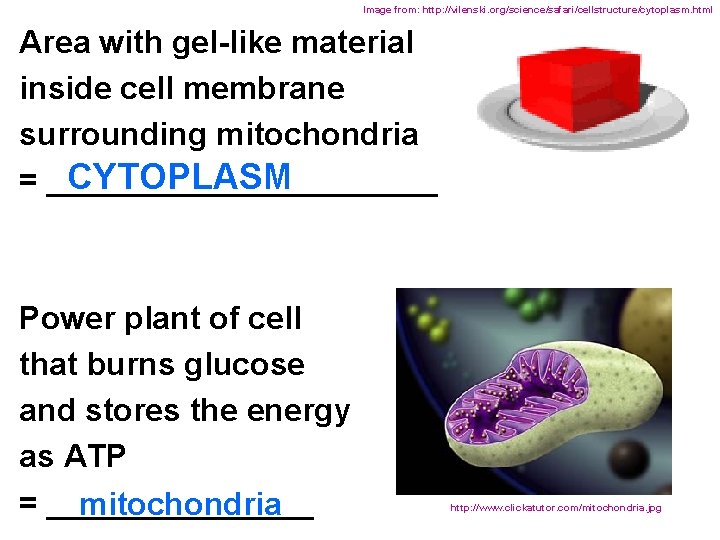
Image from: http: //vilenski. org/science/safari/cellstructure/cytoplasm. html Area with gel-like material inside cell membrane surrounding mitochondria CYTOPLASM = ___________ Power plant of cell that burns glucose and stores the energy as ATP = ________ mitochondria http: //www. clickatutor. com/mitochondria. jpg
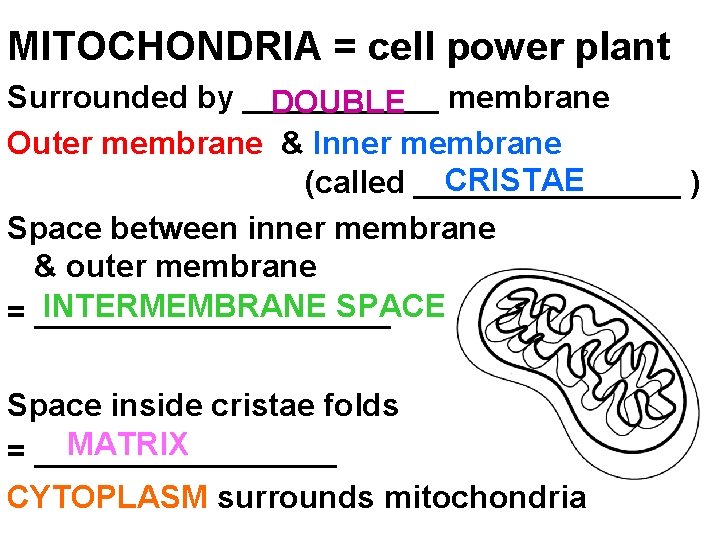
MITOCHONDRIA = cell power plant Surrounded by ______ DOUBLE membrane Outer membrane & Inner membrane CRISTAE (called ________ ) Space between inner membrane & outer membrane INTERMEMBRANE SPACE = __________ Space inside cristae folds MATRIX = _________ CYTOPLASM surrounds mitochondria
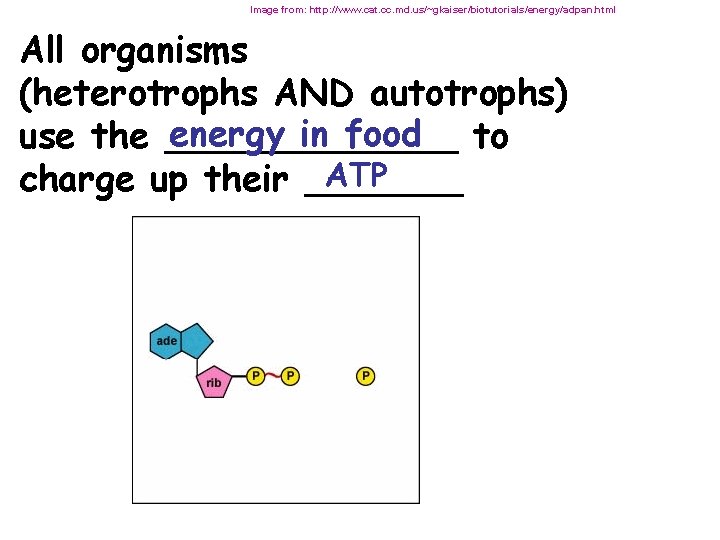
Image from: http: //www. cat. cc. md. us/~gkaiser/biotutorials/energy/adpan. html All organisms (heterotrophs AND autotrophs) energy in food to use the _______ ATP charge up their _______
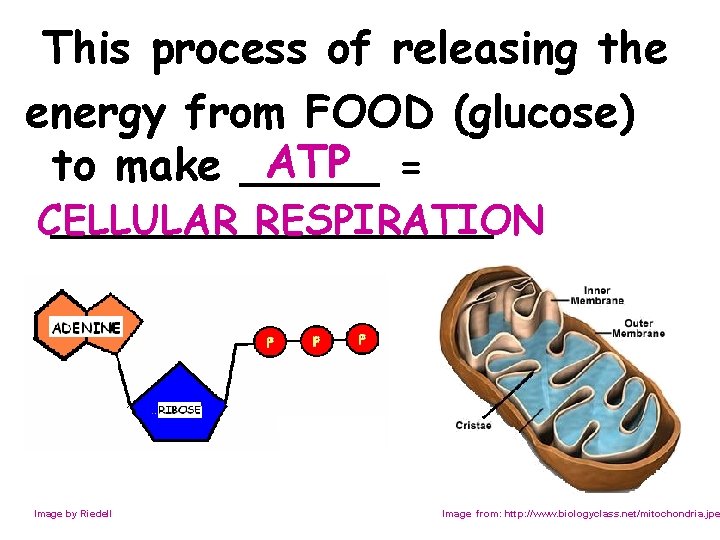
This process of releasing the energy from FOOD (glucose) ATP = to make ___________ CELLULAR RESPIRATION Image by Riedell Image from: http: //www. biologyclass. net/mitochondria. jpe
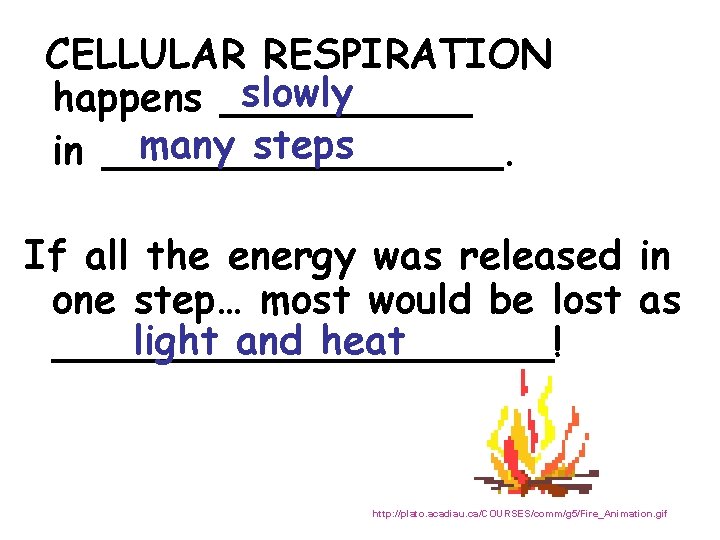
CELLULAR RESPIRATION slowly happens _____ many steps in ________. If all the energy was released in one step… most would be lost as light and heat __________! http: //plato. acadiau. ca/COURSES/comm/g 5/Fire_Animation. gif
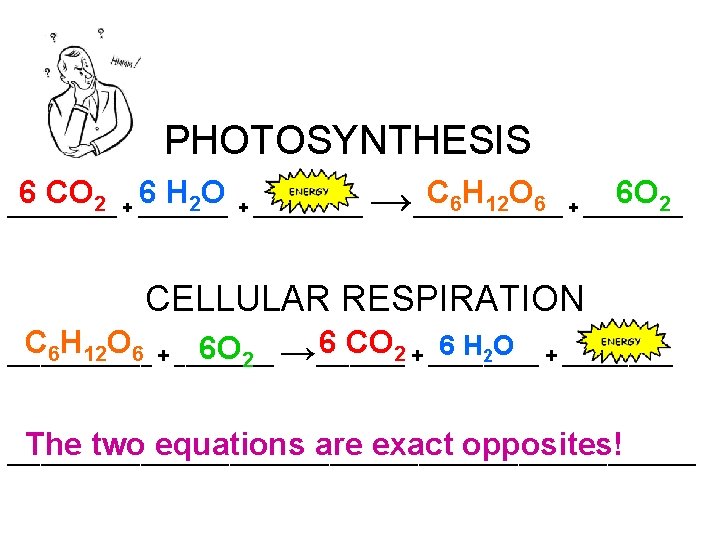
PHOTOSYNTHESIS 6 CO 6 H O 2 + _____ 2 ______ + ______ C 6 H 12 O 6 + _____ 6 O 2 →________ CELLULAR RESPIRATION C 6 H 12 O 6 + _____ 6 CO 2 + _____ 6 H 2 O + _____ 6 O 2 →_______ The two equations are exact opposites! _______________________________
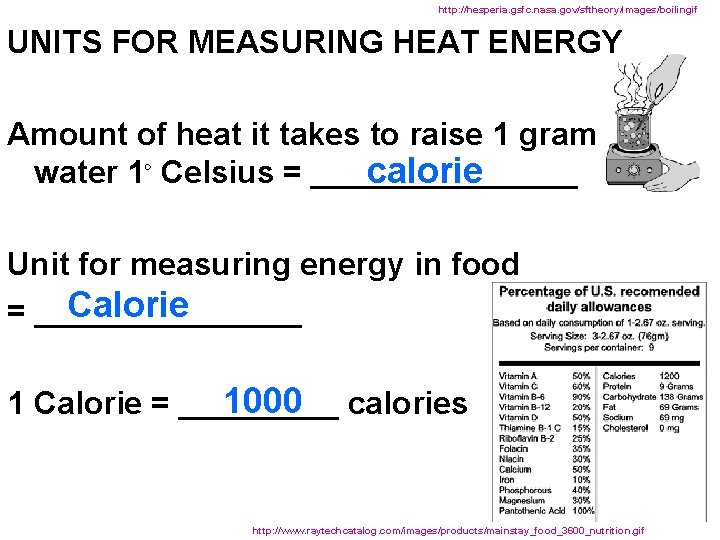
http: //hesperia. gsfc. nasa. gov/sftheory/images/boilingif UNITS FOR MEASURING HEAT ENERGY Amount of heat it takes to raise 1 gram of calorie water 1◦ Celsius = ________ Unit for measuring energy in food Calorie = ________ 1000 calories 1 Calorie = _____ http: //www. raytechcatalog. com/images/products/mainstay_food_3600_nutrition. gif
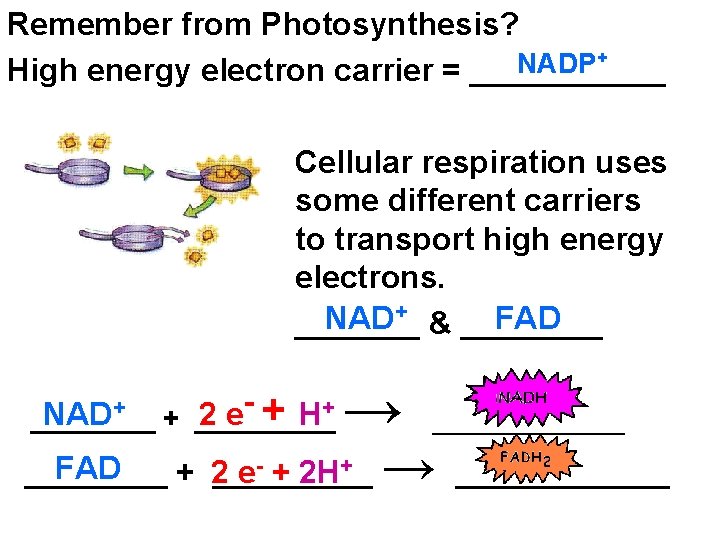
Remember from Photosynthesis? + NADP High energy electron carrier = ______ Cellular respiration uses some different carriers to transport high energy electrons. + NAD FAD _______ & ____ 2 e + H+ _____ NAD+ → FAD e- + 2 H+ ____ + 2 ____________ → ______
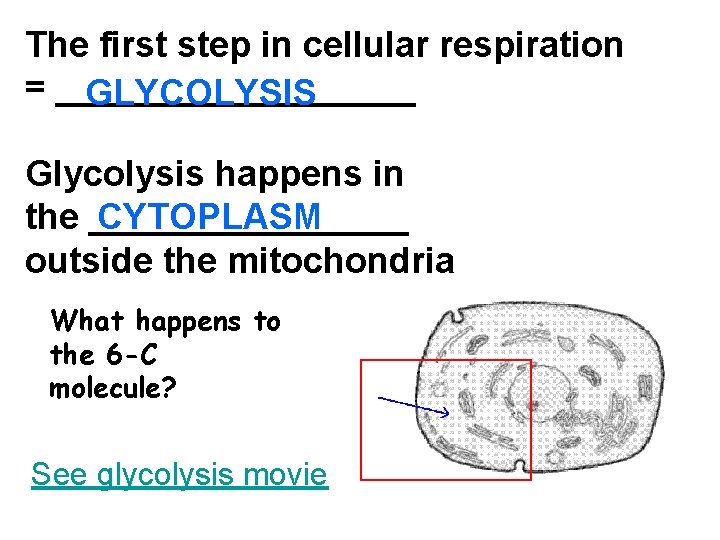
The first step in cellular respiration = _________ GLYCOLYSIS Glycolysis happens in CYTOPLASM the ________ outside the mitochondria What happens to the 6 -C molecule? See glycolysis movie
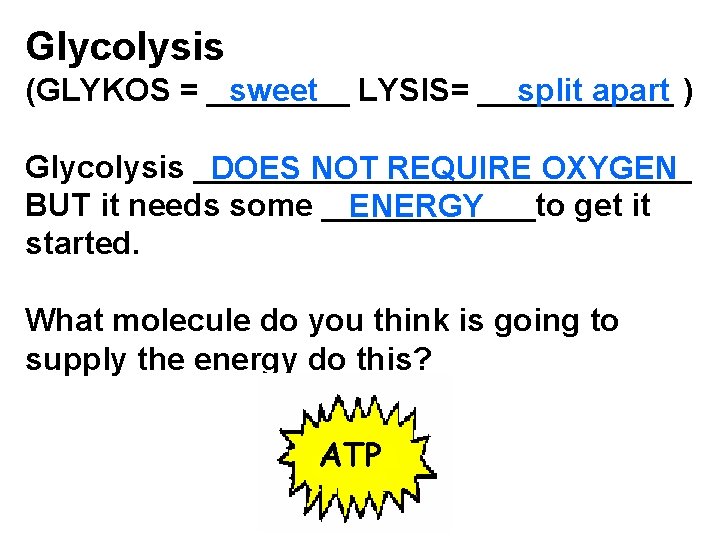
Glycolysis sweet LYSIS= ______ split apart ) (GLYKOS = ____ Glycolysis ______________ DOES NOT REQUIRE OXYGEN BUT it needs some ______to get it ENERGY started. What molecule do you think is going to supply the energy do this? ATP
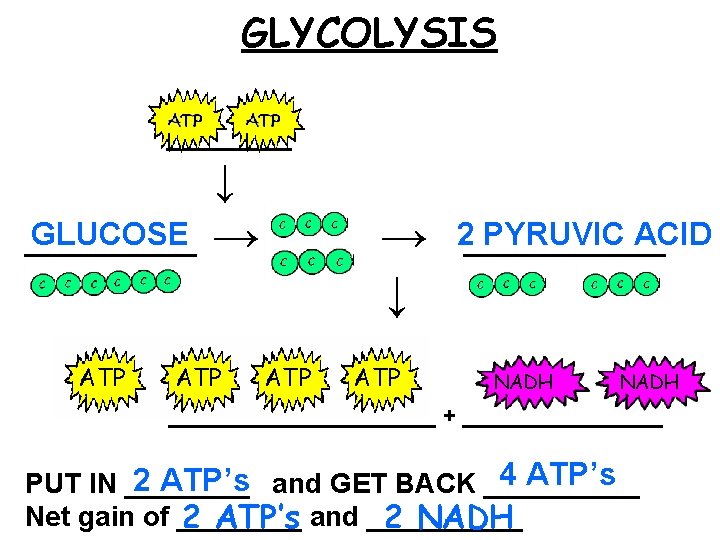
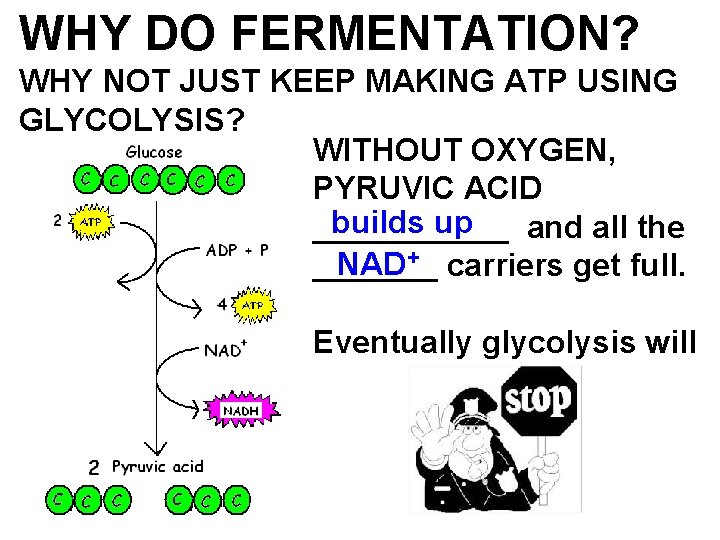
GLYCOLYSIS ____ ↓ GLUCOSE ______ ATP → ↓ ATP 2_______ PYRUVIC ACID NADH __________ + ________ 4 ATP’s 2 ATP’s and GET BACK _____ PUT IN ____ Net gain of ____ 2 ATP’s and _____ 2 NADH
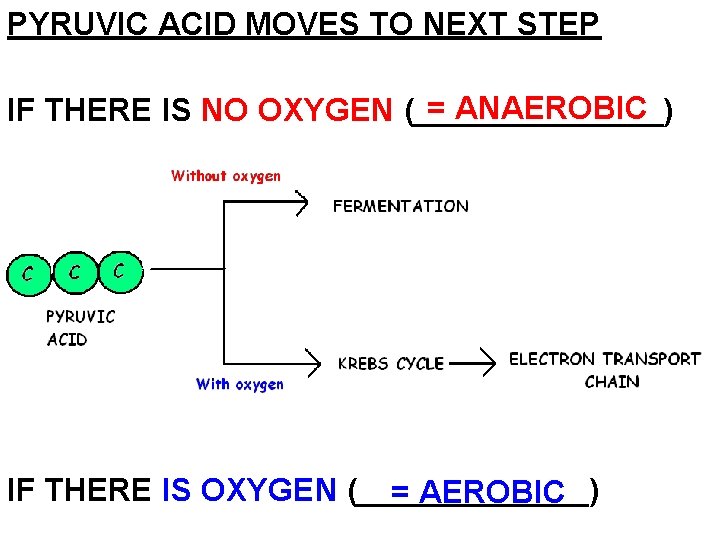
PYRUVIC ACID MOVES TO NEXT STEP = ANAEROBIC IF THERE IS NO OXYGEN (_______) IF THERE IS OXYGEN (_______) = AEROBIC
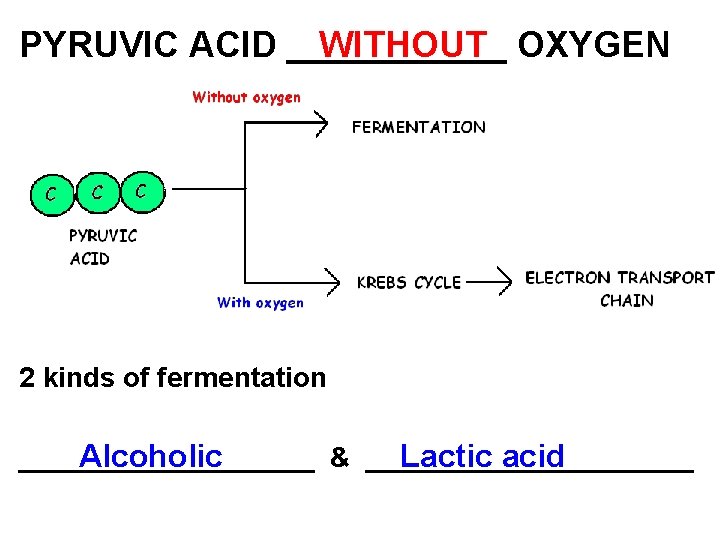
WITHOUT OXYGEN PYRUVIC ACID ______ ANAEROBIC 2 kinds of fermentation Alcoholic Lactic acid __________ & ___________
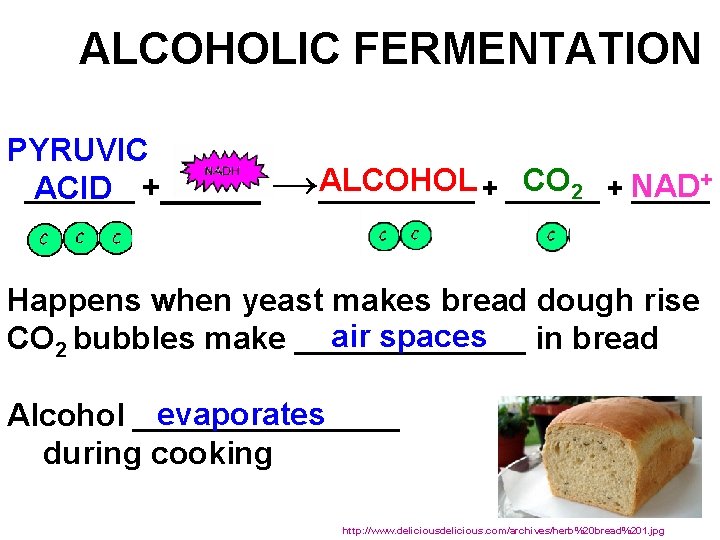
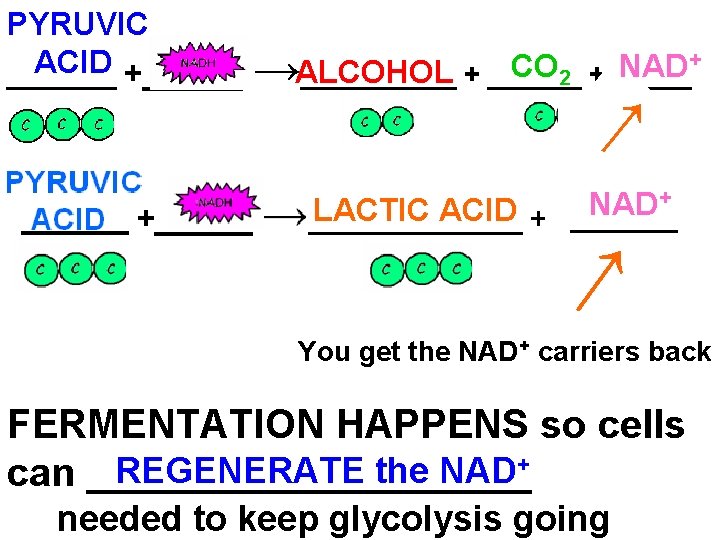
ALCOHOLIC FERMENTATION PYRUVIC _______ ACID +_____ ALCOHOL + ______ CO 2 + NAD →_____+ Happens when yeast makes bread dough rise air spaces in bread CO 2 bubbles make _______ evaporates Alcohol ________ during cooking http: //www. delicious. com/archives/herb%20 bread%201. jpg
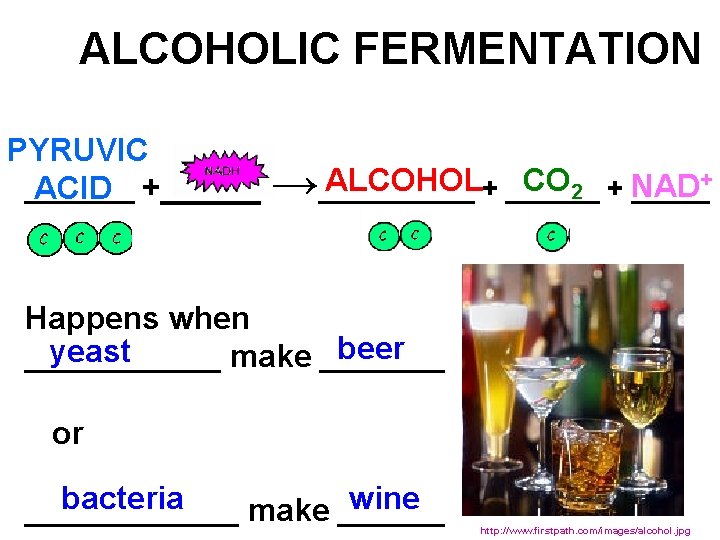
ALCOHOLIC FERMENTATION PYRUVIC _______ ACID +_____ ALCOHOL+ ______ CO 2 + NAD →_____+ Happens when beer yeast ______ make _______ or bacteria wine ______ make ______ http: //www. firstpath. com/images/alcohol. jpg
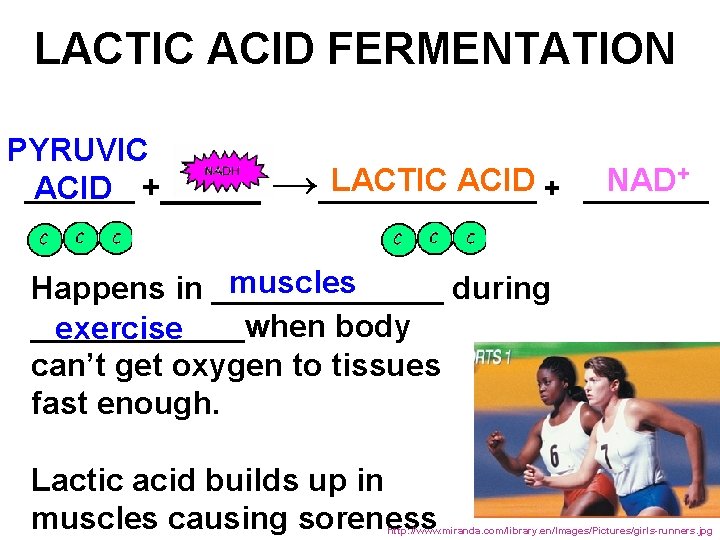
LACTIC ACID FERMENTATION PYRUVIC _______ ACID +_____ + LACTIC ACID NAD →_______ + ____ muscles Happens in _______ during ______when body exercise can’t get oxygen to tissues fast enough. Lactic acid builds up in muscles causing soreness http: //www. miranda. com/library. en/Images/Pictures/girls-runners. jpg
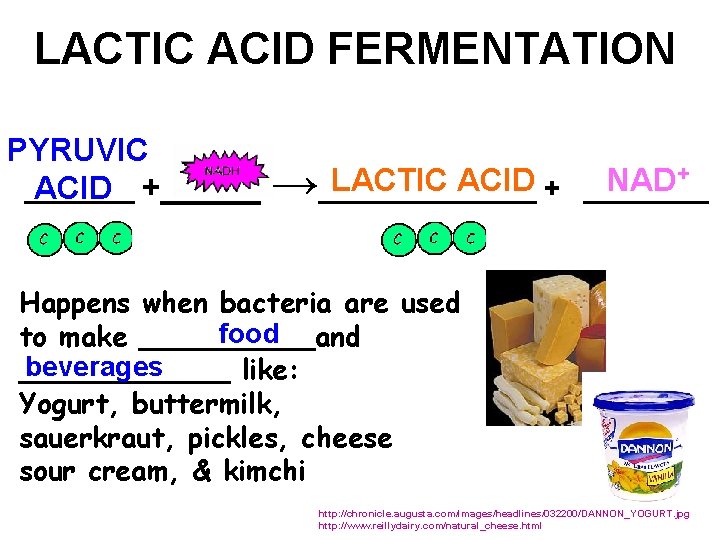
LACTIC ACID FERMENTATION PYRUVIC _______ ACID +_____ + LACTIC ACID NAD →_______ + ____ Happens when bacteria are used food to make _____and beverages ______ like: Yogurt, buttermilk, sauerkraut, pickles, cheese sour cream, & kimchi http: //chronicle. augusta. com/images/headlines/032200/DANNON_YOGURT. jpg http: //www. reillydairy. com/natural_cheese. html
WHY DO FERMENTATION? WHY NOT JUST KEEP MAKING ATP USING GLYCOLYSIS? WITHOUT OXYGEN, PYRUVIC ACID builds up ______ and all the NAD+ carriers get full. _______ Eventually glycolysis will NAD+
+ CO NAD →ALCOHOL _____ + ______ 2 + _____ → PYRUVIC ACID +_______ → LACTIC ACID + NAD ______ You get the NAD+ carriers back FERMENTATION HAPPENS so cells + REGENERATE the NAD can __________ needed to keep glycolysis going
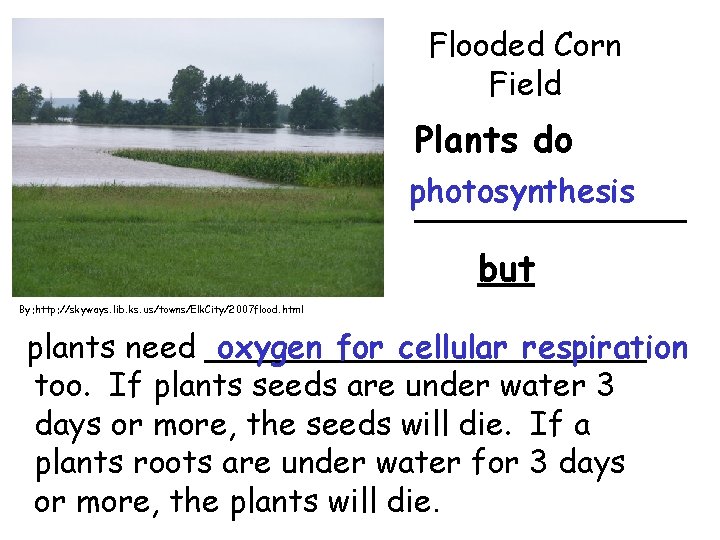
Flooded Corn Field Plants do photosynthesis ______ but By: http: //skyways. lib. ks. us/towns/Elk. City/2007 flood. html plants need ___________ oxygen for cellular respiration too. If plants seeds are under water 3 days or more, the seeds will die. If a plants roots are under water for 3 days or more, the plants will die.
Core High School Life Science Performance Descriptors High school students performing at the ADVANCED level: analyze chemical reaction and chemical processes involved in the Calvin Cycle and Krebs Cycle; predict the function of a given structure; High school students performing at the PROFICIENT level: describe and give examples of chemical reactions required to sustain life (…role of enzymes) describe and give examples of chemical reactions required to sustain life (hydrolysis, dehydration synthesis, photosynthesis, cellular respiration, ADP/ATP, role of enzymes); describe the relationship between structure and function High school students performing at the BASIC level name chemical reactions required to sustain life (… role of enzymes) name chemical reactions required to sustain life (hydrolysis, dehydration synthesis, photosynthesis, cellular respiration, ADP/ATP, role of enzymes); recognize that different structures perform different functions;