
Cellular Respiration Chapter 9 What Is ATP Energy











- Slides: 29
Cellular Respiration Chapter 9
What Is ATP? Energy used by all Cells Adenosine Triphosphate Organic molecule containing highenergy Phosphate bonds
Chemical Structure of ATP Adenine Base 3 Phosphates Ribose Sugar
What Does ATP Do for You? It supplies YOU with ENERGY!
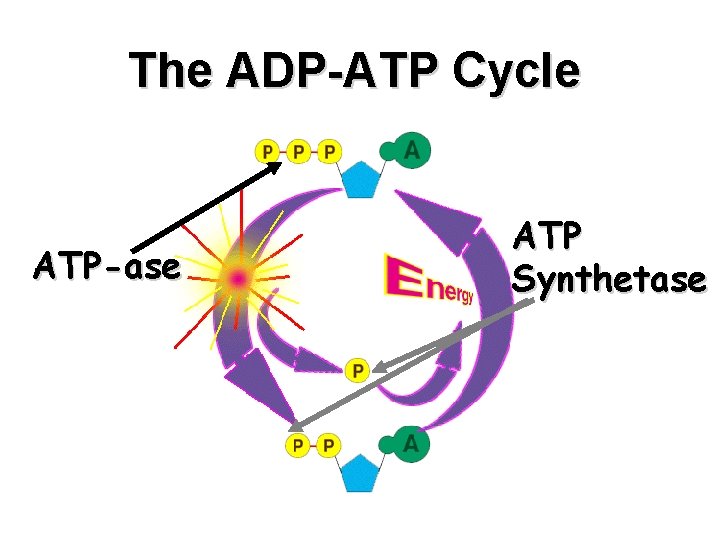
How Do We Get Energy From ATP? By breaking the highenergy bonds between the last two phosphates in ATP
How Does That Happen? An Enzyme!
How is ATP Re-Made? The reverse of the previous process occurs. Another Enzyme is used! ATP Synthetase
The ADP-ATP Cycle ATP-ase ATP Synthetase
When is ATP Made in the Body? During a Process called Cellular Respiration that takes place in both Plants & Animals
Overall Equation for Cellular Respiration C 6 H 12 O 6 + 6 O 2 YIELDS 6 CO 2 + 6 H 20 + e- + 36 -38 ATP’s
What Carries the Electrons? • NAD+ • • (nicotinadenine dinucleotide) acts as the energy carrier NAD+ is a coenzyme It’s Reduced to NADH when it picks up two electrons and one hydrogen ion
Are There Any Other Electron Carriers? • YES! Another Coenzyme! • FAD+ (Flavin adenine dinucleotide) • Reduced to FADH 2
Cellular Respiration Facts • Metabolic Pathway that breaks down carbohydrates • Process is Exergonic as Highenergy Glucose is broken into CO 2 and H 2 O (release energy)
What are the Stages of Cellular Respiration? • Glycolysis • The Krebs Cycle • The Electron Transport Chain
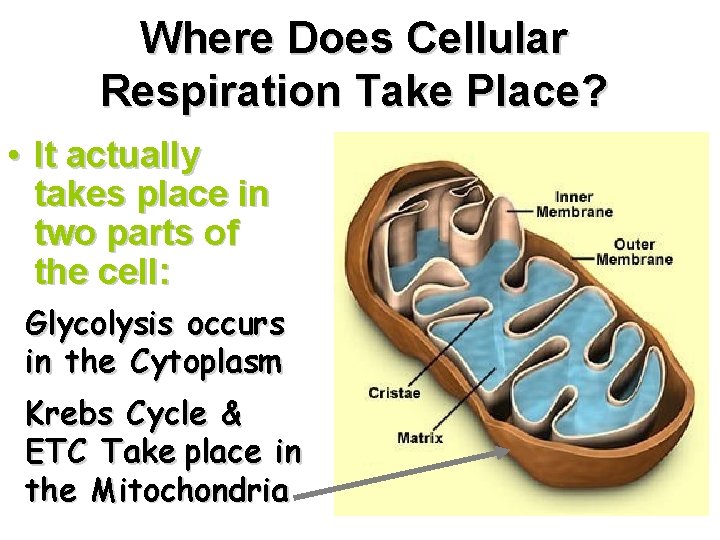
Where Does Cellular Respiration Take Place? • It actually takes place in two parts of the cell: Glycolysis occurs in the Cytoplasm Krebs Cycle & ETC Take place in the Mitochondria
Mitochondria Structure • Smooth outer Membrane • Folded inner membrane • Folds called Cristae • Space inside cristae called the Matrix
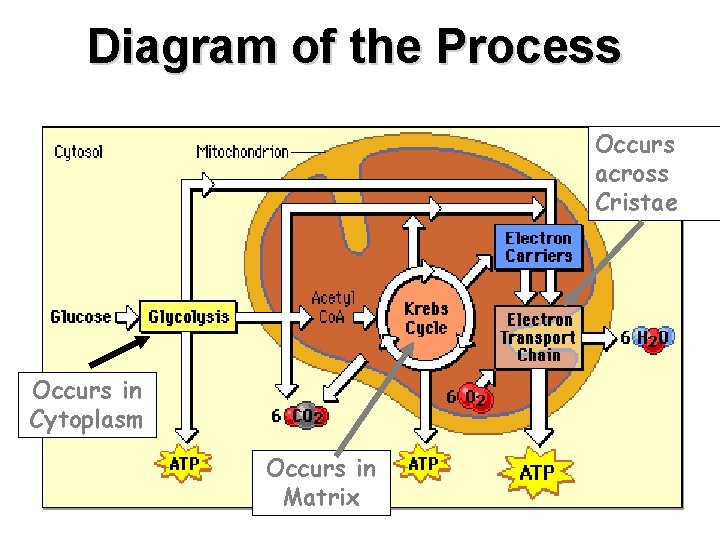
Diagram of the Process Occurs across Cristae Occurs in Cytoplasm Occurs in Matrix
Glycolysis Summary Takes place in the Cytoplasm Anaerobic (Doesn’t Use Oxygen) Requires input of 2 ATP Glucose split into two molecules of Pyruvate or Pyruvic Acid
Glycolysis Summary • Also produces 2 NADH and 4 ATP • Pyruvate is oxidized to Acetyl Co. A and CO 2 is removed
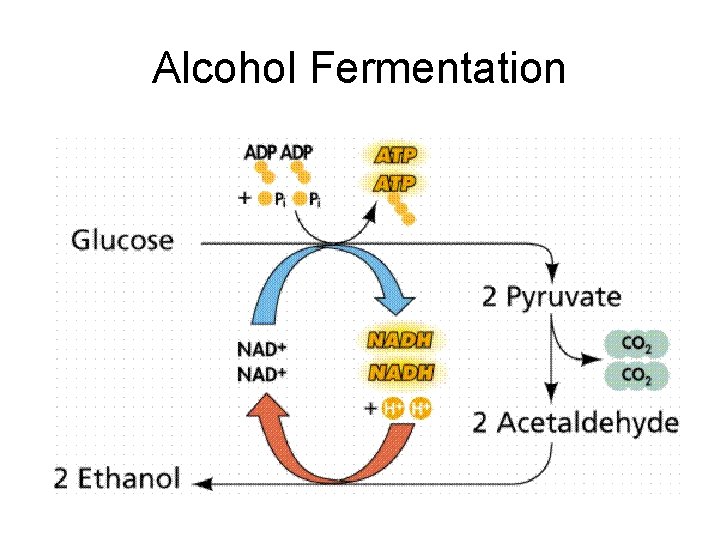
Fermentation v Occurs when O 2 NOT present (anaerobic) v. Called Lactic Acid fermentation in muscle cells (makes muscles tired) v. Called Alcoholic fermentation in yeast (produces ethanol) v. Nets only 2 ATP
Lactic Acid Fermentation
Alcohol Fermentation
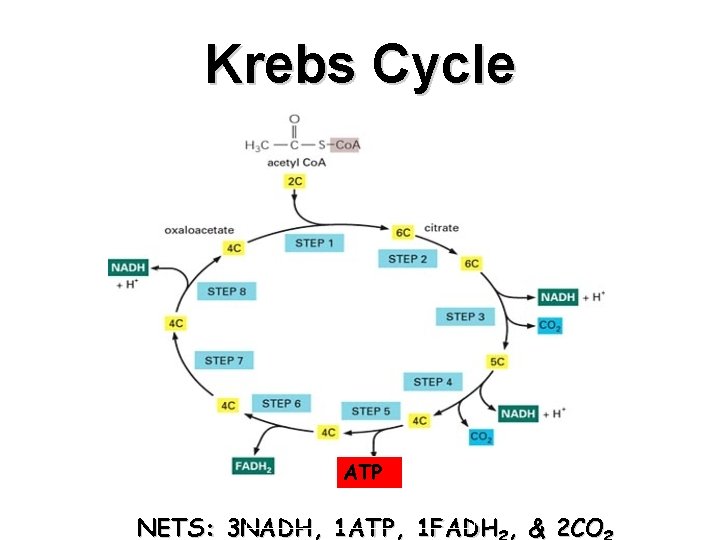
Krebs Cycle Summary • Requires Oxygen (Aerobic) • Series of reactions that give off CO 2 and produce one ATP per cycle • Produces two ATP • Takes place in matrix of mitochondria
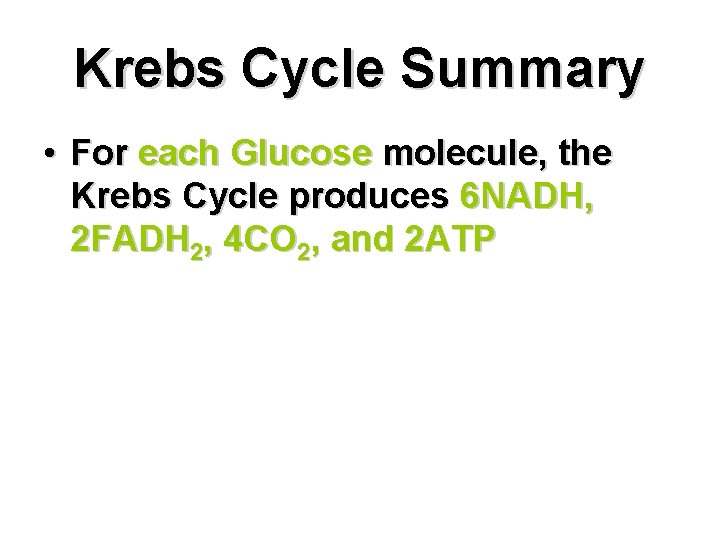
Krebs Cycle Summary • For each Glucose molecule, the Krebs Cycle produces 6 NADH, 2 FADH 2, 4 CO 2, and 2 ATP
Krebs Cycle ATP NETS: 3 NADH, 1 ATP, 1 FADH , & 2 CO
Electron Transport Chain Summary • 34 ATP Produced • H 2 O Produced • Occurs Across Inner Mitochondrial membrane
Electron Transport Chain Animation