
Cellular Respiration Chapter 9 Energy Review n Energy
- Slides: 17
Cellular Respiration Chapter 9
Energy Review n Energy Storing Molecules n ATP, NADPH (NAD+), FADH (FAD+), FADH 2 ATP supplies most of the energy that drives metabolism in living things n ATP releases energy when converted into ADP n
Cellular Respiration Overview Chapter 9 -1 n Living things get most of the energy they need from glucose. n n n Autrotrophs make glucose using photosynthesis Heterotrophs get glucose from food they eat Cellular Respiration n The process that releases energy by breaking down glucose and other food molecules in the presence of oxygen.
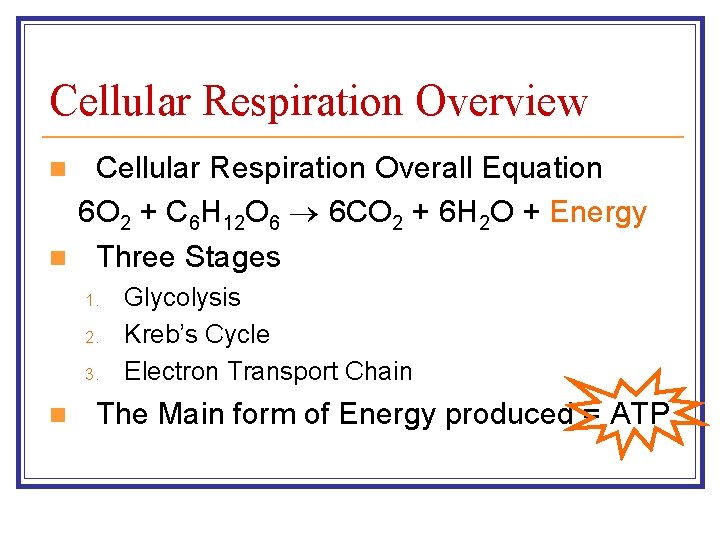
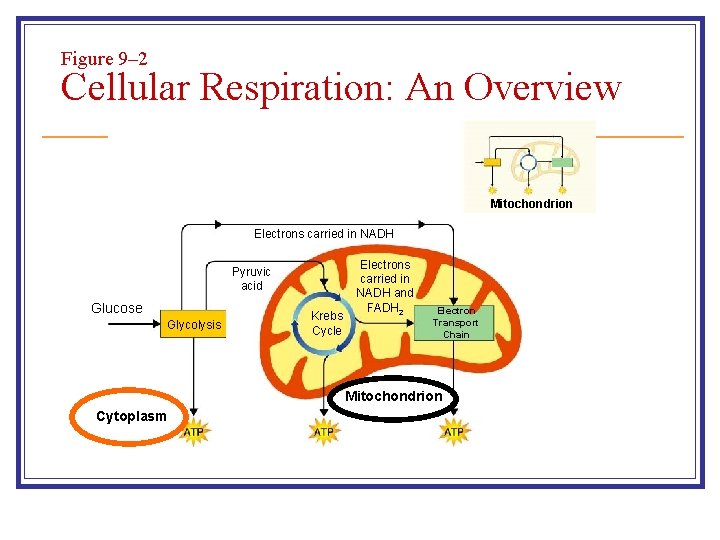
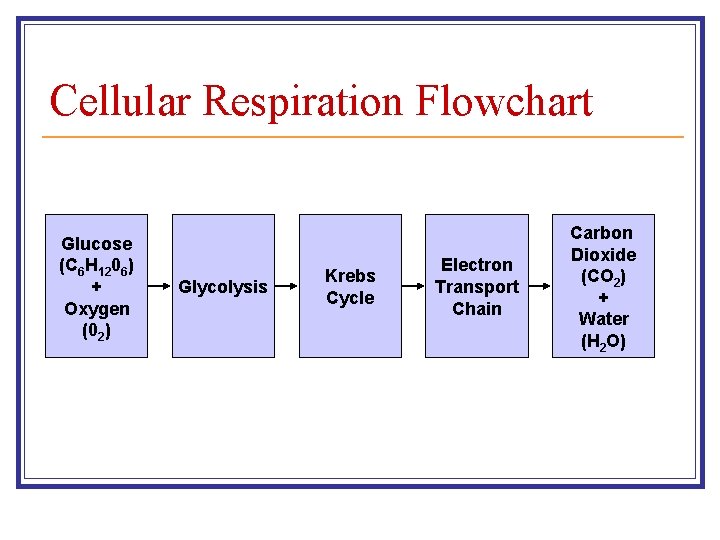
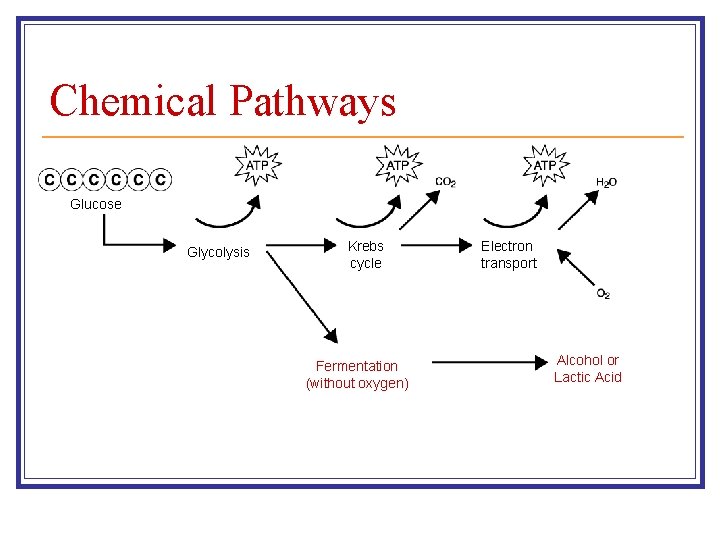
Cellular Respiration Overview n n Cellular Respiration Overall Equation 6 O 2 + C 6 H 12 O 6 6 CO 2 + 6 H 2 O + Energy Three Stages 1. 2. 3. n Glycolysis Kreb’s Cycle Electron Transport Chain The Main form of Energy produced = ATP
Figure 9– 2 Cellular Respiration: An Overview Mitochondrion Electrons carried in NADH Pyruvic acid Glucose Glycolysis Krebs Cycle Electrons carried in NADH and FADH 2 Electron Transport Chain Mitochondrion Cytoplasm
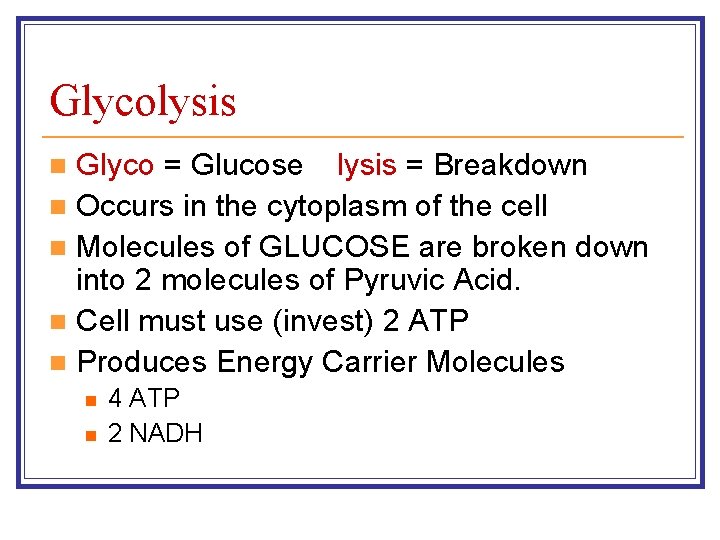
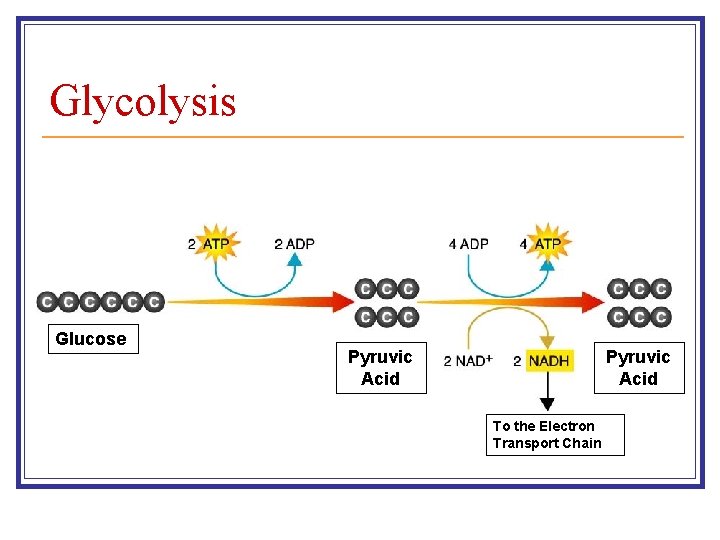
Glycolysis Glyco = Glucose lysis = Breakdown n Occurs in the cytoplasm of the cell n Molecules of GLUCOSE are broken down into 2 molecules of Pyruvic Acid. n Cell must use (invest) 2 ATP n Produces Energy Carrier Molecules n n n 4 ATP 2 NADH
Glycolysis Glucose Pyruvic Acid To the Electron Transport Chain
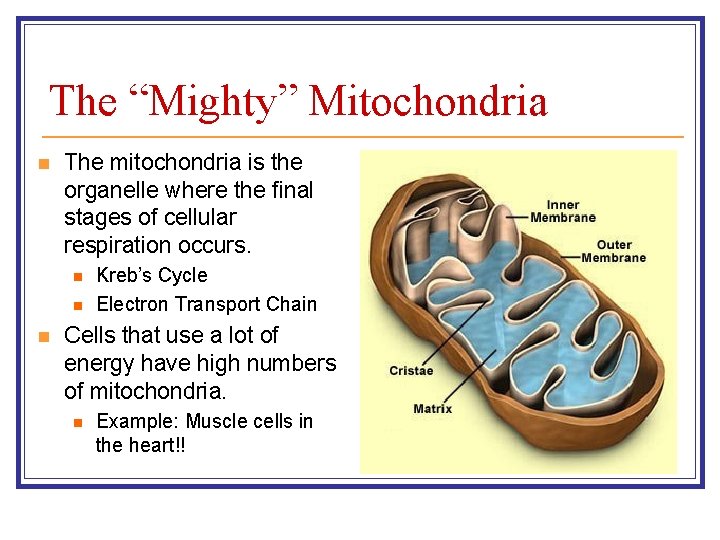
The “Mighty” Mitochondria n The mitochondria is the organelle where the final stages of cellular respiration occurs. n n n Kreb’s Cycle Electron Transport Chain Cells that use a lot of energy have high numbers of mitochondria. n Example: Muscle cells in the heart!!
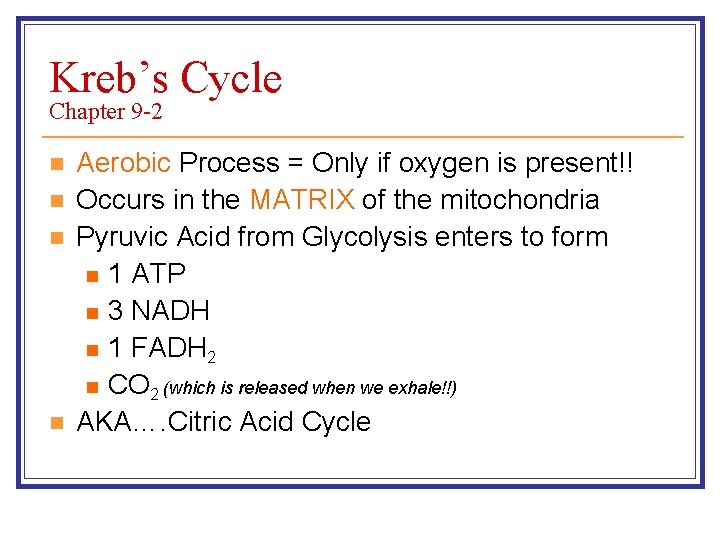
Kreb’s Cycle Chapter 9 -2 n n Aerobic Process = Only if oxygen is present!! Occurs in the MATRIX of the mitochondria Pyruvic Acid from Glycolysis enters to form n 1 ATP n 3 NADH n 1 FADH 2 n CO 2 (which is released when we exhale!!) AKA…. Citric Acid Cycle
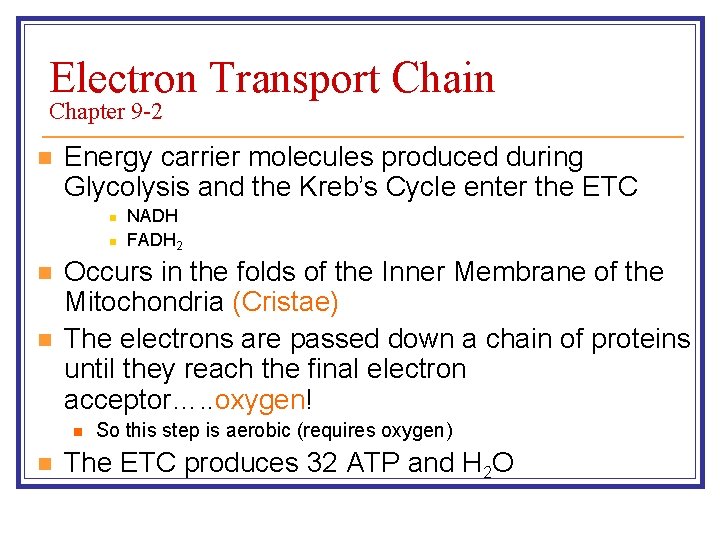
Electron Transport Chain Chapter 9 -2 n Energy carrier molecules produced during Glycolysis and the Kreb’s Cycle enter the ETC n n Occurs in the folds of the Inner Membrane of the Mitochondria (Cristae) The electrons are passed down a chain of proteins until they reach the final electron acceptor…. . oxygen! n n NADH FADH 2 So this step is aerobic (requires oxygen) The ETC produces 32 ATP and H 2 O
Section 9 -2 Cellular Respiration Flowchart Glucose (C 6 H 1206) + Oxygen (02) Glycolysis Krebs Cycle Electron Transport Chain Carbon Dioxide (CO 2) + Water (H 2 O)
What happens if NO OXYGEN is available? ? The Kreb’s Cycle and Electron Transport Chain can’t function!! These are anaerobic conditions!!
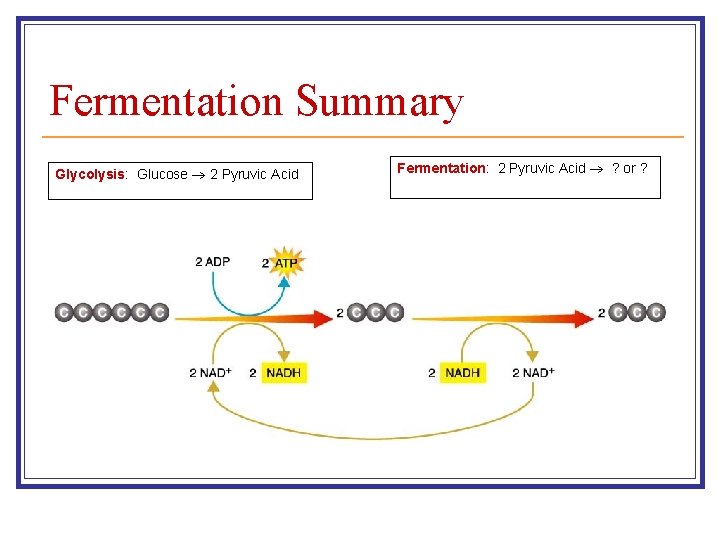
Fermentation Chapter 9 -1 n n n The cell can use Fermentation instead!! Occurs in the Cytoplasm n Just like glycolysis!! Fermentation n A series of reactions that convert NADH (from glycolysis) back into NAD allowing glycolysis to keep producing a small amount of ATP
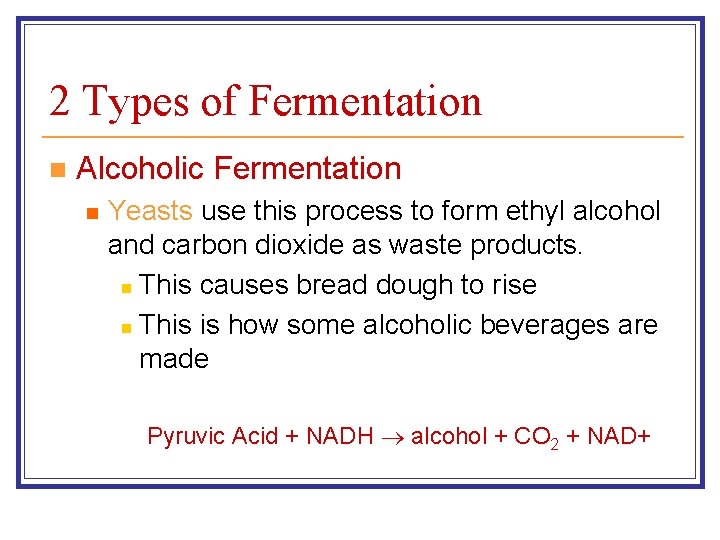
2 Types of Fermentation n Alcoholic Fermentation n Yeasts use this process to form ethyl alcohol and carbon dioxide as waste products. n This causes bread dough to rise n This is how some alcoholic beverages are made Pyruvic Acid + NADH alcohol + CO 2 + NAD+
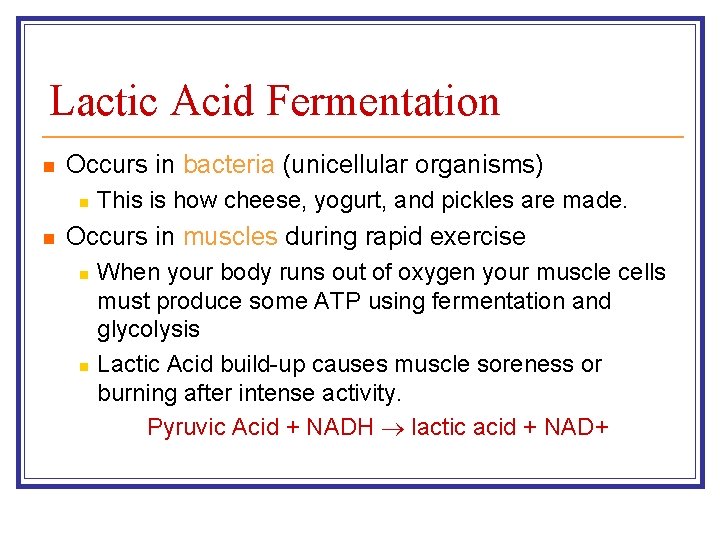
Lactic Acid Fermentation n Occurs in bacteria (unicellular organisms) n n This is how cheese, yogurt, and pickles are made. Occurs in muscles during rapid exercise n n When your body runs out of oxygen your muscle cells must produce some ATP using fermentation and glycolysis Lactic Acid build-up causes muscle soreness or burning after intense activity. Pyruvic Acid + NADH lactic acid + NAD+
Fermentation Summary Glycolysis: Glucose 2 Pyruvic Acid Fermentation: 2 Pyruvic Acid ? or ?
Section 9 -1 Chemical Pathways Glucose Glycolysis Krebs cycle Fermentation (without oxygen) Electron transport Alcohol or Lactic Acid