
Cellular Respiration Chapter 9 Big Picture Life is
Cellular Respiration Chapter 9
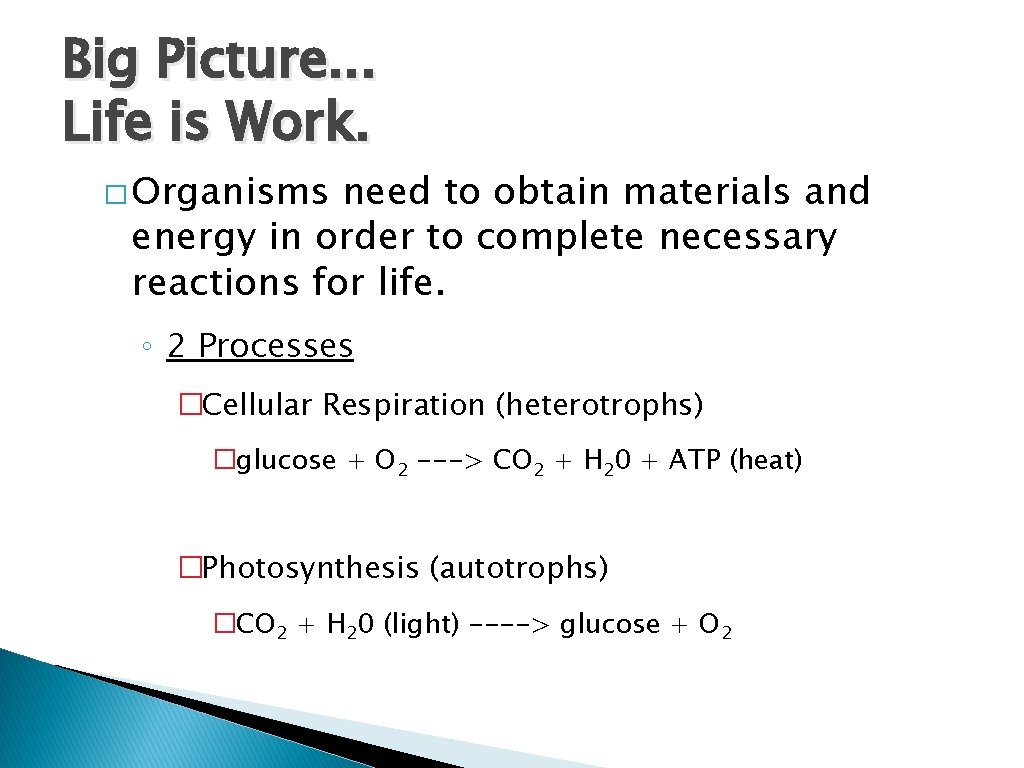
Big Picture. . . Life is Work. � Organisms need to obtain materials and energy in order to complete necessary reactions for life. ◦ 2 Processes �Cellular Respiration (heterotrophs) �glucose + O 2 ---> CO 2 + H 20 + ATP (heat) �Photosynthesis (autotrophs) �CO 2 + H 20 (light) ----> glucose + O 2
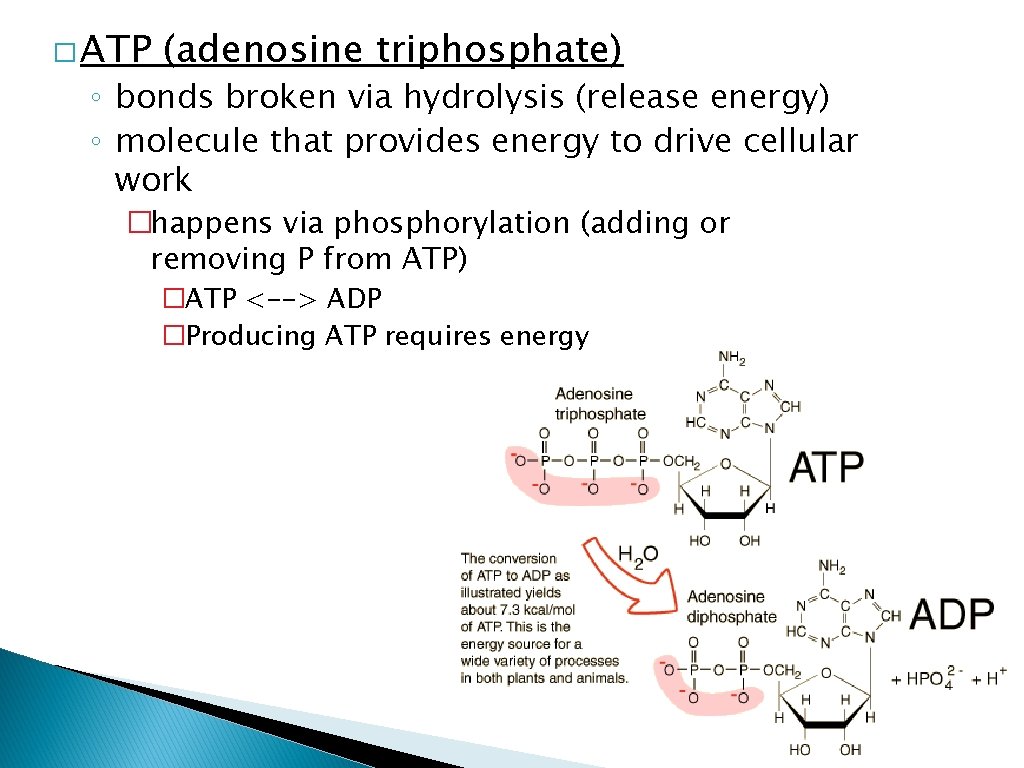
� ATP (adenosine triphosphate) ◦ bonds broken via hydrolysis (release energy) ◦ molecule that provides energy to drive cellular work �happens via phosphorylation (adding or removing P from ATP) �ATP <--> ADP �Producing ATP requires energy

Transfer of electrons between compounds. . . � Oxidation-Reduction Reactions (redox) ◦ oxidation (losing electrons) �reducing agent (electron donor) ◦ reduction (gaining electrons--reduce positive charge) �oxidizing agent (electron acceptor)

� Redox in Cellular Respiration. . . ◦ glucose oxidized to CO 2 ◦ oxygen reduced to H 2 O ◦ coenzymes are used throughout this process to “help shuttle” the electrons (H+) �NAD+ (nicotinamide adenine dinucleotide)--NADH is reduced state �FAD (flavin adenine dinucleotide)-FADH 2 is reduced state
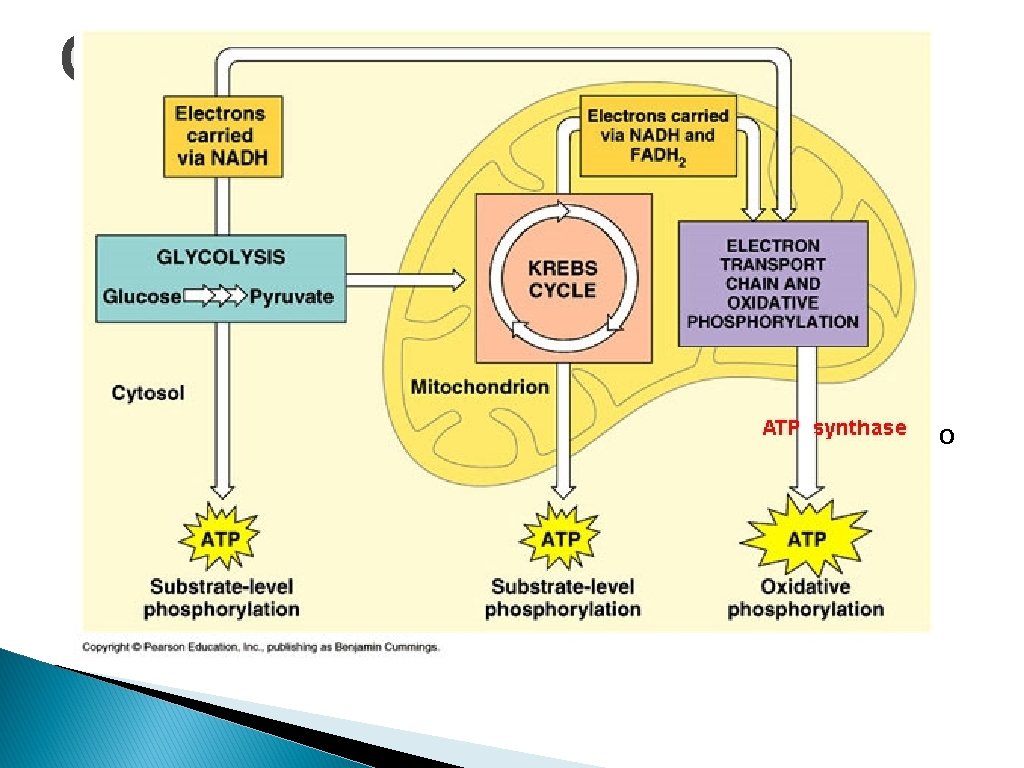
Cellular Respiration � Cellular Respiration does not oxidize glucose in a single explosive step. Instead a series of steps are used to release small amounts of energy. ◦ Glycolysis �in the cytosol. Glucose broken to pyruvate. Some ATP produced. ◦ TCA (Krebs) Cycle and Pyruvate oxidation �pyruvate further oxidized and completely broken down to CO 2 in the mitochondria. Some ATP produced. ◦ Electron Transport Chain (oxidative phosphorylation and chemiosmosis) �accepts electrons from carriers (NADH and FADH 2) and releases energy. ATP and H 20 are produced here.
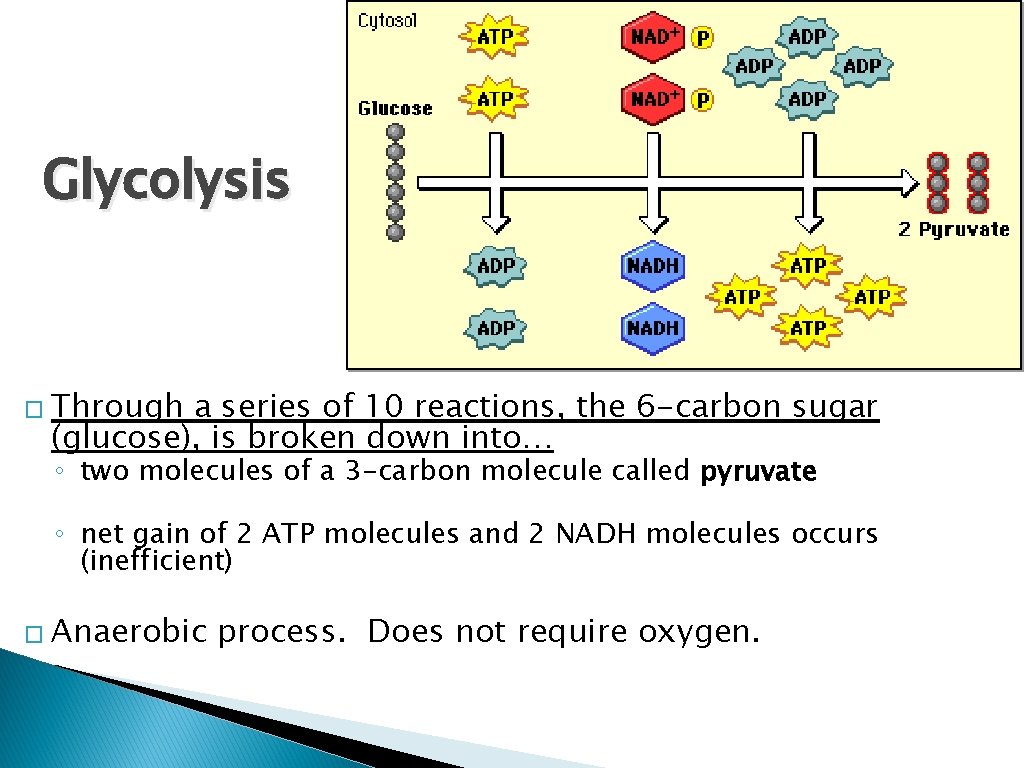
Glycolysis � Through a series of 10 reactions, the 6 -carbon sugar (glucose), is broken down into… ◦ two molecules of a 3 -carbon molecule called pyruvate ◦ net gain of 2 ATP molecules and 2 NADH molecules occurs (inefficient) � Anaerobic process. Does not require oxygen.

Pyruvate Oxidation � Pyruvate travels into the mitochondria via a transport protein. � Pyruvate then gets oxidized into Acetyl-Co. A inside the mitochondria (one is produced per pyruvate molecule) ◦ A CO 2 molecule is released ◦ One NADH molecule is produced ◦ Acetyl-Co. A then enters the TCA (Krebs) cycle in the mitochondrial matrix
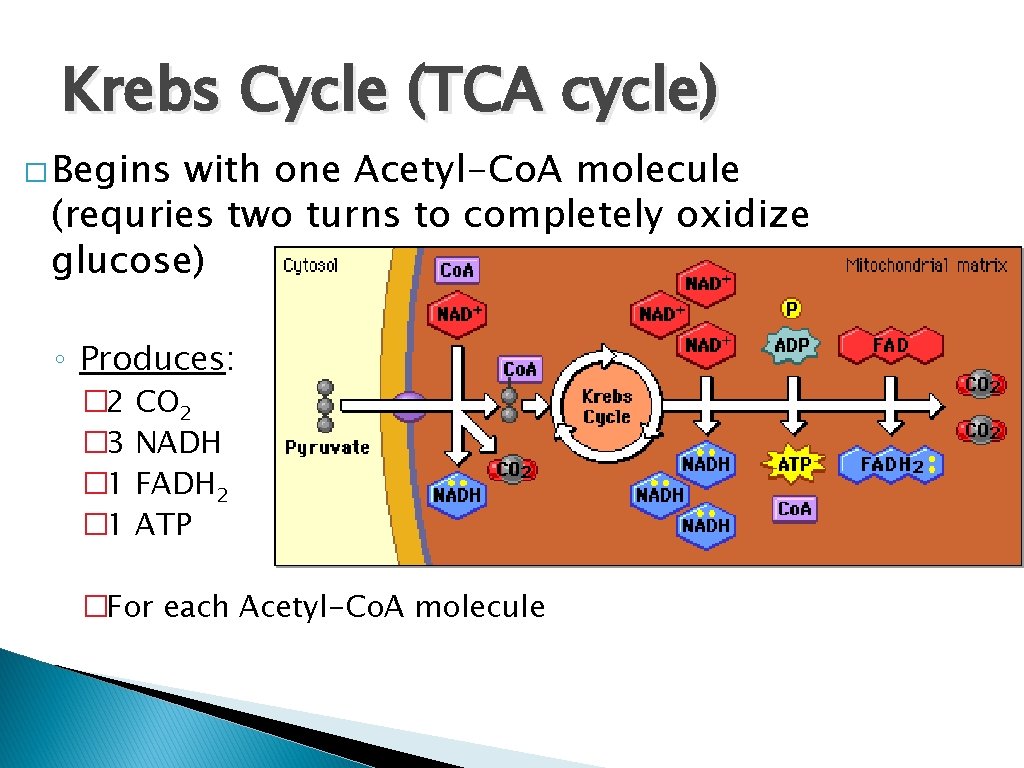
Krebs Cycle (TCA cycle) � Begins with one Acetyl-Co. A molecule (requries two turns to completely oxidize glucose) ◦ Produces: � 2 � 3 � 1 CO 2 NADH FADH 2 ATP �For each Acetyl-Co. A molecule
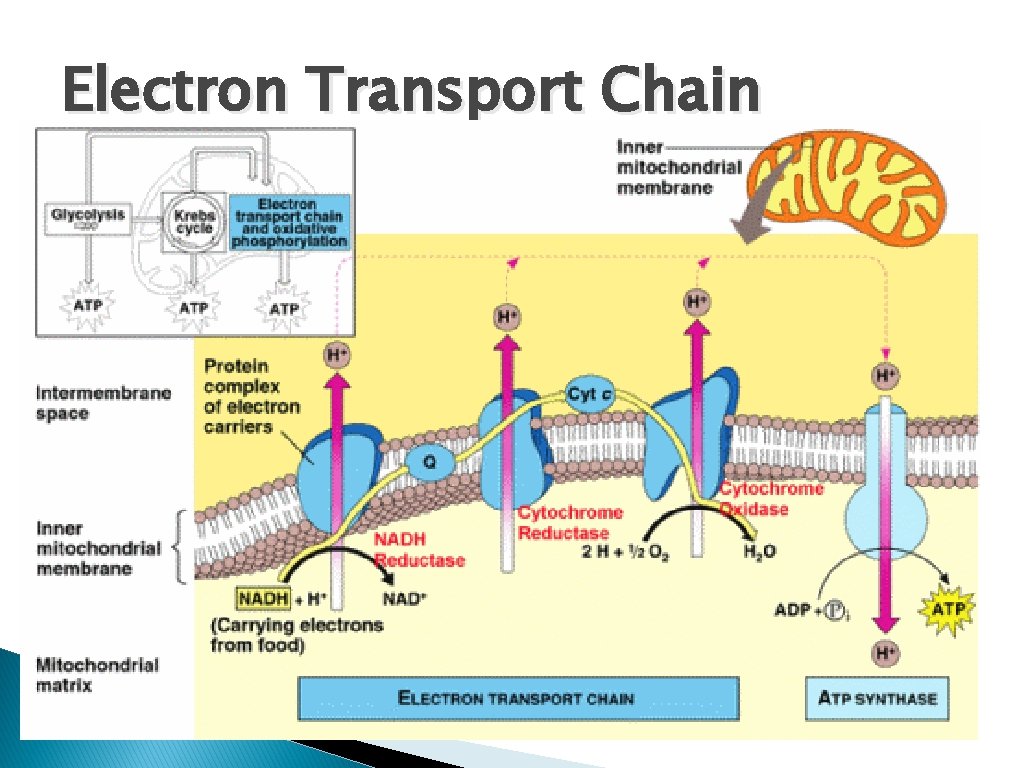
Electron Transport Chain � Occurs in the inner membrane of the mitochondria (cristae—folds) ◦ Oxidative Phosphorylation �Within the membrane are transmembrane proteins to pump H+ ions across (creates gradient) �Electron carriers (NADH and FADH 2) donate electrons to drive the passage of H+ ions �Last protein oxidizes oxygen into water ◦ Chemiosmosis �At the end of the chain, H+ passes back through the membrane in ATP synthase, which uses the energy from this process to convert ADP back to ATP. �H+ gradient across a membrane used to drive cellular work (movement of H+ ions)
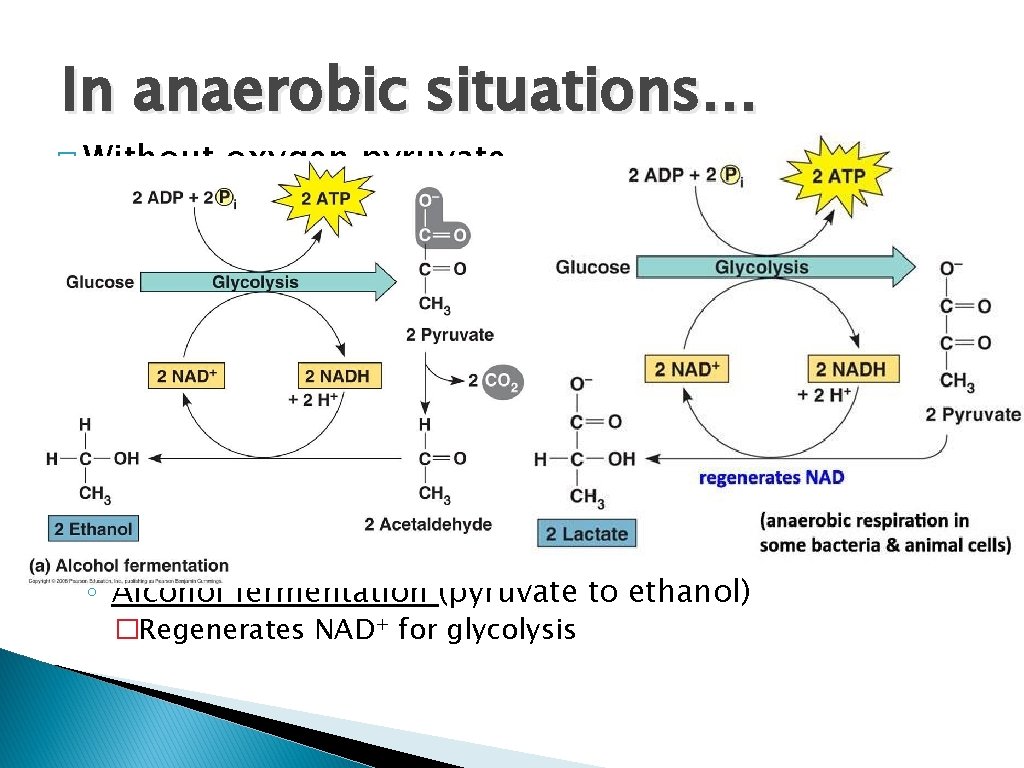
In anaerobic situations… � Without oxygen pyruvate cannot enter the mitochondria and begin the Krebs Cycle, oxygen is not present to pull electrons down chain, and the process stops. � Instead pyruvate enters into an alternate pathway to oxidize glucose and generate ATP… ◦ Lactic acid fermentation (pyruvate to lactate) �Regenerates NAD+ for glycolysis ◦ Alcohol fermentation (pyruvate to ethanol) �Regenerates NAD+ for glycolysis
� aerobic respiration: cell respiration that requires oxygen (most organisms) � anaerobic respiration (fermentation): cell respiration that occurs without oxygen � oxidative phosphorylation: ATP synthesis powered by redox reactions in ETC (90% of ATP generated by CR) � substrate level phosphorylation: ATP formed by glycolysis and TCA cycle � chemiosmosis: H+ ions move through a membrane to drive cellular work
- Slides: 12