
Cellular Respiration Chapter 7 Cellular Respiration Glycolysis and
- Slides: 19
Cellular Respiration Chapter 7
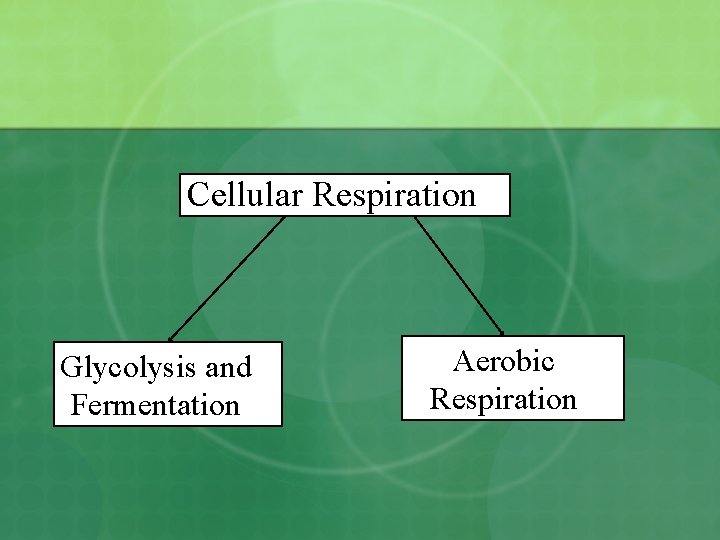
Cellular Respiration Glycolysis and Fermentation Aerobic Respiration
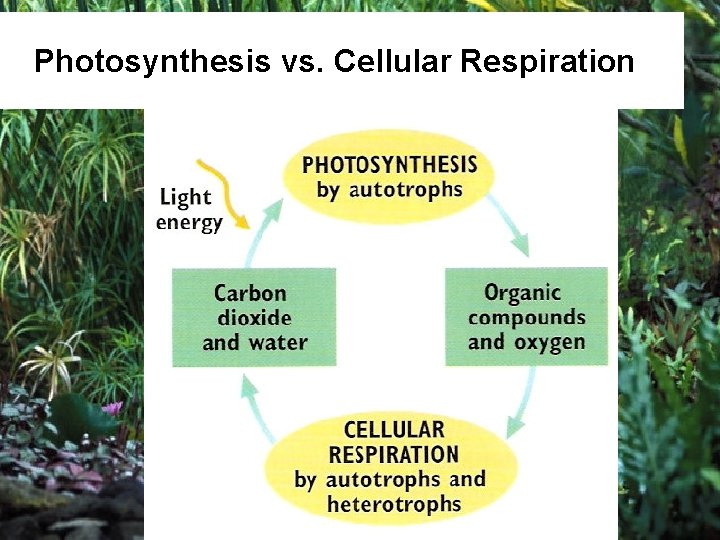
Photosynthesis vs. Cellular Respiration
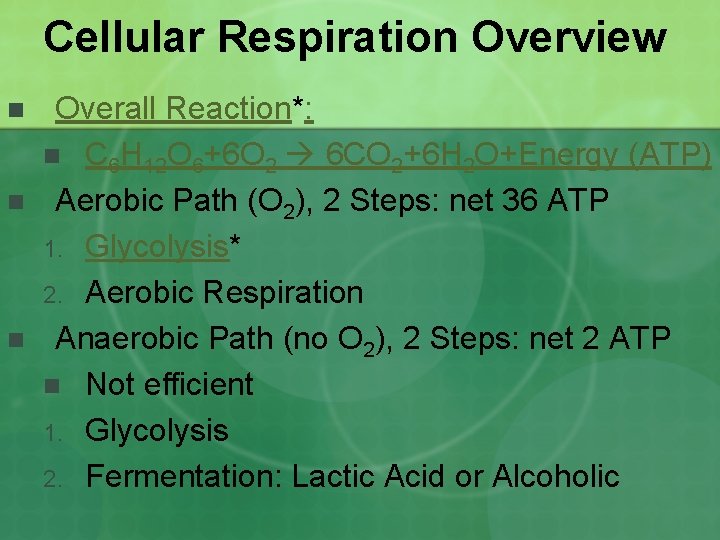
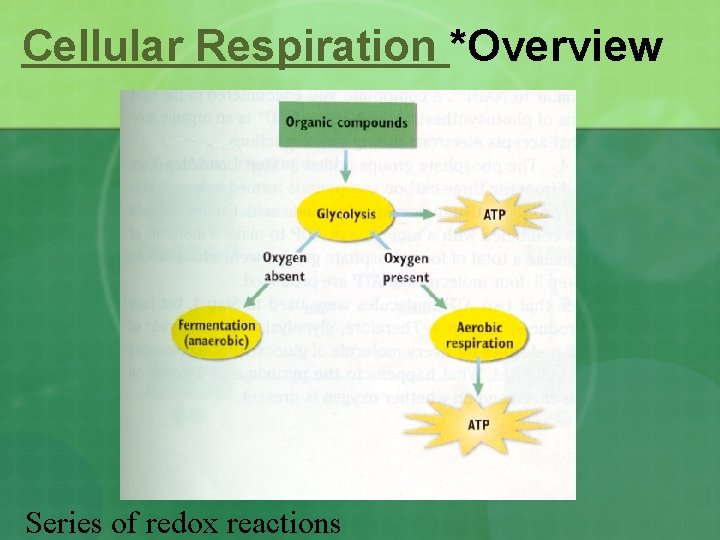
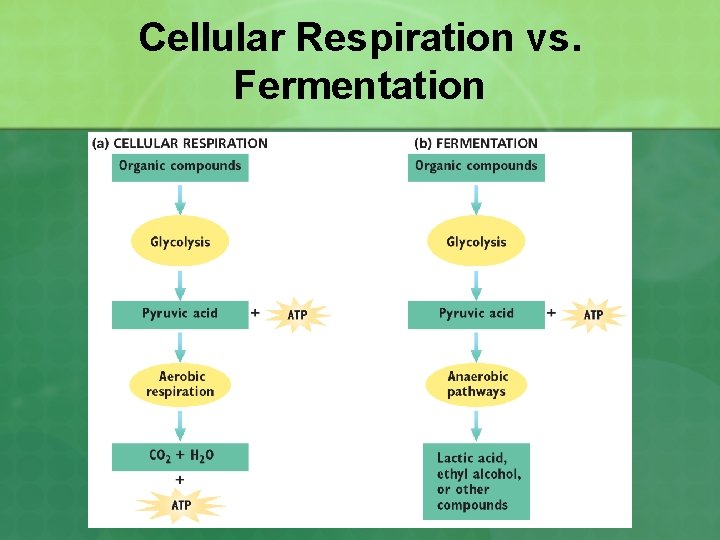
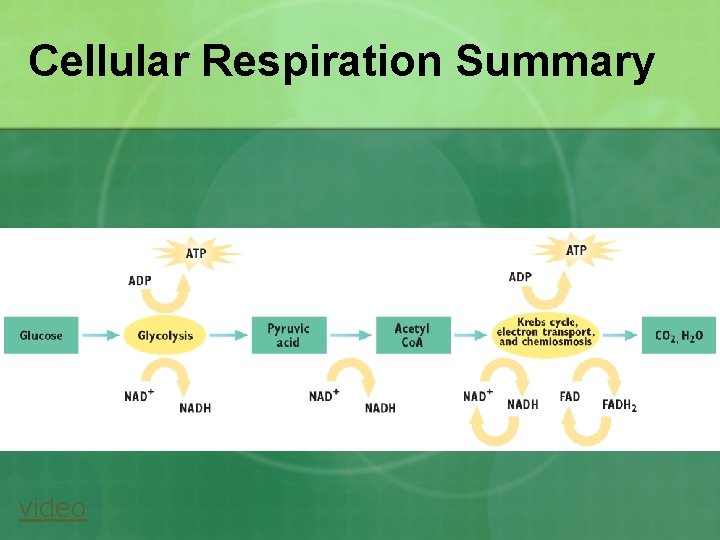
Cellular Respiration Overview n n n Overall Reaction*: n C 6 H 12 O 6+6 O 2 6 CO 2+6 H 2 O+Energy (ATP) Aerobic Path (O 2), 2 Steps: net 36 ATP 1. Glycolysis* 2. Aerobic Respiration Anaerobic Path (no O 2), 2 Steps: net 2 ATP n Not efficient 1. Glycolysis 2. Fermentation: Lactic Acid or Alcoholic
Cellular Respiration *Overview Series of redox reactions
Cellular Respiration vs. Fermentation
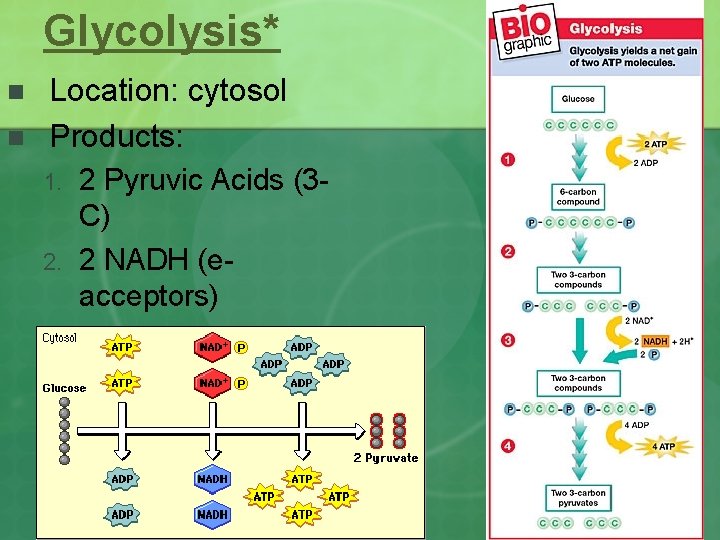
Glycolysis* n n Location: cytosol Products: 1. 2. 3. 2 Pyruvic Acids (3 C) 2 NADH (eacceptors) 4 ATP – 2 ATP used n = 2 ATP net
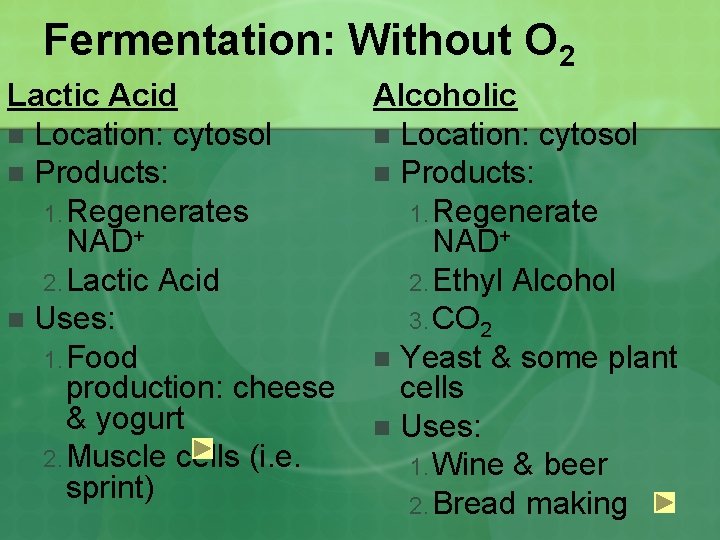
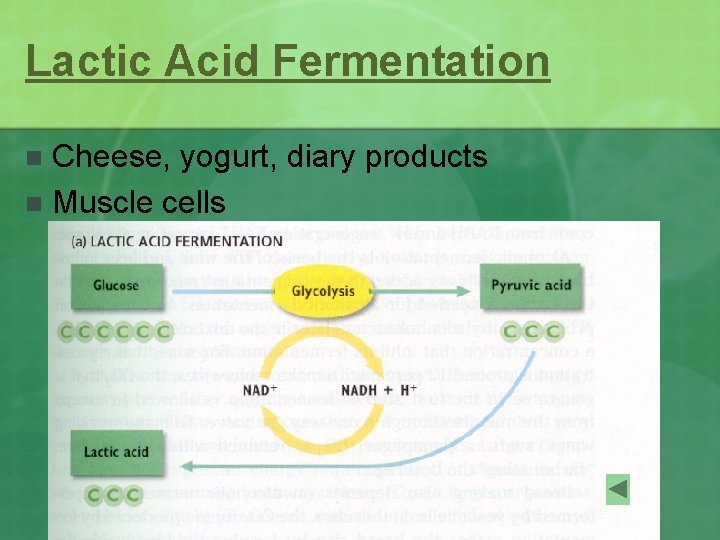
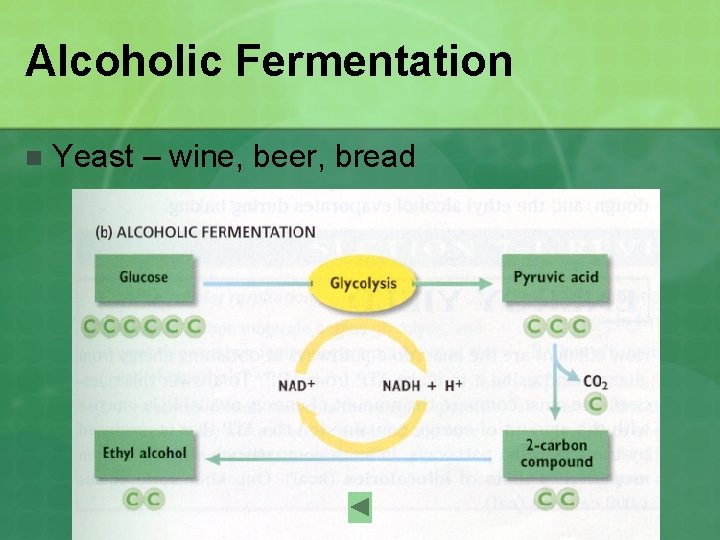
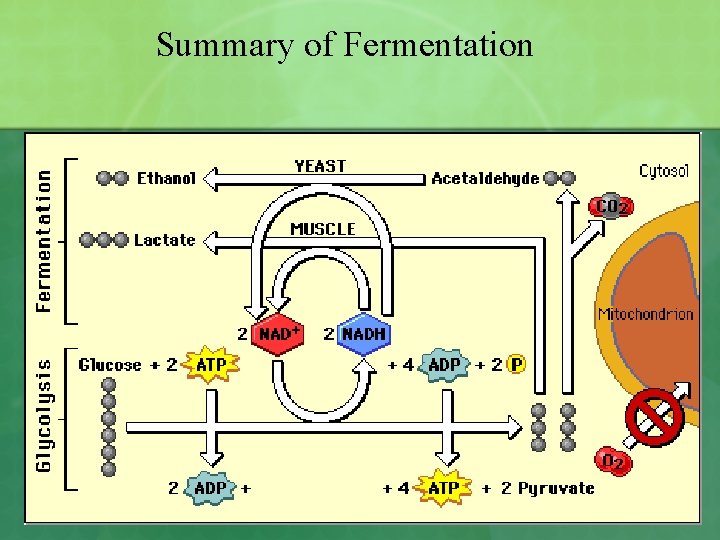
Fermentation: Without O 2 Lactic Acid n Location: cytosol n Products: 1. Regenerates NAD+ 2. Lactic Acid n Uses: 1. Food production: cheese & yogurt 2. Muscle cells (i. e. sprint) Alcoholic n Location: cytosol n Products: 1. Regenerate NAD+ 2. Ethyl Alcohol 3. CO 2 n Yeast & some plant cells n Uses: 1. Wine & beer 2. Bread making
Lactic Acid Fermentation Cheese, yogurt, diary products n Muscle cells n
Alcoholic Fermentation n Yeast – wine, beer, bread
Summary of Fermentation
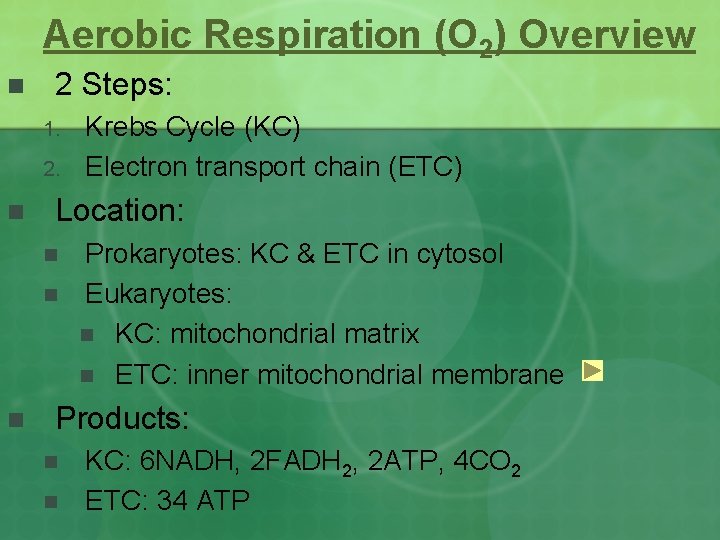
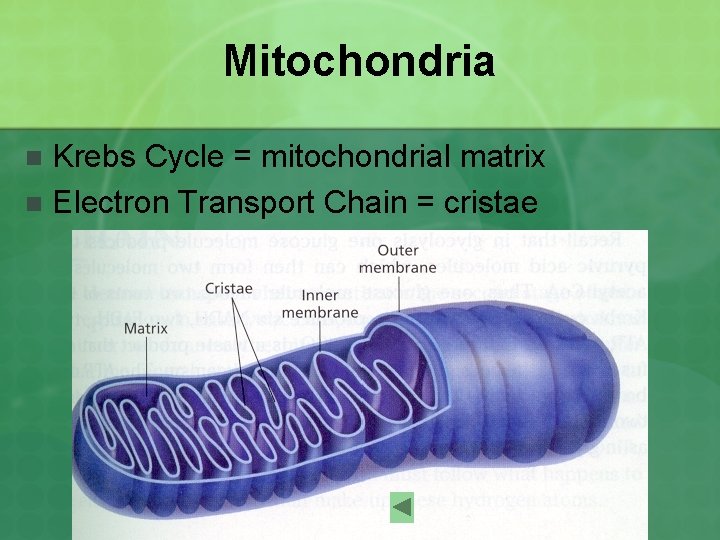
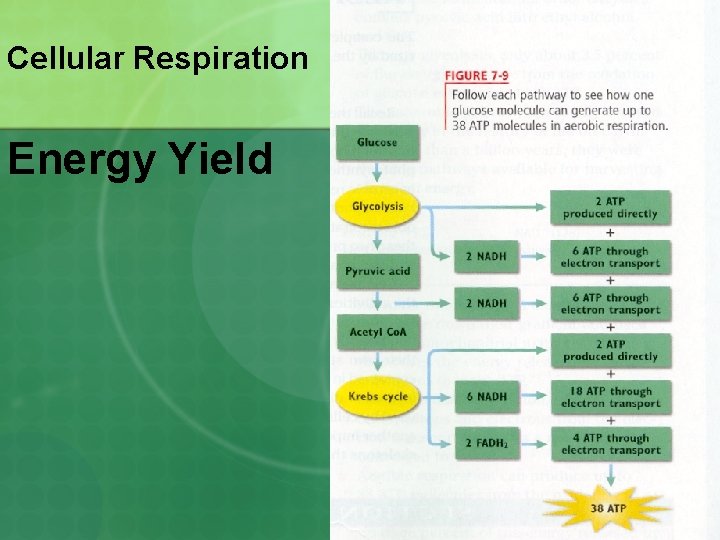
Aerobic Respiration (O 2) Overview n 2 Steps: 1. 2. n Location: n n n Krebs Cycle (KC) Electron transport chain (ETC) Prokaryotes: KC & ETC in cytosol Eukaryotes: n KC: mitochondrial matrix n ETC: inner mitochondrial membrane Products: n n KC: 6 NADH, 2 FADH 2, 2 ATP, 4 CO 2 ETC: 34 ATP
Mitochondria Krebs Cycle = mitochondrial matrix n Electron Transport Chain = cristae n
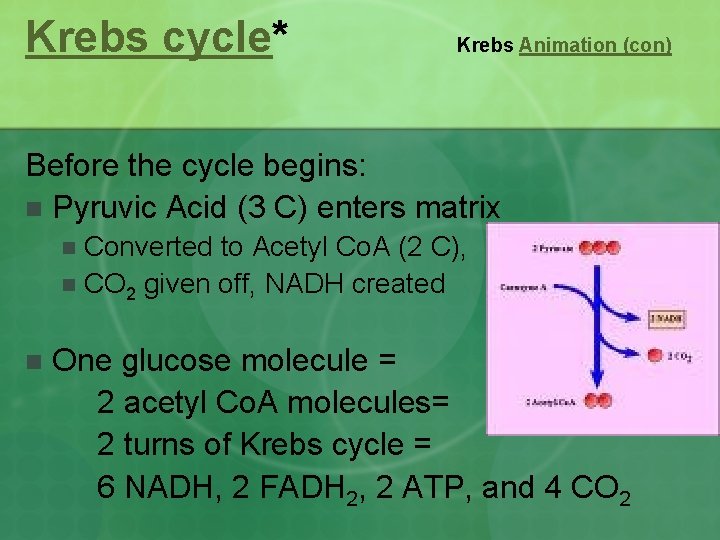
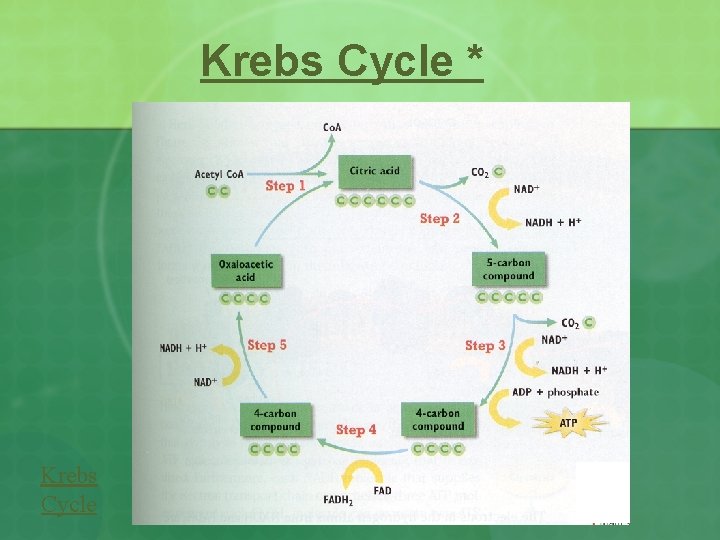
Krebs cycle* Krebs Animation (con) Before the cycle begins: n Pyruvic Acid (3 C) enters matrix Converted to Acetyl Co. A (2 C), n CO 2 given off, NADH created n n One glucose molecule = 2 acetyl Co. A molecules= 2 turns of Krebs cycle = 6 NADH, 2 FADH 2, 2 ATP, and 4 CO 2
Krebs Cycle * Krebs Cycle
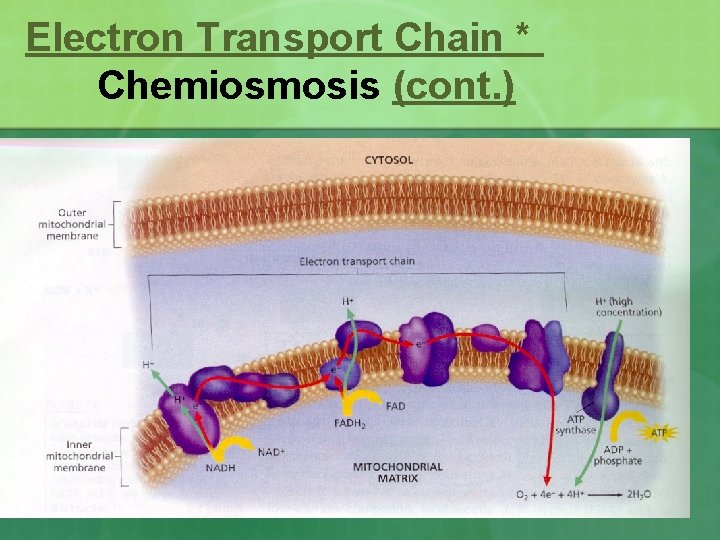
Electron Transport Chain * ETC animation *( Con) NADH & FADH 2 donate electrons in high energy states n The movement of electrons pumps H+ out of matrix n Concentration gradient is formed n ATP Synthase acts as channel for H+ into matrix n ATP is created - Chemiosmosis n O 2 accepts H+ protons and e-, forming H 2 O n
Electron Transport Chain * Chemiosmosis (cont. )
Cellular Respiration Energy Yield
Cellular Respiration Summary video