
Cellular Respiration Cellular Respiration is the process of
- Slides: 15
Cellular Respiration
Cellular Respiration is the process of breaking down the CHEMICAL BONDS IN ORGANIC MOLECULES (food molecules) in the presence of oxygen, in order to RELEASE ATP
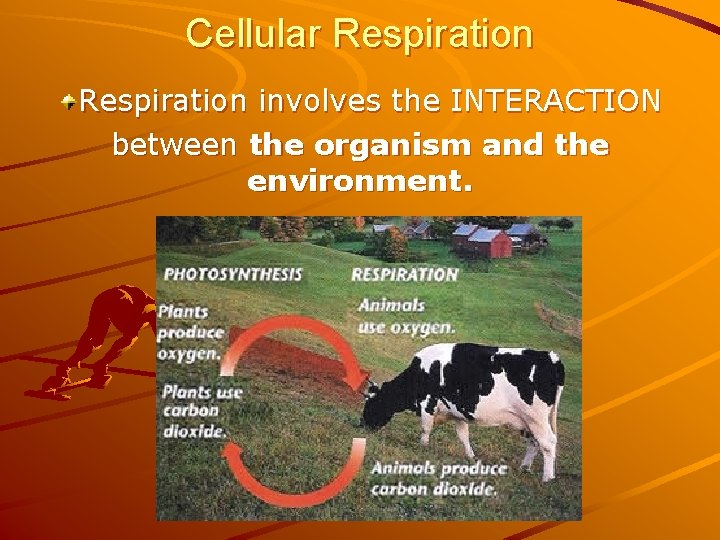
Cellular Respiration involves the INTERACTION between the organism and the environment.
GAS EXCHANGE In many organisms, Cellular respiration requires oxygen which is brought into an organism from the environment. Obtaining oxygen from the environment and releasing carbon dioxide is called AEROBIC RESPIRATION (aerobic= oxygen)
Energy Through the process of cellular respiration, glucose is broken down by an organism to produce ATP which be used for lifesustaining processes
All Living things NEED ATP in order to live MATERIALS USED: Reactants – The materials used during respiration include: Glucose, which is made during photosynthesis in plants and obtained by feeding animals. Oxygen which is obtained through gas exchange
MATERIALS PRODUCED: PRODUCTS ATP- ADENOSINE TRIPHOSPHATE (ENERGY) • CARBON DIOXIDE • WATER
When & where does respiration happen? Respiration occurs in the MITOCHONDRIA of ALL LIVING CELLS. It occurs everyday, 24 hrs a day, because sunlight is NOT needed.
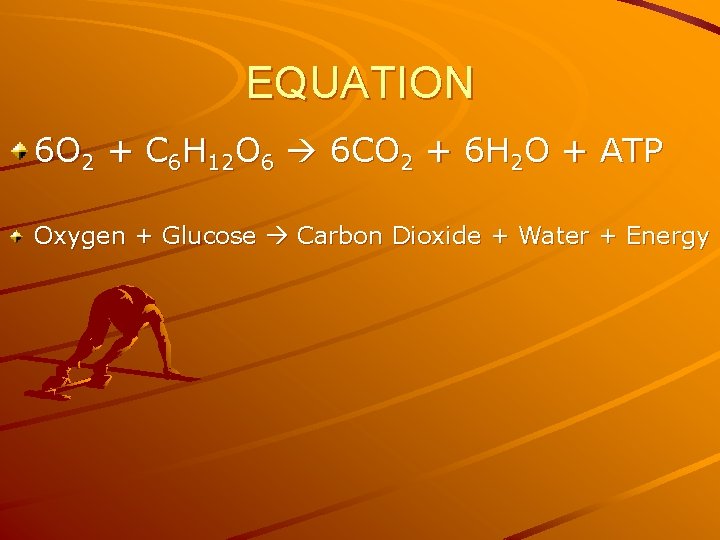
EQUATION 6 O 2 + C 6 H 12 O 6 6 CO 2 + 6 H 2 O + ATP Oxygen + Glucose Carbon Dioxide + Water + Energy
Where does respiration happen? Cellular respiration occurs in organelles called MITOCHONDRION OXYGEN and GLUCOSE enter the organelle and WATER and CARBON DIOXIDE are released The ATP FOUND IN THE CHEMICAL BONDS OF GLUCOSE is now transferred to other molecules for as ENERGY.
Why is Respiration Important? All cells “run” on the ATP that is released from the CHEMICAL BONDS that holds the glucose molecule together.
Organisms can use ATP for: The transport of molecules in the cell. (ex. Active transport. ) Life processes Metabolism Maintain Homeostasis Reproduction and Growth
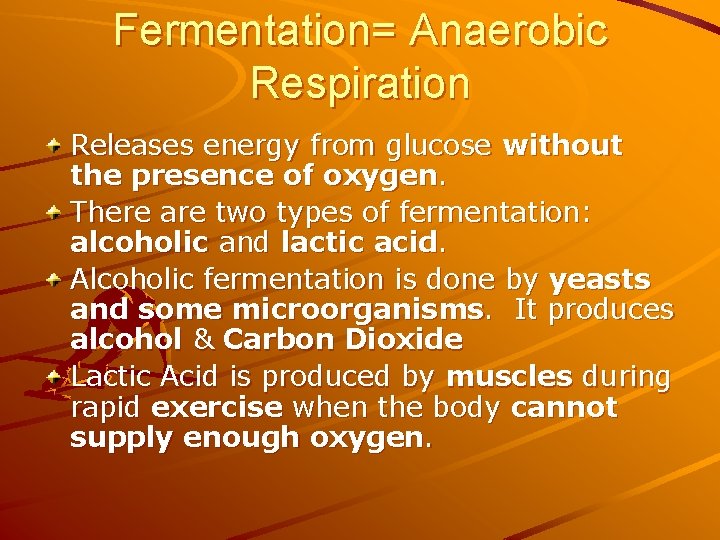
Fermentation= Anaerobic Respiration Releases energy from glucose without the presence of oxygen. There are two types of fermentation: alcoholic and lactic acid. Alcoholic fermentation is done by yeasts and some microorganisms. It produces alcohol & Carbon Dioxide Lactic Acid is produced by muscles during rapid exercise when the body cannot supply enough oxygen.
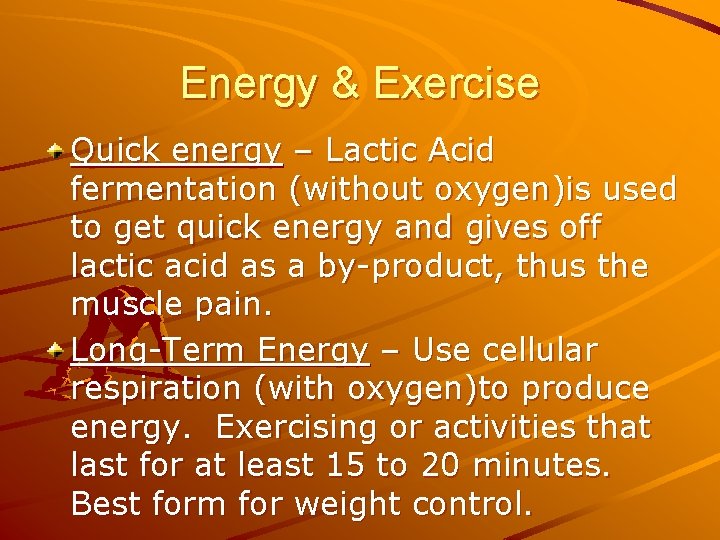
Energy & Exercise Quick energy – Lactic Acid fermentation (without oxygen)is used to get quick energy and gives off lactic acid as a by-product, thus the muscle pain. Long-Term Energy – Use cellular respiration (with oxygen)to produce energy. Exercising or activities that last for at least 15 to 20 minutes. Best form for weight control.
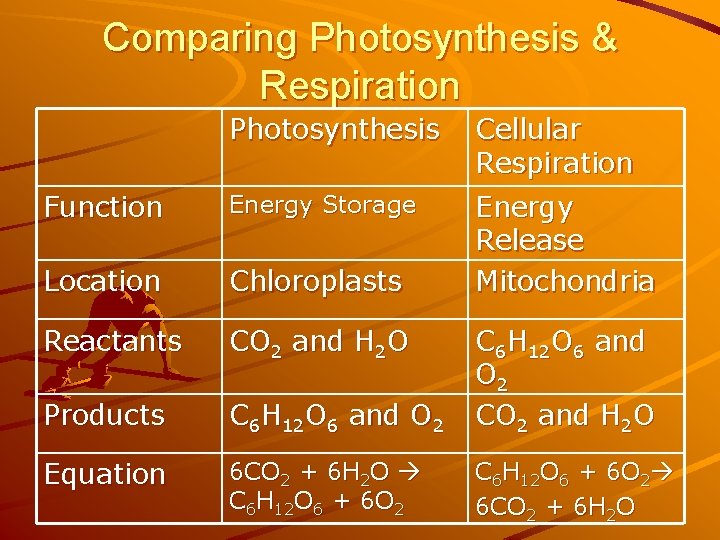
Comparing Photosynthesis & Respiration Photosynthesis Cellular Respiration Function Energy Storage Location Chloroplasts Energy Release Mitochondria Reactants CO 2 and H 2 O Products C 6 H 12 O 6 and O 2 CO 2 and H 2 O Equation 6 CO 2 + 6 H 2 O C 6 H 12 O 6 + 6 O 2 6 CO 2 + 6 H 2 O