
Cellular Respiration Cellular Respiration An analogy can be
Cellular Respiration
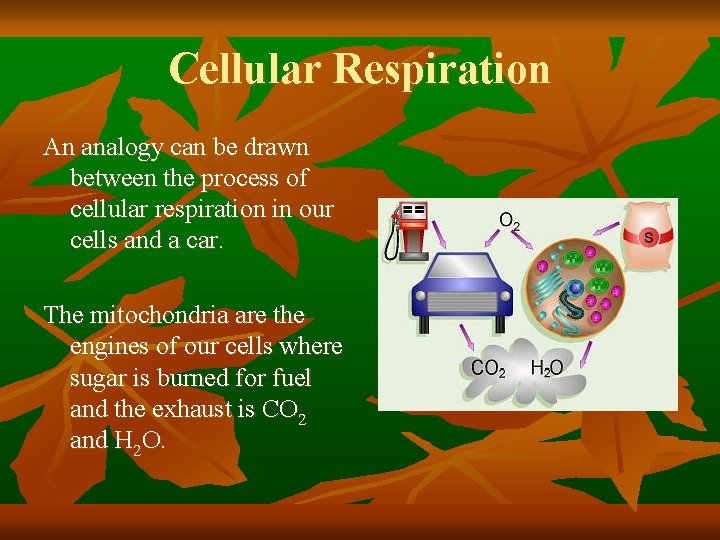
Cellular Respiration An analogy can be drawn between the process of cellular respiration in our cells and a car. The mitochondria are the engines of our cells where sugar is burned for fuel and the exhaust is CO 2 and H 2 O.
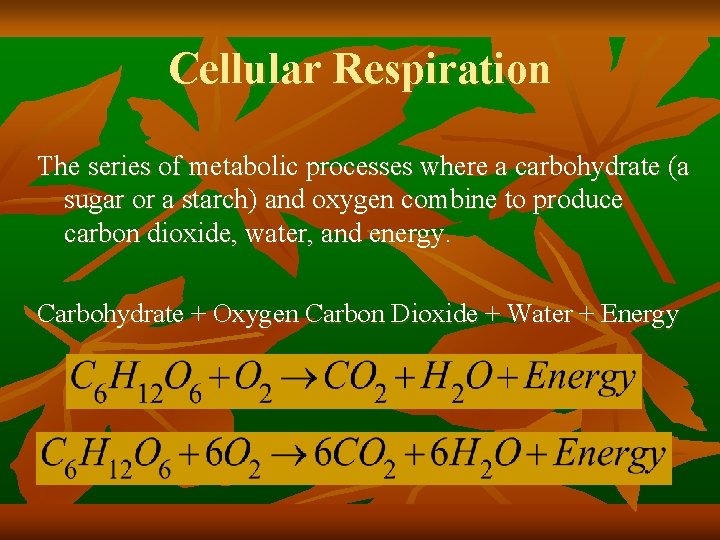
Cellular Respiration The series of metabolic processes where a carbohydrate (a sugar or a starch) and oxygen combine to produce carbon dioxide, water, and energy. Carbohydrate + Oxygen Carbon Dioxide + Water + Energy
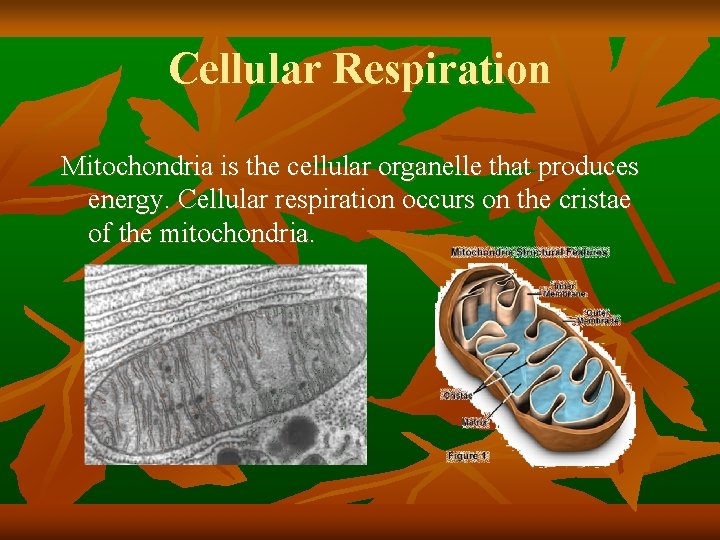
Cellular Respiration Mitochondria is the cellular organelle that produces energy. Cellular respiration occurs on the cristae of the mitochondria.
Photosynthesis All energy originates from the sun. The sun’s energy is captured through a process called photosynthesis. Through photosynthesis, primary producers (i. e. plants) convert light energy from the sun into chemical energy – stored as carbohydrates and other organic compounds.
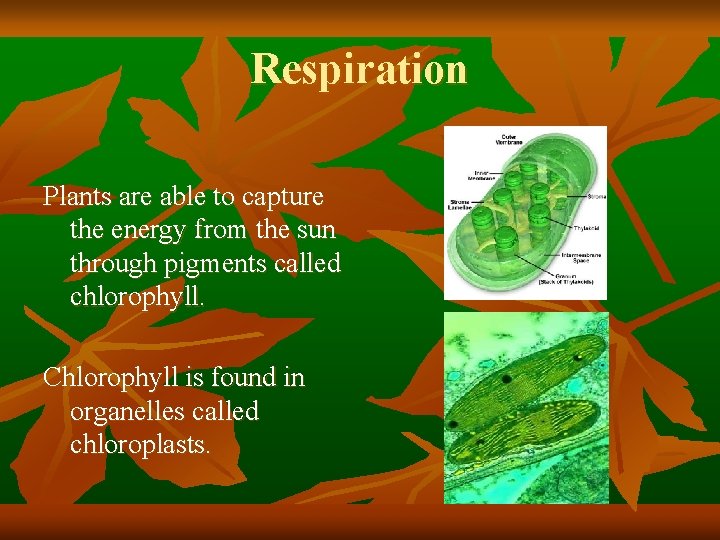
Respiration Plants are able to capture the energy from the sun through pigments called chlorophyll. Chlorophyll is found in organelles called chloroplasts.
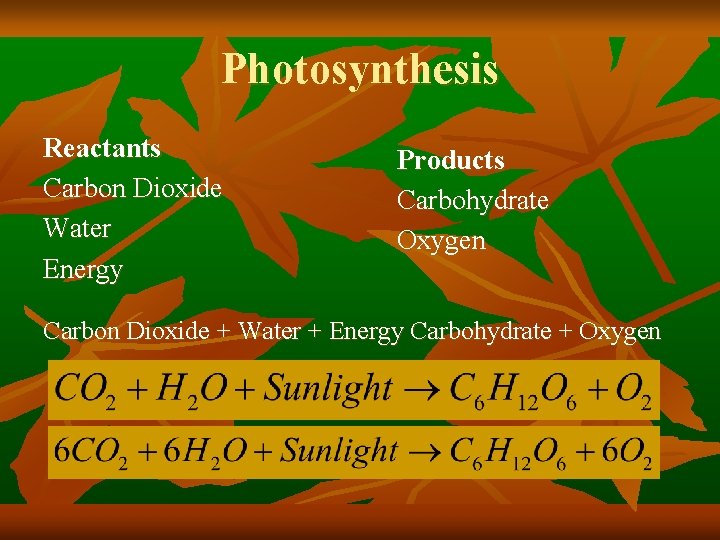
Photosynthesis Reactants Carbon Dioxide Water Energy Products Carbohydrate Oxygen Carbon Dioxide + Water + Energy Carbohydrate + Oxygen
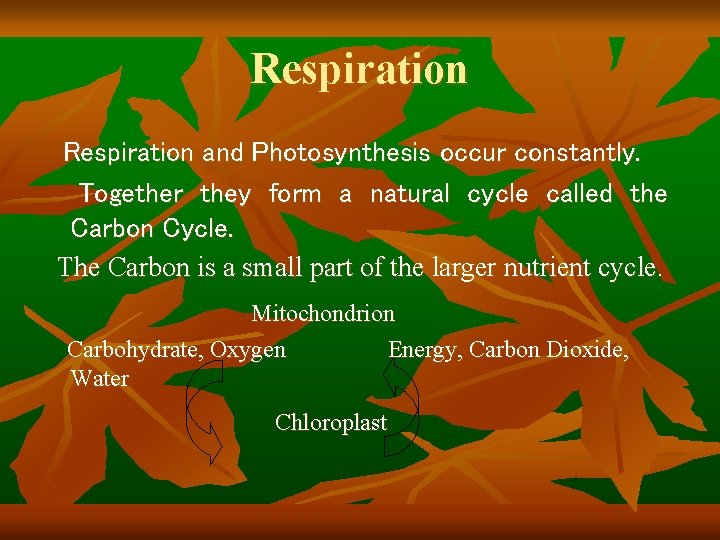
Respiration and Photosynthesis occur constantly. Together they form a natural cycle called the Carbon Cycle. The Carbon is a small part of the larger nutrient cycle. Mitochondrion Carbohydrate, Oxygen Energy, Carbon Dioxide, Water Chloroplast
- Slides: 8