
Cellular Respiration Biology Chapter 6 Section 1 http
Cellular Respiration Biology Chapter 6 Section 1 http: //www. science 4 kids. us /Life Science/life. htm
Objectives • Compare and contrast endergonic and exergonic reactions • Explain how ATP links exergonic and endergonic reactions • Compare and contrast aerobic and anaerobic respiration
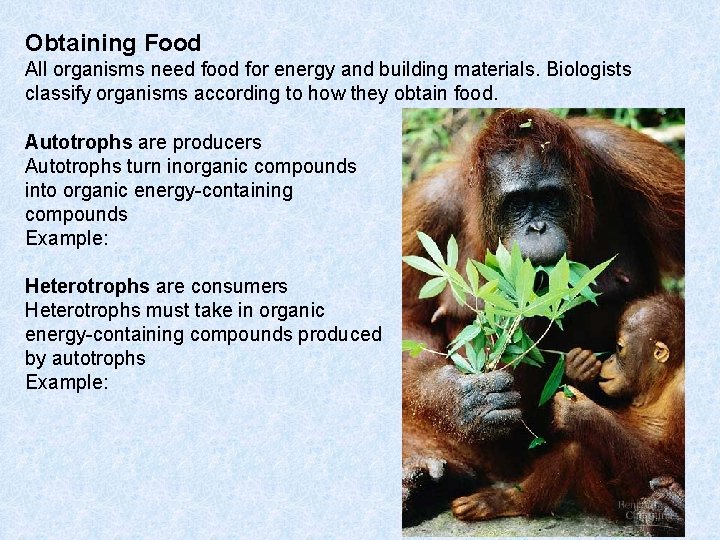
Obtaining Food All organisms need food for energy and building materials. Biologists classify organisms according to how they obtain food. Autotrophs are producers Autotrophs turn inorganic compounds into organic energy-containing compounds Example: Heterotrophs are consumers Heterotrophs must take in organic energy-containing compounds produced by autotrophs Example:
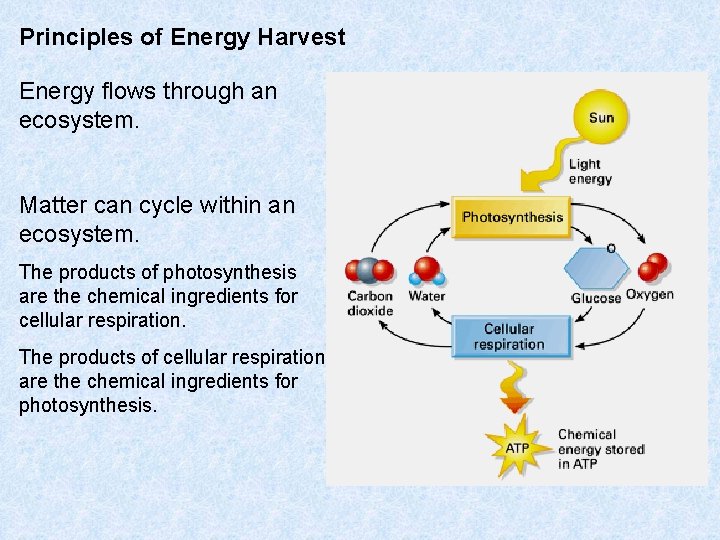
Principles of Energy Harvest Energy flows through an ecosystem. Matter can cycle within an ecosystem. The products of photosynthesis are the chemical ingredients for cellular respiration. The products of cellular respiration are the chemical ingredients for photosynthesis.
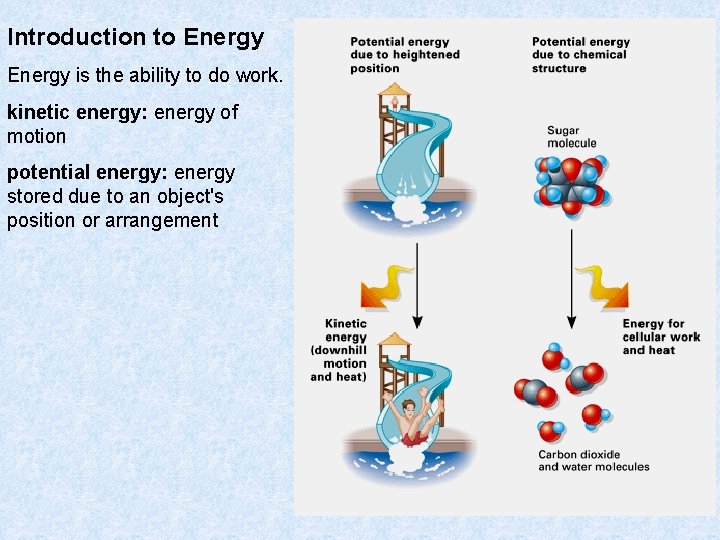
Introduction to Energy is the ability to do work. kinetic energy: energy of motion potential energy: energy stored due to an object's position or arrangement
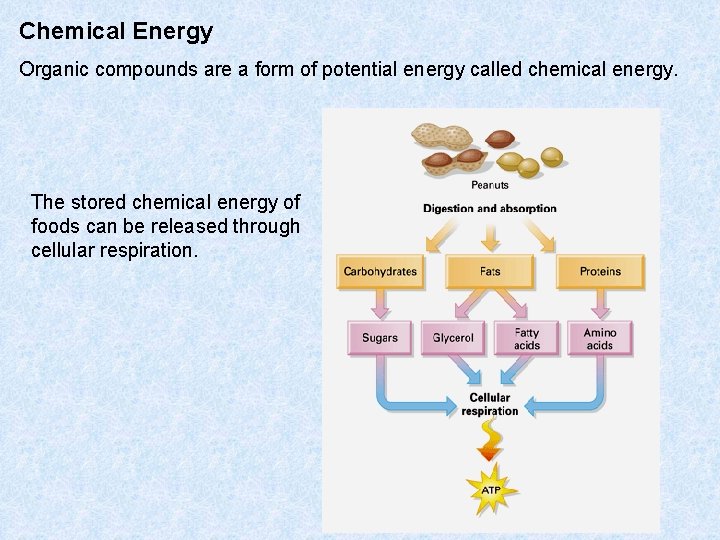
Chemical Energy Organic compounds are a form of potential energy called chemical energy. The stored chemical energy of foods can be released through cellular respiration.
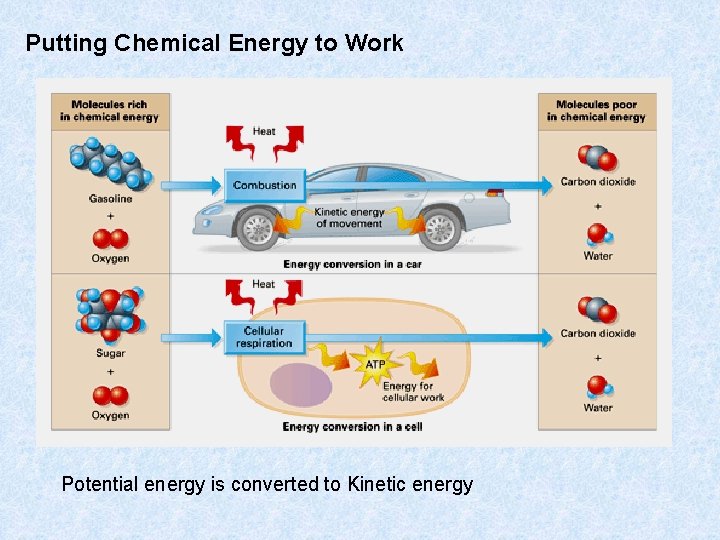
Putting Chemical Energy to Work Potential energy is converted to Kinetic energy
Free Energy • Free energy (aka Gibbs Free Energy) is the energy available to do work • Endergonic reactions require the addition of free energy to take place – Example: • Exergonic reactions release energy as they proceed – Example:
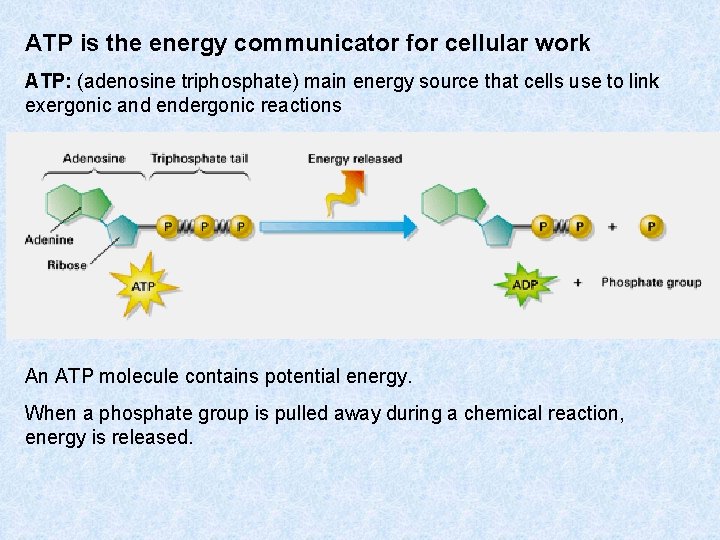
ATP is the energy communicator for cellular work ATP: (adenosine triphosphate) main energy source that cells use to link exergonic and endergonic reactions An ATP molecule contains potential energy. When a phosphate group is pulled away during a chemical reaction, energy is released.
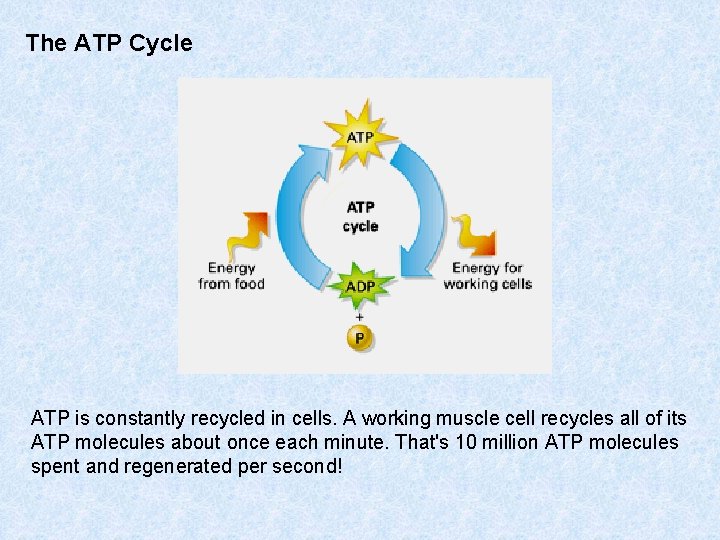
The ATP Cycle ATP is constantly recycled in cells. A working muscle cell recycles all of its ATP molecules about once each minute. That's 10 million ATP molecules spent and regenerated per second!
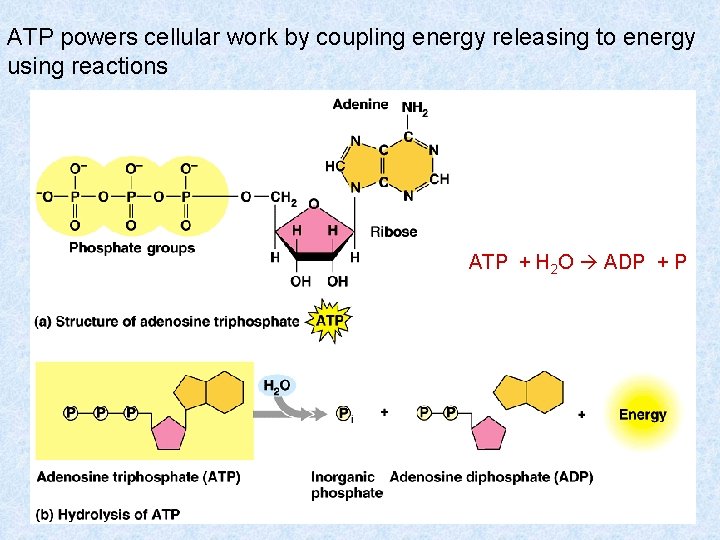
ATP powers cellular work by coupling energy releasing to energy using reactions ATP + H 2 O ADP + P
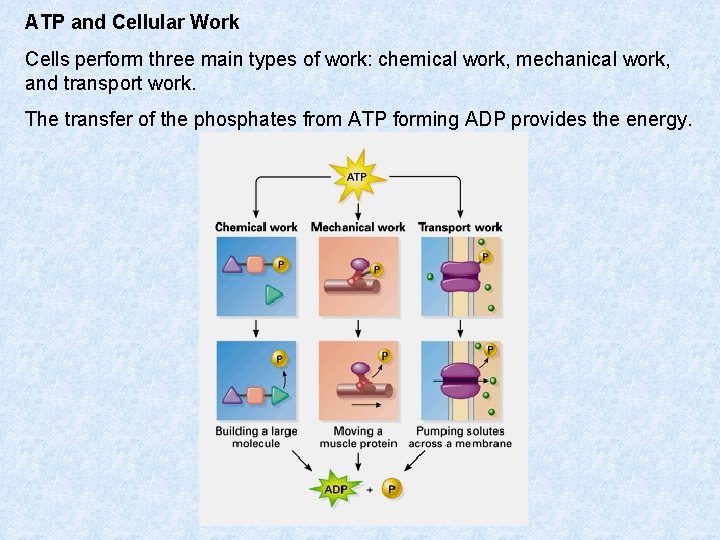
ATP and Cellular Work Cells perform three main types of work: chemical work, mechanical work, and transport work. The transfer of the phosphates from ATP forming ADP provides the energy.
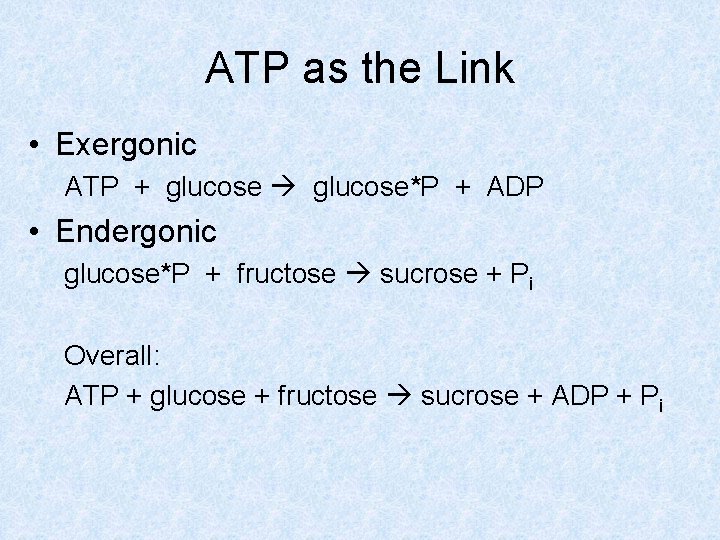
ATP as the Link • Exergonic ATP + glucose*P + ADP • Endergonic glucose*P + fructose sucrose + Pi Overall: ATP + glucose + fructose sucrose + ADP + Pi
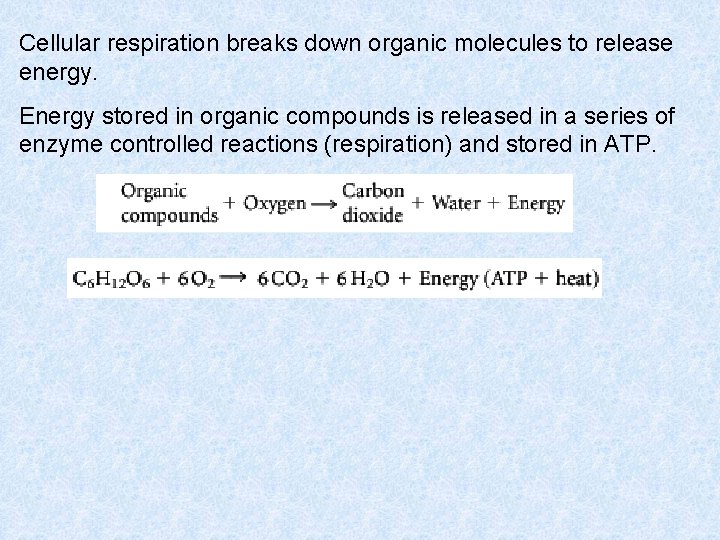
Cellular respiration breaks down organic molecules to release energy. Energy stored in organic compounds is released in a series of enzyme controlled reactions (respiration) and stored in ATP.
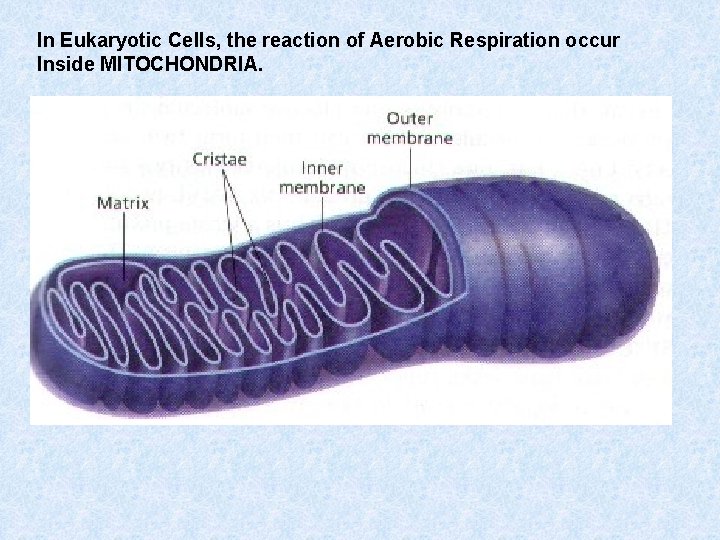
In Eukaryotic Cells, the reaction of Aerobic Respiration occur Inside MITOCHONDRIA.
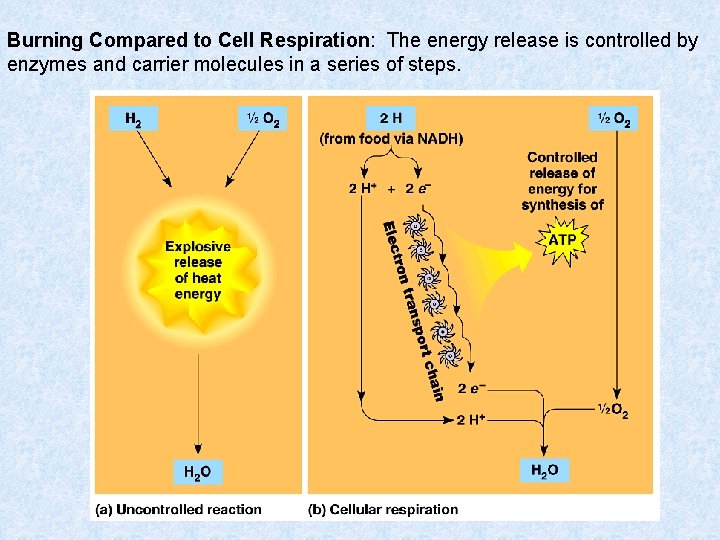
Burning Compared to Cell Respiration: The energy release is controlled by enzymes and carrier molecules in a series of steps.
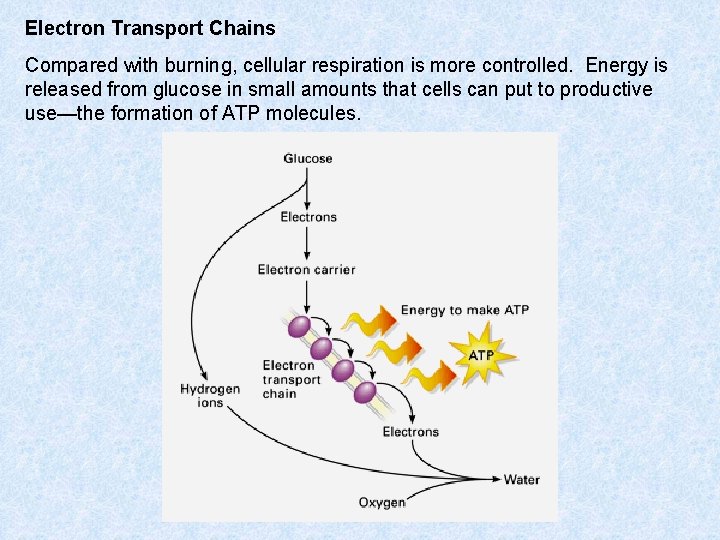
Electron Transport Chains Compared with burning, cellular respiration is more controlled. Energy is released from glucose in small amounts that cells can put to productive use—the formation of ATP molecules.
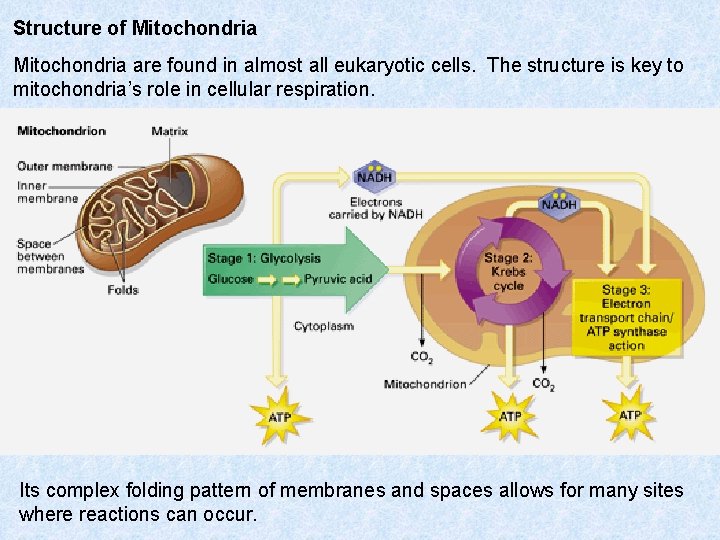
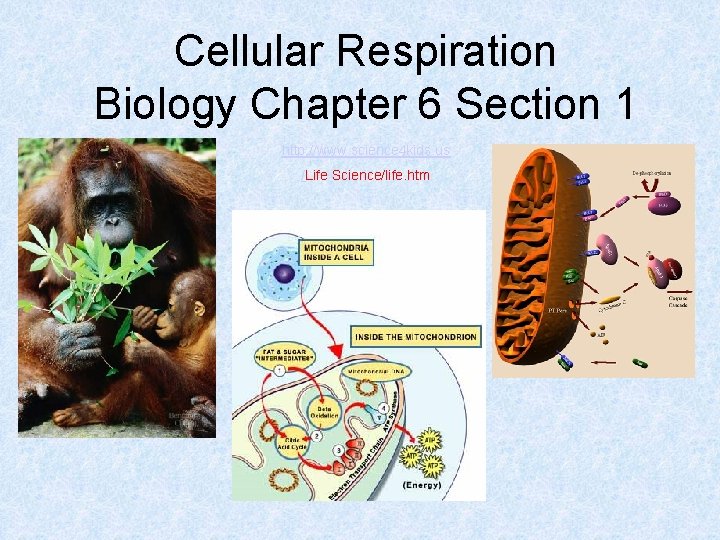
Structure of Mitochondria are found in almost all eukaryotic cells. The structure is key to mitochondria’s role in cellular respiration. Its complex folding pattern of membranes and spaces allows for many sites where reactions can occur.
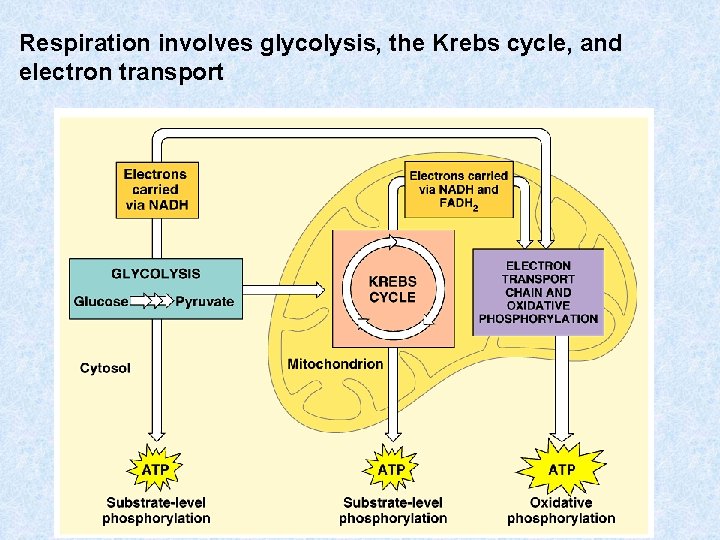
Respiration involves glycolysis, the Krebs cycle, and electron transport
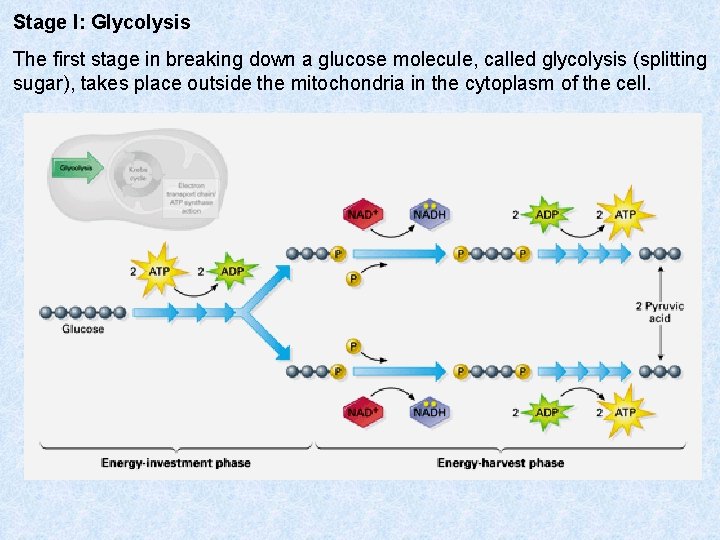
Stage I: Glycolysis The first stage in breaking down a glucose molecule, called glycolysis (splitting sugar), takes place outside the mitochondria in the cytoplasm of the cell.
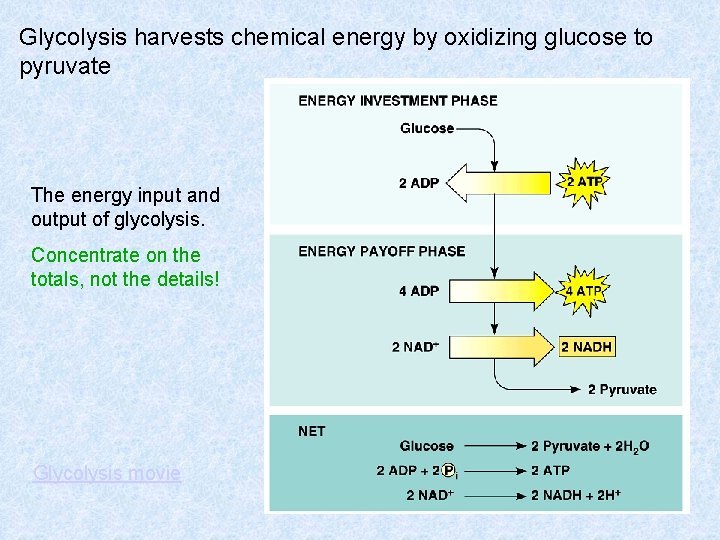
Glycolysis harvests chemical energy by oxidizing glucose to pyruvate The energy input and output of glycolysis. Concentrate on the totals, not the details! Glycolysis movie
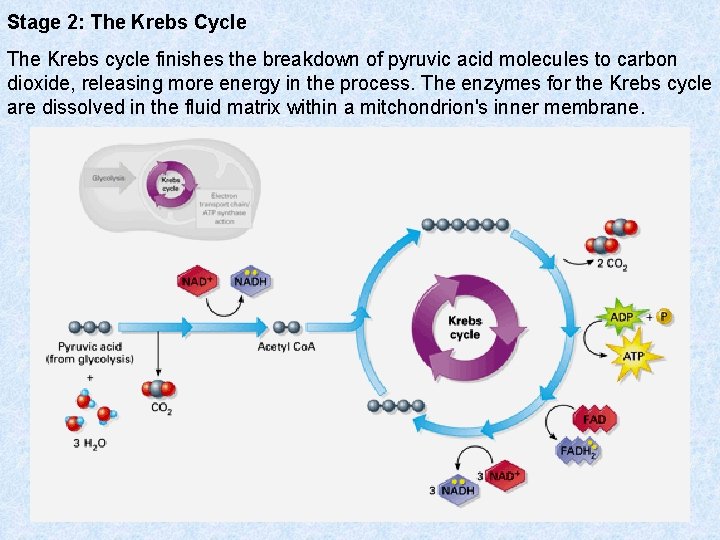
Stage 2: The Krebs Cycle The Krebs cycle finishes the breakdown of pyruvic acid molecules to carbon dioxide, releasing more energy in the process. The enzymes for the Krebs cycle are dissolved in the fluid matrix within a mitchondrion's inner membrane.
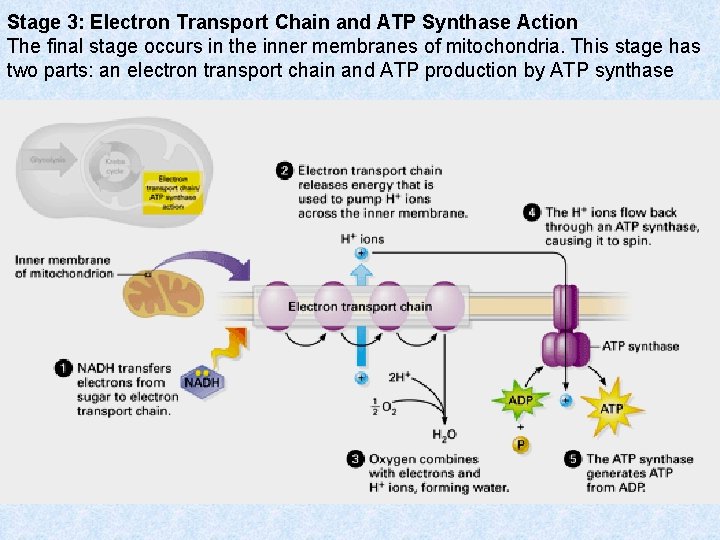
Stage 3: Electron Transport Chain and ATP Synthase Action The final stage occurs in the inner membranes of mitochondria. This stage has two parts: an electron transport chain and ATP production by ATP synthase
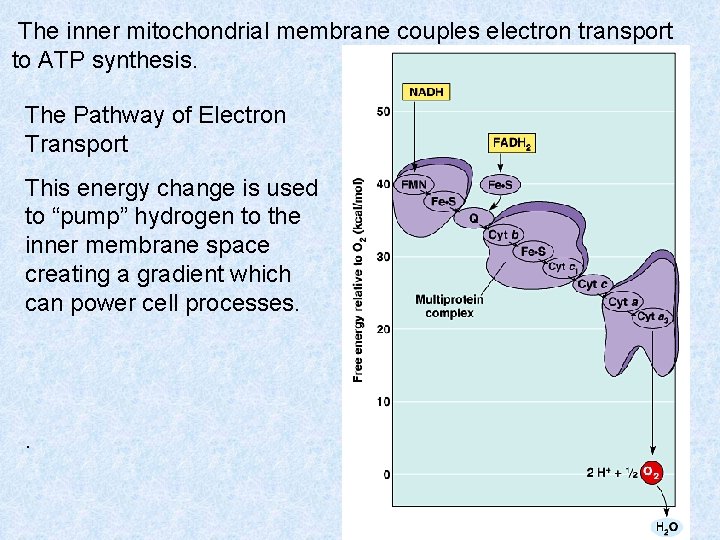
The inner mitochondrial membrane couples electron transport to ATP synthesis. The Pathway of Electron Transport This energy change is used to “pump” hydrogen to the inner membrane space creating a gradient which can power cell processes. .
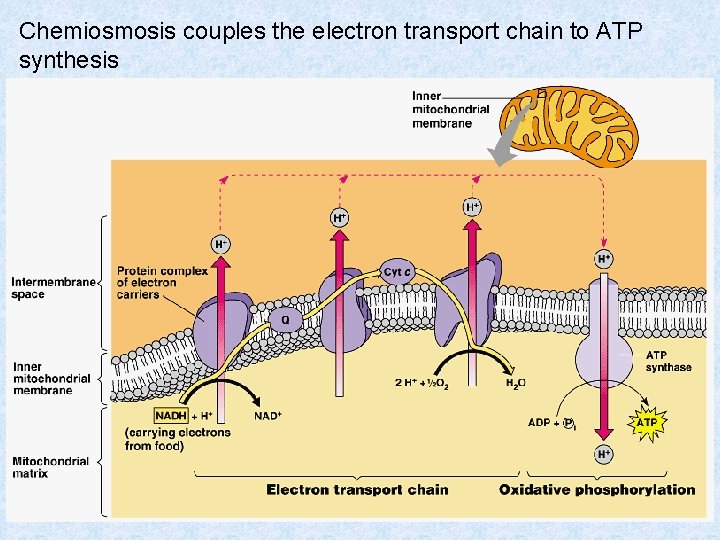
Chemiosmosis couples the electron transport chain to ATP synthesis
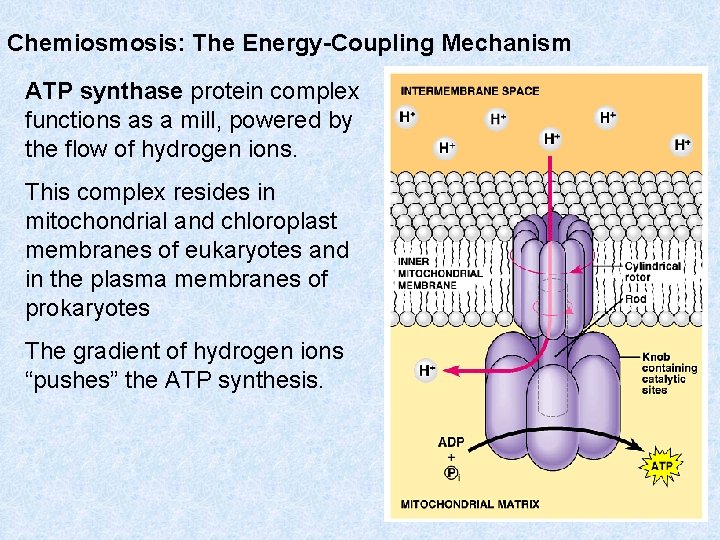
Chemiosmosis: The Energy-Coupling Mechanism ATP synthase protein complex functions as a mill, powered by the flow of hydrogen ions. This complex resides in mitochondrial and chloroplast membranes of eukaryotes and in the plasma membranes of prokaryotes The gradient of hydrogen ions “pushes” the ATP synthesis.
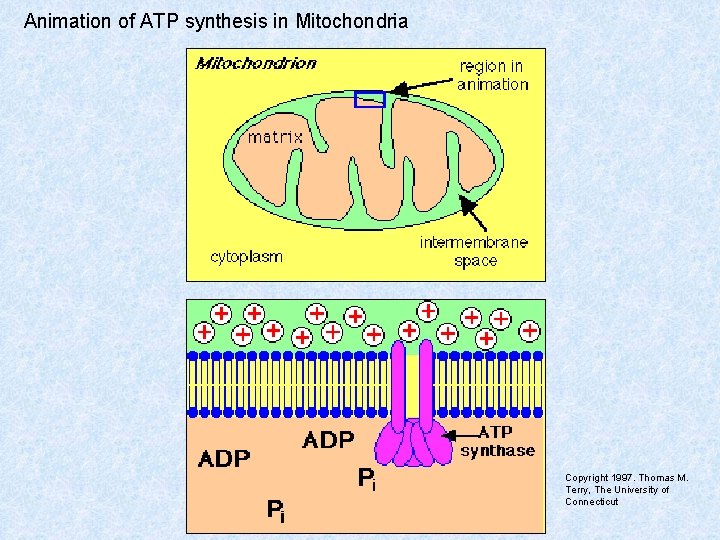
Animation of ATP synthesis in Mitochondria Copyright 1997. Thomas M. Terry, The University of Connecticut
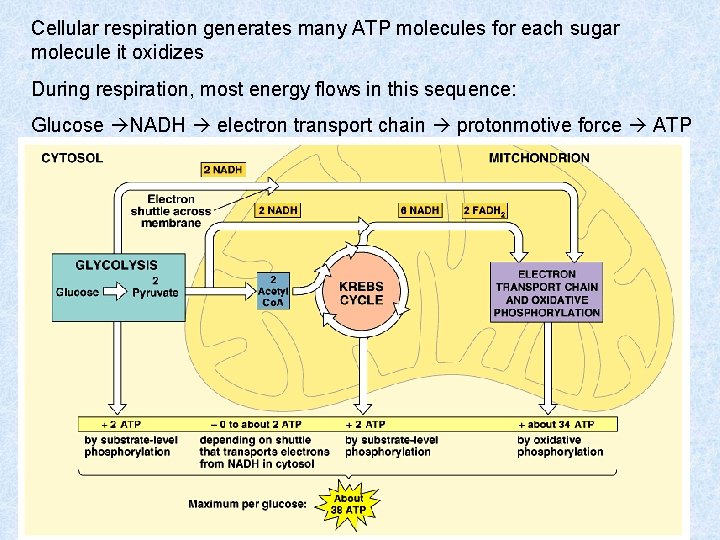
Cellular respiration generates many ATP molecules for each sugar molecule it oxidizes During respiration, most energy flows in this sequence: Glucose NADH electron transport chain protonmotive force ATP
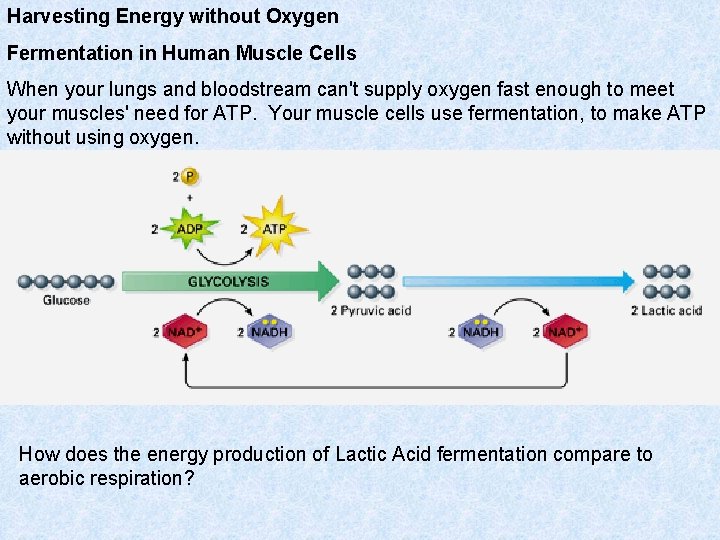
Harvesting Energy without Oxygen Fermentation in Human Muscle Cells When your lungs and bloodstream can't supply oxygen fast enough to meet your muscles' need for ATP. Your muscle cells use fermentation, to make ATP without using oxygen. How does the energy production of Lactic Acid fermentation compare to aerobic respiration?
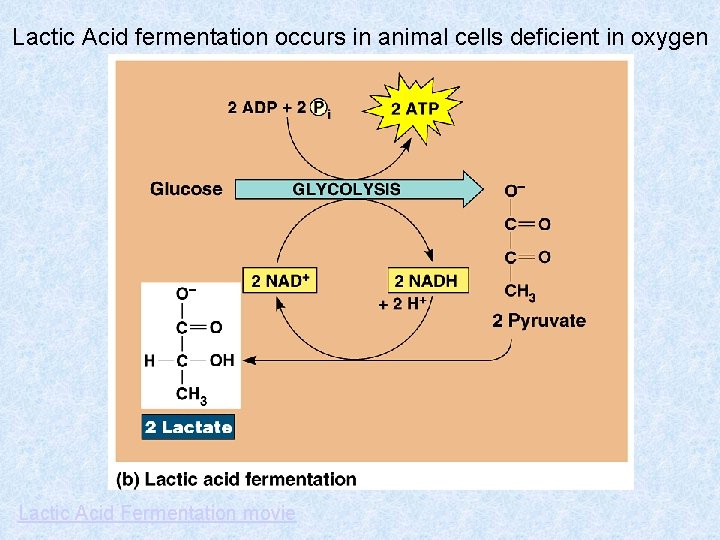
Lactic Acid fermentation occurs in animal cells deficient in oxygen Lactic Acid Fermentation movie
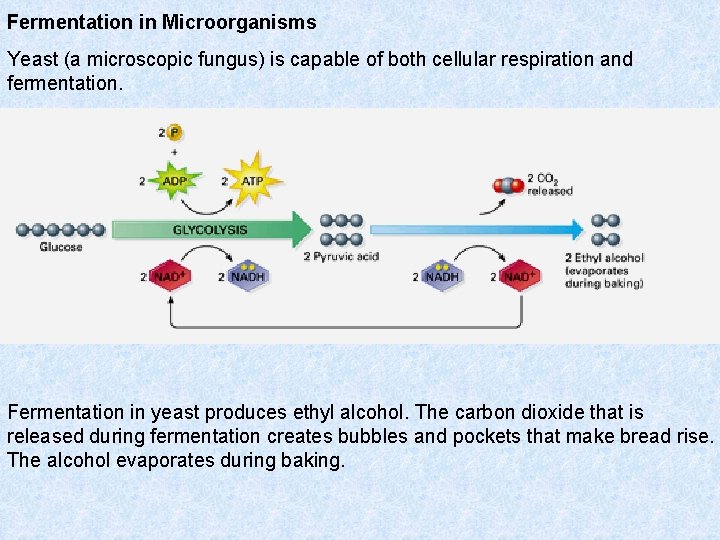
Fermentation in Microorganisms Yeast (a microscopic fungus) is capable of both cellular respiration and fermentation. Fermentation in yeast produces ethyl alcohol. The carbon dioxide that is released during fermentation creates bubbles and pockets that make bread rise. The alcohol evaporates during baking.
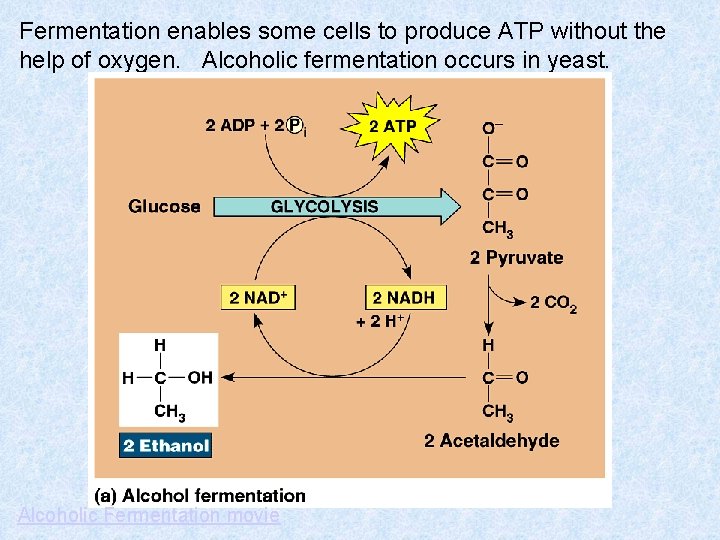
Fermentation enables some cells to produce ATP without the help of oxygen. Alcoholic fermentation occurs in yeast. Alcoholic Fermentation movie
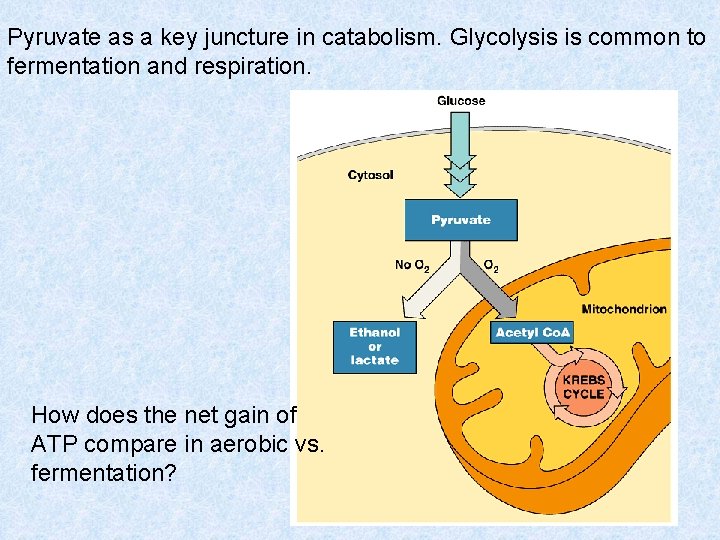
Pyruvate as a key juncture in catabolism. Glycolysis is common to fermentation and respiration. How does the net gain of ATP compare in aerobic vs. fermentation?
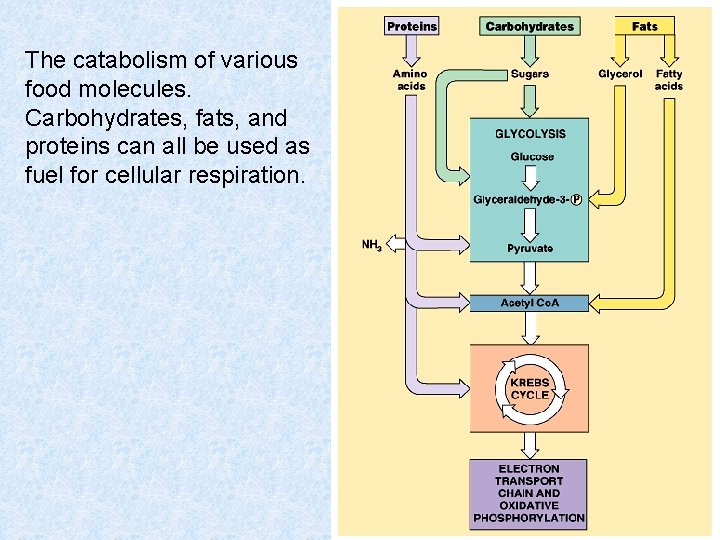
The catabolism of various food molecules. Carbohydrates, fats, and proteins can all be used as fuel for cellular respiration.
- Slides: 34