
Cellular Respiration and ATP Chapter 7 Chapter 3
- Slides: 11
Cellular Respiration and ATP Chapter 7 & Chapter 3 (page 54)
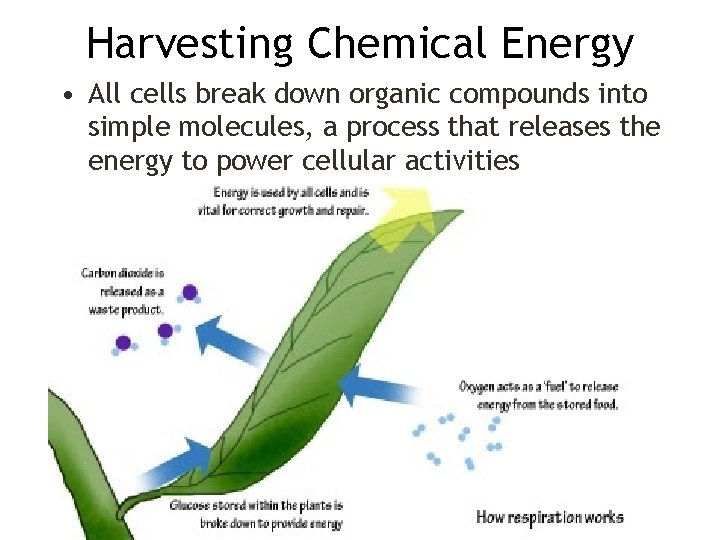
Harvesting Chemical Energy • All cells break down organic compounds into simple molecules, a process that releases the energy to power cellular activities
Cellular Respiration • Cellular Respiration—cells make ATP by breaking down glucose (organic compounds) – • Both heterotrophs AND autotrophs must use cellular respiration Two types of cellular respiration 1. Aerobic—occurs in the presence of oxygen 2. Anaerobic—occurs when no oxygen is present
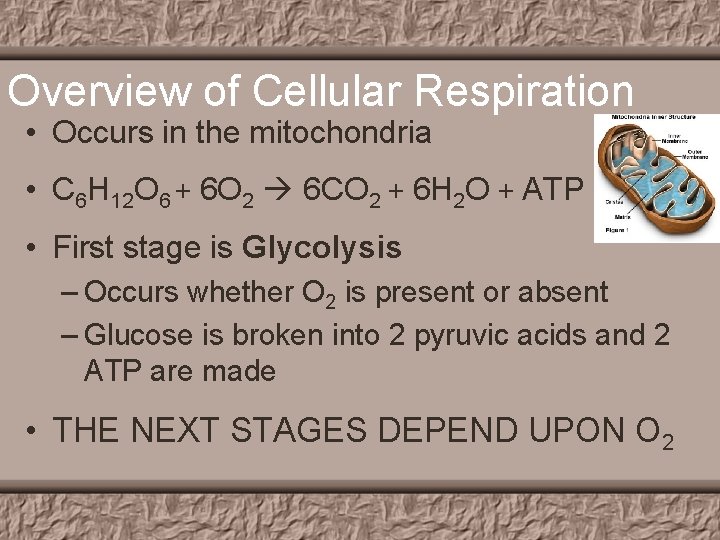
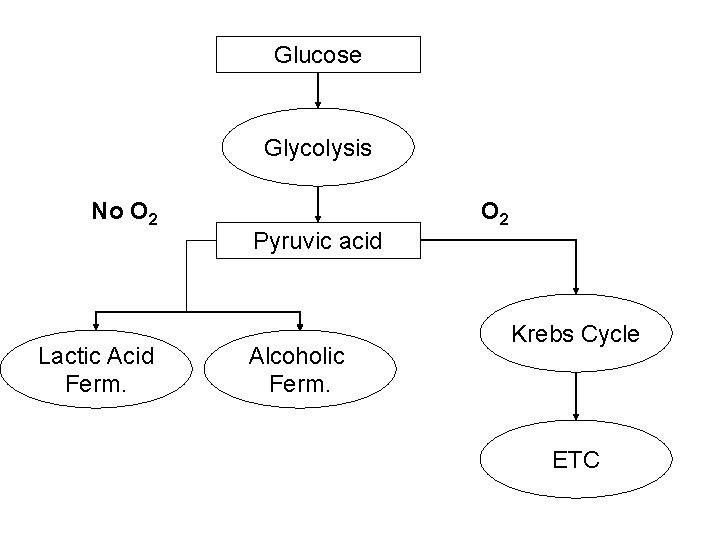
Overview of Cellular Respiration • Occurs in the mitochondria • C 6 H 12 O 6 + 6 O 2 6 CO 2 + 6 H 2 O + ATP • First stage is Glycolysis – Occurs whether O 2 is present or absent – Glucose is broken into 2 pyruvic acids and 2 ATP are made • THE NEXT STAGES DEPEND UPON O 2
Glucose Glycolysis No O 2 Lactic Acid Ferm. Pyruvic acid Alcoholic Ferm. O 2 Krebs Cycle ETC
If no O 2 is present… • Fermentation occurs – Respiration without oxygen • Two Types of Fermentation – Lactic acid fermentation – Alcoholic fermentation
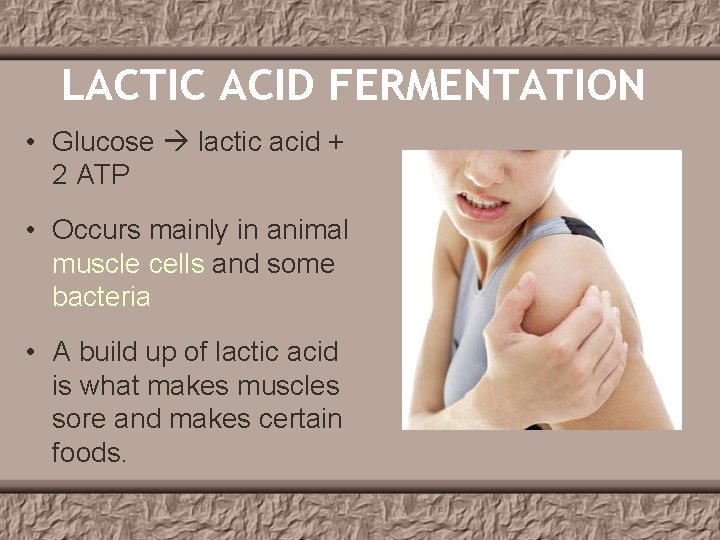
LACTIC ACID FERMENTATION • Glucose lactic acid + 2 ATP • Occurs mainly in animal muscle cells and some bacteria • A build up of lactic acid is what makes muscles sore and makes certain foods.
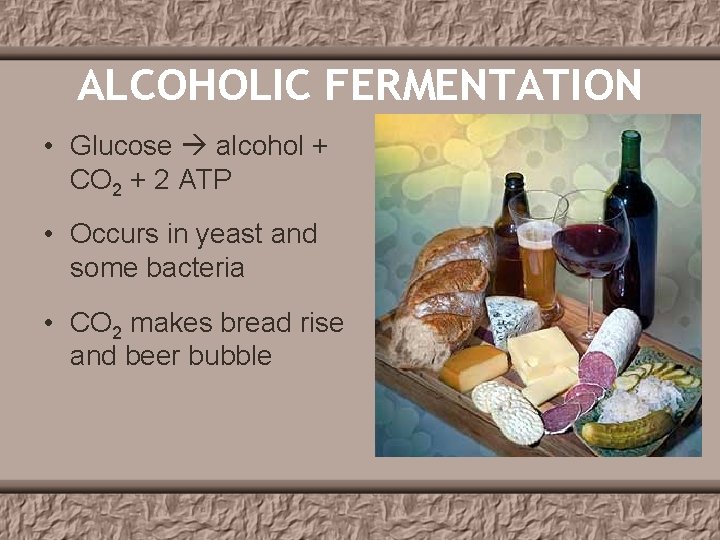
ALCOHOLIC FERMENTATION • Glucose alcohol + CO 2 + 2 ATP • Occurs in yeast and some bacteria • CO 2 makes bread rise and beer bubble
If O 2 is present… • CELLULAR RESPIRATION--THREE STAGES: v Glycolysis: v Krebs splits glucose in half cycle: releases carbon dioxide v Electron transport chain: produces lots (3638) ATP and releases water
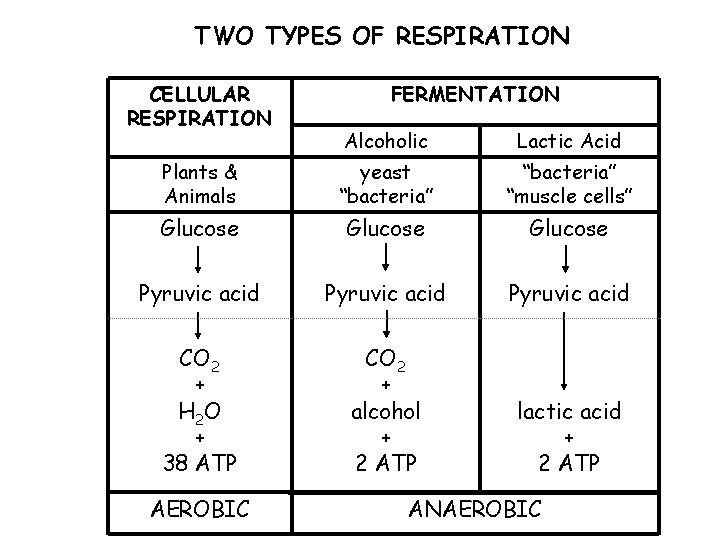
TWO TYPES OF RESPIRATION CELLULAR RESPIRATION FERMENTATION Alcoholic Lactic Acid Plants & Animals yeast “bacteria” “muscle cells” Glucose Pyruvic acid CO 2 + H 2 O + 38 ATP CO 2 + alcohol + 2 ATP lactic acid + 2 ATP AEROBIC ANAEROBIC