
Cellular Respiration 1 Mitochondria Organelle where cellular respiration
- Slides: 9
Cellular Respiration 1
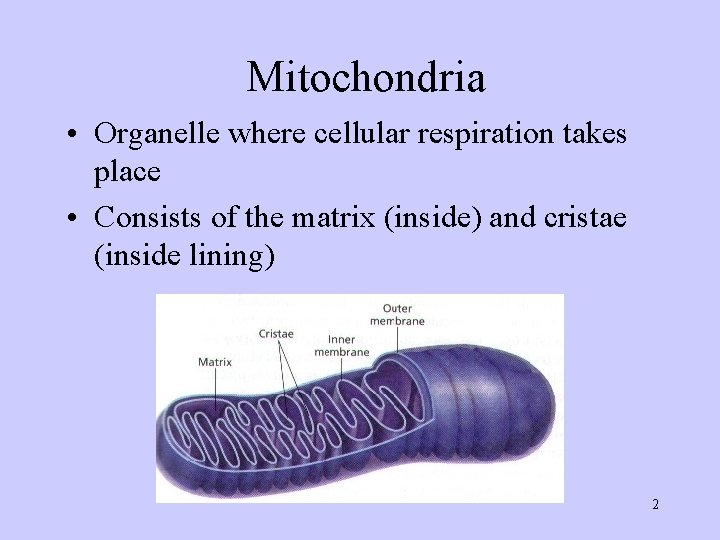
Mitochondria • Organelle where cellular respiration takes place • Consists of the matrix (inside) and cristae (inside lining) 2
Cellular Respiration • The process of converting glucose into ATP • C 6 H 12 O 6 + 6 O 2 6 CO 2 + 6 H 2 O + Energy • Three stages: 1. Glycolysis 2. Krebs cycle 3. Electron Transport Chain (ETC) 3
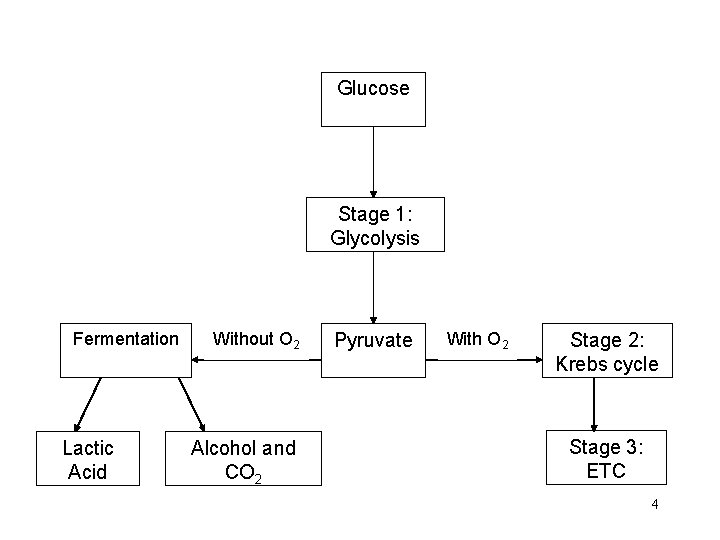
Glucose Stage 1: Glycolysis Fermentation Lactic Acid Without O 2 Alcohol and CO 2 Pyruvate With O 2 Stage 2: Krebs cycle Stage 3: ETC 4
Stage 1 – Glycolysis • Anaerobic process • Occurs in all organisms • Occurs in cytoplasm of cells 5
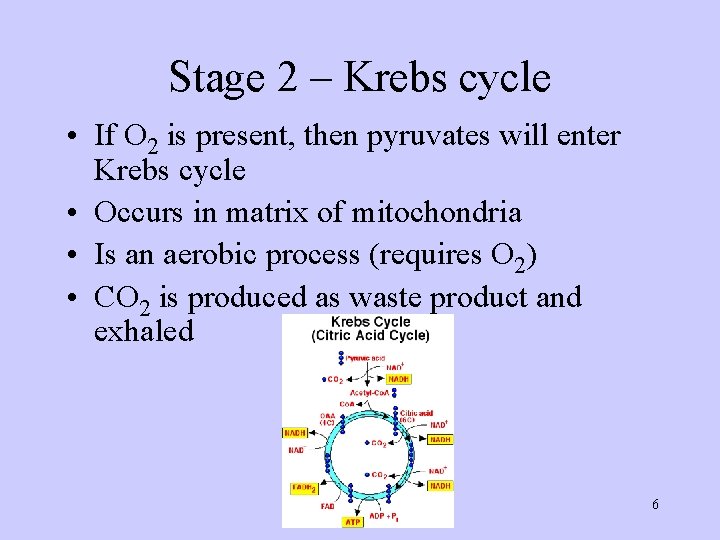
Stage 2 – Krebs cycle • If O 2 is present, then pyruvates will enter Krebs cycle • Occurs in matrix of mitochondria • Is an aerobic process (requires O 2) • CO 2 is produced as waste product and exhaled 6
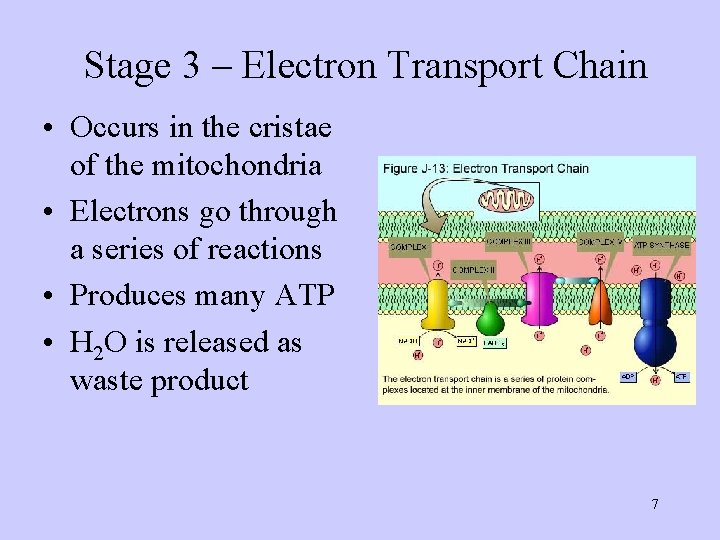
Stage 3 – Electron Transport Chain • Occurs in the cristae of the mitochondria • Electrons go through a series of reactions • Produces many ATP • H 2 O is released as waste product 7
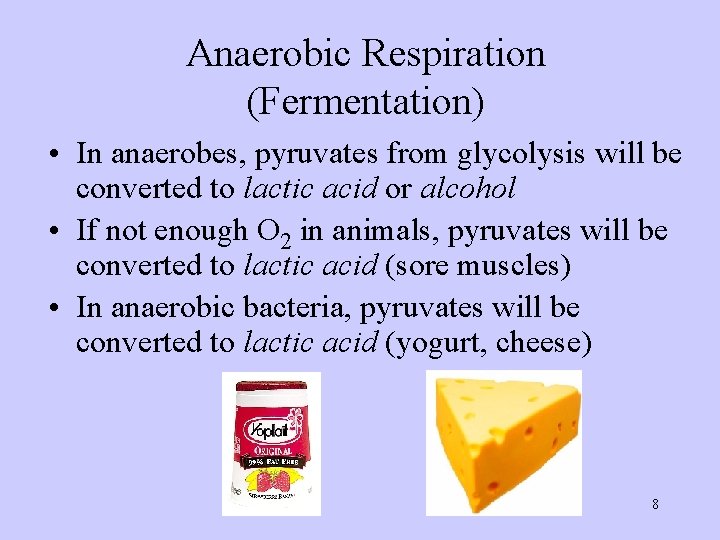
Anaerobic Respiration (Fermentation) • In anaerobes, pyruvates from glycolysis will be converted to lactic acid or alcohol • If not enough O 2 in animals, pyruvates will be converted to lactic acid (sore muscles) • In anaerobic bacteria, pyruvates will be converted to lactic acid (yogurt, cheese) 8
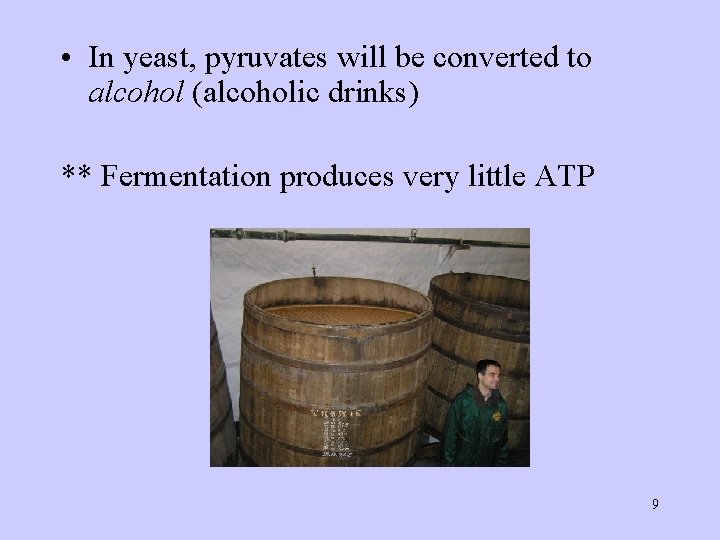
• In yeast, pyruvates will be converted to alcohol (alcoholic drinks) ** Fermentation produces very little ATP 9