
Cellular Reproduction Why Cells ReproduceDivide Growth Cell Repair
- Slides: 51
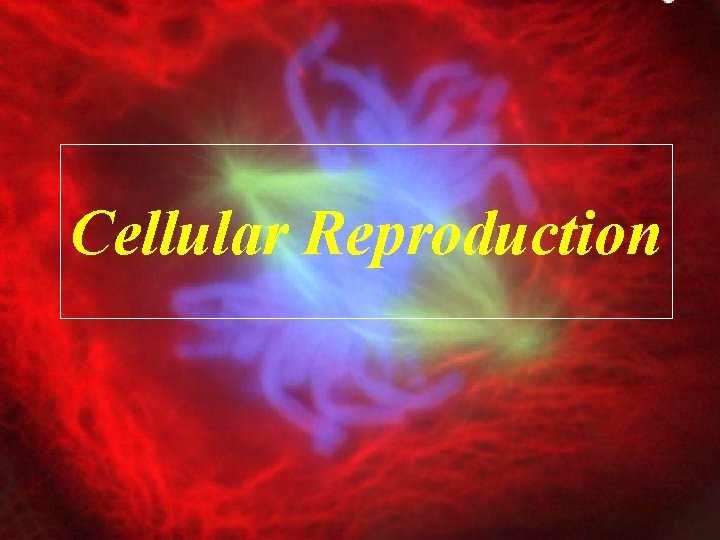
Cellular Reproduction
Why Cells Reproduce/Divide • Growth • Cell Repair • Cell Replacement
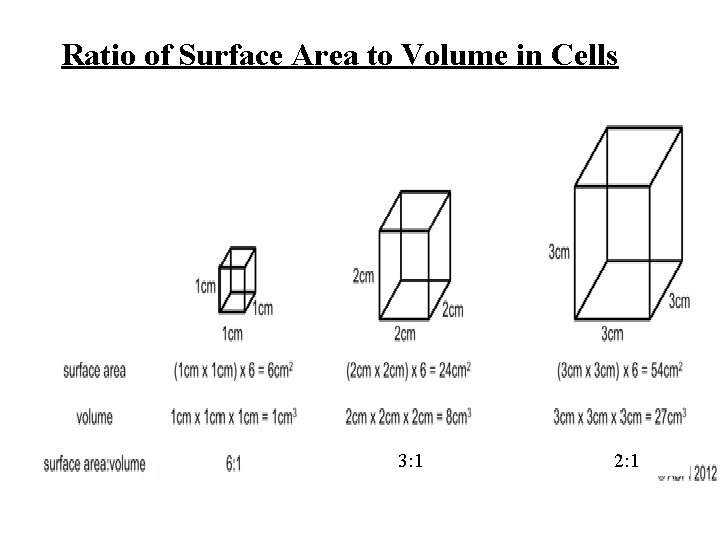
Why do cells multiply and not just grow bigger? 1. DNA overload: -the DNA can handle only so many requests for ‘information’ ex: library in growing town 2. Exchange of materials: -the cell must have enough surface area (cell membrane) to transport waste and nutrients into/out of cell -cells need HIGH surface area to volume ratio
Ratio of Surface Area to Volume in Cells 3: 1 2: 1
-if a cell gets too large, it is difficult to get sufficient amounts of oxygen and nutrients in and out of cell -this is why cells do not grow much even if the organism they are a part of does
-before it gets too large, a growing cell divides forming two daughter cells -called cell division -before the cell divides, it replicates(copies) all of its DNA -helps with information b/c each daughter cell gets its own genetic info
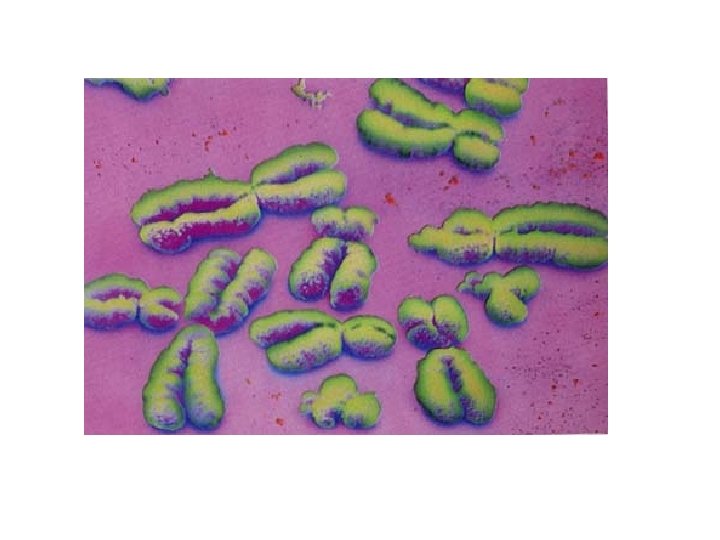
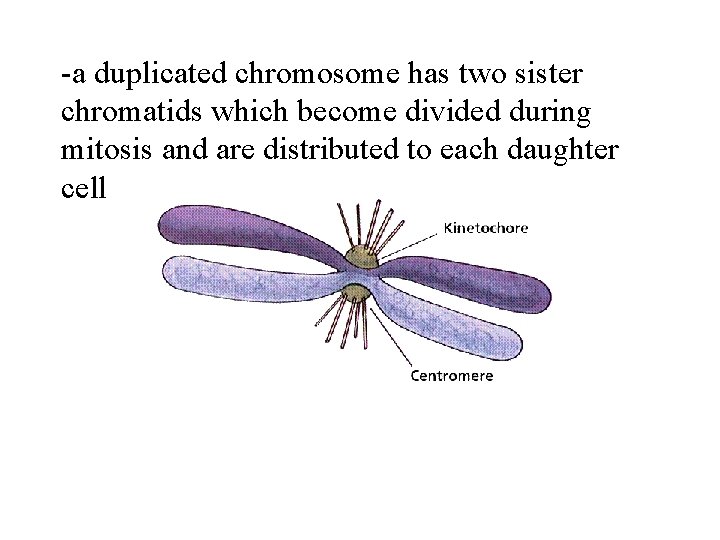
Chromosomes -carry genetic info -condensed form of DNA and protein -only visible during cell division b/c they come together -are copied before cell division to get two sister chromatids -chromatids are attached by centromeres -most human cells have 46 chromosomes (each with 2 sister chromatids)
-a duplicated chromosome has two sister chromatids which become divided during mitosis and are distributed to each daughter cell
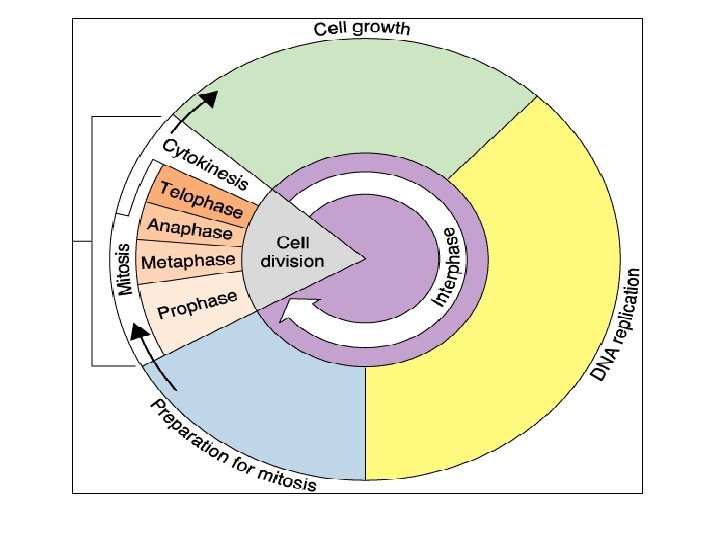
Cell Cycle -the series of events that cells go through as they grow and divide into two daughter cells -occurs in all cells (except sex cells) -every 20 hours in humans
Phases of the Cell Cycle INTERPHASE -longest phase of the cell cycle *G 1: cell growth/making of organelles *S: chromosomes are copied to prep for mitosis (DNA replication) *G 2: making of more organelles in prep for M phase, shortest phase of interphase
CELL DIVISION *M: division of the nucleus (mitosis) and the cytoplasm (cytokinesis) occurs -made up of five total steps
Interphase -longest part of the cell cycle -3 distinct parts G 1, S, G 2 -cell increases in mass -number of organelles doubles -DNA is duplicated
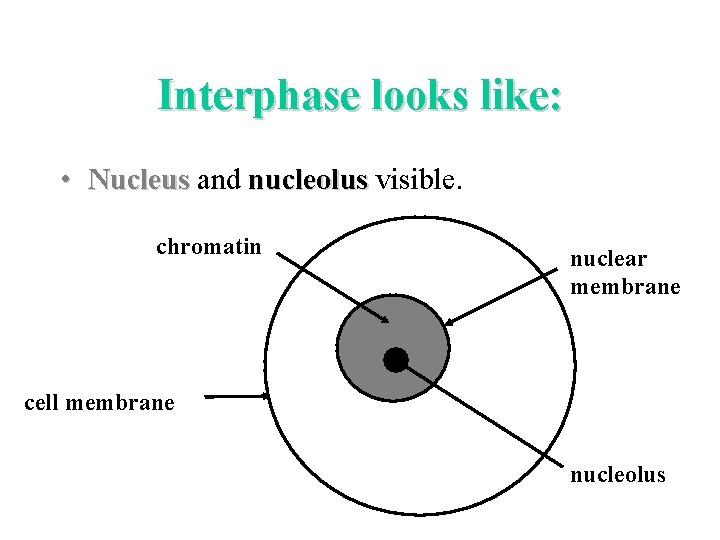
Interphase looks like: • Nucleus and nucleolus visible. chromatin nuclear membrane cell membrane nucleolus
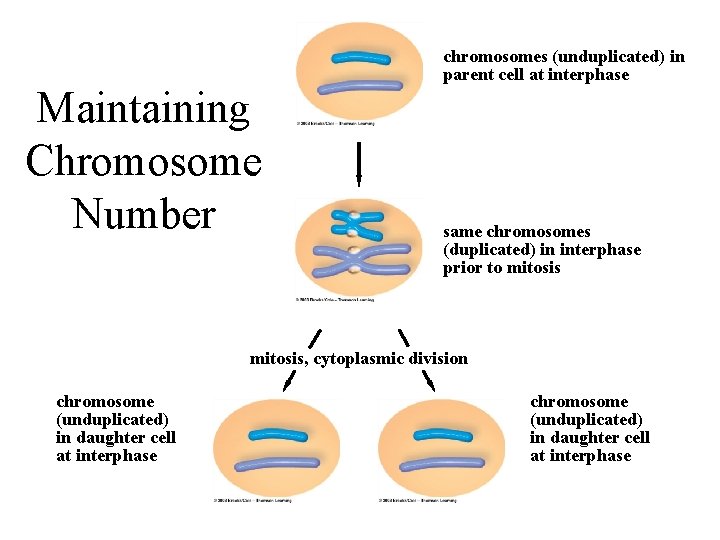
Maintaining Chromosome Number chromosomes (unduplicated) in parent cell at interphase same chromosomes (duplicated) in interphase prior to mitosis, cytoplasmic division chromosome (unduplicated) in daughter cell at interphase
Mitosis – Division of the nucleus Made up of 4 smaller phases: 1. Prophase 2. Metaphase 3. Anaphase 4. Telophase *can last from a few minutes to a few days
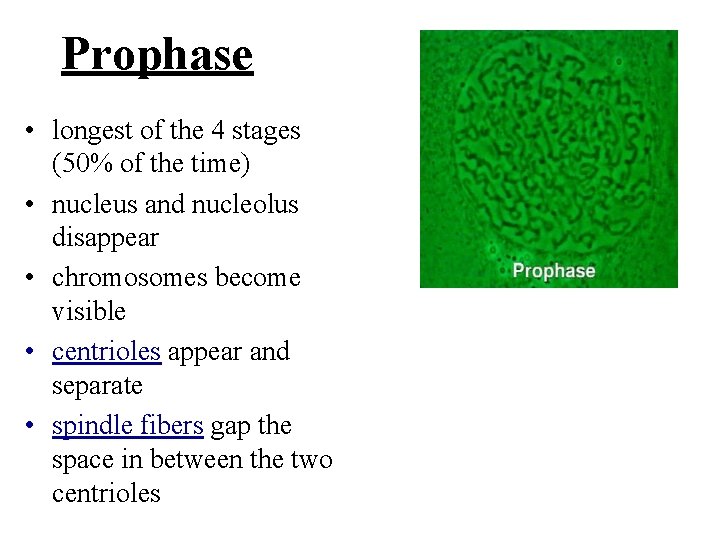
Prophase • longest of the 4 stages (50% of the time) • nucleus and nucleolus disappear • chromosomes become visible • centrioles appear and separate • spindle fibers gap the space in between the two centrioles
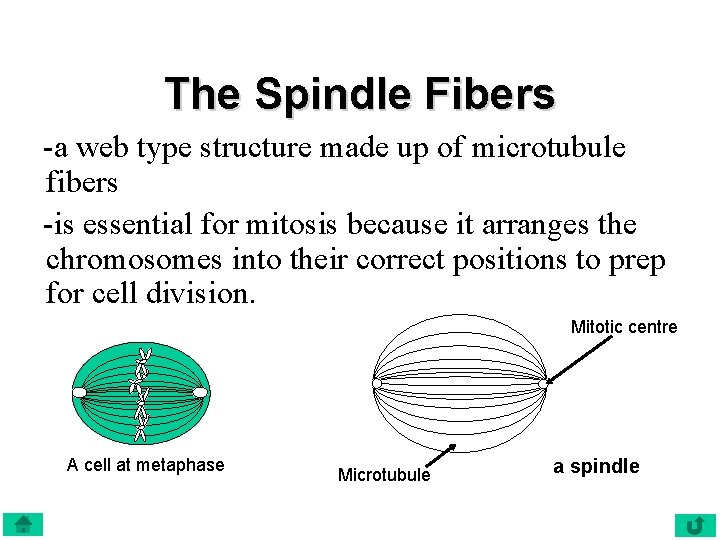
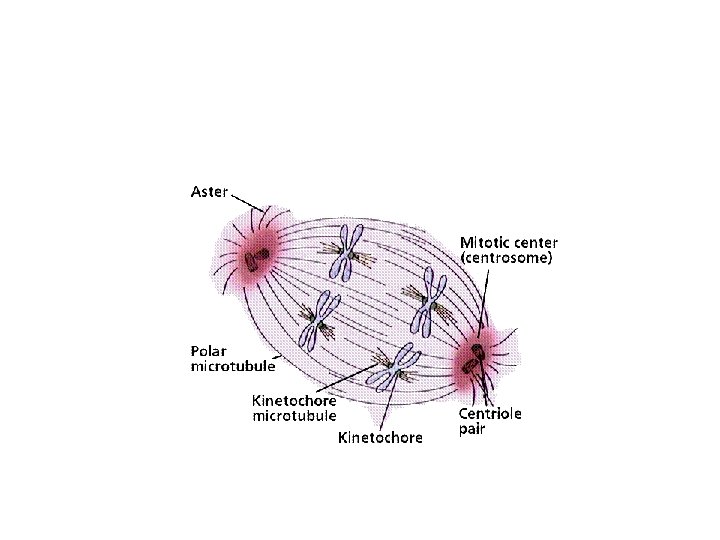
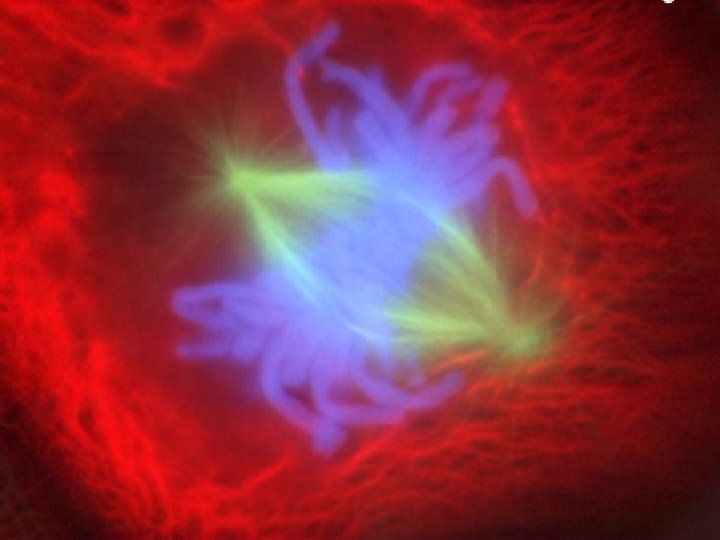
The Spindle Fibers -a web type structure made up of microtubule fibers -is essential for mitosis because it arranges the chromosomes into their correct positions to prep for cell division. Mitotic centre A cell at metaphase Microtubule a spindle
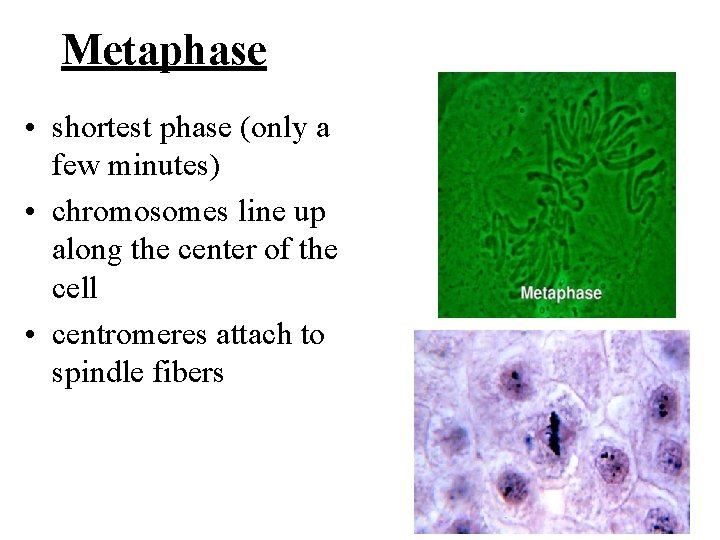
Metaphase • shortest phase (only a few minutes) • chromosomes line up along the center of the cell • centromeres attach to spindle fibers
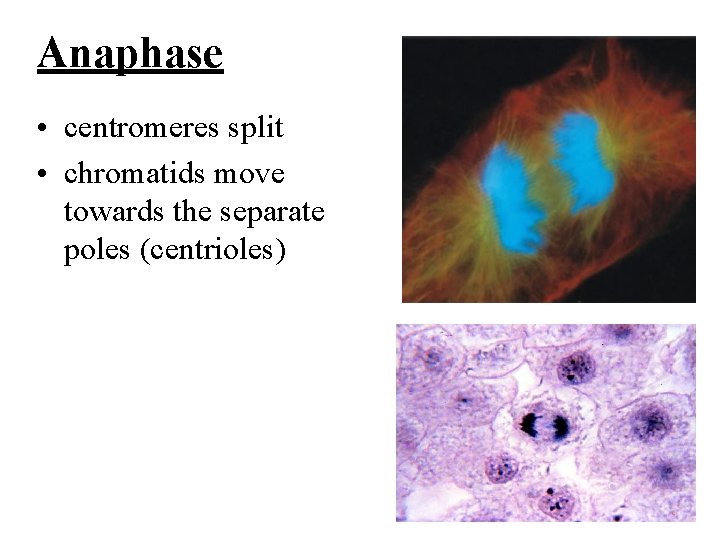
Anaphase • centromeres split • chromatids move towards the separate poles (centrioles)
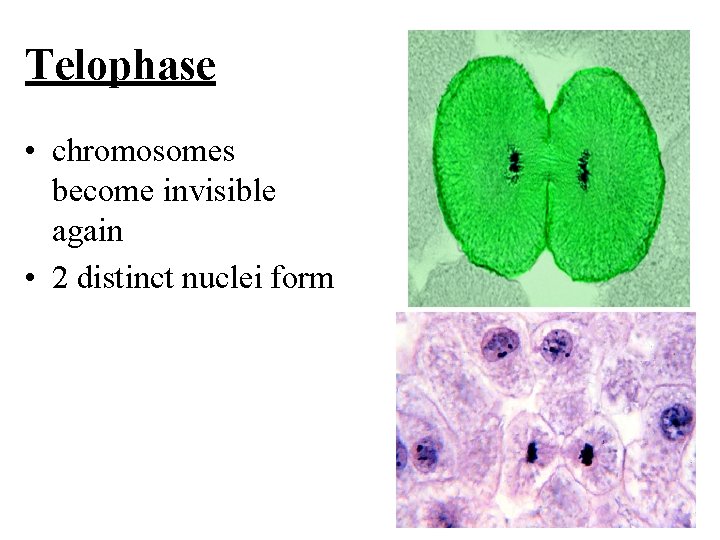
Telophase • chromosomes become invisible again • 2 distinct nuclei form
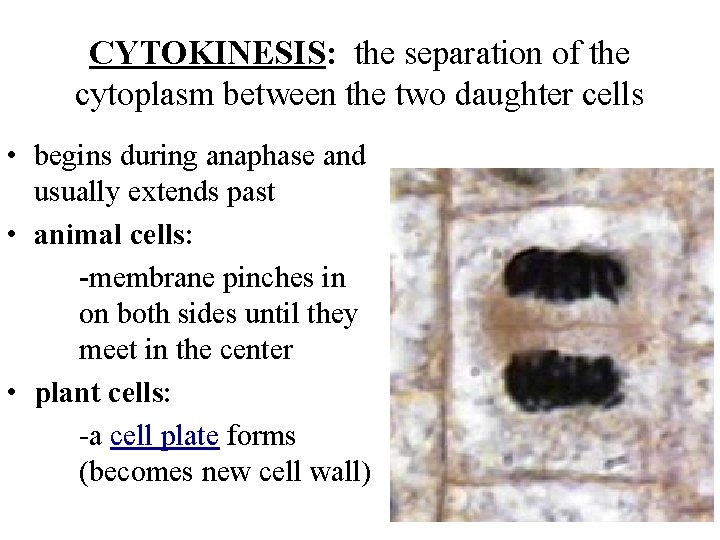
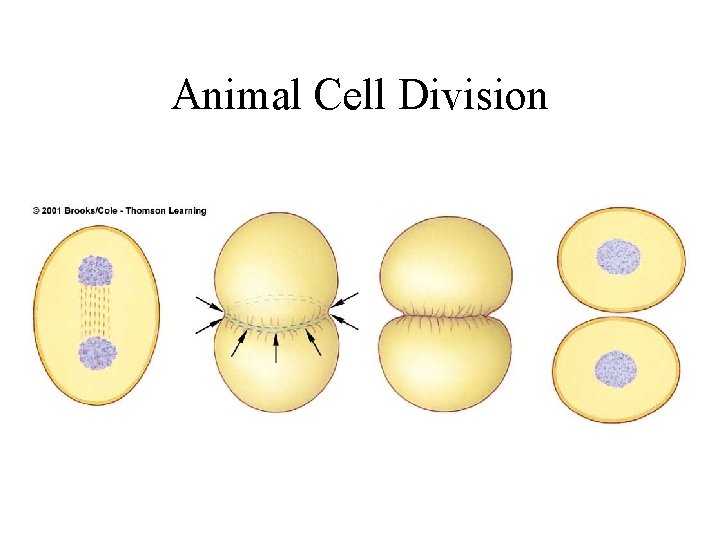
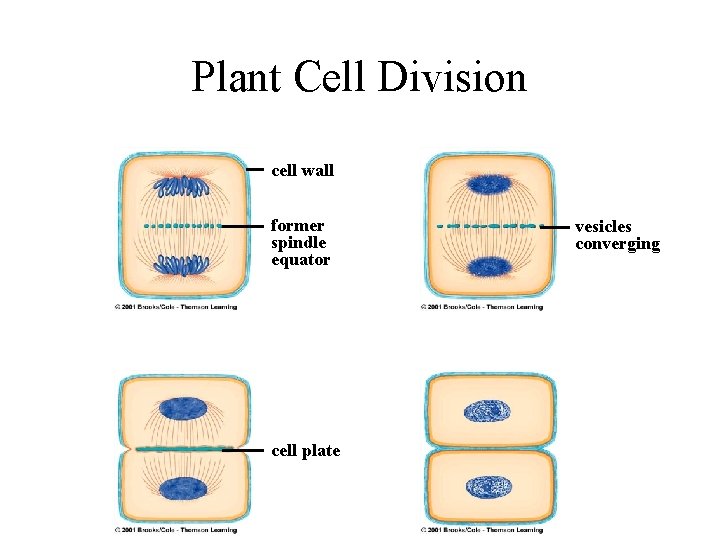
CYTOKINESIS: the separation of the cytoplasm between the two daughter cells • begins during anaphase and usually extends past • animal cells: -membrane pinches in on both sides until they meet in the center • plant cells: -a cell plate forms (becomes new cell wall)
Animal Cell Division
Plant Cell Division cell wall former spindle equator cell plate vesicles converging
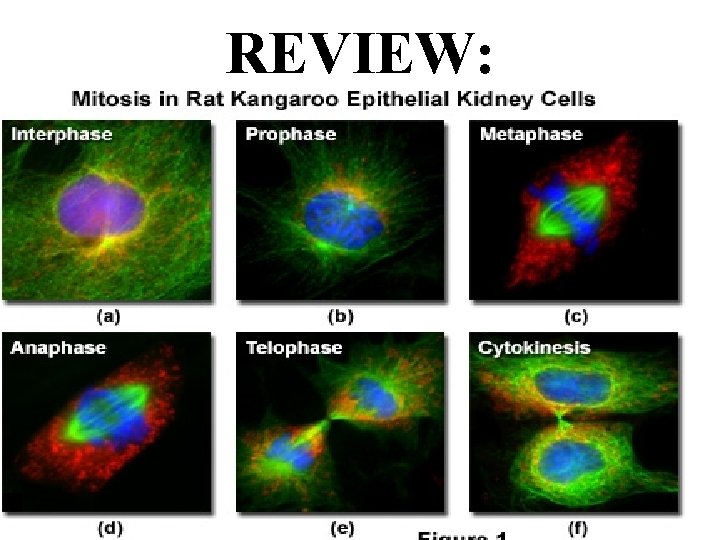
REVIEW:
Mitosis
Mitosis Part One
Mitosis Continued
Mitosis Song
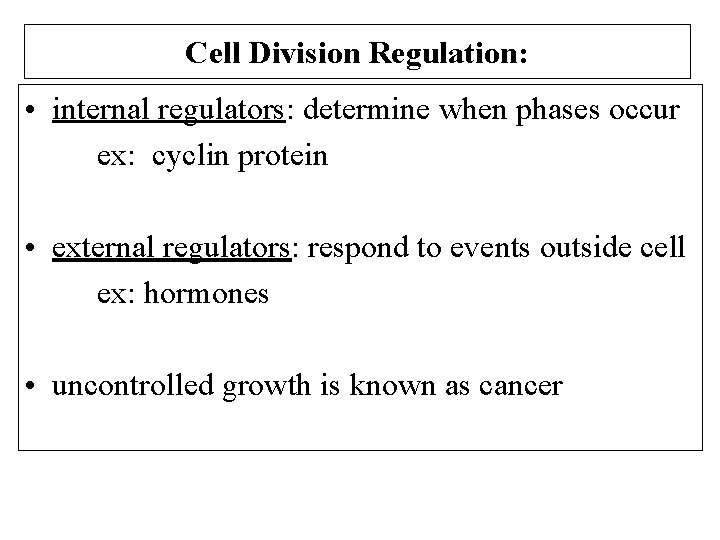
Cell Division Regulation: • internal regulators: determine when phases occur ex: cyclin protein • external regulators: respond to events outside cell ex: hormones • uncontrolled growth is known as cancer
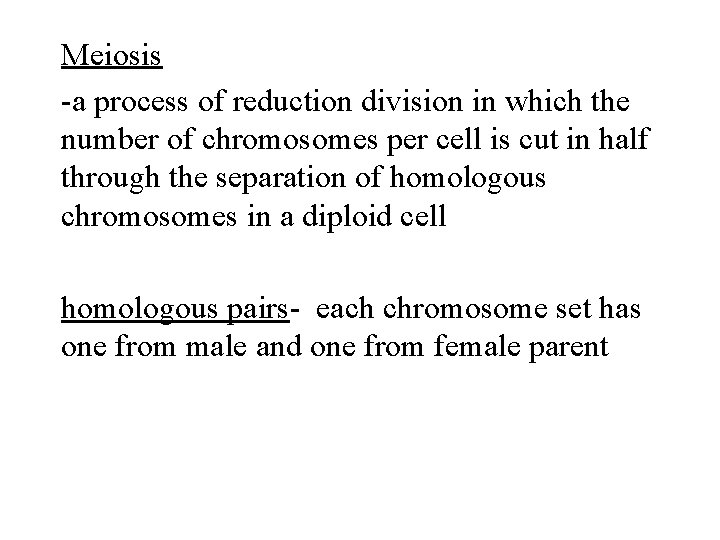
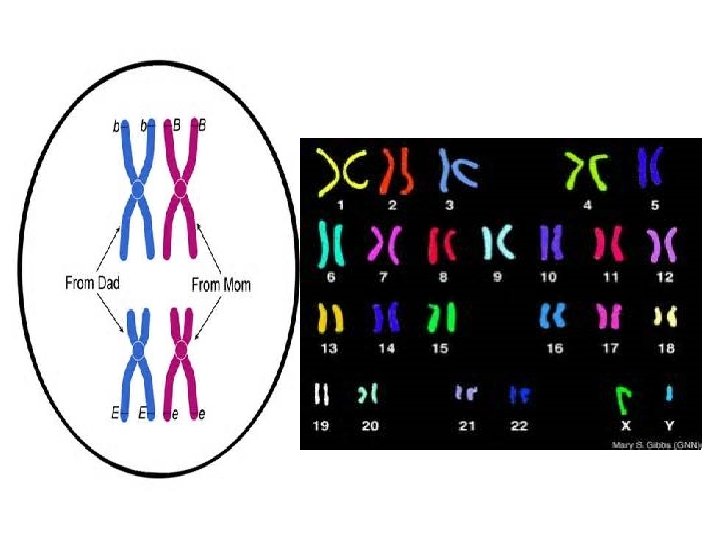
Meiosis -a process of reduction division in which the number of chromosomes per cell is cut in half through the separation of homologous chromosomes in a diploid cell homologous pairs- each chromosome set has one from male and one from female parent
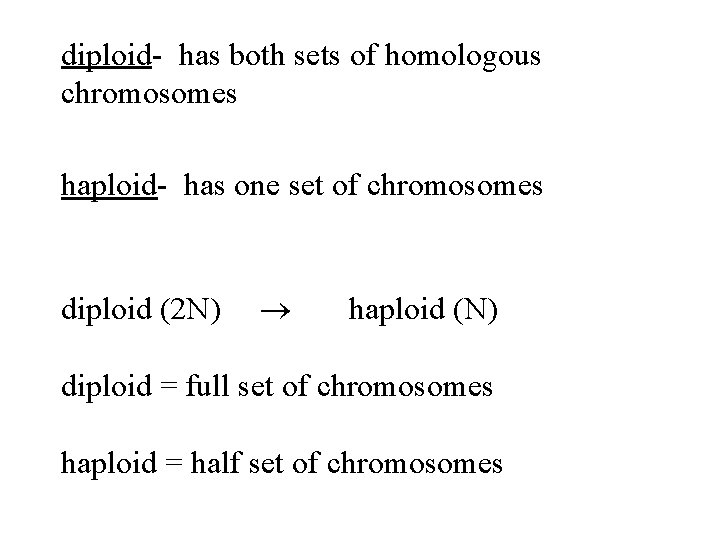
diploid- has both sets of homologous chromosomes haploid- has one set of chromosomes diploid (2 N) haploid (N) diploid = full set of chromosomes haploid = half set of chromosomes
-meiosis produces 4 haploid gamete cells from one diploid cell gametes cells- sex cells (egg and sperm)
-two rounds of cell division in meiosis -this is how the amount of chromosomes gets cut in half -homologous chromosomes are separated
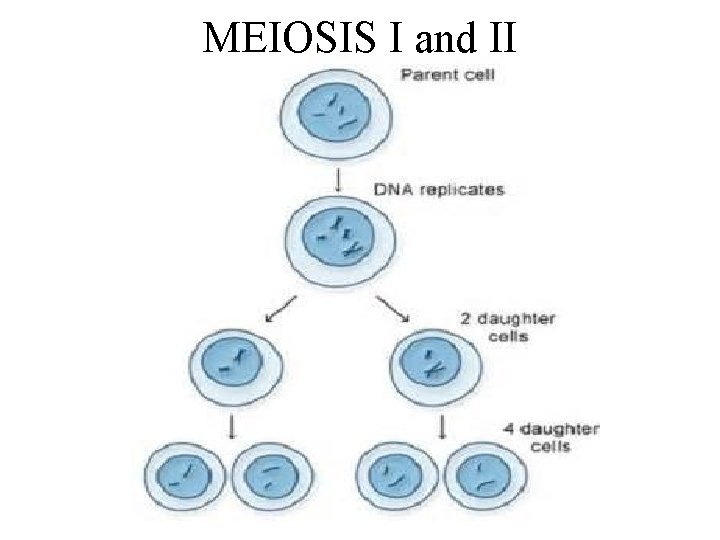
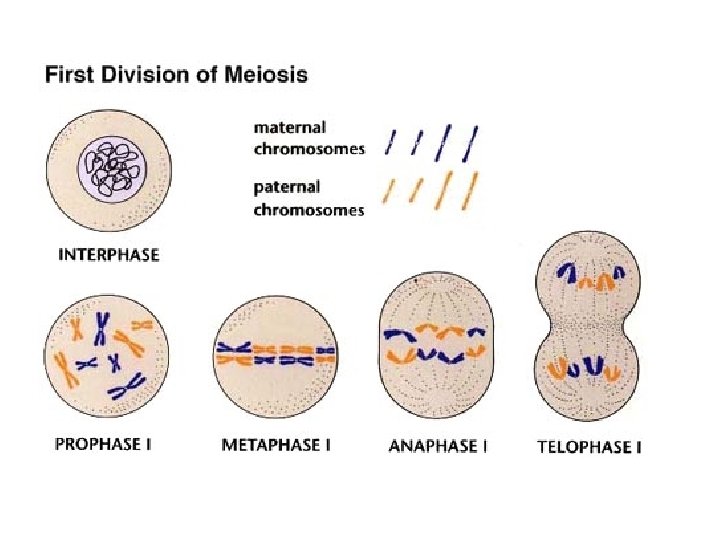
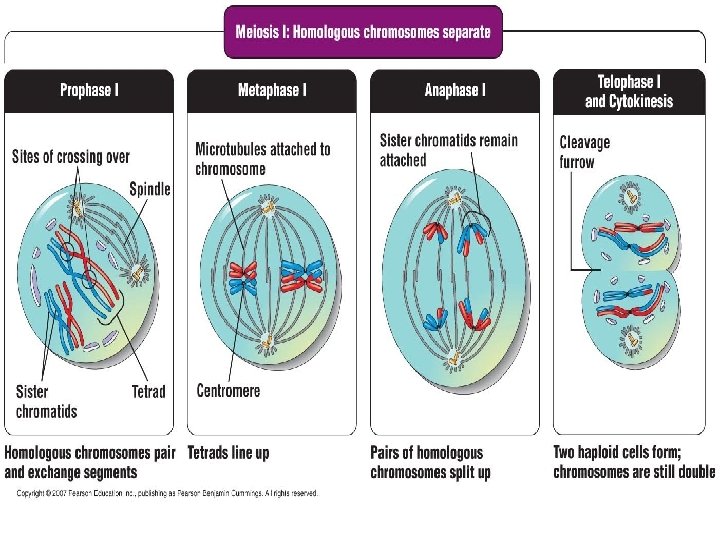
Meiosis I -first round of division -homologous chromosomes separated Meiosis II -second round of division -chromosome number cut in half
MEIOSIS I and II
MEIOSIS I -similar to mitosis: *cell prepares for division *DNA is replicated BUT: *homologous chromosomes pair up *form a tetrad- made up of 4 chromatids **called synapsis *exchange portions of their genes *called crossing over (this adds to diversity)
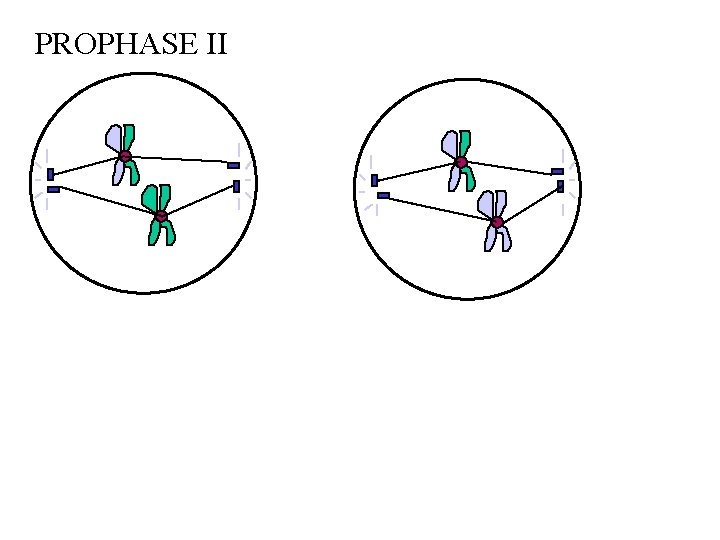
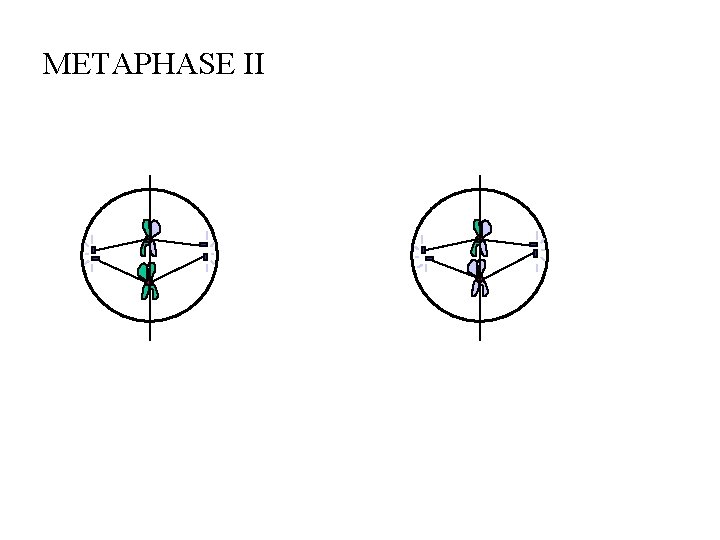
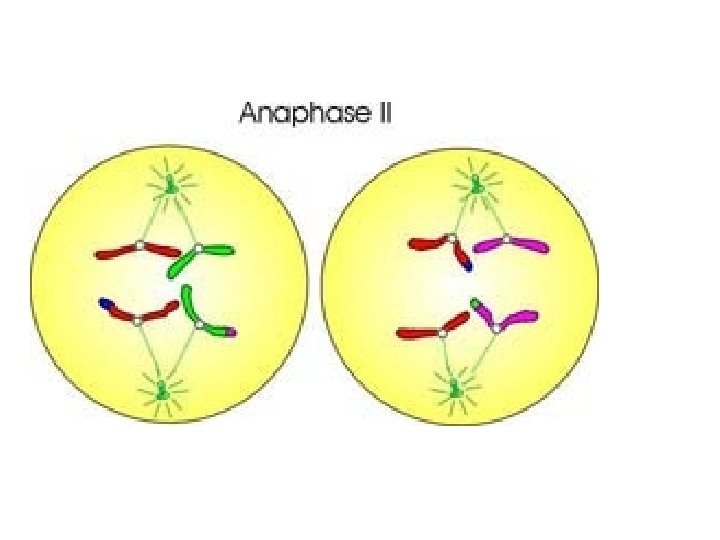
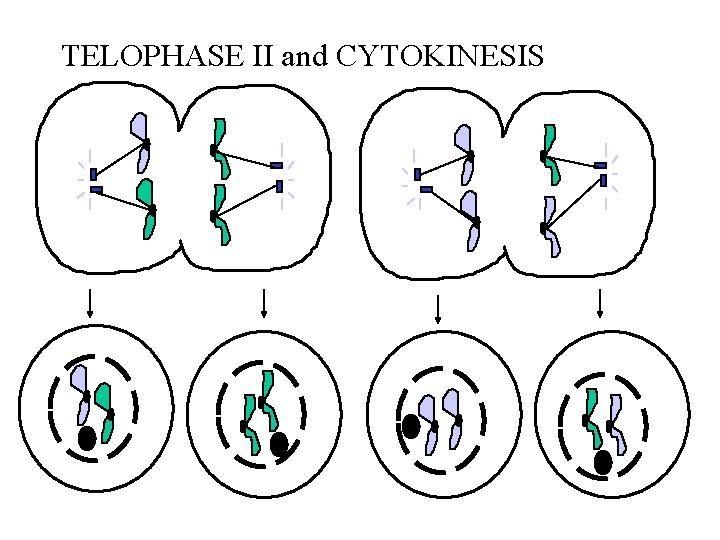
MEIOSIS II -no interphase II (no more DNA replication) -very similar to mitosis -chromosomes line up as individuals, have already been separated from partner -sister chromatids split
PROPHASE II
METAPHASE II
TELOPHASE II and CYTOKINESIS
During meiosis: -chromosomes independently assort (separation of genes during gamete formation) -haploid gametes in men = sperm cell -haploid gametes in women = egg cell *other three cells (in females) are called polar bodies
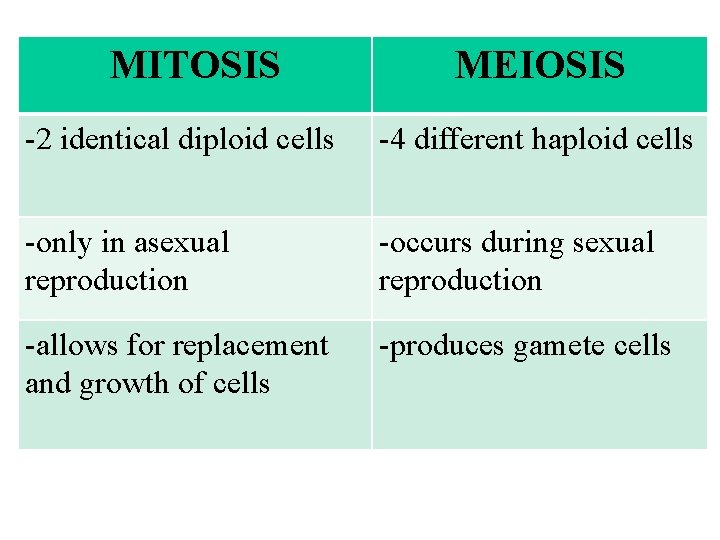
MITOSIS MEIOSIS -2 identical diploid cells -4 different haploid cells -only in asexual reproduction -occurs during sexual reproduction -allows for replacement and growth of cells -produces gamete cells
Meiosis