
Cellular Reproduction through Meiosis By Tyler Wynn Introduction
Cellular Reproduction through Meiosis By: Tyler Wynn
Introduction Meiosis is the specific cell division needed for sexual reproduction in eukaryotes, THAT INCLUDES YOU! You can learn how your body starts from a single cell to multiple cell and how your cells continually grow in numbers.
Objectives During this lesson students will explore, learn, and recognize the different steps of the meiosis cell replication process. Students will learn steps of meiosis and the overall cycle of it.

Meiosis Cellular Reproduction
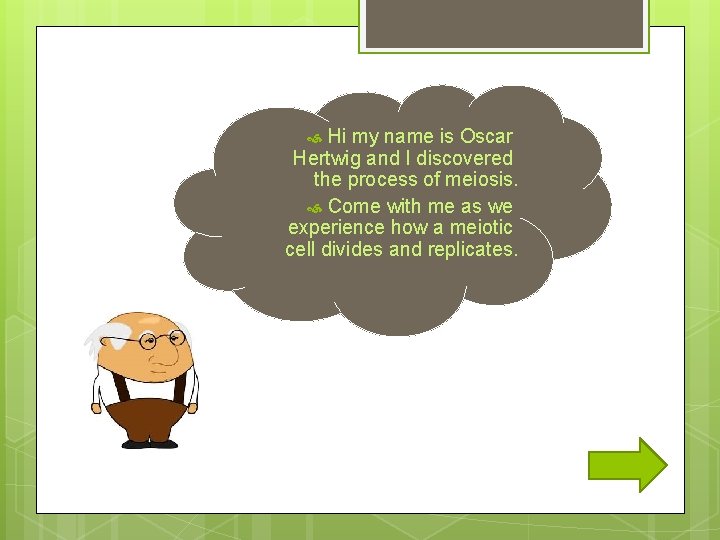
Hi my name is Oscar Hertwig and I discovered the process of meiosis. Come with me as we experience how a meiotic cell divides and replicates.
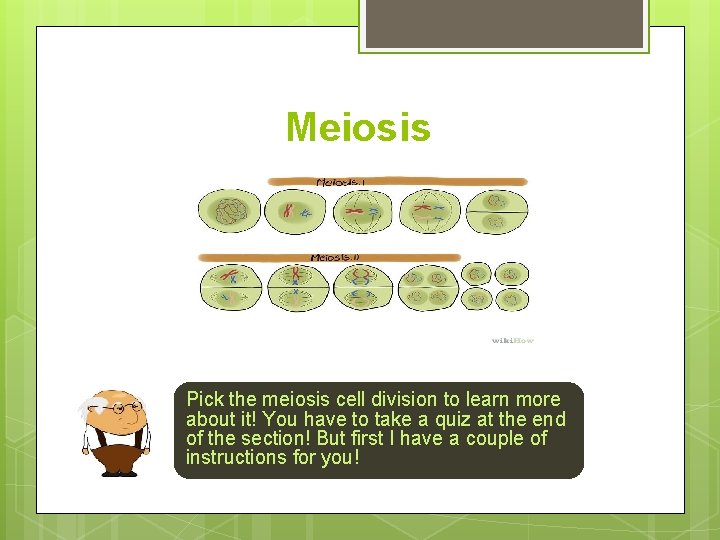
Meiosis Pick the meiosis cell division to learn more about it! You have to take a quiz at the end of the section! But first I have a couple of instructions for you!
Use this arrow to go to next page. Use this arrow to go back to previous page. Use this button to go back to meiosis selection menu. Click quiz button to take quiz over topic. Click video camera to watch meiosis video.
Have fun learning about cell reproduction/division today! Remember that there is a quiz at the end of each topic! Click on the arrow to begin!
Main Menu Interphase Explore the stages of Meiosis! Prophase I Metaphase I Anaphase I Telophase I Prophase II Metaphase II Anaphase II Telophase II Video of Meiosis
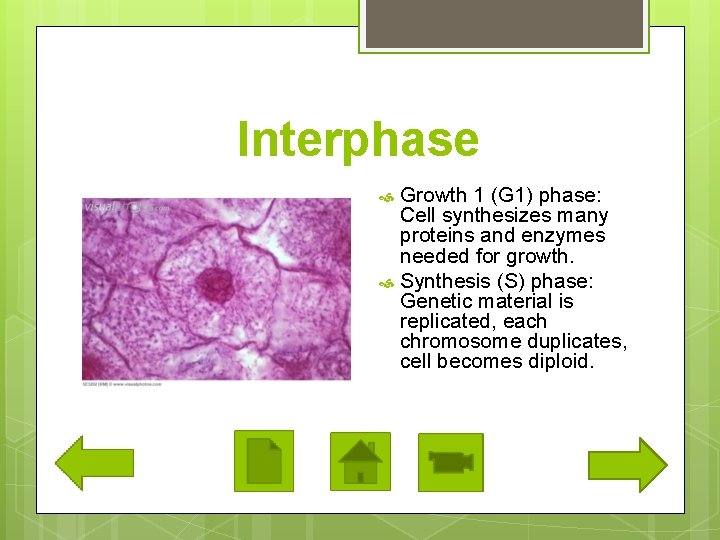
Interphase Growth 1 (G 1) phase: Cell synthesizes many proteins and enzymes needed for growth. Synthesis (S) phase: Genetic material is replicated, each chromosome duplicates, cell becomes diploid.

Prophase I Longest phase of meiosis. DNA is exchanged between homologous chromosomes this process is called recombination. Recombination allows for chromosomal crossover which is the significant source of genetic variation.
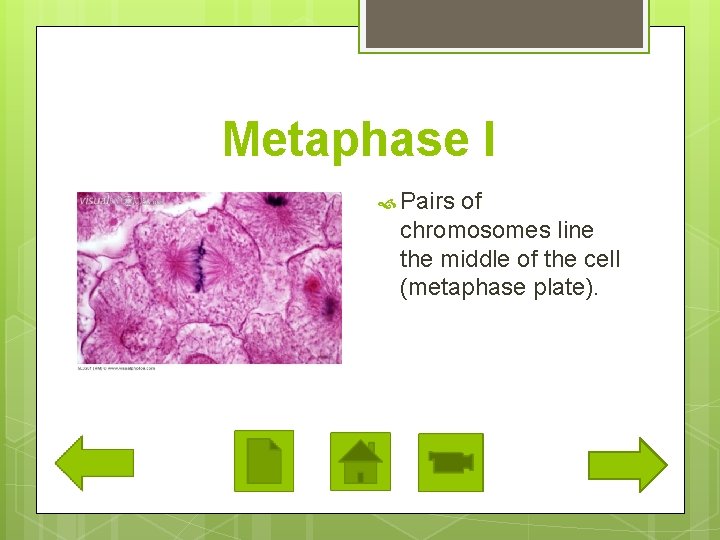
Metaphase I Pairs of chromosomes line the middle of the cell (metaphase plate).
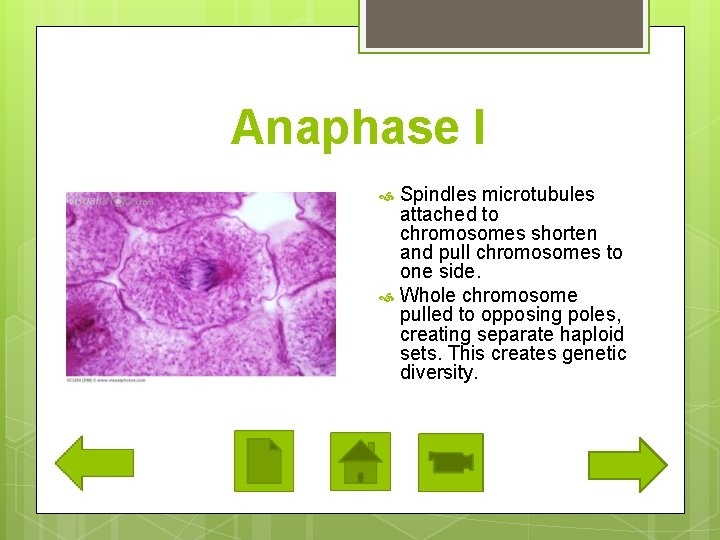
Anaphase I Spindles microtubules attached to chromosomes shorten and pull chromosomes to one side. Whole chromosome pulled to opposing poles, creating separate haploid sets. This creates genetic diversity.
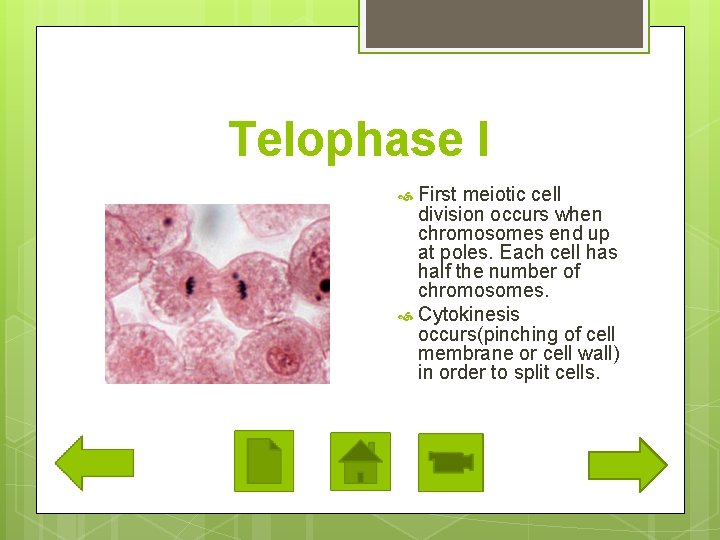
Telophase I First meiotic cell division occurs when chromosomes end up at poles. Each cell has half the number of chromosomes. Cytokinesis occurs(pinching of cell membrane or cell wall) in order to split cells.
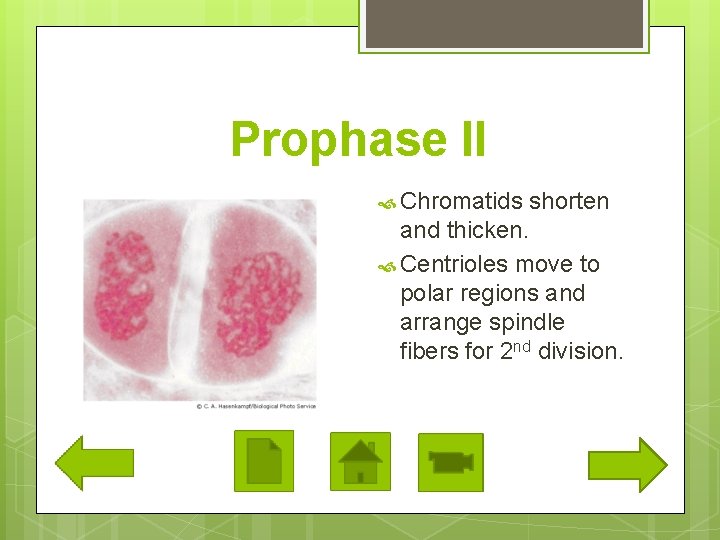
Prophase II Chromatids shorten and thicken. Centrioles move to polar regions and arrange spindle fibers for 2 nd division.
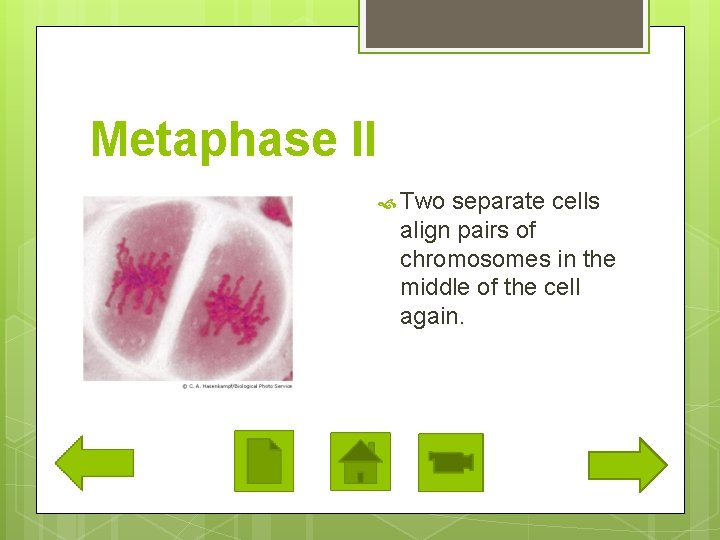
Metaphase II Two separate cells align pairs of chromosomes in the middle of the cell again.
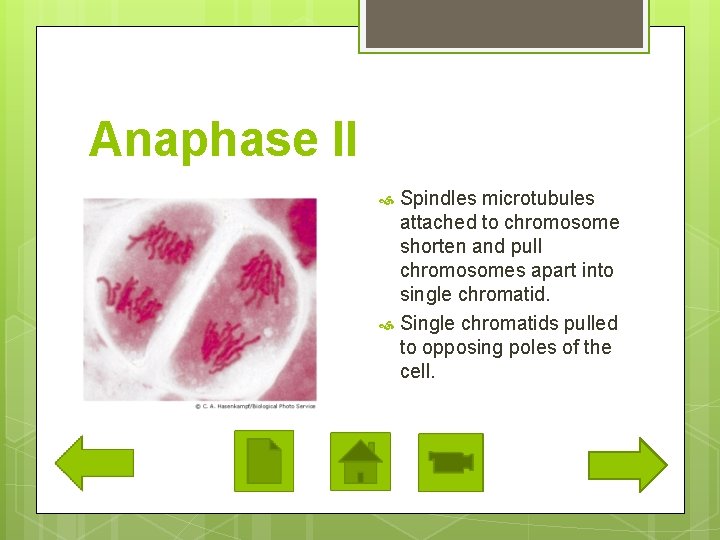
Anaphase II Spindles microtubules attached to chromosome shorten and pull chromosomes apart into single chromatid. Single chromatids pulled to opposing poles of the cell.
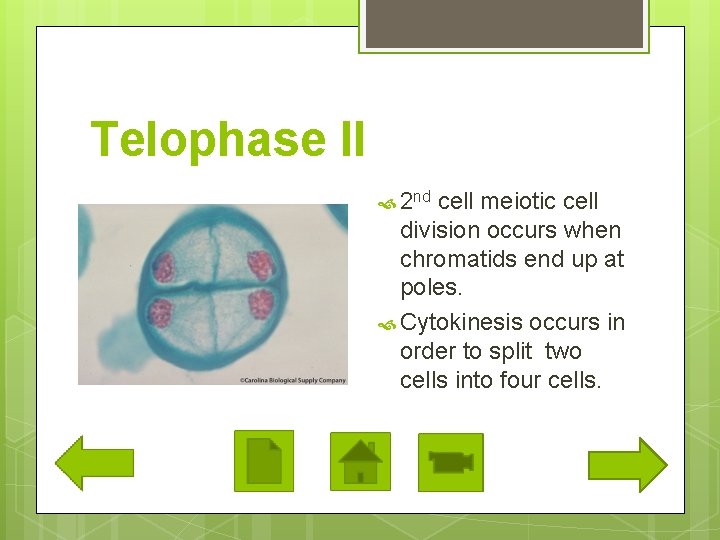
Telophase II 2 nd cell meiotic cell division occurs when chromatids end up at poles. Cytokinesis occurs in order to split two cells into four cells.
Video of Meiosis
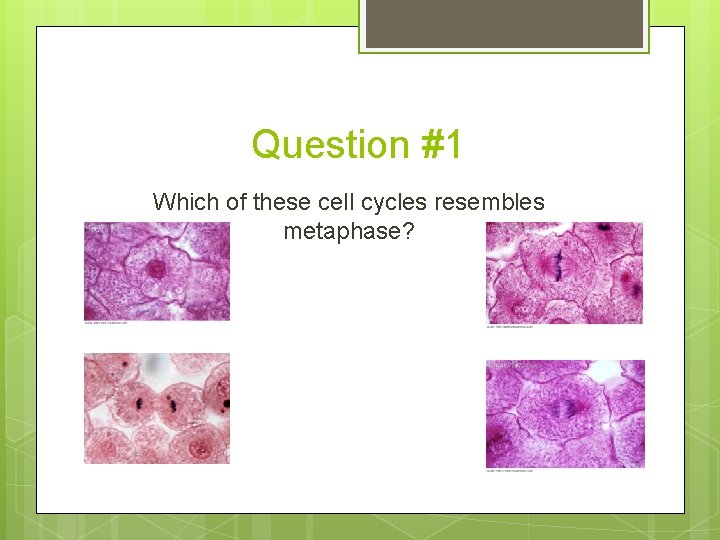
Question #1 Which of these cell cycles resembles metaphase?

THAT’S CORRECT GOOD JOB!
THAT’S INCORRECT TRY AGAIN!
Question #2 What does the Telophase step of meiosis do? Align chromosomes at middle of cell. Pull chromosomes to opposing poles. Replicate genetic material. Perform cytokinesis and pull cells apart, split cells.
THAT’S CORRECT GOOD JOB!
THAT’S INCORRECT TRY AGAIN!
CONGRADULATIONS YOU HAVE COMPLETED THE QUIZ AND HAVE A BETTER KNOWLEDGE OF MEIOTIC CELL DIVISION!
Resources O’Connor, C. (2008) Meiosis, genetic recombination, and sexual reproduction. Nature Education. 1(1): 174. http: //faculty. baruch. cuny. edu www. hybridmedicalanimation. com/work/animation/the-stages -of-meiosis/ www. visualphotos. com https: //www. flickr. com/photos/carolinabio/6241450806/ http: //www. eddytheecodog. com/introscreen/adventure 3/steak. html https: //community. giffgaff. com/t 5/Blog/Congratulationsendorphin-our-newest-VIG-member/bc-p/11531325
Resources http: //www. eddytheeco- dog. com/introscreen/adventure 3/steak. html https: //community. giffgaff. com/t 5/Blog/Congra tulations-endorphin-our-newest-VIGmember/bc-p/11531325
- Slides: 28