
Cellular Reproduction Cell Division the process of a


- Slides: 36
Cellular Reproduction
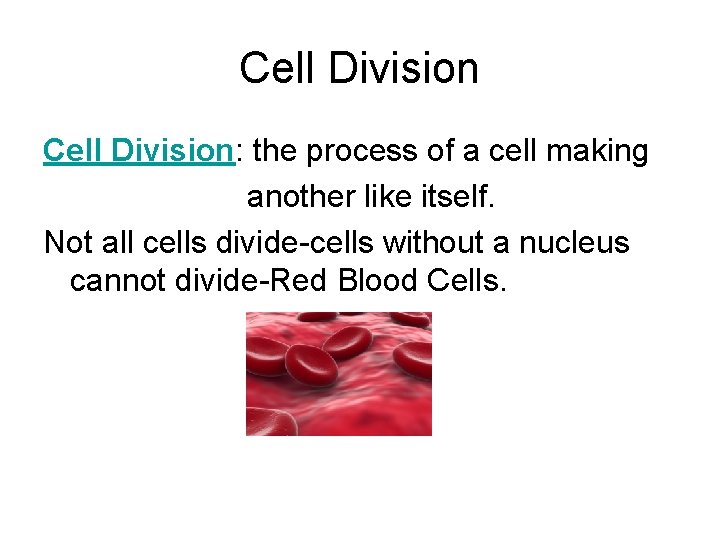
Cell Division: the process of a cell making another like itself. Not all cells divide-cells without a nucleus cannot divide-Red Blood Cells.
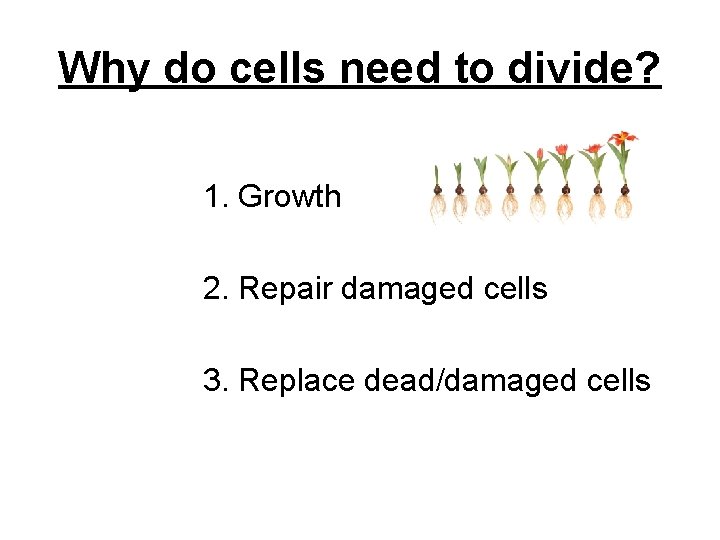
Why do cells need to divide? 1. Growth 2. Repair damaged cells 3. Replace dead/damaged cells
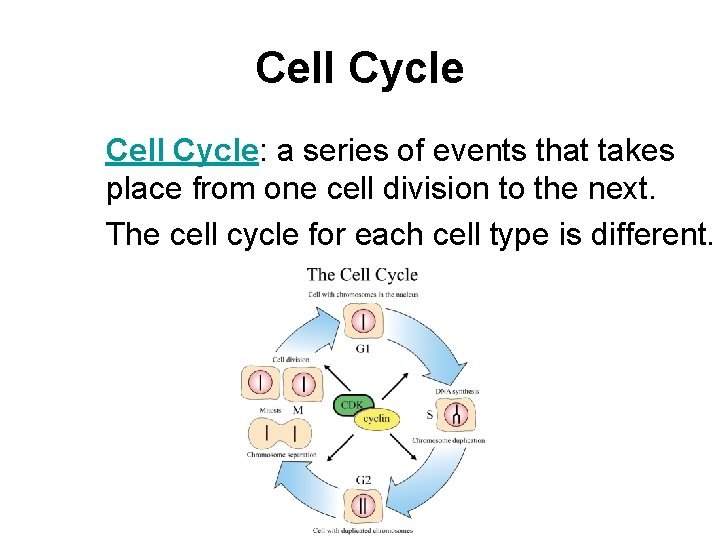
Cell Cycle: a series of events that takes place from one cell division to the next. The cell cycle for each cell type is different.
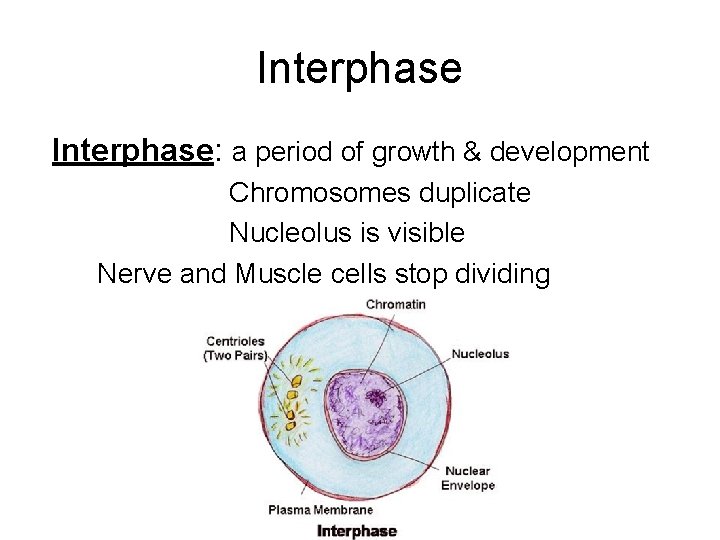
Interphase: a period of growth & development Chromosomes duplicate Nucleolus is visible Nerve and Muscle cells stop dividing
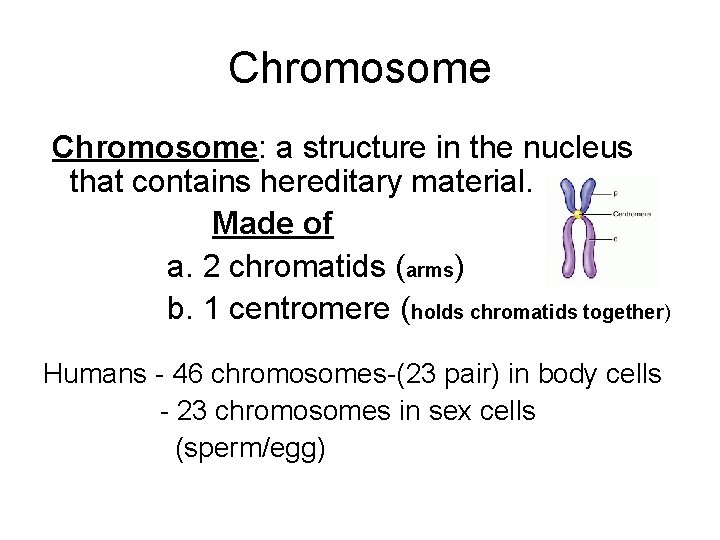
Chromosome: a structure in the nucleus that contains hereditary material. Made of a. 2 chromatids (arms) b. 1 centromere (holds chromatids together) Humans - 46 chromosomes-(23 pair) in body cells - 23 chromosomes in sex cells (sperm/egg)
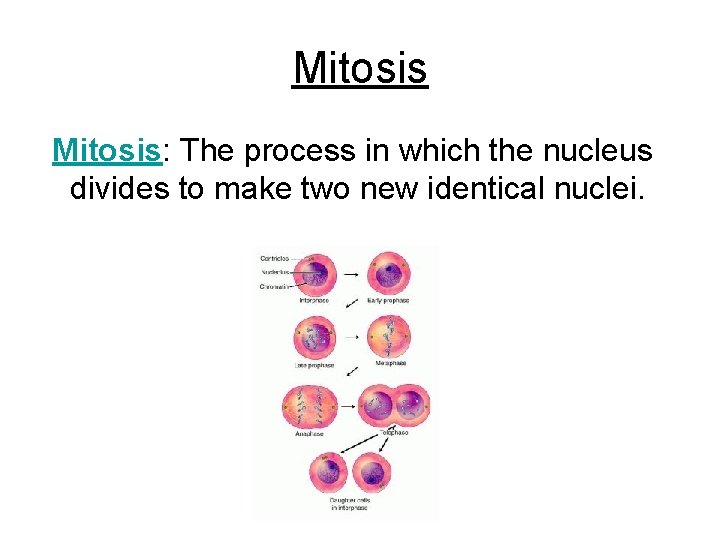
Mitosis: The process in which the nucleus divides to make two new identical nuclei.
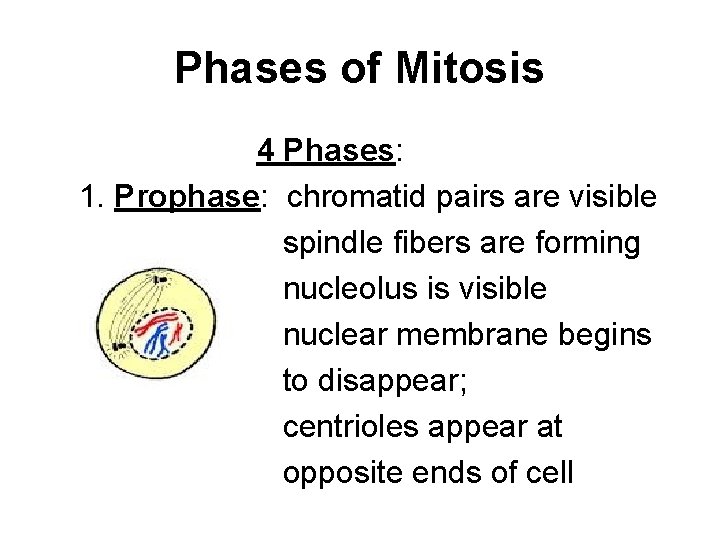
Phases of Mitosis 4 Phases: 1. Prophase: chromatid pairs are visible spindle fibers are forming nucleolus is visible nuclear membrane begins to disappear; centrioles appear at opposite ends of cell
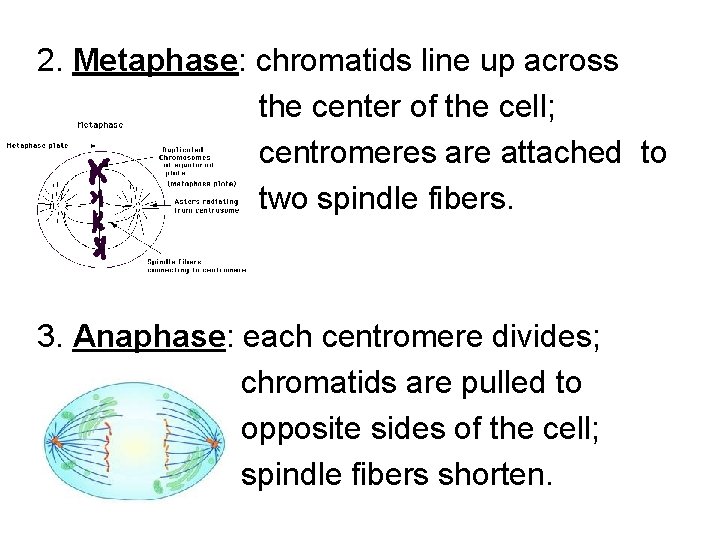
2. Metaphase: chromatids line up across the center of the cell; centromeres are attached to two spindle fibers. 3. Anaphase: each centromere divides; chromatids are pulled to opposite sides of the cell; spindle fibers shorten.
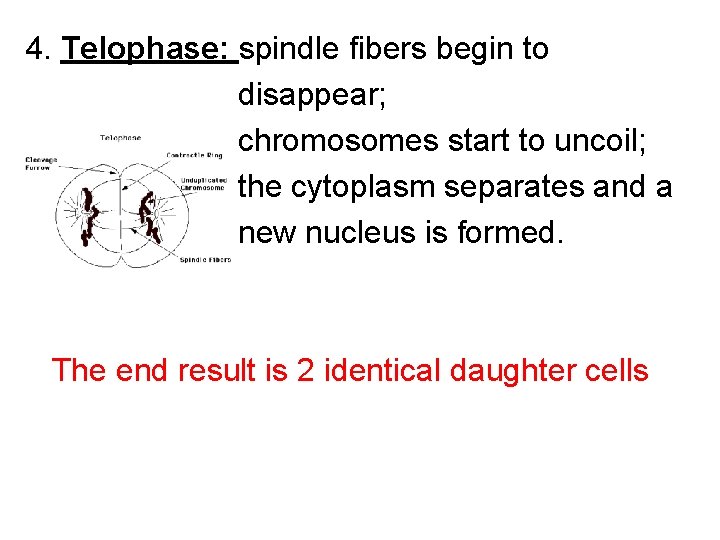
4. Telophase: spindle fibers begin to disappear; chromosomes start to uncoil; the cytoplasm separates and a new nucleus is formed. The end result is 2 identical daughter cells
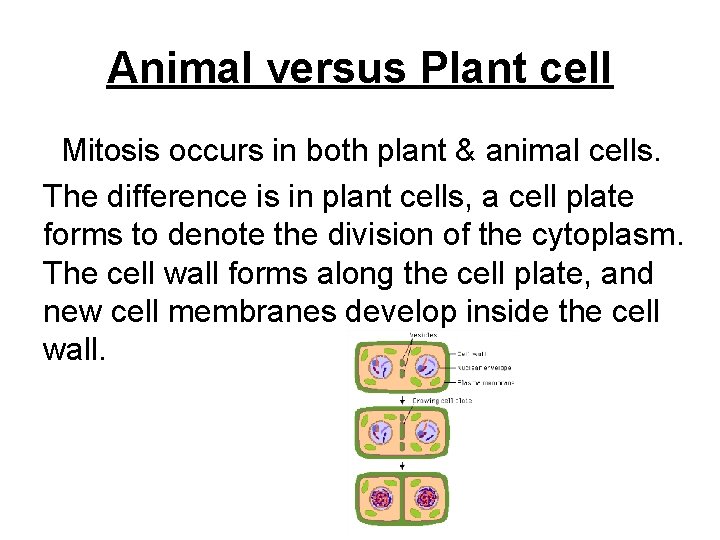
Animal versus Plant cell Mitosis occurs in both plant & animal cells. The difference is in plant cells, a cell plate forms to denote the division of the cytoplasm. The cell wall forms along the cell plate, and new cell membranes develop inside the cell wall.
Reproduction: when an organism makes another like itself There are 2 types of reproduction: 1. Asexual reproduction a new organism is formed from 1 parent; identical to parent. 2. Sexual reproduction: a new organism is formed from 2 gametes from 2 parents that has unique characteristics.
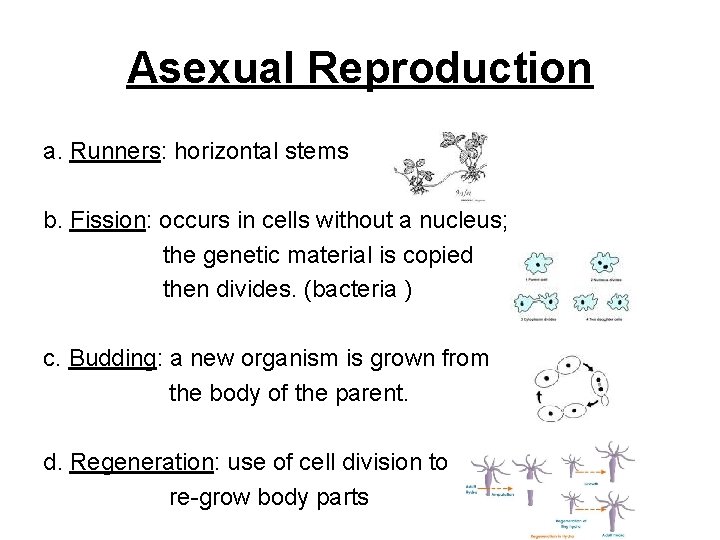
Asexual Reproduction a. Runners: horizontal stems b. Fission: occurs in cells without a nucleus; the genetic material is copied then divides. (bacteria ) c. Budding: a new organism is grown from the body of the parent. d. Regeneration: use of cell division to re-grow body parts
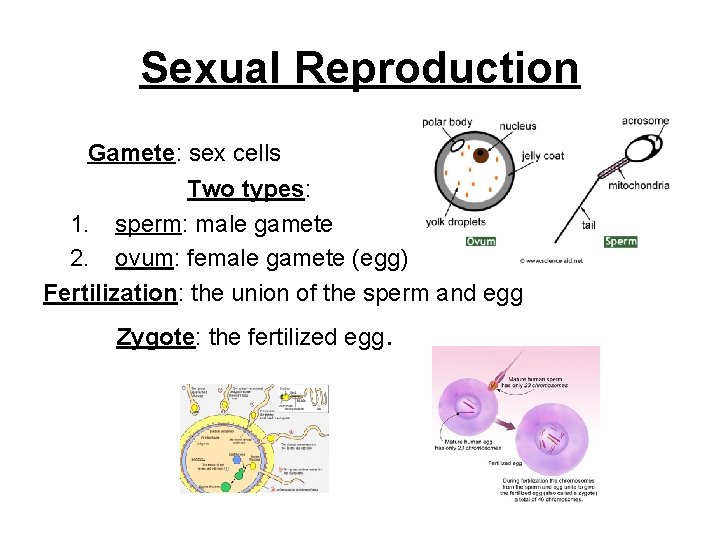
Sexual Reproduction Gamete: sex cells Two types: 1. sperm: male gamete 2. ovum: female gamete (egg) Fertilization: the union of the sperm and egg Zygote: the fertilized egg.
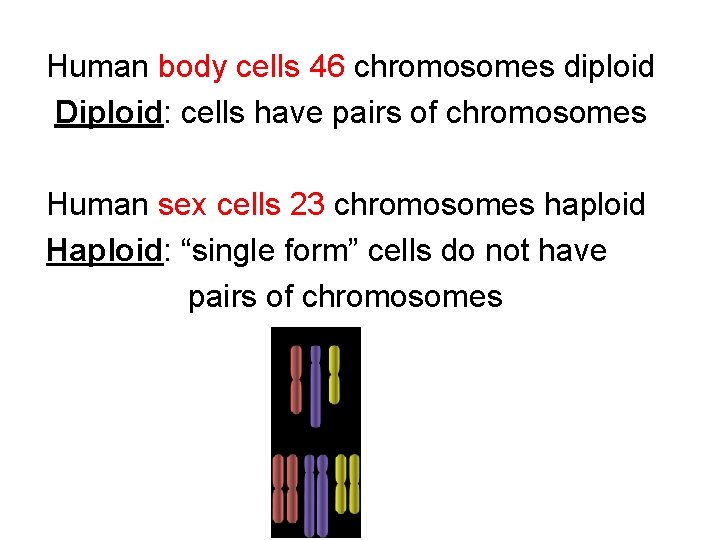
Human body cells 46 chromosomes diploid Diploid: cells have pairs of chromosomes Human sex cells 23 chromosomes haploid Haploid: “single form” cells do not have pairs of chromosomes
Why Meiosis? If in sexual reproduction diploid cells combined, the offspring would have double the total of chromosomes as the parent. In plants, most survive; in animals none survive. As a result, meiosis ensures that the offspring will have diploid number of chromosomes- as the parent. There are 2 divisions of the nucleus in meiosis.
Meiosis Ovum (haploid) + Meiosis Sperm (haploid) = Zygote (diploid) mitosis development organism
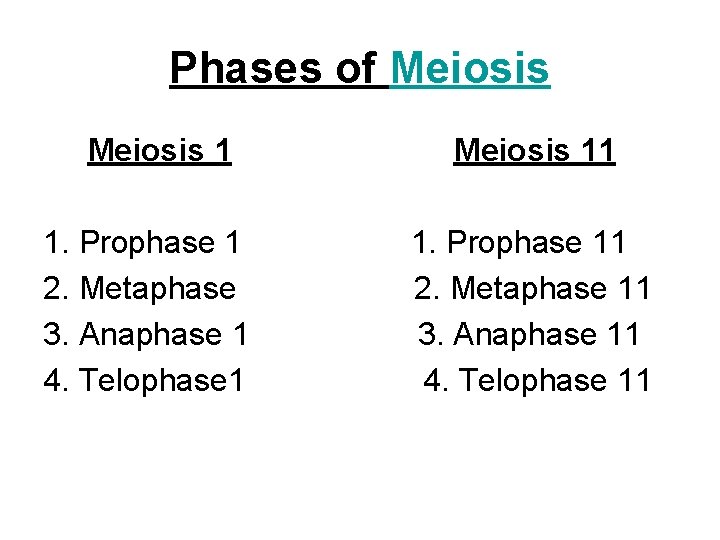
Phases of Meiosis 1 1. Prophase 1 2. Metaphase 3. Anaphase 1 4. Telophase 1 Meiosis 11 1. Prophase 11 2. Metaphase 11 3. Anaphase 11 4. Telophase 11
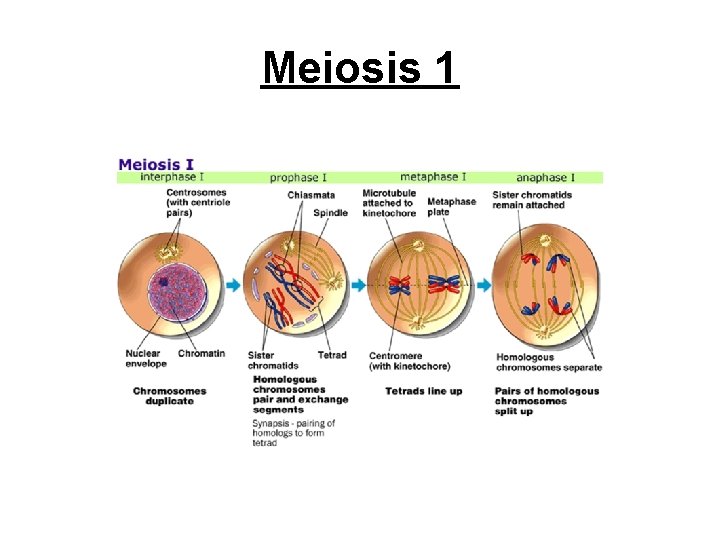
Meiosis 1
Prophase 1: nuclear membrane begins to disappear; centrioles appear; chromosomes are duplicated; spindle fibers start to form. Metaphase 1: pairs of duplicated chromosomes line up in center of cell; centromeres attach to one spindle fiber. Anaphase 1: two pair of chromatids of each similar pair move to opposite ends of cell. Telophase 1: the cytoplasm divides; 2 new cells form having one duplicated chromosome from each similar pair.
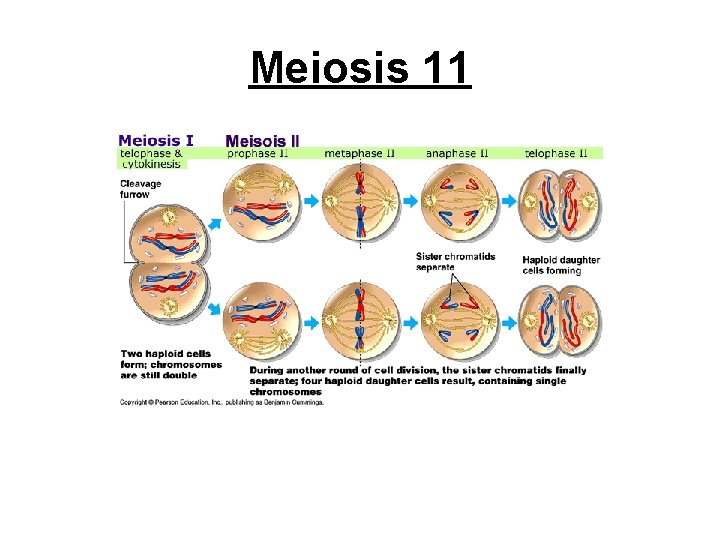
Meiosis 11
Prophase 2: the duplicated chromosomes and spindle fibers re-appear in each cell; Metaphase 2: duplicated chromosomes move to the center of the cell; each centromere attaches to 2 spindle fibers Anaphase 2: centromere divides; chromatids separate and move to opposite sides of cell each chromatid is now an individual chromosome. Telophase 2: spindle fibers disappear; nuclear membrane re-forms and the cytoplasm has divided
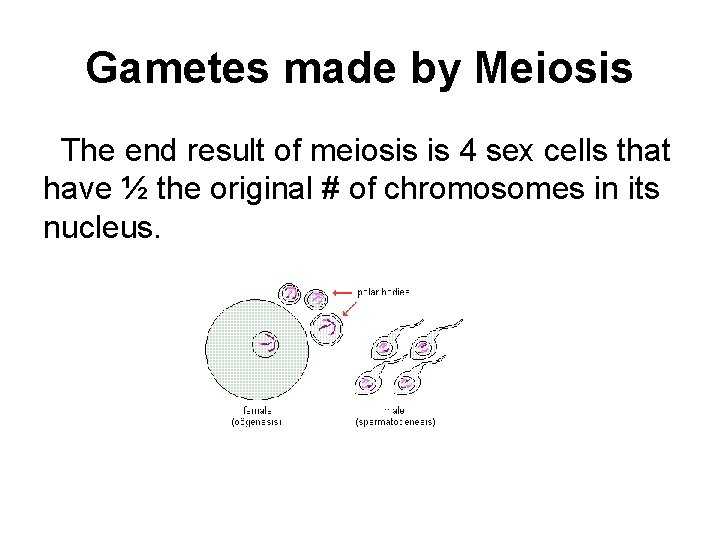
Gametes made by Meiosis The end result of meiosis is 4 sex cells that have ½ the original # of chromosomes in its nucleus.
Mistakes in Meiosis 1. Too many chromosomes Organisms die 2. too few chromosomes Organisms do not grow normally
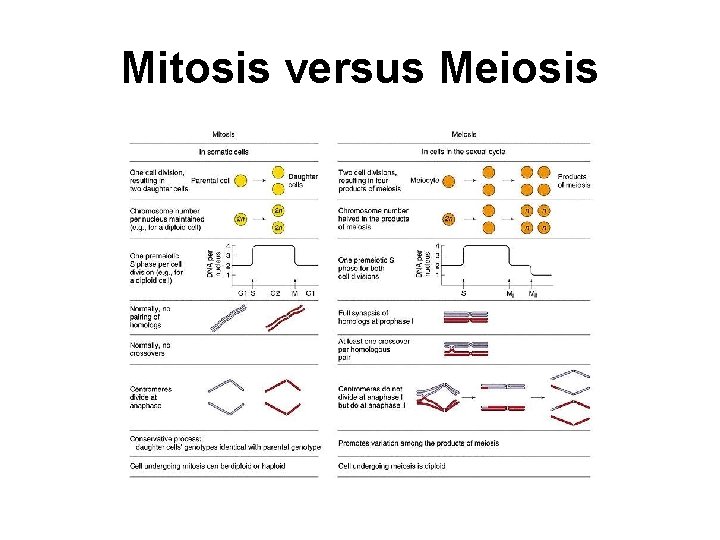
Mitosis versus Meiosis
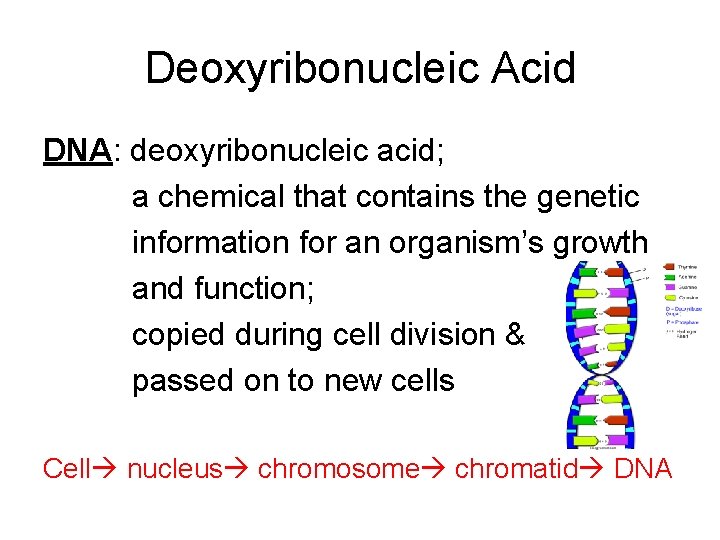
Deoxyribonucleic Acid DNA: deoxyribonucleic acid; a chemical that contains the genetic information for an organism’s growth and function; copied during cell division & passed on to new cells Cell nucleus chromosome chromatid DNA
Discovery of DNA Rosalind Franklin: 1952 used x-ray crystallography to find that DNA is made of two strands of molecules arranged in a spiral James Watson & Francis Crick: 1953 made a model of DNA and proved that it existed as a double helix
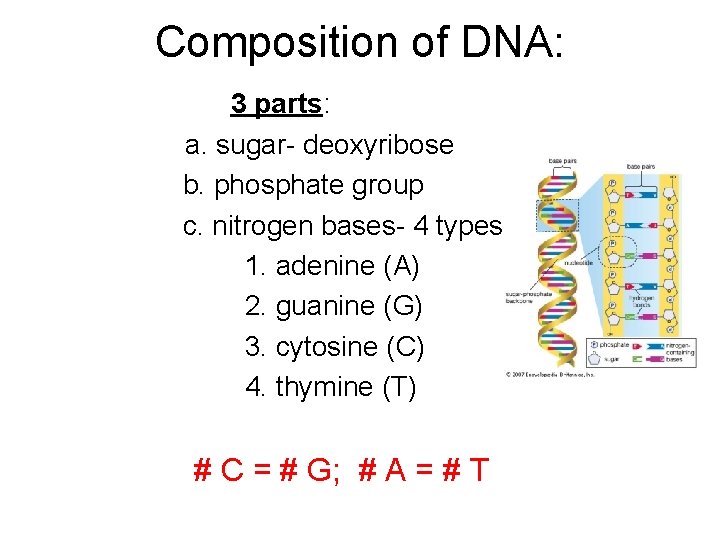
Composition of DNA: 3 parts: a. sugar- deoxyribose b. phosphate group c. nitrogen bases- 4 types: 1. adenine (A) 2. guanine (G) 3. cytosine (C) 4. thymine (T) # C = # G; # A = # T
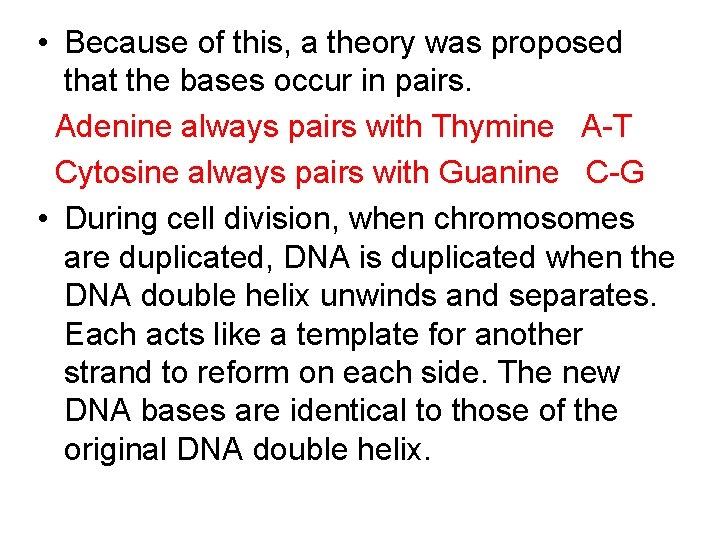
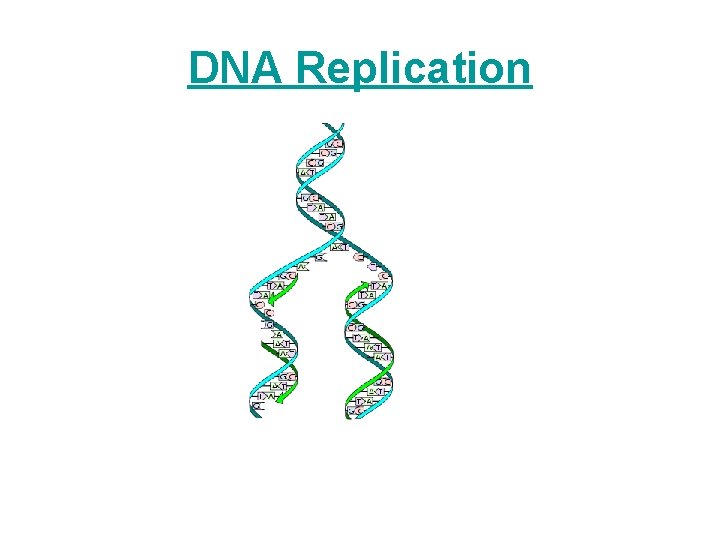
• Because of this, a theory was proposed that the bases occur in pairs. Adenine always pairs with Thymine A-T Cytosine always pairs with Guanine C-G • During cell division, when chromosomes are duplicated, DNA is duplicated when the DNA double helix unwinds and separates. Each acts like a template for another strand to reform on each side. The new DNA bases are identical to those of the original DNA double helix.
DNA Replication
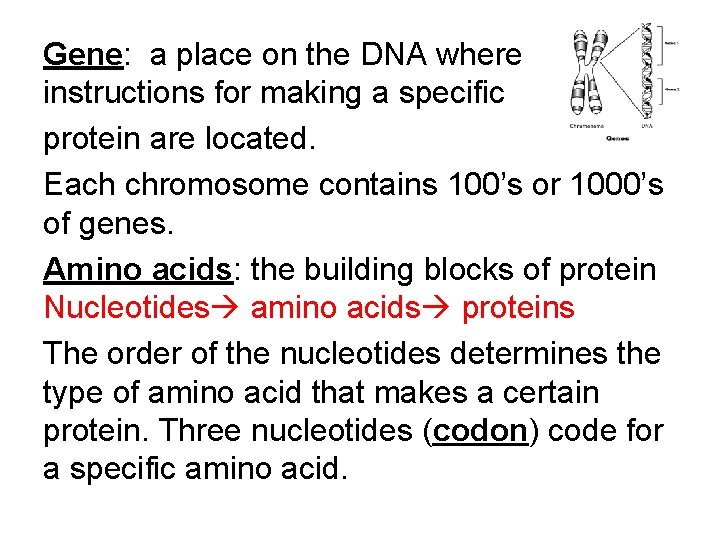
Gene: a place on the DNA where instructions for making a specific protein are located. Each chromosome contains 100’s or 1000’s of genes. Amino acids: the building blocks of protein Nucleotides amino acids proteins The order of the nucleotides determines the type of amino acid that makes a certain protein. Three nucleotides (codon) code for a specific amino acid.
How are proteins made? Genes are in the nucleus of a cell. Proteins are made on ribosomes in the cytoplasm of the cell. The code from the genes in the nucleus needs to get to the ribosomes in the cytoplasm…. so…. RNA: a type of nucleic acid called ribonucleic acid.
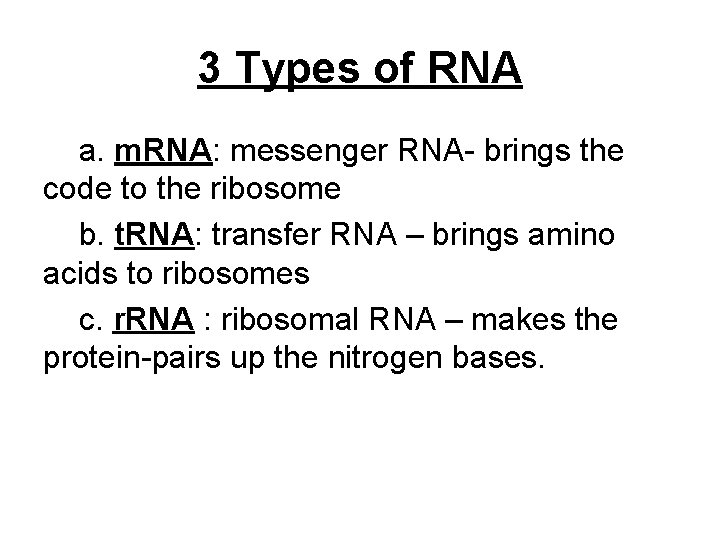
3 Types of RNA a. m. RNA: messenger RNA- brings the code to the ribosome b. t. RNA: transfer RNA – brings amino acids to ribosomes c. r. RNA : ribosomal RNA – makes the protein-pairs up the nitrogen bases.
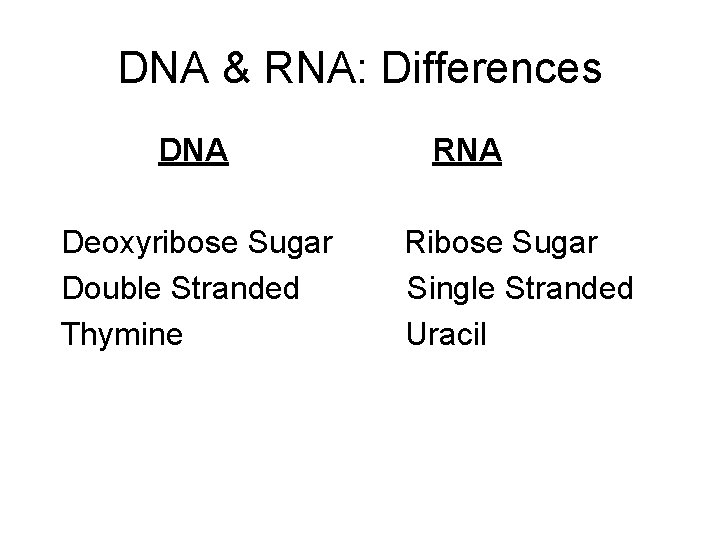
DNA & RNA: Differences DNA Deoxyribose Sugar Double Stranded Thymine RNA Ribose Sugar Single Stranded Uracil
Mutations: a permanent change in the DNA sequence of a gene or chromosome. Due to: a. DNA not being copied correctly b. X-rays c. Sunlight d. Chemicals-mutagens
Results of a mutation a. b. c. d. e. organism can’t grow organism can’t repair organism can’t maintain itself adds variety to a species causes death to an organism If the mutation is in a body cell, it might or might not be life threatening. If the mutation is in a sex cell, then all cells formed from that sex cell will have that mutation.