
CELLULAR REPRODUCTION Asexual Vs Sexual Reproduction ASEXUAL REPRODUCTION
- Slides: 17
CELLULAR REPRODUCTION Asexual Vs Sexual Reproduction
ASEXUAL REPRODUCTION • Single parent passes complete copy of genetic information to its offspring • Identical to parent • Four types • Binary fission • Fragmentation • Budding • Parthenogenesis
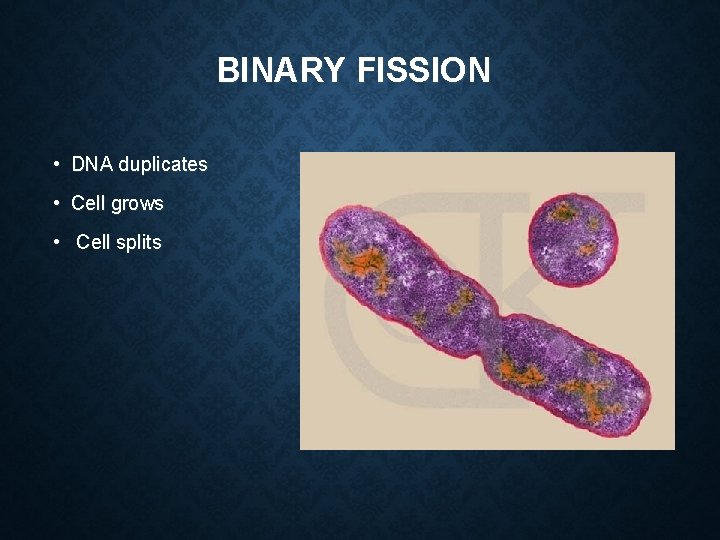
BINARY FISSION • DNA duplicates • Cell grows • Cell splits
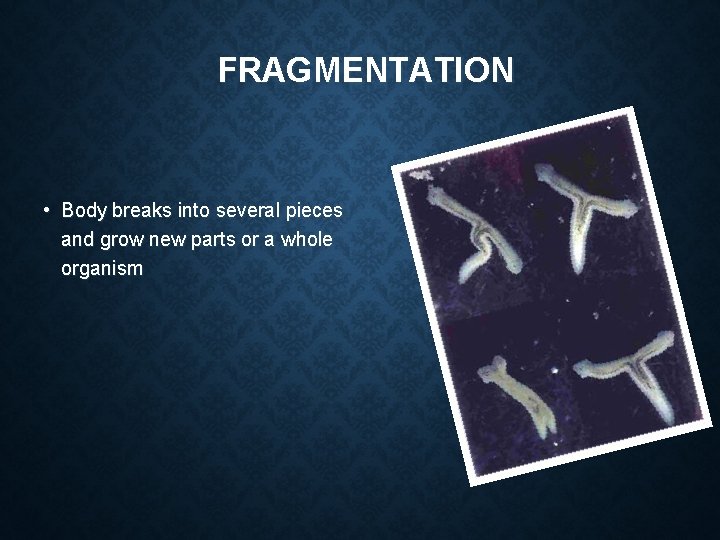
FRAGMENTATION • Body breaks into several pieces and grow new parts or a whole organism
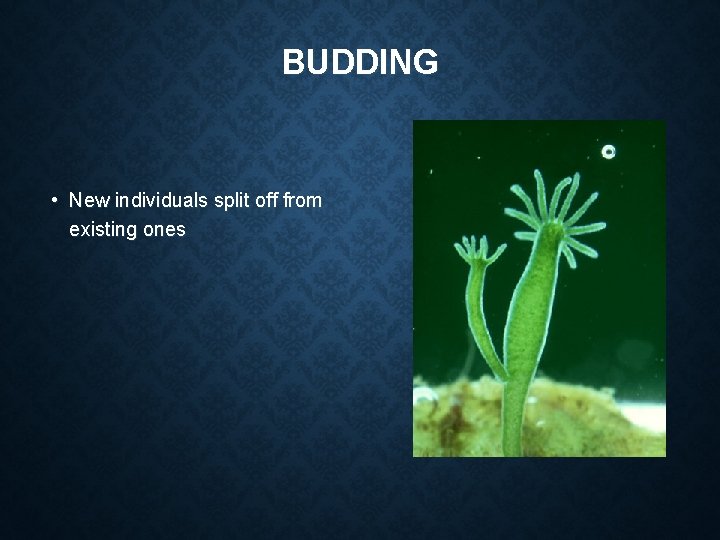
BUDDING • New individuals split off from existing ones
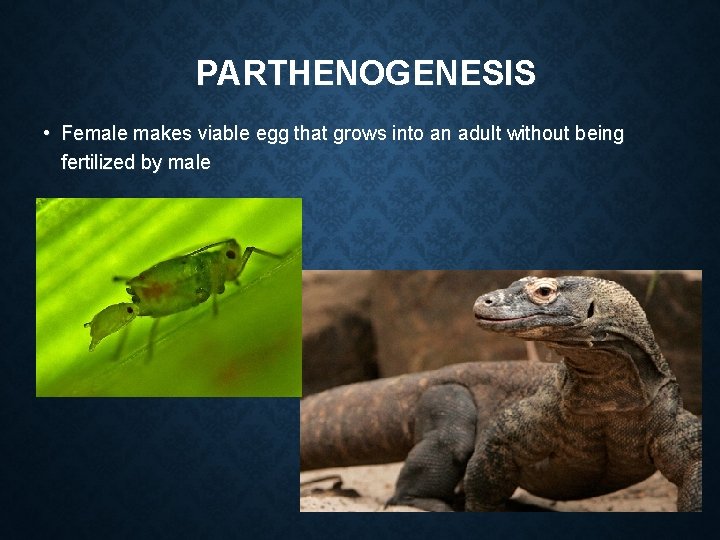
PARTHENOGENESIS • Female makes viable egg that grows into an adult without being fertilized by male
SEXUAL REPRODUCTION • Genetic material given to offspring by two individuals • Offspring are genetically different from parents • Gametes • Reproductive cell (sperm or egg) • Division of germ cell • Haploid cells created through meiosis • Union produces zygote
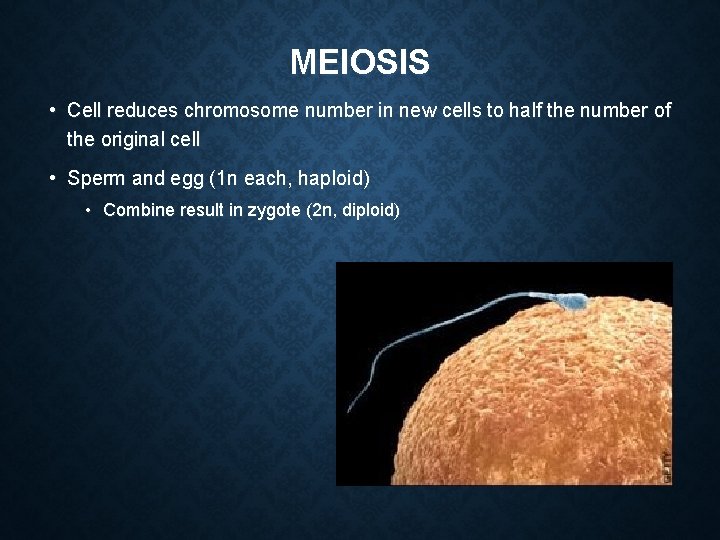
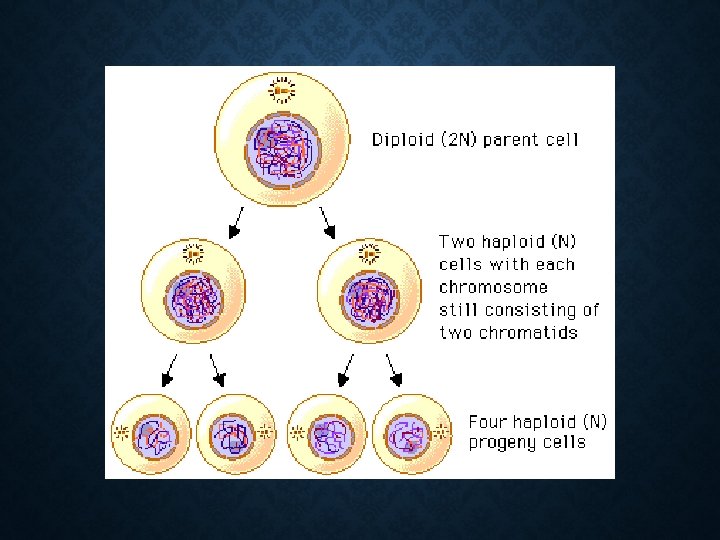
MEIOSIS • Cell reduces chromosome number in new cells to half the number of the original cell • Sperm and egg (1 n each, haploid) • Combine result in zygote (2 n, diploid)
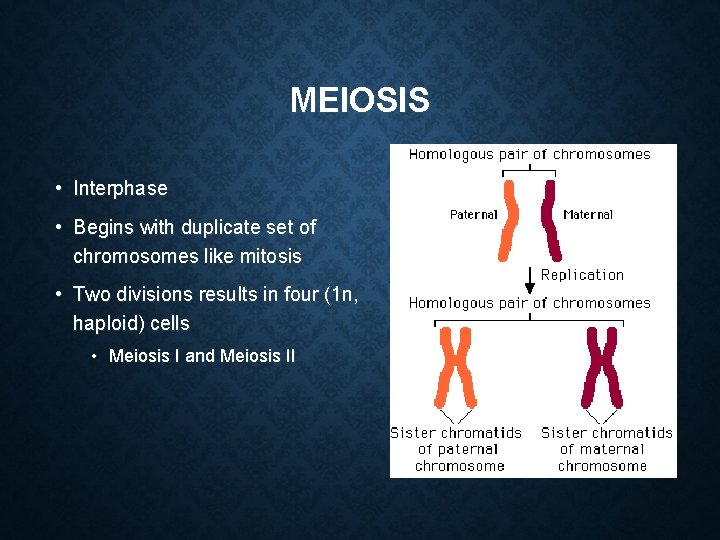
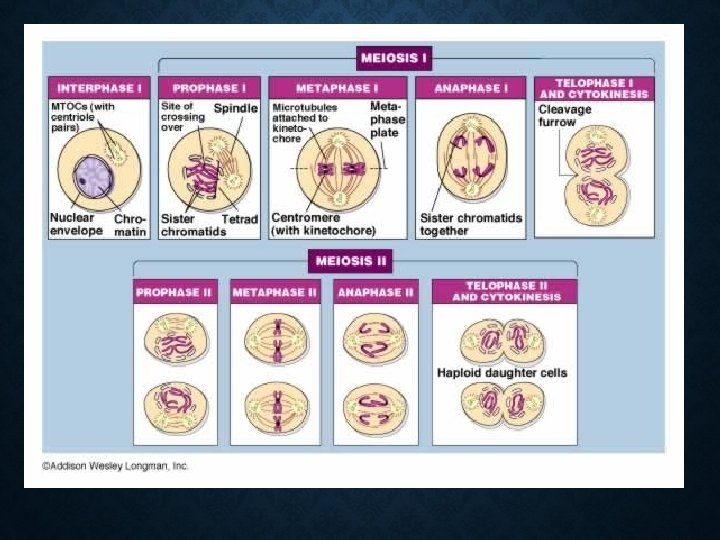
MEIOSIS • Interphase • Begins with duplicate set of chromosomes like mitosis • Two divisions results in four (1 n, haploid) cells • Meiosis I and Meiosis II
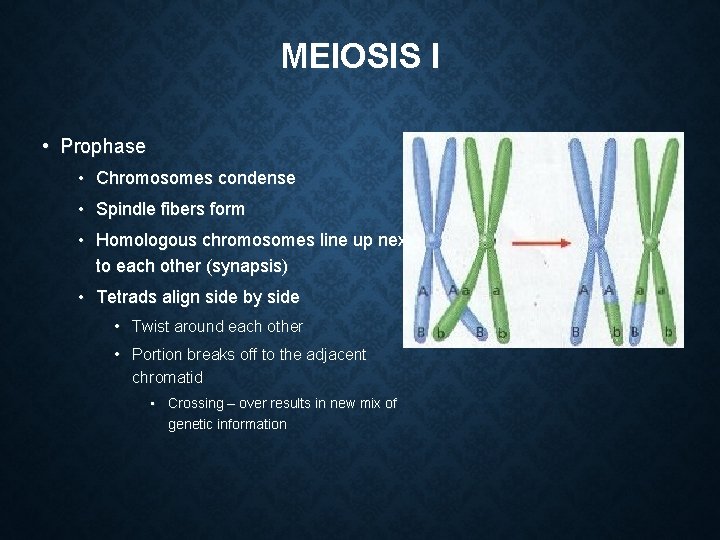
MEIOSIS I • Prophase • Chromosomes condense • Spindle fibers form • Homologous chromosomes line up next to each other (synapsis) • Tetrads align side by side • Twist around each other • Portion breaks off to the adjacent chromatid • Crossing – over results in new mix of genetic information
MEIOSIS I • Similar to mitosis • Metaphase I • Anaphase I • Independent assortment • Telophase I • Results in two cells with a chromosome from each pair of homologous chromosomes
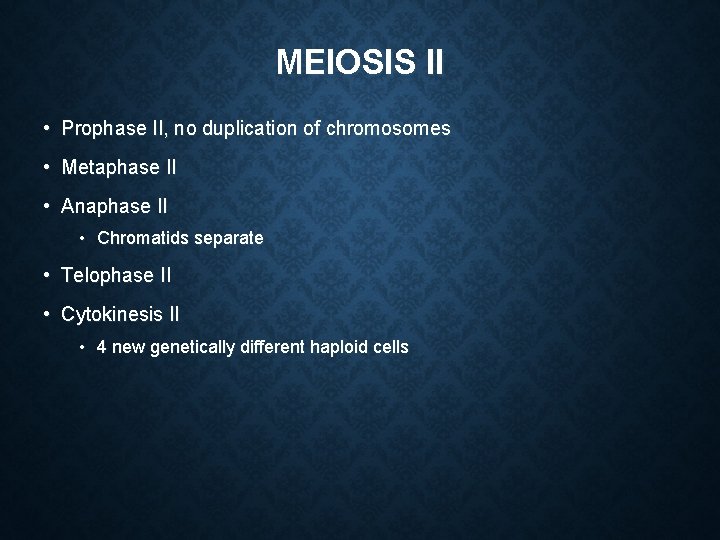
MEIOSIS II • Prophase II, no duplication of chromosomes • Metaphase II • Anaphase II • Chromatids separate • Telophase II • Cytokinesis II • 4 new genetically different haploid cells
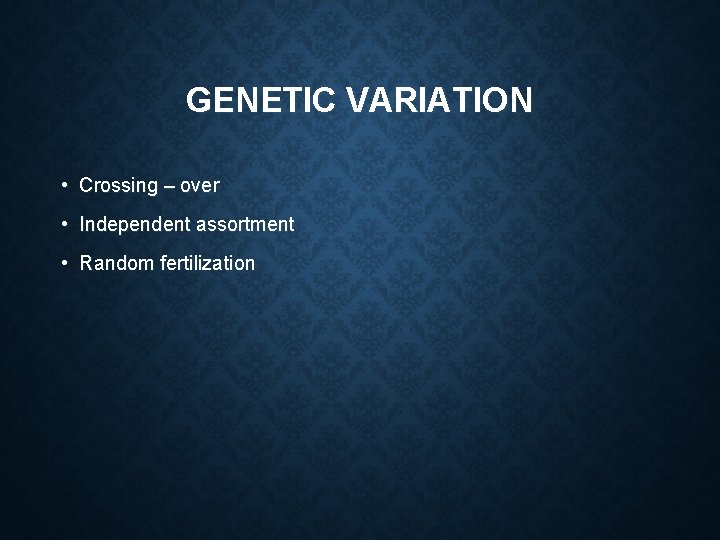
GENETIC VARIATION • Crossing – over • Independent assortment • Random fertilization
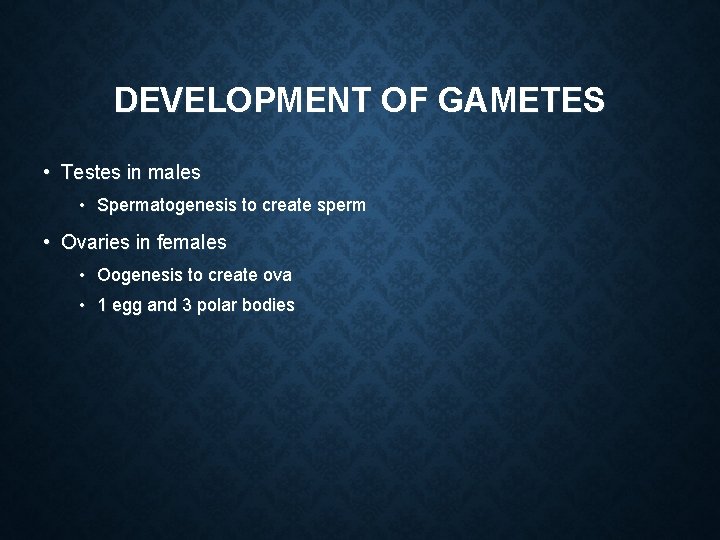
DEVELOPMENT OF GAMETES • Testes in males • Spermatogenesis to create sperm • Ovaries in females • Oogenesis to create ova • 1 egg and 3 polar bodies
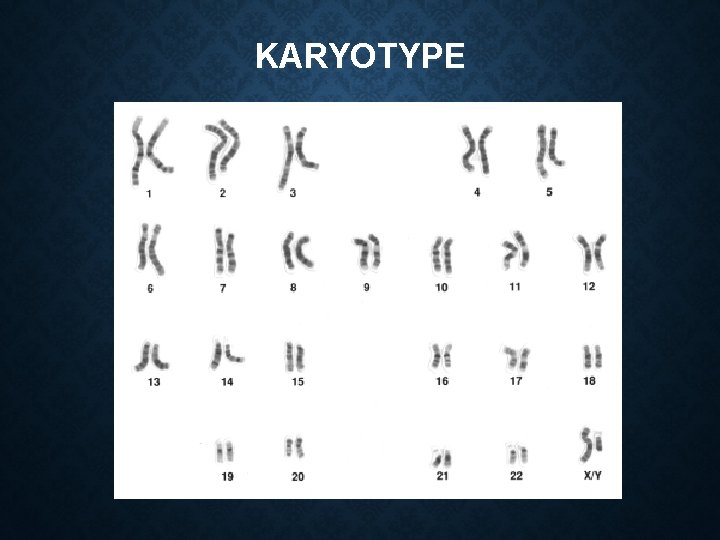
KARYOTYPE