
Cellular Photosynthesis vs Respiration Objective Students will learn
Cellular Photosynthesis vs. Respiration
Objective Students will learn how plants and animals make and use energy by comparing photosynthesis and cellular respiration in order to recognize how the two processes are dependent on one another. n
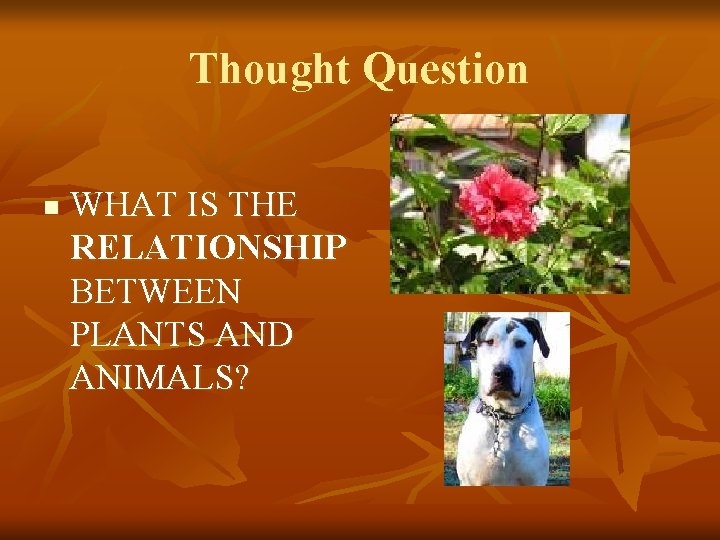
Thought Question n WHAT IS THE RELATIONSHIP BETWEEN PLANTS AND ANIMALS?
Creating your booklet 1. 2. 3. 4. 5. Start with the page that says “Booklet on: ” This page should be facing down on your desk This leaves the page with “ 1 A Photosynthesis” facing you. Find the page with “Cellular Respiration 1 B” and put it face down on top of the “ 1 A Photosynthesis” page Pick up both sheets and fold in so 3 A and 3 B are touching. Title the front Page
1 A Photosynthesis- Definition n Photosynthesis is the process in which green plants use the energy of sunlight to convert water and carbon dioxide into high-energy carbohydrates and oxygen.
1 B Cellular Respiration- Definition n Cellular respiration is the process that releases energy by breaking down glucose and other food molecules in the presence of oxygen.
Organism PLANTS n n n Photosynthesis occurs in all plants. List some examples of plants where you believe photosynthesis occurs. Why doesn’t photosynthesis occurs in animals? ANIMALS n n Cellular respiration occurs in all plants and animals. Why do plants need to do cell respiration?
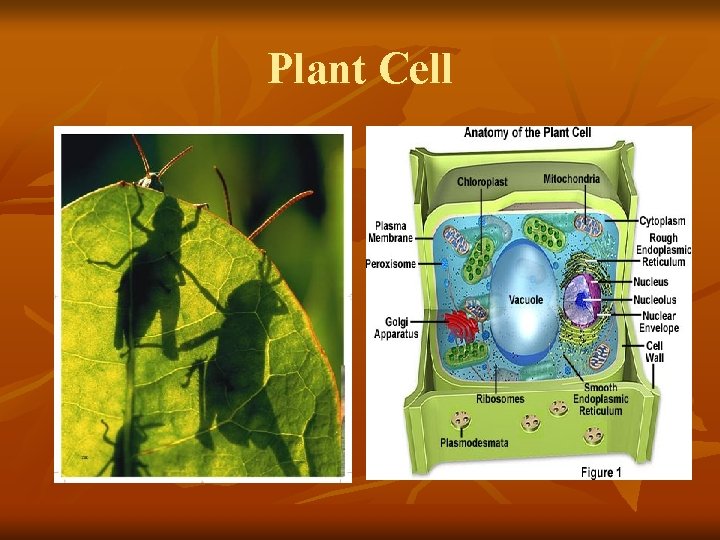
Plant Cell
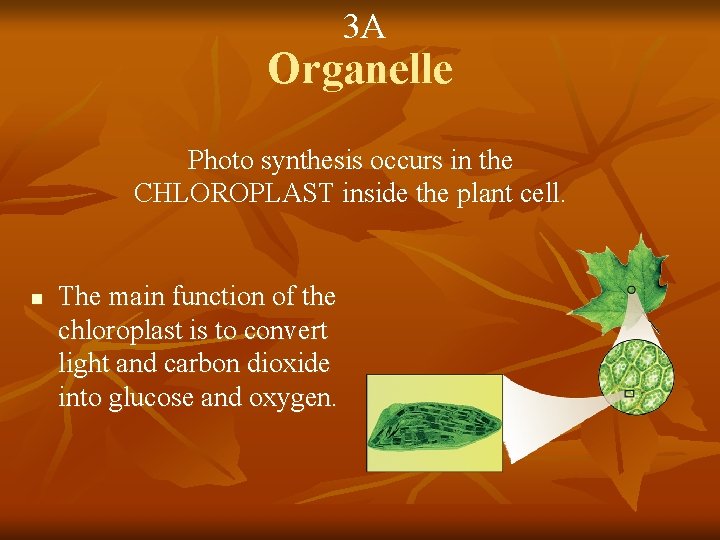
3 A Organelle Photo synthesis occurs in the CHLOROPLAST inside the plant cell. n The main function of the chloroplast is to convert light and carbon dioxide into glucose and oxygen.
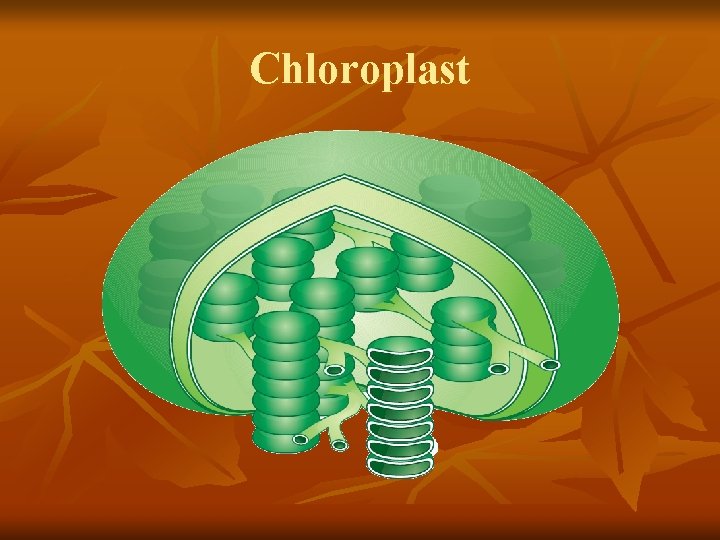
Chloroplast
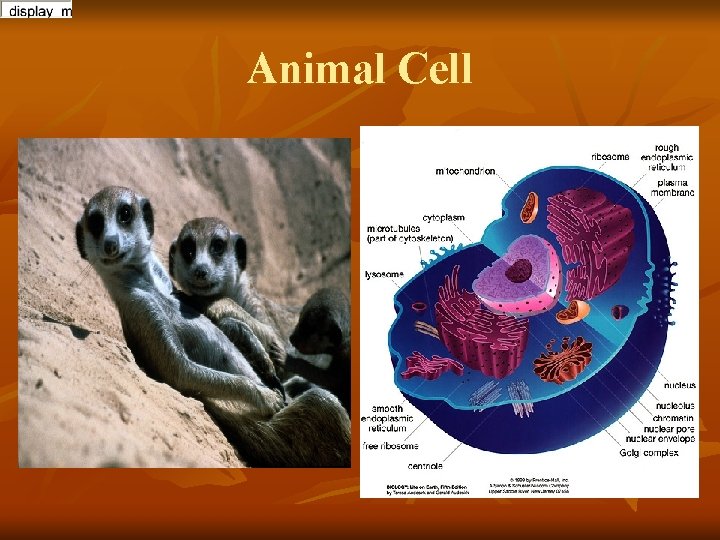
Animal Cell
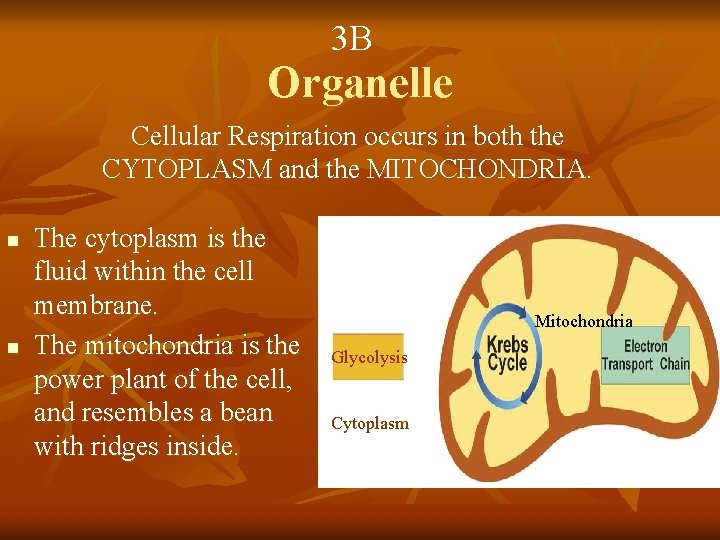
3 B Organelle Cellular Respiration occurs in both the CYTOPLASM and the MITOCHONDRIA. n n The cytoplasm is the fluid within the cell membrane. The mitochondria is the power plant of the cell, and resembles a bean with ridges inside. Mitochondria Glycolysis Cytoplasm
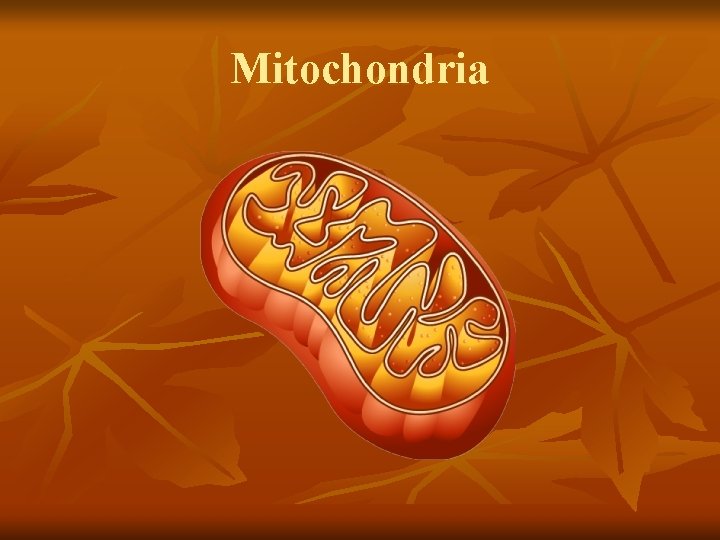
Mitochondria
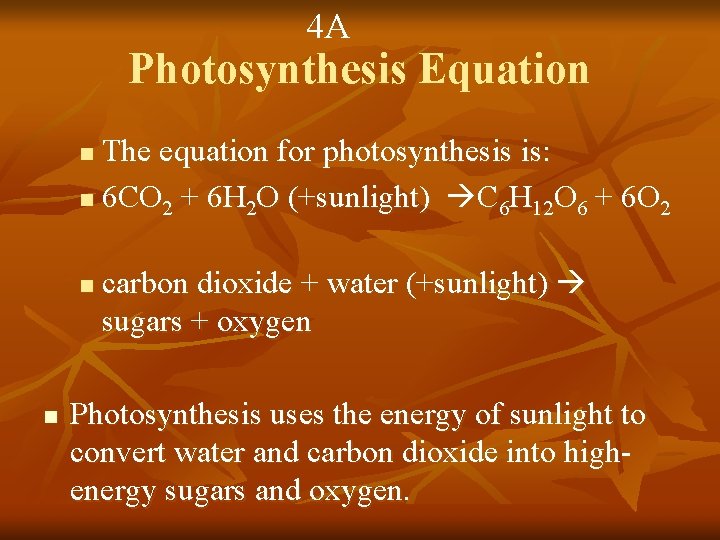
4 A Photosynthesis Equation The equation for photosynthesis is: n 6 CO 2 + 6 H 2 O (+sunlight) C 6 H 12 O 6 + 6 O 2 n n n carbon dioxide + water (+sunlight) sugars + oxygen Photosynthesis uses the energy of sunlight to convert water and carbon dioxide into highenergy sugars and oxygen.
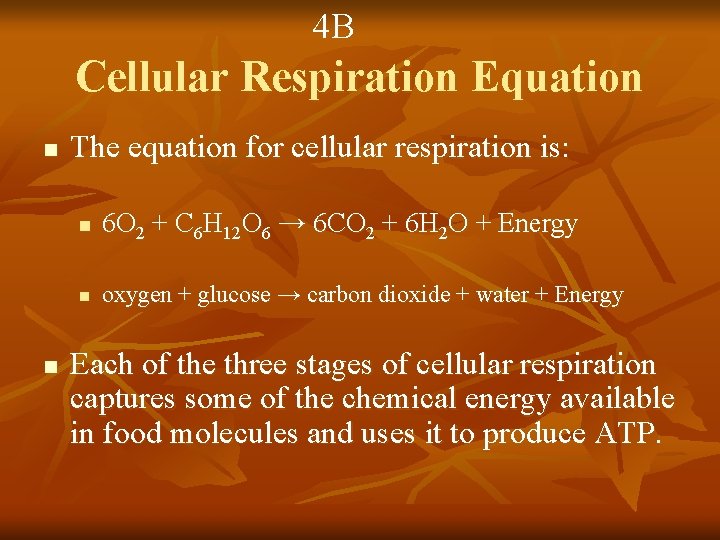
4 B Cellular Respiration Equation n n The equation for cellular respiration is: n 6 O 2 + C 6 H 12 O 6 → 6 CO 2 + 6 H 2 O + Energy n oxygen + glucose → carbon dioxide + water + Energy Each of the three stages of cellular respiration captures some of the chemical energy available in food molecules and uses it to produce ATP.
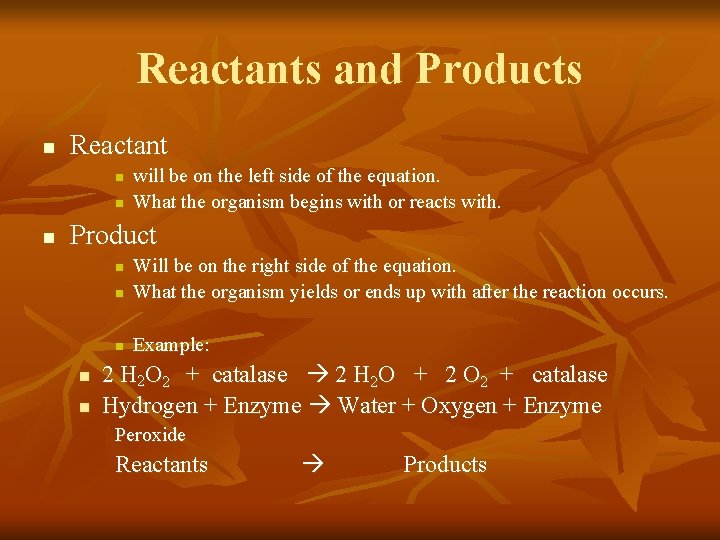
Reactants and Products n Reactant n n n will be on the left side of the equation. What the organism begins with or reacts with. Product n Will be on the right side of the equation. What the organism yields or ends up with after the reaction occurs. n Example: n n n 2 H 2 O 2 + catalase 2 H 2 O + 2 O 2 + catalase Hydrogen + Enzyme Water + Oxygen + Enzyme Peroxide Reactants Products
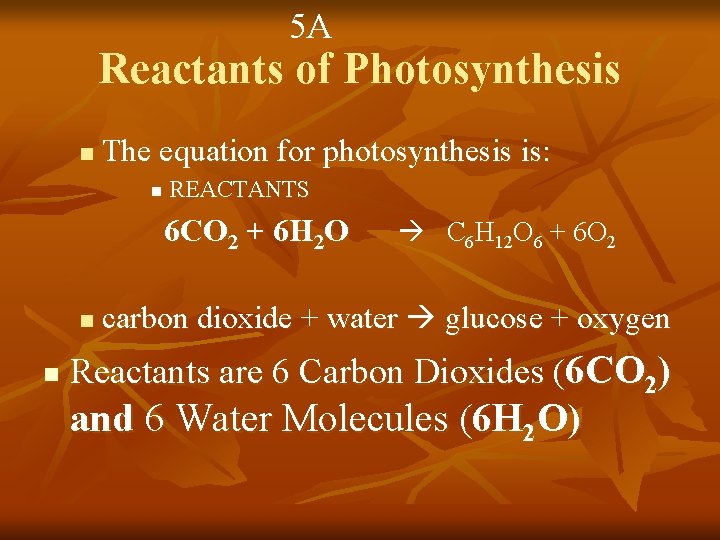
5 A Reactants of Photosynthesis n The equation for photosynthesis is: n REACTANTS 6 CO 2 + 6 H 2 O n n C 6 H 12 O 6 + 6 O 2 carbon dioxide + water glucose + oxygen Reactants are 6 Carbon Dioxides (6 CO 2) and 6 Water Molecules (6 H 2 O)
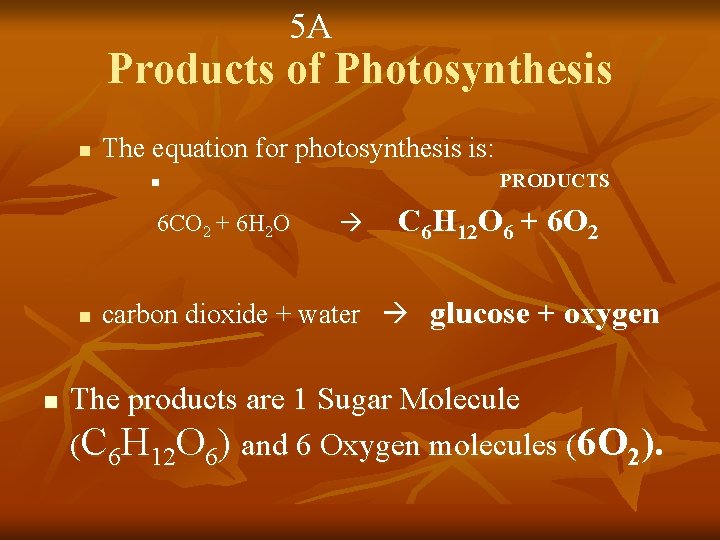
5 A Products of Photosynthesis n The equation for photosynthesis is: PRODUCTS n 6 CO 2 + 6 H 2 O n n C 6 H 12 O 6 + 6 O 2 carbon dioxide + water glucose + oxygen The products are 1 Sugar Molecule (C 6 H 12 O 6) and 6 Oxygen molecules (6 O 2).
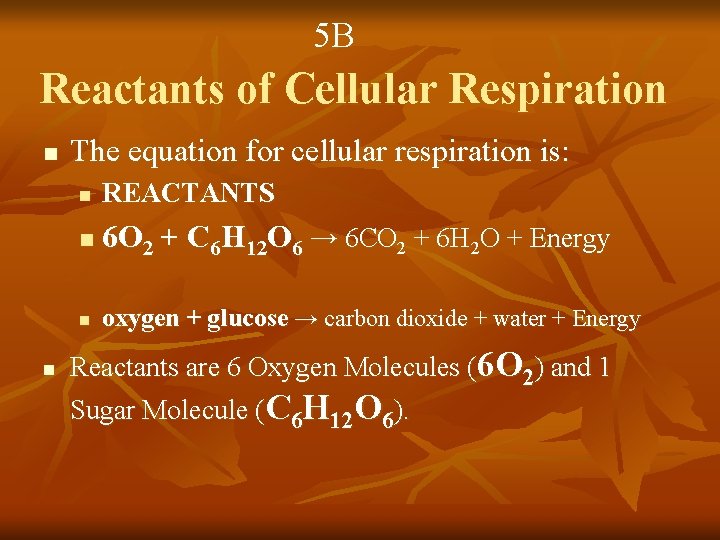
5 B Reactants of Cellular Respiration n n The equation for cellular respiration is: n REACTANTS n 6 O 2 + C 6 H 12 O 6 → 6 CO 2 + 6 H 2 O + Energy n oxygen + glucose → carbon dioxide + water + Energy Reactants are 6 Oxygen Molecules (6 O 2) and 1 Sugar Molecule (C 6 H 12 O 6).
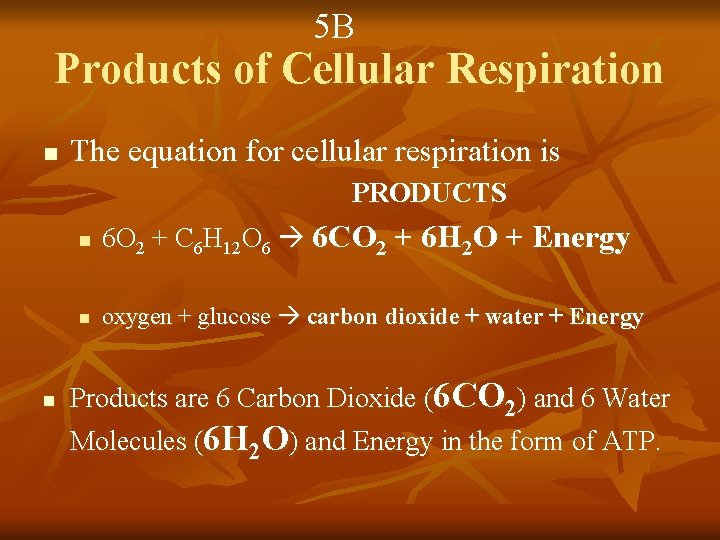
5 B Products of Cellular Respiration n The equation for cellular respiration is PRODUCTS n n 6 O 2 + C 6 H 12 O 6 6 CO 2 + 6 H 2 O + Energy n oxygen + glucose carbon dioxide + water + Energy Products are 6 Carbon Dioxide (6 CO 2) and 6 Water Molecules (6 H 2 O) and Energy in the form of ATP.
Peer Evaluation n n Switch with another student and have them evaluate your booklet. After you switch, be sure to write your name in the “Evaluator” spot and the student who’s flip book you are grading as the student. You should be able to answer all the questions on the Evaluation Sheet using your fellow student’s booklet. When you finish, hand the flip book back to the student and pass in your answer sheets.
6 AB Summary n WHAT IS THE RELATIONSHIP BETWEEN PLANTS AND ANIMALS? HOW DO WE KNOW?
Answer using complete sentences n n What is the relationship between plants and animals? How do you know? Be SURE to include: Vocabulary: Reactant, Product, Photosynthesis, Cell Respiration, Chloroplast, n What plants give to animals. n What animals give to plants. n
- Slides: 23