
Cellular Pathways that Harvest Chemical Energy Respiration Energy
- Slides: 43
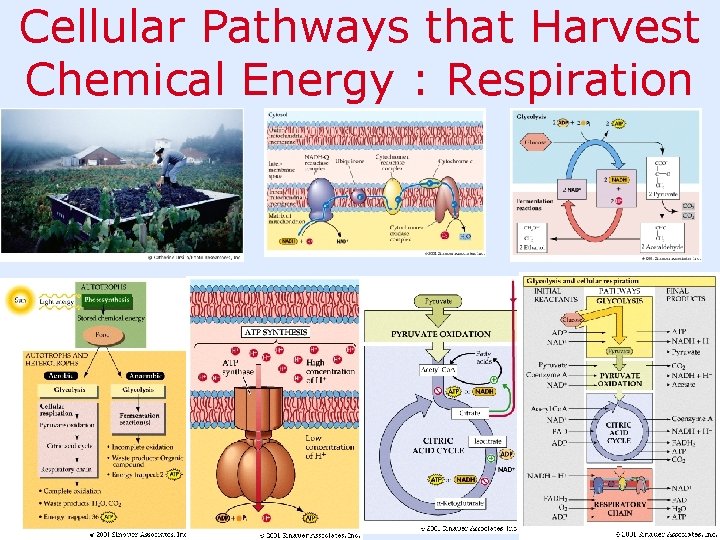
Cellular Pathways that Harvest Chemical Energy : Respiration
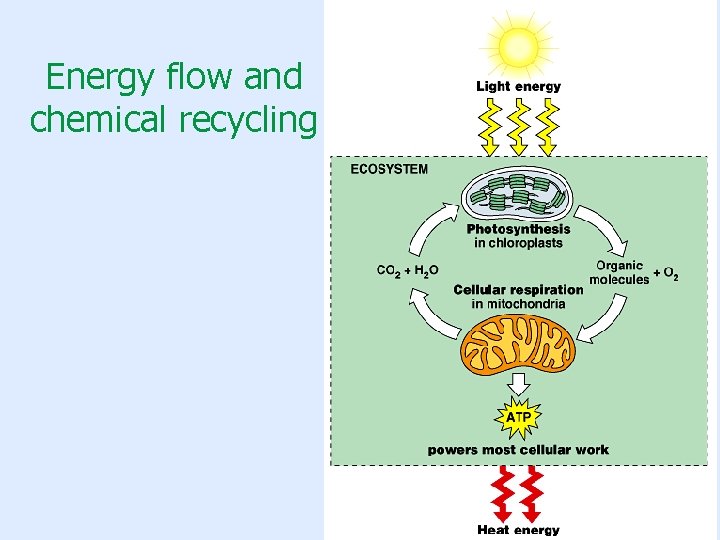
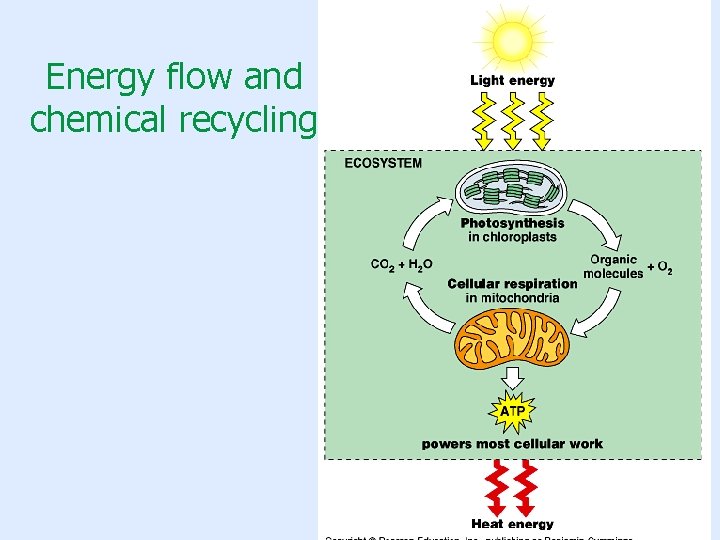
Energy flow and chemical recycling
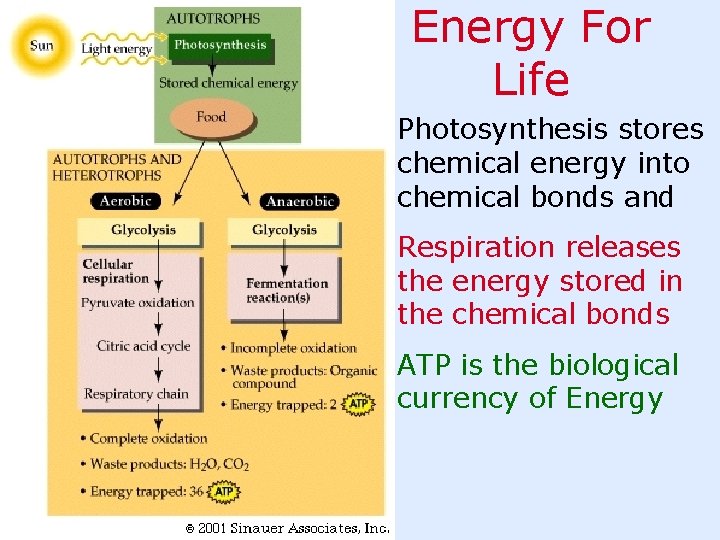
Energy For Life Photosynthesis stores chemical energy into chemical bonds and Respiration releases the energy stored in the chemical bonds ATP is the biological currency of Energy
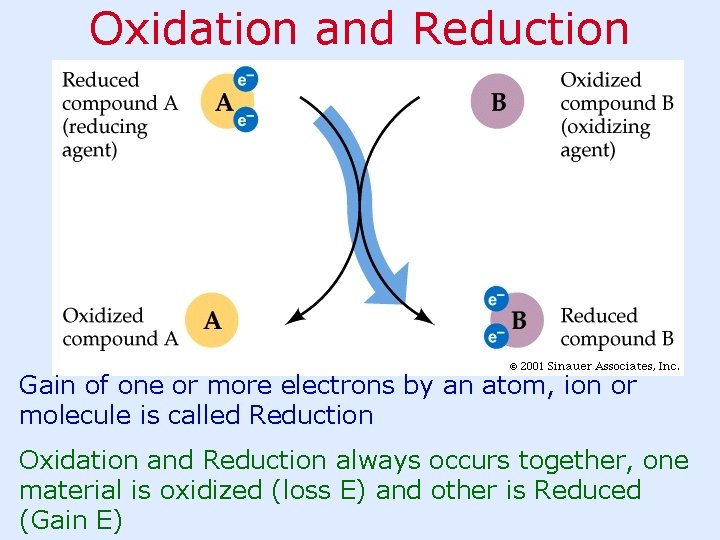
Oxidation and Reduction Gain of one or more electrons by an atom, ion or molecule is called Reduction Oxidation and Reduction always occurs together, one material is oxidized (loss E) and other is Reduced (Gain E)
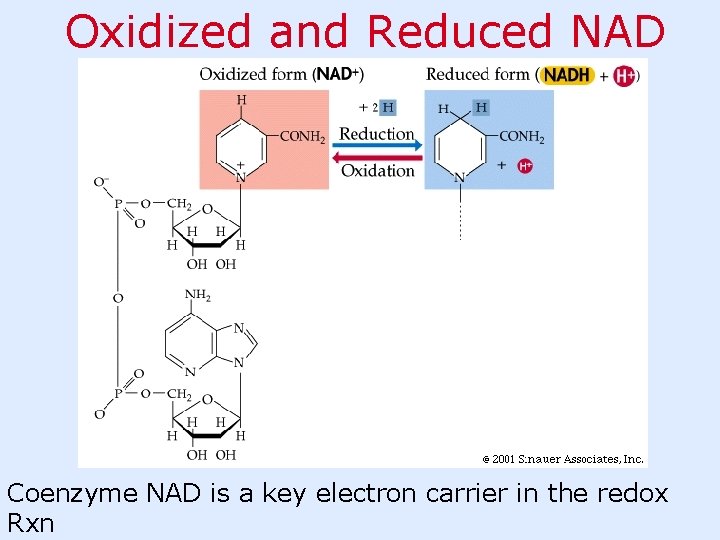
Oxidized and Reduced NAD Coenzyme NAD is a key electron carrier in the redox Rxn
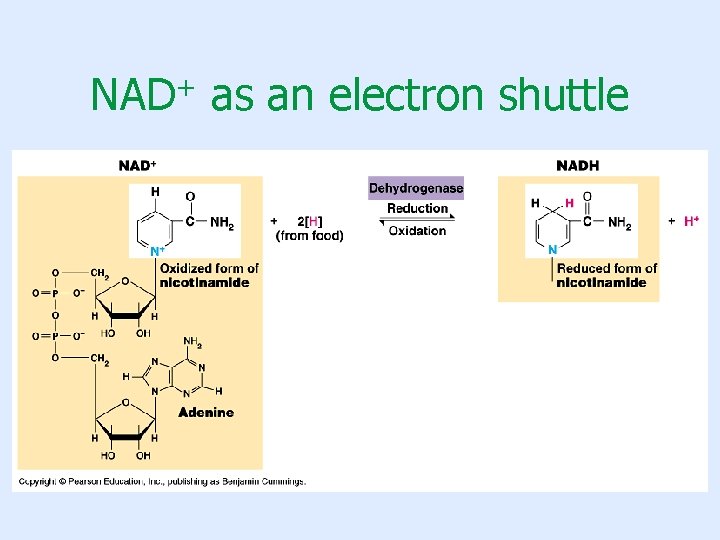
NAD+ as an electron shuttle
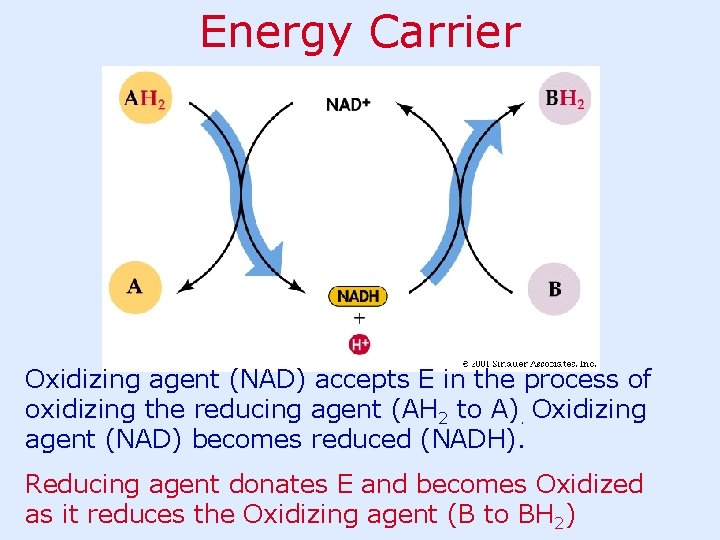
Energy Carrier Oxidizing agent (NAD) accepts E in the process of oxidizing the reducing agent (AH 2 to A). Oxidizing agent (NAD) becomes reduced (NADH). Reducing agent donates E and becomes Oxidized as it reduces the Oxidizing agent (B to BH 2)
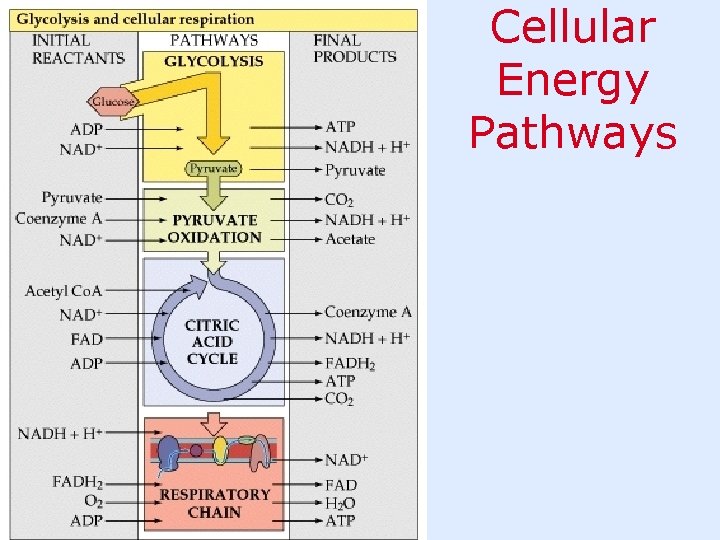
Cellular Energy Pathways
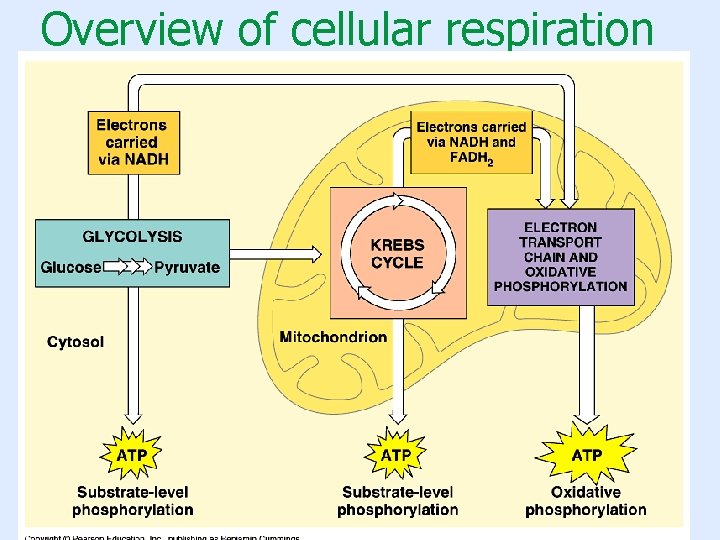
Overview of cellular respiration
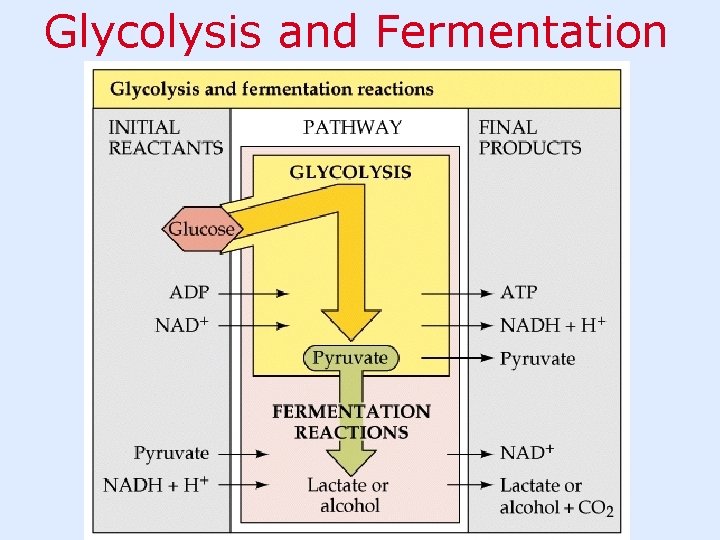
Glycolysis and Fermentation
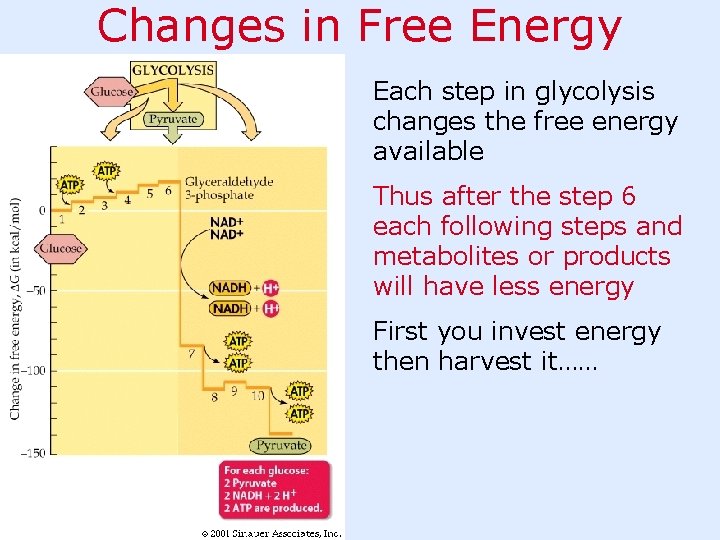
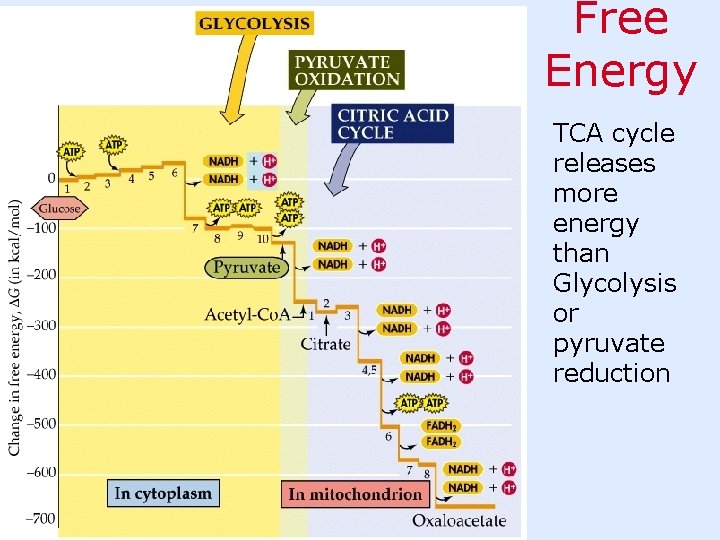
Changes in Free Energy Each step in glycolysis changes the free energy available Thus after the step 6 each following steps and metabolites or products will have less energy First you invest energy then harvest it……
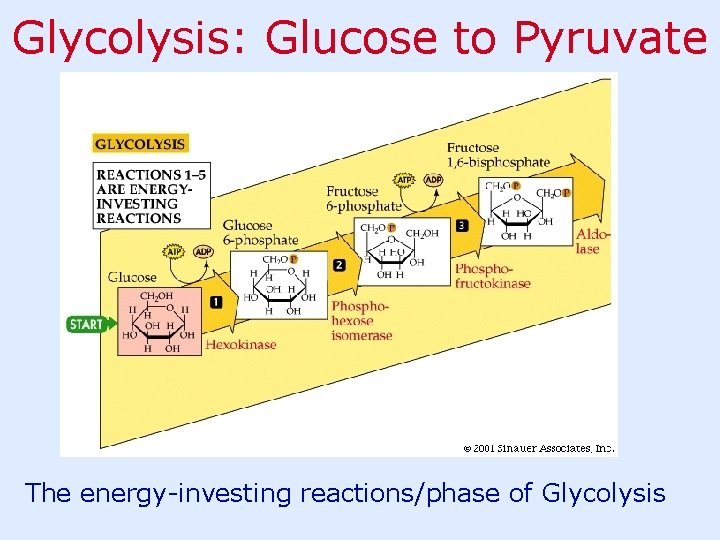
Glycolysis: Glucose to Pyruvate The energy-investing reactions/phase of Glycolysis
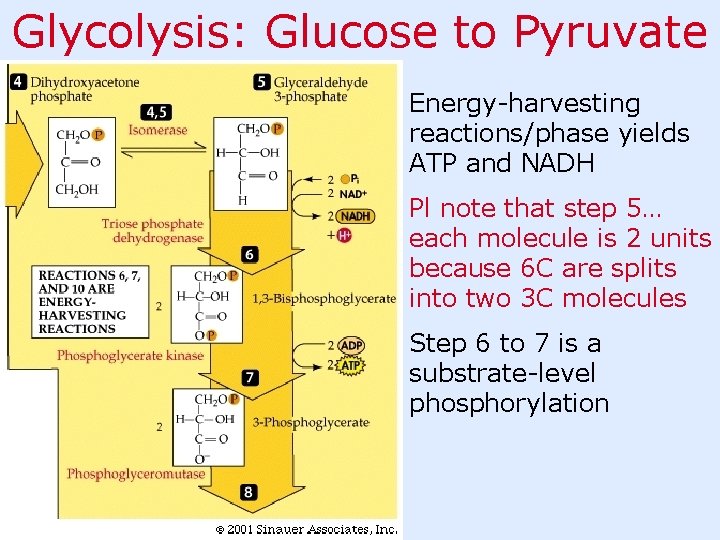
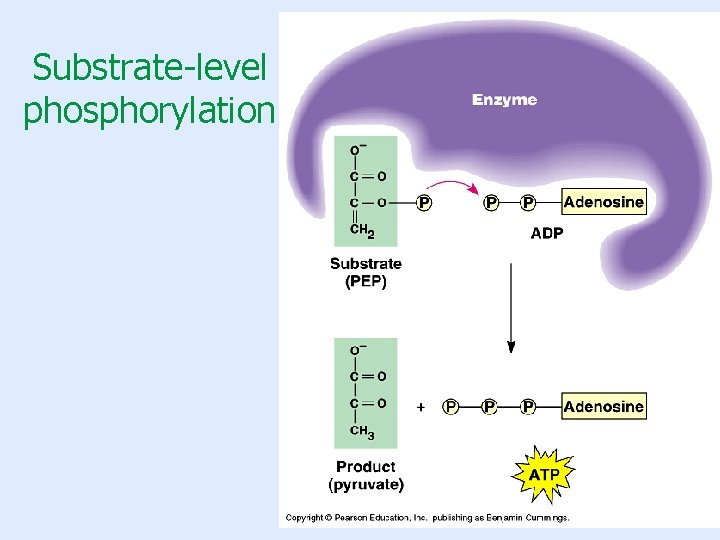
Glycolysis: Glucose to Pyruvate Energy-harvesting reactions/phase yields ATP and NADH Pl note that step 5… each molecule is 2 units because 6 C are splits into two 3 C molecules Step 6 to 7 is a substrate-level phosphorylation
Substrate-level phosphorylation
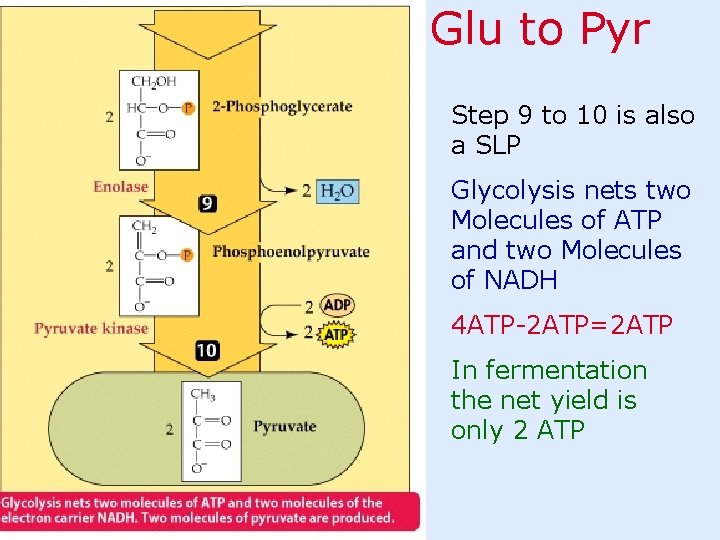
Glu to Pyr Step 9 to 10 is also a SLP Glycolysis nets two Molecules of ATP and two Molecules of NADH 4 ATP-2 ATP=2 ATP In fermentation the net yield is only 2 ATP
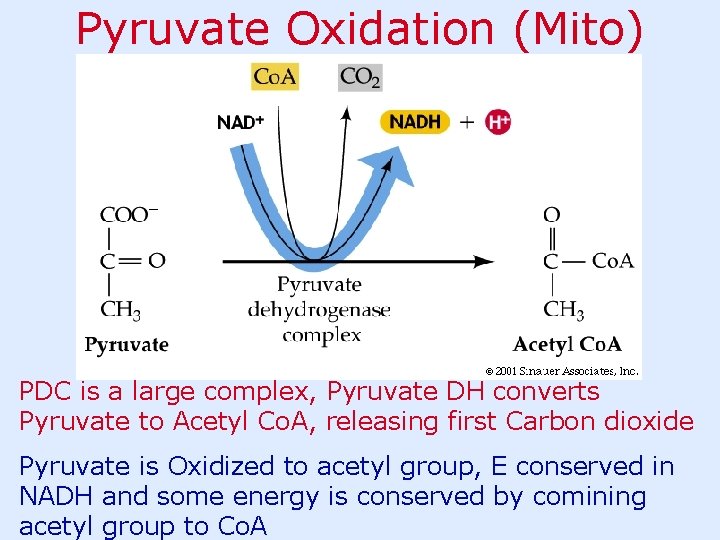
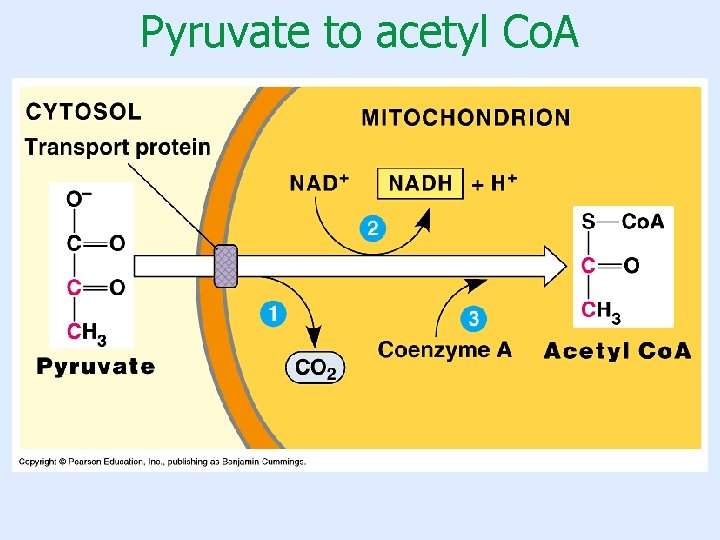
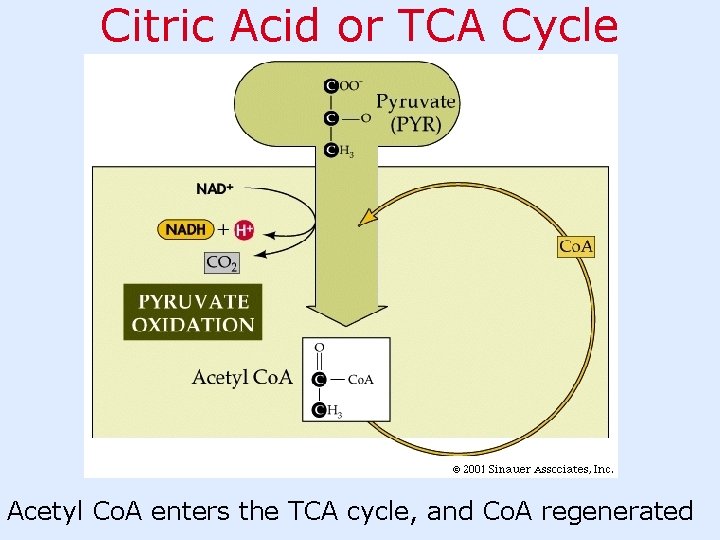
Pyruvate Oxidation (Mito) PDC is a large complex, Pyruvate DH converts Pyruvate to Acetyl Co. A, releasing first Carbon dioxide Pyruvate is Oxidized to acetyl group, E conserved in NADH and some energy is conserved by comining acetyl group to Co. A
Pyruvate to acetyl Co. A
Citric Acid or TCA Cycle Acetyl Co. A enters the TCA cycle, and Co. A regenerated
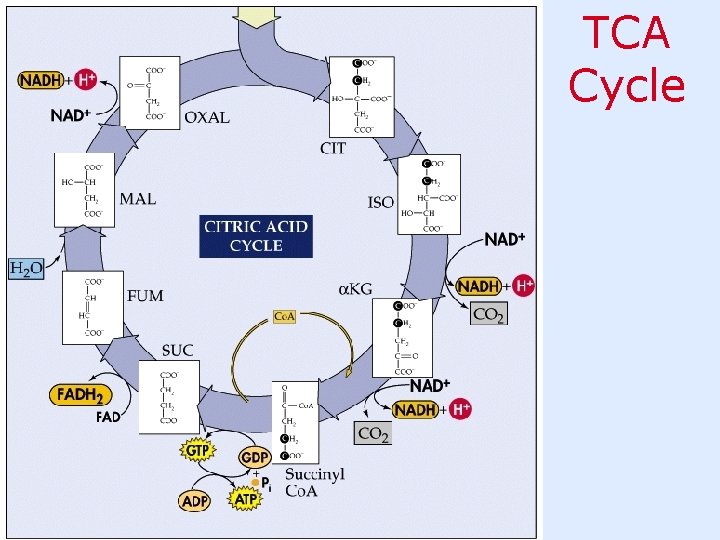
TCA Cycle
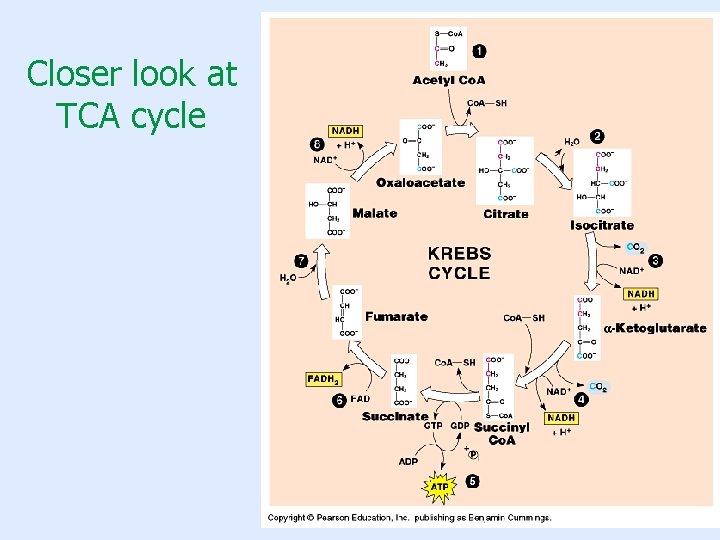
Closer look at TCA cycle
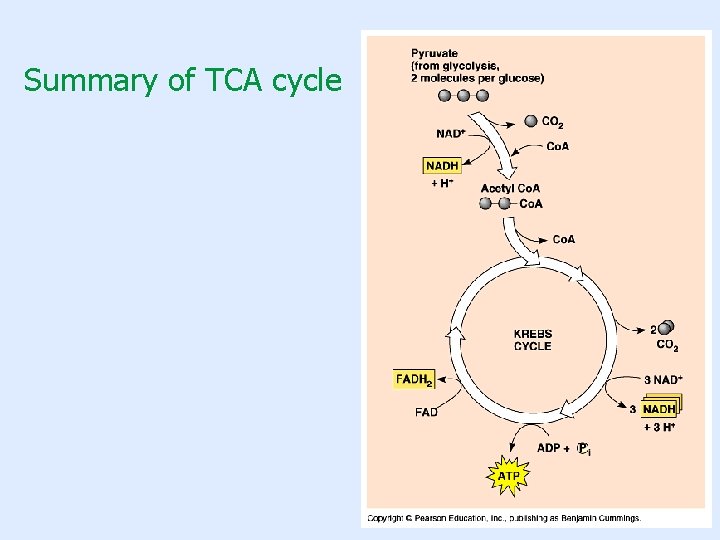
Summary of TCA cycle
Free Energy TCA cycle releases more energy than Glycolysis or pyruvate reduction
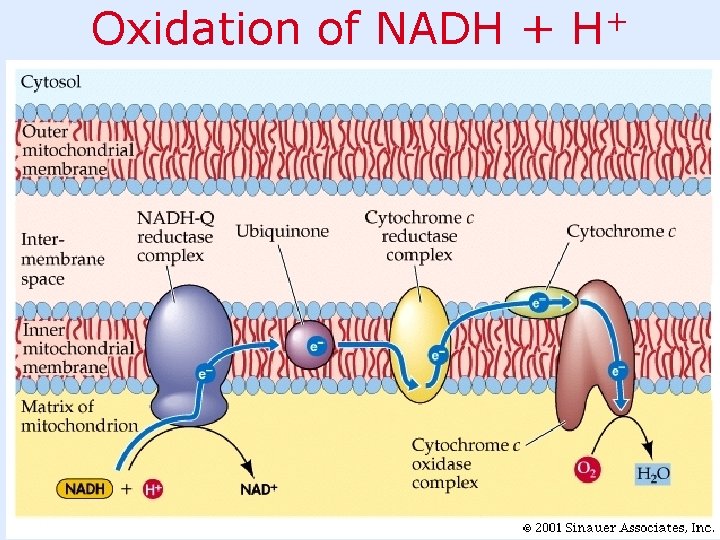
Oxidation of NADH + + H
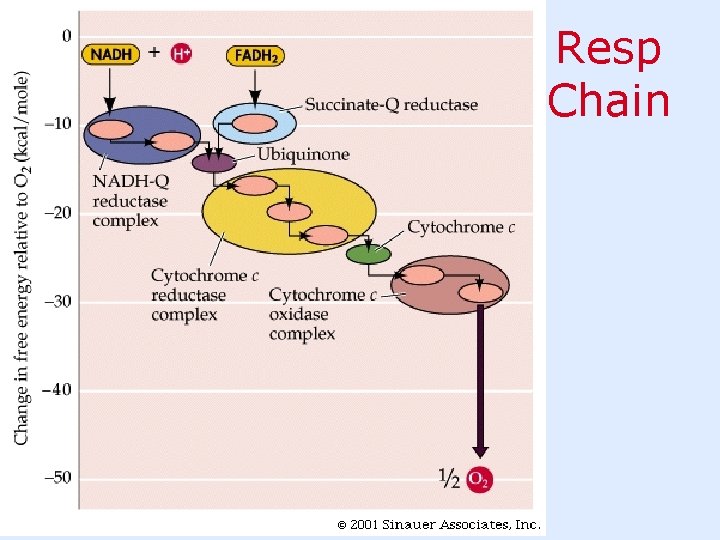
Resp Chain
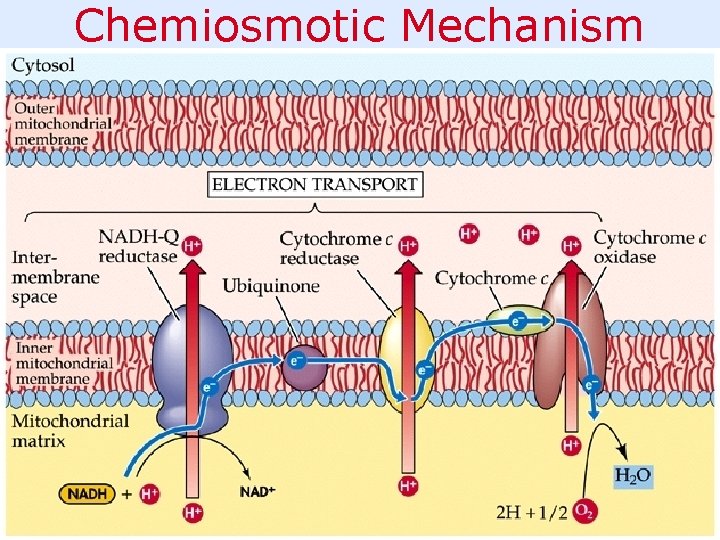
Chemiosmotic Mechanism
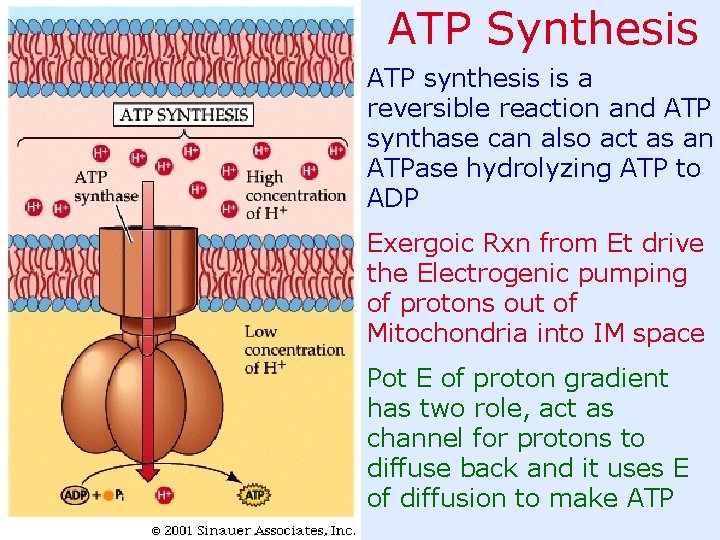
ATP Synthesis ATP synthesis is a reversible reaction and ATP synthase can also act as an ATPase hydrolyzing ATP to ADP Exergoic Rxn from Et drive the Electrogenic pumping of protons out of Mitochondria into IM space Pot E of proton gradient has two role, act as channel for protons to diffuse back and it uses E of diffusion to make ATP
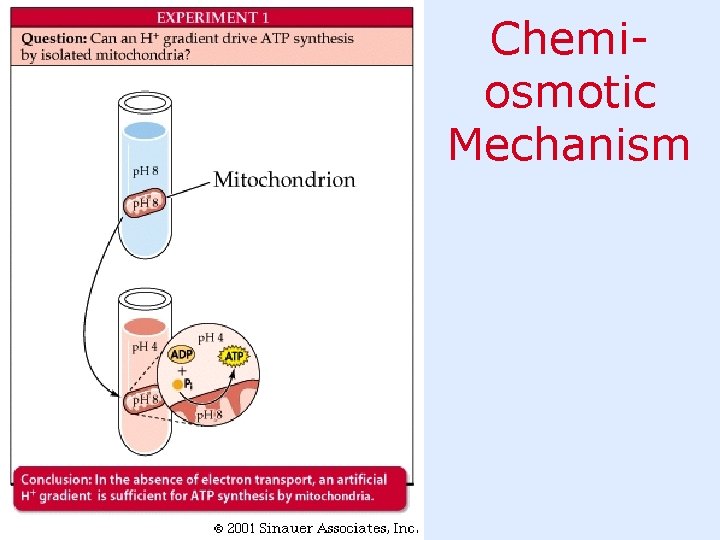
Chemiosmotic Mechanism
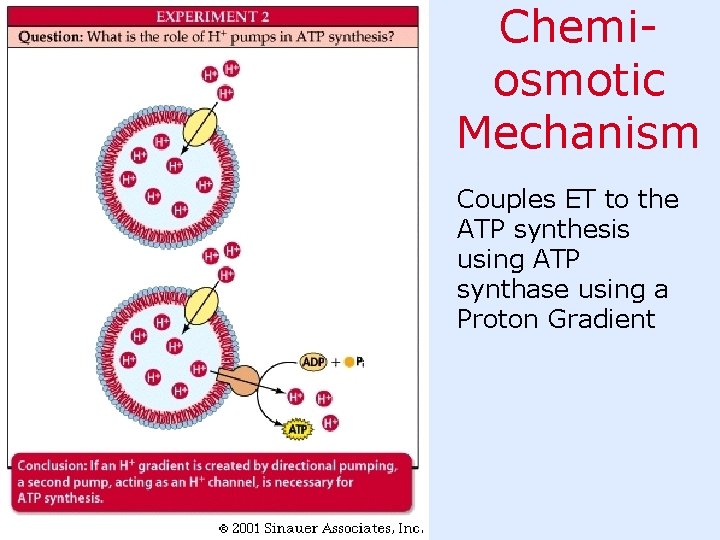
Chemiosmotic Mechanism Couples ET to the ATP synthesis using ATP synthase using a Proton Gradient
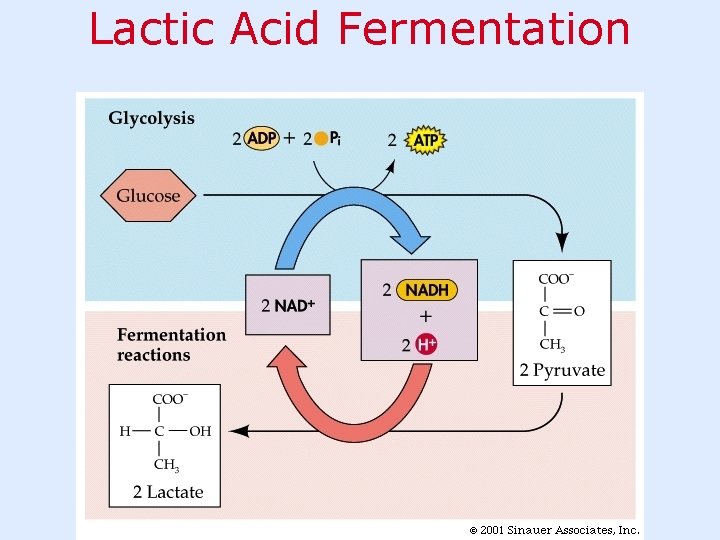
Lactic Acid Fermentation
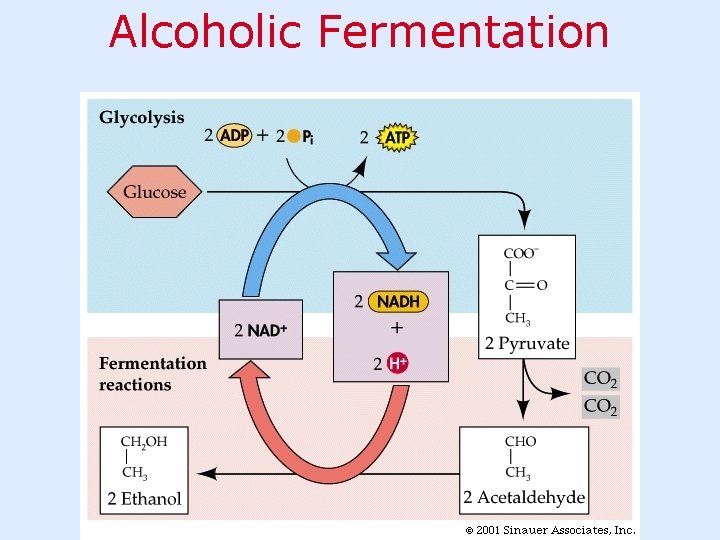
Alcoholic Fermentation
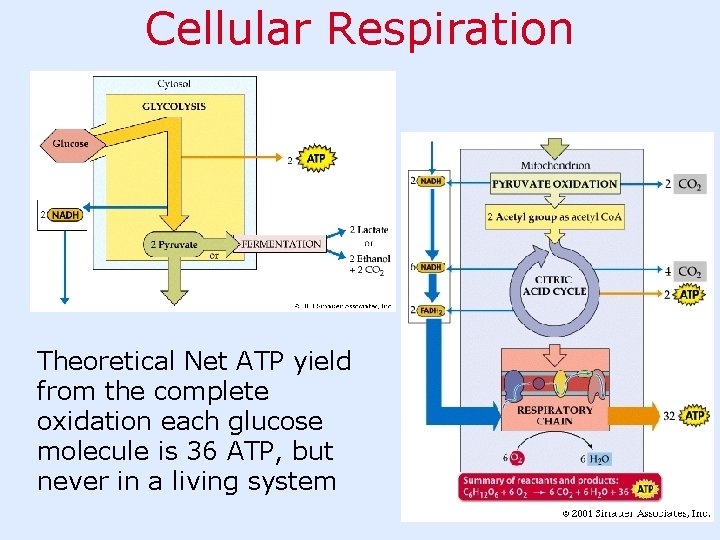
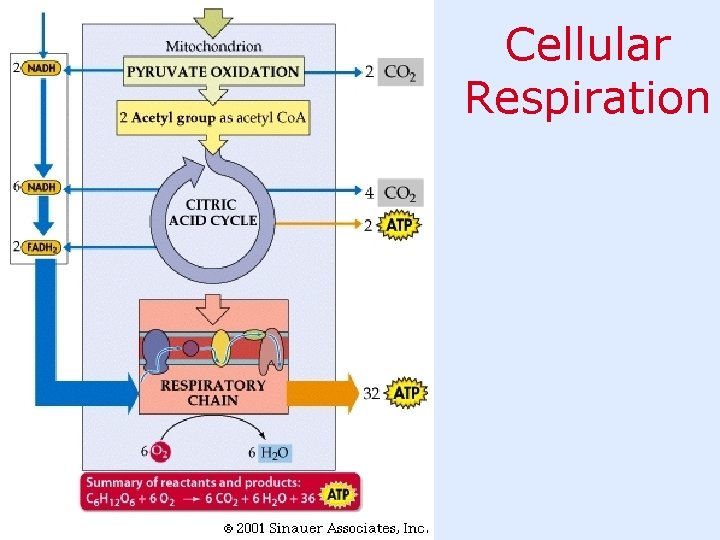
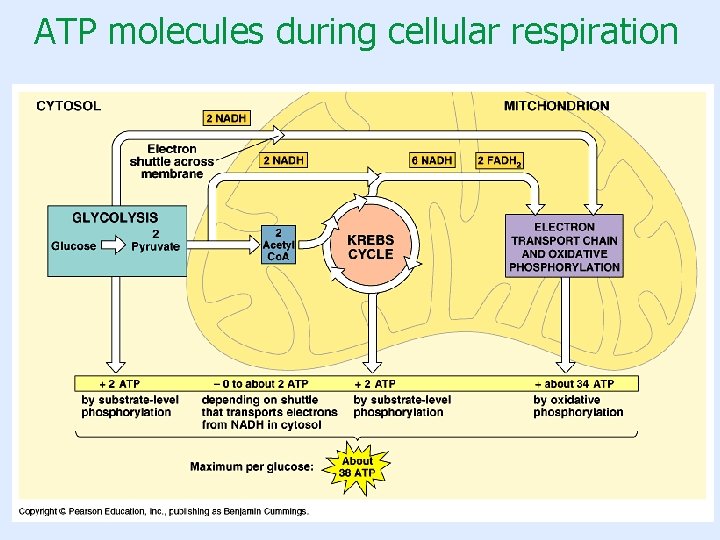
Cellular Respiration Theoretical Net ATP yield from the complete oxidation each glucose molecule is 36 ATP, but never in a living system
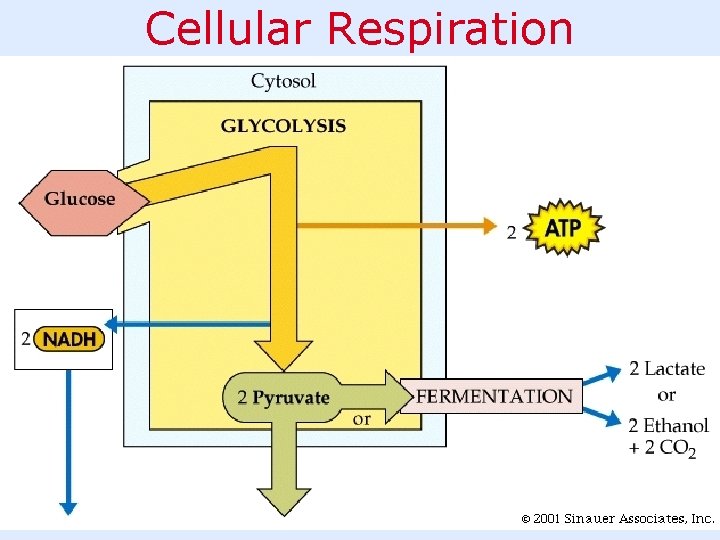
Cellular Respiration
Cellular Respiration
ATP molecules during cellular respiration
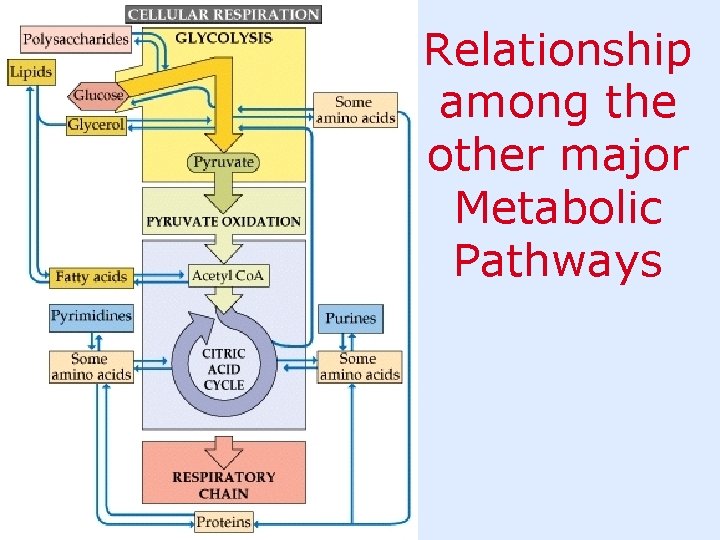
Relationship among the other major Metabolic Pathways
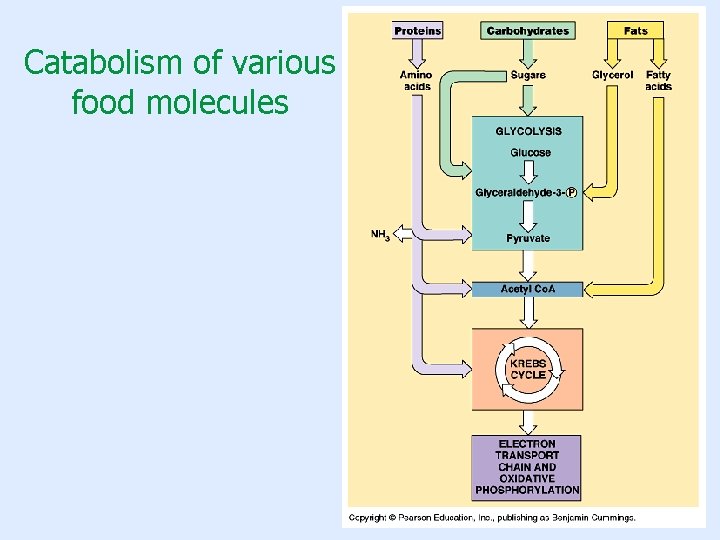
Catabolism of various food molecules
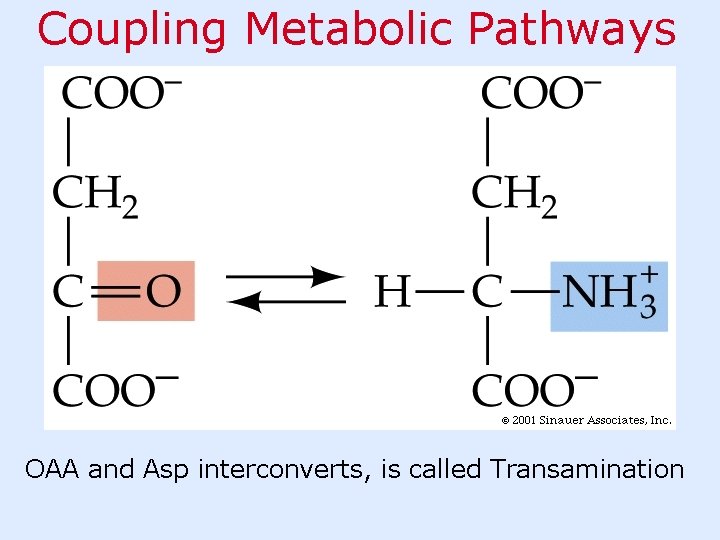
Coupling Metabolic Pathways OAA and Asp interconverts, is called Transamination
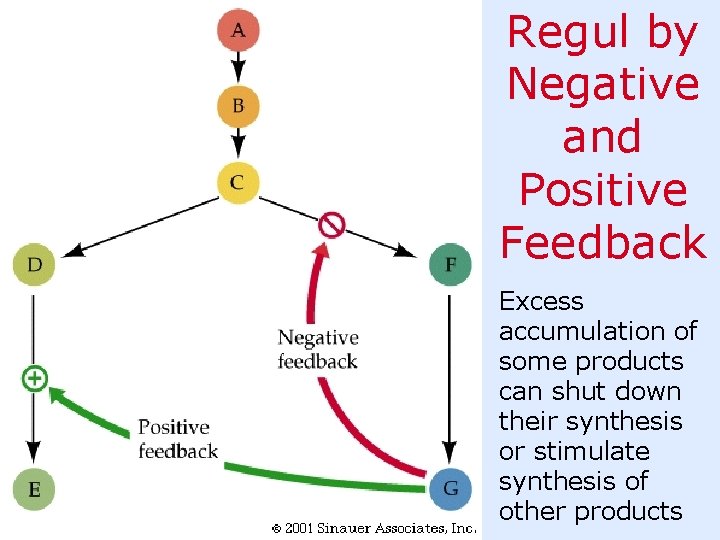
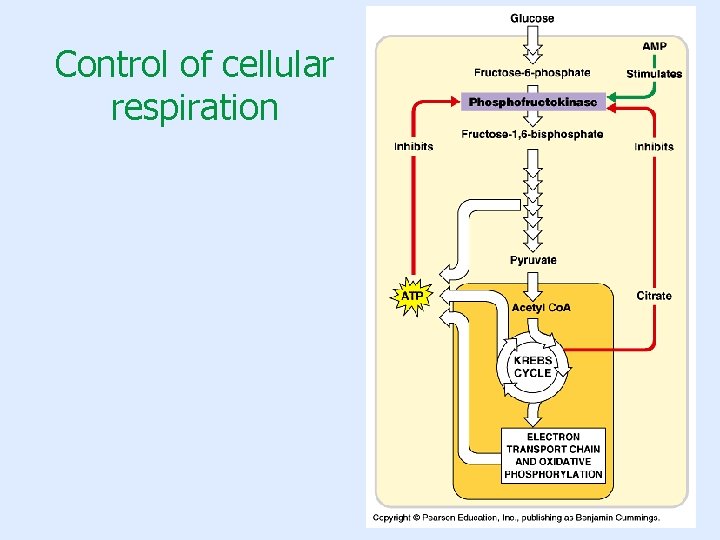
Regul by Negative and Positive Feedback Excess accumulation of some products can shut down their synthesis or stimulate synthesis of other products
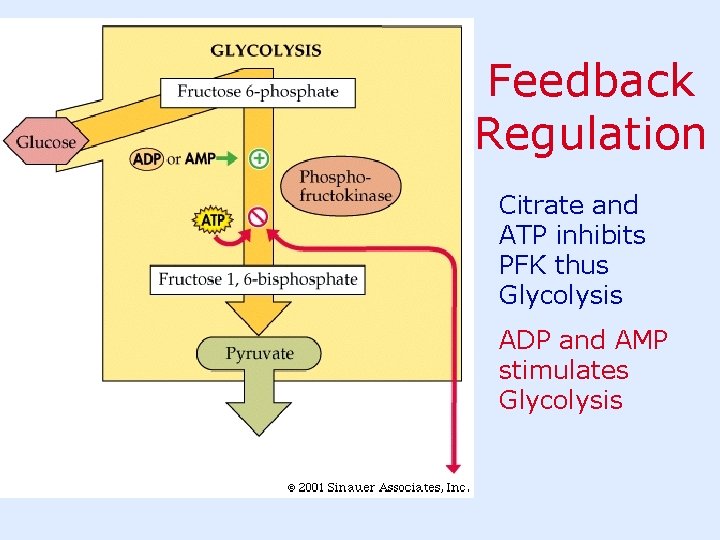
Feedback Regulation Citrate and ATP inhibits PFK thus Glycolysis ADP and AMP stimulates Glycolysis
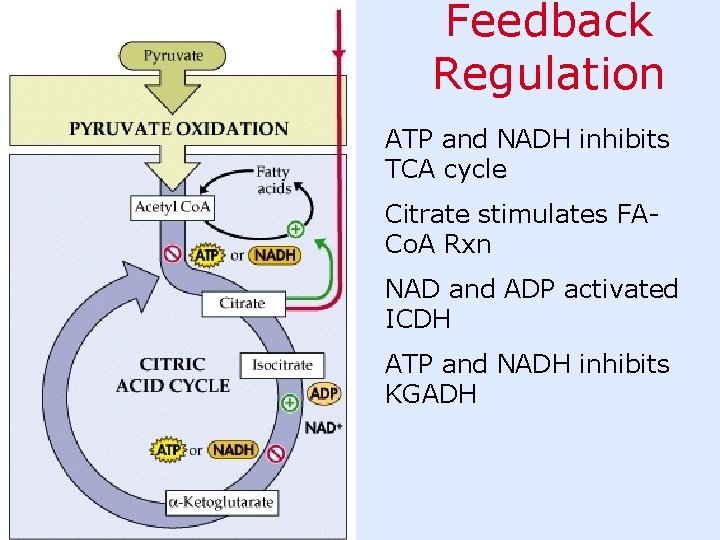
Feedback Regulation ATP and NADH inhibits TCA cycle Citrate stimulates FACo. A Rxn NAD and ADP activated ICDH ATP and NADH inhibits KGADH
Control of cellular respiration
Energy flow and chemical recycling
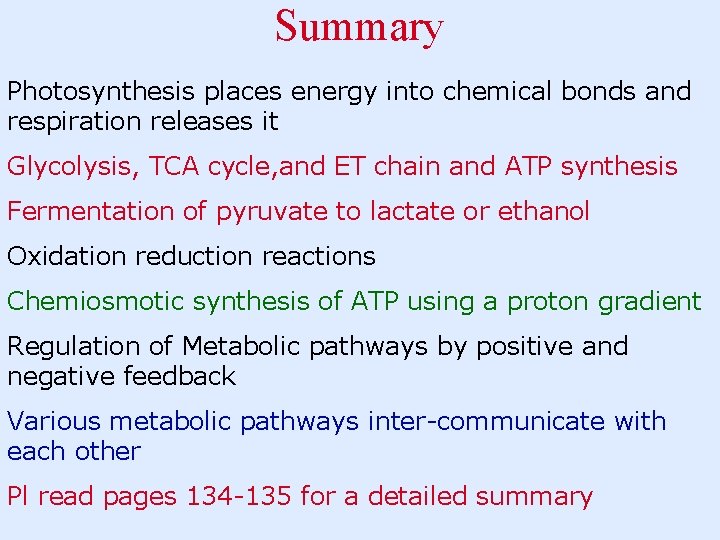
Summary Photosynthesis places energy into chemical bonds and respiration releases it Glycolysis, TCA cycle, and ET chain and ATP synthesis Fermentation of pyruvate to lactate or ethanol Oxidation reduction reactions Chemiosmotic synthesis of ATP using a proton gradient Regulation of Metabolic pathways by positive and negative feedback Various metabolic pathways inter-communicate with each other Pl read pages 134 -135 for a detailed summary