
Cellular Metabolism Metabolic processes all chemical reactions that
Cellular Metabolism Metabolic processes – all chemical reactions that occur in the body Cellular metabolism- refers to all of the chemical processes that occur inside living cells. Two types of metabolic reactions Anabolism • build molecules • uses energy Catabolism • Breaks down larger molecules • Energy is released
Anabolism provides the substances needed for cellular growth and repair
Catabolism breaks down larger molecules into smaller ones
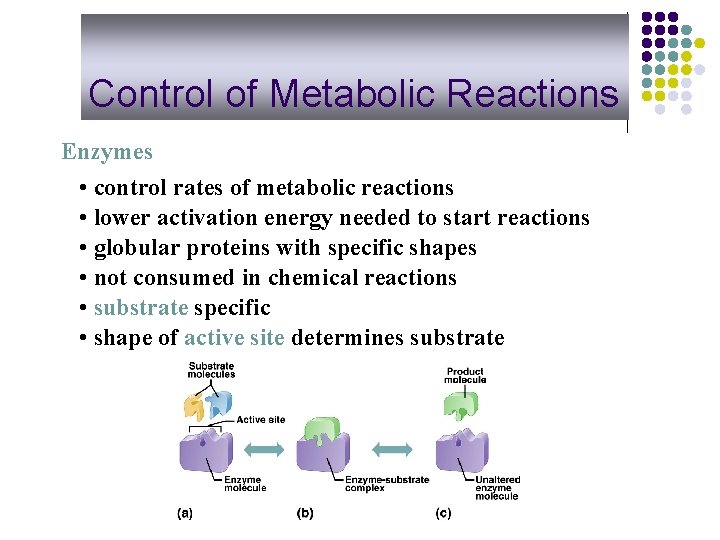
Control of Metabolic Reactions Enzymes • control rates of metabolic reactions • lower activation energy needed to start reactions • globular proteins with specific shapes • not consumed in chemical reactions • substrate specific • shape of active site determines substrate
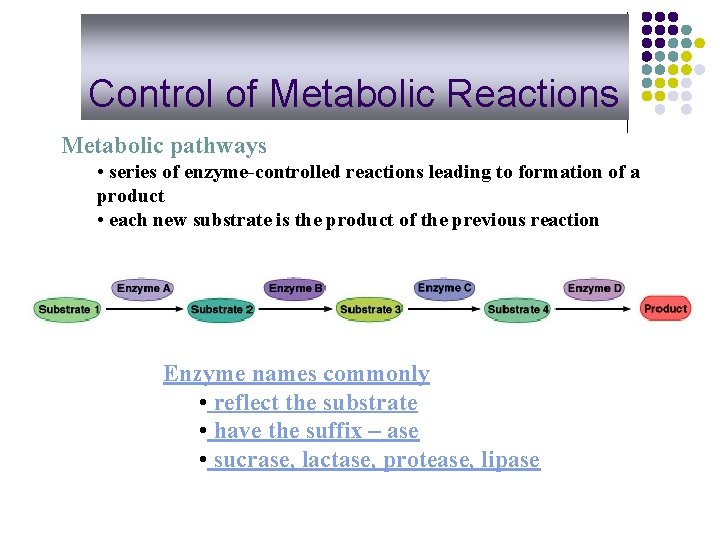
Control of Metabolic Reactions Metabolic pathways • series of enzyme-controlled reactions leading to formation of a product • each new substrate is the product of the previous reaction Enzyme names commonly • reflect the substrate • have the suffix – ase • sucrase, lactase, protease, lipase
Control of Metabolic Reactions Factors that alter enzymes • temperature and heat • radiation • electricity • chemicals • changes in p. H
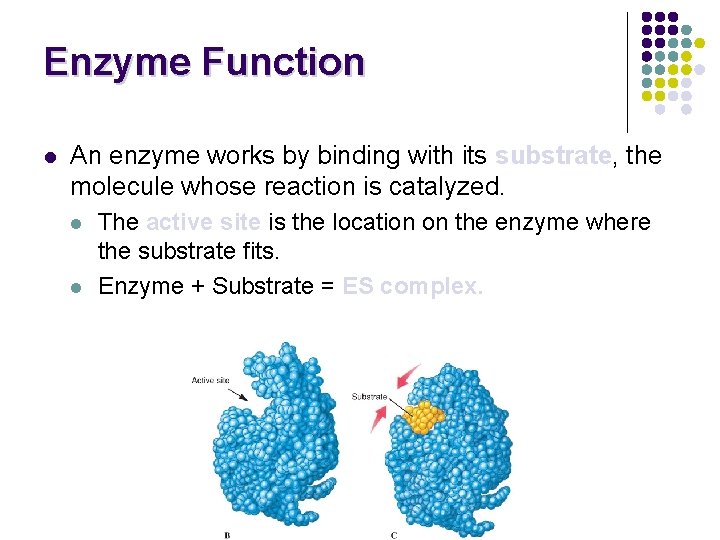
Enzyme Function l An enzyme works by binding with its substrate, the molecule whose reaction is catalyzed. l l The active site is the location on the enzyme where the substrate fits. Enzyme + Substrate = ES complex.
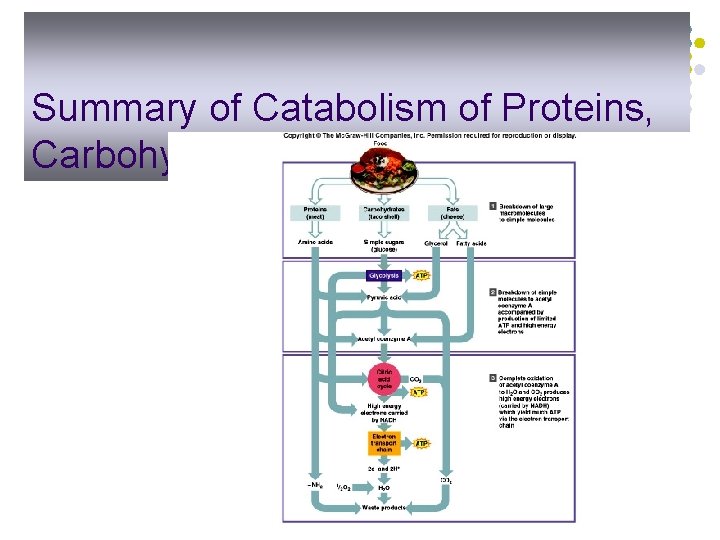
Summary of Catabolism of Proteins, Carbohydrates, and Fats
Nucleic Acids and Protein Synthesis Genetic information – instructs cells how to construct proteins; stored in DNA Gene – segment of DNA that codes for one protein Genome – complete set of genes
Protein Synthesis l Directed by DNA l DNA is transcribed to make messenger RNA (m. RNA) l m. RNA provides amino acid sequence l Ribosomal RNA (r. RNA) is a component of ribosomes (site of protein synthesis) l Attaches to the m. RNA strand to read the m. RNA and bring in the corresponding codons to make the polypeptide chain. l Transfer RNA (t. RNA) brings amino acids to ribosome to be joined together l Links the amino acids together to make a polypeptide chain (protein)
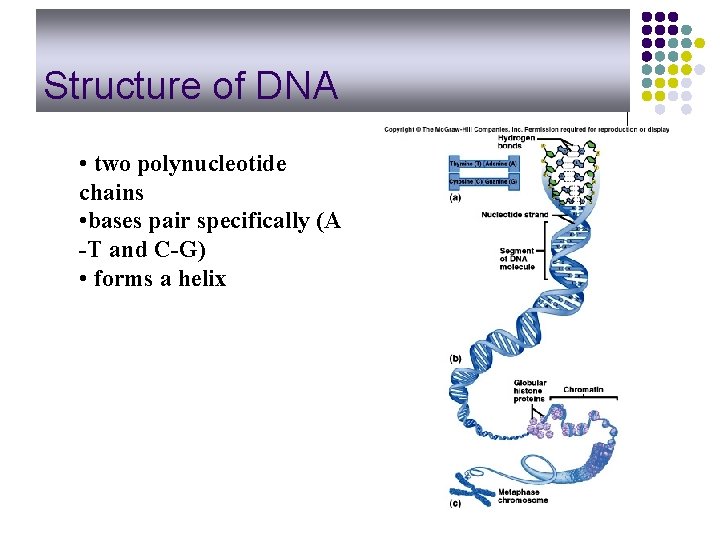
Structure of DNA • two polynucleotide chains • bases pair specifically (A -T and C-G) • forms a helix
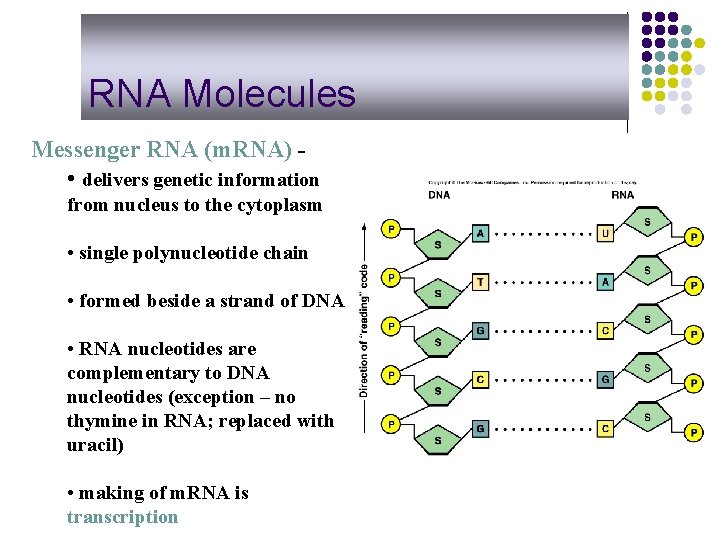
RNA Molecules Messenger RNA (m. RNA) • delivers genetic information from nucleus to the cytoplasm • single polynucleotide chain • formed beside a strand of DNA • RNA nucleotides are complementary to DNA nucleotides (exception – no thymine in RNA; replaced with uracil) • making of m. RNA is transcription
From DNA to Protein l DNA replicates DNA l l l DNA transcribes itself into a RNA (leaves the nucleus) l l Regions of DNA form basis of genes When the information stored in a gene is expressed this becomes a protein. TRANSCRIPTION makes an m. RNA copy of the DNA RNA interacts with other RNAs and translates itself into a sequence of amino acids (a polypeptide chain or protein). l TRANSLATION makes a polypeptide chain using t. RNA, r. RNA and m. RNA
RNA Molecules Transfer RNA (t. RNA) • carries amino acids to m. RNA • carries anticodon to m. RNA • translates a codon of m. RNA into an amino acid Ribosomal RNA (r. RNA) – • provides structure and enzyme activity for ribosomes
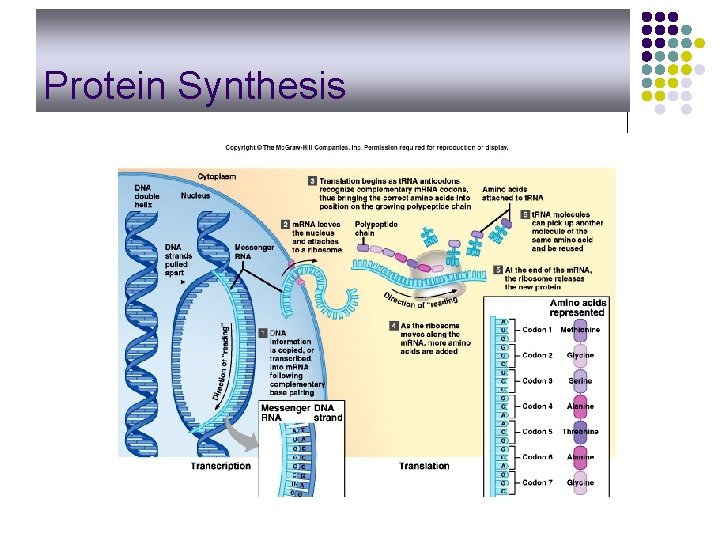
Protein Synthesis
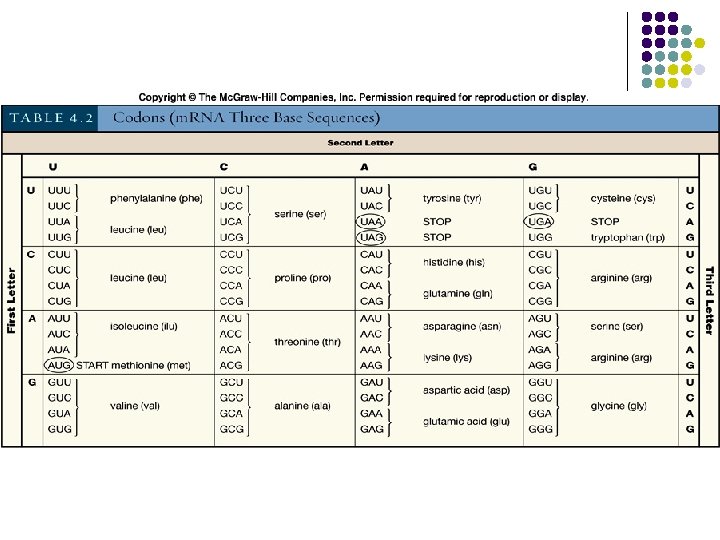
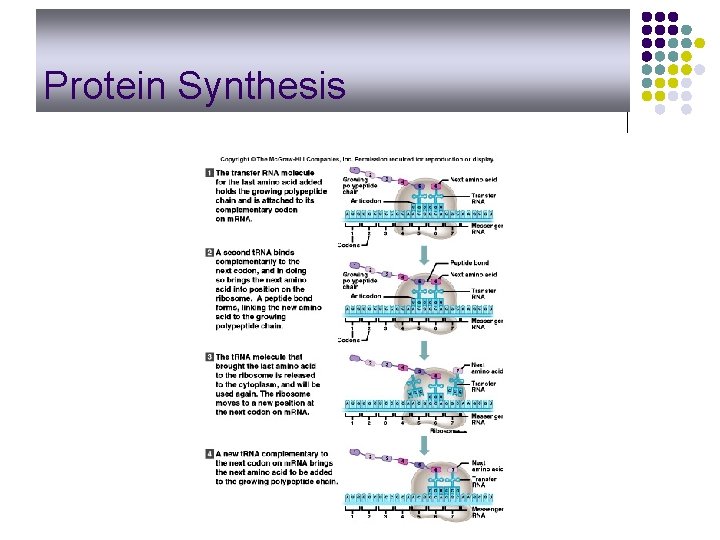
Protein Synthesis
Another DNA l l l Mitochondrial DNA or mt. DNA formed in the mitochondria 99% of mt. DNA comes from the mother
- Slides: 18