
CELLULAR METABOLISM Chapter 4 2 METABOLIC PROCESSES Metabolic
CELLULAR METABOLISM Chapter 4
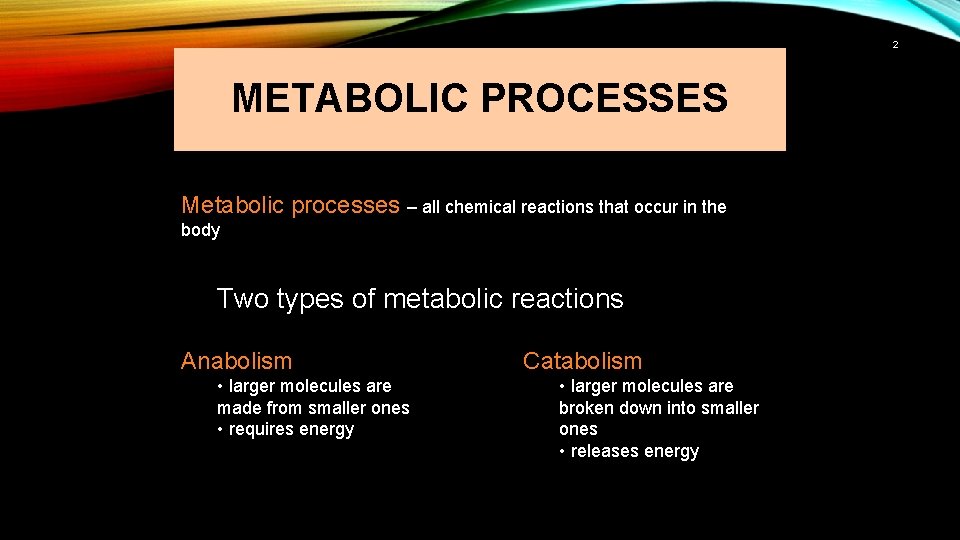
2 METABOLIC PROCESSES Metabolic processes – all chemical reactions that occur in the body Two types of metabolic reactions Anabolism • larger molecules are made from smaller ones • requires energy Catabolism • larger molecules are broken down into smaller ones • releases energy
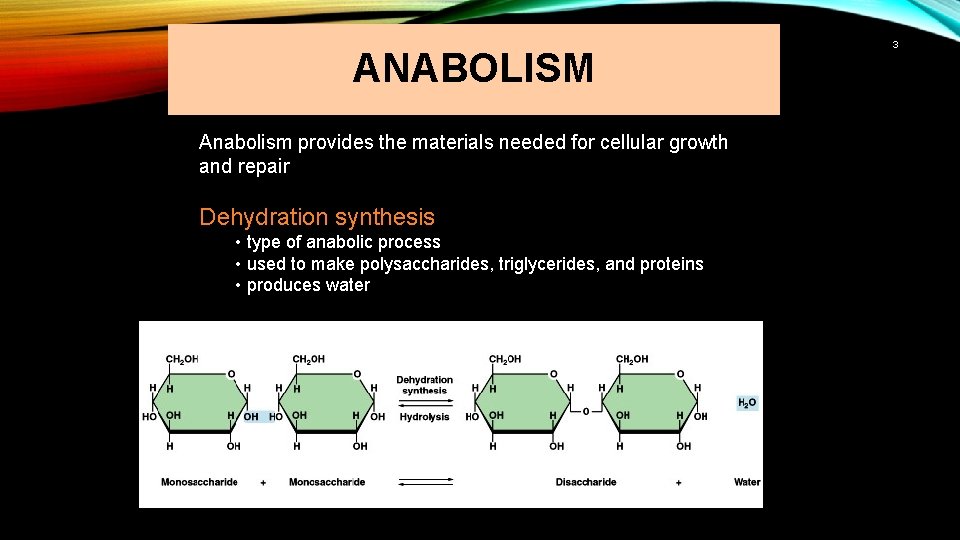
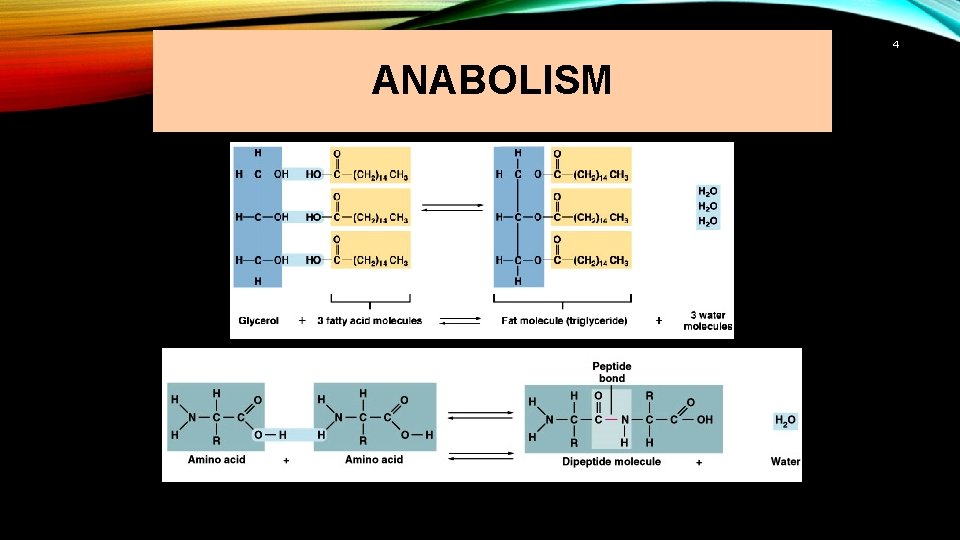
ANABOLISM Anabolism provides the materials needed for cellular growth and repair Dehydration synthesis • type of anabolic process • used to make polysaccharides, triglycerides, and proteins • produces water 3
4 ANABOLISM
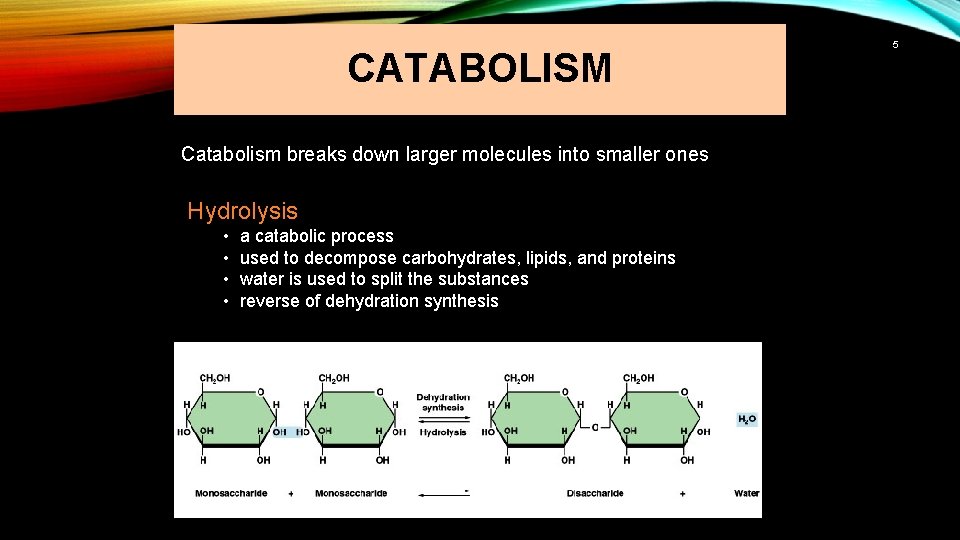
CATABOLISM Catabolism breaks down larger molecules into smaller ones Hydrolysis • • a catabolic process used to decompose carbohydrates, lipids, and proteins water is used to split the substances reverse of dehydration synthesis 5
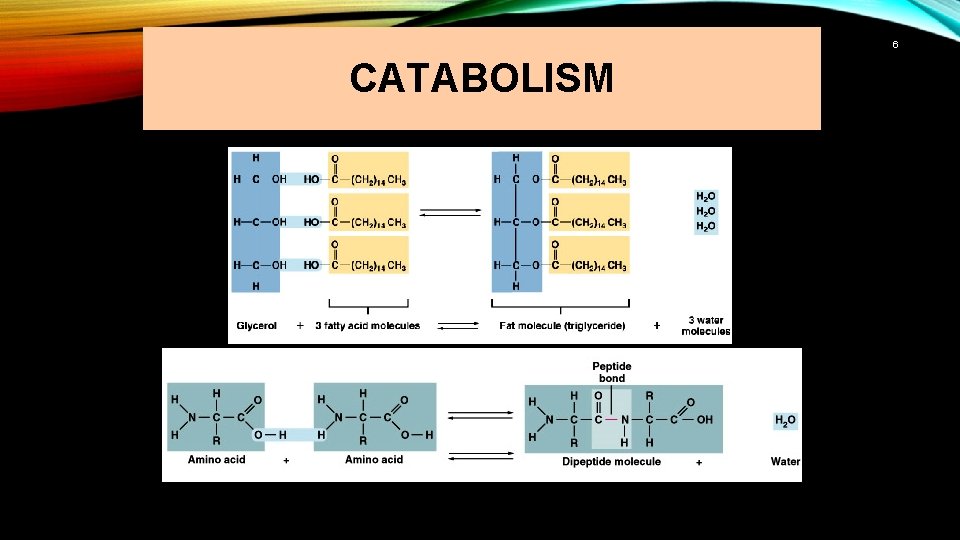
6 CATABOLISM
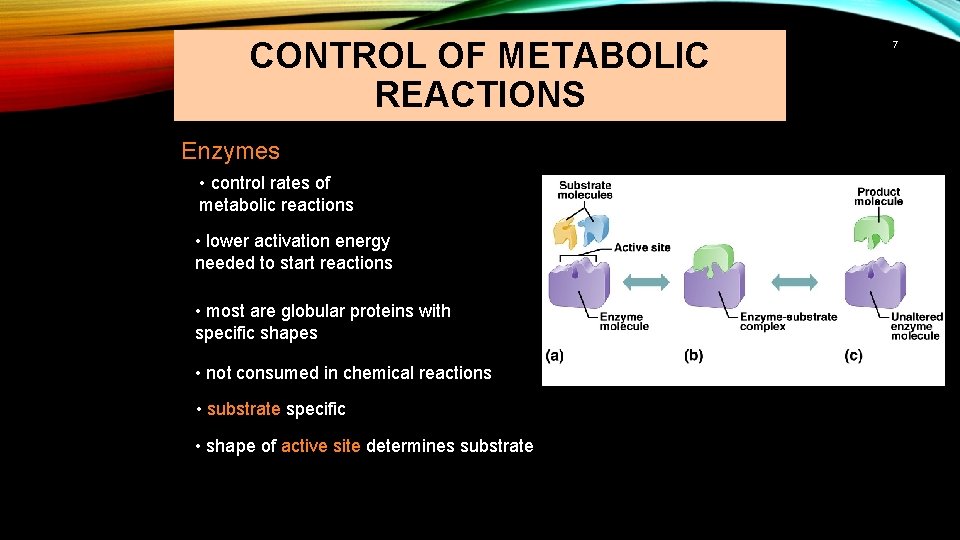
CONTROL OF METABOLIC REACTIONS Enzymes • control rates of metabolic reactions • lower activation energy needed to start reactions • most are globular proteins with specific shapes • not consumed in chemical reactions • substrate specific • shape of active site determines substrate 7
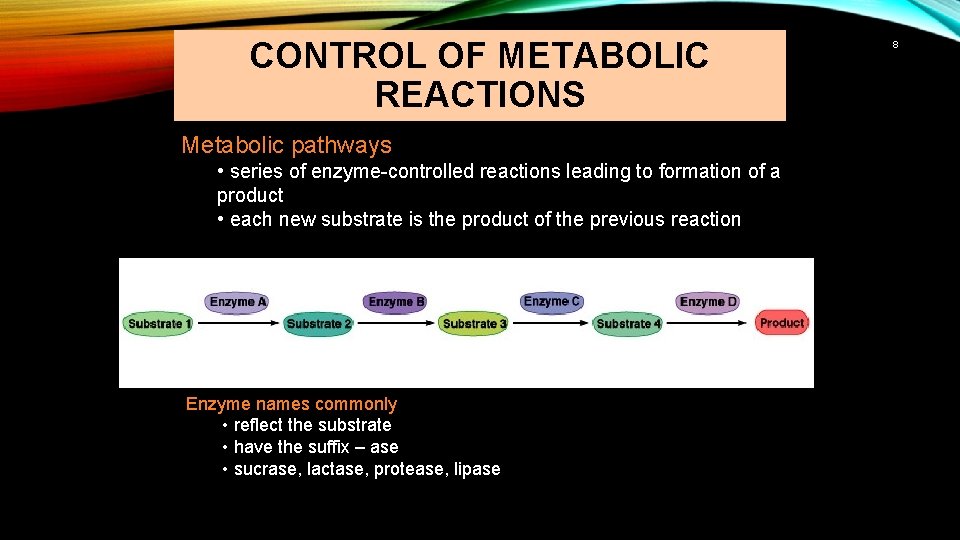
CONTROL OF METABOLIC REACTIONS Metabolic pathways • series of enzyme-controlled reactions leading to formation of a product • each new substrate is the product of the previous reaction Enzyme names commonly • reflect the substrate • have the suffix – ase • sucrase, lactase, protease, lipase 8
CONTROL OF METABOLIC REACTIONS Cofactors • make some enzymes active • non protein component • ions or coenzymes Factors that alter enzymes • heat • radiation • electricity • chemicals • changes in p. H Coenzymes • organic molecules that act as cofactors • vitamins 9
ENERGY FOR METABOLIC REACTIONS Energy • ability to do work or change something • heat, light, sound, electricity, mechanical energy, chemical energy • changed from one form to another • involved in all metabolic reactions Release of chemical energy • most metabolic processes depend on chemical energy • oxidation of glucose generates chemical energy to promote cellular metabolism • cellular respiration releases chemical energy from molecules and makes it available for cellular use 10
CELLULAR RESPIRATION Occurs in three series of reactions 1. Glycolysis 2. Citric acid cycle 3. Electron transport chain Includes • anaerobic reactions (without O 2) - produce little ATP • aerobic reactions (requires O 2) - produce most ATP Products • carbon dioxide • water • ATP (chemical energy) • heat 11
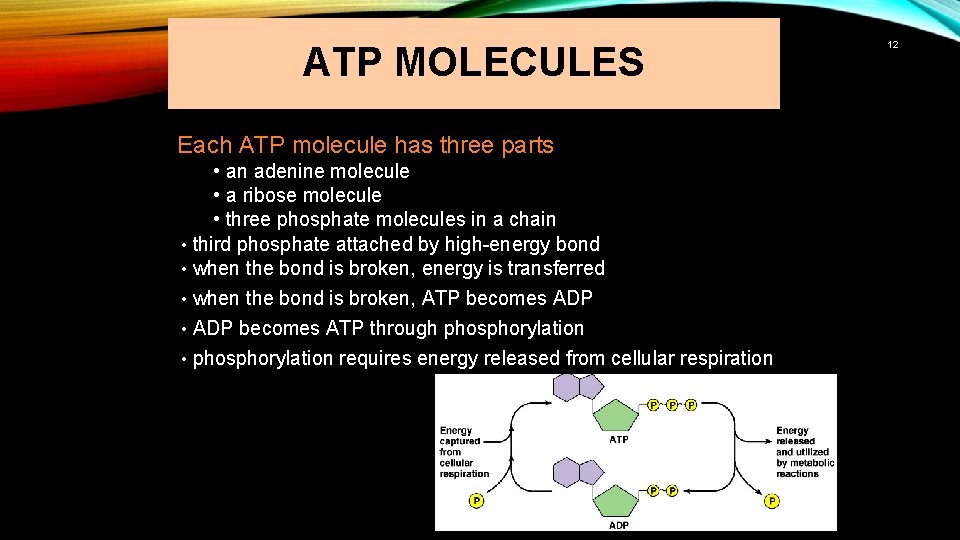
ATP MOLECULES Each ATP molecule has three parts • an adenine molecule • a ribose molecule • three phosphate molecules in a chain • third phosphate attached by high-energy bond • when the bond is broken, energy is transferred • when the bond is broken, ATP becomes ADP • ADP becomes ATP through phosphorylation • phosphorylation requires energy released from cellular respiration 12
13 GLYCOLYSIS • series of ten reactions • breaks down glucose into 2 pyruvic acid molecules • occurs in cytosol • anaerobic phase of cellular respiration • yields two ATP molecules per glucose Summarized by three main events 1. phosphorylation 2. splitting 3. production of NADH and ATP
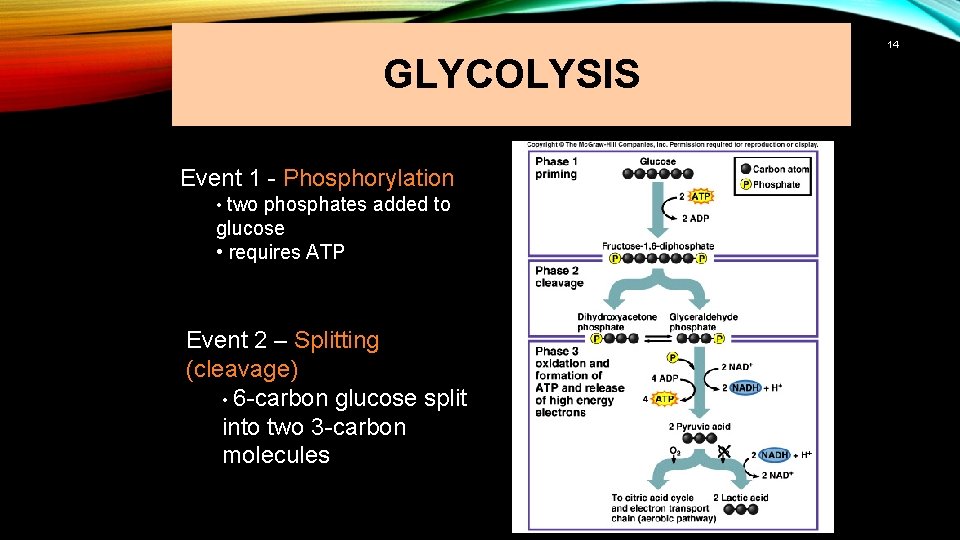
14 GLYCOLYSIS Event 1 - Phosphorylation • two phosphates added to glucose • requires ATP Event 2 – Splitting (cleavage) • 6 -carbon glucose split into two 3 -carbon molecules
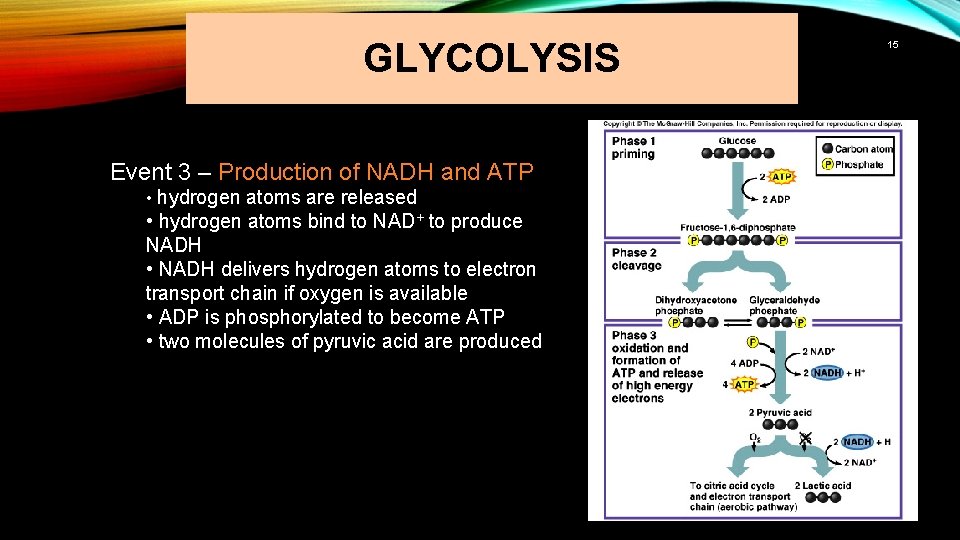
GLYCOLYSIS Event 3 – Production of NADH and ATP • hydrogen atoms are released • hydrogen atoms bind to NAD+ to produce NADH • NADH delivers hydrogen atoms to electron transport chain if oxygen is available • ADP is phosphorylated to become ATP • two molecules of pyruvic acid are produced 15
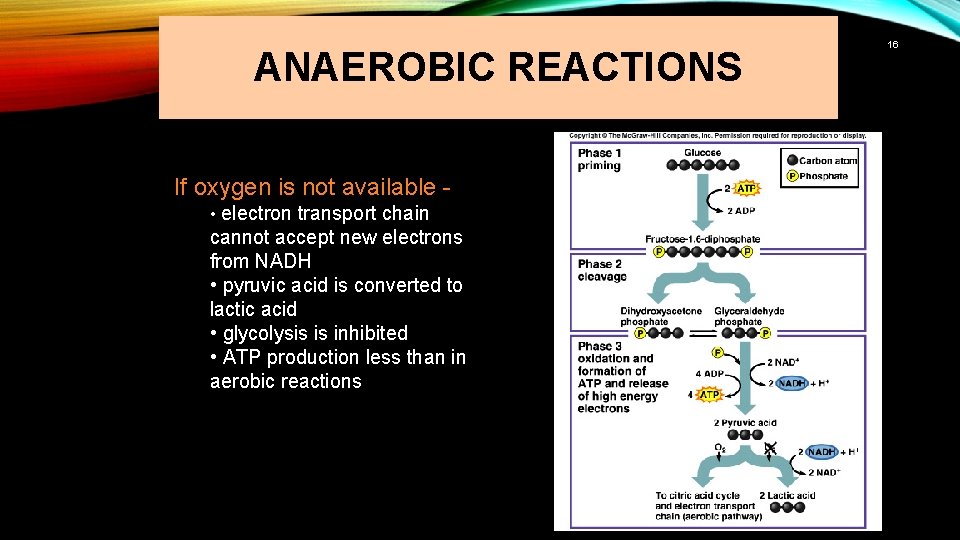
ANAEROBIC REACTIONS If oxygen is not available • electron transport chain cannot accept new electrons from NADH • pyruvic acid is converted to lactic acid • glycolysis is inhibited • ATP production less than in aerobic reactions 16
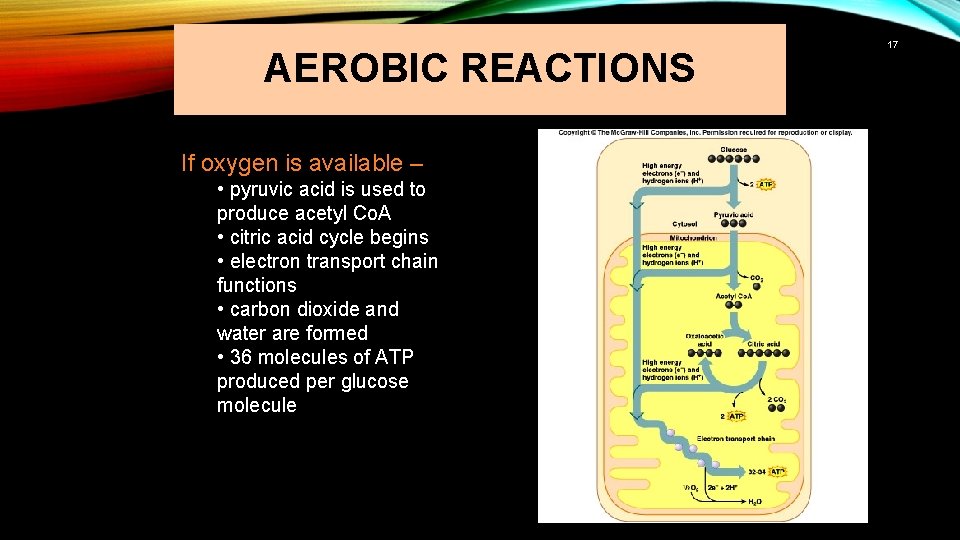
AEROBIC REACTIONS If oxygen is available – • pyruvic acid is used to produce acetyl Co. A • citric acid cycle begins • electron transport chain functions • carbon dioxide and water are formed • 36 molecules of ATP produced per glucose molecule 17
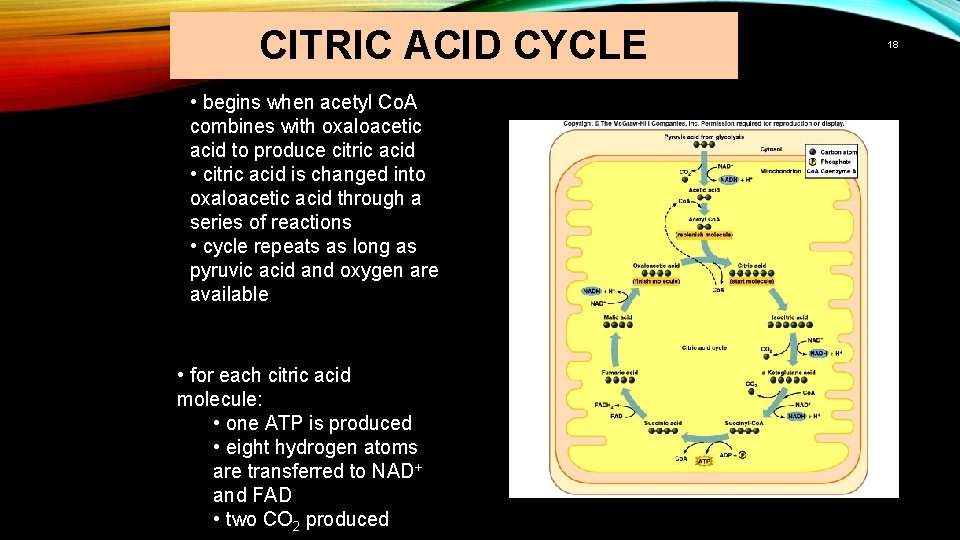
CITRIC ACID CYCLE • begins when acetyl Co. A combines with oxaloacetic acid to produce citric acid • citric acid is changed into oxaloacetic acid through a series of reactions • cycle repeats as long as pyruvic acid and oxygen are available • for each citric acid molecule: • one ATP is produced • eight hydrogen atoms are transferred to NAD+ and FAD • two CO 2 produced 18
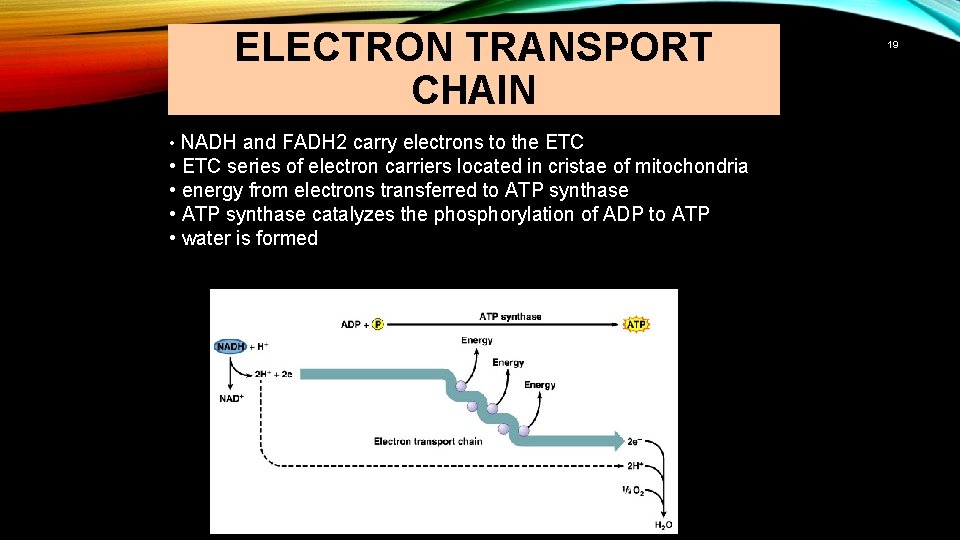
ELECTRON TRANSPORT CHAIN • NADH and FADH 2 carry electrons to the ETC • ETC series of electron carriers located in cristae of mitochondria • energy from electrons transferred to ATP synthase • ATP synthase catalyzes the phosphorylation of ADP to ATP • water is formed 19
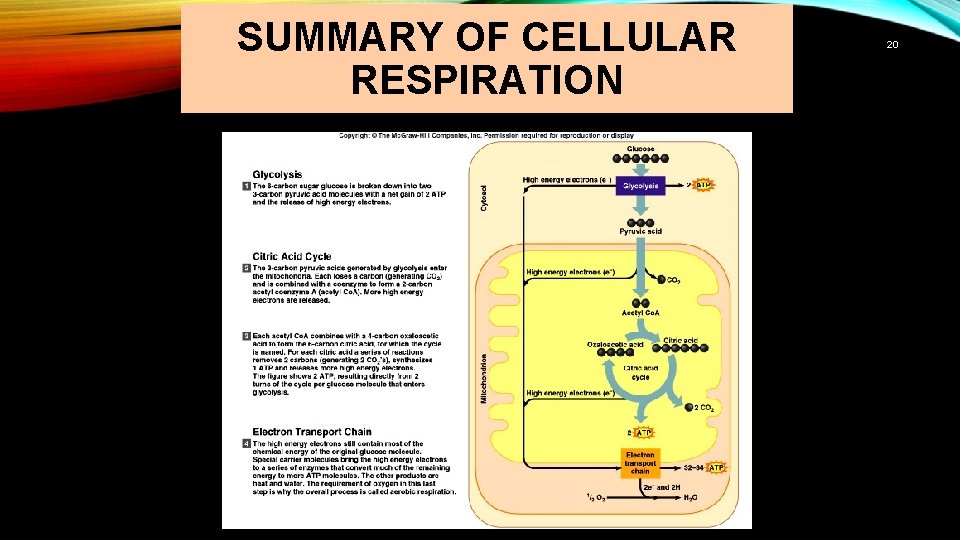
SUMMARY OF CELLULAR RESPIRATION 20
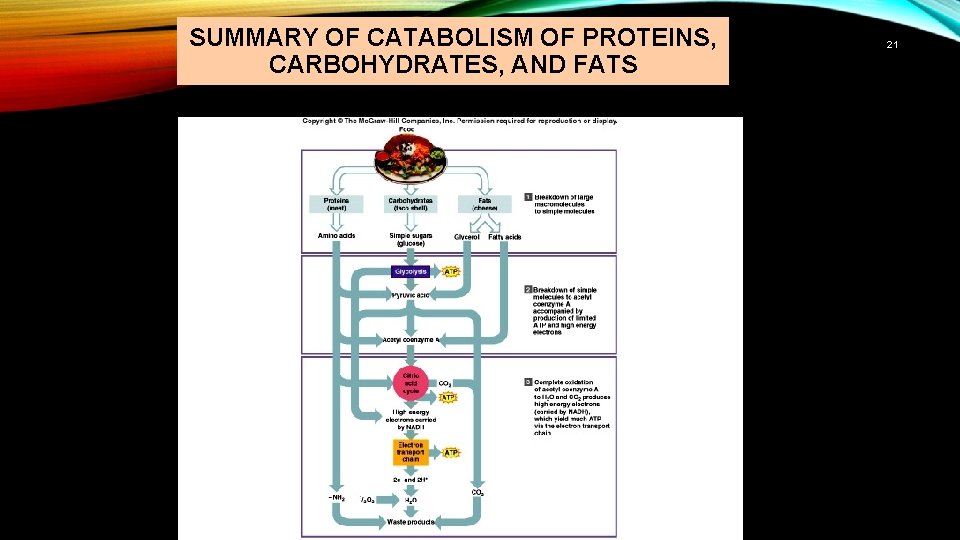
SUMMARY OF CATABOLISM OF PROTEINS, CARBOHYDRATES, AND FATS 21
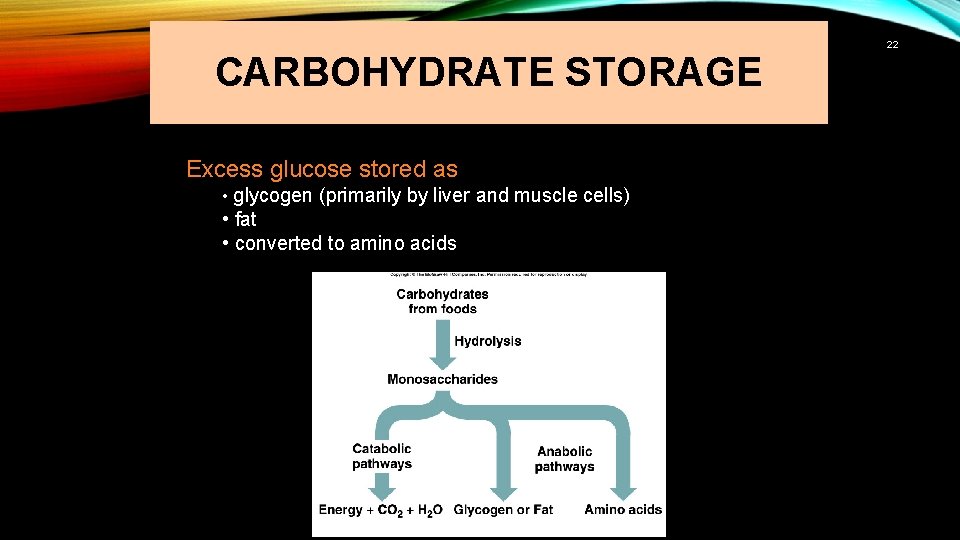
CARBOHYDRATE STORAGE Excess glucose stored as • glycogen (primarily by liver and muscle cells) • fat • converted to amino acids 22
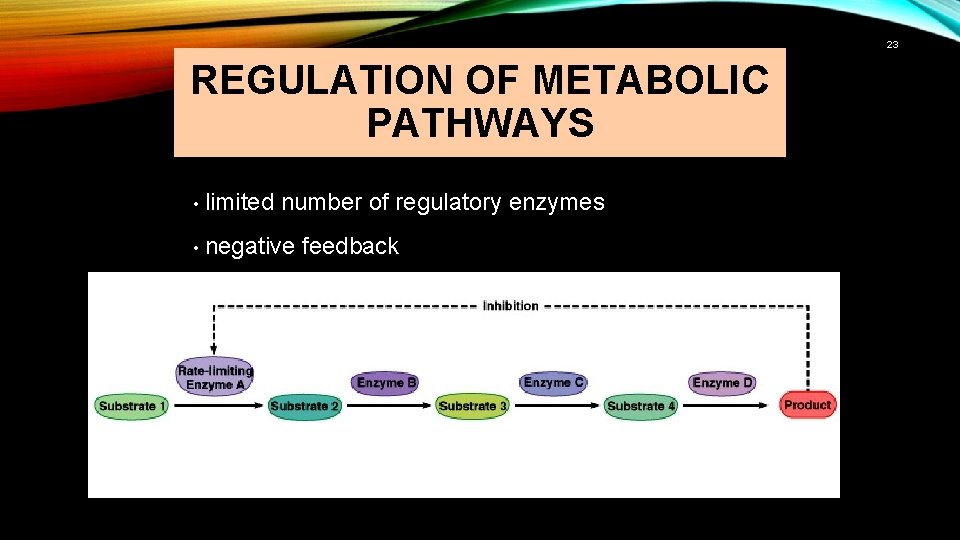
23 REGULATION OF METABOLIC PATHWAYS • limited number of regulatory enzymes • negative feedback
NUCLEIC ACIDS AND PROTEIN SYNTHESIS Genetic information – instructs cells how to construct proteins; stored in DNA Gene – segment of DNA that codes for one protein Genome – complete set of genes Genetic Code – method used to translate a sequence of nucleotides of DNA into a sequence of amino acids 24
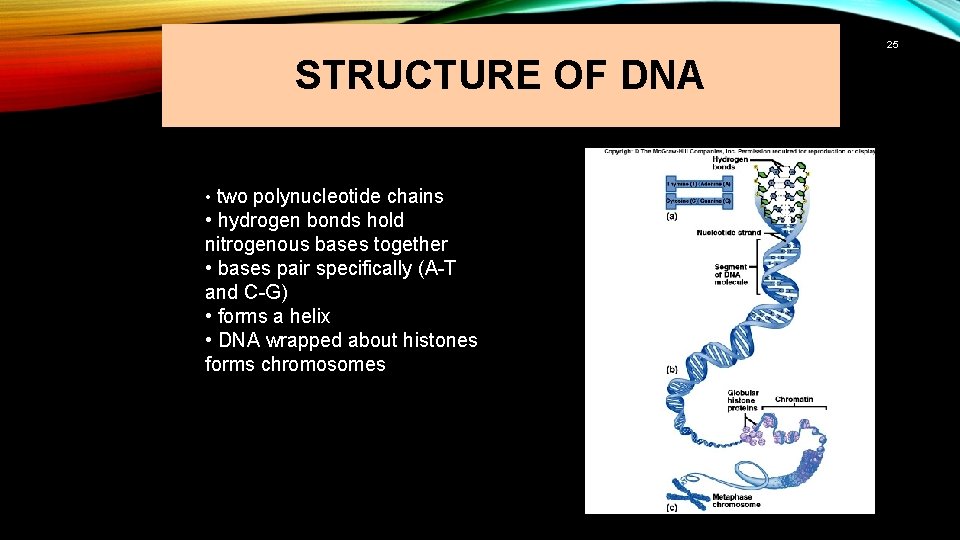
25 STRUCTURE OF DNA • two polynucleotide chains • hydrogen bonds hold nitrogenous bases together • bases pair specifically (A-T and C-G) • forms a helix • DNA wrapped about histones forms chromosomes
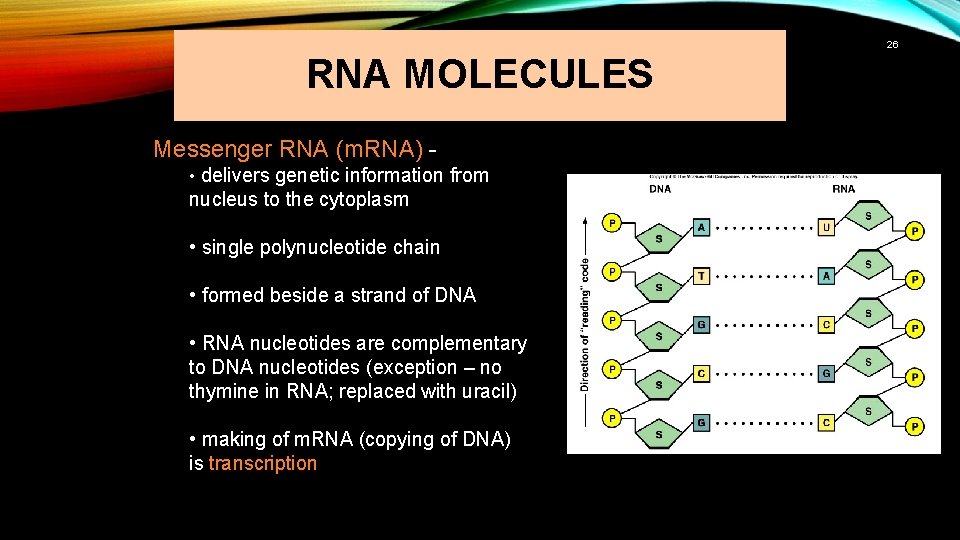
26 RNA MOLECULES Messenger RNA (m. RNA) • delivers genetic information from nucleus to the cytoplasm • single polynucleotide chain • formed beside a strand of DNA • RNA nucleotides are complementary to DNA nucleotides (exception – no thymine in RNA; replaced with uracil) • making of m. RNA (copying of DNA) is transcription
27 RNA MOLECULES Transfer RNA (t. RNA) • carries amino acids to m. RNA • carries anticodon to m. RNA • translates a codon of m. RNA into an amino acid Ribosomal RNA (r. RNA) – • provides structure and enzyme activity for ribosomes
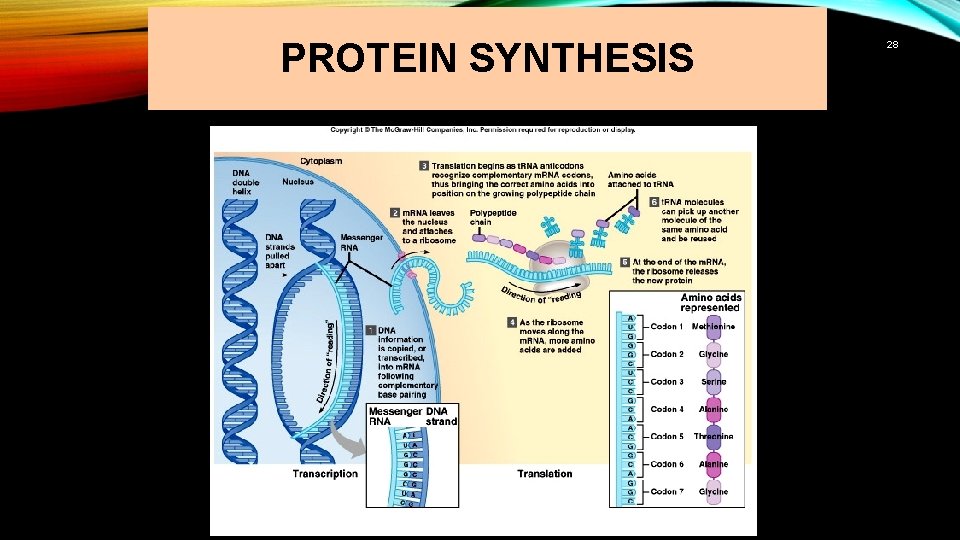
PROTEIN SYNTHESIS 28
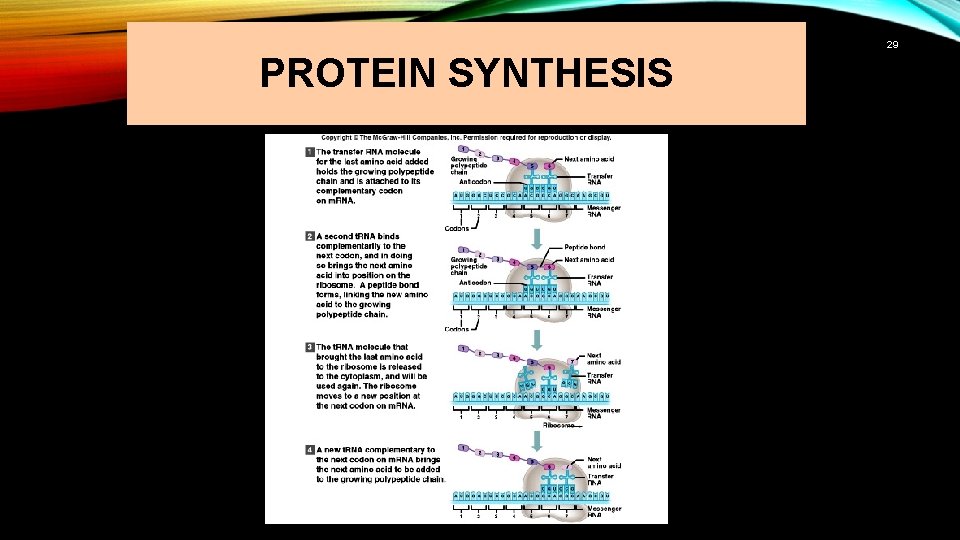
29 PROTEIN SYNTHESIS
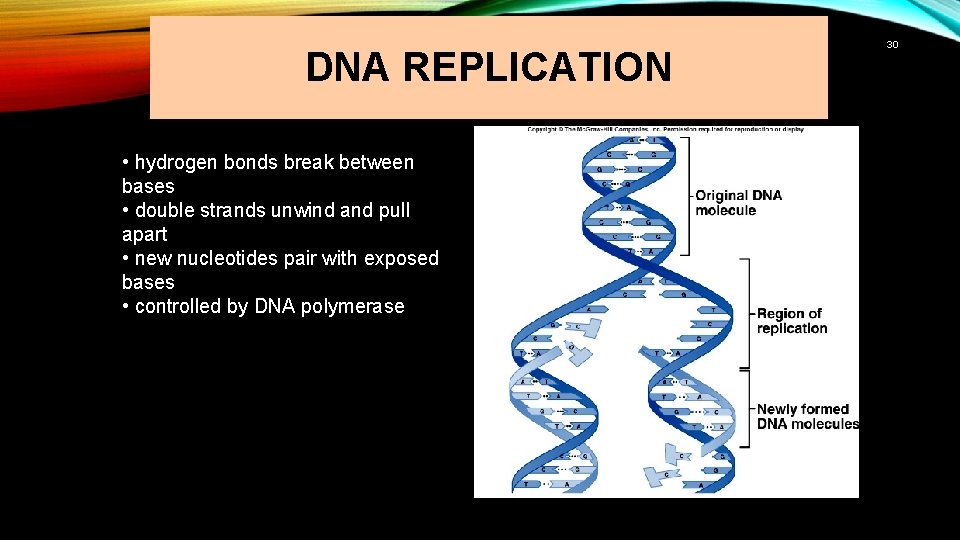
DNA REPLICATION • hydrogen bonds break between bases • double strands unwind and pull apart • new nucleotides pair with exposed bases • controlled by DNA polymerase 30
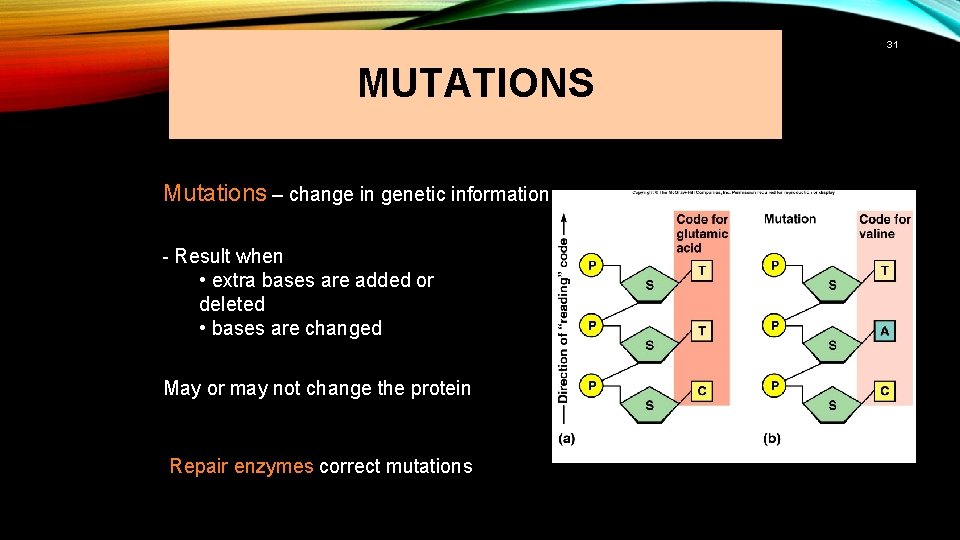
31 MUTATIONS Mutations – change in genetic information - Result when • extra bases are added or deleted • bases are changed May or may not change the protein Repair enzymes correct mutations
32 CLINICAL APPLICATION Phenylketonuria PKU • enzyme that breaks down the amino acid phenylalanine is missing • build up of phenylalanine causes mental retardation • treated by diets very low in phenylalanine
- Slides: 32