
Cellular Functions All the different parts of the


- Slides: 27
Cellular Functions �All the different parts of the cell are important to the life of the cell. �Cellular activities require energy. �All cells are able to release energy from complex molecules. �The energy in a sugar molecule is released by the mitochondria in small steps. �After a cell has taken in energy-rich molecules, the molecules are used by the mitochondria and energy is released.
Metabolism �Metabolism is the sum of all the chemical reactions in a cell or organism. �Important molecules, like sugar, are processed and energy is transformed to ATP and waste materials. �Not all energy is used immediately. Some cells, for example, those in green plants that contain chloroplasts, store energy in complex molecules such as sugars.
Homeostasis and Transport �Atoms, molecules and small particles are in constant motion. �Molecules tend to move from an area where they are more concentrated to an area where they are less concentrated, until their concentration is the same everywhere. �The concentrations of molecules at various points between the high and low areas form what is called the concentration gradient. �Molecules are said to move down the concentration gradient.
There are two types of cellular transport units: �___________________________
The Amoeba Sisters!! https: //www. youtube. com/watch? v=Ptmlvtei 8 hw
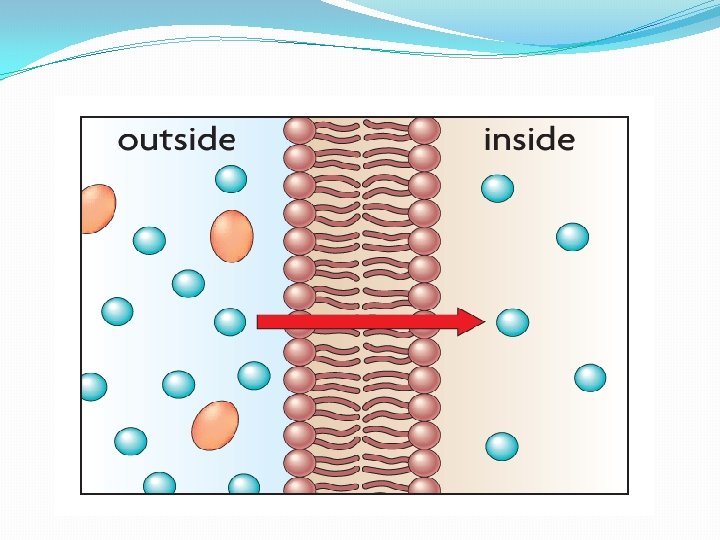
Passive transport Passive Transport = movement of substances from an area of high concentration to low concentration across the cell membrane without any input of energy by the cell
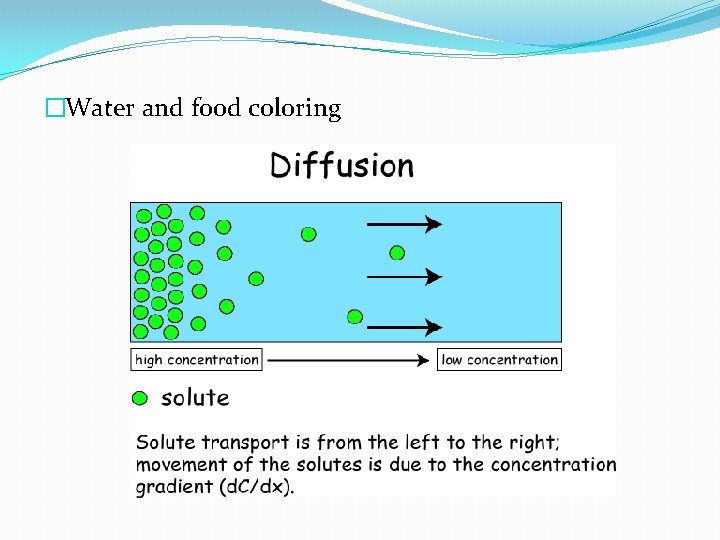
Types of passive transport �Diffusion = movement of molecules from high to low �Driven by the concentration gradient �Molecules spread out evenly till dynamic equilibrium is reached
Examples of diffusion… Can you think of any?
�Water and food coloring
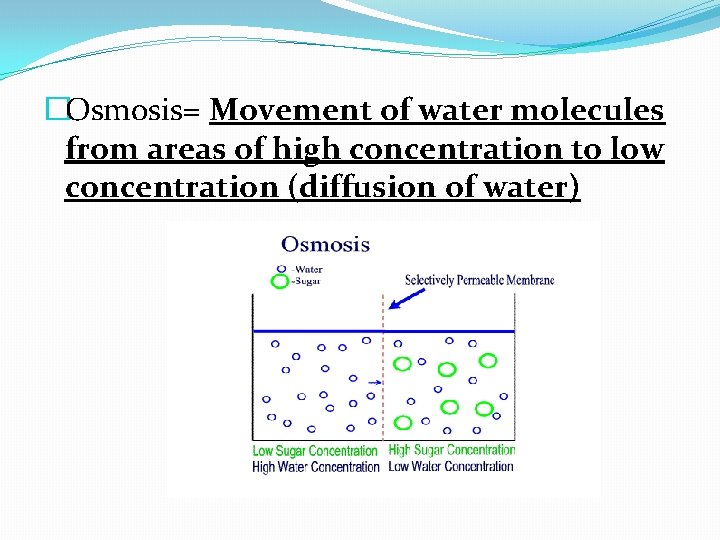
�Osmosis= Movement of water molecules from areas of high concentration to low concentration (diffusion of water)
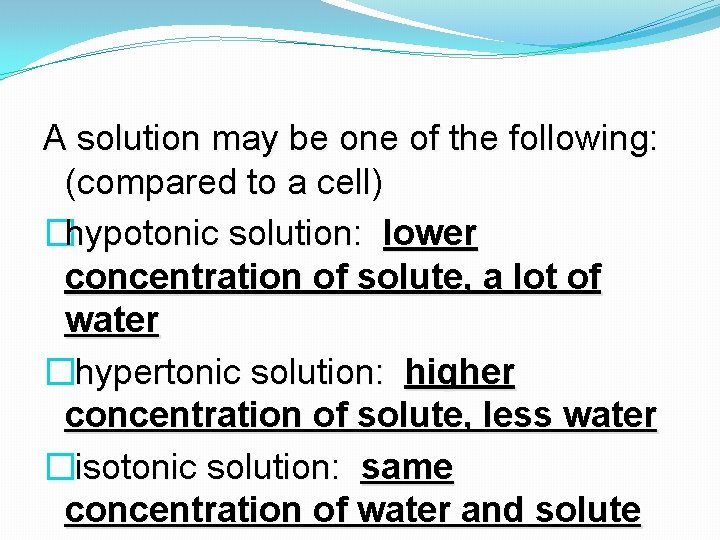
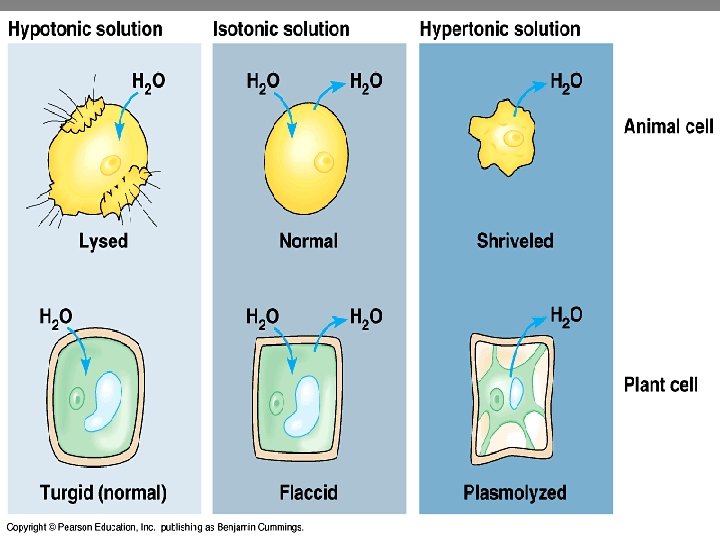
A solution may be one of the following: (compared to a cell) �hypotonic solution: lower concentration of solute, a lot of water �hypertonic solution: higher concentration of solute, less water �isotonic solution: same concentration of water and solute
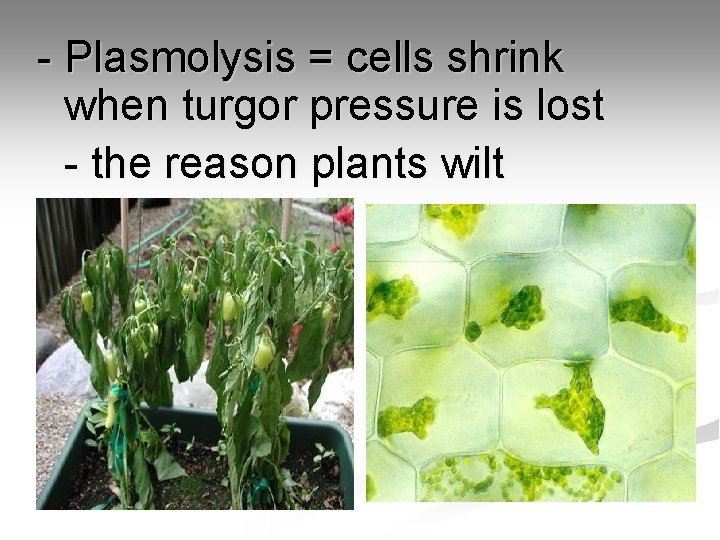
- Plasmolysis = cells shrink when turgor pressure is lost - the reason plants wilt
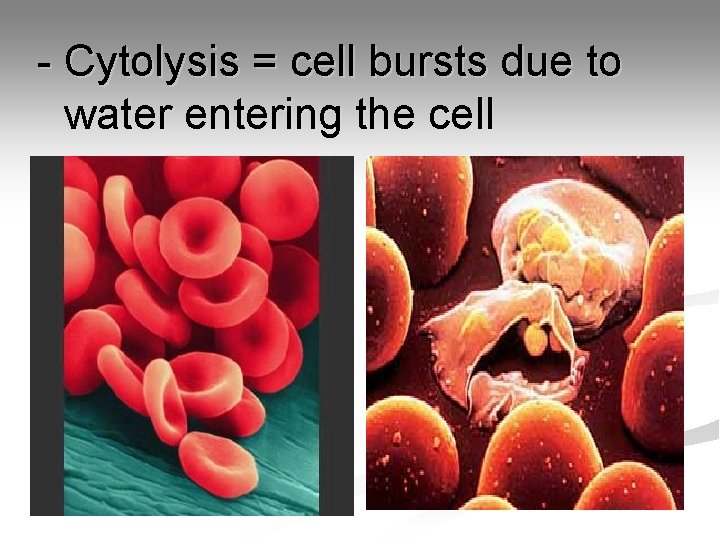
- Cytolysis = cell bursts due to water entering the cell
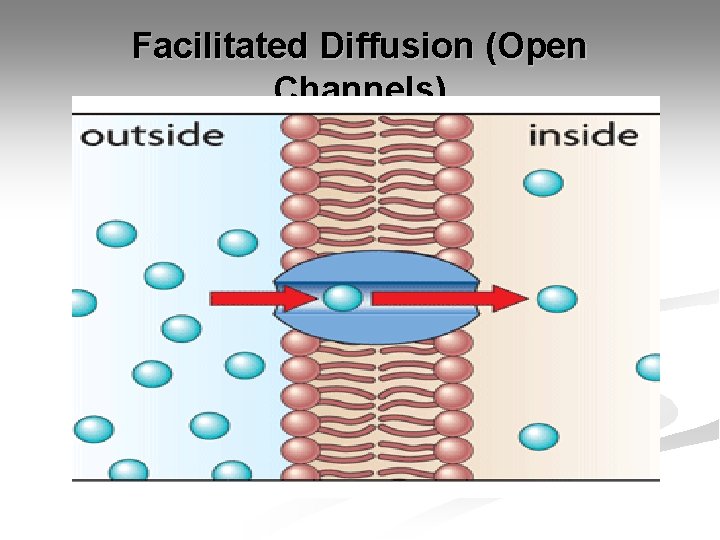
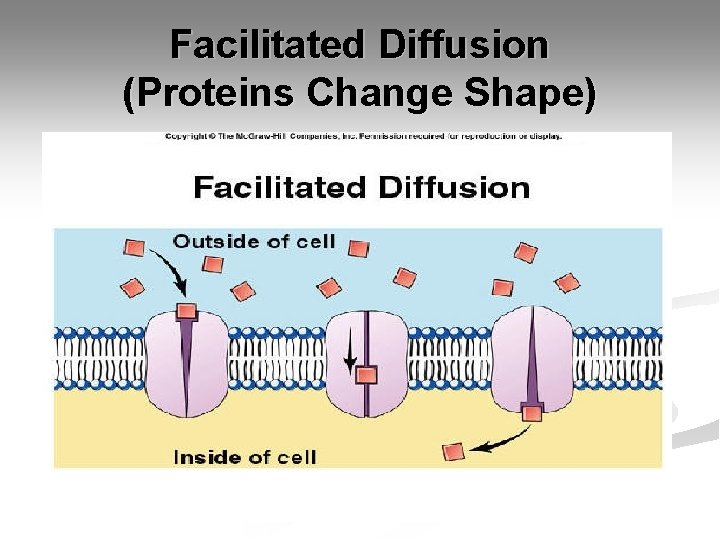
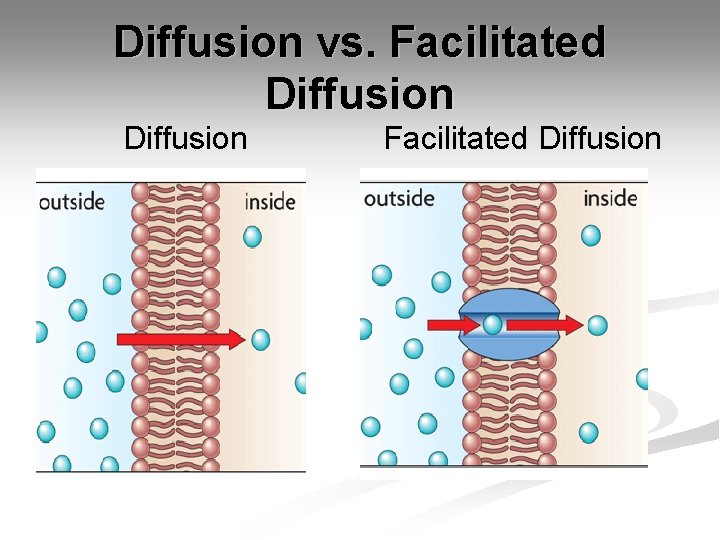
Facilitated Diffusion = move molecules across the cell membrane through carrier/transport proteins �are specific for the type of molecule they help diffuse
Facilitated Diffusion (Open Channels)
Facilitated Diffusion (Proteins Change Shape)
Diffusion vs. Facilitated Diffusion
Facilitated Diffusion https: //www. youtube. com/watch? v=IXk. Lh 34 Kc. Q
REVIEW n The diffusion of water is called the osmosis. Molecules move across a semipermeable membrane, from an area of high concentration to low concentration.
n Hypertonic: If concentration of water is higher inside the cell, water diffuses out of the cell and the cell will shrink. n Salt solution n Plasmolysis is a loss of turgor pressure and the cell will shrink.
n Hypotonic: If concentration of water is higher outside the cell, water diffuses into the cell and the cell will expand (burst). n Provides the plant cell with turgor pressure. n In an animal cell, it may result in cytolysis (bursting of the cell) n Contractile vacuoles are used to remove excess water in protozoa. Animals use lungs and kidneys.
Active Transport • Movement of molecules up the concentration gradient. • Requires energy • Carrier proteins can also serve as “pumps” during active transport.
• The membrane proteins are very specific. One protein that moves glucose will not move calcium. • Sodium Potassium Pump – works to maintain a higher concentration of sodium (Na) ions inside the cell and a higher concentration of postassium (K) ions outside the cell. • Requires energy to do so. • Creates and electrical gradient across the cell membrane which is essential for nerve impulses.
• Exocytosis • Endocytosis • Pinocytosis • Phagocytosis
• https: //www. youtube. com/watch? v=2 ic. EADP 0 J 4&spfreload=10