
Cellular Energy Part 2 Cellular Respiration Anaerobic and
Cellular Energy Part 2: Cellular Respiration Anaerobic and Aerobic
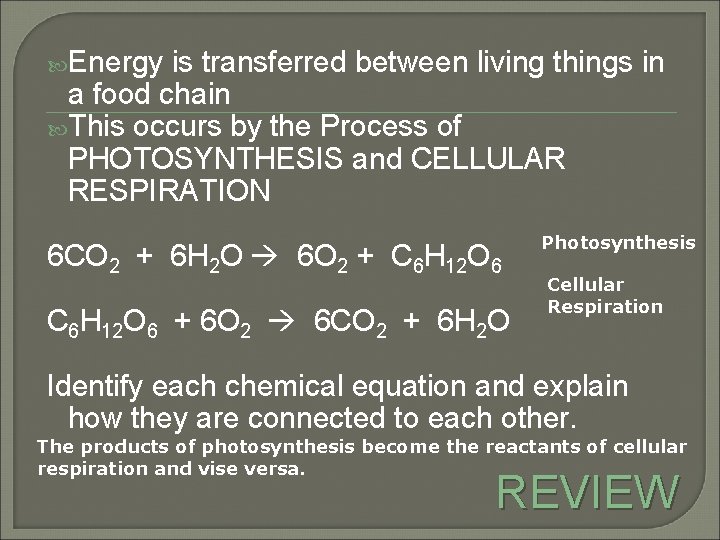
Energy is transferred between living things in a food chain This occurs by the Process of PHOTOSYNTHESIS and CELLULAR RESPIRATION 6 CO 2 + 6 H 2 O 6 O 2 + C 6 H 12 O 6 + 6 O 2 6 CO 2 + 6 H 2 O Photosynthesis Cellular Respiration Identify each chemical equation and explain how they are connected to each other. The products of photosynthesis become the reactants of cellular respiration and vise versa. REVIEW
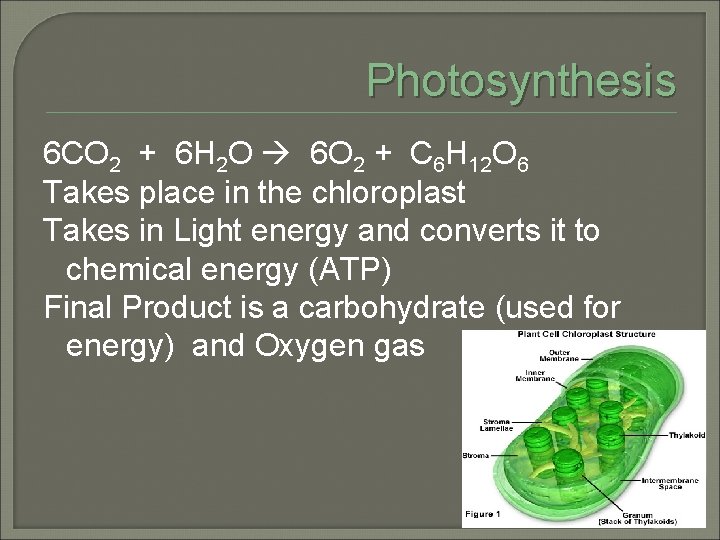
Photosynthesis 6 CO 2 + 6 H 2 O 6 O 2 + C 6 H 12 O 6 Takes place in the chloroplast Takes in Light energy and converts it to chemical energy (ATP) Final Product is a carbohydrate (used for energy) and Oxygen gas
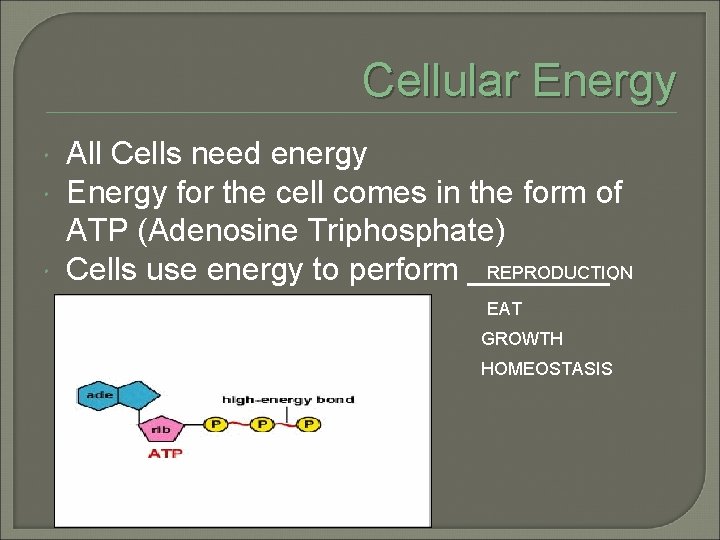
Cellular Energy All Cells need energy Energy for the cell comes in the form of ATP (Adenosine Triphosphate) REPRODUCTION Cells use energy to perform ____. EAT GROWTH HOMEOSTASIS
Food supplies cells with raw materials (carbs, lipids, proteins, nucleic acids) Food provides the energy needed to make ATP The amount of energy a food source can supply to a cell is recorded as a c. ALORIE. calorie- amount of heat energy needed to raise the temperature of 1 g of water, 1 degree Celsius. Food Calories are spelled using a capital “C” because they represent 1000 calories. Why do we eat?
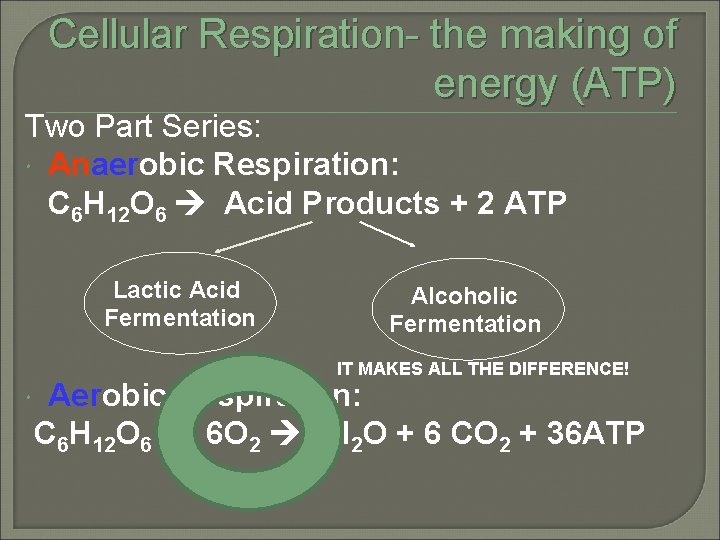
Cellular Respiration- the making of energy (ATP) Two Part Series: Anaerobic Respiration: Respiration C 6 H 12 O 6 Acid Products + 2 ATP Lactic Acid Fermentation Alcoholic Fermentation IT MAKES ALL THE DIFFERENCE! Aerobic Respiration: Respiration C 6 H 12 O 6 + 6 O 2 6 H 2 O + 6 CO 2 + 36 ATP
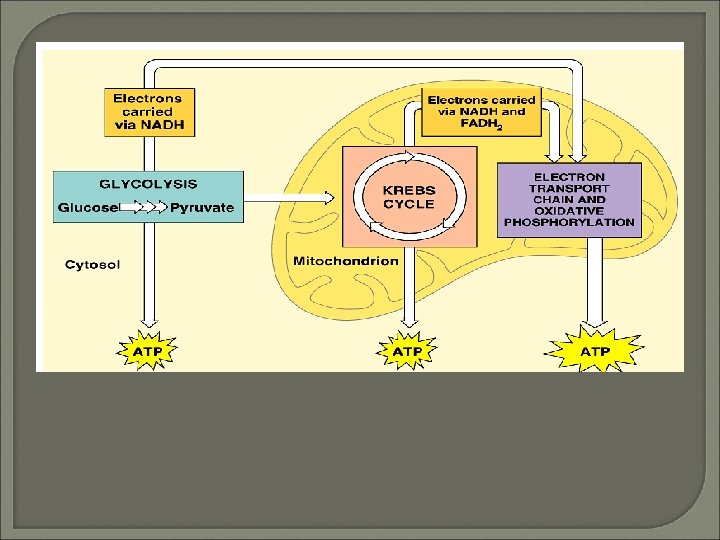
Cellular Respiration- 3 steps 1. Glycolysis- breaking down of glucose. Releases only a small amount of ATP. Takes place in the cytoplasm (for all cells) 2. Krebs Cycle- energy extracting cycle. Takes place in the mitochondria 3. Electron Transport Chain- super energy producer. Takes place in the mitochondria. The process that breaks down a glucose molecule in the presence of oxygen to make energy for the cell (ATP)
Cellular Respiration
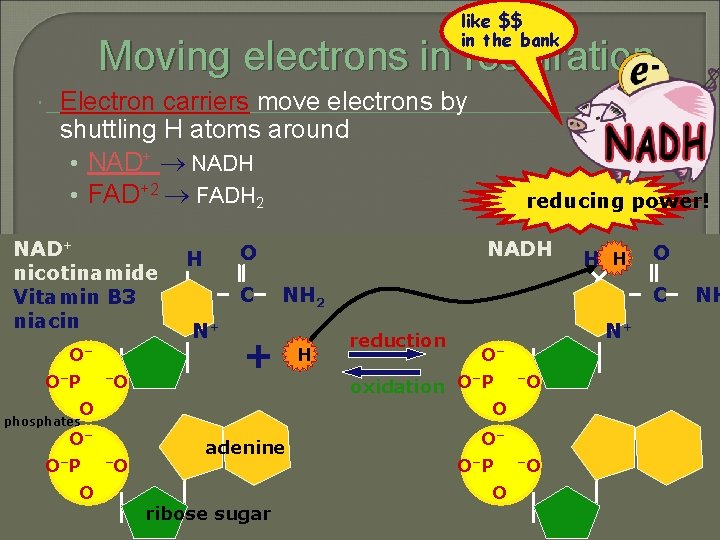
like $$ in the bank Moving electrons in respiration Electron carriers move electrons by shuttling H atoms around • NAD+ NADH • FAD+2 FADH 2 NAD+ nicotinamide Vitamin B 3 niacin O– O–P –O NADH O H C N+ + O –O adenine ribose sugar H H NH 2 phosphates O– O–P O reducing power! H O C reduction N+ O– – oxidation O P O –O O– O–P O –O NH
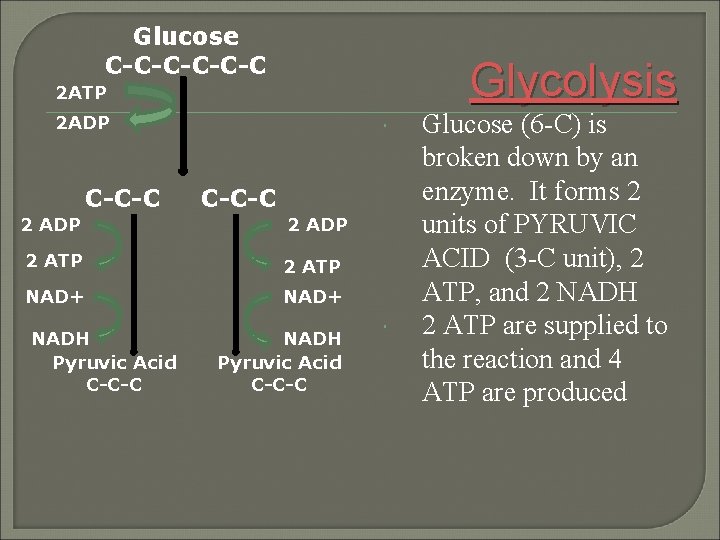
Glucose C-C-C-C Glycolysis 2 ATP 2 ADP C-C-C 2 ADP 2 ATP NAD+ NADH Pyruvic Acid C-C-C Glucose (6 -C) is broken down by an enzyme. It forms 2 units of PYRUVIC ACID (3 -C unit), 2 ATP, and 2 NADH 2 ATP are supplied to the reaction and 4 ATP are produced
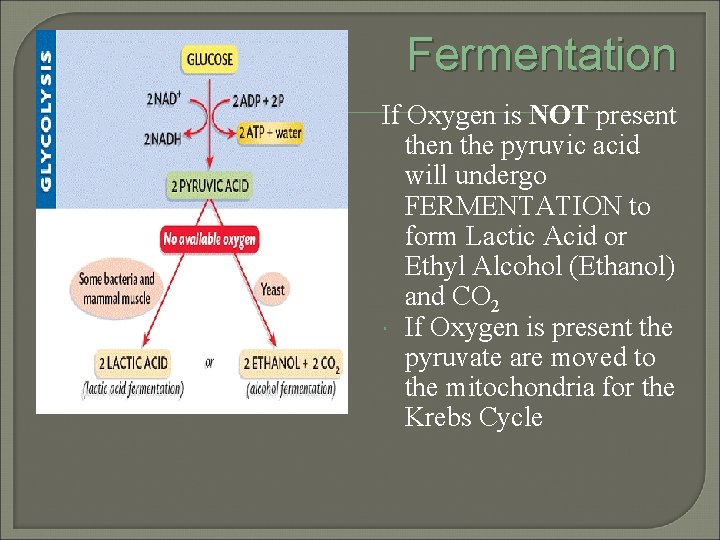
Fermentation If Oxygen is NOT present then the pyruvic acid will undergo FERMENTATION to form Lactic Acid or Ethyl Alcohol (Ethanol) and CO 2 If Oxygen is present the pyruvate are moved to the mitochondria for the Krebs Cycle
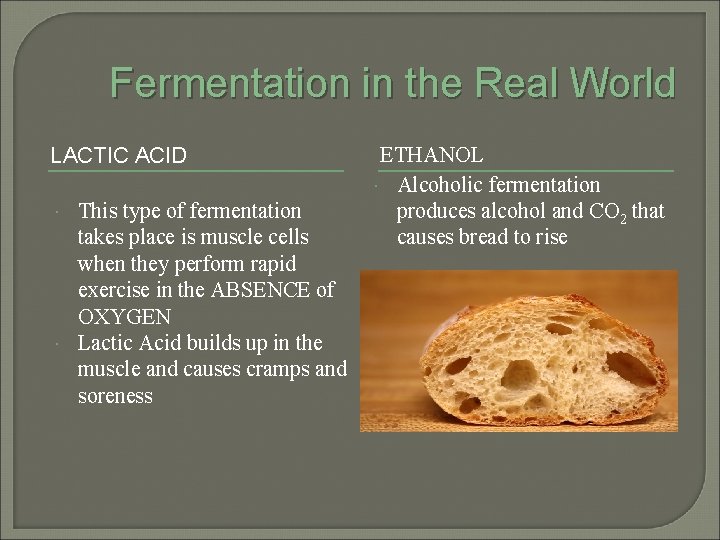
Fermentation in the Real World LACTIC ACID This type of fermentation takes place is muscle cells when they perform rapid exercise in the ABSENCE of OXYGEN Lactic Acid builds up in the muscle and causes cramps and soreness ETHANOL Alcoholic fermentation produces alcohol and CO 2 that causes bread to rise
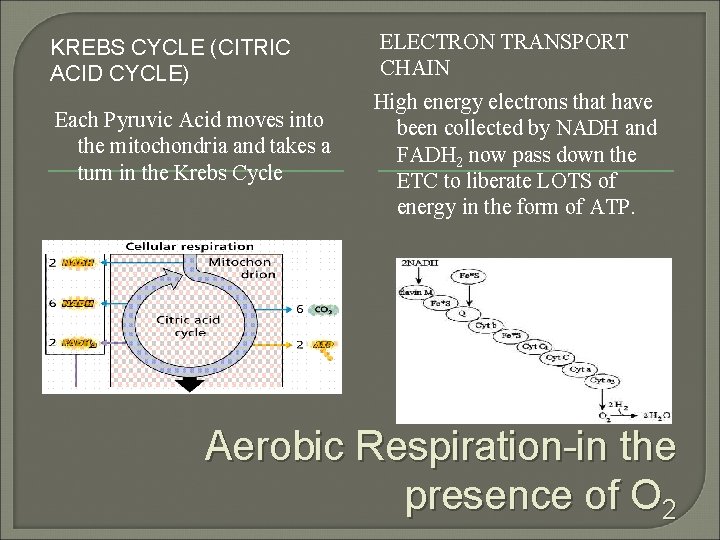
KREBS CYCLE (CITRIC ACID CYCLE) ELECTRON TRANSPORT CHAIN Each Pyruvic Acid moves into the mitochondria and takes a turn in the Krebs Cycle High energy electrons that have been collected by NADH and FADH 2 now pass down the ETC to liberate LOTS of energy in the form of ATP. Aerobic Respiration-in the presence of O 2
Krebs Cycle 1. 2. Pyruvic Acid (C-C-C) moves into the Mitochondria A Carbon is removed and a new molecule Acetyl Co. A is formed (C-C). The 3 rd carbon becomes CO 2. A NADH is also formed*Each time a C is removed it will become CO 2 3. 4. 5. 6. Acetyl Co. A (2 -C) is picked up by a 4 -C compound. The newly formed 6 -C compound now loses a C in the form of CO 2 and a NADH is made. It is now a 5 -C unit. Another C is removed and forms CO 2, a NADH and ATP are made. A 4 -C unit remains. The 4 -C is rearranged, this produces a NADH and an FADH 2. The newly formed 4 -C is ready to pick up another Acetyl Co. A and start all over.
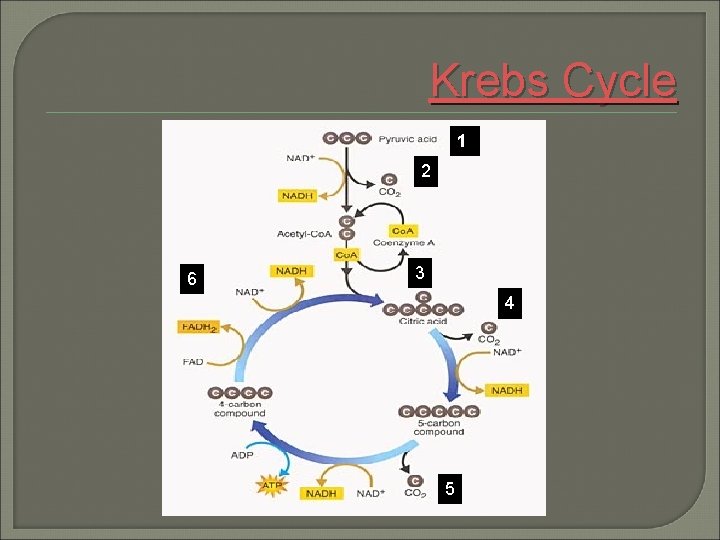
Krebs Cycle 1 2 6 3 4 5
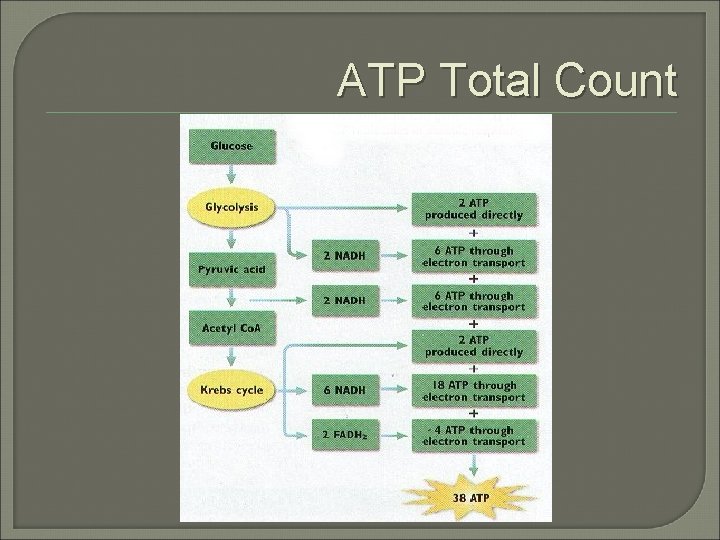
Recap of Krebs Cycle PRODUCTS 3 CO 2 molecules 4 NADH molecules 1 ATP 1 FADH 2 2 pyruvic acids are made so multiply this by 2 = 6 CO 2, 8 NADH, 2 ATP, 2 FADH 2 WHAT HAPPENS NEXT? The NADH and the FADH 2 will be moved to the inner membrane of the mitochondria where the high energy e- they carry will be removed and go to the Electron Transport Chain to make 32 ATP
Electron Transport Chain 1. 2. 3. 4. High energy electrons are removed from their carriers, NADH and FADH 2 (remember H is carrying the e-) The e- move from one protein to the next releasing energy (ETC) meanwhile the H+ (newly formed when it loses its e-) is passed through the membrane H+ powers an enzyme called ATP synthase that produces the 32 ATP of the Electron Transport Chain Finally, the e- are passed to O 2 and the Oxygen combines with the H+ to form Water.
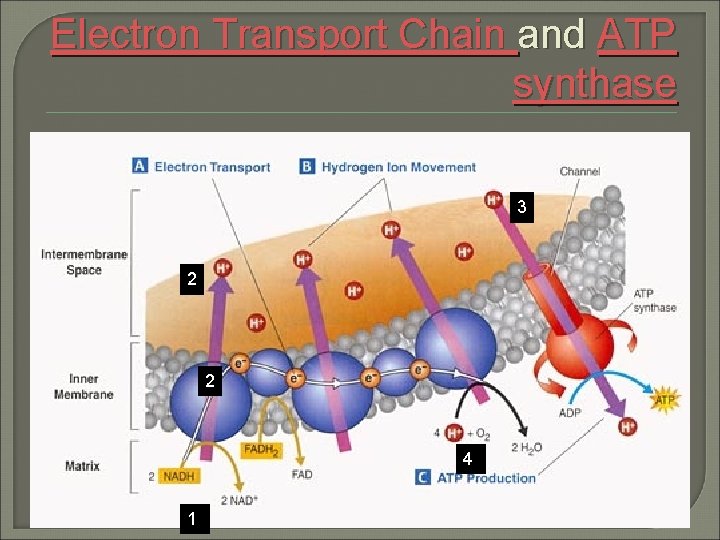
Electron Transport Chain and ATP synthase 3 2 2 4 1
ATP Total Count
Energy and Exercise Quick Energy- Cells have a small storage of ATP that is quickly used in responses to sudden danger or the start of the 100 m sprint. Once the stored ATP is used the muscles then revert to producing ATP by means of Lactic Acid fermentation. (90 sec spurts of energy) Long term energy- endurance exercises (1 -2 mile race) Uses a molecule called Glygogen to slowly release ATP through cellular respiration. Usually last up to 20 min. After 20 minuetes the body must find another source such as fats for energy.
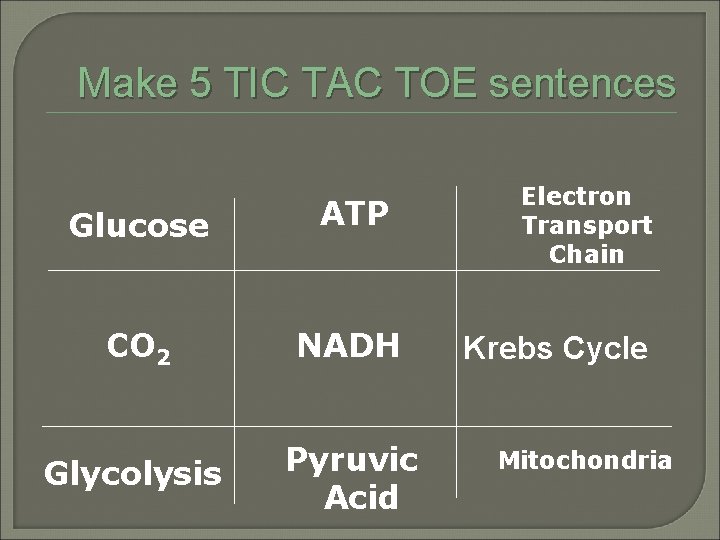
Make 5 TIC TAC TOE sentences Glucose ATP CO 2 NADH Glycolysis Pyruvic Acid Electron Transport Chain Krebs Cycle Mitochondria
- Slides: 21