
Cellular Differentiation From Embryo to Organism References http
Cellular Differentiation From Embryo to Organism References: http: //biology. kenyon. edu/courses/biol 114/Chap 11/Chapter_11. html • http: //www. virtuallaboratory. net/Biofundamentals/lecture. Notes/Topic 5 -3_Stem. Cells. htm • http: //www. indiana. edu/~elegans/Video_archive/video_archive. html • http: //www. imp. ac. at/knoblich/kno_movie 1. html • http: //stemcells. nih. gov/info/basics 4. asp • http: //www. pbs. org/wgbh/nova/sciencenow/3209/04. html
Undifferentiated cells
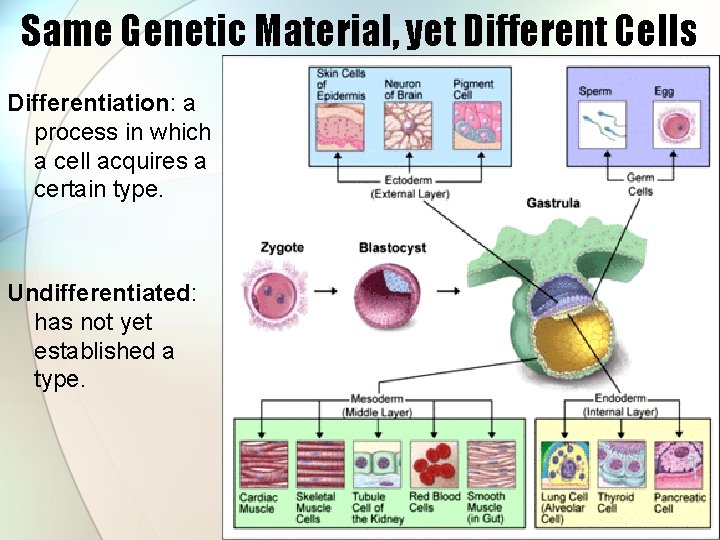
Same Genetic Material, yet Different Cells Differentiation: a process in which a cell acquires a certain type. Undifferentiated: has not yet established a type.
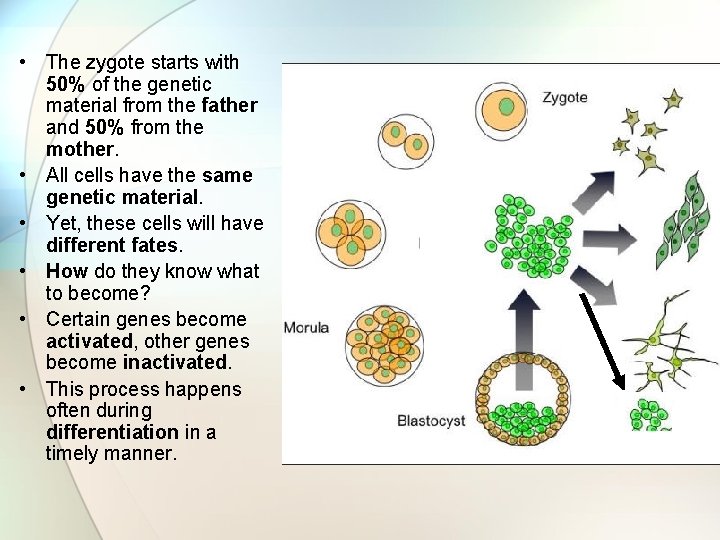
• The zygote starts with 50% of the genetic material from the father and 50% from the mother. • All cells have the same genetic material. • Yet, these cells will have different fates. • How do they know what to become? • Certain genes become activated, other genes become inactivated. • This process happens often during differentiation in a timely manner.
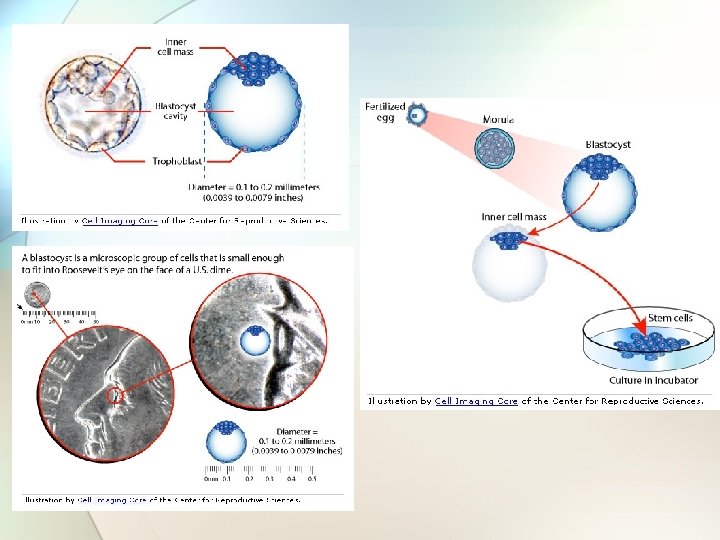
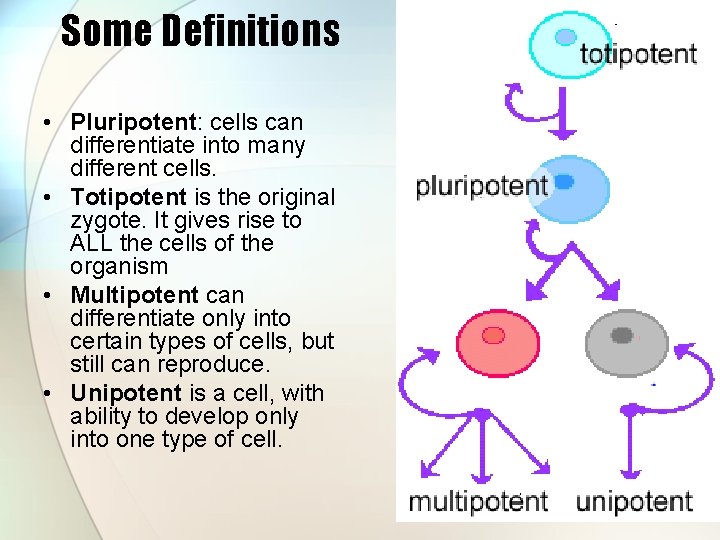
Some Definitions • Pluripotent: cells can differentiate into many different cells. • Totipotent is the original zygote. It gives rise to ALL the cells of the organism • Multipotent can differentiate only into certain types of cells, but still can reproduce. • Unipotent is a cell, with ability to develop only into one type of cell.
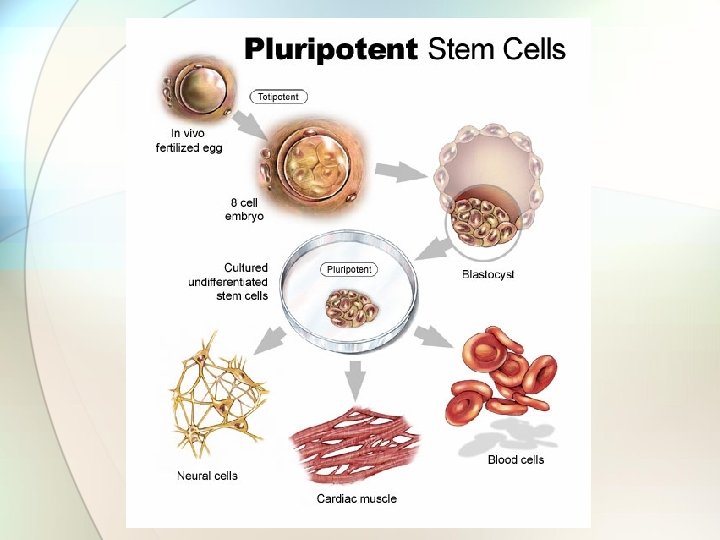
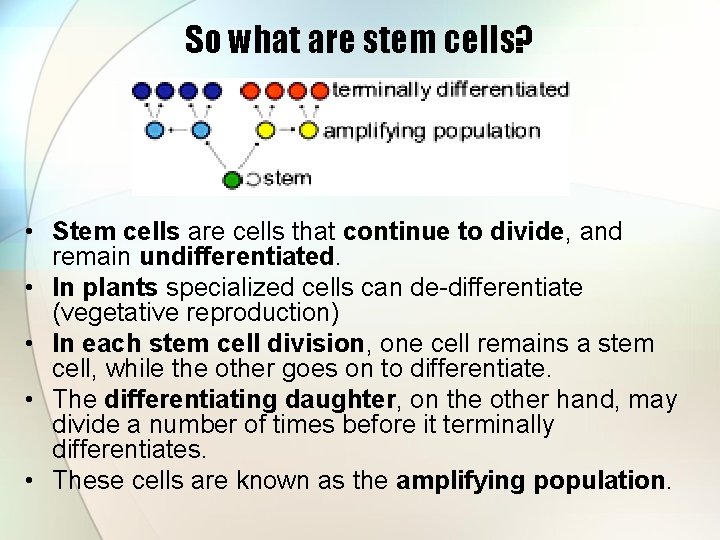
So what are stem cells? • Stem cells are cells that continue to divide, and remain undifferentiated. • In plants specialized cells can de-differentiate (vegetative reproduction) • In each stem cell division, one cell remains a stem cell, while the other goes on to differentiate. • The differentiating daughter, on the other hand, may divide a number of times before it terminally differentiates. • These cells are known as the amplifying population.
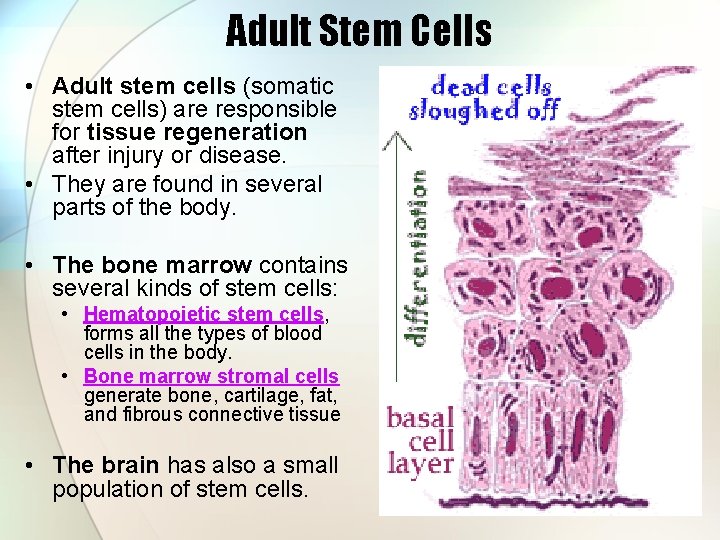
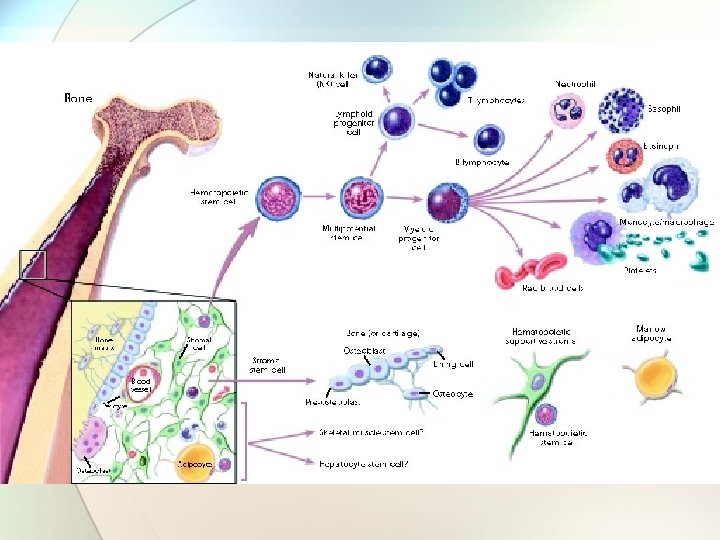
Adult Stem Cells • Adult stem cells (somatic stem cells) are responsible for tissue regeneration after injury or disease. • They are found in several parts of the body. • The bone marrow contains several kinds of stem cells: • Hematopoietic stem cells, forms all the types of blood cells in the body. • Bone marrow stromal cells generate bone, cartilage, fat, and fibrous connective tissue • The brain has also a small population of stem cells.
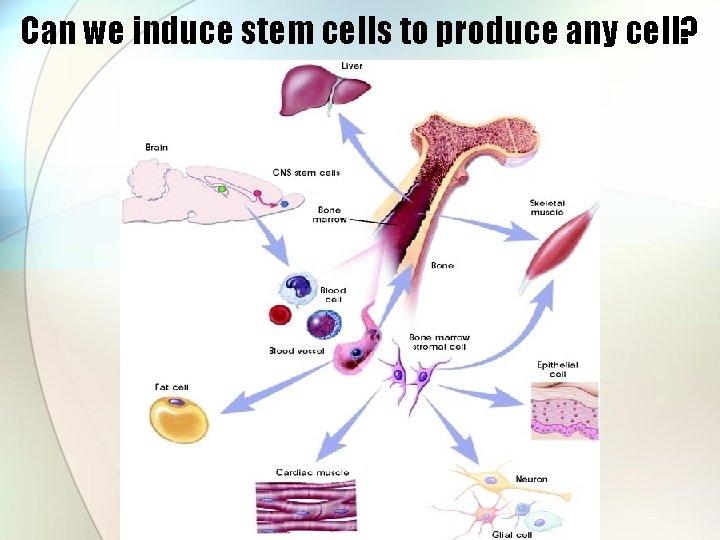
Can we induce stem cells to produce any cell?
Unanswered Questions http: //stemcells. nih. gov/info/basics 4. asp • How many kinds of adult stem cells exist, where? • What are the sources of adult stem cells in the body? • What are the signals that regulate the proliferation and differentiation of stem cells that demonstrate plasticity? • Is it possible to manipulate adult stem cells to enhance their proliferation transplants can be produced? • Does a single type of stem cell exist—possibly in the bone marrow or circulating in the blood—that can generate the cells of any organ or tissue? • What are the factors that stimulate stem cells to relocate to sites of injury or damage?
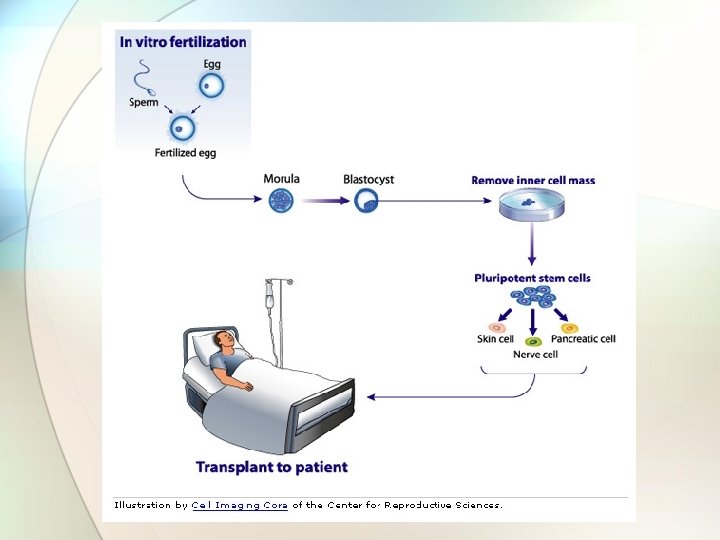
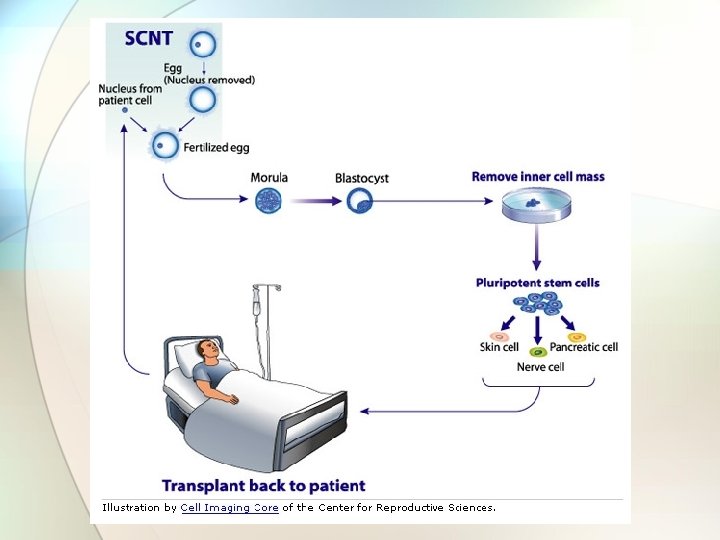
Research Directions • Isolating stem cells and putting them in culture to generate an identical population of these cells (clones) • Inducing the stem cells to differentiate into certain cell types for transplantation. • Injecting stem cells to repopulate a depleted organ and survive there, without harming the host. • Manipulate the environment to influence the way stem cells differentiate. • Embryonic stem cells are pluripotent, but adult stem cells have only limited potencies. • Using adult stem cells is preferable, because of ethical issues, harvesting from the same patient reduces immune reactions to a transplant. • Understanding the mechanisms of differentiation and repair. • Use of stem cells to test new medications specific of humans

Differentiation of Cells during Embryogenesis
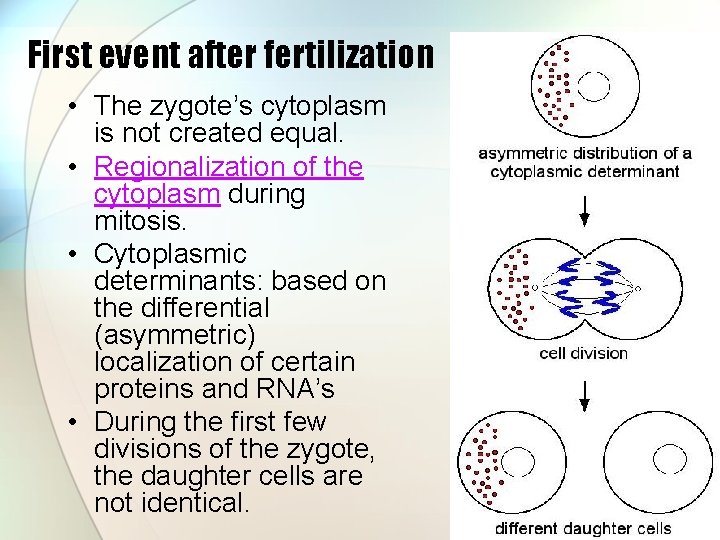
First event after fertilization • The zygote’s cytoplasm is not created equal. • Regionalization of the cytoplasm during mitosis. • Cytoplasmic determinants: based on the differential (asymmetric) localization of certain proteins and RNA’s • During the first few divisions of the zygote, the daughter cells are not identical.
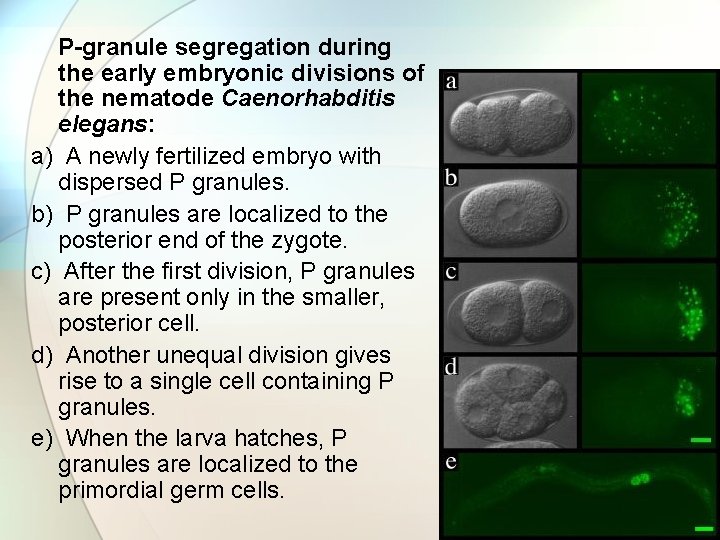
P-granule segregation during the early embryonic divisions of the nematode Caenorhabditis elegans: a) A newly fertilized embryo with dispersed P granules. b) P granules are localized to the posterior end of the zygote. c) After the first division, P granules are present only in the smaller, posterior cell. d) Another unequal division gives rise to a single cell containing P granules. e) When the larva hatches, P granules are localized to the primordial germ cells.
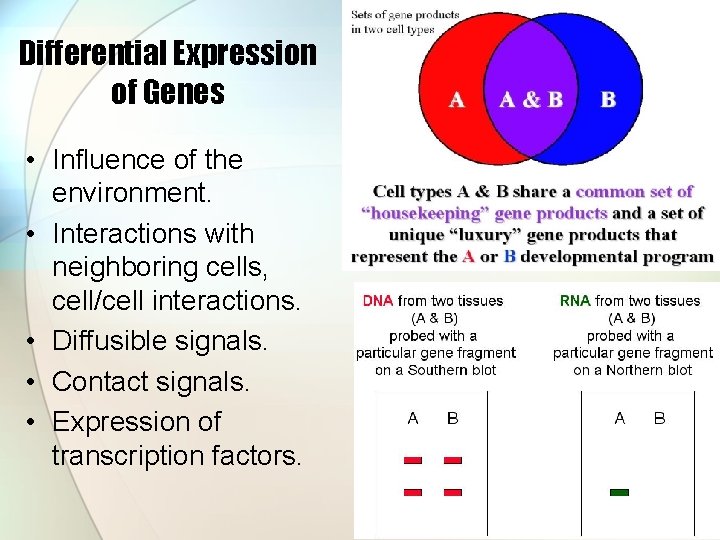
Differential Expression of Genes • Influence of the environment. • Interactions with neighboring cells, cell/cell interactions. • Diffusible signals. • Contact signals. • Expression of transcription factors.
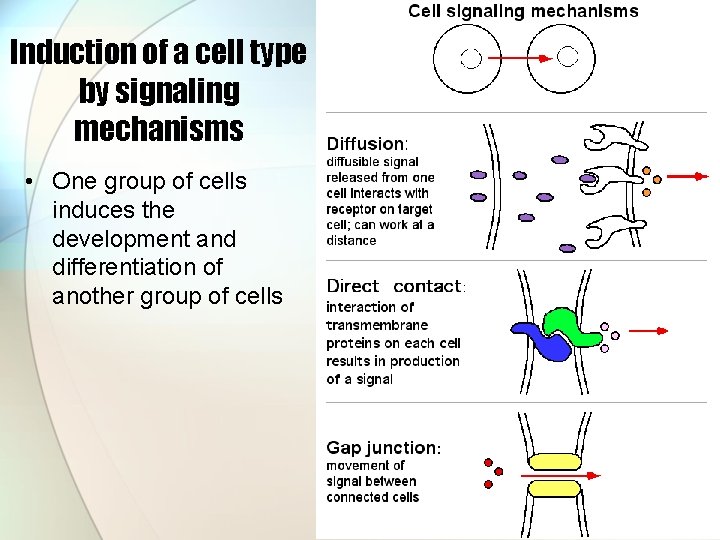
Induction of a cell type by signaling mechanisms • One group of cells induces the development and differentiation of another group of cells
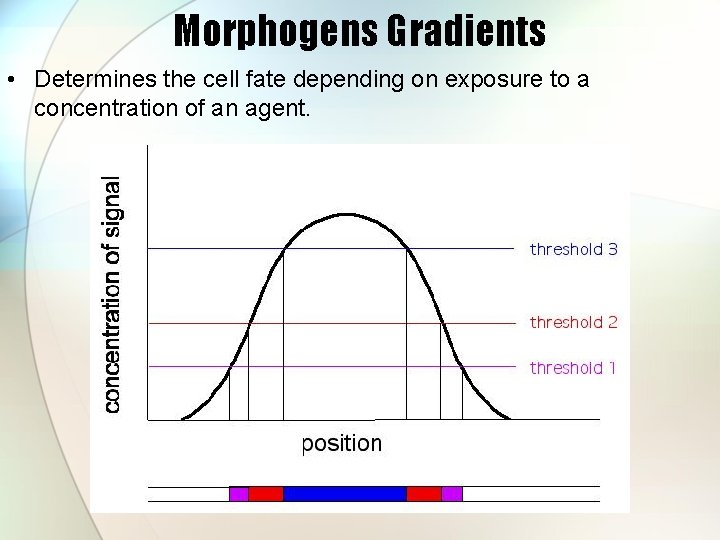
Morphogens Gradients • Determines the cell fate depending on exposure to a concentration of an agent.
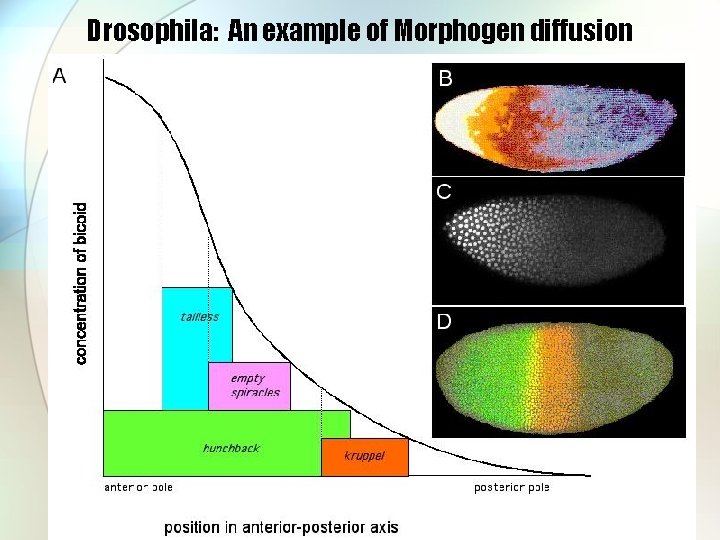
Drosophila: An example of Morphogen diffusion
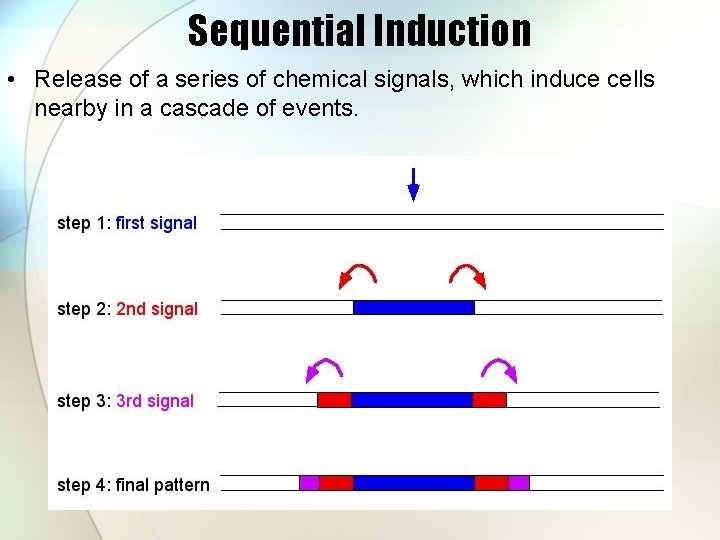
Sequential Induction • Release of a series of chemical signals, which induce cells nearby in a cascade of events.
- Slides: 27