
Cellular Communication All cells communicate Eukaryotes and prokaryotes
- Slides: 13
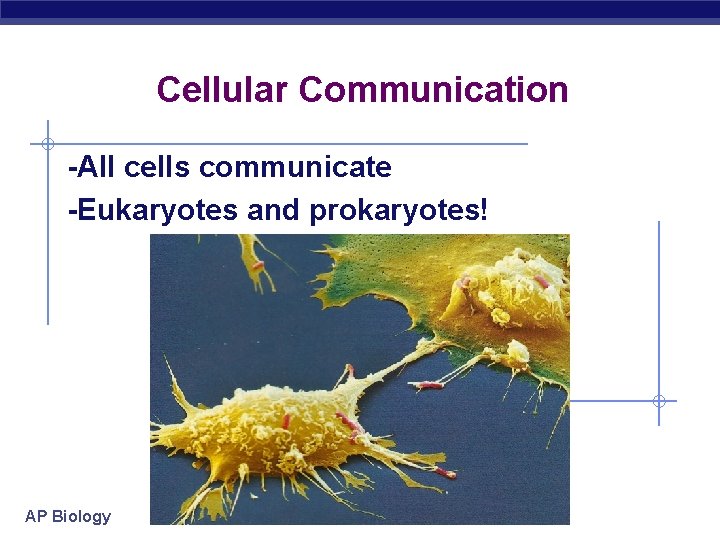
Cellular Communication -All cells communicate -Eukaryotes and prokaryotes! AP Biology
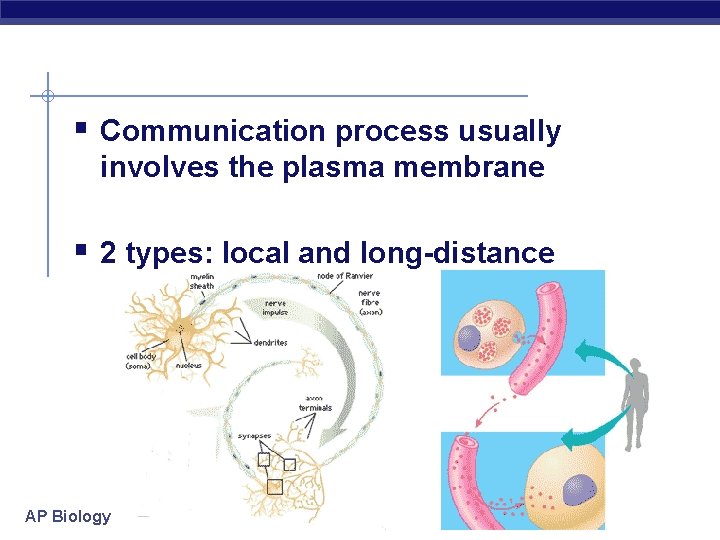
§ Communication process usually involves the plasma membrane § 2 types: local and long-distance AP Biology
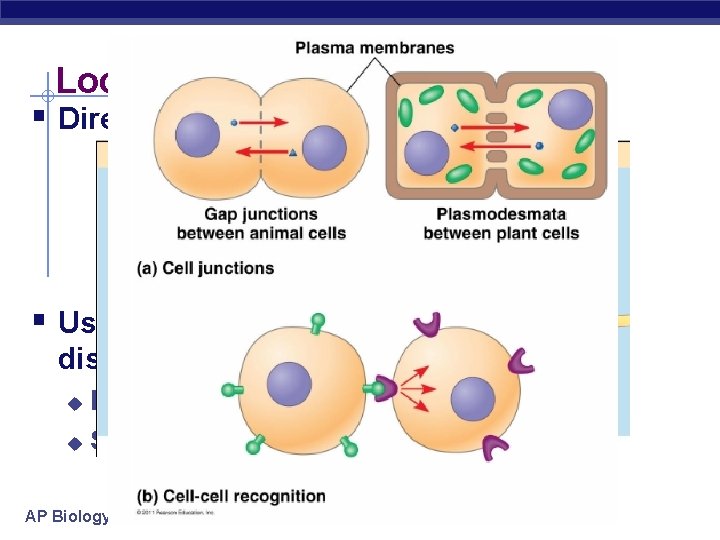
Local Signaling § Direct contact § Gap junctions or plasmodesmata w Cytoplasms of cells directly connected § Animal cells also by direct contact between membrane-bound molecules § Use of messenger molecules for shortdistance communication Paracrine signaling u Synaptic signaling u AP Biology
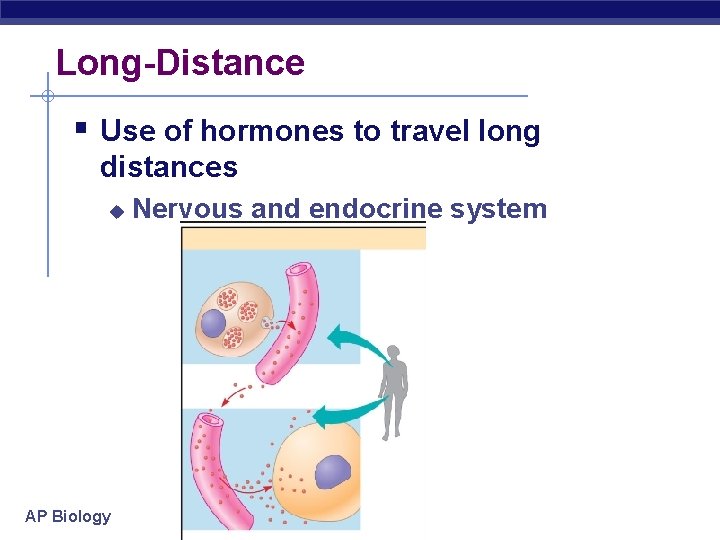
Long-Distance § Use of hormones to travel long distances u AP Biology Nervous and endocrine system
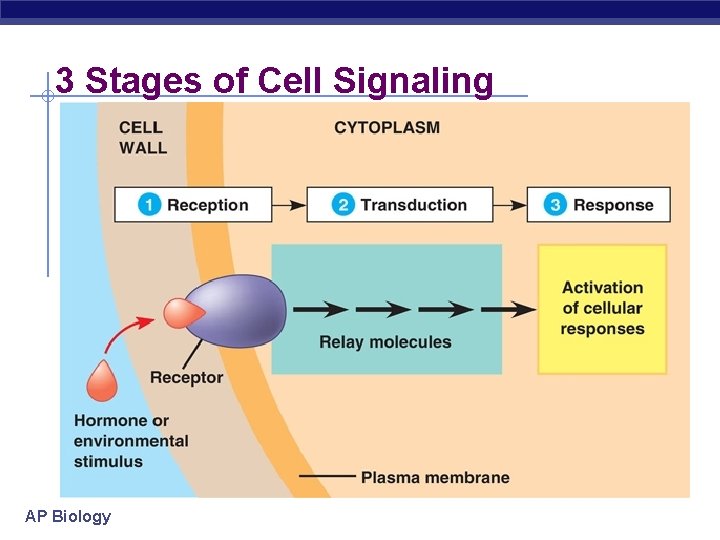
3 Stages of Cell Signaling AP Biology
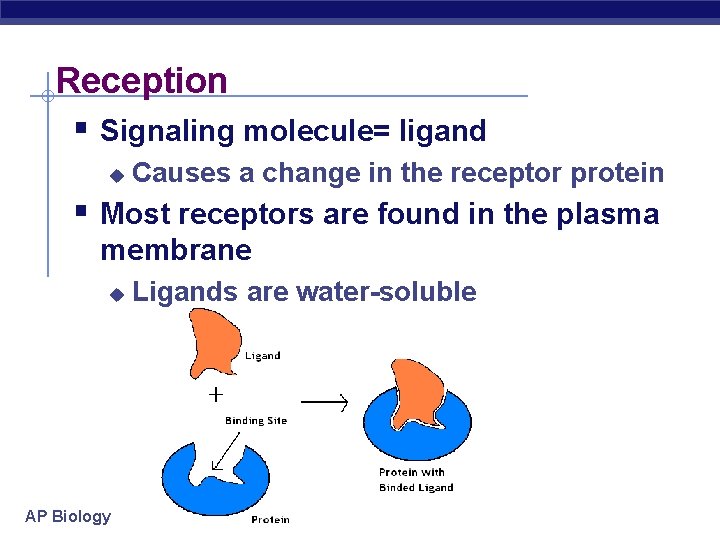
Reception § Signaling molecule= ligand u Causes a change in the receptor protein § Most receptors are found in the plasma membrane u AP Biology Ligands are water-soluble
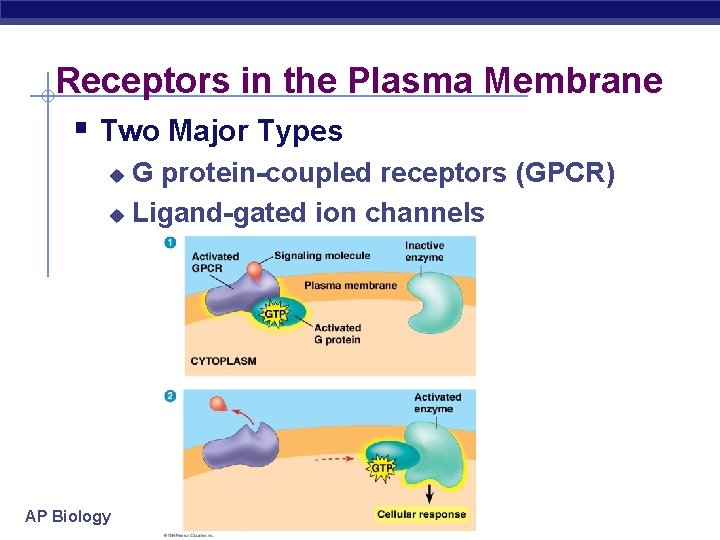
Receptors in the Plasma Membrane § Two Major Types G protein-coupled receptors (GPCR) u Ligand-gated ion channels u AP Biology
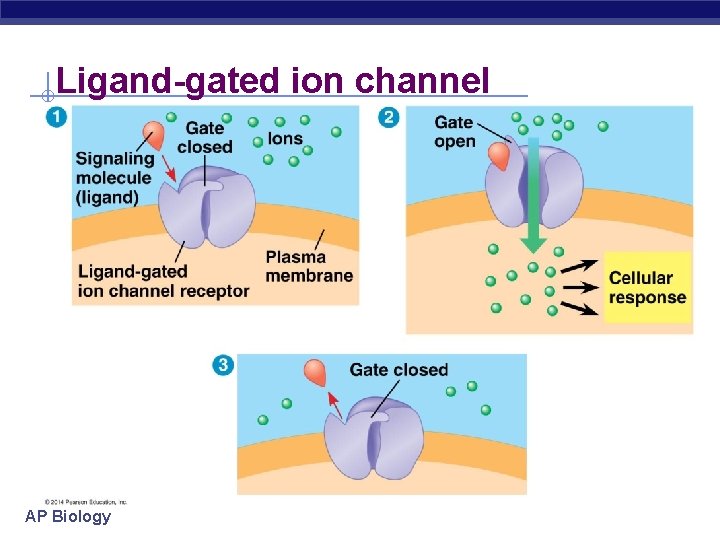
Ligand-gated ion channel AP Biology
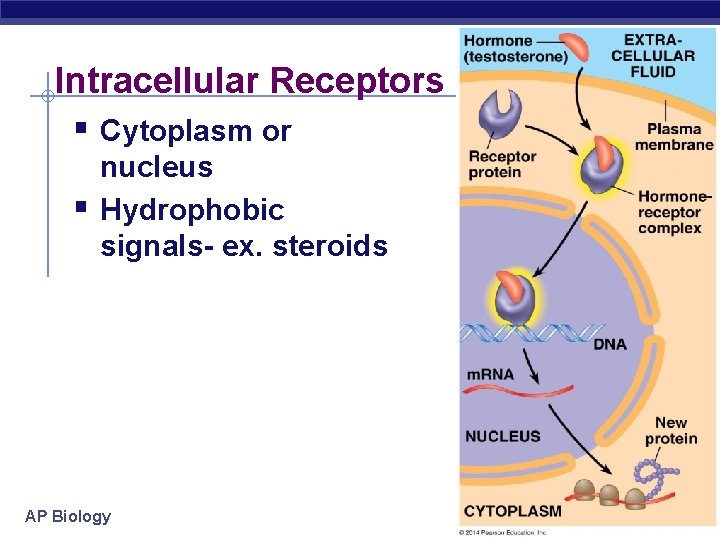
Intracellular Receptors § Cytoplasm or § nucleus Hydrophobic signals- ex. steroids AP Biology
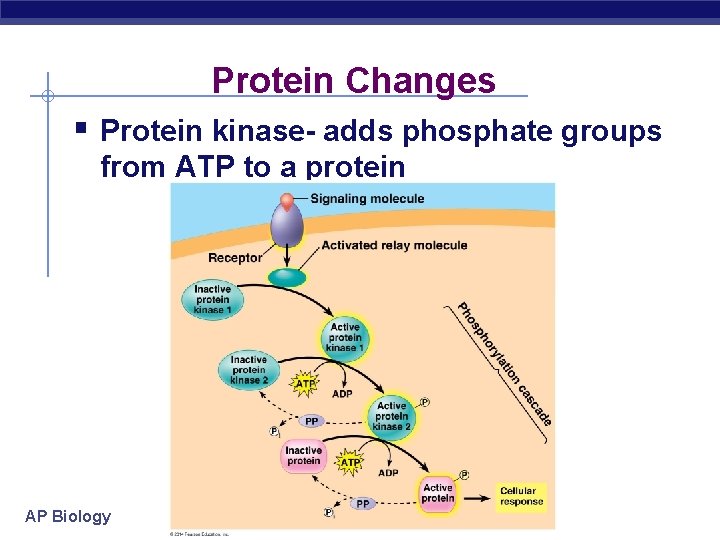
Transduction by Cascade § Transduction of cell signaling usually involves multiple steps u Gives possibility of signal amplification § Signal transduction pathway usually involves proteins u Change in shape of a protein § Phosphorylation AP Biology
Protein Changes § Protein kinase- adds phosphate groups from ATP to a protein AP Biology
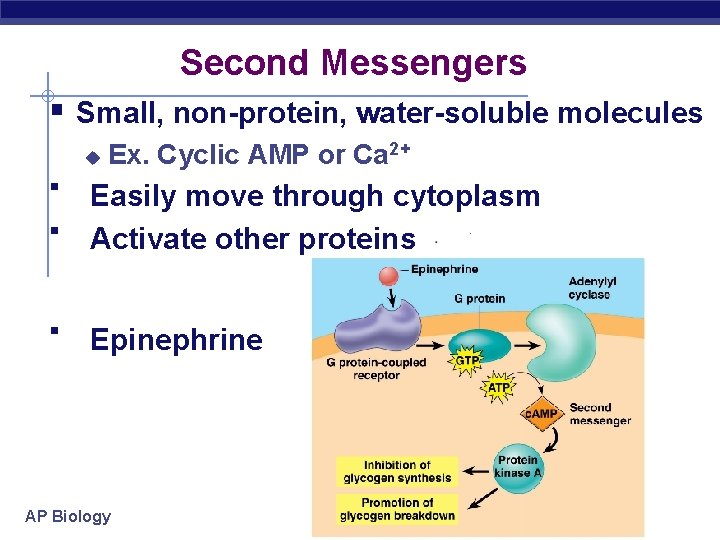
Second Messengers § Small, non-protein, water-soluble molecules u Ex. Cyclic AMP or Ca 2+ § Easily move through cytoplasm § Activate other proteins § Epinephrine AP Biology
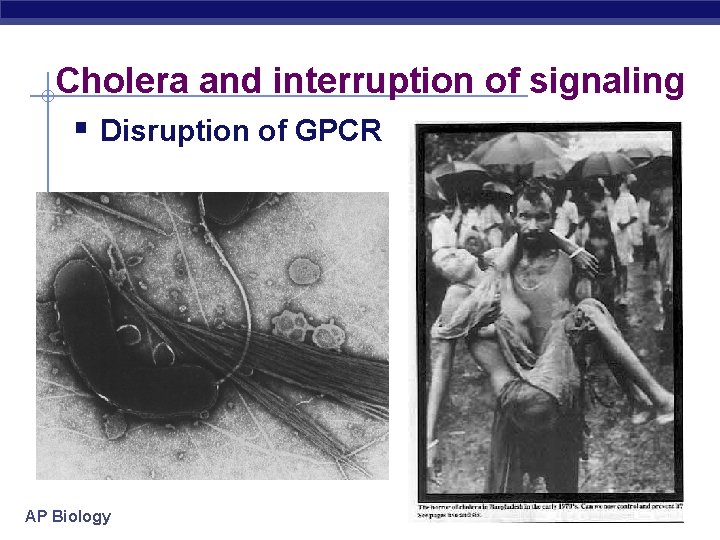
Cholera and interruption of signaling § Disruption of GPCR AP Biology