
Cells What is a cell A cell is

- Slides: 10
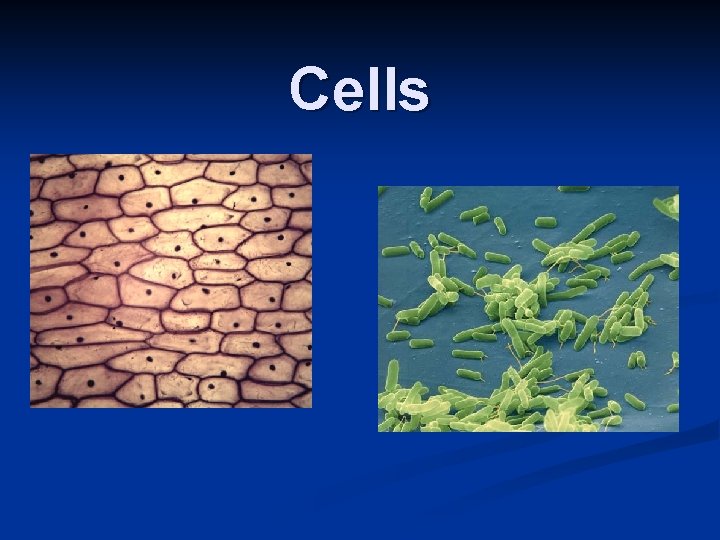
Cells
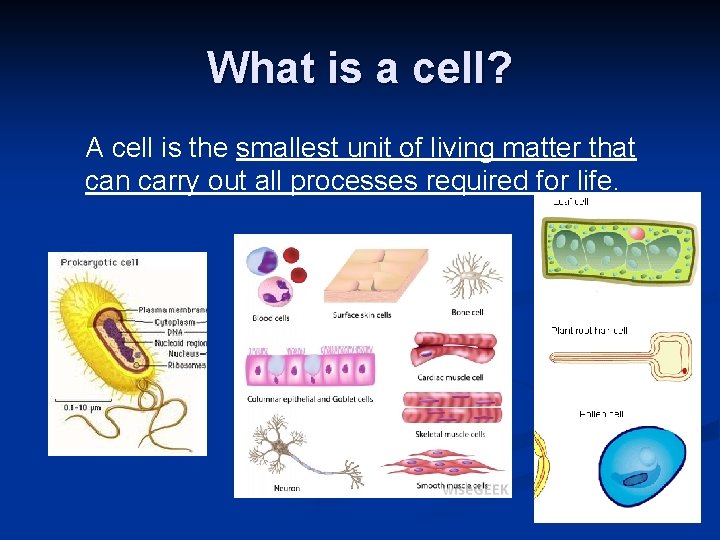
What is a cell? A cell is the smallest unit of living matter that can carry out all processes required for life.
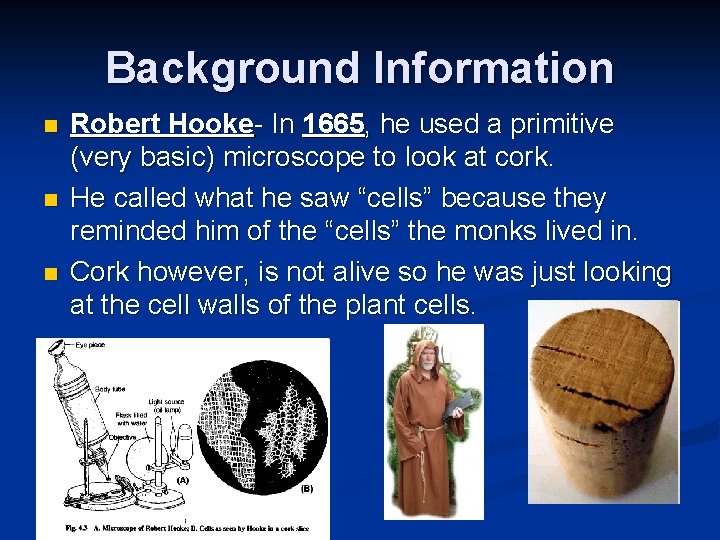
Background Information n Robert Hooke- In 1665, he used a primitive (very basic) microscope to look at cork. He called what he saw “cells” because they reminded him of the “cells” the monks lived in. Cork however, is not alive so he was just looking at the cell walls of the plant cells.
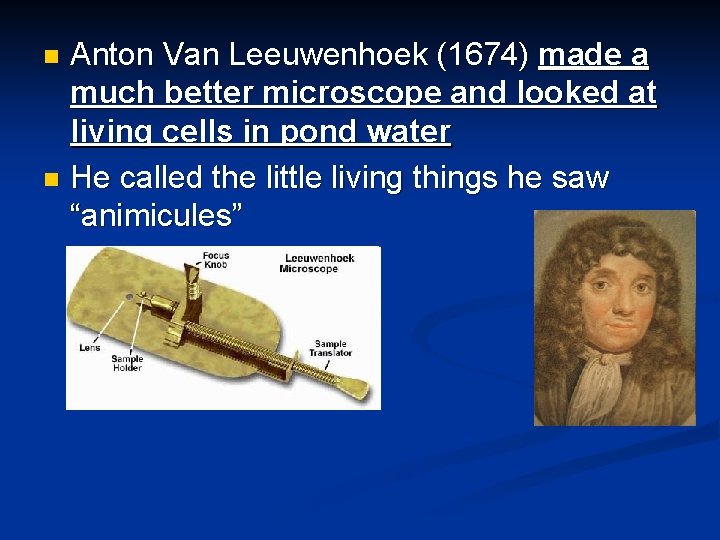
Anton Van Leeuwenhoek (1674) made a much better microscope and looked at living cells in pond water n He called the little living things he saw “animicules” n
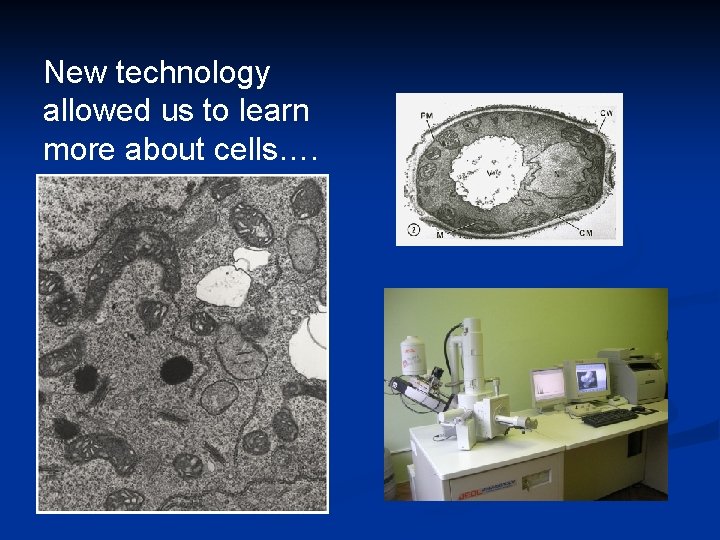
New technology allowed us to learn more about cells….
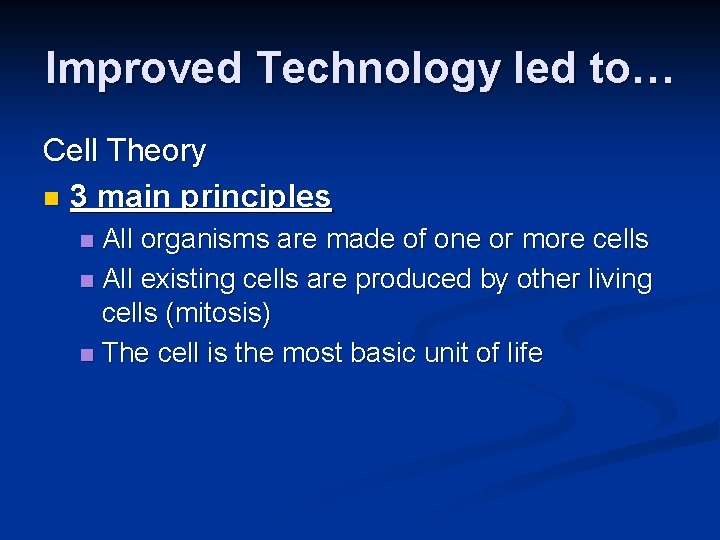
Improved Technology led to… Cell Theory n 3 main principles All organisms are made of one or more cells n All existing cells are produced by other living cells (mitosis) n The cell is the most basic unit of life n
Organelles n What are organelles? Parts of a cell n Example: nucleus, ribosome, mitochondria, cell wall, cell membrane, endoplasmic reticulum, cell membrane, etc. n Some organelles are found in only plant cells, only animal cells, both plant and animal, bacterial, single-celled organisms, or all. n
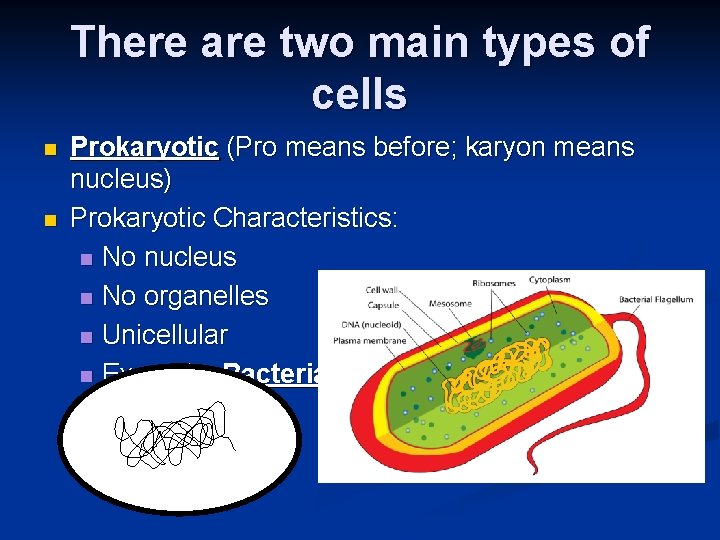
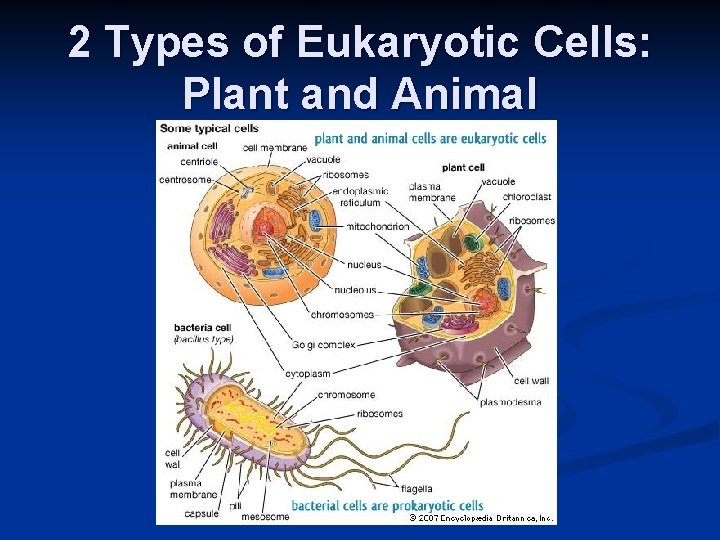
There are two main types of cells n n Prokaryotic (Pro means before; karyon means nucleus) Prokaryotic Characteristics: n No nucleus n No organelles n Unicellular n Example: Bacteria
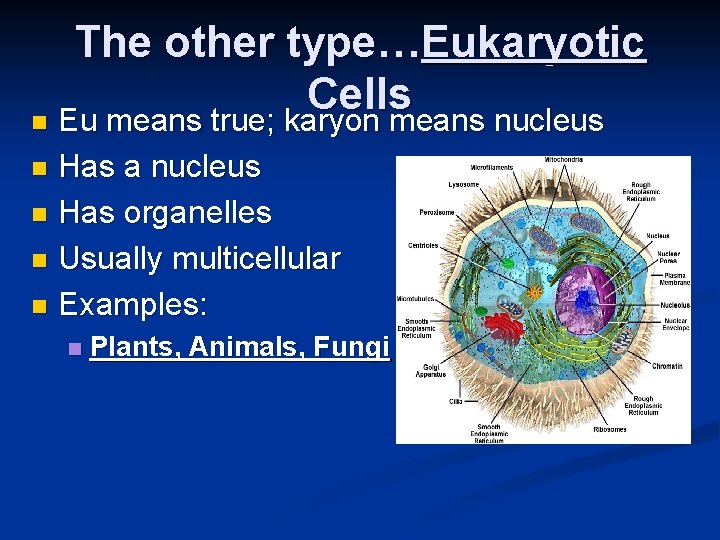
The other type…Eukaryotic Cells n Eu means true; karyon means nucleus Has a nucleus n Has organelles n Usually multicellular n Examples: n n Plants, Animals, Fungi
2 Types of Eukaryotic Cells: Plant and Animal