
Cells What do you know about cells Vocabulary
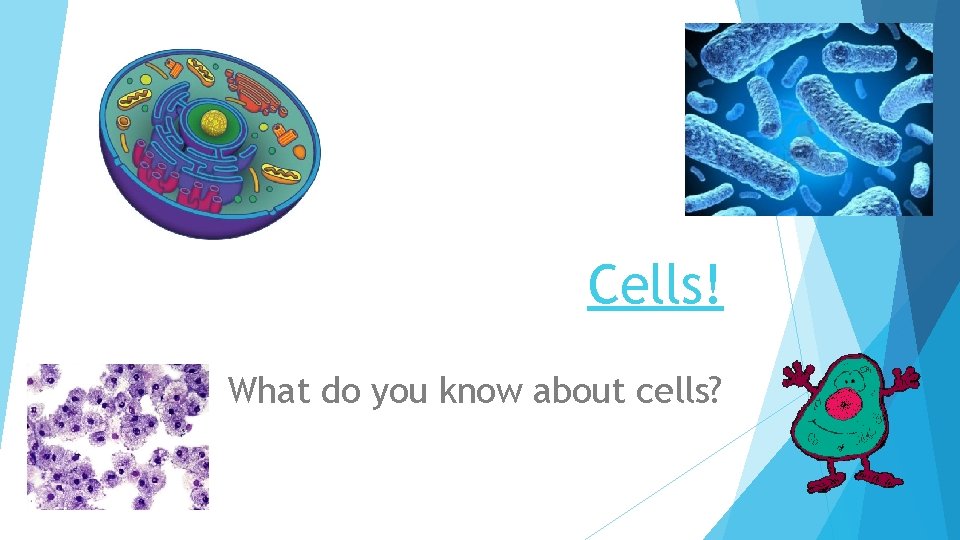
Cells! What do you know about cells?
Vocabulary #1 -7 (textbook page 51) 1. Cell - the basic unit of structure and function of living things 2. Microscopic - too small to be seen without using a microscope 3. Organism - any living that maintains vital life processes 4. Cell Membrane – the thin covering that surrounds and protects every cell; lets nutrients in and wastes out 5. Nucleus – the part of a cell that directs all the cell’s activities 6. Cytoplasm – a jelly-like material inside a cell between the cell membrane and the nucleus 7. Protist - a simple, single-celled or multi-celled organism with a nucleus and organelles
Six Life Processes of all living things Living things… 1. Take in nutrients 2. Need and use energy to work 3. Reproduce 4. Grow 5. Respond to the world around them 6. Get rid of waste Characteristics of Life #1 3: 39 Living or Not Living slides… Characteristics of Life #2 6: 07
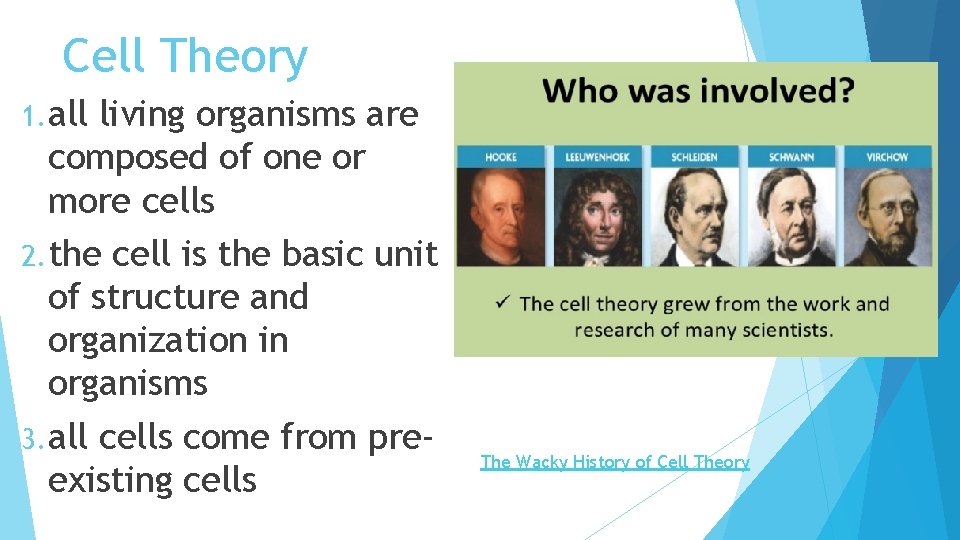
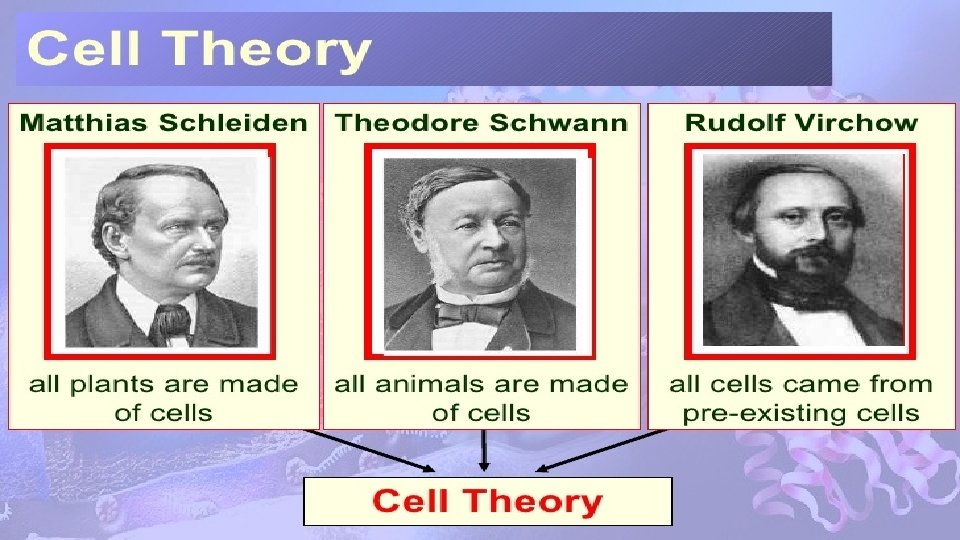
Cell Theory 1. all living organisms are composed of one or more cells 2. the cell is the basic unit of structure and organization in organisms 3. all cells come from preexisting cells The Wacky History of Cell Theory
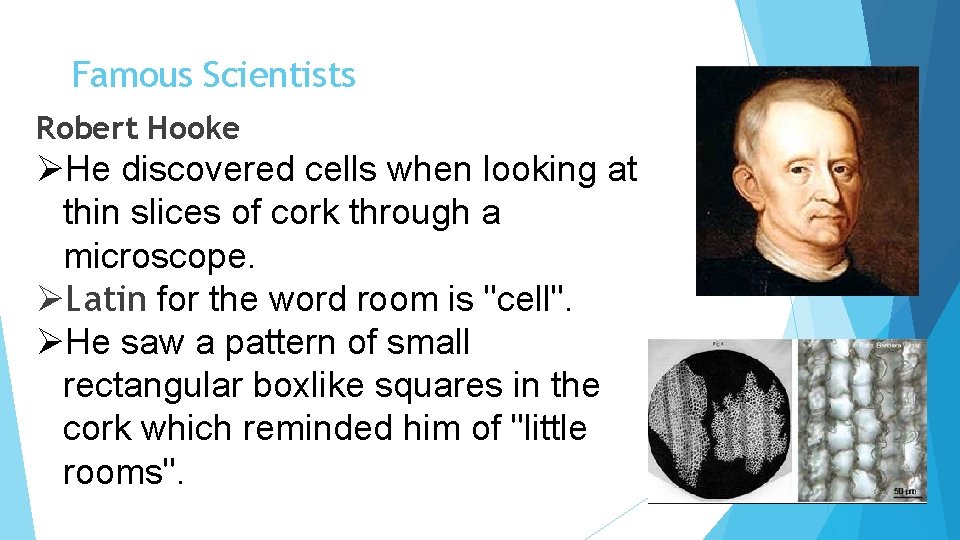
Famous Scientists Robert Hooke ØHe discovered cells when looking at thin slices of cork through a microscope. ØLatin for the word room is "cell". ØHe saw a pattern of small rectangular boxlike squares in the cork which reminded him of "little rooms".
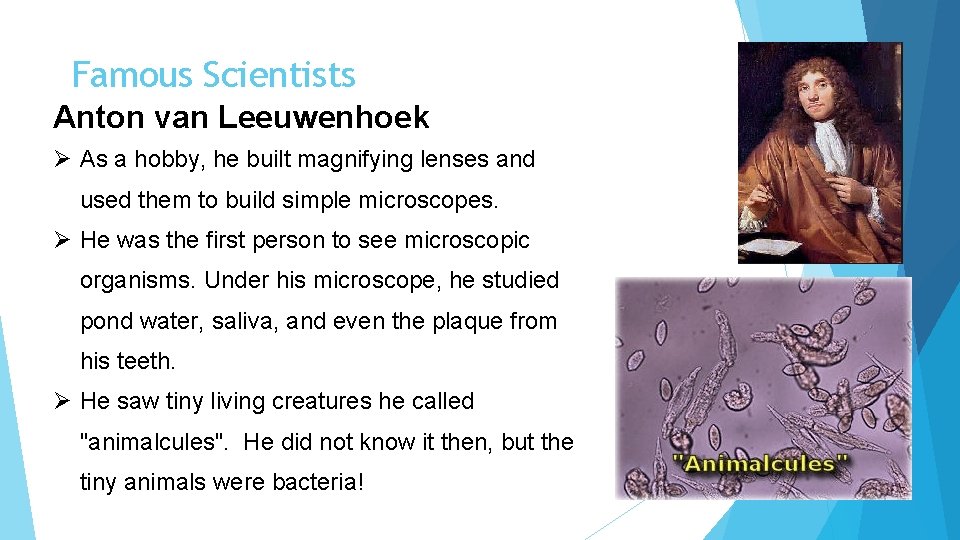
Famous Scientists Anton van Leeuwenhoek Ø As a hobby, he built magnifying lenses and used them to build simple microscopes. Ø He was the first person to see microscopic organisms. Under his microscope, he studied pond water, saliva, and even the plaque from his teeth. Ø He saw tiny living creatures he called "animalcules". He did not know it then, but the tiny animals were bacteria!
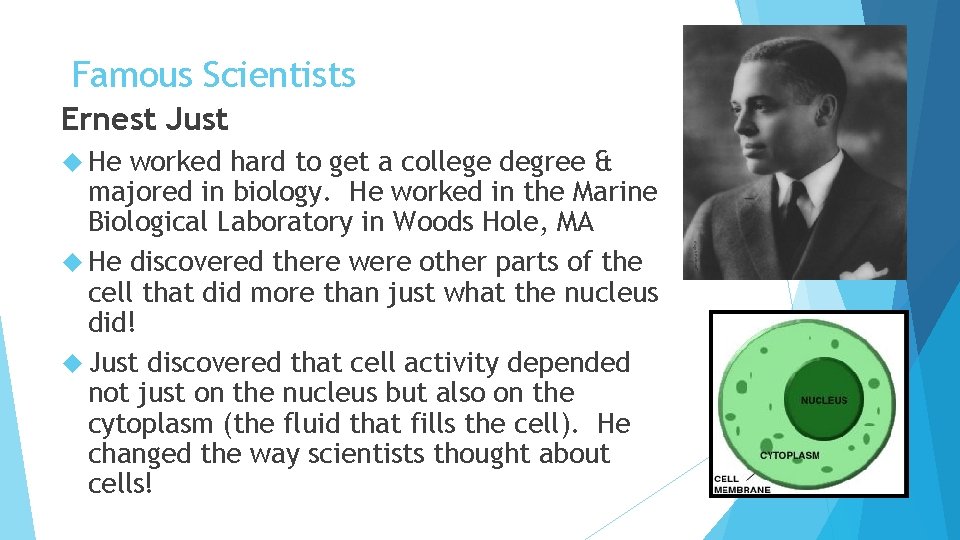
Famous Scientists Ernest Just He worked hard to get a college degree & majored in biology. He worked in the Marine Biological Laboratory in Woods Hole, MA He discovered there were other parts of the cell that did more than just what the nucleus did! Just discovered that cell activity depended not just on the nucleus but also on the cytoplasm (the fluid that fills the cell). He changed the way scientists thought about cells!
Vocabulary #12 -17 12. Moneran - a single celled organism that does not have a membrane bound nucleus. 13. Organelles – the parts of the cell that float in the cytoplasm 14. Mitochondria – called the “powerhouses”, they release energy from nutrients 15. Vacuole - store nutrients, water, or waste until the cell uses or releases these substances 16. Cell Wall – supports and gives shape to the cell 17. Chloroplasts – contains chlorophyll that uses sunlight, carbon dioxide, and water to make food (sugar)
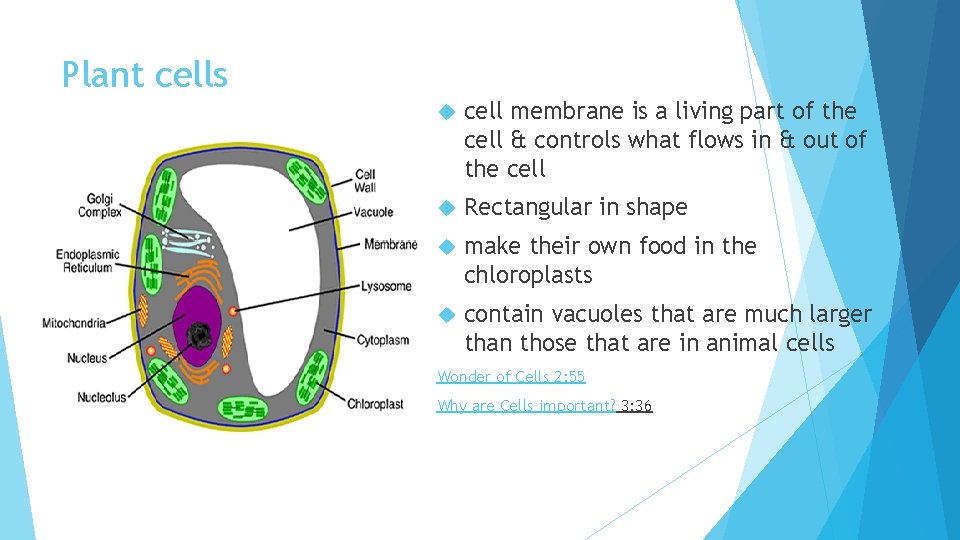
Plant cells cell membrane is a living part of the cell & controls what flows in & out of the cell Rectangular in shape make their own food in the chloroplasts contain vacuoles that are much larger than those that are in animal cells Wonder of Cells 2: 55 Why are Cells important? 3: 36
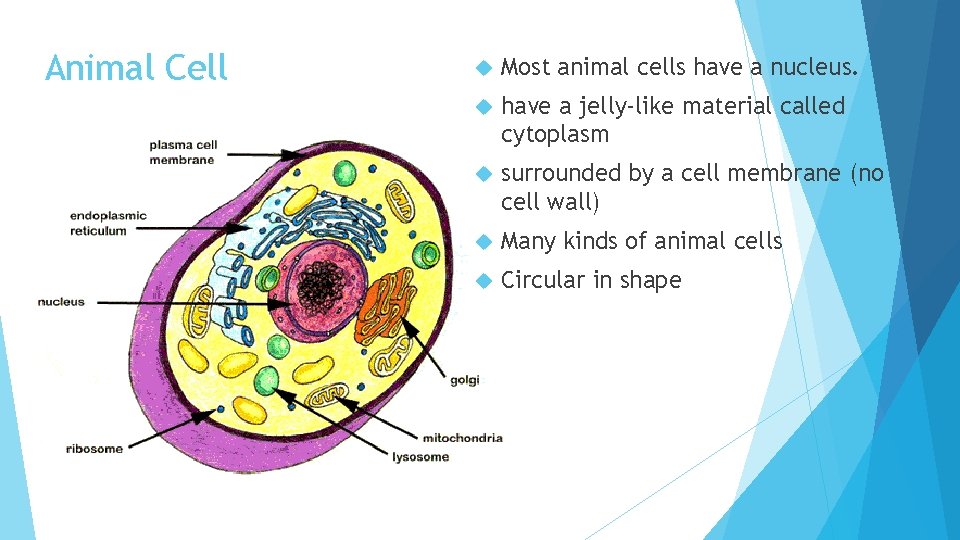
Animal Cell Most animal cells have a nucleus. have a jelly-like material called cytoplasm surrounded by a cell membrane (no cell wall) Many kinds of animal cells Circular in shape

Single-Celled Organisms Moneran - a single celled organism that does not have a membrane bound nucleus. Protist: A single celled organism that has a nucleus, some are animal like, some are plant like. 3 types: 1. Animal like Protist: Amoeba 2. Plant like Protist: Diatoms 3. Type of Moneran: Bacteria Intro to the Protists
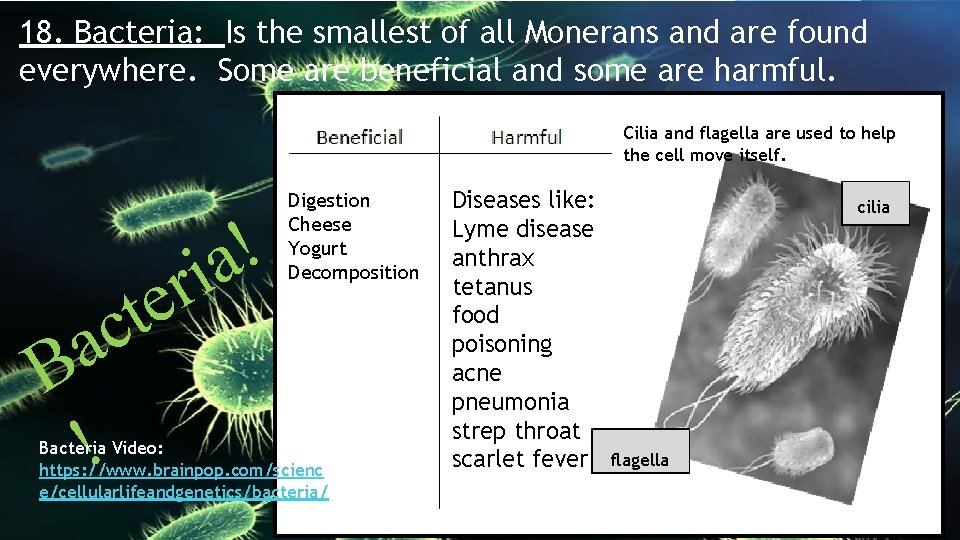
18. Bacteria: Is the smallest of all Monerans and are found everywhere. Some are beneficial and some are harmful. Cilia and flagella are used to help the cell move itself. e t c a B ! ! a i r Digestion Cheese Yogurt Decomposition Bacteria Video: https: //www. brainpop. com/scienc e/cellularlifeandgenetics/bacteria/ Diseases like: Lyme disease anthrax tetanus food poisoning acne pneumonia strep throat scarlet fever cilia flagella
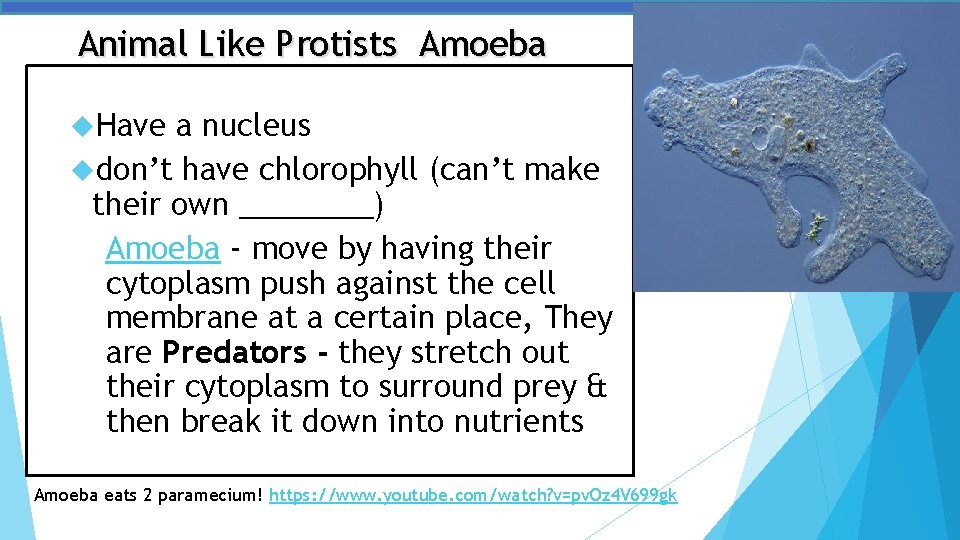
Animal Like Protists Amoeba Have a nucleus don’t have chlorophyll (can’t make their own ____) Amoeba - move by having their cytoplasm push against the cell membrane at a certain place, They are Predators - they stretch out their cytoplasm to surround prey & then break it down into nutrients Amoeba eats 2 paramecium! https: //www. youtube. com/watch? v=pv. Oz 4 V 699 gk
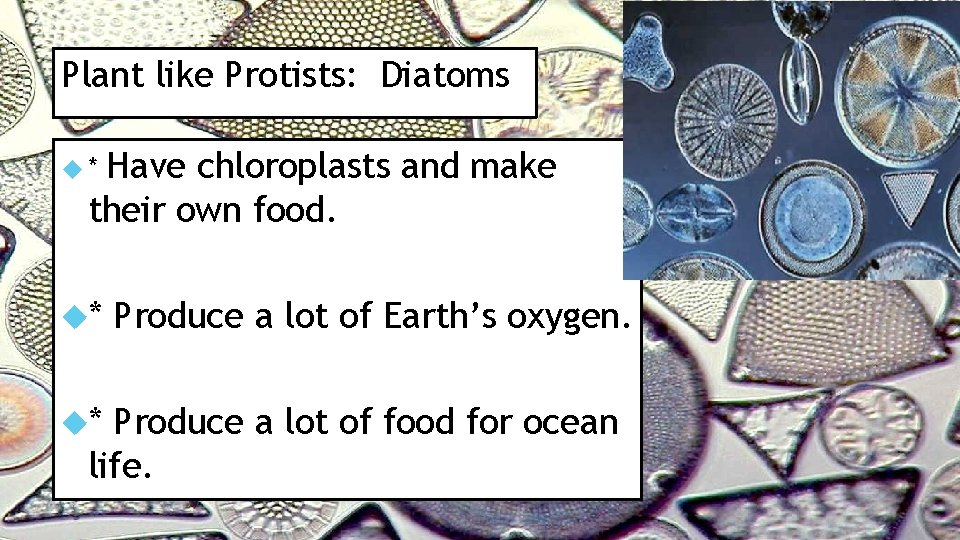
Plant like Protists: Diatoms Have chloroplasts and make their own food. * * * Produce a lot of Earth’s oxygen. Produce a lot of food for ocean life.
Lesson 2: How do cells work together? 19. (txtbk p. 61) Tissue - group of cells that work together to preform a certain function 20. Organs - a group of tissues that work together to perform a certain function 21. Organ Systems - groups of organs that work together to do a job for the body 22. Digestive system – the organ system that turns food into nutrients that body cells need for energy, growth, and repair
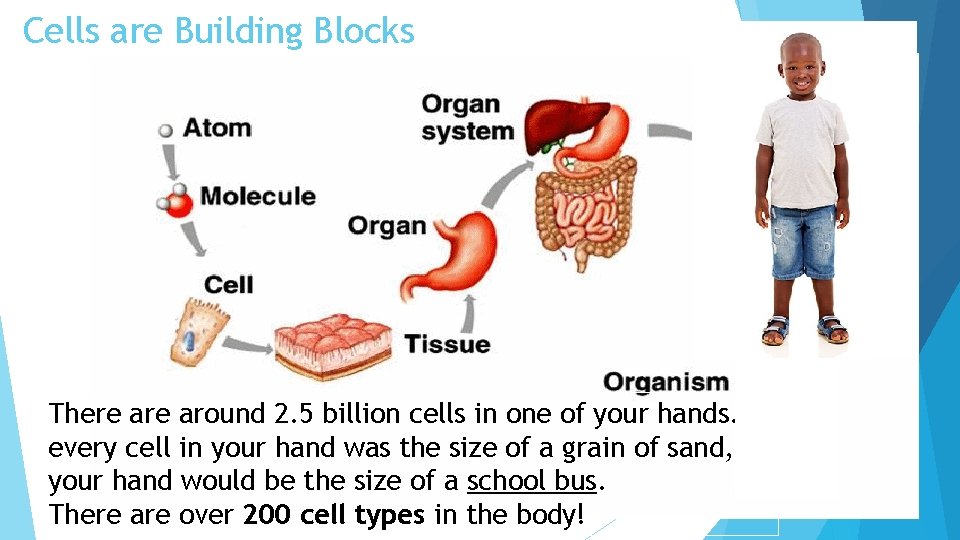
Cells are Building Blocks There around 2. 5 billion cells in one of your hands. If every cell in your hand was the size of a grain of sand, your hand would be the size of a school bus. There are over 200 cell types in the body!
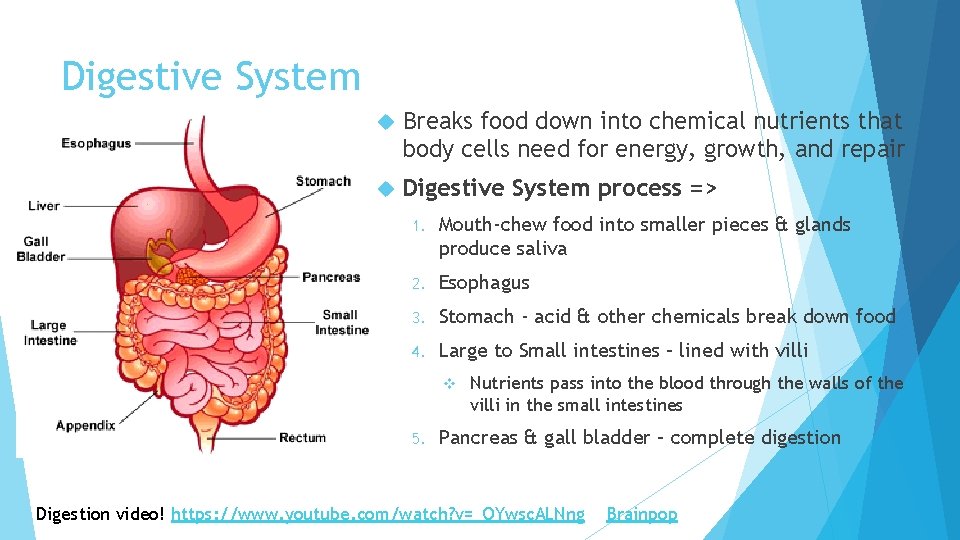
Digestive System Breaks food down into chemical nutrients that body cells need for energy, growth, and repair Digestive System process => 1. Mouth-chew food into smaller pieces & glands produce saliva 2. Esophagus 3. Stomach - acid & other chemicals break down food 4. Large to Small intestines – lined with villi v 5. Nutrients pass into the blood through the walls of the villi in the small intestines Pancreas & gall bladder – complete digestion Digestion video! https: //www. youtube. com/watch? v=_QYwsc. ALNng Brainpop
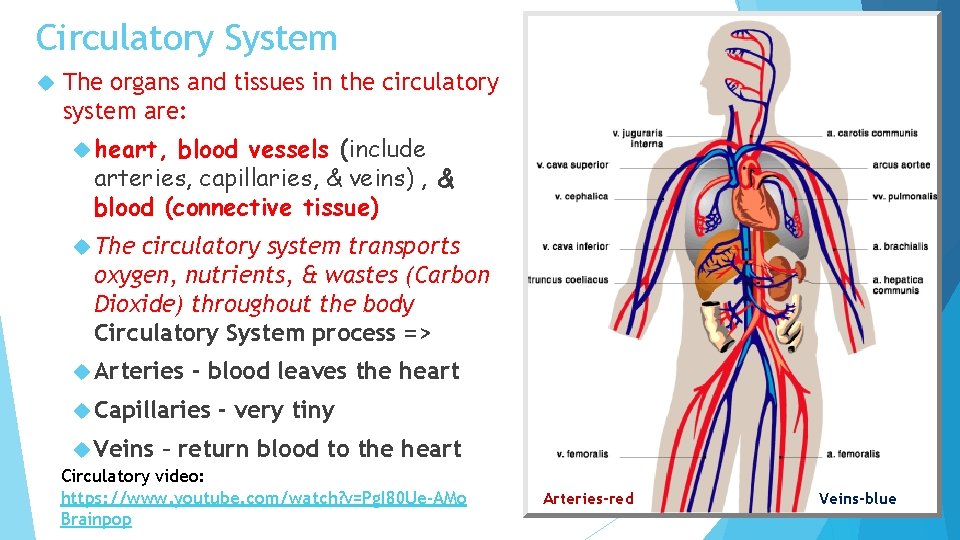
Circulatory System The organs and tissues in the circulatory system are: heart, blood vessels (include arteries, capillaries, & veins) , & blood (connective tissue) The circulatory system transports oxygen, nutrients, & wastes (Carbon Dioxide) throughout the body Circulatory System process => Arteries - blood leaves the heart Capillaries Veins - very tiny – return blood to the heart Circulatory video: https: //www. youtube. com/watch? v=Pg. I 80 Ue-AMo Brainpop Arteries-red Veins-blue
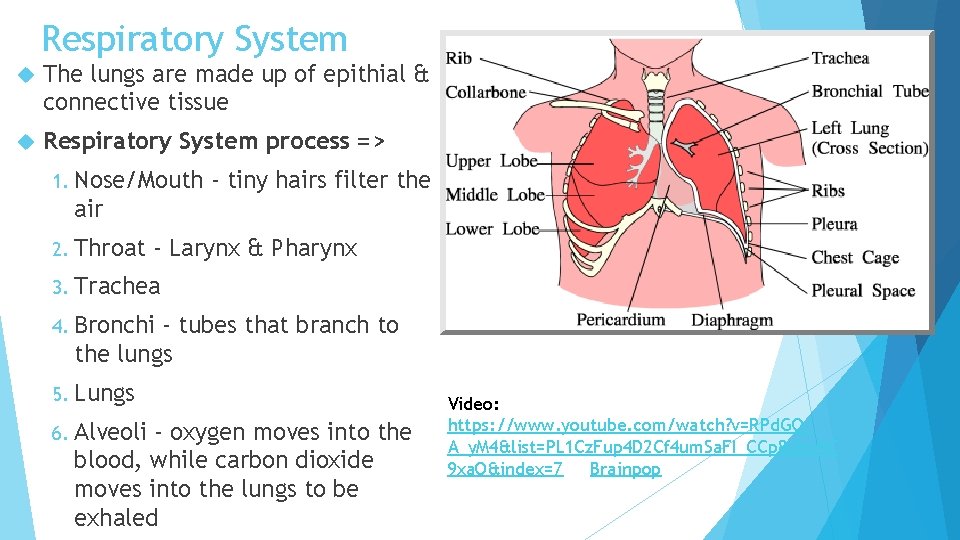
Respiratory System The lungs are made up of epithial & connective tissue Respiratory System process => 1. Nose/Mouth - tiny hairs filter the air 2. Throat - Larynx & Pharynx 3. Trachea 4. Bronchi - tubes that branch to the lungs 5. Lungs 6. Alveoli - oxygen moves into the blood, while carbon dioxide moves into the lungs to be exhaled Video: https: //www. youtube. com/watch? v=RPd. GQA_y. M 4&list=PL 1 Cz. Fup 4 D 2 Cf 4 um. Sa. FI_CCp 8 uhx. HC 9 xa. Q&index=7 Brainpop
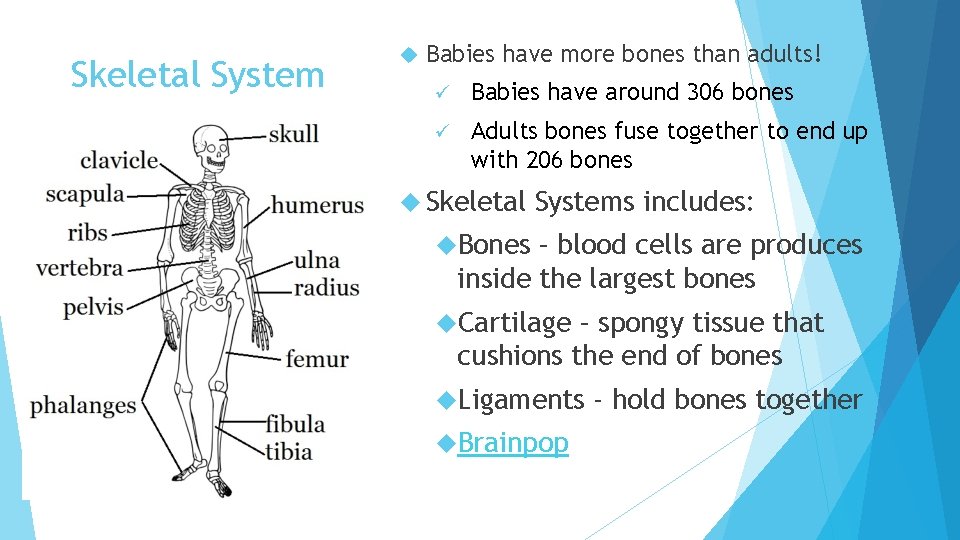
Skeletal System Babies have more bones than adults! ü Babies have around 306 bones ü Adults bones fuse together to end up with 206 bones Skeletal Systems includes: Bones – blood cells are produces inside the largest bones Cartilage – spongy tissue that cushions the end of bones Ligaments Brainpop - hold bones together
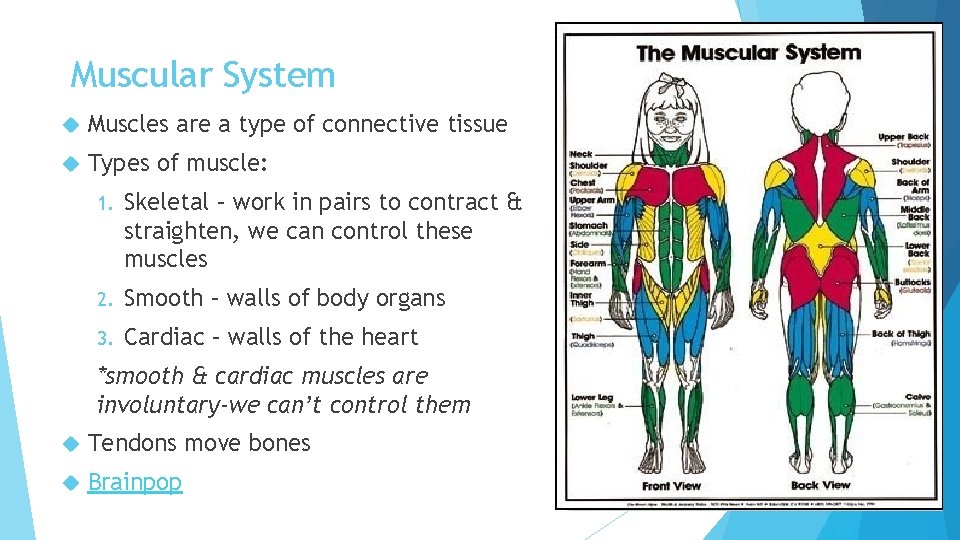
Muscular System Muscles are a type of connective tissue Types of muscle: 1. Skeletal – work in pairs to contract & straighten, we can control these muscles 2. Smooth – walls of body organs 3. Cardiac – walls of the heart *smooth & cardiac muscles are involuntary-we can’t control them Tendons move bones Brainpop
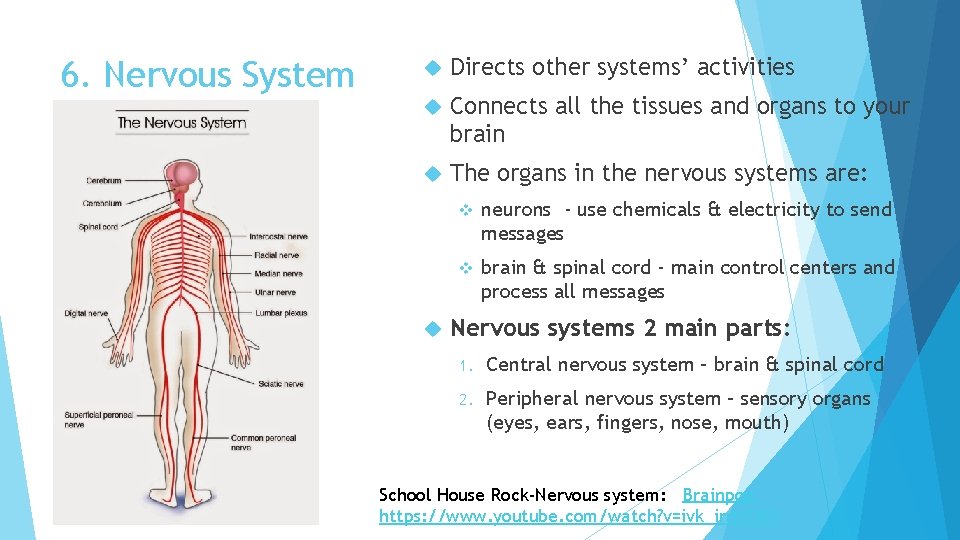
6. Nervous System Directs other systems’ activities Connects all the tissues and organs to your brain The organs in the nervous systems are: v neurons - use chemicals & electricity to send messages v brain & spinal cord - main control centers and process all messages Nervous systems 2 main parts: 1. Central nervous system – brain & spinal cord 2. Peripheral nervous system – sensory organs (eyes, ears, fingers, nose, mouth) School House Rock-Nervous system: Brainpop https: //www. youtube. com/watch? v=ivk_irr. H 1 WY
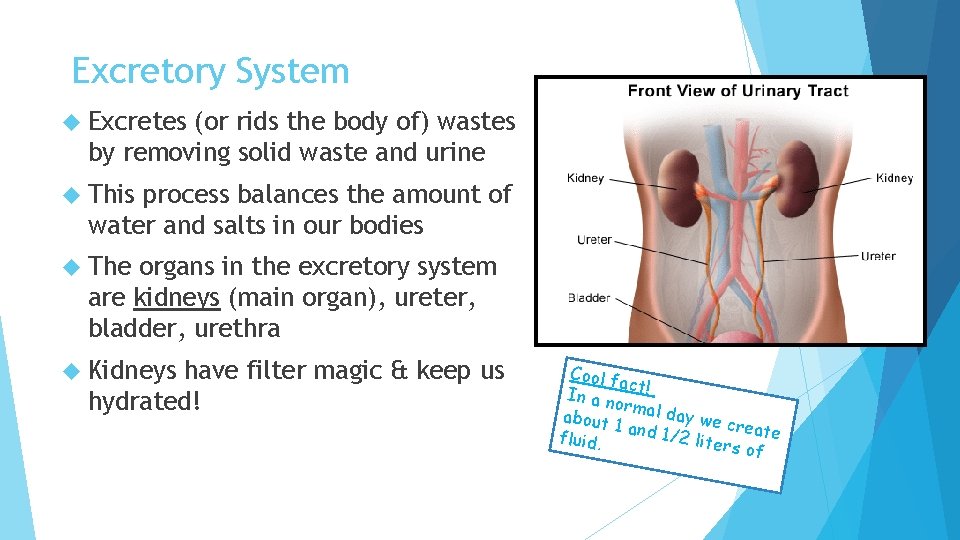
Excretory System Excretes (or rids the body of) wastes by removing solid waste and urine This process balances the amount of water and salts in our bodies The organs in the excretory system are kidneys (main organ), ureter, bladder, urethra Kidneys have filter magic & keep us hydrated! Cool fa c In a no t! rmal d a about 1 and 1 y we create /2 lite fluid. rs of
Endocrine system: the organ system, including the pancreas, pituitary gland, adrenal glands, and thyroids that secrete hormones to regulate moods and growth 29.
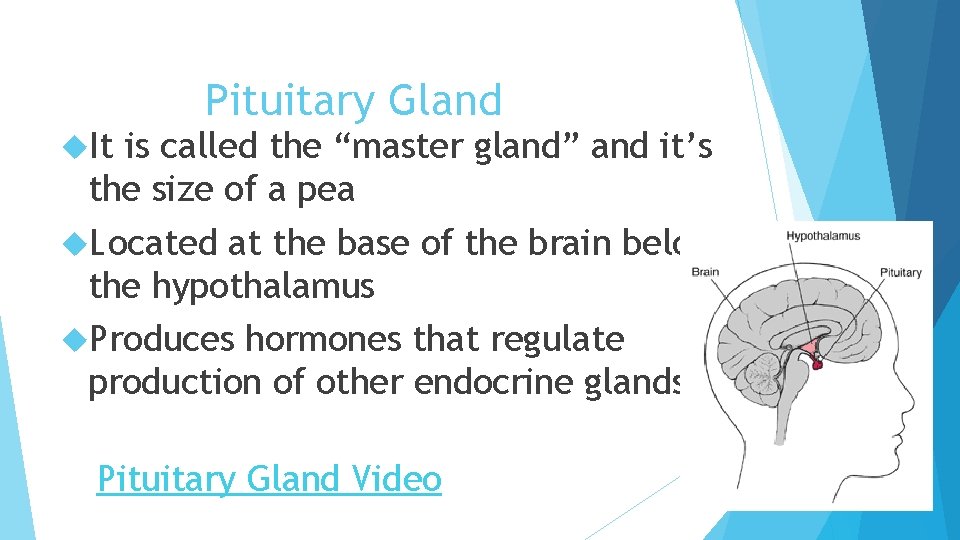
It Pituitary Gland is called the “master gland” and it’s the size of a pea Located at the base of the brain below the hypothalamus Produces hormones that regulate production of other endocrine glands Pituitary Gland Video
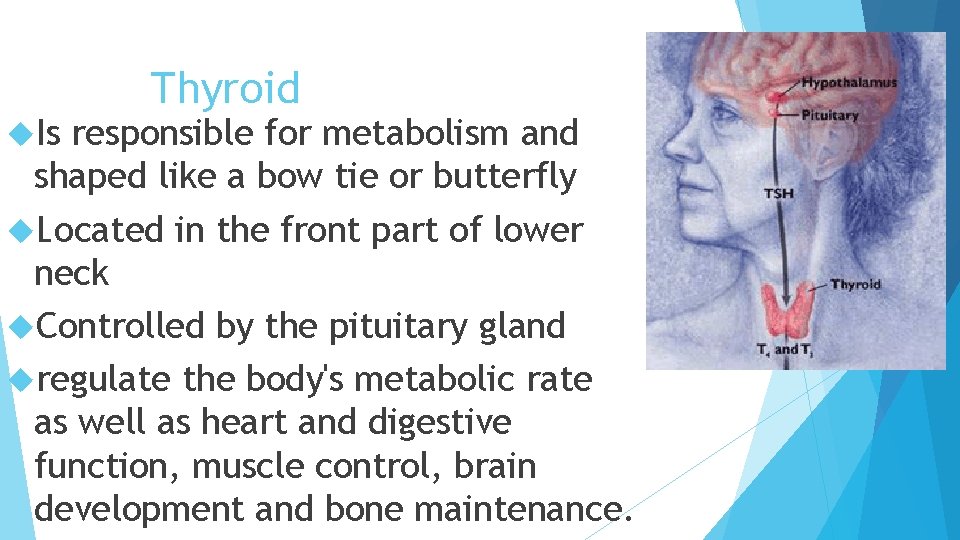
Is Thyroid responsible for metabolism and shaped like a bow tie or butterfly Located in the front part of lower neck Controlled by the pituitary gland regulate the body's metabolic rate as well as heart and digestive function, muscle control, brain development and bone maintenance.
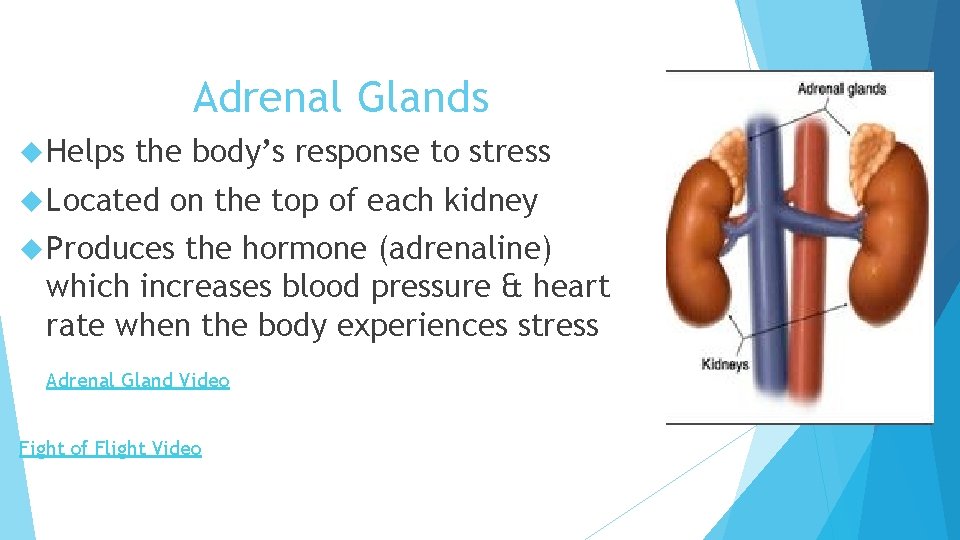
Adrenal Glands Helps the body’s response to stress Located on the top of each kidney Produces the hormone (adrenaline) which increases blood pressure & heart rate when the body experiences stress Adrenal Gland Video Fight of Flight Video
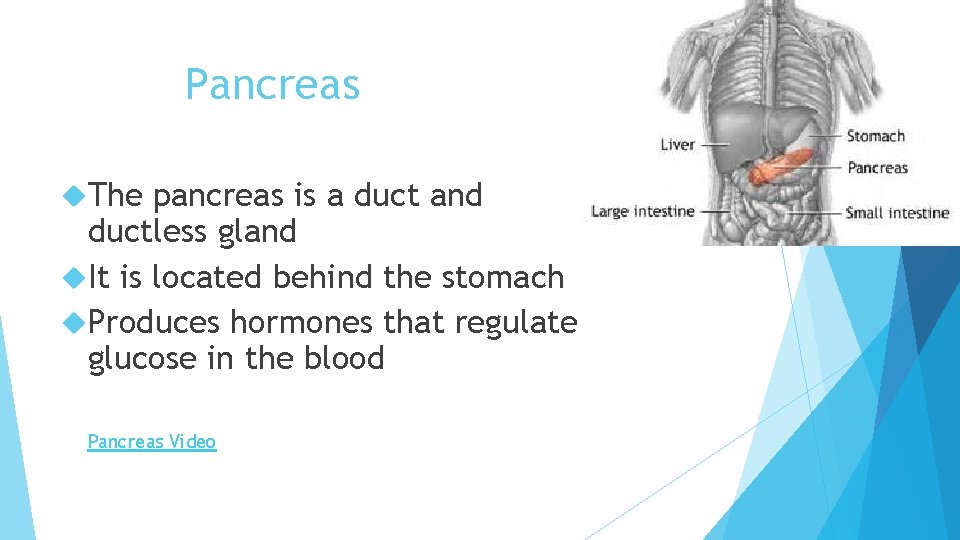
Pancreas The pancreas is a duct and ductless gland It is located behind the stomach Produces hormones that regulate glucose in the blood Pancreas Video
- Slides: 29