
Cells Tissues and Organ Systems A guide to
- Slides: 17
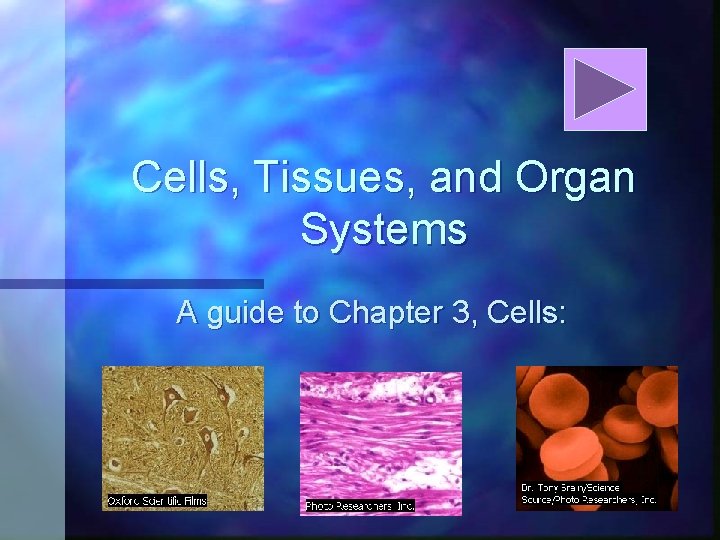
Cells, Tissues, and Organ Systems A guide to Chapter 3, Cells:
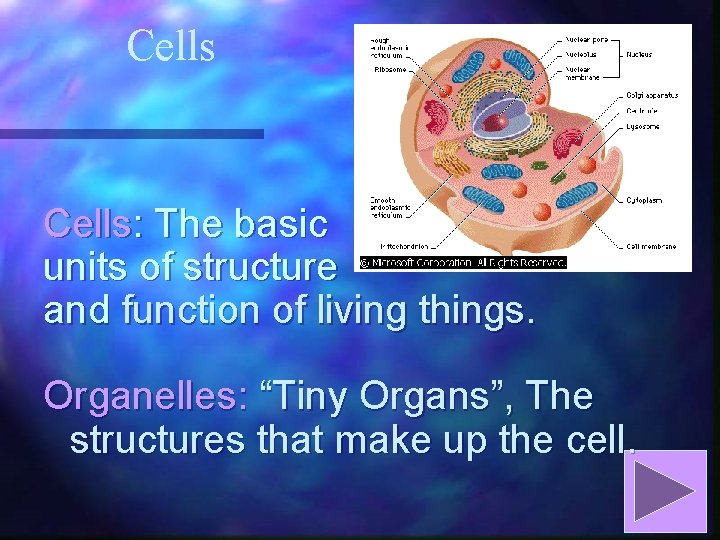
Cells: The basic units of structure and function of living things. Organelles: “Tiny Organs”, The structures that make up the cell.
The Cell Theory All living things are made of cells. n Cells are the basic units of structure and function in living things. n Living cells come only from other living cells. n
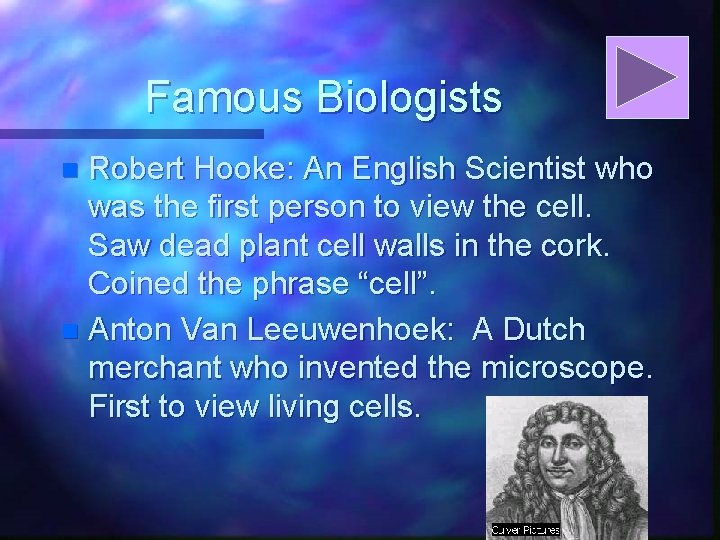
Famous Biologists Robert Hooke: An English Scientist who was the first person to view the cell. Saw dead plant cell walls in the cork. Coined the phrase “cell”. n Anton Van Leeuwenhoek: A Dutch merchant who invented the microscope. First to view living cells. n
More…. n n n Matthias Schleiden: A German Botanist. Discovered that all plants are made of plant cells. Theodor Schwann: A German zoologist who discovered that all animals were made up of animal cells. Rudolph Virchow: A German physician who discovered that all living cells come from other living cells.
Structure and Function of Cells Cell Wall: Support and protection, made of cellulose a non-living material. Only in plant cells. n Cell Membrane: Doorway of the cell, has pores. Controls movement of materials in and out of the cell. n
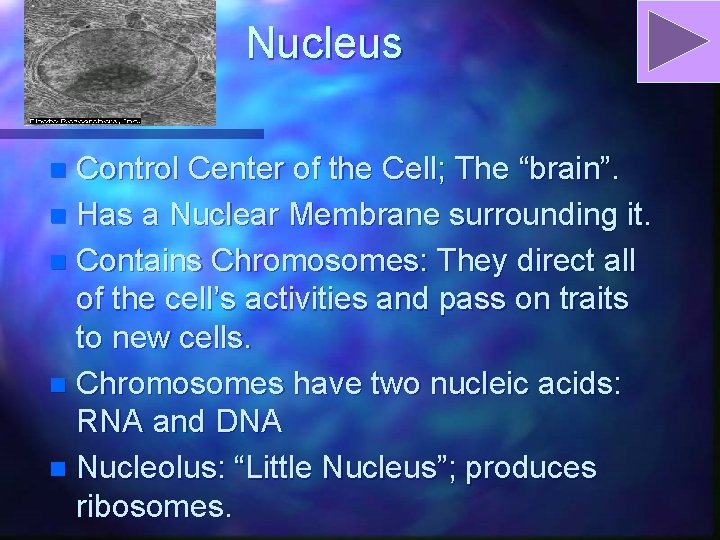
Nucleus Control Center of the Cell; The “brain”. n Has a Nuclear Membrane surrounding it. n Contains Chromosomes: They direct all of the cell’s activities and pass on traits to new cells. n Chromosomes have two nucleic acids: RNA and DNA n Nucleolus: “Little Nucleus”; produces ribosomes. n
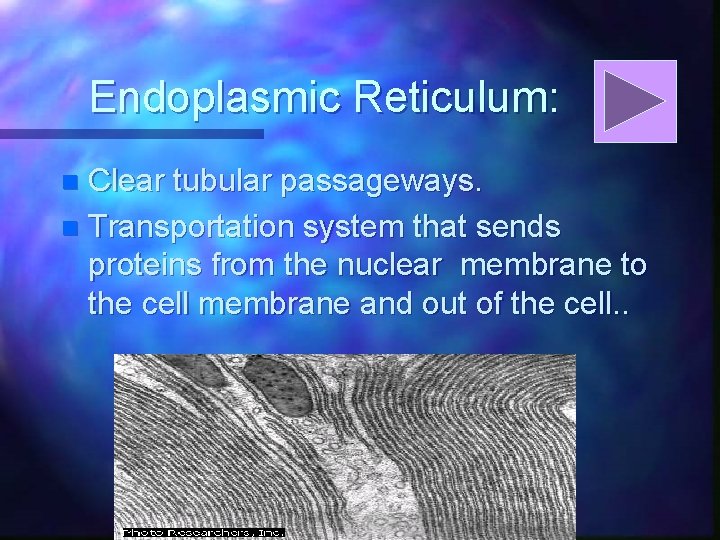
Endoplasmic Reticulum: Clear tubular passageways. n Transportation system that sends proteins from the nuclear membrane to the cell membrane and out of the cell. . n
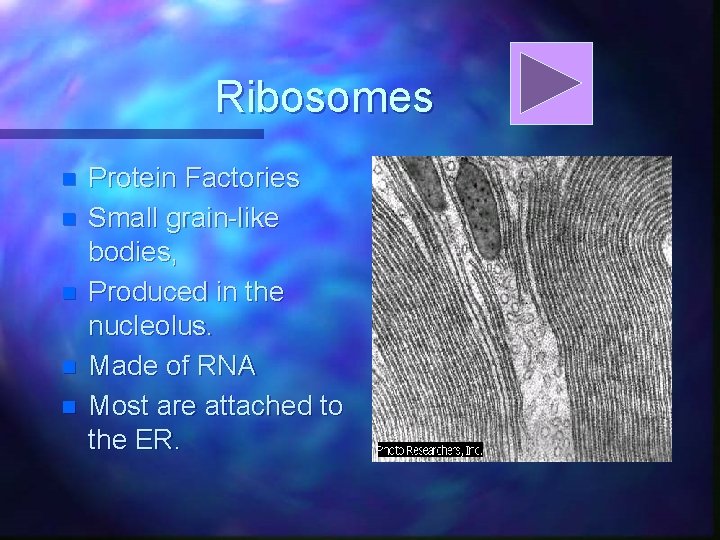
Ribosomes n n n Protein Factories Small grain-like bodies, Produced in the nucleolus. Made of RNA Most are attached to the ER.
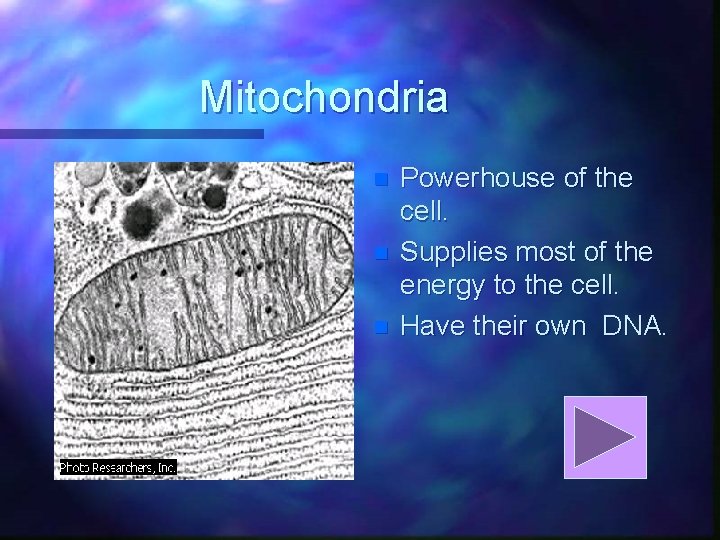
Mitochondria n n n Powerhouse of the cell. Supplies most of the energy to the cell. Have their own DNA.
Vacuoles n n Storage Tank of the cell. Large, round, water filled sac. Larger in the plant cell. Stores; food, water and wastes.
Lysosomes Cleanup crew for the cell. n Rare in plant cells. n Small, round structures. n Contain digestive enzymes. n Breaks down food and sends it to the mitochondria to be used for energy. n
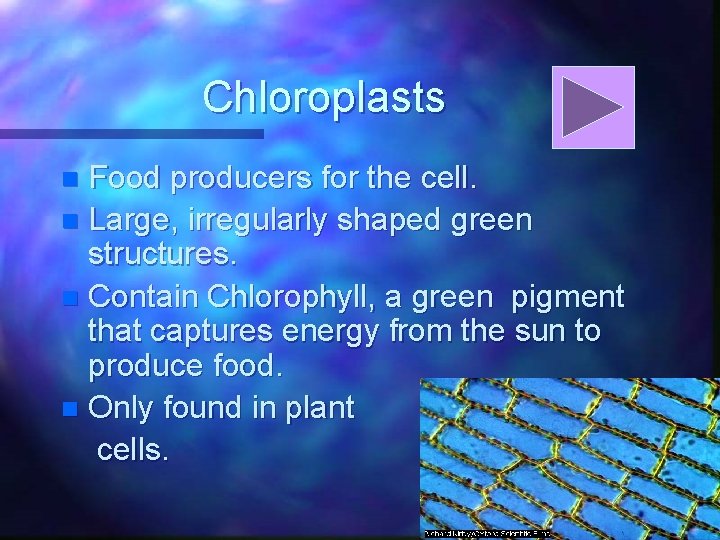
Chloroplasts Food producers for the cell. n Large, irregularly shaped green structures. n Contain Chlorophyll, a green pigment that captures energy from the sun to produce food. n Only found in plant cells. n
Cell Processes Metabolism: All building up and breaking down activities of the cell. n Respiration: When food is broken down to produce energy (mitochondria). n – Aerobic respiration: Needs oxygen. – Anaerobic respiration: Without oxygen (Fermentation).
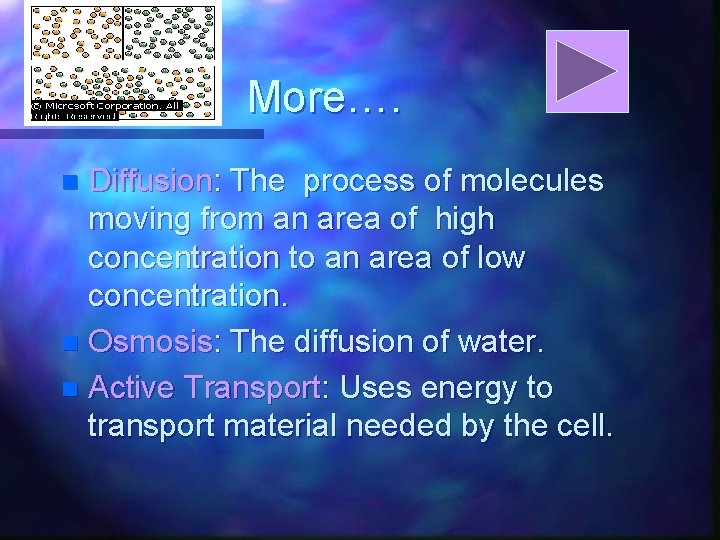
More…. Diffusion: The process of molecules moving from an area of high concentration to an area of low concentration. n Osmosis: The diffusion of water. n Active Transport: Uses energy to transport material needed by the cell. n
Cell Specialization: The arrangement of specialized parts within a living organism. n Cells n Tissues: Made up of similar cells. n Organs: A group of different tissues. (heart, lung, muscles, brain, etc. ) n Organ Systems: A group of organs that work together. (Nervous system) n Organism: The entire living thing. n
The End Created by Mrs. Scibelli Exploring Life Science Prentice Hall