
Cells The Basic Units of Life Cell Theory
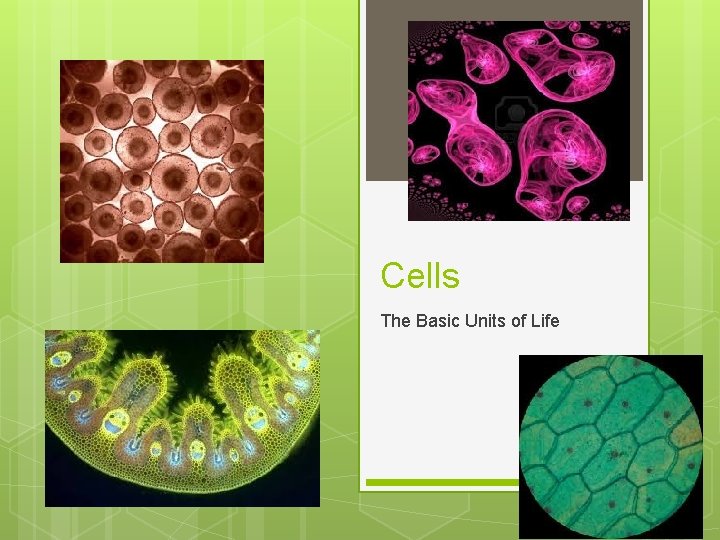
Cells The Basic Units of Life
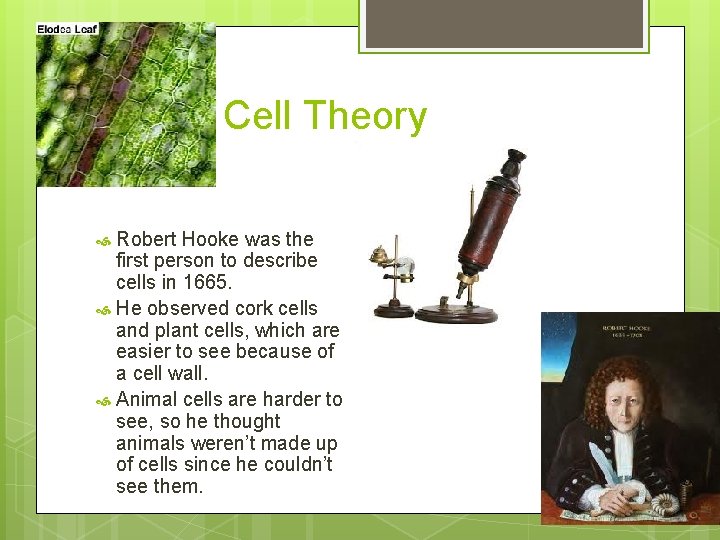
Cell Theory Robert Hooke was the first person to describe cells in 1665. He observed cork cells and plant cells, which are easier to see because of a cell wall. Animal cells are harder to see, so he thought animals weren’t made up of cells since he couldn’t see them.
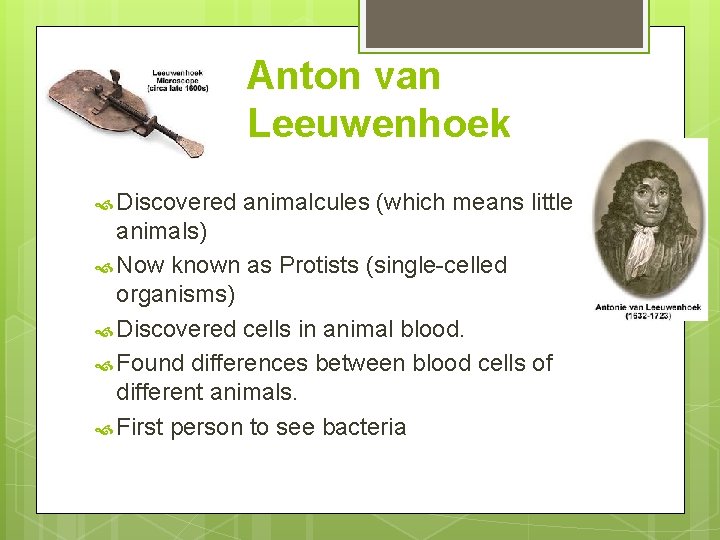
Anton van Leeuwenhoek Discovered animalcules (which means little animals) Now known as Protists (single-celled organisms) Discovered cells in animal blood. Found differences between blood cells of different animals. First person to see bacteria
Cell Theory Matthias Schleiden and Theodor Schwann Schleiden studied plants – Discovered all plants are made of cells Schwann studied animals – discovered that all animal tissue is made of cells. Schwann wrote first 2 parts of cell theory All organisms are made of one or more cells The cell is the basic unit of all living things
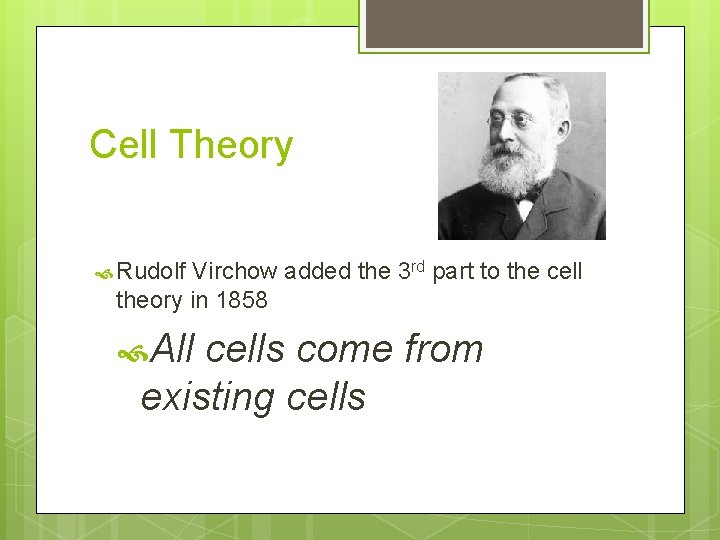
Cell Theory Rudolf Virchow added the 3 rd part to the cell theory in 1858 All cells come from existing cells
Common cell parts There are many different types of cells – But all cells have a few parts in common Cell membrane and cytoplasm Organelles Genetic material

Cell Membrane & Cytoplasm All cells are surrounded by a cell membrane The cell membrane is a protective layer that covers the cell’s surface and acts as a barrier It also controls materials going into and out of the cell Cytoplasm is the fluid inside a cell
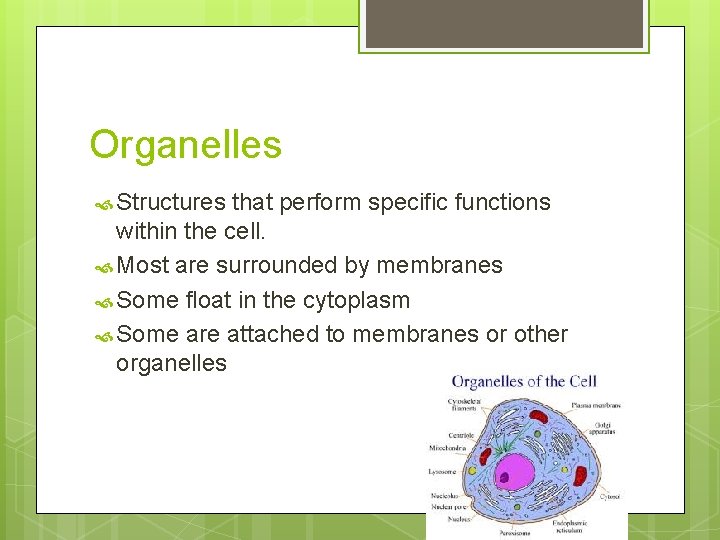
Organelles Structures that perform specific functions within the cell. Most are surrounded by membranes Some float in the cytoplasm Some are attached to membranes or other organelles
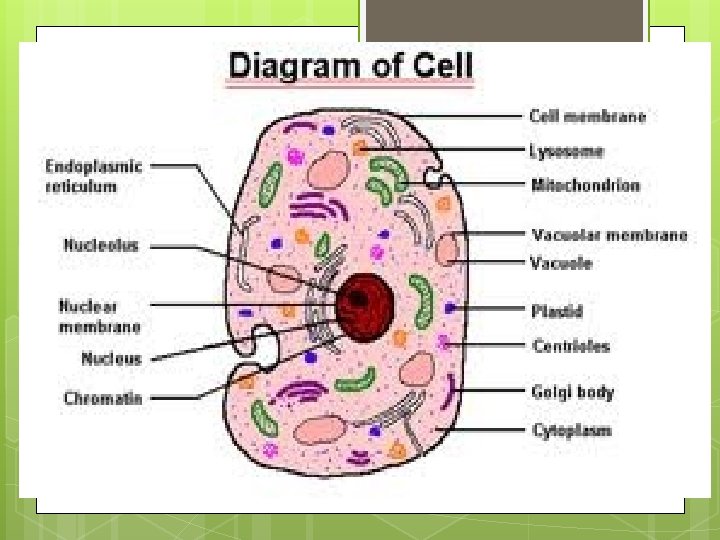
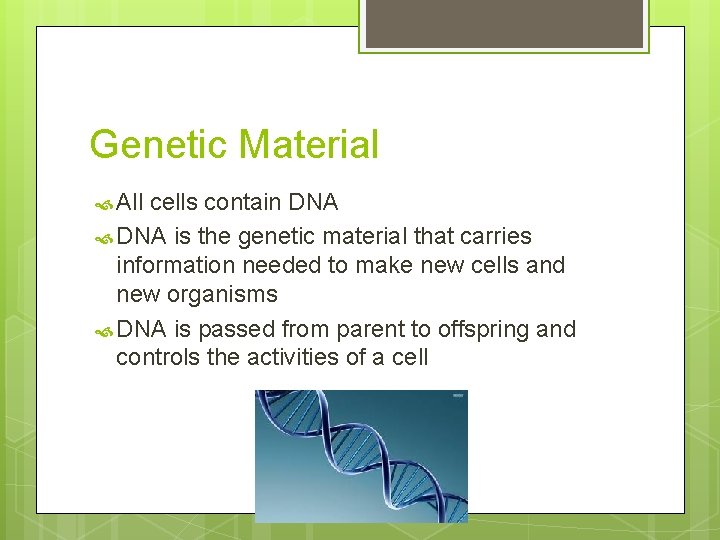
Genetic Material All cells contain DNA is the genetic material that carries information needed to make new cells and new organisms DNA is passed from parent to offspring and controls the activities of a cell
2 Types of Cells Prokaryotes and eukaryotes Prokaryotes are single-celled organisms that do not have a nucleus or membrane-bound organelles Eukaryotes are an organism made of cells that have a nucleus enclosed by a membrane
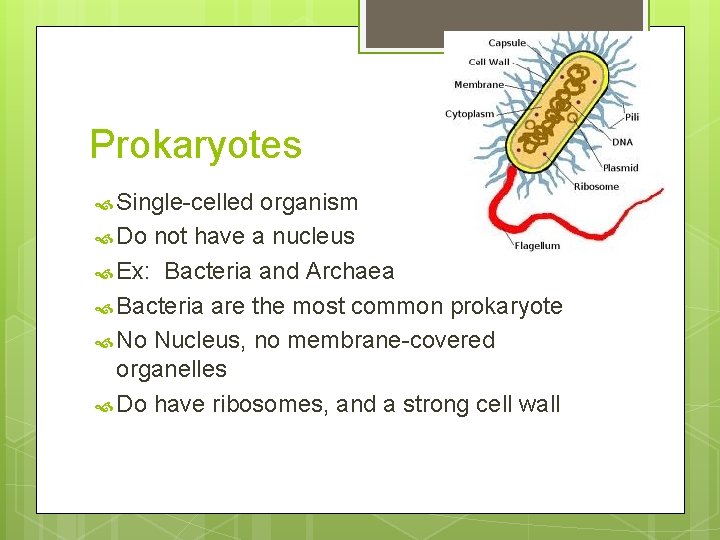
Prokaryotes Single-celled organism Do not have a nucleus Ex: Bacteria and Archaea Bacteria are the most common prokaryote No Nucleus, no membrane-covered organelles Do have ribosomes, and a strong cell wall
Eukaryotes Largest cells – 10 times larger than bacterial cells Contain a nucleus and membrane-bound organelles All living things that are not bacteria or archaea are made up of one or more eukaryotic cells Many eukaryotic organisms are multi-cellular (many cells)(plants, animals, fungi)
- Slides: 13