
Cells The Basic Unit of Life Txtbk Ch
Cells : The Basic Unit of Life Txtbk: Ch 7, RB Topic 1 SMP - LE 2016 NOTES
Bellwork -10/12 1. Complete the Cell theory timeline & worksheet by reading the textbook AND tape into your science journal with today’s date 2. Make note of the assignments. All are due on at the end of class on Monday except for Castle! 1. 2. 3. 4. 5. 6. Vocab Terms – see quizlet on my webpage Cell worksheet packet Reviewbook Topic 1 pgs 5 -6 #11 -19 Coloring Class activity – need colored pencils Castle – due Tuesday Quiz Tuesday SMP - LE 2016 NOTES
Learning targets for the Cell… I CAN 1) 2) 3) 4) Explain the cell theory List the characteristics of prokaryotic and eukaryotic cells Identify & define the function of the organelles Create a Venn diagram to illustrate the similarities and differences between an animal & plant cell 5) Use an analogy to explain how the organelles function 6) Compare organelles in unicellular organisms to the body systems in multicellular organisms. SMP - LE 2016 NOTES
Question? WHAT MAKES A CELL, A CELL? SMP - LE 2016 NOTES
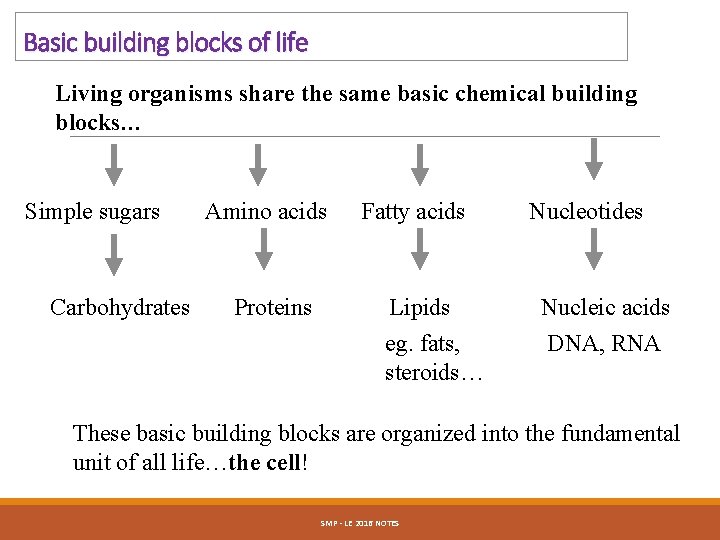
Basic building blocks of life Living organisms share the same basic chemical building blocks… Simple sugars Carbohydrates Amino acids Proteins Fatty acids Lipids eg. fats, steroids… Nucleotides Nucleic acids DNA, RNA These basic building blocks are organized into the fundamental unit of all life…the cell! SMP - LE 2016 NOTES
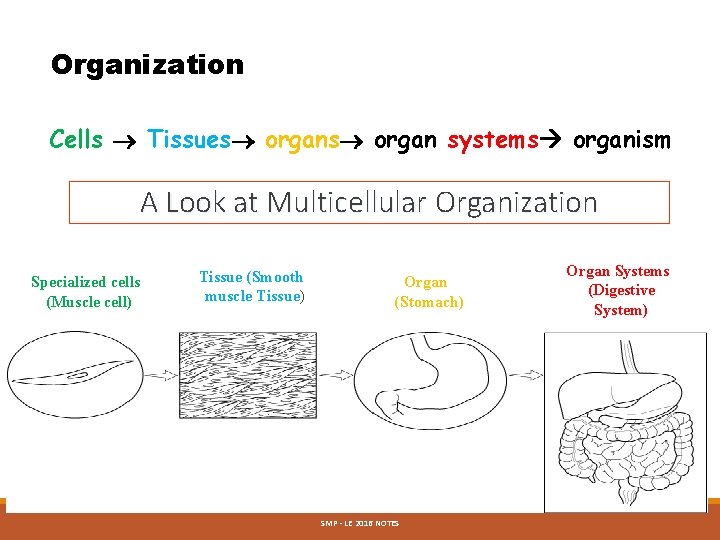
Organization Section 7 - 4 Cells Tissues organ systems organism A Look at Multicellular Organization Specialized cells (Muscle cell) Tissue (Smooth muscle Tissue) Organ (Stomach) SMP - LE 2016 NOTES Organ Systems (Digestive System)
SMP - LE 2016 NOTES
Cell Theory SMP - LE 2016 NOTES
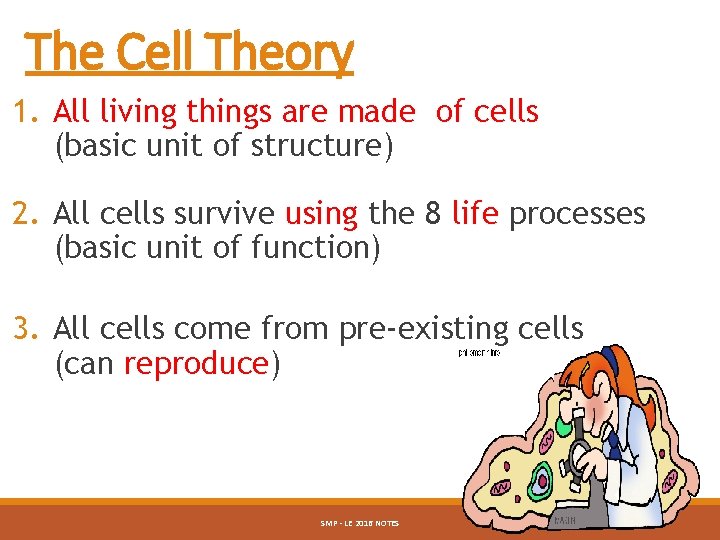
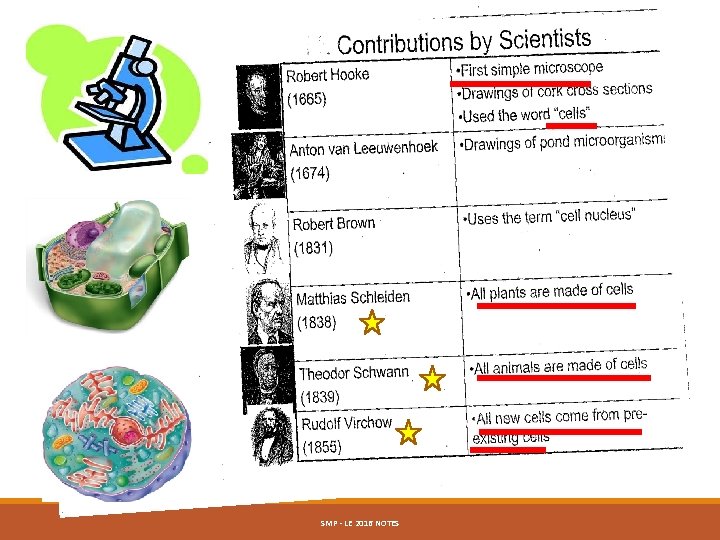
The Cell Theory 1. All living things are made of cells (basic unit of structure) 2. All cells survive using the 8 life processes (basic unit of function) 3. All cells come from pre-existing cells (can reproduce) SMP - LE 2016 NOTES
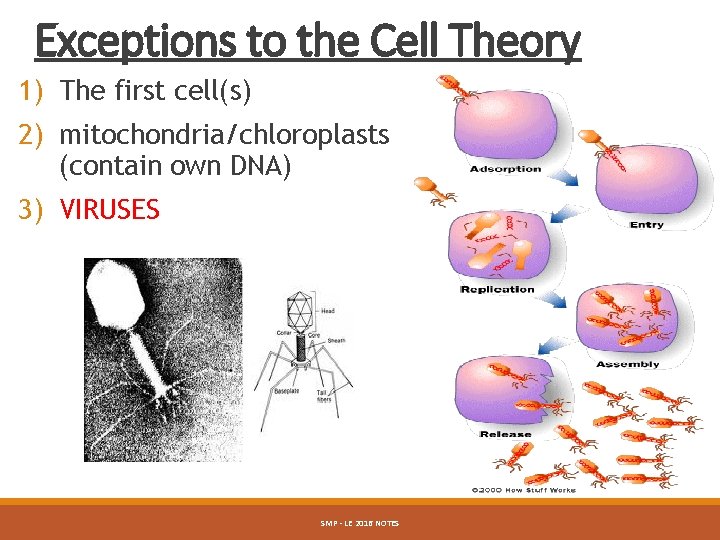
Exceptions to the Cell Theory 1) The first cell(s) 2) mitochondria/chloroplasts (contain own DNA) 3) VIRUSES SMP - LE 2016 NOTES
Types of Cells Amoeba Sisters: Prokaryotes vs. Eukaryotes SMP - LE 2016 NOTES
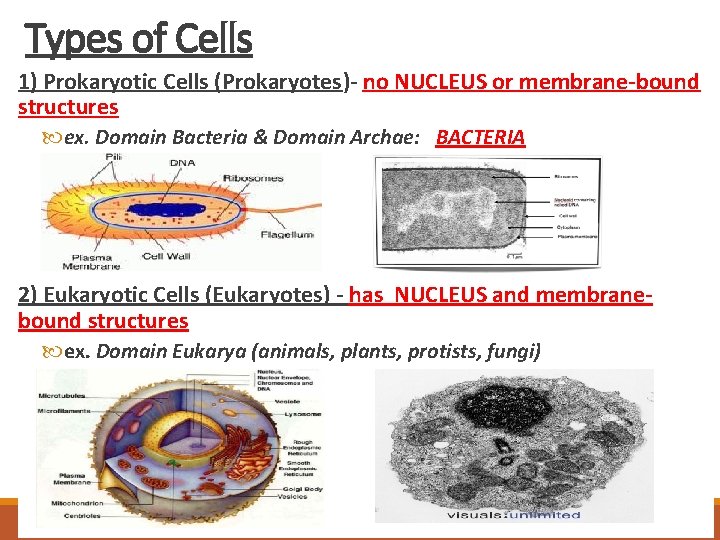
Types of Cells 1) Prokaryotic Cells (Prokaryotes)- no NUCLEUS or membrane-bound structures ex. Domain Bacteria & Domain Archae: BACTERIA 2) Eukaryotic Cells (Eukaryotes) - has NUCLEUS and membranebound structures ex. Domain Eukarya (animals, plants, protists, fungi) SMP - LE 2016 NOTES

Similarities between prokaryotes & eukaryotes • have a cell membrane & cytoplasm • contain DNA • similar metabolic activities (chemical reactions) • contain ribosomes SMP - LE 2016 NOTES
Cell Organelle – Structure & Function CLICK HERE FOR “CELL SONG” by Mr. W SMP - LE 2016 NOTES
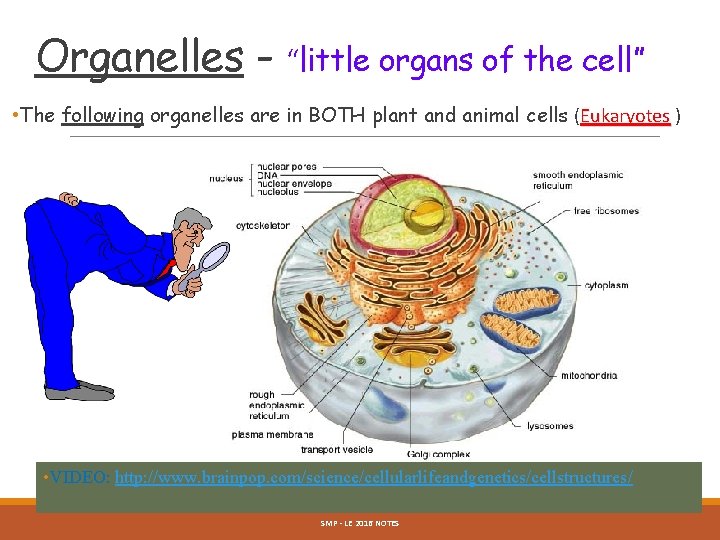
Organelles - “little organs of the cell” • The following organelles are in BOTH plant and animal cells (Eukaryotes ) • VIDEO: http: //www. brainpop. com/science/cellularlifeandgenetics/cellstructures/ SMP - LE 2016 NOTES
Cell Membrane: The Video Clip SMP - LE 2016 NOTES
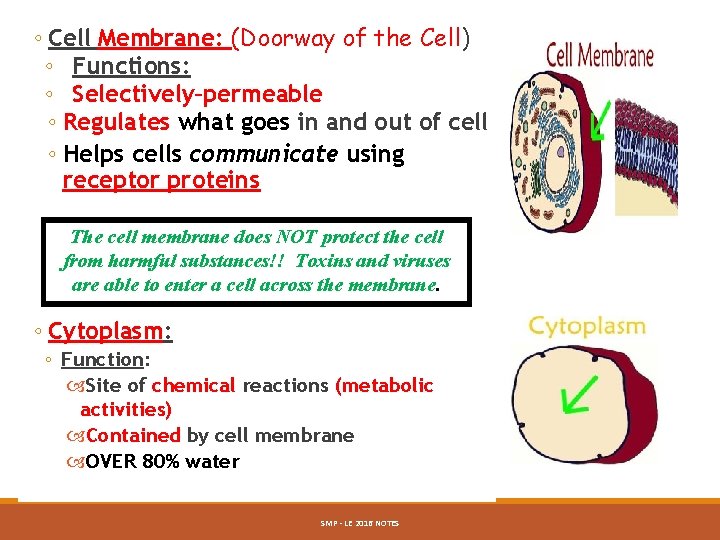
◦ Cell Membrane: (Doorway of the Cell) ◦ Functions: ◦ Selectively–permeable ◦ Regulates what goes in and out of cell ◦ Helps cells communicate using receptor proteins The cell membrane does NOT protect the cell from harmful substances!! Toxins and viruses are able to enter a cell across the membrane. ◦ Cytoplasm: ◦ Function: Site of chemical reactions (metabolic activities) Contained by cell membrane OVER 80% water SMP - LE 2016 NOTES
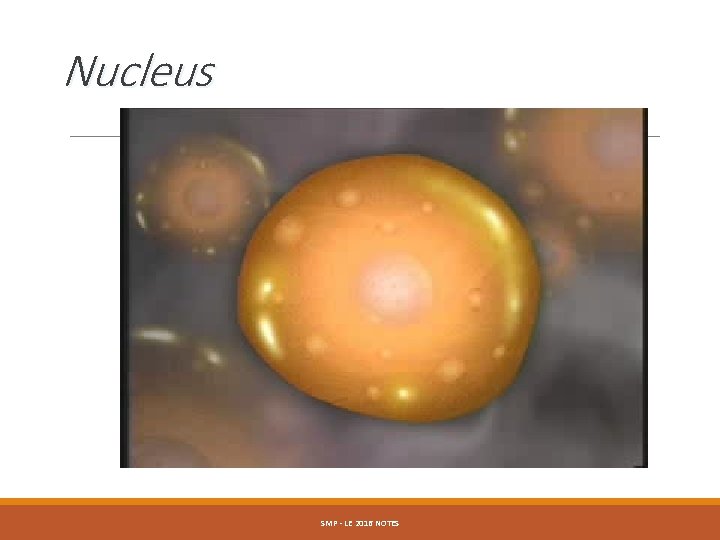
Nucleus SMP - LE 2016 NOTES
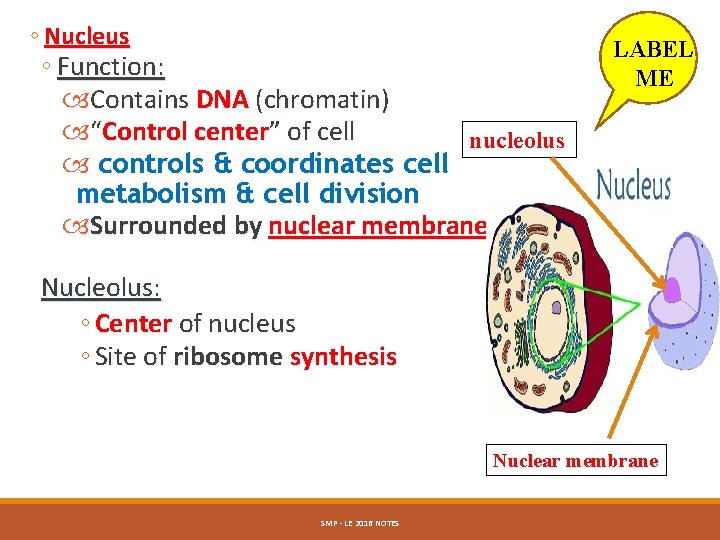
◦ Nucleus ◦ Function: Contains DNA (chromatin) “Control center” of cell nucleolus controls & coordinates cell metabolism & cell division Surrounded by nuclear membrane LABEL ME Nucleolus: ◦ Center of nucleus ◦ Site of ribosome synthesis Nuclear membrane SMP - LE 2016 NOTES

Ribosomes: The Video Clip SMP - LE 2016 NOTES
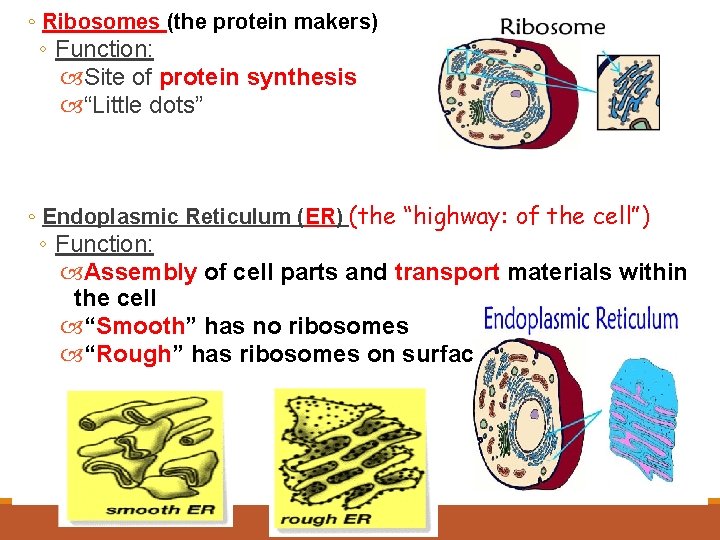
◦ Ribosomes (the protein makers) ◦ Function: Site of protein synthesis “Little dots” ◦ Endoplasmic Reticulum (ER) (the “highway: of the cell”) ◦ Function: Assembly of cell parts and transport materials within the cell “Smooth” has no ribosomes “Rough” has ribosomes on surface SMP - LE 2016 NOTES
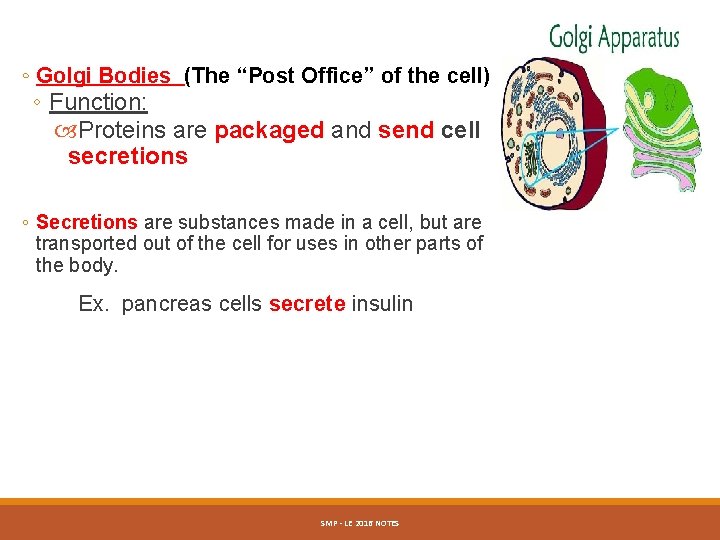
◦ Golgi Bodies (The “Post Office” of the cell) ◦ Function: Proteins are packaged and send cell secretions ◦ Secretions are substances made in a cell, but are transported out of the cell for uses in other parts of the body. Ex. pancreas cells secrete insulin SMP - LE 2016 NOTES
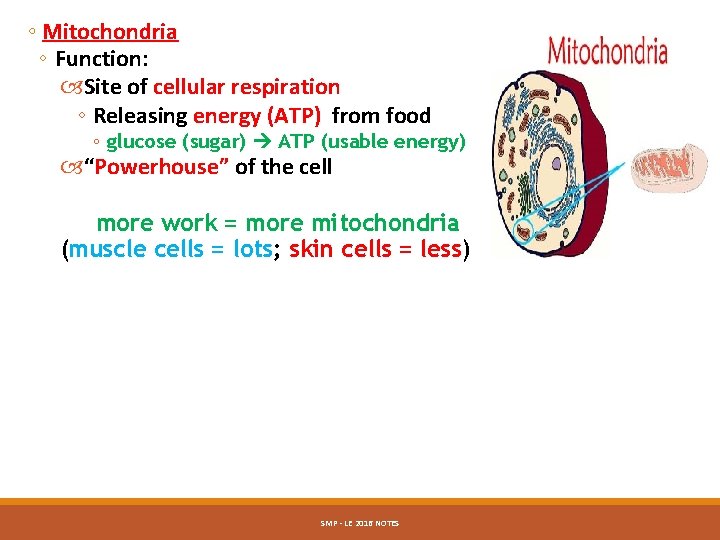
◦ Mitochondria ◦ Function: Site of cellular respiration ◦ Releasing energy (ATP) from food ◦ glucose (sugar) ATP (usable energy) “Powerhouse” of the cell more work = more mitochondria (muscle cells = lots; skin cells = less) SMP - LE 2016 NOTES
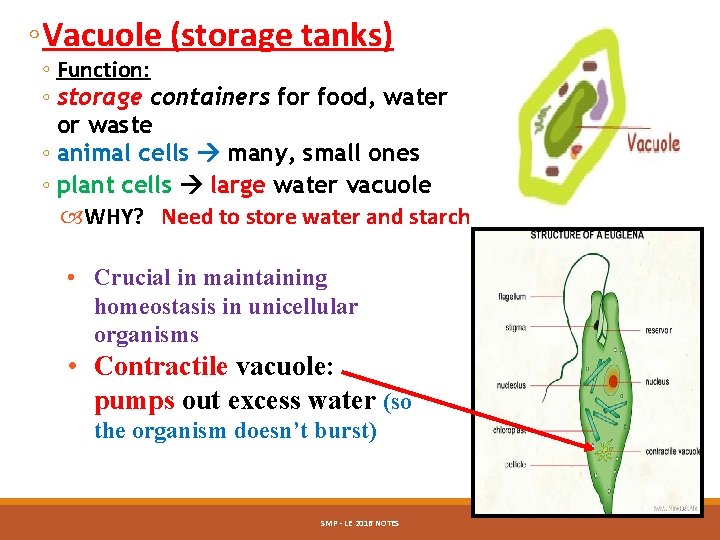
◦ Vacuole (storage tanks) ◦ Function: ◦ storage containers for food, water or waste ◦ animal cells many, small ones ◦ plant cells large water vacuole WHY? Need to store water and starch • Crucial in maintaining homeostasis in unicellular organisms • Contractile vacuole: pumps out excess water (so the organism doesn’t burst) SMP - LE 2016 NOTES
DIFFERENCES BETWEEN PLANT AND ANIMAL CELLS SMP - LE 2016 NOTES
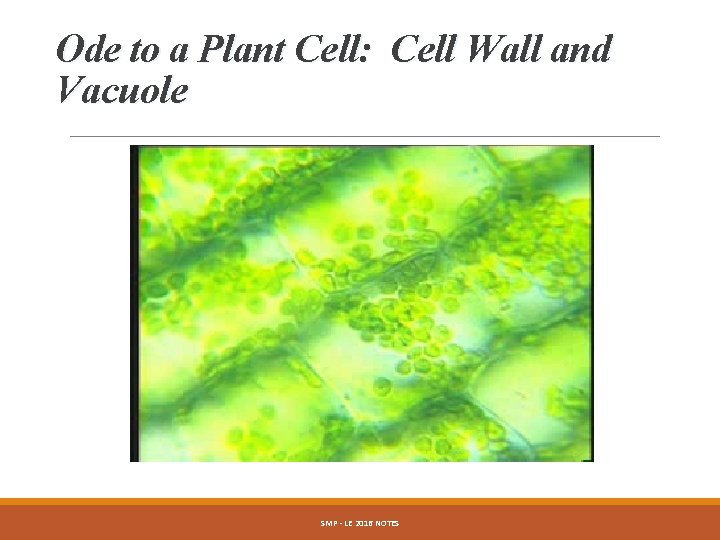
Ode to a Plant Cell: Cell Wall and Vacuole SMP - LE 2016 NOTES
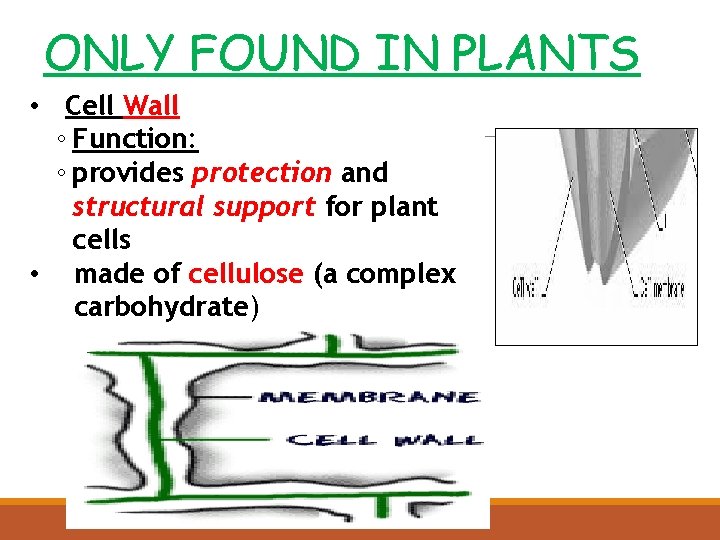
ONLY FOUND IN PLANTS • Cell Wall ◦ Function: ◦ provides protection and structural support for plant cells • made of cellulose (a complex carbohydrate) SMP - LE 2016 NOTES
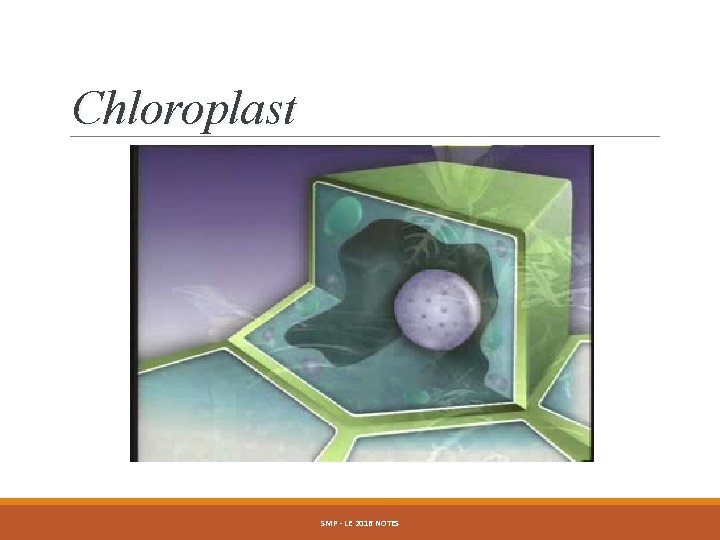
Chloroplast SMP - LE 2016 NOTES
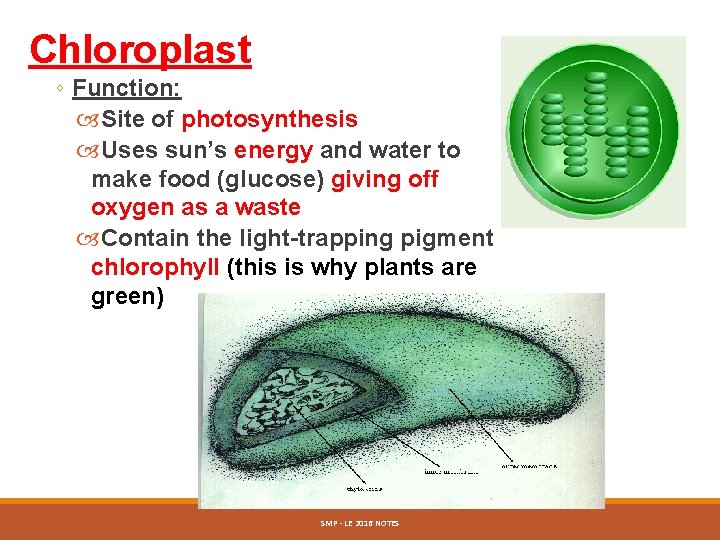
Chloroplast ◦ Function: Site of photosynthesis Uses sun’s energy and water to make food (glucose) giving off oxygen as a waste Contain the light-trapping pigment chlorophyll (this is why plants are green) SMP - LE 2016 NOTES
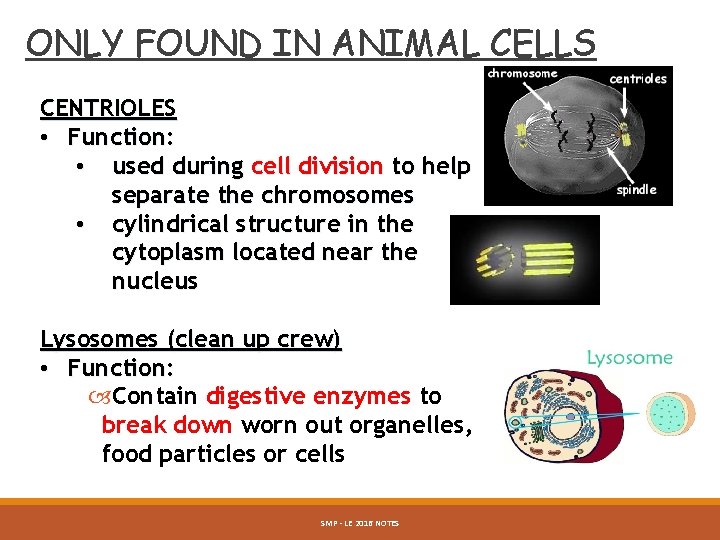
ONLY FOUND IN ANIMAL CELLS CENTRIOLES • Function: • used during cell division to help separate the chromosomes • cylindrical structure in the cytoplasm located near the nucleus Lysosomes (clean up crew) • Function: Contain digestive enzymes to break down worn out organelles, food particles or cells SMP - LE 2016 NOTES
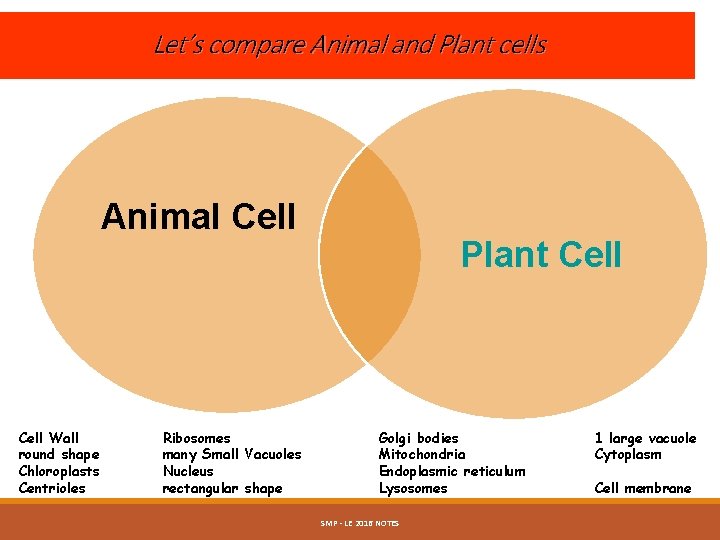
Let’s compare Animal and Plant cells Animal Cell Wall round shape Chloroplasts Centrioles Ribosomes many Small Vacuoles Nucleus rectangular shape Plant Cell Golgi bodies Mitochondria Endoplasmic reticulum Lysosomes SMP - LE 2016 NOTES 1 large vacuole Cytoplasm Cell membrane
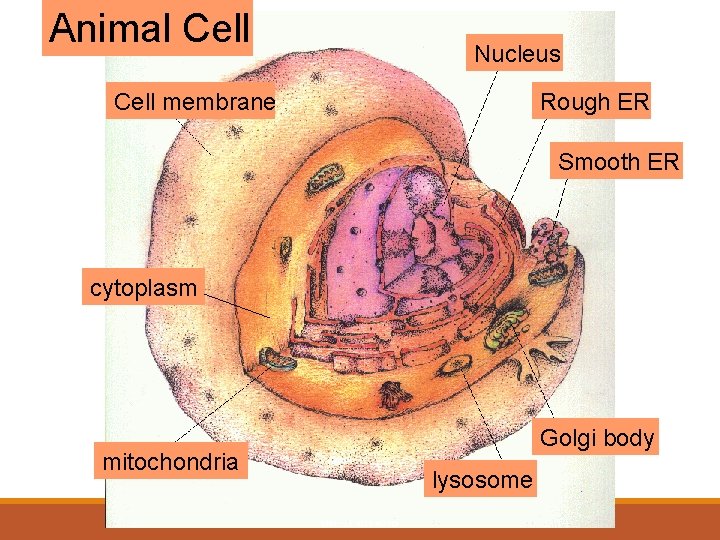
Animal Cell Nucleus Cell membrane Rough ER Smooth ER cytoplasm Golgi body mitochondria lysosome SMP - LE 2016 NOTES
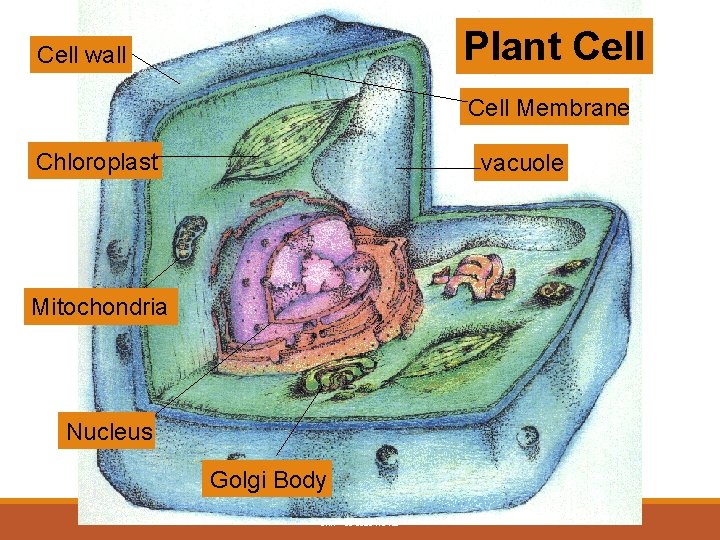
Plant Cell wall Cell Membrane Chloroplast vacuole Mitochondria Nucleus Golgi Body SMP - LE 2016 NOTES
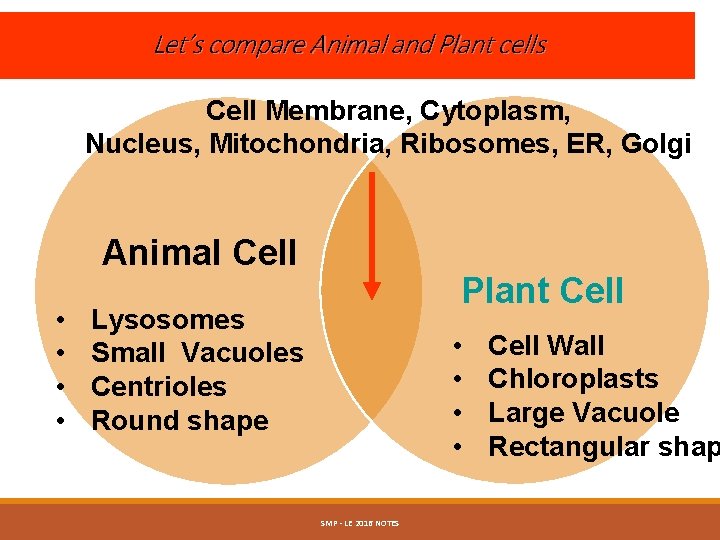
Let’s compare Animal and Plant cells Cell Membrane, Cytoplasm, Nucleus, Mitochondria, Ribosomes, ER, Golgi Animal Cell • • Plant Cell Lysosomes Small Vacuoles Centrioles Round shape • • SMP - LE 2016 NOTES Cell Wall Chloroplasts Large Vacuole Rectangular shap
Cell Review Quizlet: Cell Organelle Review for Quiz Review Games: Cell Organelles II Review Games: Animal Cell Review Games: Plant Cell SMP - LE 2016 NOTES
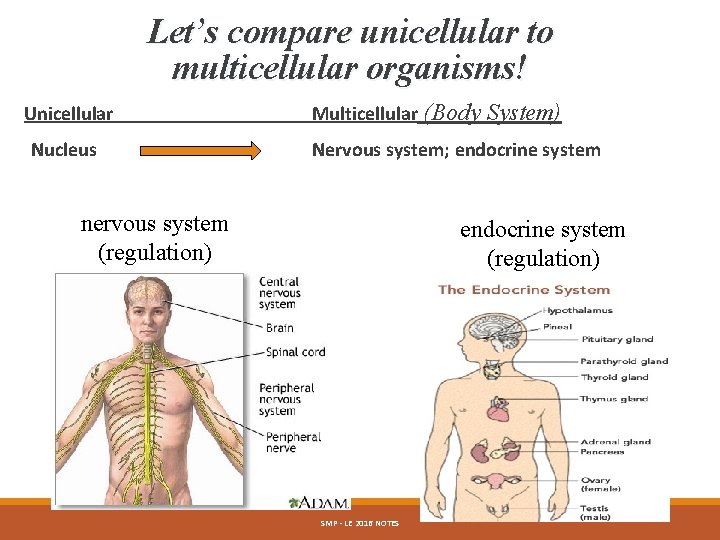
Let’s compare unicellular to multicellular organisms! Unicellular Nucleus Multicellular (Body System) Nervous system; endocrine system nervous system (regulation) endocrine system (regulation) SMP - LE 2016 NOTES
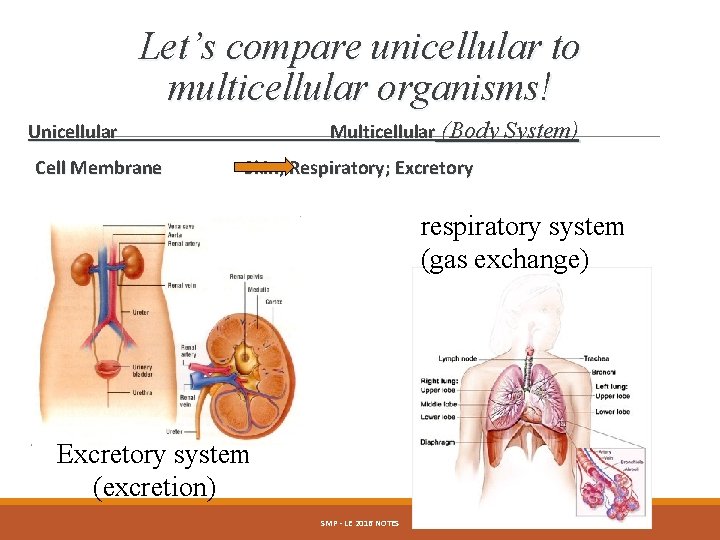
Let’s compare unicellular to multicellular organisms! Multicellular (Body System) Unicellular Cell Membrane Skin; Respiratory; Excretory respiratory system (gas exchange) Excretory system (excretion) SMP - LE 2016 NOTES
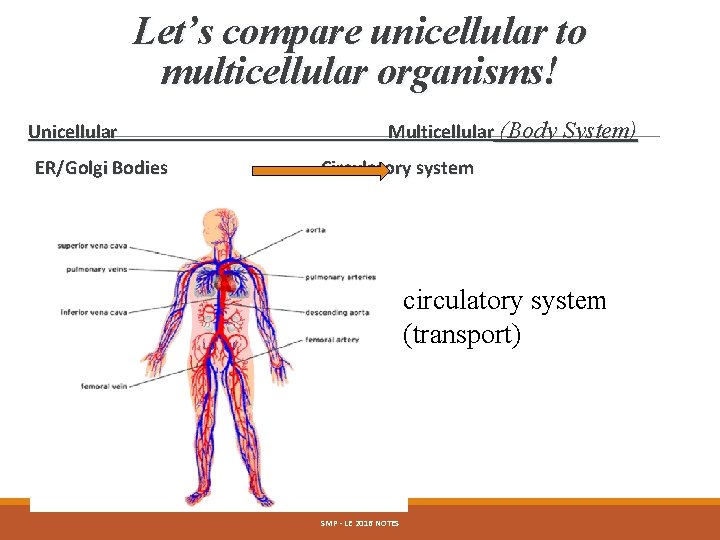
Let’s compare unicellular to multicellular organisms! Unicellular ER/Golgi Bodies Multicellular (Body System) Circulatory system circulatory system (transport) SMP - LE 2016 NOTES
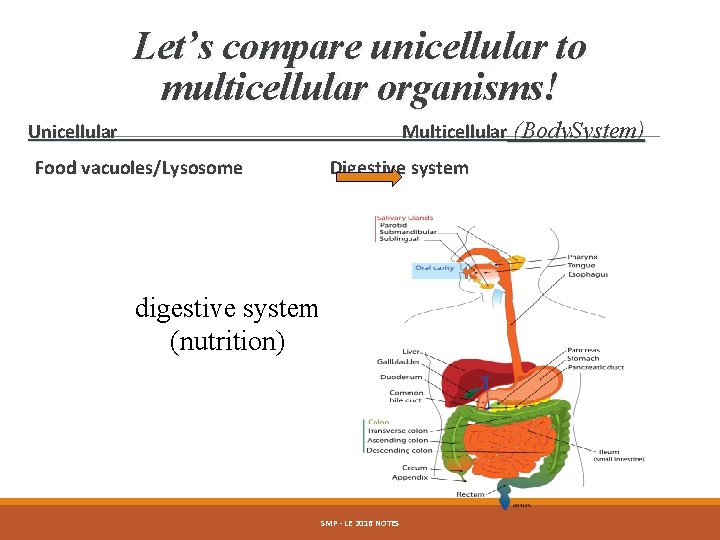
Let’s compare unicellular to multicellular organisms! Multicellular (Body. System) Unicellular Food vacuoles/Lysosome Digestive system digestive system (nutrition) SMP - LE 2016 NOTES
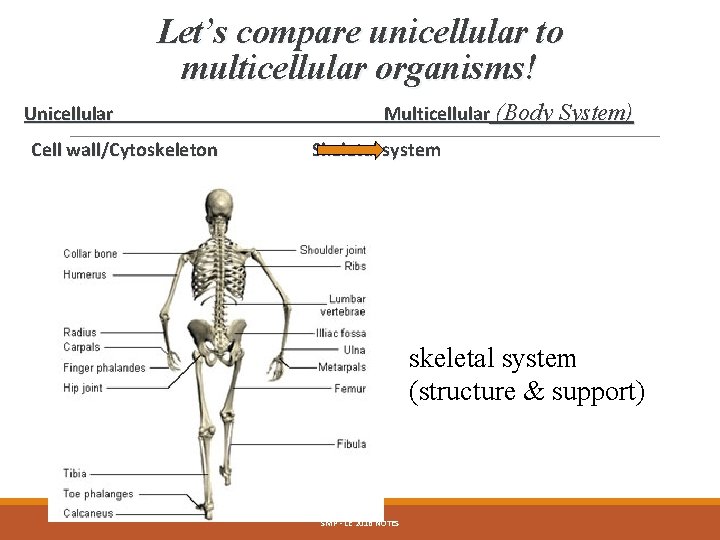
Let’s compare unicellular to multicellular organisms! Unicellular Cell wall/Cytoskeleton Multicellular (Body System) Skeletal system skeletal system (structure & support) SMP - LE 2016 NOTES
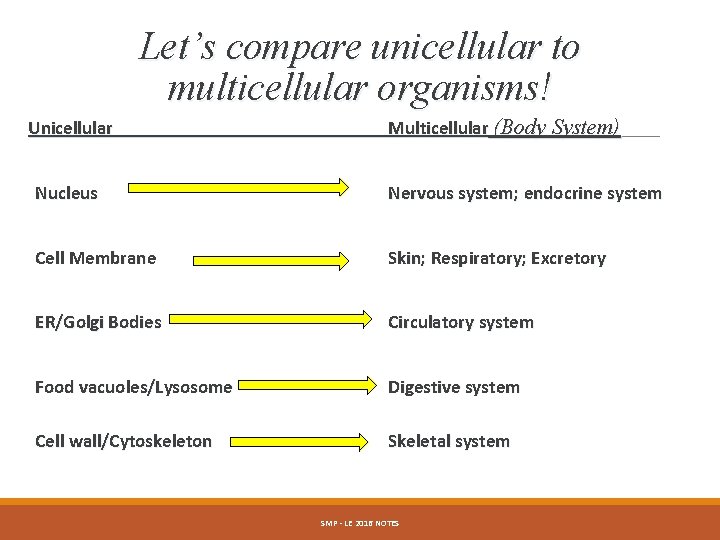
Let’s compare unicellular to multicellular organisms! Unicellular Multicellular (Body System) Nucleus Nervous system; endocrine system Cell Membrane Skin; Respiratory; Excretory ER/Golgi Bodies Circulatory system Food vacuoles/Lysosome Digestive system Cell wall/Cytoskeleton Skeletal system SMP - LE 2016 NOTES
Diversity of Cellular Life UNICELLULAR VS. MULTICELLULAR ORGANISMS SMP - LE 2016 NOTES
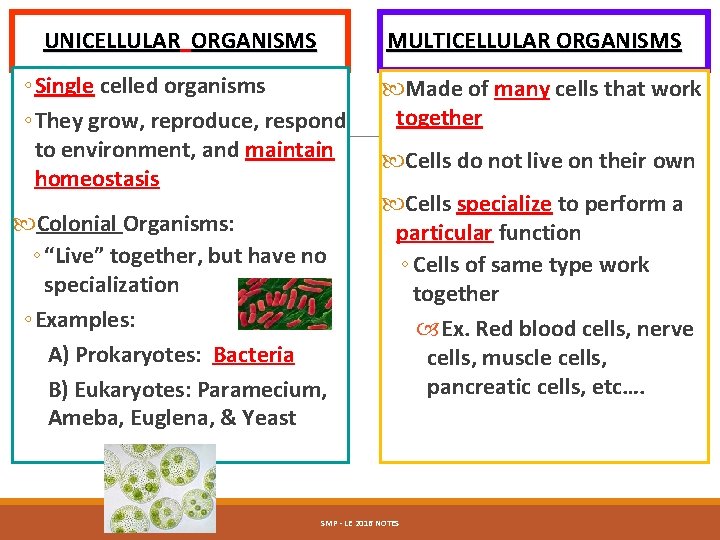
UNICELLULAR ORGANISMS MULTICELLULAR ORGANISMS ◦ Single celled organisms ◦ They grow, reproduce, respond to environment, and maintain homeostasis Made of many cells that work together Colonial Organisms: ◦ “Live” together, but have no specialization ◦ Examples: A) Prokaryotes: Bacteria B) Eukaryotes: Paramecium, Ameba, Euglena, & Yeast Cells do not live on their own Cells specialize to perform a particular function ◦ Cells of same type work together Ex. Red blood cells, nerve cells, muscle cells, pancreatic cells, etc…. SMP - LE 2016 NOTES
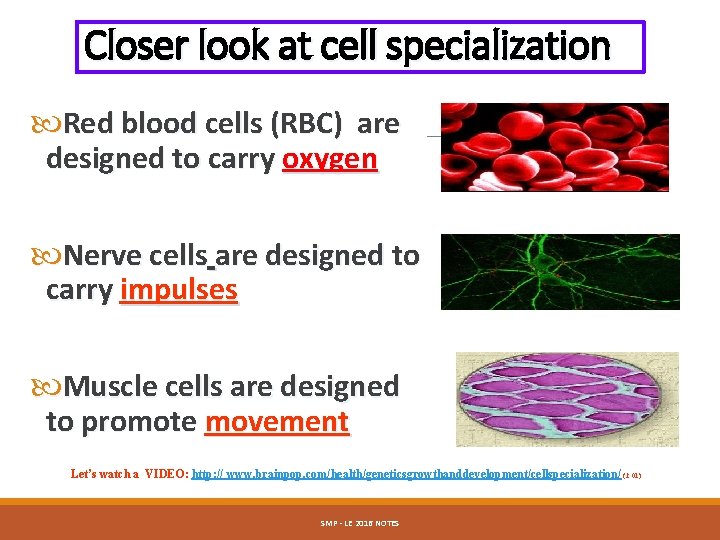
Closer look at cell specialization Red blood cells (RBC) are designed to carry oxygen Nerve cells are designed to carry impulses Muscle cells are designed to promote movement Let’s watch a VIDEO: http: // www. brainpop. com/health/geneticsgrowthanddevelopment/cellspecialization/ (2: 01) SMP - LE 2016 NOTES
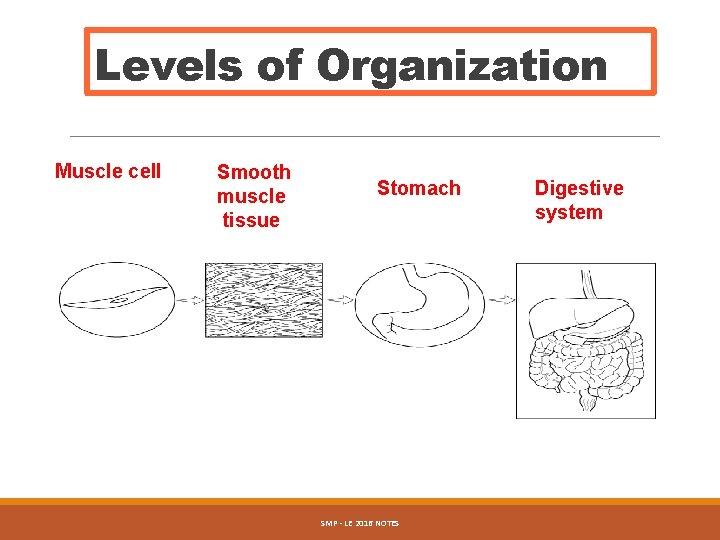
Levels of Organization Muscle cell Smooth muscle tissue Stomach SMP - LE 2016 NOTES Digestive system

THE END SMP - LE 2016 NOTES
- Slides: 46