
Cells the basic unit of life BIOL 100
Cells: the basic unit of life BIOL 100
Cells • Living things are made up of tiny structures called cells • Cells are very small in size and could not be seen without mircroscope (microscopic) so cells were discovered after invention of microscopes (mid-1600) • Cells constitute structures of all living organisms and perform various functions
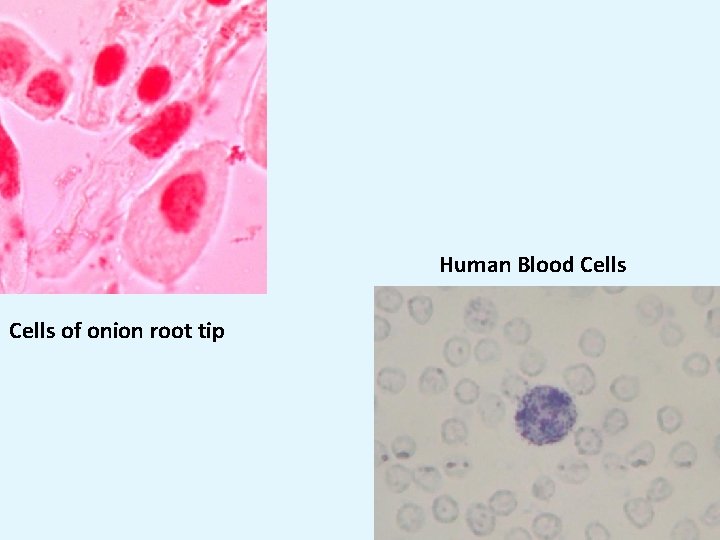
Human Blood Cells of onion root tip
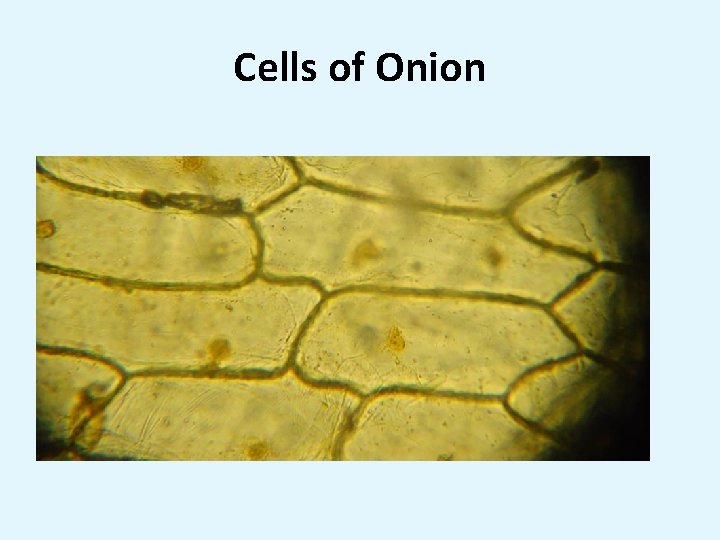
Cells of Onion
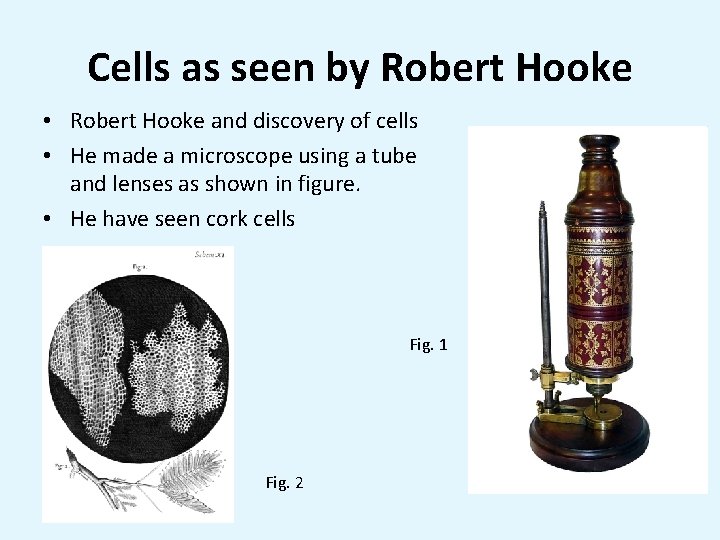
Cells as seen by Robert Hooke • Robert Hooke and discovery of cells • He made a microscope using a tube and lenses as shown in figure. • He have seen cork cells Fig. 1 Fig. 2
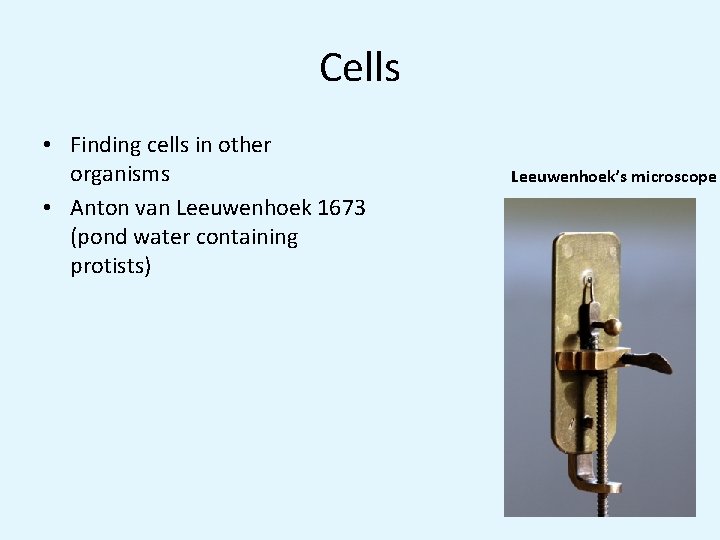
Cells • Finding cells in other organisms • Anton van Leeuwenhoek 1673 (pond water containing protists) Leeuwenhoek’s microscope
Cells • Matthias Schleiden 1838 – Concluded that plant tissue is composed of cells • Theoder Schwann 1839 – Observed animal tissues
Cell theory • Cell theory 1839 1: All organisms consist of one or more cells 2: Cell is the basic unit of structure for all organisms • Rudolf Virchow 1858 – studies on cell division – Cells arise by division of other, pre-existing cells 3: All cells arise from pre-existing ones
Cells • Unicellular and multicellular • Prokaryotic and Eukaryotic
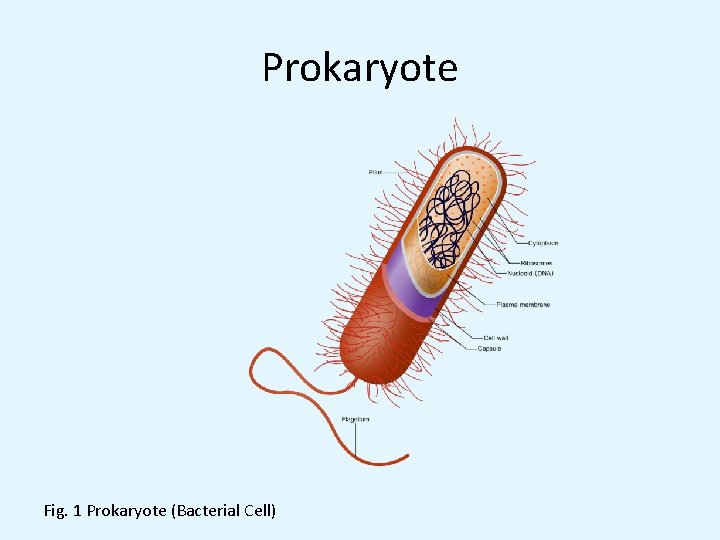
Prokaryote Fig. 1 Prokaryote (Bacterial Cell)
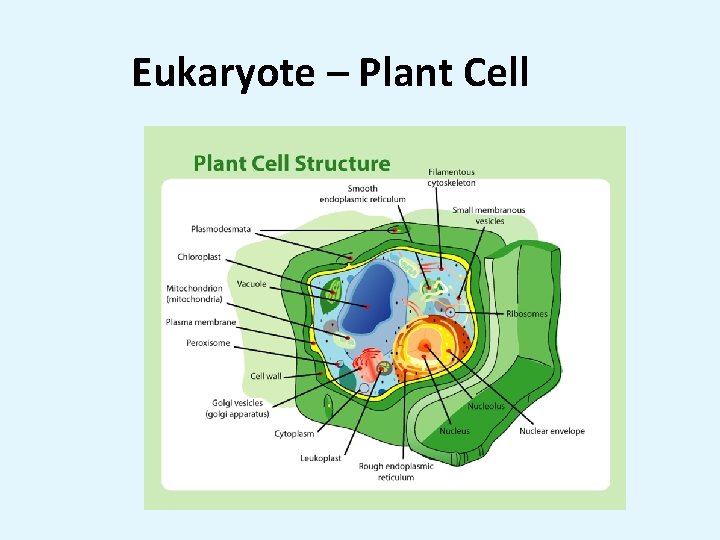
Eukaryote – Plant Cell
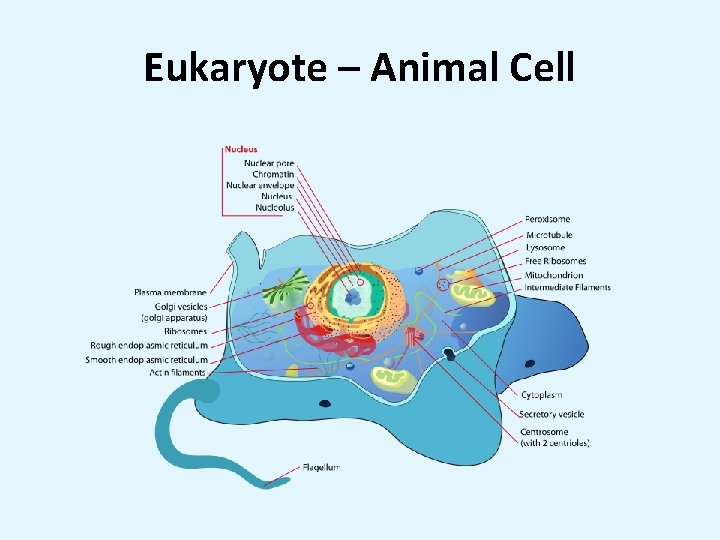
Eukaryote – Animal Cell
Prokaryote and eukaryote • Bacteria – unicellular prokaryote • Escherichia, Pseudomonas etc. • Protists– unicellular eukaryotes • (paramecium, amoeba) • Humans – multicellular eukaryotes • Multicellular organisms are all eukaryotic
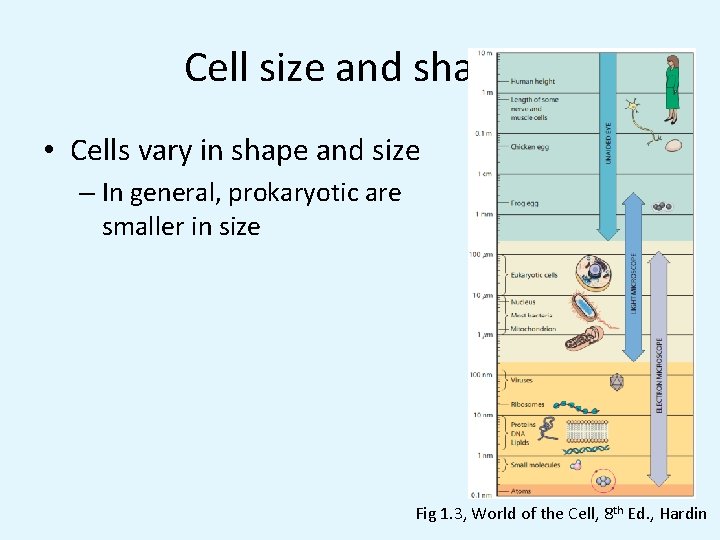
Cell size and shapes • Cells vary in shape and size – In general, prokaryotic are smaller in size Fig 1. 3, World of the Cell, 8 th Ed. , Hardin
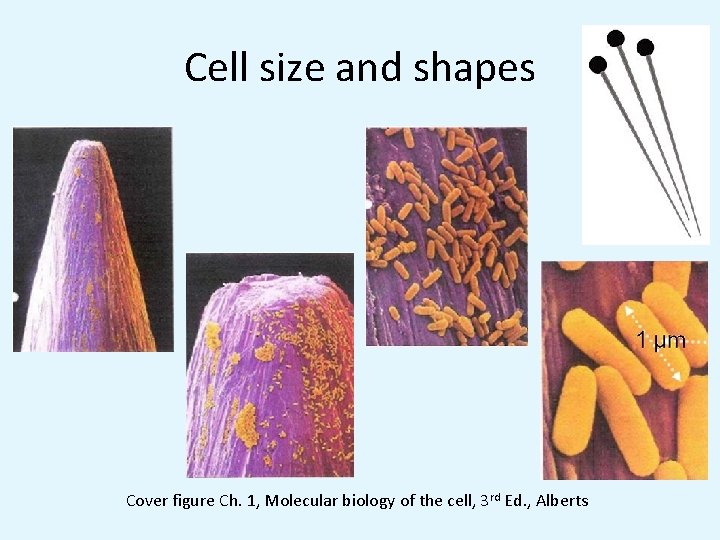
Cell size and shapes Cover figure Ch. 1, Molecular biology of the cell, 3 rd Ed. , Alberts
Parts of the Cell
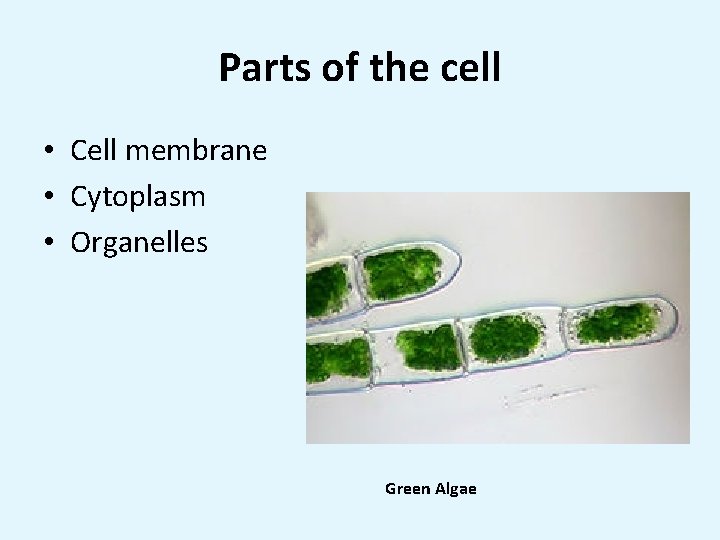
Parts of the cell • Cell membrane • Cytoplasm • Organelles Green Algae
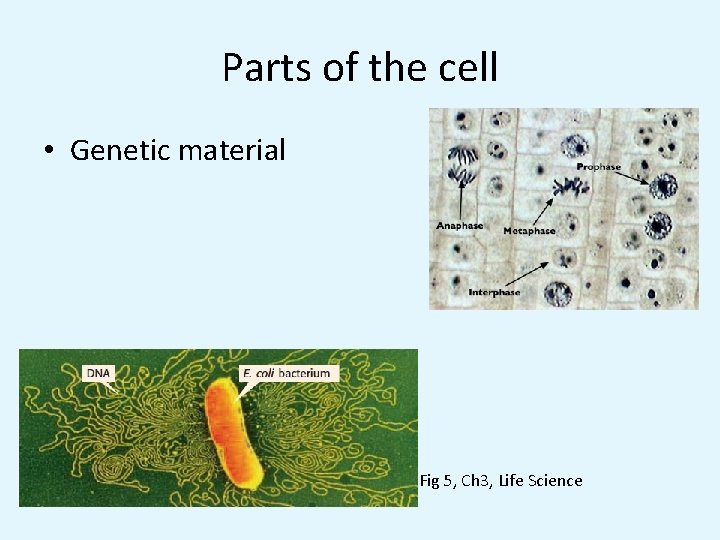
Parts of the cell • Genetic material Fig 5, Ch 3, Life Science
Cell wall • Outermost, rigid, supportive layer • Present in plants, fungi

Cell wall • Plant cell wall – cellulose • Fungi cell wall – chitin • Bacterial cell wall - peptidoglycan • Animal cells don’t have cell walls • Animals cannot digest cellulose
Cell membrane • • • Protective barrier Lipid in nature Contain hydrophobic and hydrophilic groups Two layers of phospholipids Also contain proteins Defines cell perimeter, controls transport (nutrients, water, wastes, etc. )
Cell membrane - Elastic, flexible - Consist of bilipid layer (2 layers of lipid) and integrated proteins - Have pores for the movements across membrane - Selectively allow movement of materials inside and outside the cell
Cytoskeleton • • Network of structural proteins Provide support, protect cell from collapsing Organelle movement Contains three types of proteins – One protein is a hollow tube (microtubule). The other two are long, stringy fibers, one of the stringy proteins is also found in muscle cells (Intermediate filaments, actin filaments)
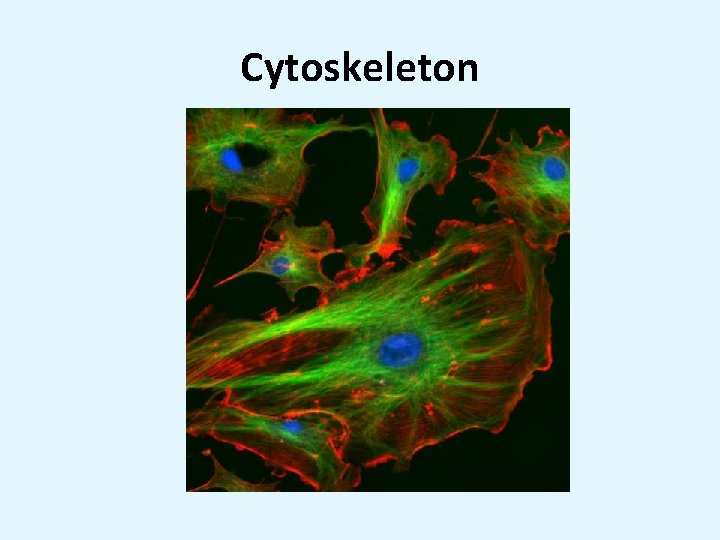
Cytoskeleton
Nucleus • Membrane bound organelle , contains DNA • Bound by two membranes (inner and outer) • Present only in eukaryotes (plants and animals) • • DNA contains information about protein synthesis Proteins carry out cellular functions and make structures Nuclear pores (nuclear membrane possesses pores) Nucleolus (a small semi-rounded structure present in nucleus)
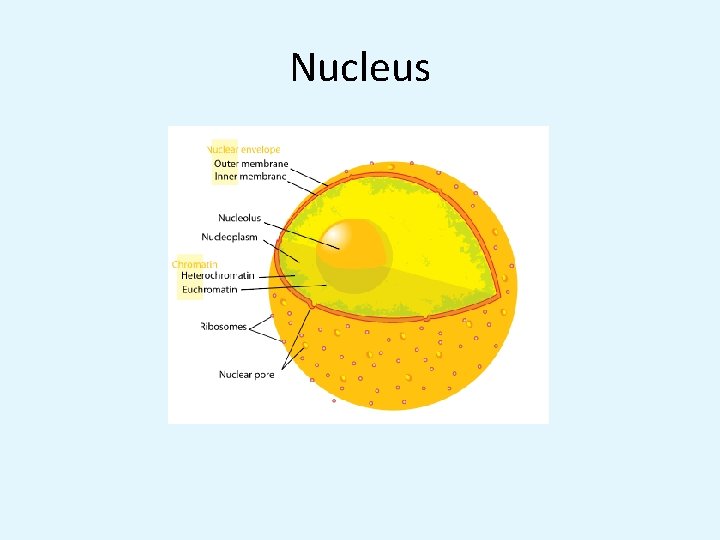
Nucleus
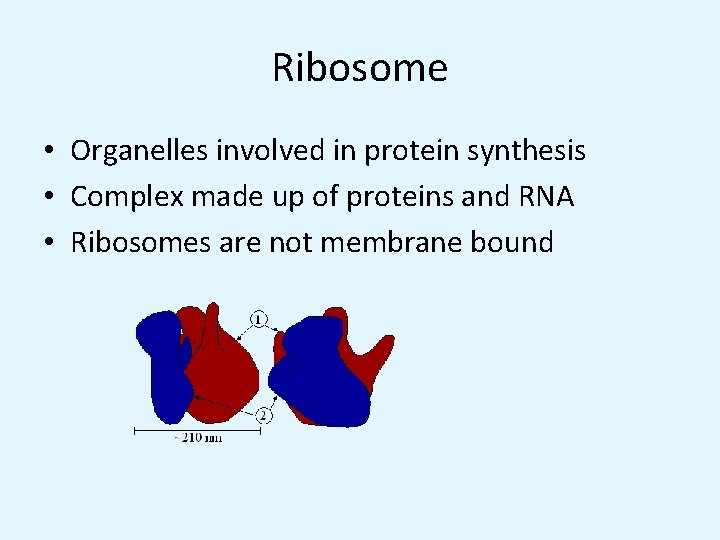
Ribosome • Organelles involved in protein synthesis • Complex made up of proteins and RNA • Ribosomes are not membrane bound
Endoplasmic reticulum • System of folded membranes • Proteins, lipids and other materials are synthesized • Transport and delivery of substances • Extended network throughout the cell • Ribosomes can be associates (rough ER) • Without ribosomes (smooth ER)
Mitochondria Membrane bound organelle 2 membranes (inner and outer) Sugars are broken down to produce energy Energy generated is in form ATP (adenosine triphosphate) • Mitochondria are of the size of bacteria and have their own DNA and ribosomes • They can divide within a cell • •
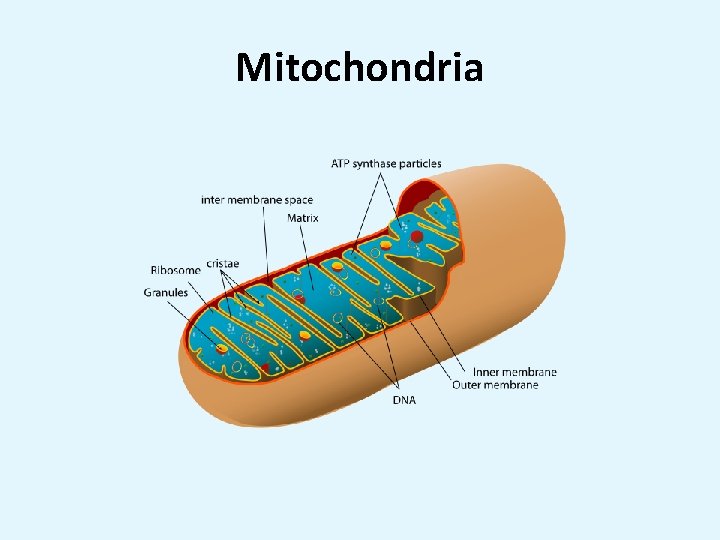
Mitochondria
Chloroplast • Found in plants, algae and some bacteria • Absent in animals • Chloroplasts contain green colored pigment known as chlorophyll which absorbs light for photosynthesis • Chloroplasts also have two membranes • Plants can make their own food by obtaining energy from sunlight (photosynthesis) • During photosynthesis, plants produce sugars and oxygen by using CO 2, sunlight and water • The sugar produced is utilized by mitochondria to produce ATP
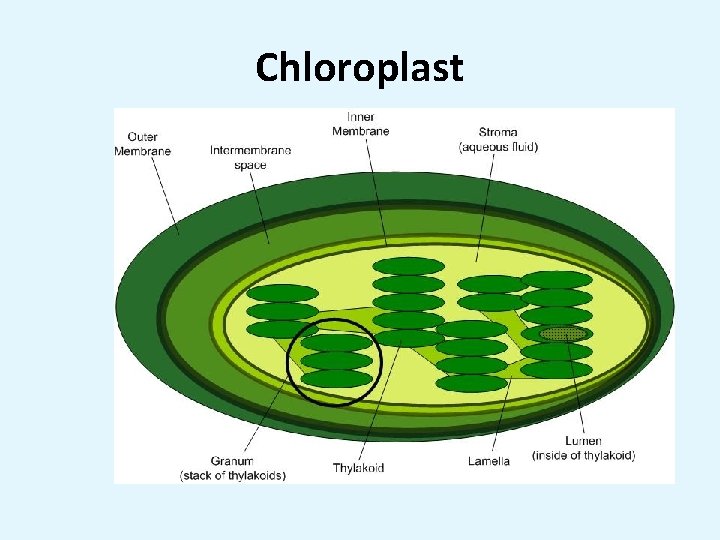
Chloroplast
Golgi complex • Stacks of membranes • Package and distribute proteins • Materials (lipids, proteins etc. ) are delivered from ER to Golgi and are processed & modified there • The final material leaves Golgi enclosed in a piece of Golgi membrane. The membrane pinches off as a vesicle (a small sac made up of membrane) • The vesicle then carries the material (cargo) to various cellular locations
Lysosomes and vacuoles • Lysosomes are small vesicles involved in cellular digestion • Contains hydrolytic (digesting) enzymes • Degrade foreign material or damaged cellular material, get rid of wastes • Various sizes and shapes • Cells engulf food as vacuoles. Lysosomes fuse and pour their contents to digest food material
Lysosomes and vacuoles • Vacuoles are vesicles meant for storage • They have variety of sizes and store different types of materials • e. g. some store digestive enzymes • Plant vacuoles are larger in size. They store water and salts. When there is enough water, plant vacuole swell and help in supporting plant cells. Vacuoles with less water result in wilting.
- Slides: 35