
Cells Test Review What are the four levels
- Slides: 20
Cells Test Review
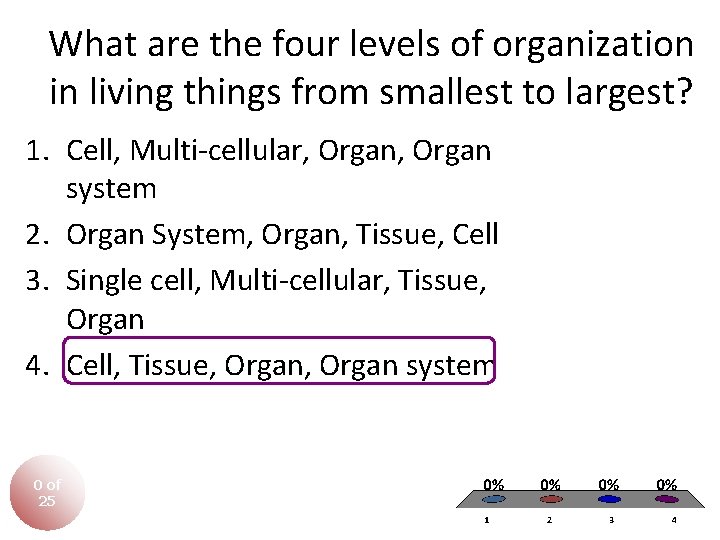
What are the four levels of organization in living things from smallest to largest? 1. Cell, Multi-cellular, Organ system 2. Organ System, Organ, Tissue, Cell 3. Single cell, Multi-cellular, Tissue, Organ 4. Cell, Tissue, Organ system 0 of 25
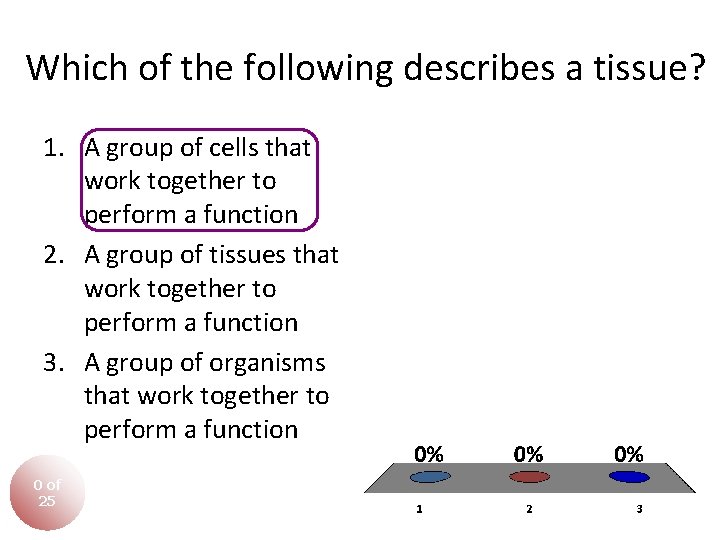
Which of the following describes a tissue? 1. A group of cells that work together to perform a function 2. A group of tissues that work together to perform a function 3. A group of organisms that work together to perform a function 0 of 25
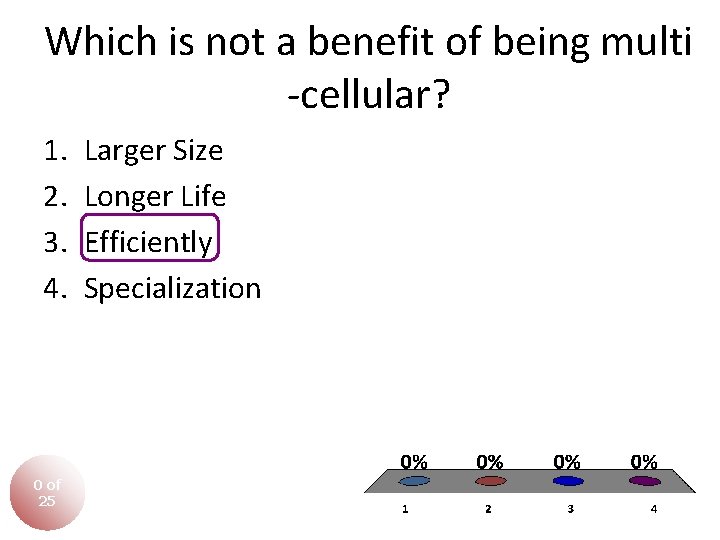
Which is not a benefit of being multi -cellular? 1. 2. 3. 4. 0 of 25 Larger Size Longer Life Efficiently Specialization
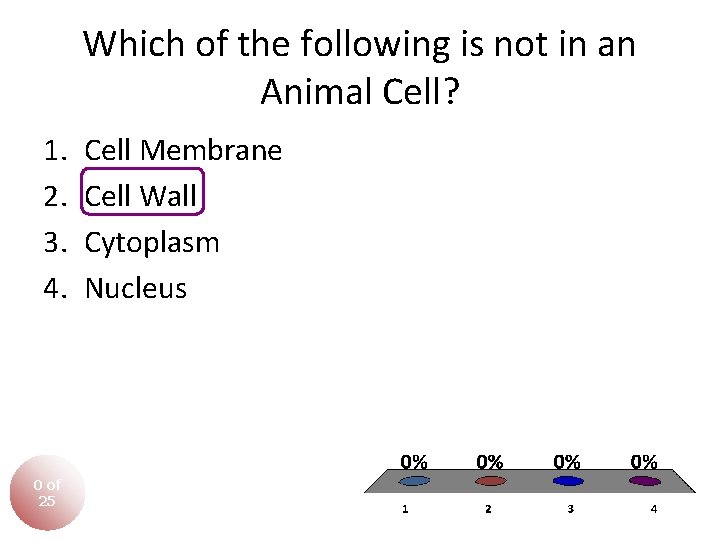
Which of the following is not in an Animal Cell? 1. 2. 3. 4. 0 of 25 Cell Membrane Cell Wall Cytoplasm Nucleus
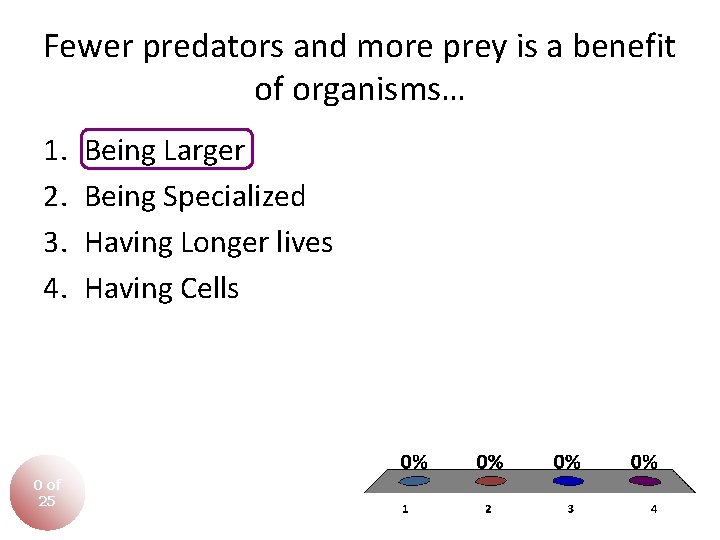
Fewer predators and more prey is a benefit of organisms… 1. 2. 3. 4. 0 of 25 Being Larger Being Specialized Having Longer lives Having Cells
Team Scores 4. 5 4. 25 Odd Even
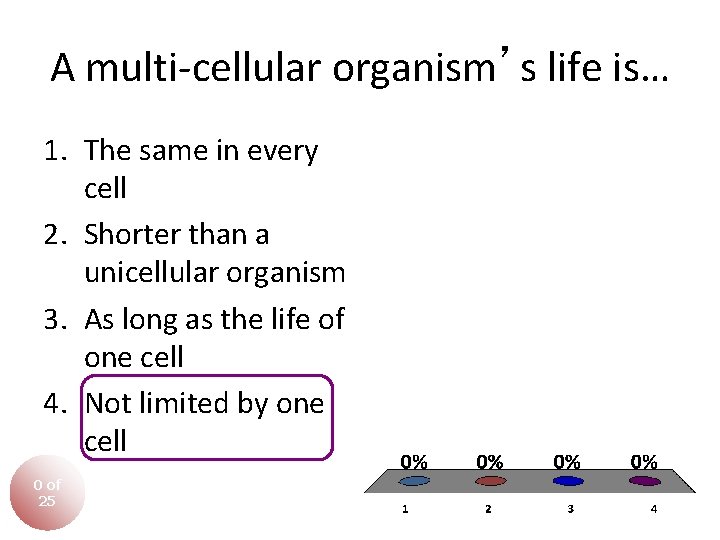
A multi-cellular organism’s life is… 1. The same in every cell 2. Shorter than a unicellular organism 3. As long as the life of one cell 4. Not limited by one cell 0 of 25
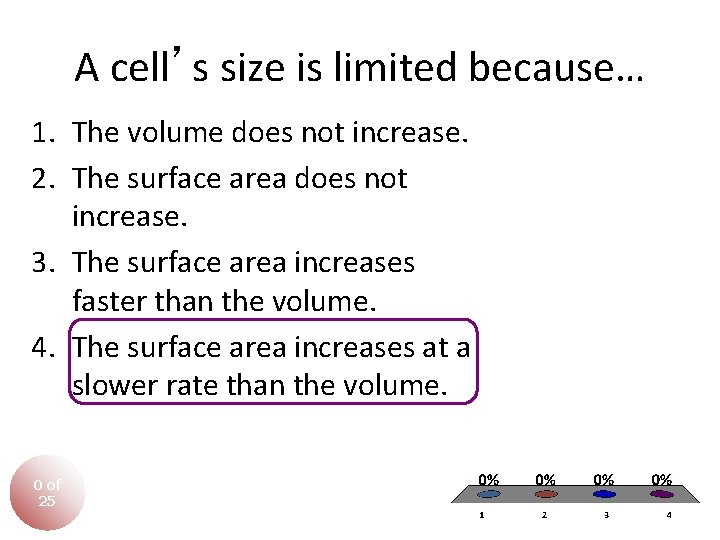
A cell’s size is limited because… 1. The volume does not increase. 2. The surface area does not increase. 3. The surface area increases faster than the volume. 4. The surface area increases at a slower rate than the volume. 0 of 25
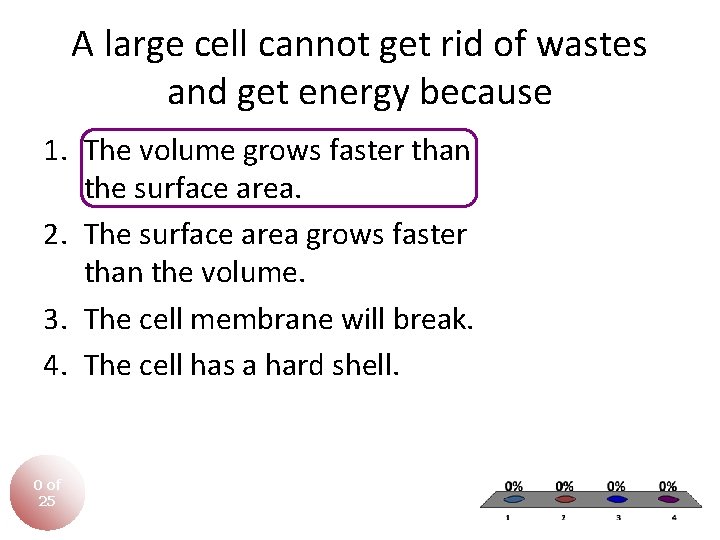
A large cell cannot get rid of wastes and get energy because 1. The volume grows faster than the surface area. 2. The surface area grows faster than the volume. 3. The cell membrane will break. 4. The cell has a hard shell. 0 of 25
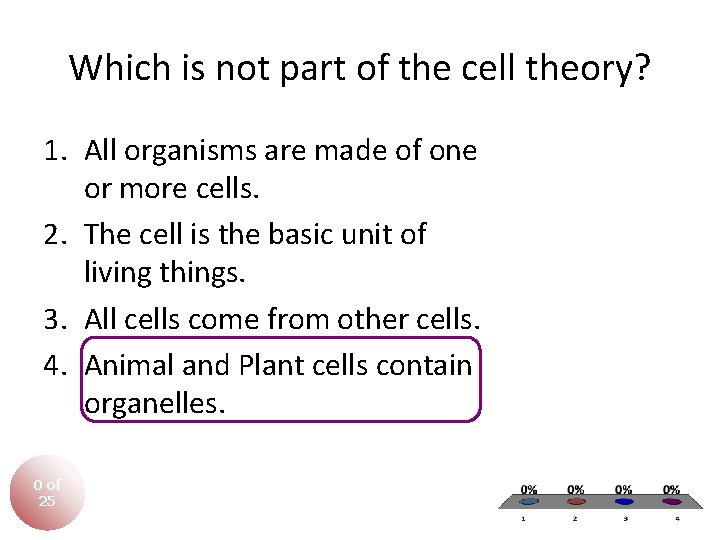
Which is not part of the cell theory? 1. All organisms are made of one or more cells. 2. The cell is the basic unit of living things. 3. All cells come from other cells. 4. Animal and Plant cells contain organelles. 0 of 25
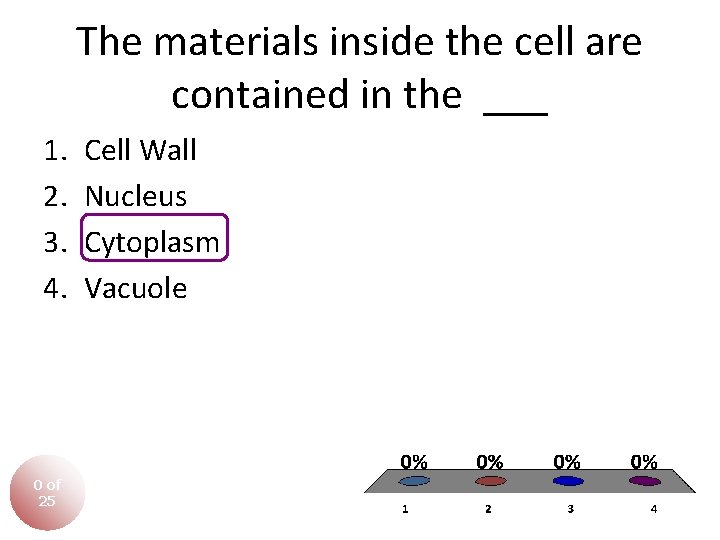
The materials inside the cell are contained in the ___ 1. 2. 3. 4. 0 of 25 Cell Wall Nucleus Cytoplasm Vacuole
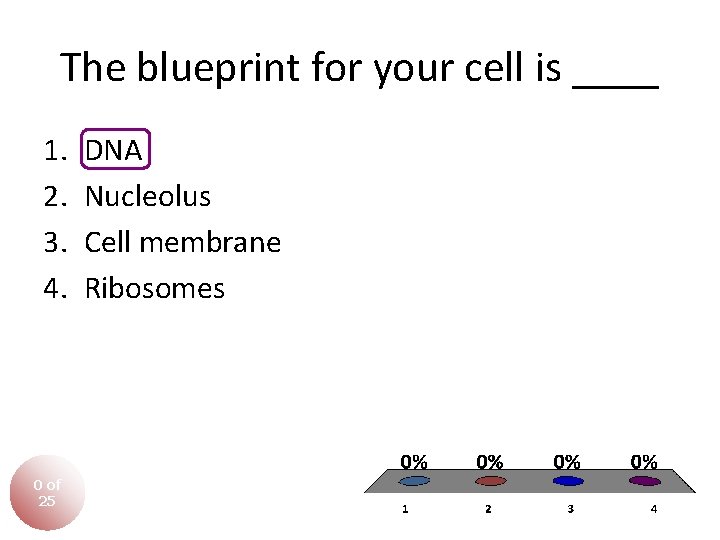
The blueprint for your cell is ____ 1. 2. 3. 4. 0 of 25 DNA Nucleolus Cell membrane Ribosomes
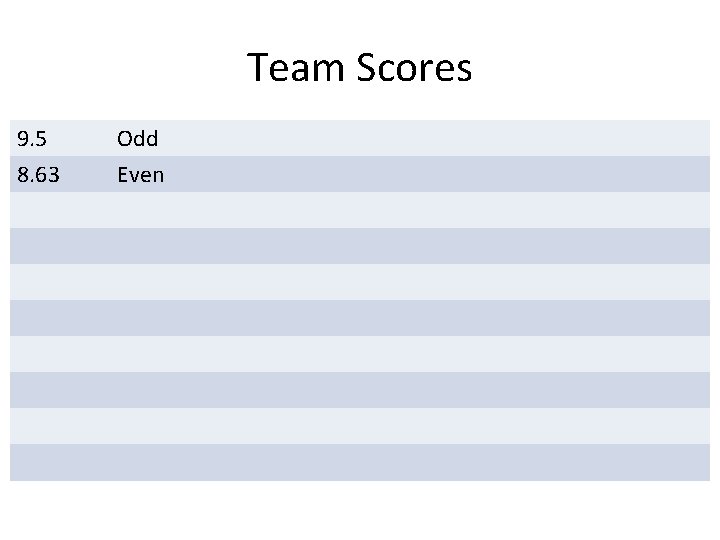
Team Scores 9. 5 8. 63 Odd Even
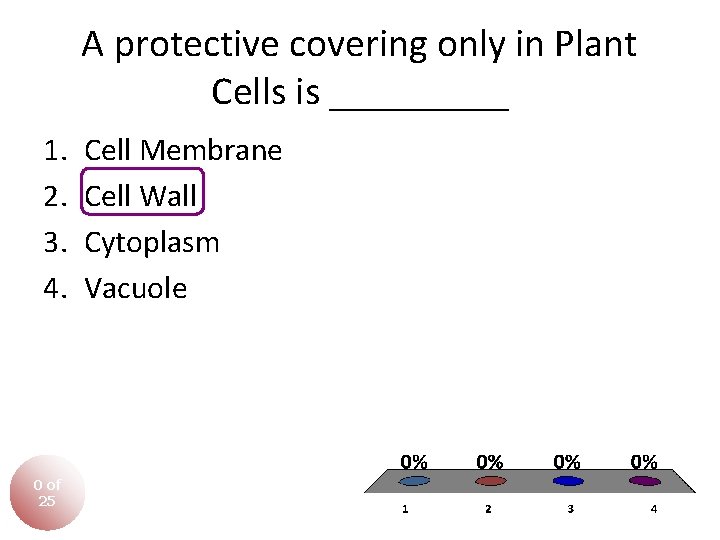
A protective covering only in Plant Cells is _____ 1. 2. 3. 4. 0 of 25 Cell Membrane Cell Wall Cytoplasm Vacuole
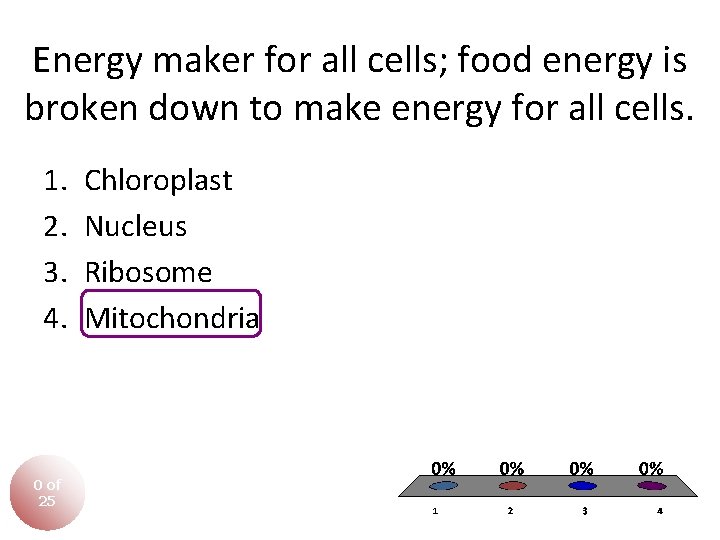
Energy maker for all cells; food energy is broken down to make energy for all cells. 1. 2. 3. 4. 0 of 25 Chloroplast Nucleus Ribosome Mitochondria
Part of a cell. 1. 2. 3. 4. 0 of 25 Organism Organelle Organ System
A ____ in a plant cell stores water or sugar. 1. 2. 3. 4. Vacuole Vesicle Cell Membrane Nucleus
Scientist who first described cells… 1. 2. 3. 4. Schleiden Schwan Spence Hooke
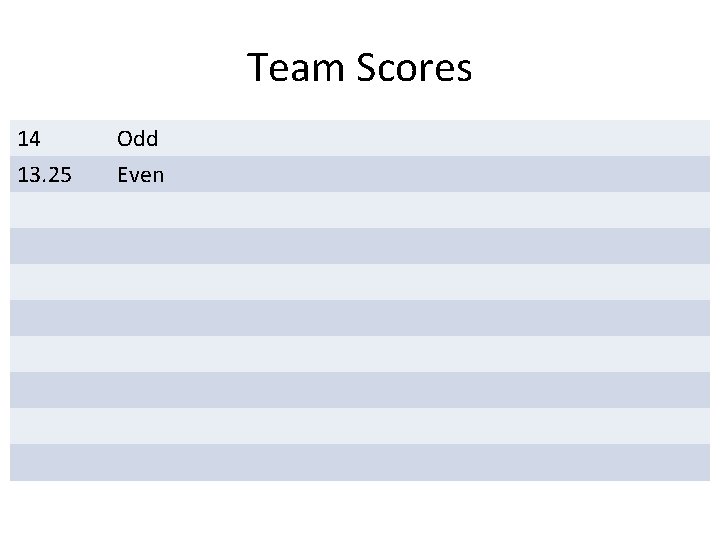
Team Scores 14 13. 25 Odd Even