
Cells Systems The Circulatory System The Circulatory System
- Slides: 27
Cells & Systems The Circulatory System
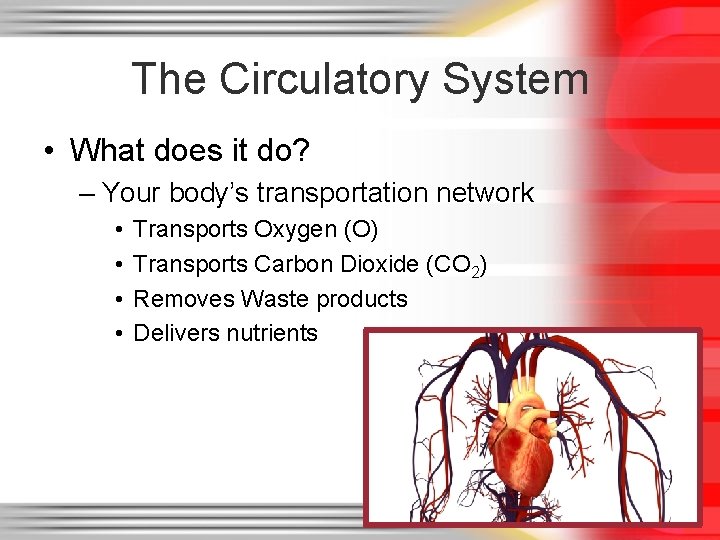
The Circulatory System • What does it do? – Your body’s transportation network • • Transports Oxygen (O) Transports Carbon Dioxide (CO 2) Removes Waste products Delivers nutrients
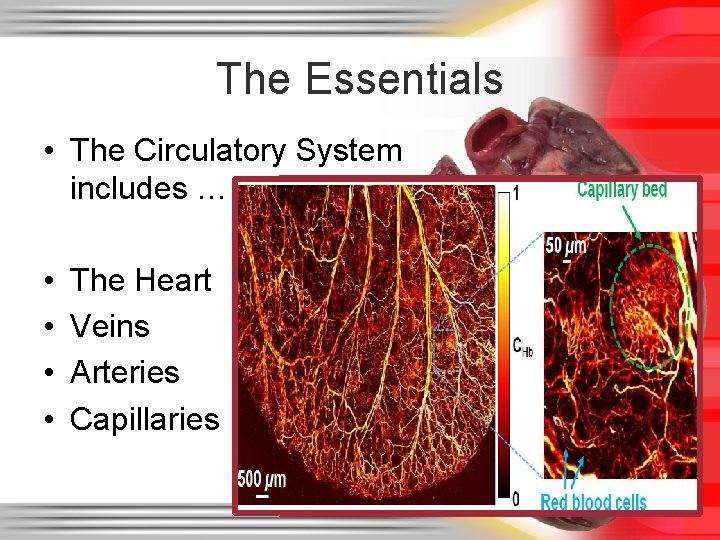
The Essentials • The Circulatory System includes … • • The Heart Veins Arteries Capillaries
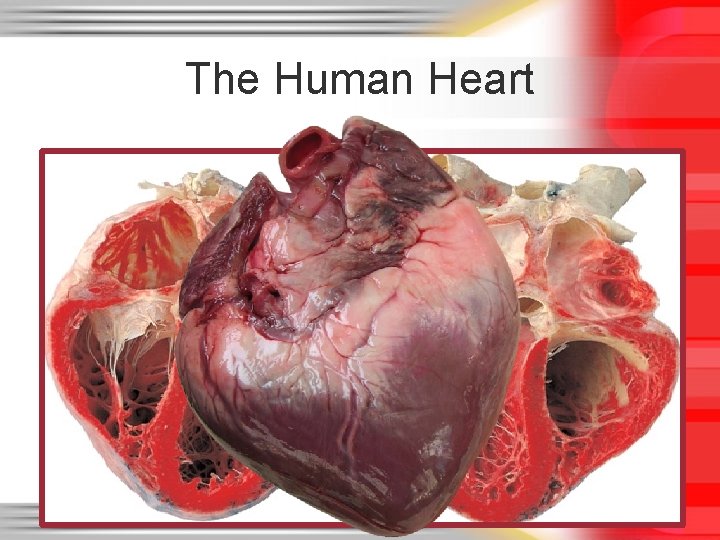
The Human Heart
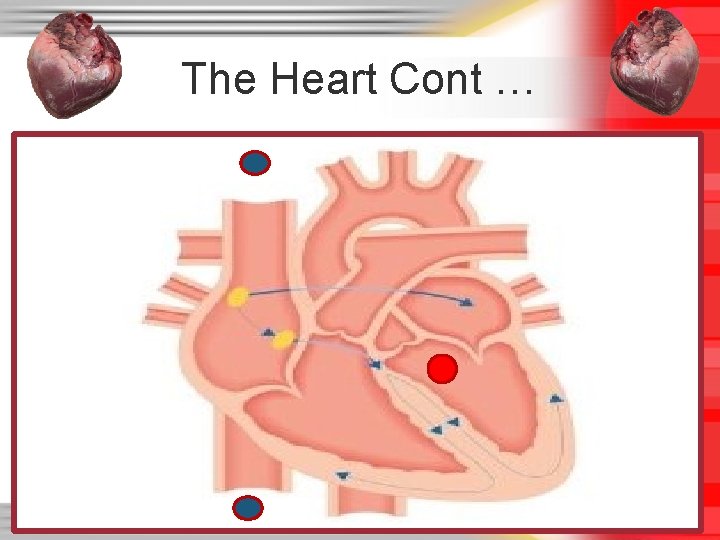
The Heart • It is a pump … but did you know …? – It is actually two pumps in one? – The left side & the right side! • The right side pumps blood to your lungs • The left side out to your entire body – Did you know that is why people believe your heart is on your left side?
The Heart Cont …
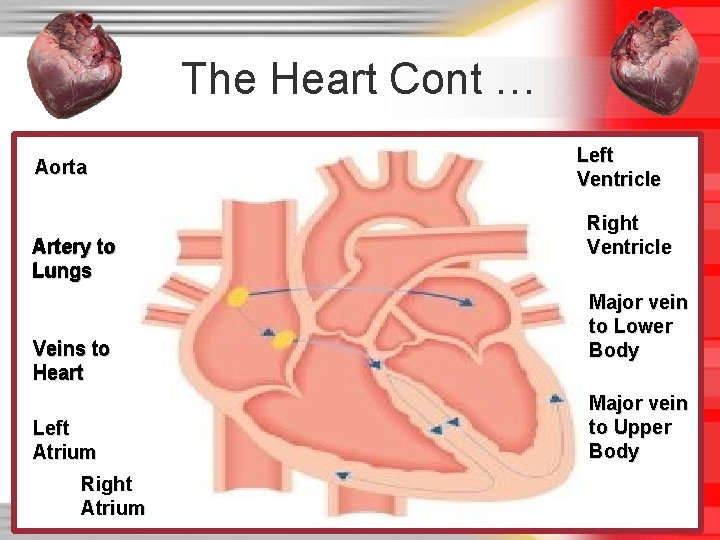
The Heart Cont … Aorta Artery to Lungs Veins to Heart Left Atrium Right Atrium Left Ventricle Right Ventricle Major vein to Lower Body Major vein to Upper Body
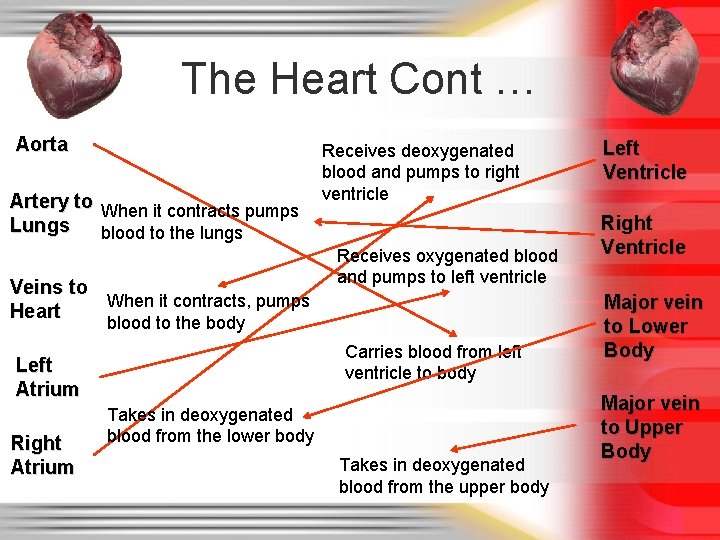
The Heart Cont … Aorta Artery to When it contracts pumps Lungs blood to the lungs Veins to When it contracts, pumps Heart Receives deoxygenated blood and pumps to right ventricle Receives oxygenated blood and pumps to left ventricle blood to the body Carries blood from left ventricle to body Left Atrium Right Atrium Takes in deoxygenated blood from the lower body Takes in deoxygenated blood from the upper body Left Ventricle Right Ventricle Major vein to Lower Body Major vein to Upper Body
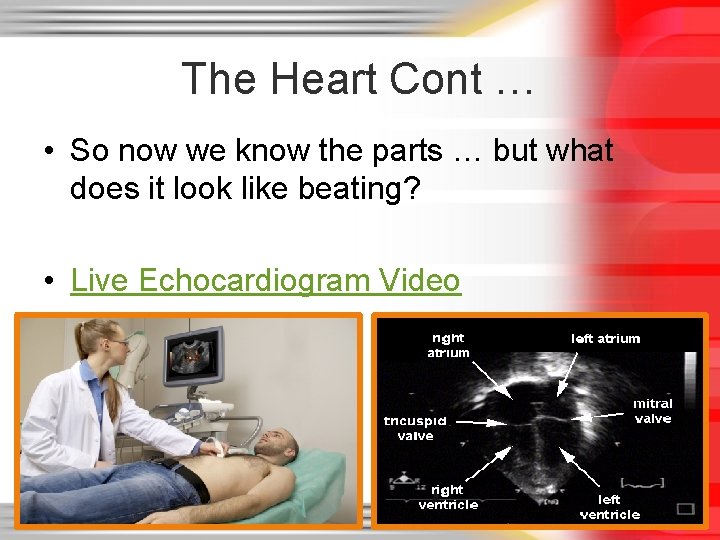
The Heart Cont … • So now we know the parts … but what does it look like beating? • Live Echocardiogram Video
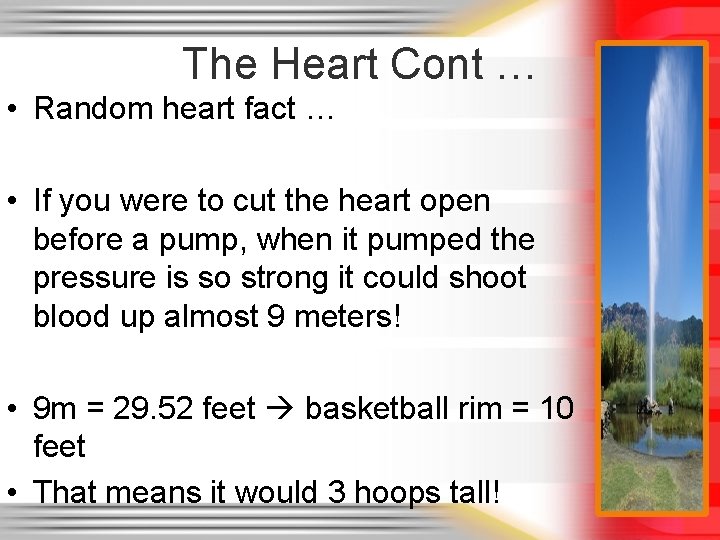
The Heart Cont … • Random heart fact … • If you were to cut the heart open before a pump, when it pumped the pressure is so strong it could shoot blood up almost 9 meters! • 9 m = 29. 52 feet basketball rim = 10 feet • That means it would 3 hoops tall!
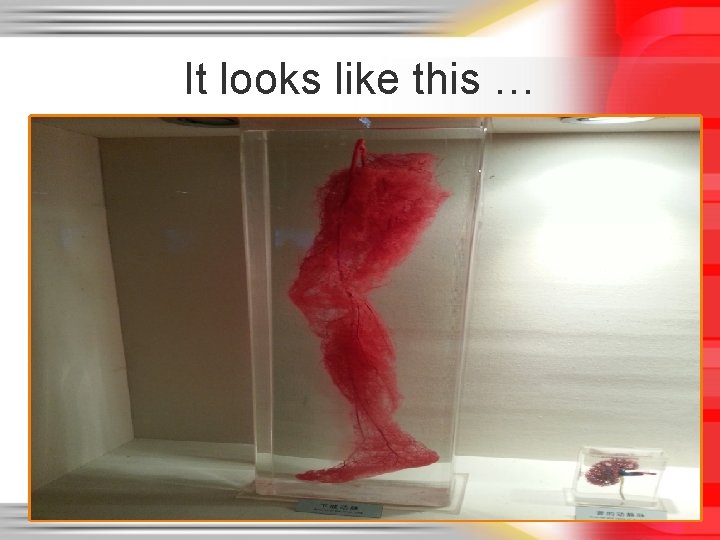
Arteries Veins & Capillaries • Your heart pumps blood throughout the body – Through 100 000 KM of blood vessels! – That could wrap around the earth 2. 49 times! WHAT? ! – 3 people stretching all blood vessels tied together could reach the moon!
It looks like this …
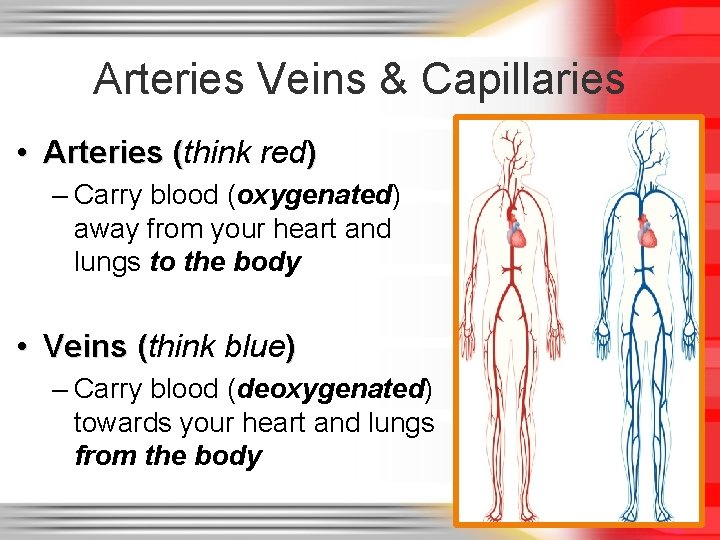
Arteries Veins & Capillaries • Arteries (think red) ( – Carry blood (oxygenated) away from your heart and lungs to the body • Veins (think blue) ( – Carry blood (deoxygenated) towards your heart and lungs from the body
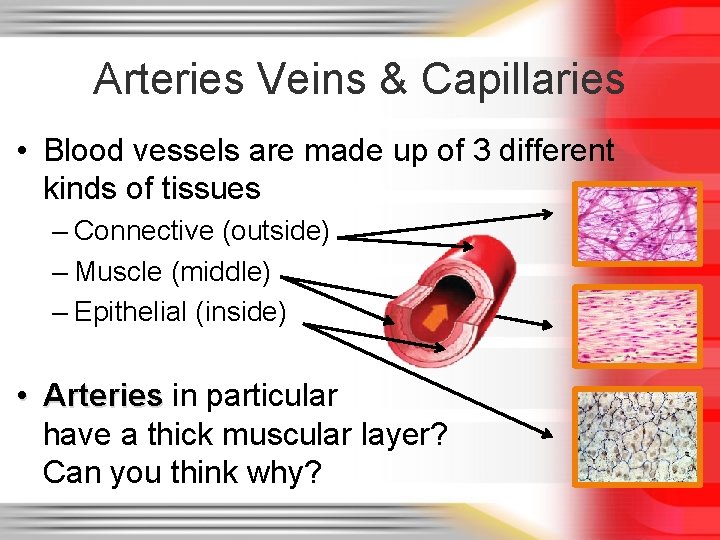
Arteries Veins & Capillaries • Blood vessels are made up of 3 different kinds of tissues – Connective (outside) – Muscle (middle) – Epithelial (inside) • Arteries in particular have a thick muscular layer? Can you think why?
Arteries Veins & Capillaries • Arteries in particular have a thick muscular layer? Can you think why? • Answer!. . . – It is what expands/contracts to push your blood along Tiny activity time!
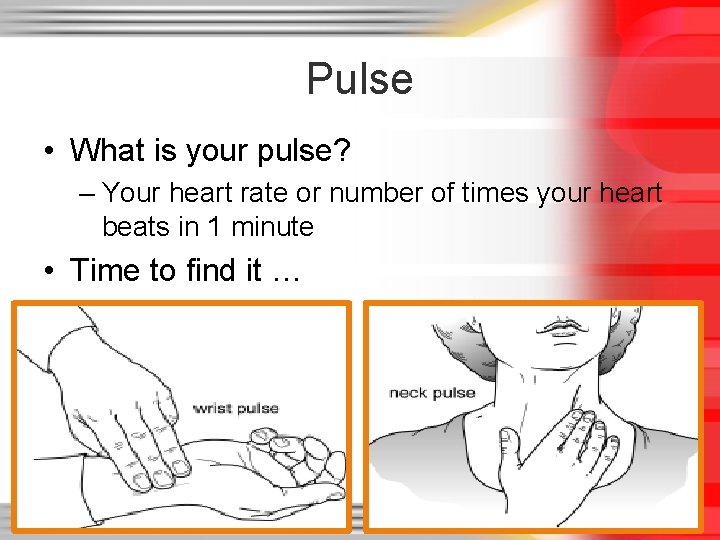
Pulse • What is your pulse? – Your heart rate or number of times your heart beats in 1 minute • Time to find it …
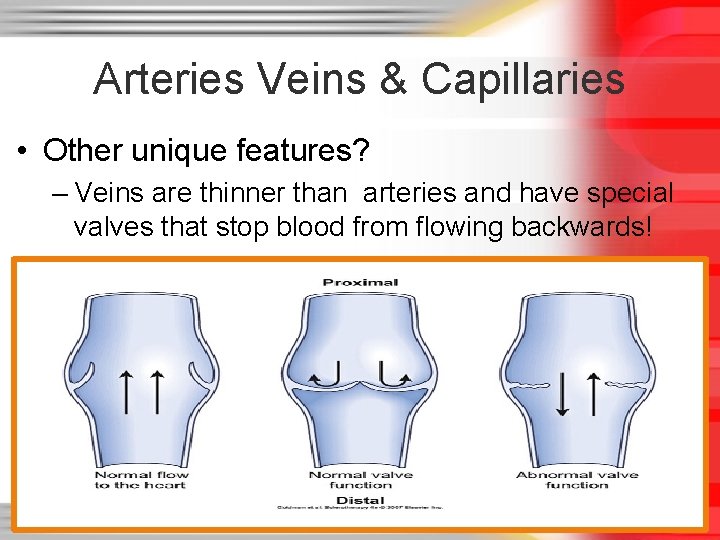
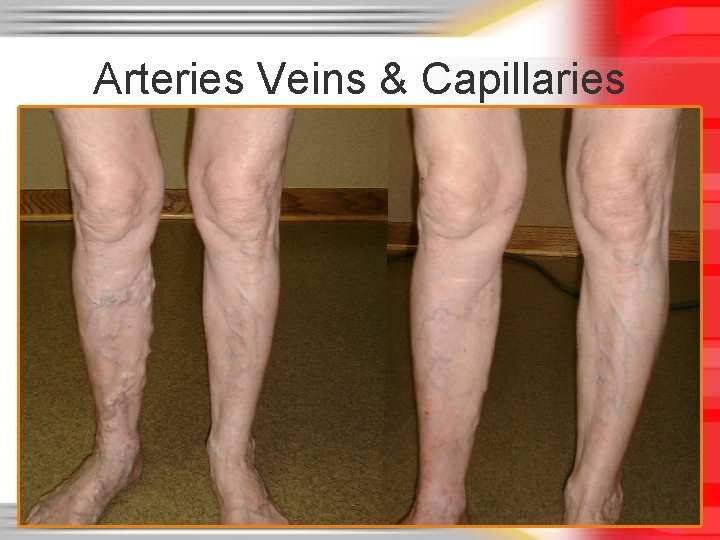
Arteries Veins & Capillaries • Other unique features? – Veins are thinner than arteries and have special valves that stop blood from flowing backwards!
Arteries Veins & Capillaries
Arteries Veins & Capillaries • Osmosis & Diffusion play important roles in the circulatory system • Diffusion – How your blood cells pick up CO 2 and O – How your body picks up/releases certain nutrients in your small intestine • These all occur in specialized blood vessels called capillaries
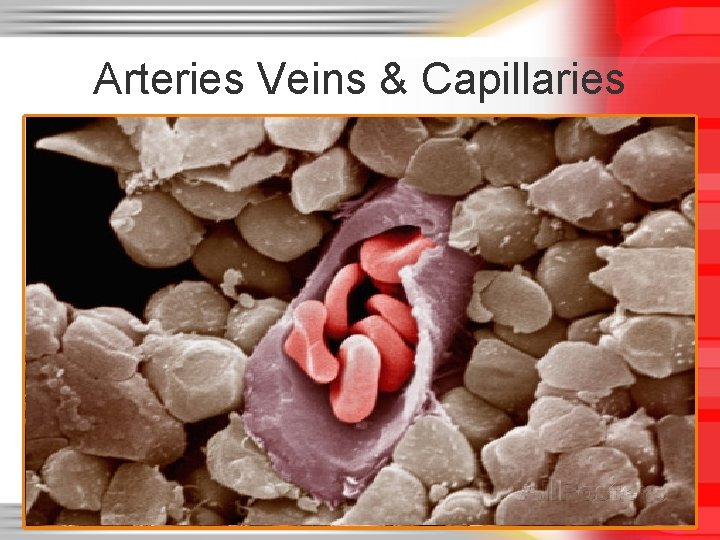
Arteries Veins & Capillaries • Capillaries are the smallest blood vessels in the body – Only 1 cell thick – So narrow blood cells can only pass through in 1 cell, single file rows • Why?
Arteries Veins & Capillaries
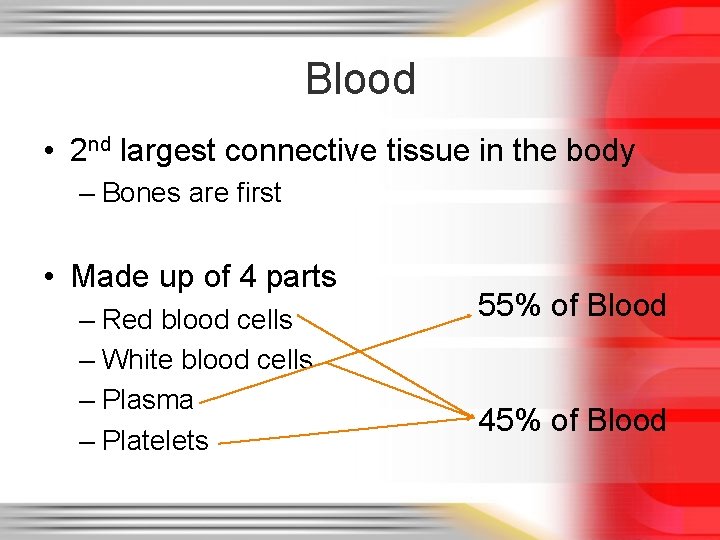
Blood • 2 nd largest connective tissue in the body – Bones are first • Made up of 4 parts – Red blood cells – White blood cells – Plasma – Platelets 55% of Blood 45% of Blood
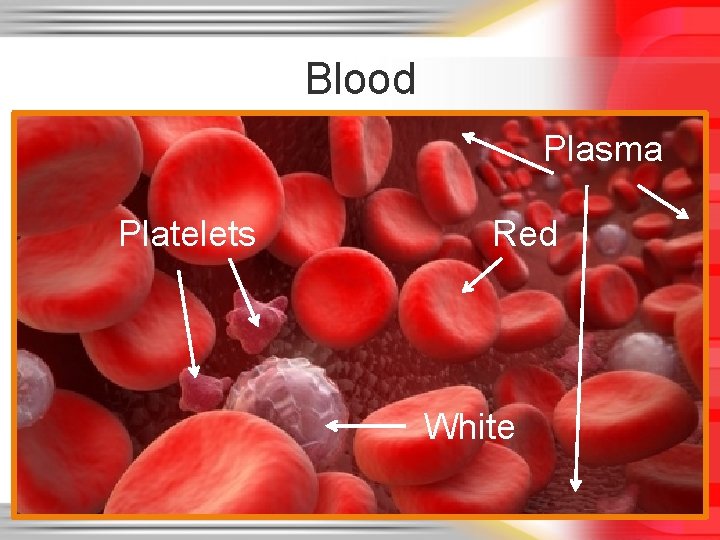
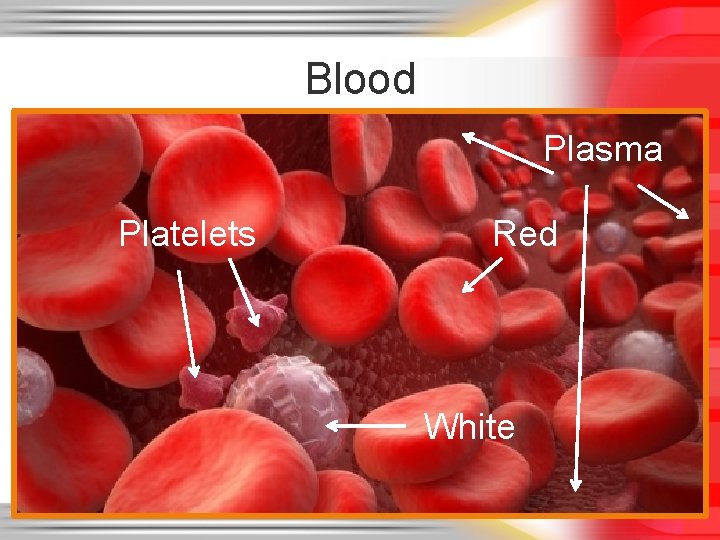
Blood • Blood cells are highly specialized Plasma – Red: Carry oxygen, no nucleus (more space for O) flexible Platelets Red – White: fight infection, eat bacteria – Platelets: stop cuts from bleeding (clotting) – Plasma: liquid portion of blood, transports nutrients, waste and CO 2 White
Blood Plasma Platelets Red White
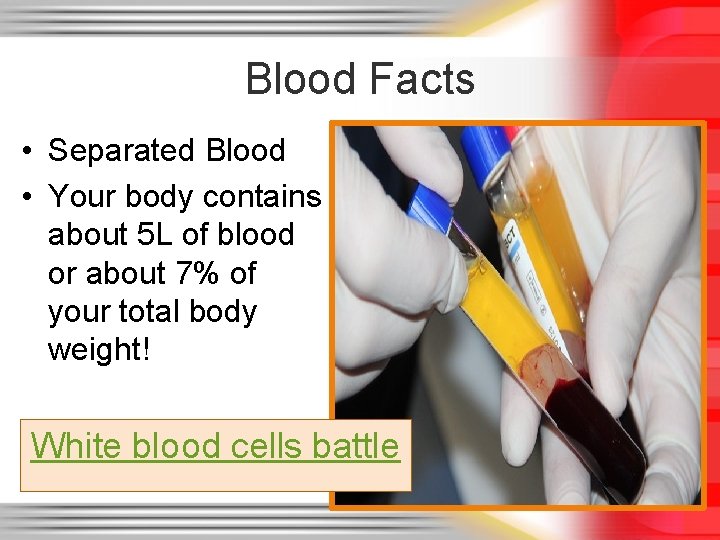
Blood Facts • Separated Blood • Your body contains about 5 L of blood or about 7% of your total body weight! White blood cells battle
White Blood Cells • How do they work? – White blood cells identify “protein marker” on cells which tell it good or bad – Good = keep looking – Bad = Nom nom! • This is why our body can reject organ donations foreign body in our body • Cancer cells are produced in your body so they contain the same cell marker = passed by
Circulatory System INTELLIGENCE TEST