
CELLS Structure Cell Membrane n n n Surrounds
CELLS Structure
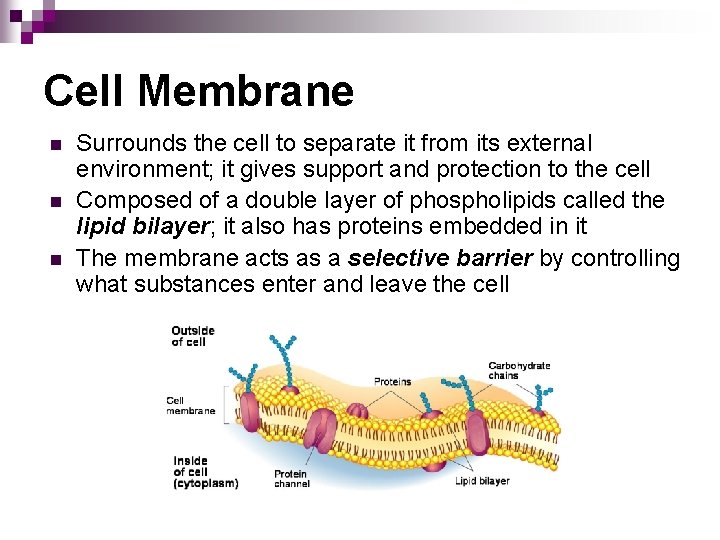
Cell Membrane n n n Surrounds the cell to separate it from its external environment; it gives support and protection to the cell Composed of a double layer of phospholipids called the lipid bilayer; it also has proteins embedded in it The membrane acts as a selective barrier by controlling what substances enter and leave the cell
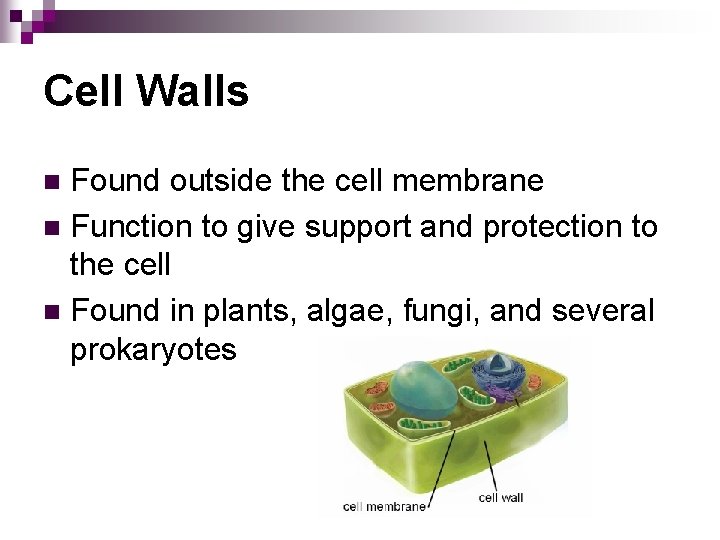
Cell Walls Found outside the cell membrane n Function to give support and protection to the cell n Found in plants, algae, fungi, and several prokaryotes n
Cell Interior n The cell has two major divisions: ¨Cytoplasm ¨Nucleus
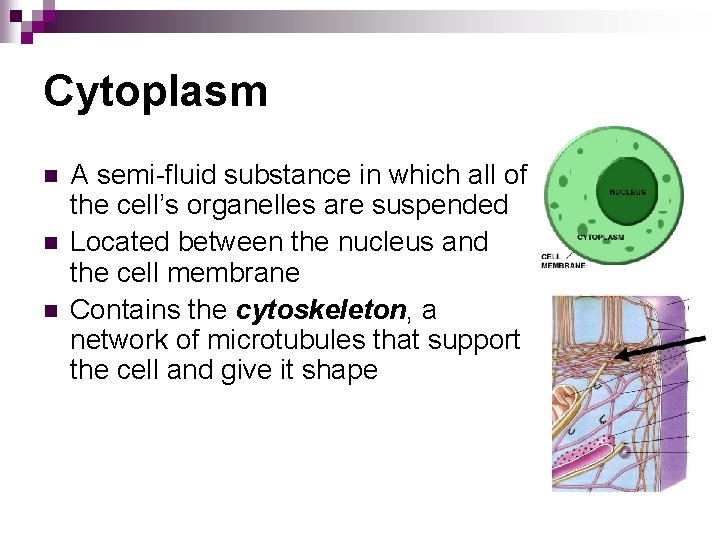
Cytoplasm n n n A semi-fluid substance in which all of the cell’s organelles are suspended Located between the nucleus and the cell membrane Contains the cytoskeleton, a network of microtubules that support the cell and give it shape
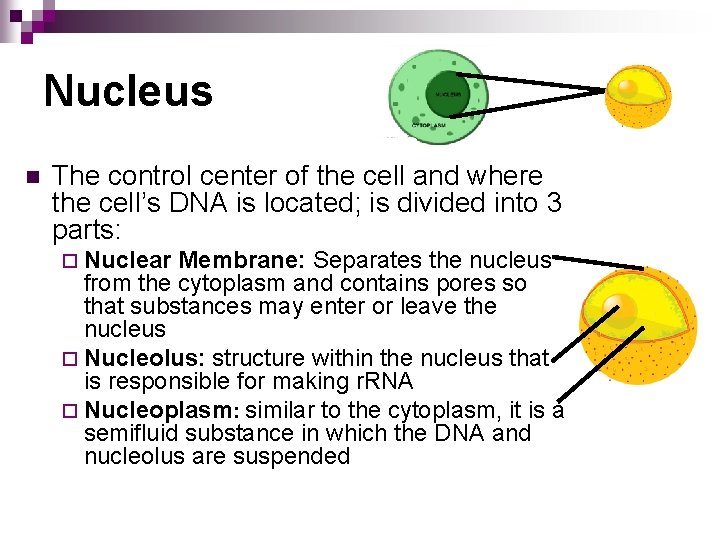
Nucleus n The control center of the cell and where the cell’s DNA is located; is divided into 3 parts: ¨ Nuclear Membrane: Separates the nucleus from the cytoplasm and contains pores so that substances may enter or leave the nucleus ¨ Nucleolus: structure within the nucleus that is responsible for making r. RNA ¨ Nucleoplasm: similar to the cytoplasm, it is a semifluid substance in which the DNA and nucleolus are suspended
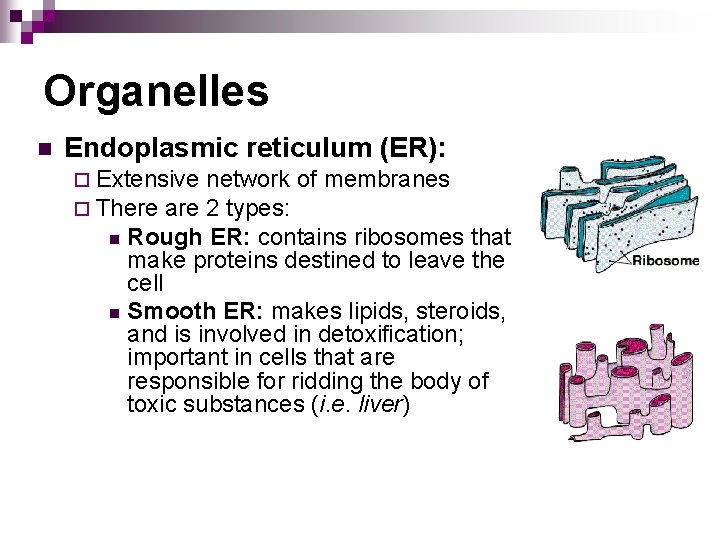
Organelles n Endoplasmic reticulum (ER): ¨ Extensive ¨ There are network of membranes 2 types: n Rough ER: contains ribosomes that make proteins destined to leave the cell n Smooth ER: makes lipids, steroids, and is involved in detoxification; important in cells that are responsible for ridding the body of toxic substances (i. e. liver)
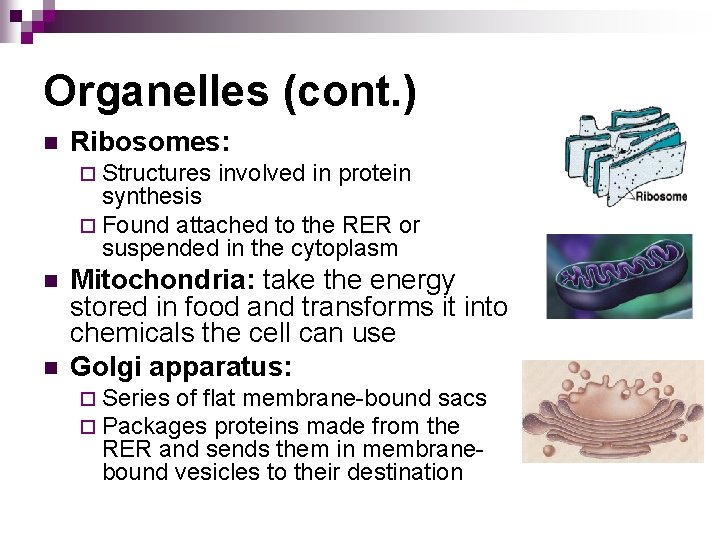
Organelles (cont. ) n Ribosomes: ¨ Structures involved in protein synthesis ¨ Found attached to the RER or suspended in the cytoplasm n n Mitochondria: take the energy stored in food and transforms it into chemicals the cell can use Golgi apparatus: ¨ Series of flat membrane-bound sacs ¨ Packages proteins made from the RER and sends them in membranebound vesicles to their destination
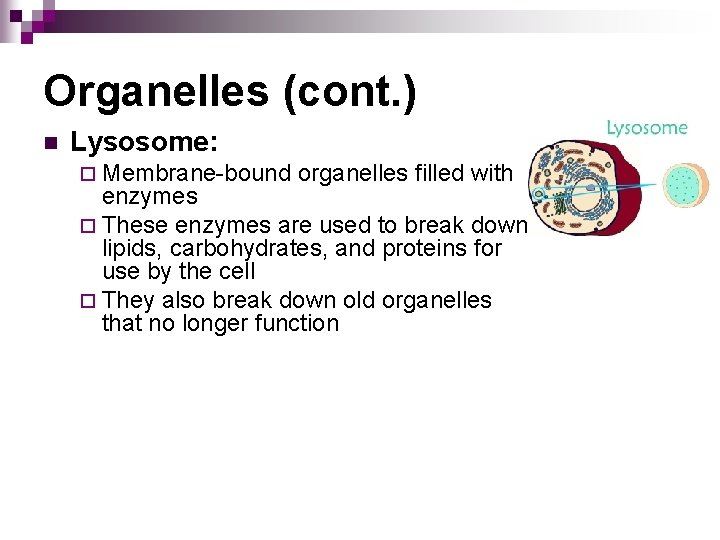
Organelles (cont. ) n Lysosome: ¨ Membrane-bound organelles filled with enzymes ¨ These enzymes are used to break down lipids, carbohydrates, and proteins for use by the cell ¨ They also break down old organelles that no longer function
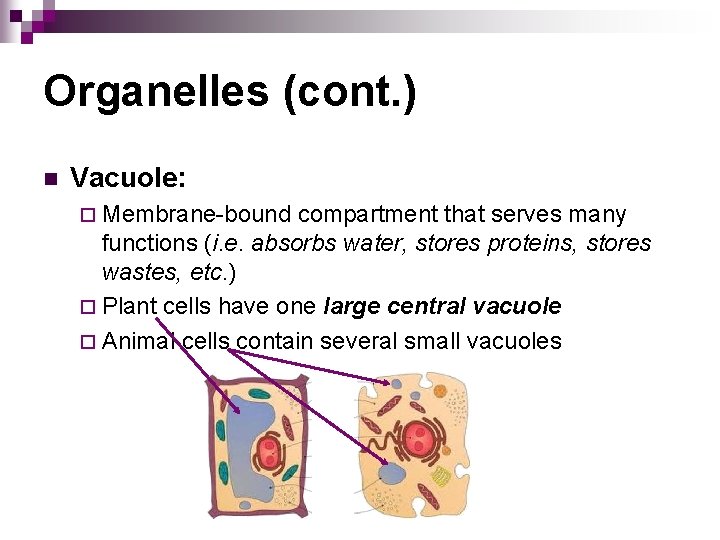
Organelles (cont. ) n Vacuole: ¨ Membrane-bound compartment that serves many functions (i. e. absorbs water, stores proteins, stores wastes, etc. ) ¨ Plant cells have one large central vacuole ¨ Animal cells contain several small vacuoles
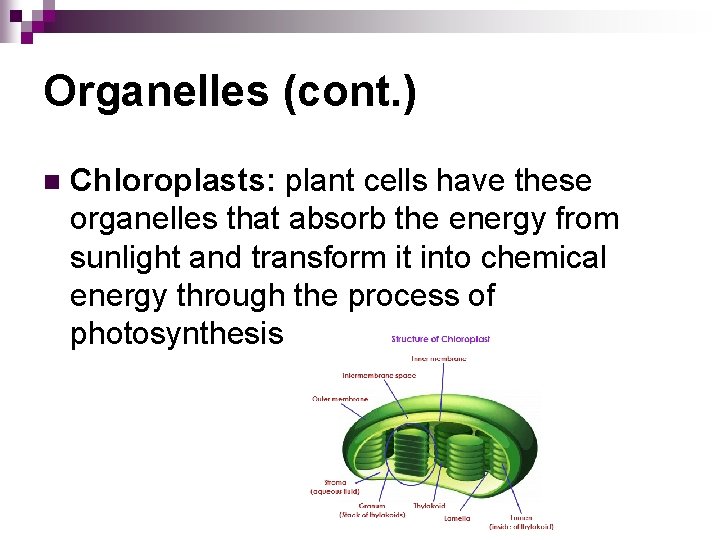
Organelles (cont. ) n Chloroplasts: plant cells have these organelles that absorb the energy from sunlight and transform it into chemical energy through the process of photosynthesis
- Slides: 11