
Cells Review Biology AIR Test Definition of a
Cells Review Biology AIR Test
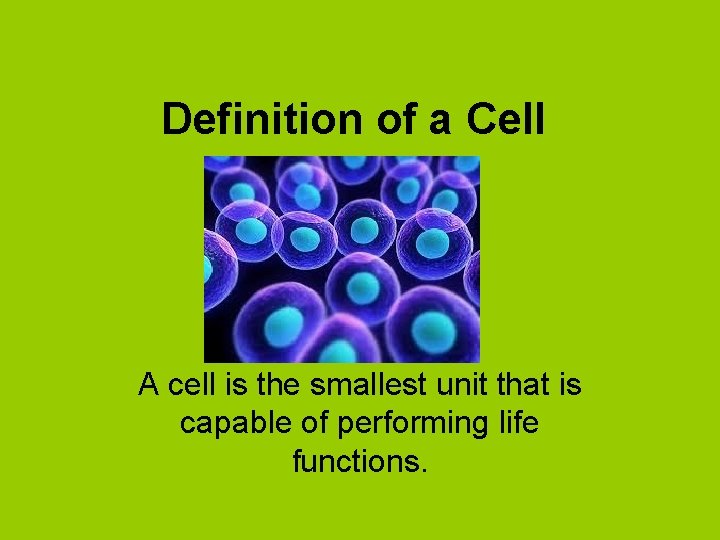
Definition of a Cell A cell is the smallest unit that is capable of performing life functions.
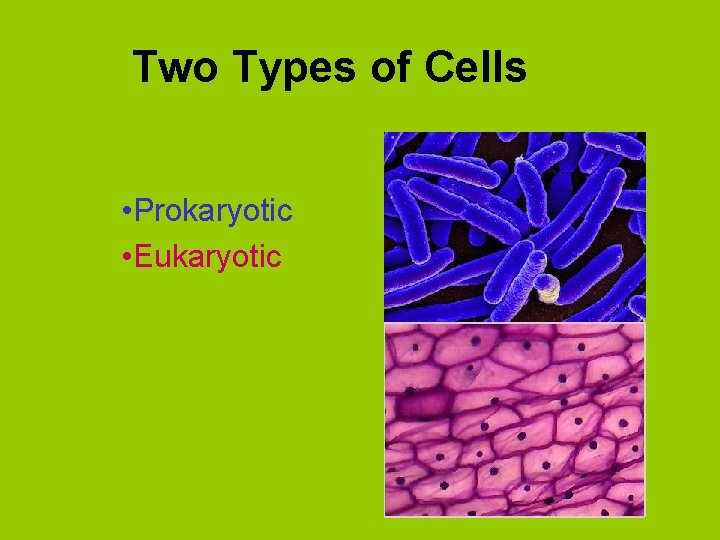
Two Types of Cells • Prokaryotic • Eukaryotic
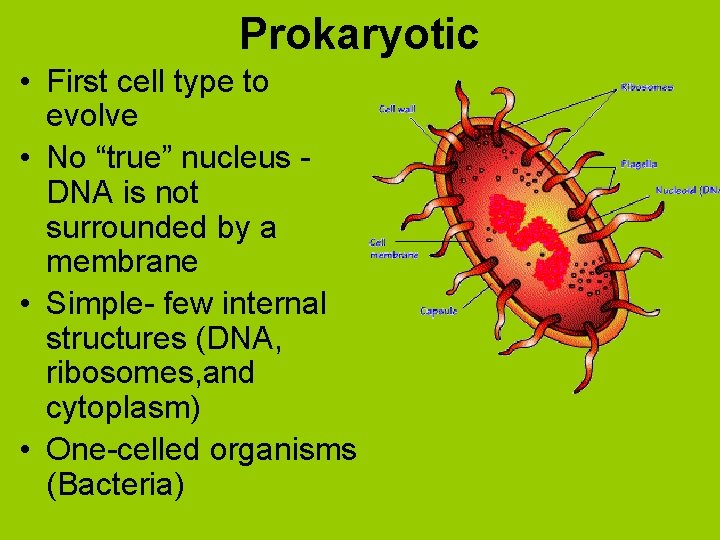
Prokaryotic • First cell type to evolve • No “true” nucleus DNA is not surrounded by a membrane • Simple- few internal structures (DNA, ribosomes, and cytoplasm) • One-celled organisms (Bacteria)
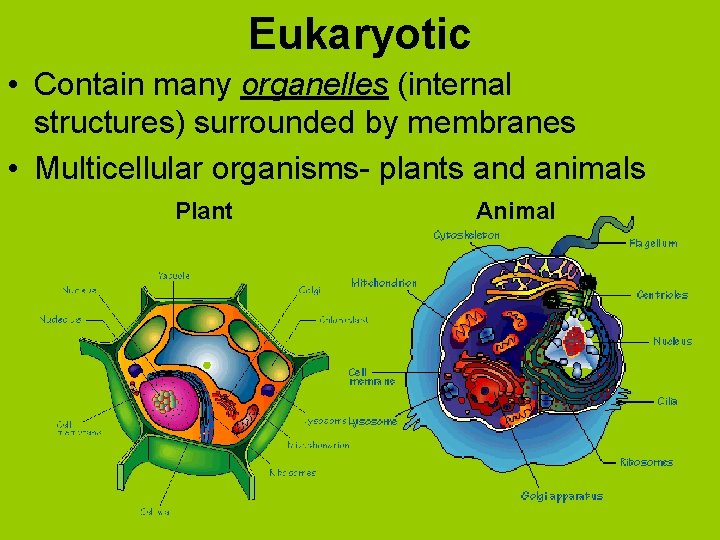
Eukaryotic • Contain many organelles (internal structures) surrounded by membranes • Multicellular organisms- plants and animals Plant Animal
Cell Organelles • Cell membrane: controls movement of materials in and out of the cell • Cell Wall: provides structural support and protects cell • Cytoplasm/Cytosol: fluid inside the cell where reactions occur • Nucleus: control center of cell (contains DNA) • Mitochondria: burn food to produce energy (ATP) • Ribosomes: make proteins • Lysosomes: store digestive enzymes • Endoplasmic reticulum: transport materials within cell • Vacuoles: where digestion occurs (store excess fluids) • Chloroplasts: where glucose is produced (photosynthesis) • Flagella: movement- whiplike structure • Cilia: movement- hairlike structure
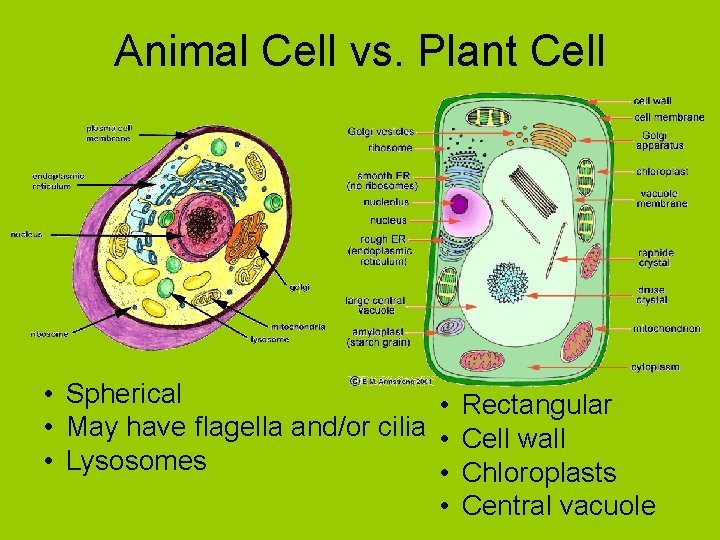
Animal Cell vs. Plant Cell • Spherical • Rectangular • May have flagella and/or cilia • Cell wall • Lysosomes • Chloroplasts • Central vacuole
Chromosome Structure • Except for the gametes, humans have 46 chromosomes (23 pairs) in the nucleus of every cell. • Chromosomes are long strands of DNA (genetic code). • When chromosomes are uncoiled, they are called chromatin. • When chromosomes are coiled, they look like a “x”.
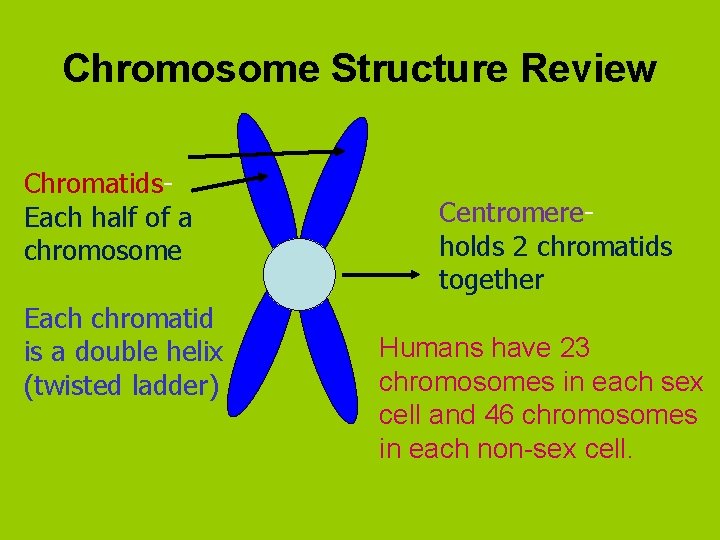
Chromosome Structure Review Chromatids. Each half of a chromosome Each chromatid is a double helix (twisted ladder) Centromereholds 2 chromatids together Humans have 23 chromosomes in each sex cell and 46 chromosomes in each non-sex cell.
MITOSIS • Cell division that results in cells that are genetically identical to the original cell. • It is the reason for human growth. • Mitosis has 4 phases: Prophase, Metaphase, Anaphase and Telophase.
MEIOSIS • Cell division that produces cells with ½ the number of chromosomes as the original cell. • This produces gametes (sex cells). • Meiosis has the same phases as mitosis; however, it goes through 2 rounds of these phases. The phases of meiosis are Prophase I/II, Metaphase I/II, Anaphase I/II and Telophase I/II.
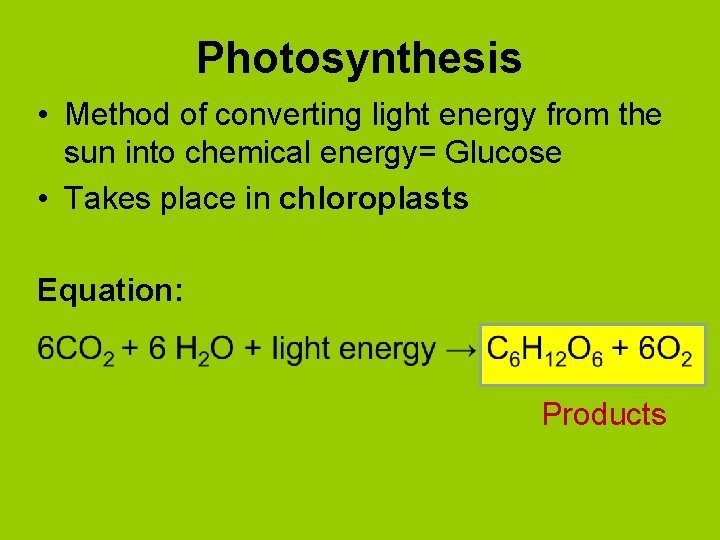
Photosynthesis • Method of converting light energy from the sun into chemical energy= Glucose • Takes place in chloroplasts Equation: Products
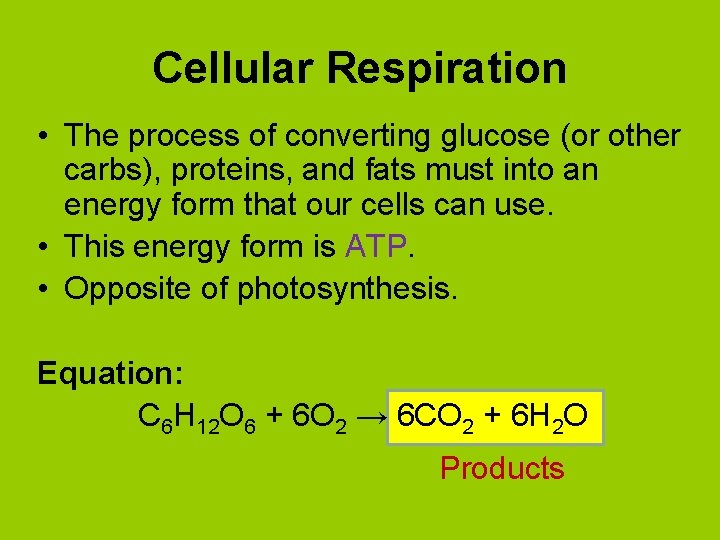
Cellular Respiration • The process of converting glucose (or other carbs), proteins, and fats must into an energy form that our cells can use. • This energy form is ATP. • Opposite of photosynthesis. Equation: C 6 H 12 O 6 + 6 O 2 → 6 CO 2 + 6 H 2 O Products
Diffusion across the cell membrane • The cell membrane is the boundary between the inside and the outside of a cell. • Some molecules pass through the membrane directly by moving through the phospholipid bilayer. – Small molecules (O 2, CO 2 and sometimes H 2 O) • Some molecules pass through the membrane by moving through a protein. – Large molecules (sugar, salt, AA, and sometimes H 2 O)
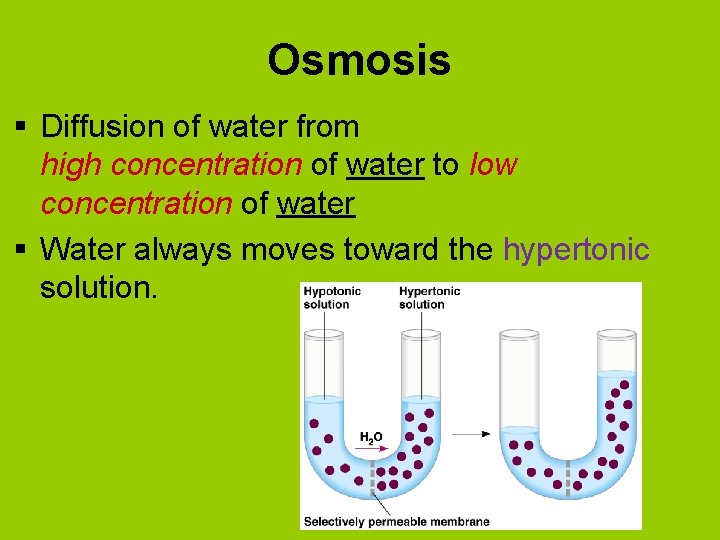
Osmosis § Diffusion of water from high concentration of water to low concentration of water § Water always moves toward the hypertonic solution.
Active Transport • Sometimes a cell has to use ATP to move molecules across the membrane. This is active transport. • The Na+/K+ pump is an example of active transport and it is the basis of the nervous system sending messages through electricity.
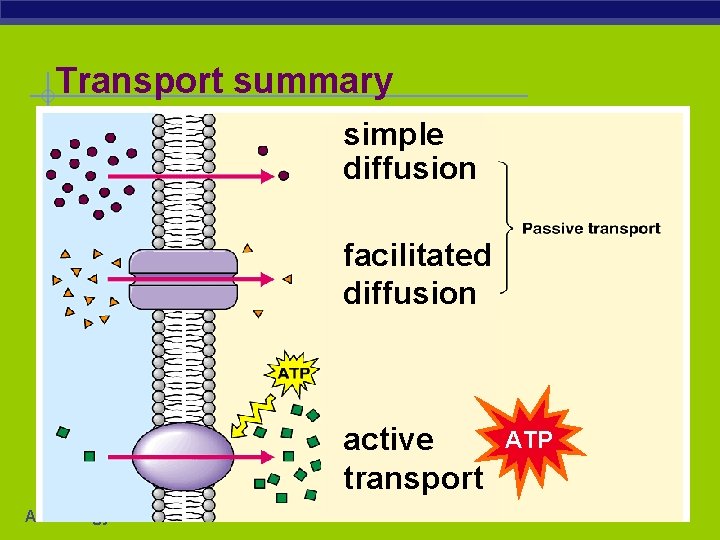
Transport summary simple diffusion facilitated diffusion active transport AP Biology ATP
- Slides: 17